You're standing in front of the mirror before a wedding, a client meeting, or a dinner where you can't afford to look approximate. The jacket's on, the shirt's clean, and the question is no longer whether you need a suit, it's which cut will make you look settled, not squeezed. For most men, the answer is a single breasted suit, because its front closure, lapel balance, and clean waist line give a sharper result without shouting for attention. If you want a quieter, useful way to keep an eye on style and refresh your wardrobe between fittings, you can also browse new releases and vineyard updates from Cobham House Vineyard while you plan the rest of your week.
Key Takeaways
A man usually chooses a single breasted suit because it gives him the most dependable silhouette when the day matters and the details are under scrutiny. The clean front, single row of buttons, and narrower overlap make it easier to read the chest, waist, and shoulder line clearly, which is why it has stayed central to British tailoring since the 19th century and became the default as the lounge suit took over everyday wear in the UK.
A well-cut version can do more than “look slim”. It can soften a fuller middle, keep broad shoulders from looking overbuilt, and stop a narrow frame from disappearing inside too much cloth. The work sits in button stance, lapel width, shoulder structure, waist suppression, and trouser taper, because those details decide whether the suit flatters the body or fights it.
If you're still comparing jacket families, the trade-off is plain. A single breasted jacket gives you more room to wear it open or fastened lightly, while a double-breasted jacket asks for more controlled, buttoned wear and a more formal posture through the front (wearing mechanics).
For a man buying his first serious suit, or replacing one that never quite sat right, the safest foundation is still a two-button, notch-lapel, single breasted suit in a disciplined cloth. If you want a clearer breakdown before you choose, Dandylion Style's breakdown of suit types lays out the main options without forcing you into jargon.
Understanding the Single Breasted Suit
A single breasted suit jacket is built around one row of buttons and a narrow front overlap. That sounds plain, but the restraint is what gives it range. With less cloth crossing the chest, the tailor has a cleaner field to shape through the waist, and the front can stay sharp without looking busy.
What the front actually does
The front closure controls where the eye travels. A single column of buttons pulls attention into one central line, so the torso reads more clearly, especially when the jacket is cut with a notch lapel, the configuration most commonly used in British business suiting (British tailoring reference). In practical terms, commercial patterns usually use 2-button or 3-button closures, and that choice changes where the jacket breaks across the body (construction example).
That is why fit shows so quickly on this type of jacket. If the chest is too tight, the lapels flare. If the back length is off, the coat starts to drag. Even a small error stands out because the front is so clean and unforgiving.
The same line of sight is why this style works across different builds. A lower button stance can lengthen the body visually, while a higher stance gives more upper-chest presence. Wider lapels add weight to the chest and can help a narrow frame avoid looking slight, while slimmer lapels keep a fuller chest from looking overstated. Waist suppression matters just as much, because a jacket that follows the body without gripping it will flatter more than one that hangs straight.
Why it became the default
In Britain, the single breasted form became the common choice in the 19th century, as the lounge suit replaced more formal coats in everyday wear during the late Victorian period (history). By the 1940s, double-breasted suits had become less common in ordinary dress, and the single breasted cut had settled into the role most men still read as “the suit” (history).
That history still matters because the cut survived for a reason. It is easier to balance on different bodies, easier to wear in more settings, and easier to keep looking correct when the cloth and make are disciplined. If you want a quick overview of the main suit families before choosing a jacket, Dandylion Style's suit overview is a useful reference.
Practical rule: the cleaner the front, the more exact the tailoring has to be. A single breasted jacket does not hide poor proportion, it exposes it.
That is why a well-made single breasted jacket rewards careful measuring and honest fitting more than fashion noise. Get the button stance, lapel width, shoulder line, and waist suppression right, and the suit will do its job without drawing attention to the mechanics.
Single Breasted vs Double Breasted Suits
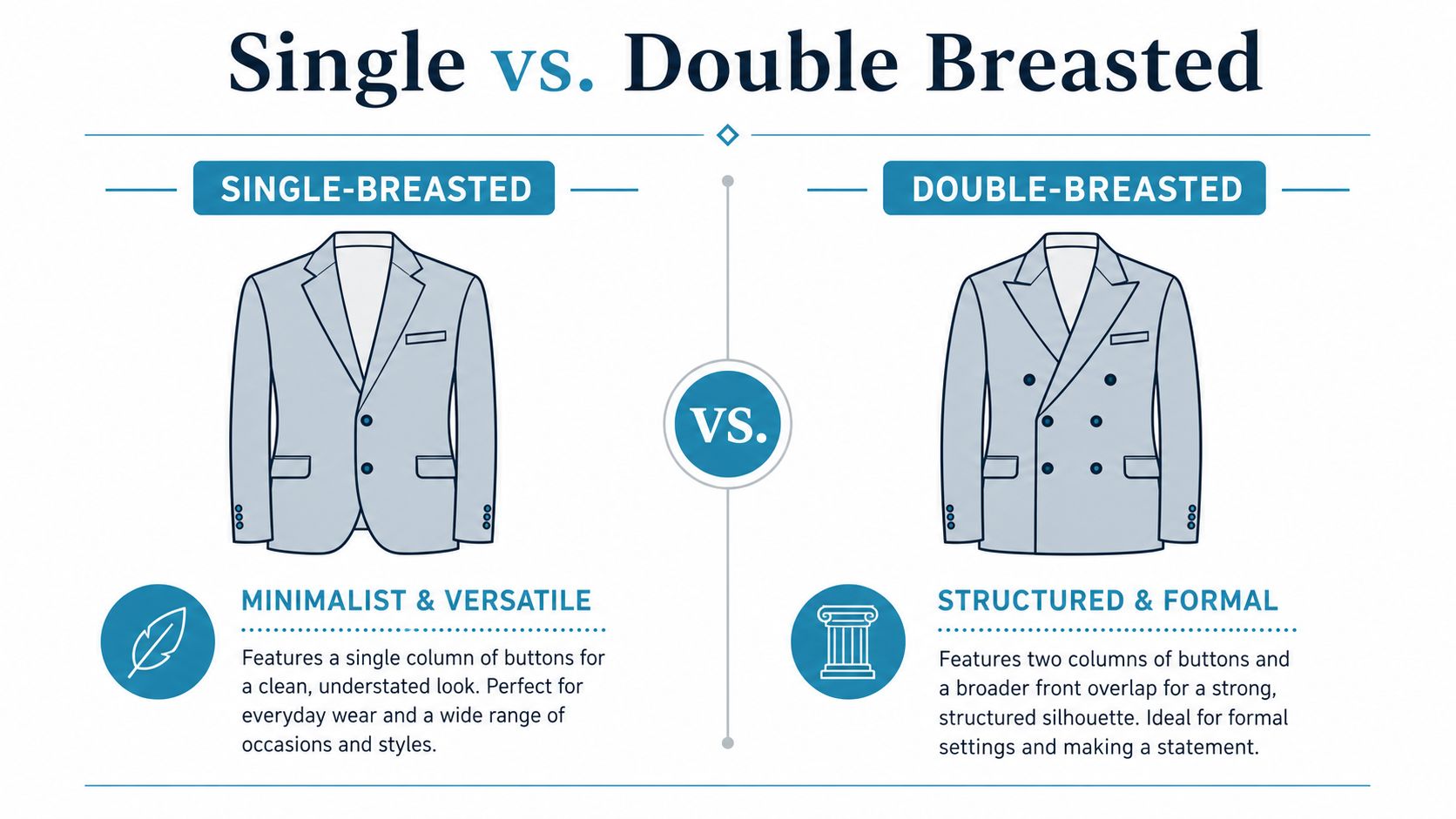
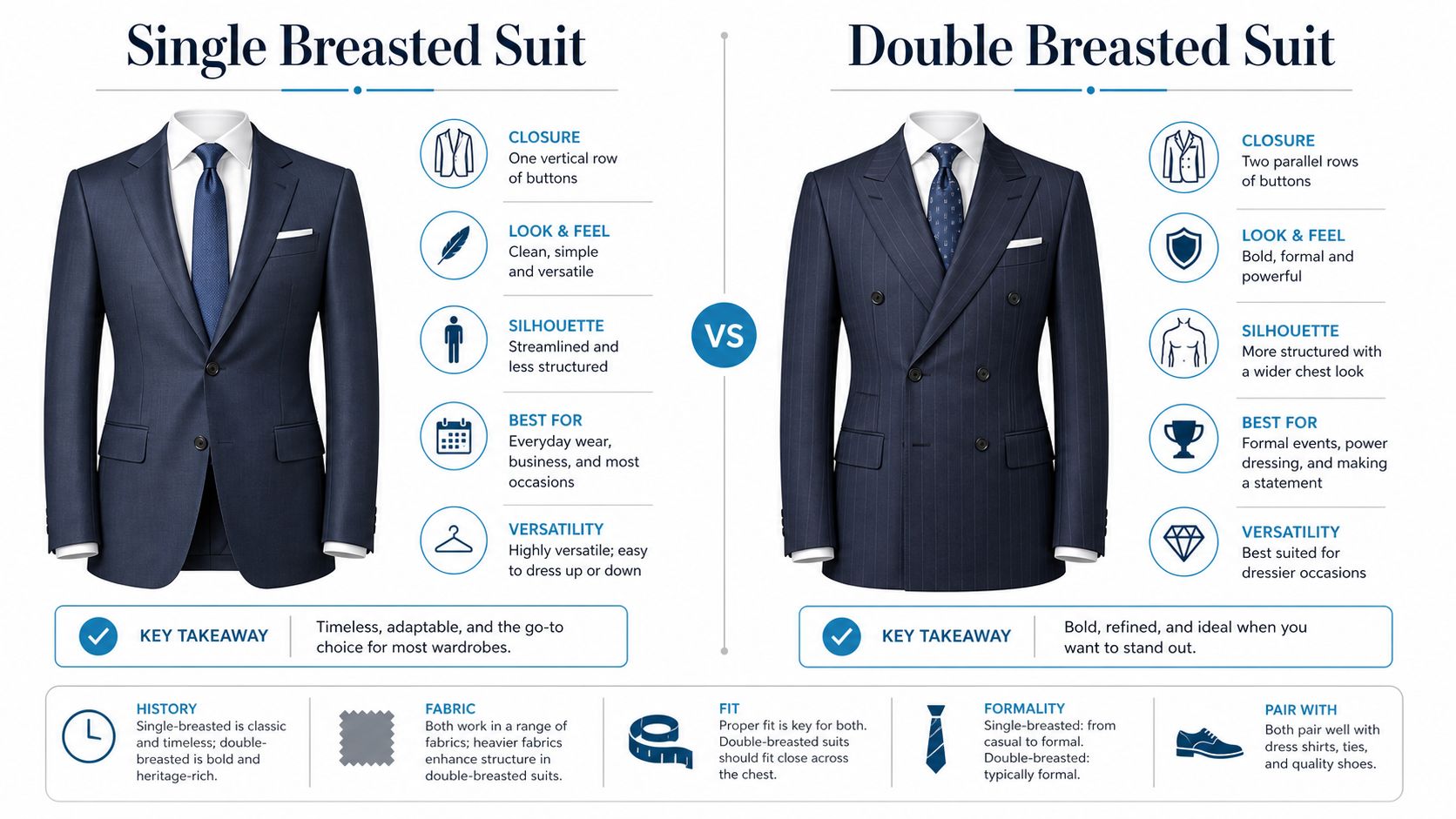
Standing in front of the mirror, the difference becomes obvious fast. A single breasted suit gives the body more freedom in motion and in reading, because the front can sit open or close lightly without much visual interruption, while a double-breasted jacket is cut to stay controlled and project a more deliberate front (wearing rules).
Shape, formality, and ease
The more versatile choice is usually the single breasted suit, while the double-breasted suit brings more structure and a stronger sense of formality (versatility comparison). You see that first in the chest. A single breasted front keeps the profile lower in bulk and cleaner through the torso, which helps in business dress and in settings where refinement matters more than display. A double-breasted front adds visual weight, and with it a firmer posture.
Construction details change that effect more than people expect. Button stance, lapel width, and waist suppression all alter how the jacket sits on the body, and the same cloth can look restrained or assertive depending on those choices. A higher button point shortens the visible torso, a lower one lengthens it. Wider lapels broaden the chest line, narrower ones quiet it down.
For most wardrobes, the first suit should usually be single breasted. It works with more shirts, more ties, and more occasions, and it is easier to keep looking right when the jacket is built with discipline. The double-breasted jacket can be excellent, but it asks more of the wearer, and more of the fitting room.
When each one earns its place
A single breasted jacket works best when adaptability matters. It can sit properly with conservative business cloth, yet it also handles less formal styling, especially when the button line is clean and the lapel is not overbuilt. A double-breasted jacket makes more sense when the brief calls for presence, structure, and a sharper old-world silhouette.
If you want a practical side-by-side reference before choosing, Dandylion Style's single-breasted versus double-breasted guide is a useful next step.
A single breasted jacket gives you room to loosen the mood. A double-breasted jacket decides the mood for you.
Choosing the Right Cut for Your Body Shape
The phrase “single breasted suits suit everyone” is too blunt to be useful. The better question is which cut details make one man look cleaner through the torso while another needs more shoulder, more lapel, or a lower button stance. That's where tailoring earns its keep.
Broad shoulders and fuller chests
A broad-shouldered man usually looks best when the jacket doesn't fight his frame. A balanced shoulder, a moderate lapel width, and a measured waist suppression keep the body looking controlled rather than boxed in. Too much structure can make the upper body feel heavy, while too little shape can make the jacket collapse.
For a fuller chest, the single breasted front is often kinder than a double-breasted alternative because it reduces front bulk and keeps the eye moving vertically. The cleaner front helps the body read as one line, not as overlapping cloth. A notch lapel usually works well here because it supports the jacket without crowding the chest.
Narrow frames and shorter builds
A narrower frame needs proportion more than drama. A well-set button stance can create the suggestion of length, while a lapel that isn't too wide prevents the jacket from overwhelming the wearer. The shoulder line matters as well. A tidy, structured shoulder can give shape without forcing the body into a silhouette that doesn't belong to it.
Tailor's rule: shape should support the body, not imitate somebody else's build.
What to ask for at fitting
The vocabulary matters because the details change the outcome. Ask about these points, then judge the jacket in the mirror rather than on the hanger:
- Button count, because 2-button and 3-button fronts break the torso differently.
- Lapel width, because wider lapels add presence and narrower ones reduce visual weight.
- Shoulder structure, because a firmer shoulder can balance a frame that needs definition.
- Waist suppression, because too much squeeze creates strain and too little leaves the jacket boxy.
- Trouser taper, because the trouser line has to support the jacket's shape, not fight it.
If you're measuring at home before a consultation, the fitting notes in Dandylion Style's measuring guide are worth using carefully.
Button Configurations and Wearing Rules
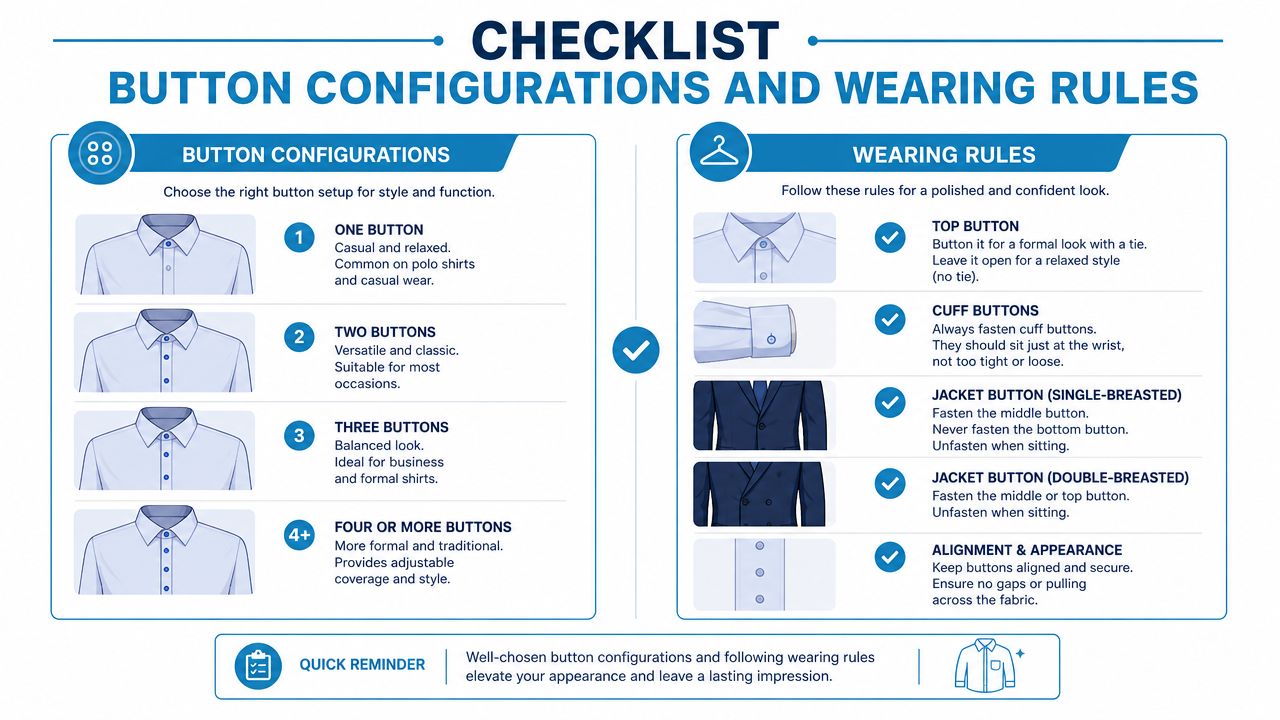
The button arrangement changes the temperament of a jacket more than most men realise. A 1-button, 2-button, or 3-button single breasted suit can all look correct, but each one changes the V-shape, the amount of shirt visible, and the jacket's tone. The issue is not preference alone. Button stance, lapel width, and waist suppression all work together, and they change how wide, long, or upright the body reads in the mirror.
How the common button counts behave
The 2-button jacket is the standard choice for good reason. It gives a balanced chest line, keeps the front open enough to avoid heaviness, and usually suits a wide range of builds because it sits between formal and relaxed in the right way (button configuration guidance). A 1-button jacket pushes the opening lower and deeper, so it reads more like evening dress or a sharper fashion piece. A 3-button jacket sits higher on the torso and creates a shallower V, which can add structure on a taller frame but can also feel crowded if the jacket is cut too high in the chest.
These differences matter because the button stance sets the visual break. A lower stance can lengthen the torso and draw the eye down the front of the jacket. A higher stance can shorten that line but add a sense of control and formality. On a fuller midsection, the wrong stance can make the coat look strained or boxy. On a leaner body, it can leave too much empty space and weaken the shape.
Fastening the jacket properly
A single breasted jacket can be worn open, or with one to two buttons fastened, depending on the cut and the setting (wearing mechanics). That flexibility is part of its appeal. The aim is not to button everything by habit, it is to let the jacket sit cleanly from the chest and carry the waist with control.
The usual mistakes are easy to spot. Men button too high and crowd the lapel roll. They fasten the jacket while seated and pull the cloth across the stomach. Or they leave the jacket open when the cut needs one button to settle the front and keep the line tidy. A jacket that closes properly should look calm, not tight, and it should still move with the body instead of fighting it.
What the fit should look like
A good button stance supports the torso rather than splitting it badly. The lapel should lie flat, the front should close without obvious tension, and the jacket should still breathe when you move. If the middle looks stressed, the size or the balance is wrong, not your posture.
For a practical reference on button placement and fastening habits, Dandylion Style's button guide is useful to keep beside the fitting notes.
Styling for Every Occasion
A single breasted suit earns its keep because it moves through different rooms without asking for a different wardrobe. The same jacket can work for a board meeting, a wedding, or an evening reception if the cloth, shirt, shoes, and tie are chosen with discipline.
Business and formal daytime wear
For office use, a restrained wool suit in navy or charcoal keeps the look professional and calm. A white or pale blue shirt, a conservative tie, and polished black or dark brown shoes keep the front clean. The jacket should stay close to the body without clinging, because business tailoring rewards neatness more than novelty.
For a wedding guest outfit, the same single breasted suit can soften slightly through the accessories. A textured tie, a pocket square with a little life in it, or a lighter shirt can move the outfit away from office mode without turning it casual. The jacket still does the heavy lifting.
Evening and seasonal adjustments
At dinner, a darker cloth with a smoother finish starts to feel more intentional. A single breasted jacket with a deeper V can look elegant with a crisp shirt and reduced accessory noise. For warmer weather, lighter cloths and softer structure keep the suit from feeling over-engineered, while heavier cloths suit colder months and more formal occasions.
The suit doesn't change, but the cloth and accessories decide whether it speaks softly or sharply.
A single breasted suit is also the easiest formal jacket to adapt when the brief shifts. It can sit cleanly in a gentleman's business wardrobe, then move straight into social wear by changing the shirt, tie, and shoe. That's why so many men return to it after experimenting with louder cuts.
If you're commissioning one garment to do the most work, Dandylion Style's bespoke suit service is built around that kind of practical use.
The Bespoke Commission Process
A bespoke single breasted suit should feel orderly from the first conversation. At a proper tailoring house, the work starts with use, posture, and the silhouette you want, then moves into cloth, cut, and balance before the jacket is ever finished. Dandylion Style works with fine British fabrics such as tweed, cashmere, linen, wool and mohair, and the studio's commissions typically complete in 8 to 12 weeks. For bespoke service details, that first discussion is where the shape begins to make sense.
What usually happens
The first meeting is about decisions, not salesmanship. You talk about where the suit will be worn, how much structure you want through the shoulder, and whether the front should feel firm or relaxed. After that, the tailor takes measurements and decides how much suppression, drape, and balance the cloth can support.
Those choices change the jacket more than many clients expect. A higher button stance can draw the eye upward and make the torso look longer. A lower stance opens the front and gives more room through the chest, which can suit a broader build or a man who dislikes a tight midsection. Lapel width works the same way, since a broader lapel adds presence and a narrow one can calm a strong chest or keep a smaller frame from being overwhelmed.
The fabric choice matters immediately. Wool gives dependable year-round wear, tweed adds weight and texture, linen gives breathing room in warmer weather, cashmere softens the feel, and mohair can add crispness and sheen. Each one changes how the single breasted front hangs, which is why cloth and construction should never be chosen separately. If the waist is cut too hard in a soft cloth, the jacket can pucker. If the structure is too light in a heavy cloth, the front can lose authority.
Pricing and appointment style
Transparent pricing helps set expectations. Bespoke two-piece suits start at £1,495, while three-piece options start at £1,795. That is the level where the client is paying for a shaped garment, not just a label. A suit can also be discussed in studio, at home, or at an office appointment across Sussex, London, and the South East, which is useful when schedules are tight.
The appointment style matters because it affects what you can judge properly. In the room, you can see how the jacket behaves when you stand, sit, and move your arms, which tells the tailor whether the shoulder line is too square or the waist suppression is too aggressive. At home or in the office, the process is more practical for men who need fittings around work, and it often gives a clearer sense of how the suit will live in the wardrobe.
You'll get the best result by being honest about use. A suit for commuting every week needs different cloth and internal support from a suit for one wedding season. Tell the tailor how you live in the garment, not how you wish you dressed.
Frequently Asked Questions
Is a single breasted suit always the safest first purchase?
For most men, yes. The single breasted cut is the most adaptable because it works across office wear, weddings, interviews, and many evening settings. Its cleaner front and simpler button line make alterations easier to read in the mirror, which helps when you're building a wardrobe that has to do real work. The safest version is usually a two-button jacket in a disciplined cloth.
What lapel works best on a single breasted suit?
The notch lapel is the most natural choice for everyday tailoring because it stays clean and restrained. A wider lapel can add presence, while a narrower one can calm a strong chest or a smaller frame. The right answer depends on proportion, not trend. If you want a jacket that moves easily between business and social wear, notch lapels usually give the least resistance.
Can a single breasted suit look formal enough for important events?
Yes, if the cloth and finish are right. Formality doesn't come only from the jacket front, it comes from the jacket's structure, the quality of the cloth, and how carefully the rest of the outfit is built. A single breasted suit in a sober wool with a sharp shirt and proper shoes can look entirely appropriate for many serious occasions, including weddings and business events.
How should I store a single breasted suit?
Store it on a broad, shaped hanger so the shoulder line keeps its form. Don't cram it into a crowded wardrobe, because the front and lapel need room to recover after wear. Let it air before putting it away, and keep the trousers hung neatly rather than folded where possible. Good storage preserves the jacket's balance, which matters more on a clean single breasted front.
Can alterations fix a bad fit after delivery?
Sometimes, but not always. Sleeves, trouser length, and minor waist adjustments are usually manageable. Shoulder problems, chest strain, and poor balance are much harder to rescue cleanly. If the jacket pulls badly at the button or sits awkwardly across the shoulders, the issue may be structural rather than cosmetic. That's why the first fitting matters more than any later tweak.
About the Author
Igor is the founder of Dandylion Style, a bespoke tailoring house in Ardingly, West Sussex, where the focus is on calm fittings, precise cut, and honest guidance. He works with gentlemen's tailoring across business wear, weddings, and formal dress, using fine British cloths and a measured approach to shape, balance, and comfort. His strength lies in turning technical fit decisions into garments that feel natural on the body.
A CTA for Dandylion Style.