When it comes to dressing sharply through the sweltering heat of summer, a summer suit linen garment isn't just an option; it's the definitive choice. It brings an unparalleled level of breathability and a uniquely relaxed elegance to the table. Its natural fibres are your secret weapon against the heat, actively working to keep you cool, making it a functional and stylish ally when temperatures soar.
This perfect marriage of comfort and class is what truly sets linen apart from every other suiting fabric out there.
Key Takeaways
Superior Comfort: Linen's natural hollow fibres make it exceptionally breathable and moisture-wicking, offering unparalleled comfort in warm weather compared to cotton or wool.
Styling Versatility: A linen suit is a sartorial chameleon, easily styled for formal weddings, smart-casual office wear, or broken into separates for relaxed weekend looks.
Embrace the Wrinkle: The characteristic creasing of linen is not a flaw but a hallmark of its authenticity and relaxed charm. Gentle steaming is preferable to harsh ironing for maintenance.
Bespoke is Best: A bespoke linen suit ensures a perfect fit that works with the fabric's natural drape. Construction details like unlined or half-lined jackets are crucial for maximising breathability.
Why a Linen Suit Is Your Ultimate Summer Ally
As the mercury climbs, trying to maintain a polished look can feel like a losing battle. Heavier fabrics, like your trusty wool suits, become your enemy, trapping heat and leaving you feeling flustered and uncomfortable. This is precisely where the magic of a well-cut linen suit becomes crystal clear, turning a summer wardrobe challenge into an opportunity for effortless style.
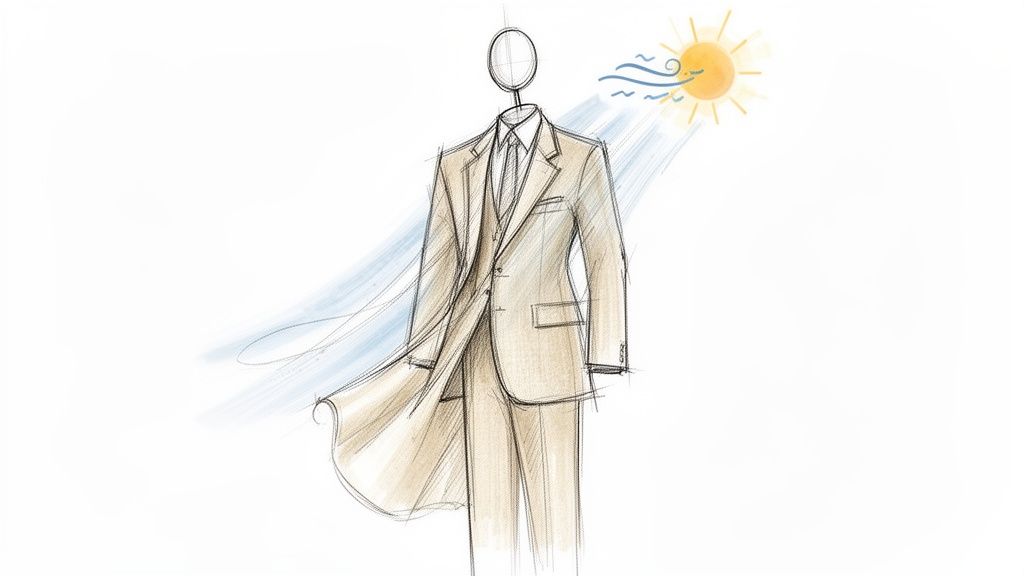
The secret is woven right into the structure of the flax plant fibres that linen is made from. These fibres are naturally hollow, which allows air to circulate freely through the fabric. Think of it as a natural, built-in ventilation system for your suit. It actively pulls moisture away from your skin and dries out incredibly quickly.
The result? A garment that helps regulate your body temperature, keeping you cool and collected through every outdoor wedding, garden party, or sun-drenched business meeting on your calendar.
A Clear Comparison
To truly appreciate linen, it helps to see how it stacks up against other summer contenders. Cotton is breathable, sure, but it has a nasty habit of holding onto moisture for far too long. Seersucker, with its distinctive puckered texture, is great for airflow but often lacks the formal drape and structure of a beautifully tailored linen suit.
To put it plainly, here’s how they compare.
Summer Suiting Fabric Comparison
Fabric
Breathability
Moisture-Wicking
Drape and Texture
Best For
Linen
Excellent
Superior
Relaxed, naturally textured
Smart-casual to formal summer events
Cotton
Good
Moderate
Crisp, structured
Versatile daily wear, less formal
Seersucker
Excellent
Good
Puckered, lightweight
Casual social gatherings
Ultimately, linen’s unique combination of high breathability and rapid moisture-wicking makes it the superior choice for staying comfortable without sacrificing an ounce of sartorial elegance. For a deeper dive into material properties, you can explore our guide on the best fabrics for suits and see how different cloths measure up for year-round wear.
This inherent functionality, paired with its timeless look, makes a summer suit linen garment more than just clothing. It’s an essential piece of engineering designed for the stylish gentleman.
The Rich Heritage of British Linen Tailoring
To really get to the heart of a modern summer suit linen garment, you have to look back. Way back. Its story is deeply woven into British history, long before it became the definitive choice for warm-weather elegance. Linen wasn't just a fabric; it was a powerhouse of industry, empire, and the very foundation of the nation's textile trade.
It all starts with flax, the humble plant that gives us linen. The fibres are incredibly strong and durable, making them indispensable for everything from the sailcloth that powered the Royal Navy to the hard-wearing work clothes for a nation building an empire. It was a practical, resilient textile—the tough, reliable backbone of British industry.
From Industry to Sartorial Icon
So, how did this workhorse fabric become a symbol of refined style? The shift was gradual, but profound. As British influence spread to warmer corners of the globe, gentlemen and officials needed clothing that was respectable yet bearable in the heat. Linen, with its natural breathability and light weight, was the obvious answer.
This practical necessity cemented linen's status in high society. It became the fabric of choice for summer wardrobes, synonymous with leisurely afternoons, colonial life, and the effortless style of a man who could afford to look crisp and cool, even when temperatures soared.
"Linen's journey from the factory floor to the grand estate is a perfect illustration of its dual character. It possesses a rugged durability that speaks to its industrial past, yet drapes with an effortless grace that defines timeless summer style."
This dual heritage is what gives a linen suit its unique personality today. It carries a legacy of both British pragmatism and understated elegance—a combination that remains incredibly compelling. You can see this spirit captured perfectly in our story about quintessentially British tailoring meeting Sicilian summer sunshine.
The Rise of a Textile Powerhouse
The industrial growth of linen production in the UK, particularly in Scotland, was nothing short of astonishing. After the 1707 Union with England removed export duties, the Scottish linen industry exploded. By 1710, Scottish mills were churning out over 1,500,000 yards of linen cloth every year. A decade later, England alone was importing £200,000 worth of Scottish linen annually, proving just how vital the fabric had become to British wardrobes.
This huge production capacity meant linen was widely available, allowing the master tailors on Savile Row and beyond to experiment with it. They learned to master its unique qualities—its tendency to crease elegantly, its light handle, and its incredible coolness—to create garments that were as beautiful as they were functional.
Choosing a summer suit linen today is about so much more than just staying cool. It's an investment in a piece of sartorial history, a nod to centuries of British craftsmanship that turned a simple plant fibre into an enduring icon of style.
Decoding Linen Fabric Weaves and Suit Construction
To truly appreciate a summer suit linen garment, you need to get under the bonnet and understand what makes it tick. The choice of fabric—whether it’s pure, unadulterated linen or a clever blend—and the way the suit is put together are what separate a good summer suit from an exceptional one. These details dictate how the suit feels, performs, and looks when the temperature climbs.
It all starts with the cloth itself. While 100% linen is the purist's choice, loved for its signature crisp texture and incredible breathability, modern tailoring has embraced blends that cleverly refine its natural tendencies. Each combination strikes a different balance between comfort, appearance, and practicality.
Pure Linen vs. Linen Blends
Think of 100% linen as a classic roadster: full of character, a bit spirited, and unapologetically itself. It develops creases that tell a story, creating that relaxed patina many of us actively seek. But for those who want that summer comfort with a slightly smoother ride, blends are a fantastic route to take.
Here are a few of the most popular pairings:
Linen-Cotton: Adding cotton softens the feel of the fabric and tames some of linen’s more enthusiastic wrinkling. This blend is a brilliant entry point into linen tailoring, giving you a great balance of crispness and comfort.
Linen-Wool: This is a masterful combination. Wool lends its natural springiness and crease-resistance, helping the suit bounce back into shape, while the linen keeps the whole garment feeling light and airy.
Linen-Silk: For a touch of lustre and a more fluid drape, silk is the perfect partner for linen. This blend creates a more luxurious cloth that’s spot-on for smarter summer events, like weddings.
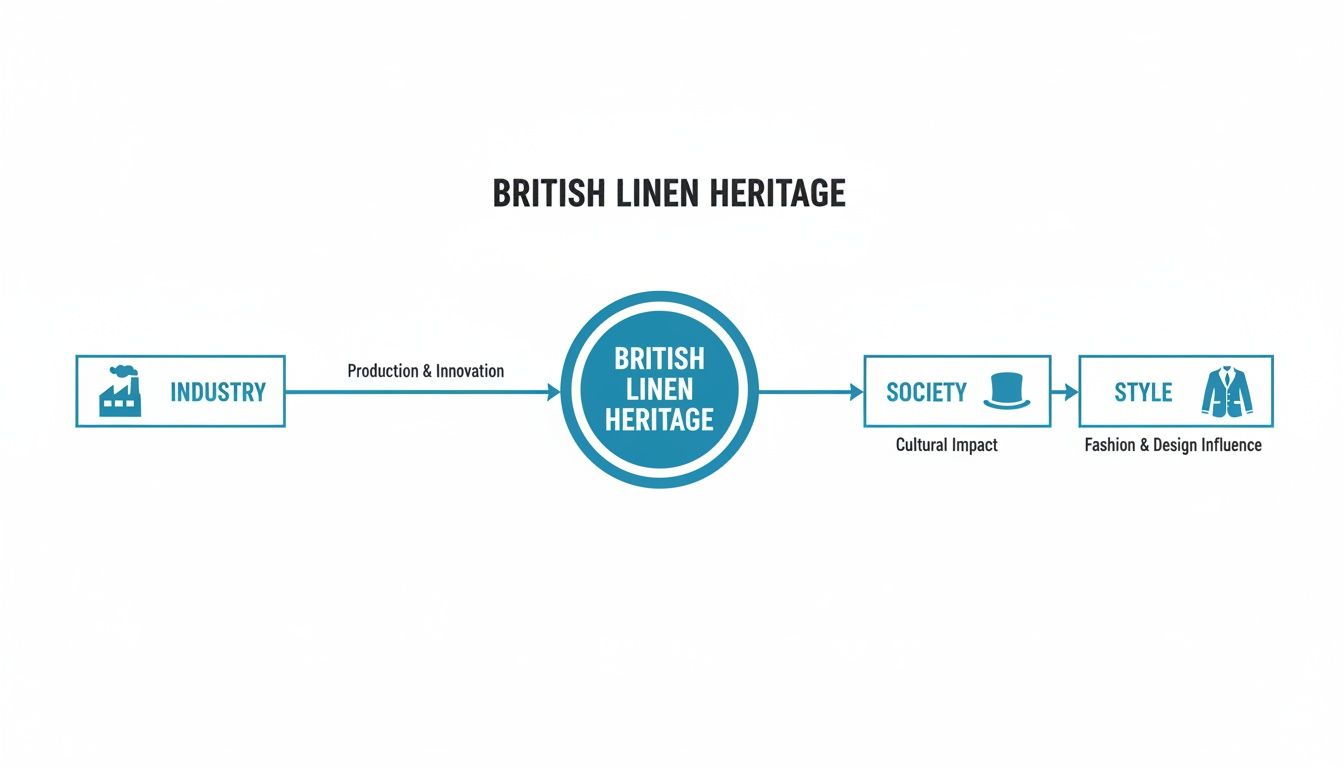
Linen has a deep-rooted history in Britain, evolving from an industrial workhorse into a cornerstone of sophisticated style, as the diagram below illustrates.
This journey shows how linen's practical strengths eventually saw it adopted by high society, cementing its place in the world of high fashion.
The Importance of Suit Construction
Here’s a crucial point: even the most breathable fabric in the world can be suffocated by poor construction. The lining and internal structure of a jacket are just as important as the outer cloth for staying comfortable in the heat. This is where bespoke tailoring really comes into its own, offering construction methods designed specifically for warm weather.
Back in the 18th century, England was a powerhouse of linen production, at one point making more than Scotland and Ireland combined. By the mid-1700s, English mills were churning out around 3 million yards a year. This boom was partly driven by government efforts to cut down on imports—linen made up 15% of all goods brought into England. This industrial might, especially in places like Yorkshire and Lancashire, gave tailors the raw material they needed to perfect their craft.
When it comes to a summer suit, less is definitely more.
A beautifully made summer suit should feel almost weightless. The goal of unstructured or soft tailoring is to remove every unnecessary layer, allowing the linen to breathe and move with you as intended.
The best construction options for a summer suit linen jacket are:
Unlined: This is the ultimate choice for breathability. With no lining at all, air flows directly through the linen weave for maximum cooling. The seams are meticulously finished—a technique called 'buggy-lining' or 'self-lining'—which is a true hallmark of quality craftsmanship.
Half-Lined: A brilliant compromise. The jacket is lined only across the shoulders and upper back, which helps it glide on smoothly over a shirt and maintains a little structure, while the lower back is left unlined for ventilation.
These techniques, often known as soft tailoring or creating an unstructured jacket, mean stripping away the heavy canvas, padding, and linings you’d find in a winter suit. The result is a garment that drapes naturally, feels incredibly light, and offers unparalleled comfort. When you're ready to explore these choices, our bespoke service allows you to design a suit with the perfect construction for your needs.
How to Style Your Linen Suit for Any Occasion
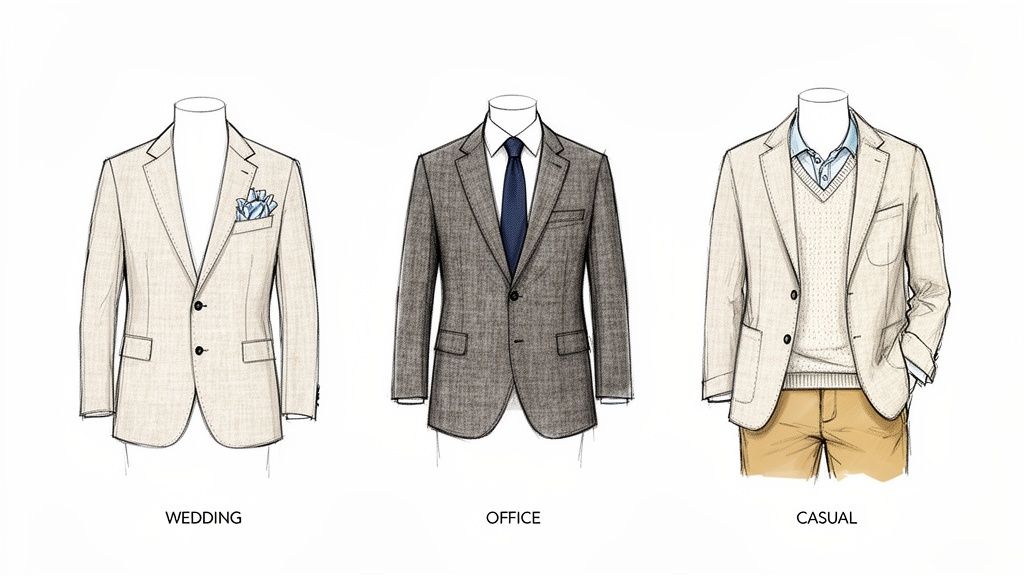
The real magic of a good summer suit linen piece is just how adaptable it is. Forget thinking of it as a one-trick pony for a specific event; it’s a sartorial chameleon, effortlessly shifting to suit different dress codes with just a few clever tweaks. Once you get the hang of styling it, a linen suit transforms from just another suit into the absolute workhorse of your warm-weather wardrobe.
Whether you’re heading to a sun-drenched wedding, navigating a stuffy office, or just enjoying a relaxed weekend, your linen suit has your back. The secret is knowing how to switch up the supporting cast—your shirt, shoes, and accessories—to perfectly match the scene.
The Summer Wedding Guest
For a summer wedding, the goal is elegance without suffering in the heat. A beautifully tailored linen suit in a light, celebratory colour is an impeccable choice, hitting that sweet spot between looking sharp and feeling comfortable.
And please, think beyond the standard beige. Sophisticated shades like stone, light grey, or a soft sky blue provide a much more refined canvas to build upon. A crisp white poplin shirt is non-negotiable here; it provides a sharp, clean contrast that anchors the whole look.
From there, it’s all about the details.
Footwear: Go for polished leather loafers (sockless, of course), suede Derbies, or even classic Oxfords. Stick to shades of tan, brown, or perhaps a deep navy.
Neckwear: A silk knitted tie is a brilliant move. It adds texture and a touch of formality without feeling remotely stuffy. If a tie feels like too much, a subtly patterned pocket square can inject a dash of personality on its own.
Details: Finish things off with a quality leather belt that matches your shoes and a classic watch.
This combination ensures you look put-together and respectful of the occasion, all while staying cool and collected through the canapés and speeches. You want to look intentional, letting the suit’s relaxed nature whisper, not shout.
The Professional in the Heat
Wearing a suit to the office in July doesn’t have to feel like a punishment. While a light-coloured linen suit might read a bit too ‘day at the races’ for some corporate settings, darker shades and smart blends are a fantastic workaround.
A suit in navy, charcoal, or olive green linen—often blended with a touch of wool for better crease resistance—keeps things professional while delivering that all-important breathability. Here, structure is key. Pair it with pieces that reinforce a business-like feel, like a light blue or subtly striped formal shirt.
Wearing linen to the office is all about managing perception. By choosing darker tones and pairing them with traditional business accessories, you retain an air of authority while enjoying the superior comfort the fabric provides.
Picture this: a navy linen-wool blend suit, a light blue shirt, and dark brown suede brogues. It projects confidence and competence. It shows you know how to dress for business without melting in the heat. For more on this, it's worth exploring some general outfit styling principles to build a truly versatile professional wardrobe.
The Art of Casual Separates
Perhaps the greatest strength of a summer suit linen is its ability to be broken apart. Wearing the jacket and trousers as separates multiplies their usefulness, giving you a seemingly endless roster of smart-casual options for weekends and relaxed evenings out.
This is where your suit’s personality can really come out to play. The softer, unstructured nature of a linen jacket makes it the perfect warm-weather stand-in for a traditional blazer or sports coat.
Styling the Jacket:
Throw your linen jacket over some stone or navy cotton chinos for a timeless smart-casual look.
For an even more relaxed vibe, wear it over a high-quality knit polo or a simple, well-cut crew-neck t-shirt.
Try a beige jacket with crisp white trousers for that classic, Riviera-inspired aesthetic. We go into much more detail on mastering this particular combination in our guide to the white linen suit.
Styling the Trousers:
Linen trousers are a summer style hero in their own right. Pair them with an open-collar shirt and some loafers for an outfit that’s stylish without even trying.
For a truly laid-back look, you can’t go wrong with leather sandals and a simple, well-fitting t-shirt or a breezy short-sleeved shirt.
By deconstructing the suit, you create a modular wardrobe system that can be adapted to almost any non-formal summer situation. It’s the smartest way to get maximum value and style from your investment, making sure every piece is pulling its weight all season long.
Commissioning Your Bespoke Linen Suit
This is where all the theory, the fabrics, and the style ideas come together to create something tangible. Choosing to commission a bespoke linen suit isn't just buying clothes; it's a collaborative, creative process. It’s a journey that starts with an idea and ends with a perfectly fitted garment that is yours and yours alone, guided every step of the way by an expert tailor.
An off-the-peg linen suit often fights a losing battle with the fabric's unique character, resulting in a poor fit and an unflattering drape. A bespoke approach, on the other hand, is built to embrace these challenges from the very beginning. Our master tailor, Igor, knows exactly how to cut and shape linen to work with its natural tendencies, not against them. This ensures the final garment hangs flawlessly and complements your physique in a way a mass-produced item simply never could.
Think of this as a partnership, one built on our expert guidance and your personal vision.
The Bespoke Process at Dandylion Style
Embarking on a bespoke commission is a calm, considered process designed for one thing: the perfect result. This isn't about speed; it's about precision and personalisation. We take the guesswork out of it, ensuring you feel confident and involved at every single stage.
The journey typically follows these key steps:
Initial Consultation: This is where we get to the heart of your vision. You’ll sit down with Igor to talk through your needs, personal style, and the occasions you have in mind for the suit. Together, we'll explore fabric swatches, lining options, and all the fine design details.
Measurements and Cutting: We take a comprehensive set of measurements to create your unique paper pattern. This pattern is then used to hand-cut your chosen linen cloth—a foundational step that is absolutely crucial for a superb fit.
Fittings: You'll have a series of fittings where the partially constructed suit is tried on. This is where the magic happens, allowing for meticulous adjustments to be made directly on your body, refining the silhouette until it's absolutely perfect.
Even today, the modern UK textile scene reflects linen's lasting appeal, though imports now dominate the market. In 2023, the UK imported £24.8 million worth of bed linen while exporting just £2.2 million, highlighting a reliance on overseas supply. As import costs rise, choosing a local bespoke linen suit from a house like Dandylion Style isn't just a style choice—it's a commitment to superior British craftsmanship. You can discover more insights about UK textile trends on ibisworld.com.
The essence of bespoke is control. Every single element, from the width of the lapel to the stance of the buttons, is decided by you, with our expert advice. It’s the ultimate expression of personal style.
The entire process, from that first conversation to collecting your finished suit, typically takes between 8–12 weeks. This timeline allows for the painstaking handwork and multiple fittings required to achieve an impeccable result. Pricing for a bespoke two-piece suit begins at £1,495—an investment in an enduring garment made just for you.
Maintaining the Character of Your Linen Suit
A well-made summer suit linen garment is a true sartorial investment, designed to be a cornerstone of your wardrobe for many years to come. But to ensure its longevity, you need to understand how to care for it. The trick is to work with the fabric’s unique nature, not against it.
Let's be honest, many gentlemen are put off by linen because of its famous tendency to crease. But here’s the thing: those wrinkles aren't a flaw. They are the very hallmark of the fabric's authenticity, a core part of its relaxed, devil-may-care charm. The goal isn’t to steam it into rigid submission, but to manage the creases with a light touch, keeping the suit looking sharp yet effortlessly lived-in.
Think of the wrinkles on a linen suit like the patina on a fine piece of leather. They aren't a problem to be solved; they tell the story of a day well-lived, adding character and personality to the garment.
Cleaning and Pressing
When it comes to linen, a gentle hand is always best. For minor marks or simply to freshen it up after a day out, spot cleaning and hanging the suit in a well-ventilated space is often all that’s needed. When a full clean is necessary, trust it to a professional dry cleaner to protect the suit’s bespoke structure.
Now, step away from the traditional iron. Its harsh, direct heat can flatten and damage the delicate linen fibres. Your greatest ally here is a handheld steamer. Gently steaming the suit will relax the major creases from wear or being packed in a suitcase, all without destroying the fabric’s wonderful natural texture. A great travel hack? Hang it in the bathroom while you take a hot shower; the steam will work its magic.
Storing Your Linen Suit
How you store your suit between wears is just as important as how you clean it. Following these simple steps will ensure it’s always ready for the next sunny occasion.
Use the Right Hanger: Never hang your jacket on a thin wire hanger. Always use a substantial, wide hanger with curved shoulders. This is crucial for supporting the jacket's structure and preventing the shoulders from sagging or creating ugly puckers.
Give It Room to Breathe: Don't cram your suit into an overstuffed wardrobe. It needs space. Allowing air to circulate helps the fibres relax naturally and ensures any residual moisture evaporates completely.
Consider a Garment Bag: For long-term storage between seasons, a breathable cotton garment bag is your best friend. It protects the suit from dust while allowing air to flow, preventing the trapped moisture and potential for mildew that can happen with plastic bags.
Frequently Asked Questions about Linen Suits
Is a 100% linen suit a good investment?
Without a doubt. A 100% pure linen suit is a superb investment for any gentleman's summer wardrobe. Its breathability is unmatched, providing comfort in the heat that other fabrics can't touch. While it creases, this is a sign of its authentic, high-quality nature. A well-made linen suit possesses a timeless, relaxed elegance perfect for everything from destination weddings to smart-casual weekends. It is the definitive choice for sophisticated summer style and will serve you well for many years to come.
What colour linen suit is most versatile?
For maximum flexibility, you cannot go wrong with a neutral, light-to-mid tone like stone, beige, or a soft light grey. These shades are sartorial chameleons; they can be styled formally for a wedding with a sharp shirt and tie, or broken into separates for a relaxed weekend. A light blue or navy linen suit also offers fantastic versatility. Navy, in particular, is brilliant for bridging the gap between a smart-casual office and an evening out, providing a perfect canvas for many different looks.
Can I wear a linen suit to a formal wedding?
Absolutely, provided it is a daytime or destination wedding with a summer formal dress code. A beautifully tailored linen suit is more than appropriate. The key is in the styling. Opt for a classic colour like stone, light blue, or navy. Pair it with a crisp white shirt, a silk tie or pocket square, and polished leather loafers or oxfords to elevate the entire look. While not suitable for a strict 'black tie' evening affair, it excels in almost every other smart summer setting.
How do you stop a linen suit from wrinkling?
First, a shift in mindset is required: you must embrace a little creasing as part of linen’s inherent character. That said, you can manage it. When travelling, roll your suit instead of folding it. Upon arrival, hang it in a steamy bathroom to let the creases fall out. A handheld steamer is your greatest ally for stubborn wrinkles, as it's far gentler than an iron. For storage, always use a wide, structured hanger to support the jacket's bespoke shape between wears.
About the Author: Igor, Founder of Dandylion Style
Igor is the founder and master tailor at the heart of Dandylion Style. With a profound appreciation for classic British tailoring and an absolute dedication to his craft, Igor established his bespoke tailoring house in the charming setting of Ardingly, West Sussex. His approach is built on a calm, considered process, where he offers honest, expert guidance to every client. Specialising in exceptional British fabrics like tweed, cashmere, and linen, Igor personally crafts one-of-a-kind suits that are a genuine reflection of the wearer’s own style.
At Dandylion Style, we specialise in creating bespoke garments that reflect your personal style and fit you perfectly. Explore our tailoring services and begin your journey to a flawless summer suit. Learn more at dandylionstyle.co.uk
Key Takeaways The Core Two: Navy blue and charcoal grey are the essential, non-negotiable suit colors for any professional wardrobe. Navy offers versatility and approachability, while charcoal projects authority and seriousness. Context is Crucial: The best suit color...
When you find a piece of clothing you absolutely love, getting the fit just right is the final, transformative touch. But how much should you expect to pay? In the UK, alteration costs can be as modest as £15 for a simple trouser hemming, or climb to £150 and beyond...
Getting the right pink shirt and tie combination is the mark of a well-dressed man. It’s a detail that separates the novices from those who truly understand their wardrobe. For a look that’s classic and can’t miss, pair your pink shirt with a navy, grey, or burgundy...
Key Takeaways For those seeking a quick overview, this section summarises the essential rules and recommendations for incorporating turn-up trousers into your wardrobe. Sartorial Purpose: Turn-ups add weight to the trouser hem, ensuring a cleaner, sharper drape,...
Deciding what colour tie to wear with a pink shirt is a common style query I hear from clients. For a classic, professional look that never fails, your safest and most effective choices are navy blue and charcoal grey. If you're heading to a more contemporary or...
You've just picked up a newly finished bespoke suit, and the cloth still has that clean, disciplined line only a real fitting room can give it. The temptation is to put it straight in the wardrobe and trust the label to do the rest. That's where expensive...
Book Your Tailoring Consultation
Looking for a suit or garment made specifically for you?
At Dandylion Style, we create bespoke and made-to-measure
garments tailored to your individual shape, style and occasion.
From suits and shirts to dresses, waistcoats and alterations,
our experienced tailors can help you create something truly unique.