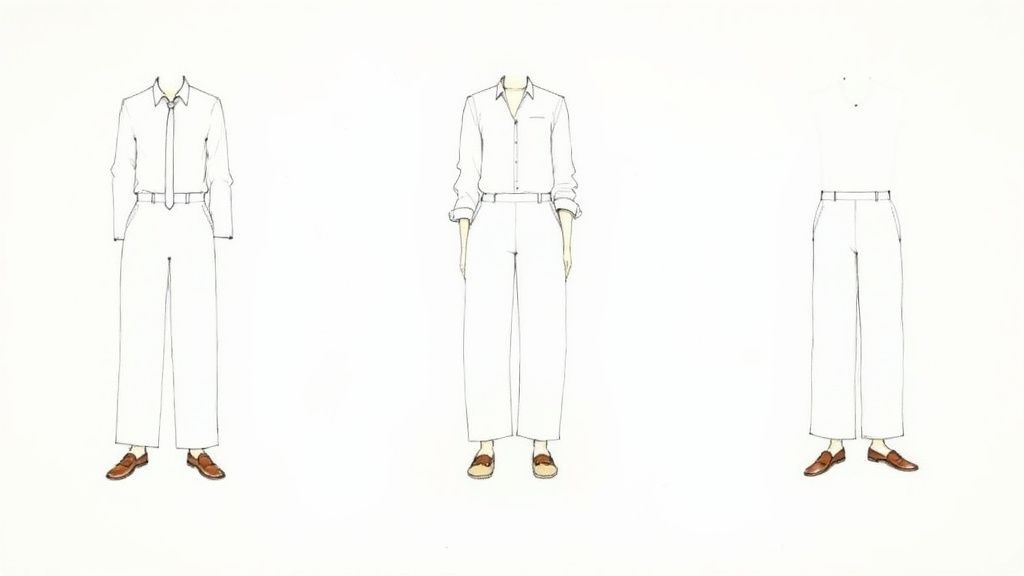
Nothing says warm-weather elegance quite like a white linen suit. It’s the quintessential garment for looking relaxed yet utterly intentional, breathing an air of sophisticated ease that’s hard to replicate. Whether for a summer wedding, a seaside event, or even navigating the city in style, this suit is a surprisingly versatile ally. Mastering it, however, means getting to grips with its unique fabric, nailing the fit, and understanding how to care for it properly.
Key Takeaways
Timeless Style: The white linen suit is an icon of warm-weather elegance, offering a blend of relaxed sophistication and classic style perfect for summer events.
Fabric & Construction Matter: Choose between 100% linen for maximum breathability or a linen-blend for better wrinkle resistance. The lining—unlined, half-lined, or fully-lined—dictates the suit's structure and coolness.
Fit is Paramount: A perfect fit is crucial to avoid looking sloppy. Focus on sharp shoulders, a tapered waist, and trousers with a slight or no break for a clean, modern silhouette.
Versatile Styling: This suit can be dressed up for formal weddings with a tie and leather shoes, or dressed down for casual parties with loafers and an open-collar shirt.
Proper Care is Essential: Professional dry cleaning is a must. Use a steamer to manage natural wrinkles and always store your suit on a proper hanger to maintain its shape.
Your Guide to the White Linen Suit
The white linen suit stands as a beacon of classic menswear, a symbol of effortless confidence that feels just as relevant today as it did in the days of Gatsby and the Riviera. Its enduring appeal comes from a perfect marriage of practicality and pure aesthetic refinement.
Unlike heavier wools, linen is crafted from the fibres of the flax plant, giving us a fabric that is exceptionally lightweight and breathable. This natural ventilation is precisely what makes it the undisputed champion for comfort when the mercury rises.
But its charm goes far beyond just keeping you cool. The suit's crisp, bright appearance projects a sense of sophisticated leisure, making it a powerful statement piece. A well-fitted white linen suit is not just an item of clothing; it's an announcement of impeccable taste.
The secret to wearing linen well lies in embracing its character. Those gentle wrinkles aren't a flaw but a feature, adding to its relaxed and lived-in charm. It signifies a garment that is enjoyed, not just worn.
To give you a quick overview, here's a snapshot of what makes the white linen suit such a distinctive piece.
White Linen Suit At a Glance
Attribute
Key Characteristic
Best Suited For
Fabric
Lightweight, breathable flax fibre
Warm-weather events, summer weddings, holidays
Aesthetic
Relaxed, sophisticated, effortlessly stylish
Seaside gatherings, smart-casual city wear, garden parties
Key Feature
Natural wrinkling, which adds to its character
Embracing a less rigid, more comfortable formality
Styling
Highly versatile with footwear and shirt choices
Pairing with loafers, espadrilles, and open-collar shirts
Care
Requires specific handling (steaming, gentle pressing)
The gentleman willing to maintain his wardrobe
This table captures the essence of the suit, but the real art lies in the details. Throughout this guide, we'll explore every facet of this iconic garment, empowering you to wear it with authority and style. We'll cover:
Fabric and Construction: We will delve into the differences between pure linen and blends, as well as the critical choice between lined versus unlined options.
Fit and Cut: You will learn how to achieve a silhouette that flatters your body type and projects confidence for any occasion.
Styling and Care: We will provide actionable advice for everything from a beach wedding to a business lunch, along with tips for keeping your suit in pristine condition.
Why White Linen Has Timeless Appeal
The white linen suit holds a special place in a gentleman's wardrobe, capturing a sense of relaxed sophistication that few other garments can ever hope to match. Its story isn't just about a particular fabric; it’s about a lifestyle. It represents a journey from purely practical clothing to a powerful symbol of elegance in the heat, cementing its status as a true classic.
Originally, linen was all about function. Woven from flax fibres, its incredibly lightweight and breathable nature made it the default choice for gentlemen navigating the tropical outposts of the British Empire or summering on the sun-drenched Mediterranean coast. It was the only civilised alternative to the heavy wools that dominated European fashion, allowing a man to look sharp even in stifling humidity.
But its appeal quickly transcended pure utility. The suit became synonymous with holidays and high society, adopted by the well-heeled as the unofficial uniform for their summer escapes.
From Practicality to Prestige
The evolution of the white linen suit is a fascinating chapter in tailoring history. What started as a simple necessity for comfort slowly became a visual shorthand for status and leisure. It was the outfit of choice for glamorous destinations like the French Riviera, the Italian coast, and American resorts like the Hamptons.
This shift was powerfully reinforced by its embrace in popular culture. Iconic figures in film and literature, from Jay Gatsby to James Bond, were cast in pristine white linen, forever linking the suit with an aspirational world of wealth, confidence, and worldly charm. Its crisp, bright appearance made a statement, projecting an air of deliberate, unhurried style.
A white linen suit is more than just clothing; it is a statement. It communicates an understanding of context, an appreciation for quality, and an effortless approach to personal style that is never out of place in the summer months.
The very character of the fabric plays a huge role in this. Those gentle, natural wrinkles—what we call the 'slub'—are not a flaw. They're a mark of authenticity. It suggests a garment that is lived in and enjoyed, one that moves with the wearer rather than constricting him.
A Legacy Woven in History
The story of linen itself is deeply woven into European craftsmanship, especially within the UK. During the 18th century, linen production boomed, with Ireland becoming a global powerhouse. Belfast, famously nicknamed “Linenopolis,” was the world’s epicentre for linen manufacturing, producing fabrics of exceptional quality that were exported across the globe. This heritage of British and Irish textile excellence gave the material its prestigious reputation, a legacy that still influences tailors today. You can discover more about the fascinating history of the linen suit and its origins.
Today, the white linen suit continues to hold its esteemed place. It represents a connection to a more elegant era while feeling perfectly at home in the modern world. It is the go-to choice for a whole range of occasions where the aim is to look impeccable without seeming overly formal or buttoned-up.
Summer Weddings: It strikes the perfect balance of formality and comfort for guests and even the groom himself.
Seaside Events: Frankly, nothing looks more at home against a coastal backdrop.
Smart-Casual Gatherings: It can be easily dressed down with an open-collar shirt for a look that is polished yet completely approachable.
Ultimately, the timeless appeal of the white linen suit is rooted in its wonderful duality. It is both practical and aspirational, relaxed yet utterly refined. It’s a garment that doesn’t just tolerate the heat; it embraces it, making style look easy—which is, of course, the highest form of elegance.
Choosing the Right Fabric and Construction
Not all linen suits are born equal. The real secret to a white linen suit that looks exceptional—not just acceptable—is buried in the details of its cloth and the way it's put together. Getting these elements right is the difference between a suit that hangs with a sharp, confident air and one that just looks a bit limp. It's about empowering you to choose a garment that performs exactly how you need it to.
It all starts with the fabric itself. While 100% pure linen is the purist's choice—lauded for its almost legendary breathability and distinctive crisp texture—modern tailoring gives us some fantastic alternatives. Linen blends are not a compromise; they're a clever evolution, mixing in other fibres to fine-tune the fabric's natural traits. A linen-cotton blend, for example, gives the cloth a softer hand and helps tame some of the heavy creasing linen is famous for, resulting in a slightly more structured drape.
Then you have linen-silk blends, which elevate the whole affair with a subtle lustre and an incredibly smooth feel against the skin. Think of these not as cutting corners on quality, but as intelligent tweaks designed to match the suit's performance to your life—whether that’s better wrinkle resistance for a man on the move or a more refined finish for a formal summer soirée.
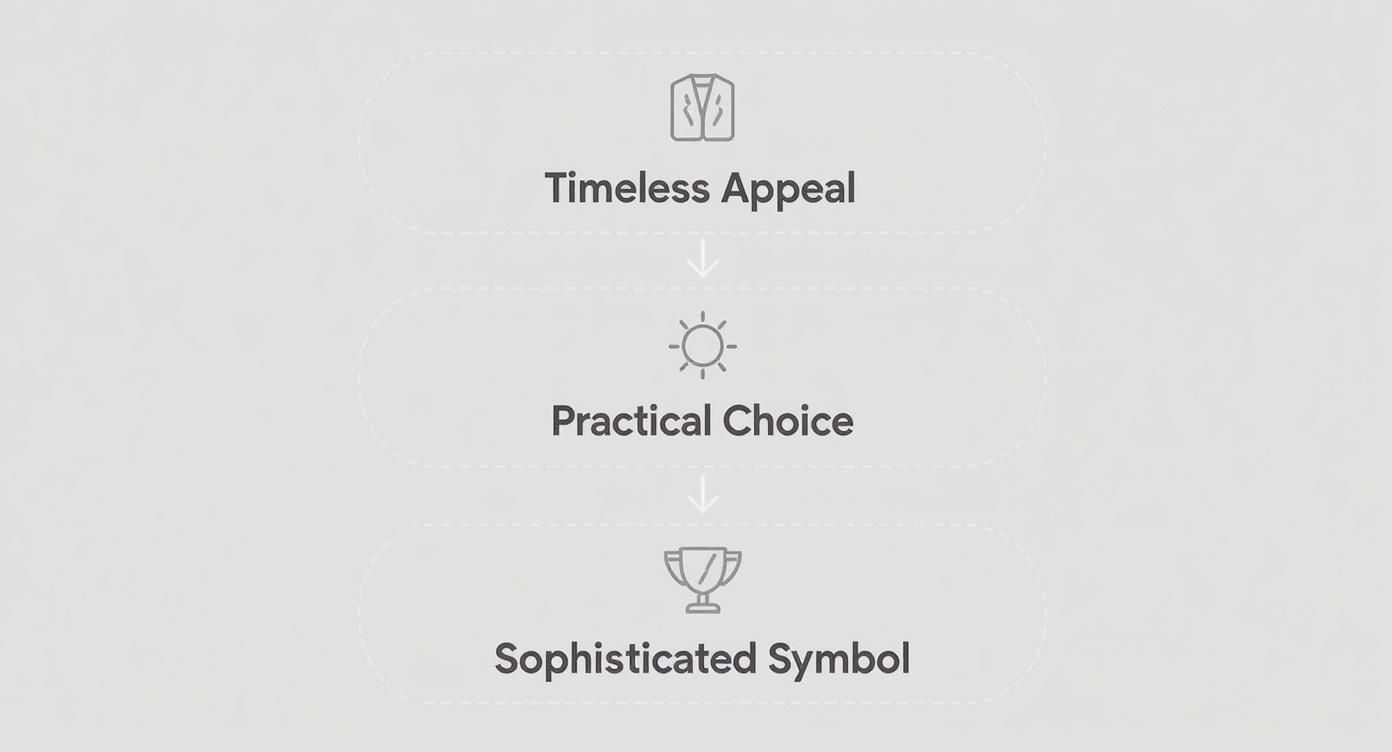
The infographic below really gets to the heart of the white linen suit's appeal, showing its journey from a timeless menswear icon to a genuinely sophisticated and practical wardrobe staple.
This hierarchy shows how the suit's classic image is built upon a foundation of practical, warm-weather benefits, which in turn elevates it to a symbol of impeccable taste.
Lined vs. Unlined: The Great Debate
Look beyond the cloth and you'll find the internal construction—specifically, the lining—which plays a huge part in how the suit actually wears and feels. This choice directly affects its breathability, structure, and comfort. Make the wrong call here, and you could easily undermine the very reason you chose linen in the first place.
A fully-lined jacket, usually with a smooth silk or Bemberg lining, gives you the most structure. It helps the jacket glide effortlessly over your shirt and keeps the silhouette clean and sharp. The trade-off? That extra layer can trap heat, which works against linen’s natural cooling superpower.
The most authentic expression of a summer suit is often found in what it lacks inside. An unlined jacket is a true testament to a tailor's skill, as every internal seam is exposed and has to be finished to perfection.
For what many consider the perfect middle ground, there's the half-lined (or 'buggy-lined') jacket. This clever construction puts lining just across the shoulders and upper back, giving you structure where it counts while leaving the rest of the jacket open for maximum airflow. An unlined jacket is the purest form of summer tailoring. It’s light as a feather and breathes like nothing else, though it does offer the least amount of structure.
Making the Right Choice for You
Your decision should really come down to the occasion and your personal preference. A linen blend might be a more practical ally for business-casual settings, while pure linen truly comes into its own at a laid-back seaside wedding. Similarly, your choice of lining depends on whether you value a crisp silhouette over maximum ventilation. For a bit more inspiration on how fabric can define a suit's entire personality, take a look at our insights on the classic linen suit in black—a garment with a completely different kind of charm.
To help you decide, let's break it down into a simple table.
Comparing Linen Fabrics and Suit Construction
This table will help you understand the key differences between pure linen and blends, and how the choice of lining can completely change the way a suit feels and performs.
Feature
Pure Linen
Linen Blend
Unlined/Half-Lined
Fully Lined
Breathability
Exceptional; the gold standard for hot weather.
Very good, but slightly less than pure linen.
Maximum airflow and lightness, ideal for high heat.
Reduced breathability due to the extra fabric layer.
Wrinkle Resistance
Prone to creasing, which is part of its charm.
Better resistance, especially cotton blends.
Less structure, so can show wrinkles more readily.
Helps the suit hold its shape and resist creasing.
Drape & Structure
Crisp, relaxed, and natural.
Can be softer or more structured, depending on the fibre.
A soft, unstructured silhouette.
Creates a clean, smooth drape and a formal shape.
Best For
High summer, holidays, relaxed weddings.
Business-casual, travel, all-day events.
Beating extreme heat and humidity with style.
More formal occasions, cooler evenings, a sharp look.
Ultimately, choosing the right fabric and construction is a bit like tuning an instrument. You're aligning the garment's properties with your lifestyle and the settings you'll wear it in. Get that balance right, and your white linen suit won't just be a stylish piece of clothing, but a genuinely comfortable and functional part of your wardrobe.
How to Achieve the Perfect Fit and Cut
The real secret to looking exceptional in a white linen suit has nothing to do with the fabric or the occasion—it all comes down to the fit. While linen’s relaxed nature is a huge part of its charm, a poorly fitted suit can slide from stylish to sloppy in a heartbeat. The right cut, however, completely transforms the garment. It projects an air of pure, unstudied confidence and ensures you look sharp, not shipwrecked.
Getting this right demands a keen eye for detail, whether you're buying off-the-rack or commissioning a bespoke piece. You’re aiming for a silhouette that looks both intentional and comfortable, striking that perfect balance between linen's inherent casualness and the clean lines of good tailoring. It should drape cleanly without any pulling or sagging, creating a look of relaxed, deliberate elegance.
The Foundation of a Flawless Fit
The starting point for any great suit is, and always will be, the shoulders. The seam of the jacket must sit squarely on the very edge of your natural shoulder. If it hangs over, the jacket is too big and will immediately create a sloppy, oversized appearance. If it’s too tight, you’ll see the fabric pulling across your upper back and feel restricted—a terrible combination, especially in warm weather.
From there, we look at the jacket's length and waist suppression. For a balanced vertical line, the jacket needs to be long enough to cover your seat. A gentle tapering at the waist is also non-negotiable; it prevents that boxy, unflattering silhouette that can make a linen suit look like a shapeless sack. This subtle shaping is what gives the jacket its elegant form.
A well-fitted suit is the best incentive to stay in shape. When you've invested in a garment that hangs without a single pull or ripple, you appreciate the art of tailoring and the silhouette it creates for you.
For the trousers, the goal is a clean, unbroken line from your waist right down to the hem. They should sit comfortably at your natural waist without needing a belt to hold them up. The leg should have a gentle taper, skimming your thigh without being tight, which stops the fabric from billowing out and adding visual bulk. To ensure you get these crucial measurements spot on, our guide on how to measure yourself for a suit provides clear, step-by-step instructions.
Single-Breasted vs Double-Breasted Styles
Once you’ve nailed the fundamentals of fit, you can decide on the cut that best flatters your body type and suits the occasion. The two main styles for any suit jacket are single-breasted and double-breasted, each with its own distinct personality.
The Single-Breasted Suit: This is the most common and versatile option, featuring a single column of buttons. It creates a longer, leaner vertical line, which makes it a universally flattering choice, particularly for gentlemen who are broader or shorter. It's the quintessential cut for a relaxed yet smart white linen suit, perfect for anything from a garden party to a business-casual meeting.
The Double-Breasted Suit: This style features overlapping front flaps and two columns of buttons, giving it a more formal, commanding presence. Its wider, peaked lapels broaden the chest and shoulders. A double-breasted white linen suit is a bold statement, ideal for someone looking to project confidence at a more sartorial event, like a summer wedding or a stylish regatta. It’s particularly flattering on taller, slimmer frames.
Nailing the Trouser Break
Finally, don’t overlook the finishing touch on the trousers: the break. The 'break' is the small crease that forms at the bottom of your trousers where they meet your shoes. For a modern, clean look that complements the breezy feel of linen, you’ll want to aim for little to no break at all.
No Break: The trouser hem just kisses the top of your shoes. This creates a sharp, contemporary look that is perfect for pairing with loafers or espadrilles, especially in summer.
Slight Break: A single, subtle fold in the fabric. This is a timeless, classic choice that works well in almost any setting.
Whatever you do, avoid a full break, where the fabric pools excessively over the shoe. It looks dated and sloppy, completely undermining the crisp, sophisticated aesthetic you want from your white linen suit. Getting this small detail right makes a world of difference.
Styling Your Suit for Any Occasion
The real magic of a white linen suit is just how adaptable it is. While it's the undisputed champion of the beach wedding, its potential reaches far beyond the sand. With a few considered tweaks to your shirt, shoes, and accessories, this one suit can be expertly styled for almost any event on your summer calendar, from the most formal ceremonies to laid-back business lunches.
The secret is to see the suit not as a rigid uniform, but as a versatile canvas. Its bright, neutral base welcomes a huge spectrum of pairings, each one setting a completely different mood and level of formality. Getting these combinations right is what truly unlocks the suit’s power, guaranteeing you look perfectly put-together, whatever the setting.
For Formal Summer Weddings
When the occasion calls for true elegance, your white linen suit can absolutely rise to the challenge. The objective here is to elevate its natural breeziness with sharp, traditional pieces that show respect for the event. This is where your choice of shirt and accessories is absolutely paramount.
A crisp, high-quality white or pale blue poplin shirt is non-negotiable. It creates a clean, structured backdrop that contrasts beautifully with the linen's more relaxed texture. To finish the formal look:
Neckwear: A silk or linen-blend tie in a pastel shade or with a subtle pattern adds that necessary touch of formality. Think pale pink, sky blue, or a soft grey.
Footwear: Polished leather is essential. Opt for dark brown or tan Oxfords or Derbies to give the light-coloured suit a solid anchor.
Accessories: A neatly folded white linen pocket square and a classic dress watch are the perfect final touches.
For Sophisticated Business Casual
In a modern business-casual office, a white linen suit can be a powerful display of confident style during the warmer months. The trick is to dial back the formality without looking like you’ve just stepped off a yacht. Here, you can lean into a more relaxed feel, often by forgoing the tie.
The modern gentleman understands that looking sharp without a tie is an art form. It requires the right collar and a confident attitude, turning an open neck into a statement of relaxed authority.
Start with an open-collar shirt in a light colour or a subtle pattern, like a fine pinstripe or a micro-check. This immediately sets a more approachable, less stuffy tone. Our complete guide on how to style a suit without a tie offers plenty more advice on perfecting this look. To keep things feeling polished, focus on your footwear and belt—a pair of dark brown suede or leather loafers and a matching belt will ensure the outfit feels sharp and intentional.
For Relaxed Seaside and Garden Parties
This is the white linen suit in its natural habitat. For a relaxed seaside gathering, a garden party, or a leisurely brunch, you can fully embrace the suit's casual elegance. The goal is comfort and an effortless sense of style.
Start by swapping out a formal shirt for something more laid-back. A high-quality polo shirt in navy or a pastel, or even a simple linen shirt worn with the top few buttons undone, works perfectly. This is also where you can really have some fun with your footwear.
Suede Loafers: Offer a touch of refined texture.
Espadrilles: Bring that ultimate relaxed, continental feel.
Leather Sandals: For the most casual of beachside events, a pair of well-made leather sandals can complete the look perfectly.
When you're choosing how to style your white linen suit for a particular event, thinking about the overall theme is crucial. It helps you accessorise in a way that’s both stylish and appropriate. For a bit more inspiration, you might want to explore popular event theme ideas to ensure your entire ensemble is perfectly in tune with the occasion. Once you understand the context, you can adapt your suit with confidence, making it one of the most hardworking and stylish pieces in your summer wardrobe.
The Bespoke Journey with Dandylion Style
An off-the-rack suit is designed for a theoretical, ‘average’ man. A bespoke garment, on the other hand, is made for just one man: you.
Commissioning a white linen suit from Dandylion Style isn’t a simple transaction; it’s a creative partnership between you and our founder, Igor. It’s a journey where your personal style, practical needs, and unique measurements are translated into a perfectly crafted, one-of-a-kind garment.
That journey begins not with a tape measure, but with a conversation. We take the time to understand exactly what you envision. Is this for a sun-drenched wedding? A series of smart-casual business meetings, or simply for enjoying the summer in impeccable style? This initial consultation sets the foundation for every decision that follows.
This collaborative spirit is the very core of our work. We believe the process should be as enjoyable and considered as the suit itself.
Your Personalised Process
Once we have a clear vision, the meticulous work begins. The process is a testament to the art of traditional tailoring, with each stage carefully managed to achieve a flawless result. We guide you through every choice, from the specific weave of the linen to the colour of the buttonhole stitching.
Our process breaks down into several key stages:
Cloth Selection: We’ll present you with a curated collection of world-class linen fabrics from esteemed British and Italian mills. You can feel the different weights and textures for yourself, from crisp pure linens to softer, more wrinkle-resistant blends.
Meticulous Measurements: Igor will take over 30 precise measurements, capturing the unique contours of your body. This detailed blueprint is what allows us to achieve a fit that ready-to-wear garments simply can’t replicate.
Multiple Fittings: Unlike made-to-measure, a true bespoke process involves several fittings. You’ll see your suit take shape at various stages, allowing for minute adjustments to the drape, length, and silhouette until it hangs absolutely perfectly.
A well-fitted suit is the best incentive to stay in shape. When you've invested in a garment that hangs without a single pull or ripple, you appreciate the art of tailoring and the silhouette it creates for you.
Investing in Unmatched Quality
The journey from our initial conversation to you taking home the finished suit typically takes between 8 to 12 weeks. This timeline gives our artisans the dedicated, unhurried attention your garment deserves. It’s a calm, considered approach that guarantees a final product of exceptional quality and longevity.
This is an investment in a garment that fits not just your body, but your life. To learn more about the philosophy and craftsmanship behind our work, you can explore the full details of the Dandylion bespoke tailoring process.
The result is a white linen suit that is not just made for you, but becomes a part of you.
Frequently Asked Questions
How do I prevent my white linen suit from wrinkling too much?
While linen's tendency to wrinkle is part of its charm, you can certainly manage it. Heavier linen cloths or linen-blends are less prone to heavy creasing. The best defence is proper storage: always hang your suit on a wide, shaped hanger. When travelling, gently rolling the suit instead of folding it avoids sharp creases. Before wearing, a quick pass with a garment steamer is usually enough to relax the fibres and ensure you look effortlessly elegant, not untidy.
What is the best way to clean and care for a white linen suit?
This is one area where you should not cut corners. Always entrust your suit to a professional dry cleaner to maintain its shape, colour, and integrity. For minor spills, you can spot-clean with a damp cloth, but test a hidden area first. A critical rule is to never use bleach, as it can yellow and damage the natural fibres. Between wears, let the suit air out for a few hours before returning it to a breathable garment bag.
Can I wear a white linen suit in the city?
Absolutely. A white linen suit can look incredibly sophisticated in an urban setting during warmer months. The secret is in the styling. To give it a city-ready edge, pair it with polished leather loafers and a matching leather belt. Underneath, a crisp, collared shirt is non-negotiable. This simple formula grounds the suit, stripping it of its beachside connotations and transforming it into a sharp, elegant statement piece perfect for summer business events, rooftop bars, or a smart lunch.
Is it acceptable to wear the jacket and trousers as separates?
Yes, and this is where a white linen suit proves its incredible value and versatility. The white linen jacket looks fantastic paired with navy or khaki chinos for a classic smart-casual look that works for many occasions. Likewise, the white linen trousers are a summer staple in their own right. Wear them with a sharp navy blazer for a nautical feel, or a high-quality polo shirt for a more relaxed vibe. This massively extends the suit's usefulness beyond formal events.
About The Author
I’m Igor, the founder and creative force here at Dandylion Style. For as long as I can remember, I’ve been fascinated by classic menswear and the sheer artistry of tailoring. It’s a passion that led me to build a career creating garments that are not only timeless but also feel like a true extension of the person wearing them. My whole philosophy is built on the simple belief that a great suit is never just my work; it's a genuine collaboration between myself and the client.
The most rewarding part of what I do is seeing a client stand a little taller, carrying themselves with a new sense of confidence in a garment we’ve created together. For me, that’s the real measure of a successful commission.
This deep-seated commitment to craftsmanship, quality, and truly understanding the individual wearer is at the very heart of every single piece that leaves my workshop. I believe the entire process, from that first conversation to the final fitting, should be just as considered and rewarding as the suit itself.
My hands-on approach ensures a bespoke experience that is second to none. The goal is always to deliver a final product, like a white linen suit, that fits not just your body, but your life and personality too. Every commission is a testament to enduring style and the unique relationship we build over the cutting table.
For a truly personal tailoring experience, discover the bespoke process at Dandylion Style and begin your own commission today.
Written by:
Igor Srzic-Cartledge
Igor is the founder of Dandylion Style, a tailoring house built on the simple, deeply held belief that a suit should be like a second skin—a true extension of a gentleman’s personality. For Igor, tailoring isn't just about cutting cloth; it's an art form dedicated to creating unique, perfectly fitted attire for the discerning man. His passion is rooted in classic sartorial traditions, yet he maintains a keen eye for contemporary style, ensuring his creations are both timeless and relevant. This approach has cemented his reputation for genuine craftsmanship and a truly personal service.
Key Takeaways The Core Two: Navy blue and charcoal grey are the essential, non-negotiable suit colors for any professional wardrobe. Navy offers versatility and approachability, while charcoal projects authority and seriousness. Context is Crucial: The best suit color...
When you find a piece of clothing you absolutely love, getting the fit just right is the final, transformative touch. But how much should you expect to pay? In the UK, alteration costs can be as modest as £15 for a simple trouser hemming, or climb to £150 and beyond...
Getting the right pink shirt and tie combination is the mark of a well-dressed man. It’s a detail that separates the novices from those who truly understand their wardrobe. For a look that’s classic and can’t miss, pair your pink shirt with a navy, grey, or burgundy...
Key Takeaways For those seeking a quick overview, this section summarises the essential rules and recommendations for incorporating turn-up trousers into your wardrobe. Sartorial Purpose: Turn-ups add weight to the trouser hem, ensuring a cleaner, sharper drape,...
Deciding what colour tie to wear with a pink shirt is a common style query I hear from clients. For a classic, professional look that never fails, your safest and most effective choices are navy blue and charcoal grey. If you're heading to a more contemporary or...
You've just picked up a newly finished bespoke suit, and the cloth still has that clean, disciplined line only a real fitting room can give it. The temptation is to put it straight in the wardrobe and trust the label to do the rest. That's where expensive...
Book Your Tailoring Consultation
Looking for a suit or garment made specifically for you?
At Dandylion Style, we create bespoke and made-to-measure
garments tailored to your individual shape, style and occasion.
From suits and shirts to dresses, waistcoats and alterations,
our experienced tailors can help you create something truly unique.