When it comes to the best fabrics for a suit, natural fibres reign supreme. Wool is the undisputed champion, the reliable workhorse of any serious wardrobe thanks to its year-round versatility, beautiful drape, and sheer durability.
For the warmer months, linen and cotton are fantastic, breathable choices that wear their wrinkles with a certain nonchalant charm. At the other end of the spectrum, luxury blends and heavier weaves like tweed truly come into their own when the temperature drops. Getting to grips with the unique character of each material is the first, most crucial step to building a truly superb collection of tailored clothing.
Key Takeaways
Wool is the Foundation: Wool, particularly worsted wool, is the most versatile and essential fabric for suits, ideal for business and formalwear due to its durability, drape, and wrinkle resistance.
Season Dictates Fabric: Lighter, more breathable fabrics like linen and cotton are perfect for spring and summer, while heavier, insulating materials such as tweed and flannel are best for autumn and winter.
Occasion is Crucial: Match your fabric to the event. Choose worsted wool for business, linen for a summer wedding, tweed for country weekends, and luxurious wool barathea for black-tie affairs.
Weight and Weave Matter: Understanding fabric weight (measured in ounces or gsm) and weave (like twill or plain weave) allows you to choose a suit that is comfortable, seasonally appropriate, and drapes beautifully.
Your Quick Guide to the Best Suit Fabrics
Choosing the right fabric is the single most important decision you'll make when commissioning a suit. It’s the very soul of the garment. It dictates not just how the suit looks, but how it feels, how it breathes, and how it holds up over years of wear.
Think of the cloth as the architectural blueprint for your suit; everything from the drape to the silhouette is built upon this foundation. A beautifully cut suit in a poor-quality, lifeless cloth will always fall short. It’s as simple as that.
To navigate this crucial choice, it helps to see each material as having its own distinct personality. Wool is the reliable professional, always appropriate. Linen is the relaxed holidaymaker, cool and confident. Tweed is the rugged country academic, full of texture and character. Recognising these roles allows you to pick a fabric that aligns perfectly with your purpose.
This initial understanding is fundamental, whether you're selecting cloth for a formal business suit or a casual weekend jacket. It forms the basis of all great tailoring and is a key part of the conversation in any good made-to-measure suit consultation.
To simplify things, the table below gives you a quick comparison—think of it as your sartorial cheat sheet.
Suit Fabric Quick Comparison
This table offers a snapshot of the most common suit fabrics, highlighting where each one truly shines across different seasons and occasions.
Of course, this is just the starting point. Each of these categories contains a world of variety in terms of weight, weave, and finish, which we'll explore in more detail.
Why Wool Is The Bedrock Of Bespoke Tailoring
When you start talking about the best fabrics for a suit, every conversation worth having begins with wool. It’s the foundational material of classic tailoring, the very benchmark against which every other cloth is judged. This isn’t just down to tradition; wool has earned its top spot through a brilliant combination of natural performance tricks that make it perfect for crafting structured garments.
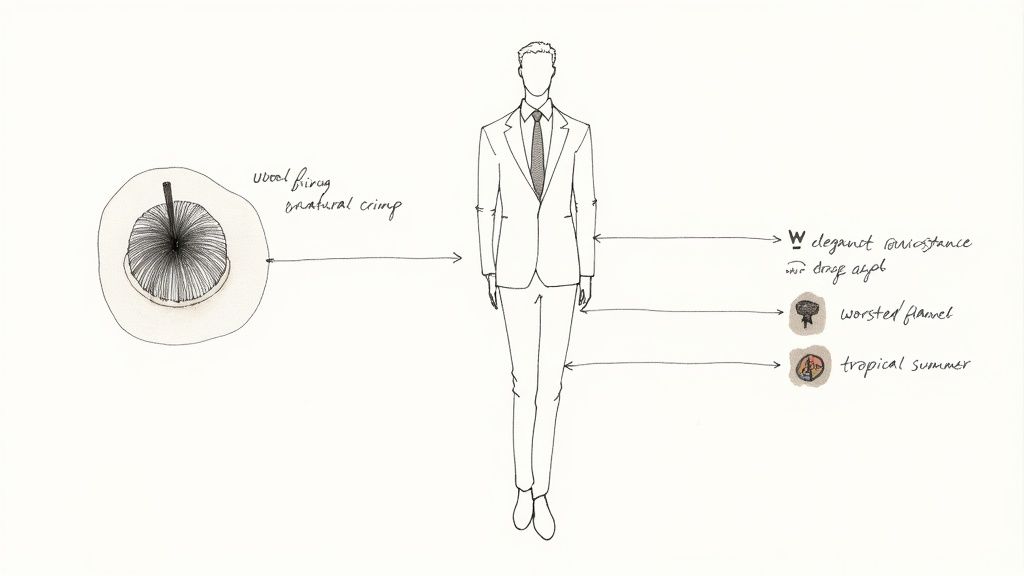
At the heart of wool’s magic is its natural crimp. Picture each fibre as a tiny, coiled spring. This structure is what gives the fabric its bounce, memory, and incredible resilience. It’s the reason a well-made wool suit can shed wrinkles overnight and drape across the body with an elegant fluidity that other materials just can't quite manage.
This natural engineering makes wool a tailor’s dream. It provides the perfect canvas for shaping and sculpting a garment that moves with you, holding a sharp crease while resisting the unwanted ones. It’s practical brilliance, pure and simple.
Worsted Wool: The Reliable Workhorse
For most business and formal events, worsted wool is the undisputed champion. The term "worsted" isn't about the type of sheep; it's a process. Long, fine wool fibres are combed to lie perfectly parallel before being spun into a yarn that's smooth, strong, and incredibly uniform. This creates a fabric with a clean, almost sheer surface and a crisp feel.
Think of worsted wool as the consummate professional in your wardrobe. Its smooth finish is perfect for a sharp business suit, and its durability means it can handle the rigours of daily wear. A mid-weight worsted in navy or charcoal is the quintessential four-season suit, at home in almost any setting.
Flannel: The Softer Side of Wool
If worsted is the crisp professional, then flannel is its softer, more approachable cousin. Unlike worsted, flannel is typically made from carded woollen yarns, which are less uniform. The fabric is then brushed to raise the fibres—a process known as "napping"—which gives flannel its signature soft, slightly fuzzy texture.
This raised nap cleverly traps tiny pockets of air, making flannel a fantastic insulator and the ideal choice for an autumn or winter suit. It has a visual depth and a comforting feel that’s perfect for adding a touch of character when the temperature drops.
A gentleman's wardrobe is incomplete without the distinct personalities of wool. Worsted provides the structure for business, while flannel offers the comfort and character for cooler days, each playing a vital role.
Tropical Wool: The Clever Solution for Summer
Wearing a suit in warmer climes can be a challenge, but tropical wool offers an elegant solution. This isn't a different type of wool, but rather a worsted fabric woven in a way that maximises airflow. It uses a plain, open weave and high-twist yarns to create a cloth that’s lightweight, airy, and exceptionally breathable.
This smart construction allows it to keep all of wool’s fantastic drape and wrinkle resistance while feeling cool and comfortable against the skin. It’s the perfect choice for summer business wear or a destination wedding, letting you stay impeccably dressed without overheating. The history of these textiles is deeply woven into the fabric of British style, and you can explore more about these exceptional British fabrics right here.
Here in the UK, wool’s dominance is cemented by centuries of heritage in sheep farming and textile production. Since the 19th century, regions like Yorkshire and the Scottish Borders have been the heartlands of wool processing, establishing it as the definitive material for a gentleman's attire. This legacy continues, with wool playing a major role in the UK fashion textile sector—a key part of the USD 32.6 billion apparel market in 2022.
Exploring Essential Alternatives To Wool
While wool rightly holds the crown, a truly versatile wardrobe is built on variety. Knowing when to reach for an alternative is the mark of a well-dressed gentleman. Stepping beyond wool opens up a world of textures, weights, and characters perfectly suited to specific seasons and settings, allowing your personal style to adapt with confidence and flair.
Sometimes, the best fabric for a suit is the one that meets a specific need—the airy coolness for a summer wedding or the rugged warmth for a weekend in the country. From breezy linens to hardy tweeds, these materials each bring a distinct personality to the tailor's table. They offer solutions where a classic worsted might fall short, ensuring you’re impeccably turned out, whatever the occasion.
Linen: The Quintessential Summer Fabric
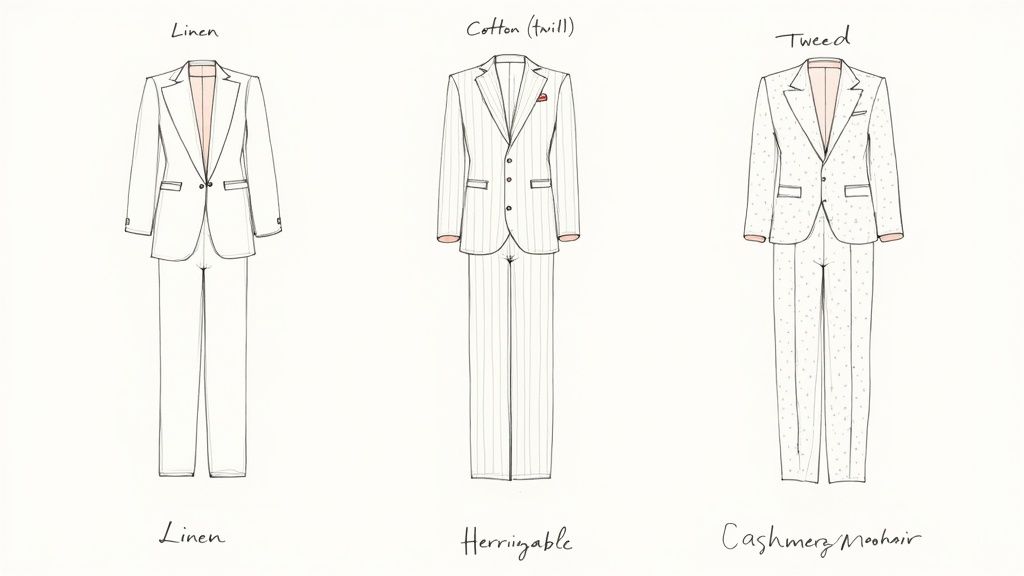
When the mercury rises, linen is the undisputed champion of summer tailoring. Woven from the fibres of the flax plant, it’s one of the oldest textiles known to man, prized for its exceptional coolness and breathability. Its naturally open weave allows air to circulate freely, making it feel crisp and comfortable even on the most humid of days.
A common misconception is that linen's tendency to wrinkle is a flaw. Far from it. Those characteristic creases are part of its inherent charm—a sign of relaxed, confident elegance. A well-cut linen suit doesn't fight the heat; it embraces it with a certain nonchalant sophistication that's impossible to replicate. To explore how to style this seasonal staple, you can learn more about crafting the perfect summer linen suit.
The wrinkles in a linen suit are not a defect; they are its signature. They tell a story of a day enjoyed in the sun, of comfort and of effortless style.
Cotton: A Durable And Casual Choice
For warm-weather suiting, cotton offers a slightly more structured alternative to linen. Fabrics like cotton twill or seersucker provide excellent breathability but with a crisper handle and less propensity to wrinkle. This makes a cotton suit a fantastic smart-casual option for spring and summer events, bridging the gap between formal wool and relaxed linen.
It’s a durable and familiar fibre that takes dye beautifully, offering a wide spectrum of colour possibilities. While often seen in casualwear, its role in British tailoring for less formal suits should not be underestimated. Cotton’s ubiquity is clear; it’s a key component in suiting blends for warmer, more casual environments, valued for its breathability and softness.
Tweed: The Rugged And Storied Original
Born from the harsh climates of Scotland and Ireland, tweed is a rugged, heavyweight woollen fabric defined by its rich texture and earthy colour palettes. It first emerged in the 19th century as a practical cloth for outdoor and country pursuits, designed to withstand wind and rain. Its distinctive character comes from the flecked, unfinished appearance of the wool.
Today, tweed remains the perfect choice for an autumn or winter sports coat or a full suit intended for country weekends or academic settings. It carries a sense of heritage and intellectual charm, offering both warmth and incredible durability. Popular patterns include:
Herringbone: A classic V-shaped weaving pattern.
Donegal: Characterised by colourful flecks or "neps" woven into the cloth.
Harris Tweed: A specific type of tweed handwoven in the Outer Hebrides of Scotland.
Luxury Blends: Cashmere And Mohair
For moments that call for something truly special, luxury fibres like cashmere and mohair elevate a suit to another level. Cashmere, known for its incredible softness and insulating properties, adds a level of comfort and opulence that is simply unmatched. While a 100% cashmere suit is a rare luxury, a wool-cashmere blend provides much of that signature softness with added durability.
Mohair, derived from the fleece of the Angora goat, is prized for its remarkable lustre and crispness. When blended with wool, it creates a fabric with a subtle sheen that is highly resilient to creasing, making it an excellent choice for evening wear or a travel suit.
Getting to Grips with Fabric Weight, Weave, and Drape
Moving beyond simply knowing the type of fabric—wool, linen, cotton—is where a true appreciation for tailoring begins. To really understand a piece of cloth, you need to get a feel for three fundamental characteristics: its weight, its weave, and its drape. These technical elements give a fabric its unique personality, dictating how it feels to wear, how it performs through the seasons, and ultimately, how it shapes your silhouette.
Once you speak this language, you can walk into a tailor's shop with real confidence. Instead of just pointing at a colour or pattern, you can run the cloth between your fingers and understand its potential. This knowledge transforms the process from a simple purchase into a creative collaboration. It’s the secret to commissioning a garment that doesn't just fit your body, but genuinely fits your life.
Decoding Fabric Weight
Fabric weight is the most straightforward of these concepts, but it's absolutely critical for comfort. Measured in ounces per yard (oz) or grams per square metre (gsm), it simply tells you how dense and substantial the cloth is.
Think of it like choosing a coat for the weather. A lightweight fabric is your windbreaker; a heavyweight one is your winter overcoat. In tailoring, this translates directly to seasonal suitability:
Lightweight (7-9oz / 200-260gsm): These are your summer specialists. We’re talking tropical wools, linens, and cottons. They are airy, breathable, and designed to keep you cool, often wearing with the crispness of a well-made shirt.
Mid-weight (10-12oz / 280-340gsm): This is the versatile sweet spot, the true "three-season" or even "four-season" cloth in many parts of the UK. Most worsted wools fall into this category, making them the workhorse of any business wardrobe. They have enough body to drape beautifully but aren't heavy enough to feel stifling.
Heavyweight (13oz+ / 370gsm+): Reserved for the colder months, these fabrics include flannel, tweed, and heavy woollens. They offer exceptional warmth and create a powerful, structured silhouette, acting almost as a layer of armour against the elements.
Fabric weight is the foundation of seasonal dressing. A 9oz linen and a 14oz tweed may both be exceptional cloths, but they are built for entirely different purposes. Understanding this distinction is the first step toward building a truly functional and comfortable wardrobe.
The Influence of Weave
The weave is the very architecture of the fabric—the specific pattern in which the vertical (warp) and horizontal (weft) threads are interlaced. This structure has a profound effect on the cloth’s texture, its durability, and even the way it catches the light. While there are countless variations, a few common weaves define the majority of suiting fabrics.
Twill Weave: This is the undisputed champion of suiting, easily recognised by its distinct diagonal lines. It produces a fabric that is durable, drapes well, and is naturally resistant to wrinkling. Gabardine and most worsted wools are classic examples of a twill.
Herringbone: A handsome variation of the twill, herringbone creates a distinctive V-shaped or "broken twill" pattern that looks like the skeleton of a herring. It adds a subtle, classic texture and is a hallmark of tweed and refined winter suitings.
Plain Weave: The simplest of them all, where each weft thread passes over one warp thread and under the next. This creates a balanced, stable fabric that is highly breathable, making it the go-to for summer cloths like linen, cotton poplin, and tropical wool.
Demystifying Drape
Drape is the most poetic and perhaps least tangible of the three, yet it’s what gives a suit its life and movement. It describes how a fabric hangs and flows under its own weight. Does it fall in clean, sharp lines, or does it cling and ripple? The answer lies in the drape.
A fabric with good drape conforms beautifully to the wearer's body, creating a clean, uninterrupted silhouette that is both flattering and powerful. Heavy wools and cashmeres are prized for this very quality. On the other hand, a stiff, rigid fabric will hang away from the body, looking boxy and lifeless. When you're assessing any material, consider its drape—it’s the secret to a suit that moves with grace and authority. When considering durability and crease resistance, key properties for ensuring your suit withstands the rigours of travel, explore options for travel-friendly suits where the weave and drape are engineered for performance.
For a deeper dive into how these elements come together in different materials, you can explore our full range of articles on suit fabric.
How To Match Fabric To Season And Occasion
Getting to grips with the technical side of fabrics is one thing, but knowing exactly which cloth to choose for a specific moment—that’s the real art of dressing well. This is where theory gets put into practice, turning a wardrobe full of clothes into a versatile toolkit for any situation. Picking the best fabric for a suit isn't just about colour or pattern; it’s about reading the room and presenting yourself perfectly for every event on your calendar.
A gentleman's suit should feel like a second skin, perfectly adapted to the climate and the company he keeps. Whether you're navigating the boardroom, celebrating a wedding, or just enjoying a relaxed weekend, the right fabric ensures you look and feel completely at ease. This is the secret to building a wardrobe that works for you, not against you.
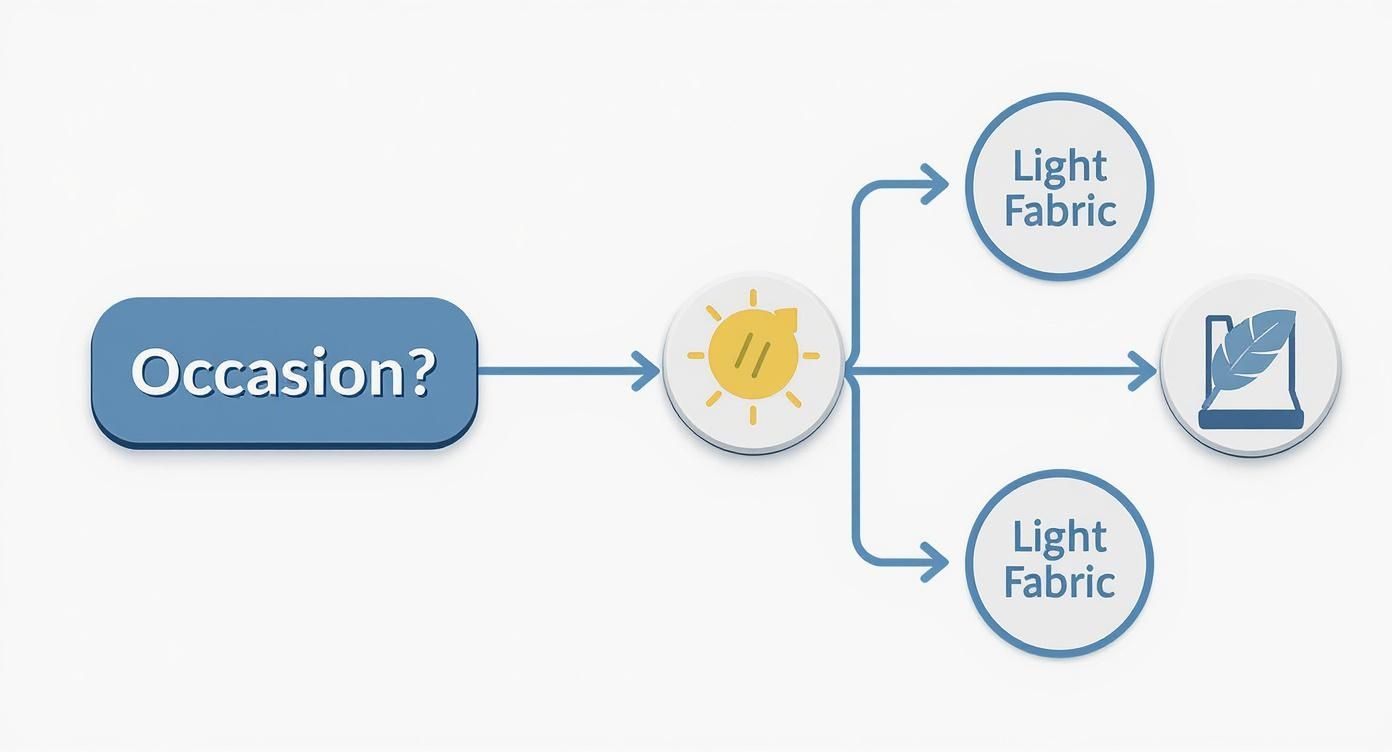
This simple decision tree is a great starting point for thinking about your fabric choice based on the event and the weather.
As you can see, the first questions you should always ask are about the context of the event and the likely temperature.
For The Boardroom And Business
In a professional setting, your suit is your armour. It needs to project confidence, reliability, and authority without shouting. The undisputed champion in this arena is a mid-weight (11-12oz) worsted wool in a conservative shade like charcoal or navy.
This fabric choice is a statement in itself. It’s tough enough for the daily grind, drapes cleanly to create a sharp silhouette, and shakes off wrinkles throughout a long day. A true workhorse that never looks overworked, it’s the bedrock of any serious business wardrobe.
For slightly less formal offices or just to add some variety, you can’t go wrong with these classics:
Birdseye: A pattern of tiny, repeating dots that look like a bird's eye, adding a subtle dose of texture.
Pinstripe: The quintessential pattern for projecting authority, perfect for finance and law.
Sharkskin: A two-toned woven fabric with a smooth feel and a slight lustre, giving it a touch of visual depth.
For A Summer Wedding Or Garden Party
Warm-weather celebrations demand fabrics that are light, breathable, and have a certain relaxed elegance. This is where linen and cotton truly come into their own. For a summer wedding guest, a suit in a light-coloured linen or a crisp cotton twill hits that perfect note between formality and comfort.
These materials are designed to keep you cool while carrying a sense of nonchalant style. The natural creasing of linen, far from being a flaw, is part of its charm—it signals a relaxed, confident approach perfect for a joyous occasion. Stick to shades like stone, light blue, or beige to reflect the season.
Choosing a fabric is like choosing your words; the right one sets the perfect tone for the occasion. A linen suit at a summer wedding speaks of relaxed celebration, while a wool barathea at a black-tie event conveys timeless respect for tradition.
For A Black-Tie Evening Event
When the invitation says "black tie," tradition and formality are king. This isn't the time for experimentation; it's about pure, distilled elegance. The classic, and frankly unbeatable, choice for a dinner jacket (or tuxedo) is wool barathea, a fine twill weave with a slightly pebbled surface that gives it a beautiful matte finish.
This particular weave absorbs light rather than reflecting it, creating a deep, rich black that provides the perfect contrast to a crisp white dress shirt. Its weight and structure also give you the sharp, clean lines essential for formalwear. While velvet is a superb alternative for a smoking jacket, for unmatched evening elegance, wool barathea remains the gold standard.
For The Countryside And Casual Weekends
For more relaxed settings, especially during the autumn and winter months, texture and durability are your main considerations. This is the natural habitat of tweed. A tweed sports coat or even a full suit is the perfect companion for a weekend in the country, a smart pub lunch, or an academic gathering.
Its rugged origins and rich, earthy tones connect it to the outdoors, while its warmth and durability make it incredibly practical. Whether it’s Herringbone, Donegal, or Harris tweed, each offers a unique character, adding a touch of storied, intellectual charm to your casual wardrobe. These are fabrics meant to be lived in, and they only get better with every wear.
How Fabric Choice Defines A Bespoke Suit
Think of a bespoke suit, and you might picture the cut, the fit, or the finishing touches. But in truth, everything begins with the cloth. The fabric you choose isn't just a component; it's the very soul of the garment. It’s the foundation upon which every chalk mark, snip of the shears, and stitch is built.
A master tailor doesn't just see a pattern on a roll of fabric. They feel its personality. They assess its weight, study its unique weave, and understand how it will naturally drape before a single measurement is taken. This intimate knowledge allows them to craft a pattern that works with the cloth, not against it, creating a suit that complements both the material and the man wearing it.
This collaborative approach is what makes the final piece feel like it was made just for you—because, in every sense, it was. To get a better feel for this partnership, you can learn more about crafting your bespoke suit journey with us.
The Inner Workings of a Bespoke Garment
The synergy between fabric and construction runs deep, extending to the parts of the suit you don’t see. The internal components are just as crucial, selected to support and enhance the main fabric. A prime example is the use of a full canvas interlining.
Typically made from horsehair and wool, a full canvas is stitched loosely to the jacket's outer shell. This isn't just a layer; it's a dynamic structure that allows the suit to "float" on your body, moulding to your shape over time. It works in harmony with your chosen cloth to create a perfect, evolving fit and a beautiful, natural drape that simply can't be replicated.
Similarly, the lining is far more than a decorative afterthought. A silk lining, for instance, feels incredible against the skin but also plays a vital structural role. It protects the main cloth from the inside, adds to the garment's longevity, and allows the jacket to glide on and off effortlessly.
In bespoke, the fabric dictates the form. A heavy tweed demands a different cut and structure than a lightweight tropical wool. The tailor's art is in listening to the cloth and giving it the shape it was meant to hold.
Innovation Meets Tradition in Modern Tailoring
While the classic natural fibres are still the gold standard, the world of suiting fabrics is always evolving. Today, there's a growing appreciation for performance fabrics that blend traditional quality with modern needs like durability and wrinkle resistance. This demand for cloths that are both stylish and functional is reflected in the UK menswear market, which was valued at USD 30.54 billion in 2024.
Ultimately, the choice of fabric is what gives a bespoke suit its character. It’s a decision that defines the suit’s feel, function, and aesthetic from the inside out, much like how material composition dictates a product's purpose and classification in other crafts. It truly is the heart of the commission.
Frequently Asked Questions
What's the best all-rounder fabric for a first suit?
Without a doubt, a mid-weight worsted wool in either charcoal grey or navy blue. This fabric is the ultimate workhorse for any gentleman’s wardrobe. It offers a fantastic balance of elegant drape, durability, and natural wrinkle resistance, making it suitable for all four seasons. It’s just as appropriate for a crucial business meeting as it is for a wedding or a smart dinner, making it the smartest and most versatile investment for a foundational suit.
How much does fabric weight really matter for comfort?
Fabric weight is absolutely crucial; it dictates not only your comfort but also how the suit will hang and perform throughout the year. Lightweight fabrics (7-9oz) are breathable summer essentials. Mid-weights (10-12oz) are dependable all-season options, striking that perfect balance between structure and comfort. Heavy fabrics (13oz+) provide real warmth and a sharp, structured drape, making them perfect for autumn and winter. Choosing the right weight ensures you stay comfortable while your suit looks its best.
Are synthetic blends ever a good idea for a quality suit?
While 100% natural fibres are the gold standard for luxury suits, some high-quality blends have their place. A tiny percentage of elastane can add welcome flexibility, while certain technical fibres improve durability and wrinkle resistance for a travel suit. The key is balance. A suit that's mostly synthetic will feel stuffy and lack the beautiful drape of wool. For a garment of real quality, always ensure natural fibres make up the vast majority of the blend.
Is linen a good fabric for a formal business suit?
Linen is generally too relaxed for a formal business setting. Its tendency to wrinkle, while part of its charm for casual occasions like summer weddings, can look untidy in a corporate environment. For the boardroom, a crisp worsted wool is always the superior choice as it projects a more professional and authoritative image. Reserve your elegant linen suits for smart-casual events, garden parties, and warm-weather socialising where its relaxed character can truly shine and keep you comfortable.
What is the difference between tweed and flannel?
Both tweed and flannel are excellent cold-weather wool fabrics, but they have distinct personalities. Flannel is defined by its softness, achieved by brushing the fabric to raise the fibres, which creates a fuzzy texture that traps air for warmth. Tweed is a much more rugged, heavyweight, and textured fabric, originally designed for harsh outdoor conditions in Scotland. Think of flannel for soft, cosy elegance and tweed for durable, rustic character perfect for the countryside.
About the Author
Igor is the founder of Dandylion Style and a tailor with over 20 years of experience crafting bespoke and made-to-measure suits for a discerning clientele. Working with gentlemen across London and Sussex, he combines traditional techniques with a keen eye for modern style. His passion is for classic, timeless elegance, built on an uncompromising commitment to quality. Through Dandylion Style, Igor shares his dedication to the art of tailoring, creating garments that not only look impeccable but feel exceptional to wear.
At Dandylion Style, we're here to guide you through every choice, from selecting the finest British cloths to adding the perfect finishing stitch. Explore our bespoke tailoring services and start the journey toward a suit that is crafted just for you.
Written by:
Igor Srzic-Cartledge
Igor is the founder of Dandylion Style, a tailoring house built on the simple, deeply held belief that a suit should be like a second skin—a true extension of a gentleman’s personality. For Igor, tailoring isn't just about cutting cloth; it's an art form dedicated to creating unique, perfectly fitted attire for the discerning man. His passion is rooted in classic sartorial traditions, yet he maintains a keen eye for contemporary style, ensuring his creations are both timeless and relevant. This approach has cemented his reputation for genuine craftsmanship and a truly personal service.
Key Takeaways The Core Two: Navy blue and charcoal grey are the essential, non-negotiable suit colors for any professional wardrobe. Navy offers versatility and approachability, while charcoal projects authority and seriousness. Context is Crucial: The best suit color...
When you find a piece of clothing you absolutely love, getting the fit just right is the final, transformative touch. But how much should you expect to pay? In the UK, alteration costs can be as modest as £15 for a simple trouser hemming, or climb to £150 and beyond...
Getting the right pink shirt and tie combination is the mark of a well-dressed man. It’s a detail that separates the novices from those who truly understand their wardrobe. For a look that’s classic and can’t miss, pair your pink shirt with a navy, grey, or burgundy...
Key Takeaways For those seeking a quick overview, this section summarises the essential rules and recommendations for incorporating turn-up trousers into your wardrobe. Sartorial Purpose: Turn-ups add weight to the trouser hem, ensuring a cleaner, sharper drape,...
Deciding what colour tie to wear with a pink shirt is a common style query I hear from clients. For a classic, professional look that never fails, your safest and most effective choices are navy blue and charcoal grey. If you're heading to a more contemporary or...
You've just picked up a newly finished bespoke suit, and the cloth still has that clean, disciplined line only a real fitting room can give it. The temptation is to put it straight in the wardrobe and trust the label to do the rest. That's where expensive...
Book Your Tailoring Consultation
Looking for a suit or garment made specifically for you?
At Dandylion Style, we create bespoke and made-to-measure
garments tailored to your individual shape, style and occasion.
From suits and shirts to dresses, waistcoats and alterations,
our experienced tailors can help you create something truly unique.