In today's ever-evolving style landscape, knowing how to wear a suit without a tie is a key skill. It strikes the perfect balance between sophisticated and relaxed, but getting it right requires attention to detail. This guide covers the essential elements, from choosing the right collar to selecting the perfect accessories, ensuring you look polished and intentional every time.
Key Takeaways
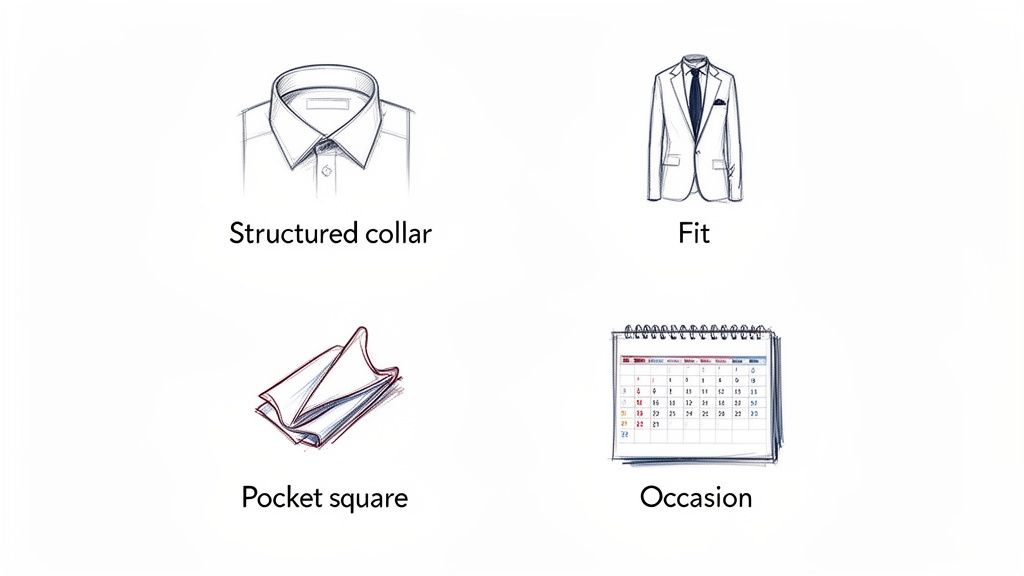
Collar is King: Your shirt collar must be structured enough to stand up on its own. A cutaway or button-down collar is ideal to avoid a sloppy look.
Fit is Everything: Without a tie to draw the eye, the fit of your suit becomes the main focus. Bespoke or perfectly tailored suits are essential for a sharp silhouette.
Accessorise Smartly: Use a pocket square to add a touch of colour and personality. Coordinate your shoes and belt to maintain a polished, cohesive look.
Know the Occasion: The tieless look is perfect for smart-casual offices, modern weddings, and social events. Avoid it for black-tie functions or in highly traditional corporate settings.
The Fundamentals of Going Tieless
Successfully pulling off a suit without a tie is all about getting a few non-negotiable details just right. When you ditch the tie, other parts of your outfit have to work a bit harder to keep everything looking sharp and intentional. Without that focus, the look can quickly slide from stylishly relaxed into just plain sloppy.
First and foremost, your shirt collar is critical. It absolutely must have enough structure to stand up on its own, without wilting under your jacket. A floppy collar is the fastest way to ruin the entire silhouette. Equally important is the fit of the suit itself. This is where a bespoke or perfectly tailored suit becomes essential, as any bagginess around the shoulders or waist is far more noticeable without a tie to draw the eye.
The secret to a great tieless look isn't just removing the tie—it's about elevating everything else. Your suit’s fit, shirt collar, and accessories become the new focal points.
Finally, don't forget the finishing touches. A well-chosen pocket square is no longer just an accessory; it's a necessity. It adds that essential splash of colour and personality right where your tie would normally sit, completing the look with purpose.
Why the Tieless Suit Defines Modern Style
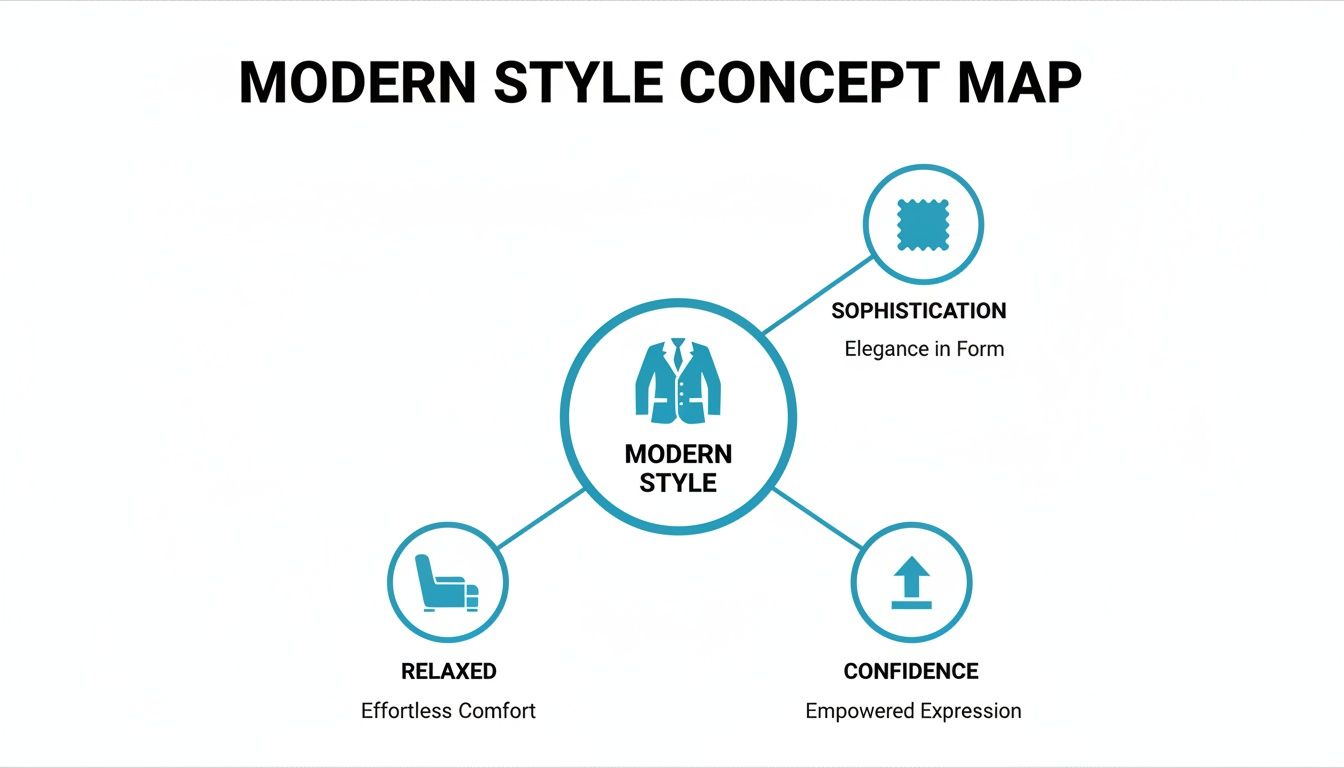
Choosing to wear a suit without a tie is far more than a simple style choice; it’s a statement. It speaks to a modern confidence and reflects a much broader cultural shift away from the rigid, formal uniforms of the past.
True elegance today isn't found by blindly following an old-school dress code. It’s rooted in the impeccable fit of a suit and the quality of its fabric. Personal expression and comfort are no longer secondary considerations—they're paramount.
This evolution is impossible to miss in the professional world. In the UK, casual office dress codes hit a four-year high in early 2023. A staggering 80% of job advertisements that even mentioned a dress code were actively promoting relaxed clothing. That’s a clear signal that the mandatory suit and tie is losing its grip. You can read more on this workplace trend in this HR Director analysis.
Blending Sophistication with a Relaxed Attitude
The tieless suit is the new power dressing. It sends a clear message: you understand the rules of classic tailoring but are confident enough to bend them for a contemporary world. This look strikes the perfect balance between professionalism and approachability, making it just as fitting for a creative meeting in London as for a stylish wedding in the West Sussex countryside.
The goal is to look intentional and put-together, not like you simply forgot an accessory on your way out the door. Execution is everything. A sharp, bespoke suit paired with a crisp, open-collar shirt projects an effortless sense of control. When you ditch the tie, the focus naturally shifts to the quality and cut of the suit itself, which is where different styles of suits can truly come into their own.
Choosing to go tieless is about owning your style. It shows respect for the occasion through impeccable tailoring while embracing a modern, less constricted form of formality.
This relaxed elegance is the essence of the tieless suit. For more inspiration on weaving casual styling concepts into sophisticated looks, there are plenty of expert sources to draw from. Ultimately, this approach is the perfect proof that genuine style isn't about adding more—it's about perfecting the essentials.
Choosing the Right Shirt and Collar
When you ditch the tie, your shirt is no longer just a supporting act; it steps right into the spotlight. Suddenly, its fit, fabric, and—most importantly—its collar are what make or break the entire look. They decide whether you look sharp and deliberate, or just like you forgot a crucial part of your outfit.
Let's be clear: a limp, collapsing collar is the cardinal sin of going tieless. It’s the one detail that can instantly torpedo an otherwise impeccable suit.
The secret is structure. Your collar needs enough backbone to stand up on its own, framing your face without crumpling under the weight of the jacket lapels. This is non-negotiable. A bespoke shirt is, of course, the gold standard here. It guarantees the placket lies perfectly flat against your chest and the collar is engineered to hold its shape from morning coffee to last orders.
Collar Styles That Stand Tall
Not all collars are created equal in the tieless world. You need a style with some inherent stiffness, one that's built for the job.
Here’s a quick rundown of your best options.
Collar Styles for the Tieless Look
Collar Style
Characteristics
Best For
Cutaway Collar
Wide-spreading points, typically with stiff construction.
Framing a strong jawline and maintaining a sharp, formal edge.
Button-Down Collar
Collar points are fastened to the shirt with small buttons.
A classic, foolproof option that guarantees the collar stays put.
Spread Collar
A versatile middle-ground between a point and cutaway.
A balanced, sharp look that works for most face shapes and occasions.
These three styles give you the structure you need. The cutaway offers a bold, confident frame for your neck, while the button-down is a timeless classic for good reason—those buttons lock the collar points down, ensuring they never wander. For more on that, have a look at our guide to the button-up vs button-down shirt.
On the other hand, you'll want to steer clear of very soft, unstructured collars like the camp collar. Unless you're specifically aiming for a relaxed, resort-wear vibe (which rarely gels with traditional suiting), it's best avoided. The goal is relaxed elegance, not pure casualness.
Fabric and Fit: The Foundation of the Look
Beyond the collar, the shirt's fabric plays a huge role in the overall impression. A crisp cotton poplin gives you a clean, sharp finish, making it a reliable choice for business settings or smarter social events.
If you want a little more depth, an Oxford cloth shirt brings a subtle texture into the mix that adds a touch of character.
This is all about striking a balance—projecting a relaxed confidence that feels effortless, but is actually quite considered.
The image above gets it right. A successful tieless look isn't just about removing an accessory; it's about carefully curating what remains to project an air of effortless control. A perfectly fitted shirt in a quality fabric is the very cornerstone of this aesthetic.
A simple rule for the open collar: just one button undone. This hits the sweet spot between relaxed and refined. Unfasten any more, and you stray into ‘70s disco territory, completely undermining the authority of the suit.
Finally, the fit must be spot-on. There should be no pulling at the buttons across your chest or excess fabric billowing around your waist. This is where a bespoke shirt truly proves its worth. Cut to your exact measurements, it creates a clean, uninterrupted line from shoulder to trouser, providing the flawless canvas that the tieless look absolutely demands.
Selecting the Perfect Suit Cut and Fabric
When you decide to go tieless, the suit itself has to step up. It’s no longer just part of an ensemble; it is the ensemble. Suddenly, every detail, from the cut of the lapel to the feel of the cloth, is under the spotlight. Getting the suit right isn't just a good idea—it's everything.
The Cut: Getting the Details Right
The jacket's cut is what frames your open-collar shirt, and the lapels are the first thing people notice.
A classic notch lapel is your reliable, all-purpose choice. It’s a timeless shape that works for just about any occasion, giving you a clean and understated silhouette. If you want to make more of a statement, a peak lapel is the way to go. It’s a bolder look that draws the eye upwards, creating a subtle broadening effect on the shoulders.
This move towards a more relaxed yet considered style is happening everywhere, especially in the workplace. It's not just a fleeting trend. Research shows that between 2018 and 2024, the number of UK organisations with strict, contractual dress codes plummeted from 30% to just 4.3%. Most now rely on informal guidelines, which gives you the freedom to express a bit more personality.
The Power of Texture and Weave
Fabric is your secret weapon when you’re not wearing a tie. A standard, flat-coloured wool suit can sometimes feel like it's missing something without the punctuation of a tie. The solution? Choose materials with a bit of character—a noticeable texture or a subtle pattern that adds depth.
Here are a few fabrics that really hold their own:
British Tweed: Its rugged, textured weave brings a certain rustic charm that’s perfect for the cooler months.
Linen or Linen Blends: The go-to for summer events. Linen's natural slub and texture create a look that's relaxed but still undeniably smart.
Fine Wool with a Pattern: Think subtle. A quiet check, a classic herringbone, or a birdseye pattern adds just enough visual interest without shouting for attention.
A suit’s fabric is its personality. Without a tie, a textured cloth like a Donegal tweed or a crisp linen doesn't just look good—it feels considered and adds a layer of tactile interest that a simple worsted wool might lack.
Choosing the right material ensures your suit has enough personality to stand on its own. For a deeper dive, take a look at our guide on the best fabrics for suits. It’s a great resource for picking the perfect cloth for any season.
Adding a Layer: The Waistcoat
For those times when you need a bit more polish—say, a wedding or a crucial business meeting—the three-piece suit is your best friend. A waistcoat adds a layer of structure that brilliantly fills the space a tie would normally occupy.
It keeps your shirtfront neat and maintains a formal line, even when you unbutton your jacket. This is where a bespoke three-piece truly shines, creating a seamless, cohesive look that feels both contemporary and classic. The waistcoat makes the whole outfit feel complete, proving that going tieless can be every bit as sophisticated as traditional formalwear.
Refining Your Look with Accessories and Grooming
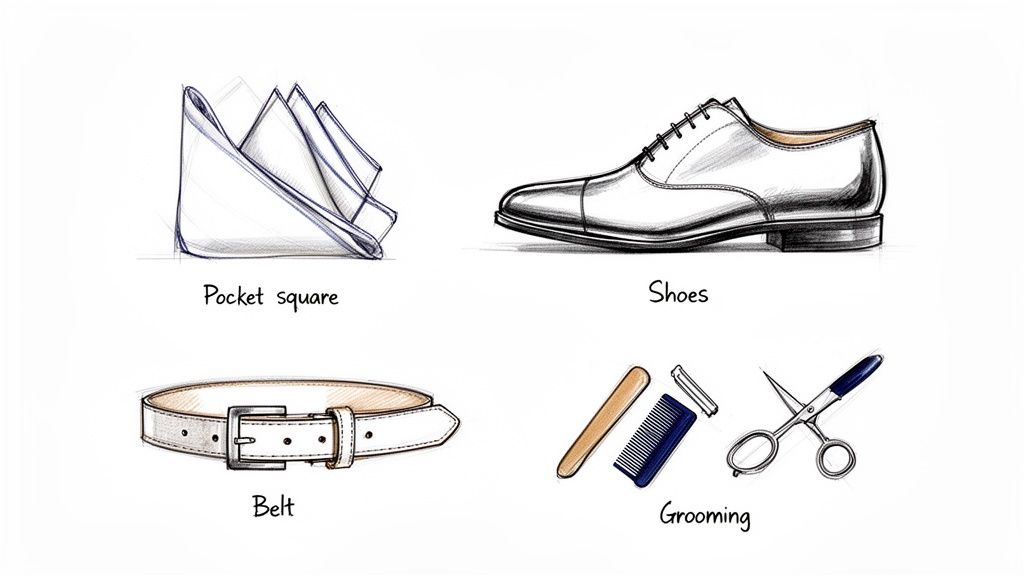
When you ditch the tie, the smaller details suddenly take centre stage. They’re no longer just finishing touches; they become the main event. Without that central piece of neckwear, every other element of your outfit has to work a bit harder to create a look that feels deliberate and complete. This is where well-chosen accessories and sharp grooming really come into their own.
Take the pocket square. It’s no longer a mere flourish but an essential piece of the puzzle. It’s the perfect spot to inject a bit of colour, pattern, and personality, filling that visual space the tie leaves behind. A crisp white linen square offers a timeless, understated elegance. Or, for a more considered feel, a patterned silk square can pick up a colour from your shirt or even your socks.
Choosing the Right Footwear and Leather Goods
Your shoes are what ground the entire outfit. Classic, well-polished leather footwear is absolutely non-negotiable if you want to maintain the suit's inherent smartness. Get this wrong, and the whole look falls apart.
Oxfords: The quintessential dress shoe. If you're heading somewhere more formal or business-like, these are your best bet. Their closed-lacing system creates a sleek, clean line that is hard to beat.
Derbies: A touch less formal than Oxfords, their open lacing makes them a wonderfully versatile choice. They pair particularly well with more textured suits, like a tweed or a summer linen.
Loafers: For a genuinely modern and relaxed feel, you can't go wrong with a pair of high-quality leather or suede loafers. They're an excellent option for smart-casual events where you want to look sharp but not stuffy.
And of course, your belt must talk to your shoes. It's a simple rule, but one that makes a world of difference: match the leather's colour and finish. Black leather belt, black leather shoes. Brown suede belt, brown suede loafers. It’s this kind of intentional coordination that signals true style. For more ideas on how to pull it all together, explore our curated selection of men's accessories.
When you remove the tie, every other detail is magnified. Your shoes, belt, and pocket square aren't just additions; they are the anchors of your look. Invest in quality and coordinate them thoughtfully.
The Non-Negotiable Role of Grooming
Finally, remember that no amount of fine tailoring or premium accessories can make up for sloppy grooming. A sharp haircut and either a well-maintained beard or a clean shave are fundamental to pulling off the polished-yet-relaxed aesthetic of suits without a tie.
A truly refined look is a complete picture. Consider exploring options like professional facial treatments for men to ensure your skin looks as sharp as your suit. The goal is to present an image where every detail, from your collar to your complexion, is sharp, clean, and considered. It's this level of attention that separates an intentional style statement from a look that simply feels like something is missing.
When to Wear a Suit Without a Tie
Knowing when you can confidently ditch the tie is all about reading the room. This modern take on tailoring is incredibly versatile, but it’s certainly not a one-size-fits-all solution. Get it right, and you look sharp, self-assured, and contemporary. Get it wrong, and you just risk looking like you forgot something.
The secret is to match the relaxed elegance of the tieless suit to the atmosphere of the event. It’s the perfect move for those situations that land squarely between stuffy formal and outright casual.
The Smart Casual Office and Client Meetings
In today's ever-evolving professional world, the tieless suit has found its natural habitat. For many offices, particularly in creative fields or the tech industry, a dark wool two-piece suit worn without a tie nails that sweet spot between authority and approachability. It says you’re here to do business, but without appearing overly rigid or buttoned-up.
This isn’t just a feeling; there’s data to back it up. A 2017 study found that 61% of UK workers felt more productive when the office dress code was relaxed. And what was the number one complaint for men? The tie, at a significant 41%, far outstripping any other sartorial restriction. It's a clear signal that losing the tie can genuinely boost comfort and, by extension, performance.
That said, context is everything. For a formal job interview, particularly in a traditional sector, a tie is almost always the safer and more respectful bet. Our dedicated guide on what to wear for a male interview breaks this down in more detail, helping you make the best first impression.
Social Events and Contemporary Weddings
This is where the tieless suit really comes into its own. Think of social gatherings like gallery openings, upscale dinners, or milestone birthday parties. In these settings, it projects an air of effortless style. You look polished and like you’ve made a considered effort, but in a way that feels distinctly modern and unstuffy.
Weddings are another prime opportunity, as long as the dress code gives you the green light. For a summer or destination wedding, a tieless linen three-piece suit is a masterful choice. The waistcoat maintains a sense of formality and structure, ensuring you look sharp and celebratory without feeling constricted by the heat.
Always, always check the invitation. A dress code like 'Cocktail Attire' or 'Smart Casual' is a clear signal that going tieless is perfectly acceptable. If you see 'Black Tie' or 'Formal', however, a tie is non-negotiable.
When a Tie Remains Essential
For all its versatility, there are occasions when a tie is simply indispensable. Ultra-traditional corporate environments—think certain City law firms or old-school financial institutions—often still expect neckwear as a standard mark of professionalism.
Likewise, formal events with strict dress codes demand adherence to tradition. A tuxedo should always be paired with a bow tie, and a dark business suit at a formal gala calls for a tie. In these contexts, forgoing one isn't a style statement; it's a social misstep. Knowing when to stick to the rules is just as important as knowing when you can bend them.
Frequently Asked Questions
Can I wear any suit without a tie?
Not all suits work equally well. The best candidates are modern, well-tailored suits with a strong shoulder line and a fitted waist. These styles are designed to look sharp and intentional on their own. Older, boxier suits often rely on a tie to provide structure and a focal point, and can look incomplete without one. The key is a flawless fit, which is why bespoke tailoring is ideal for achieving this polished look, ensuring your silhouette is impeccable from every angle.
What is the best shirt collar for a tieless look?
A collar with good structure is non-negotiable, as a limp collar will ruin the entire outfit. Your best options are a cutaway or spread collar, which have wide points that frame the face nicely and stay crisp under your jacket lapels. A classic button-down is another foolproof choice, as the buttons anchor the collar points, ensuring they stay perfectly in place all day. Avoid soft, unstructured collars that are likely to collapse and look sloppy.
How many shirt buttons should I leave undone?
This is a simple rule with no exceptions: just one. Leave only the top button of your shirt undone. This creates the perfect V-shape that looks relaxed yet refined. Unfastening two or more buttons makes the look too casual, moving into 'nightclub' territory and completely undermining the sophistication of the suit. One button open is the sweet spot that communicates effortless style and confidence without appearing careless.
When is it okay to wear a suit without a tie to a wedding?
This is entirely dependent on the dress code and setting. For weddings with a 'smart casual' or 'cocktail attire' dress code, or for those held in relaxed settings like a beach or countryside barn, going tieless is a perfectly stylish and appropriate choice. However, if the invitation specifies 'black tie' or 'formal', or if the ceremony is in a very traditional venue, a tie is still essential to show respect for the occasion and the couple.
Can I wear a three-piece suit without a tie?
Absolutely. A three-piece suit is a fantastic option for a tieless look, especially for more formal occasions like weddings or important meetings. The waistcoat adds a layer of formality and structure, neatly filling the space where a tie would normally sit. It keeps the front of your shirt looking clean and maintains a sharp silhouette, even when your jacket is unbuttoned. This makes the entire ensemble feel complete and intentional, proving that you can be both formal and modern.
About The Author
Meet Igor, the founder and master tailor behind Dandylion Style. With a deep-seated passion for fine British fabrics and precision cutting that has guided him for over 20 years, Igor established his bespoke tailoring house right here in Ardingly, West Sussex. His mission is simple: to create one-of-a-kind garments that feel personal, comfortable, and built to last.
Igor’s calm, considered process involves honest guidance on every detail, from the exact drape of the cloth and the feel of the lining to the final cut and finishing touches. It is this dedication that guarantees a perfect silhouette—a crucial element, especially when styling suits without a tie.
Whether you're in Sussex, London, or anywhere in the South East, Igor's expertise ensures your garment is shaped precisely to your form and lifestyle. His work is a testament to the belief that true style is built on a foundation of impeccable fit and personal expression, making every commission a unique reflection of its wearer.
At Dandylion Style, we specialise in creating bespoke suits that are perfectly cut to ensure you look impeccable, with or without a tie. Book your consultation today to begin your bespoke journey.
Key Takeaways The Core Two: Navy blue and charcoal grey are the essential, non-negotiable suit colors for any professional wardrobe. Navy offers versatility and approachability, while charcoal projects authority and seriousness. Context is Crucial: The best suit color...
When you find a piece of clothing you absolutely love, getting the fit just right is the final, transformative touch. But how much should you expect to pay? In the UK, alteration costs can be as modest as £15 for a simple trouser hemming, or climb to £150 and beyond...
Getting the right pink shirt and tie combination is the mark of a well-dressed man. It’s a detail that separates the novices from those who truly understand their wardrobe. For a look that’s classic and can’t miss, pair your pink shirt with a navy, grey, or burgundy...
Key Takeaways For those seeking a quick overview, this section summarises the essential rules and recommendations for incorporating turn-up trousers into your wardrobe. Sartorial Purpose: Turn-ups add weight to the trouser hem, ensuring a cleaner, sharper drape,...
Deciding what colour tie to wear with a pink shirt is a common style query I hear from clients. For a classic, professional look that never fails, your safest and most effective choices are navy blue and charcoal grey. If you're heading to a more contemporary or...
You've just picked up a newly finished bespoke suit, and the cloth still has that clean, disciplined line only a real fitting room can give it. The temptation is to put it straight in the wardrobe and trust the label to do the rest. That's where expensive...
Book Your Tailoring Consultation
Looking for a suit or garment made specifically for you?
At Dandylion Style, we create bespoke and made-to-measure
garments tailored to your individual shape, style and occasion.
From suits and shirts to dresses, waistcoats and alterations,
our experienced tailors can help you create something truly unique.