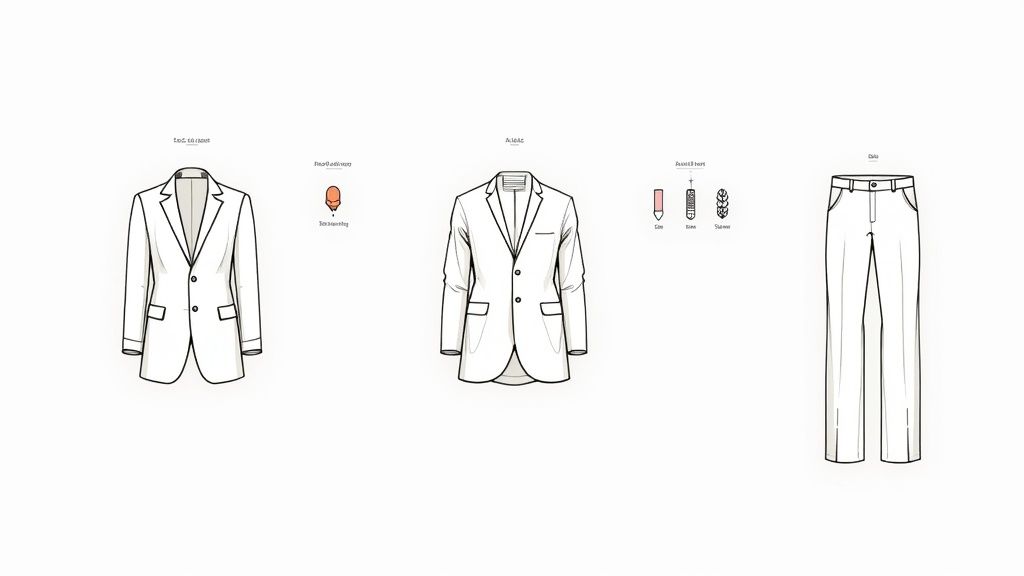
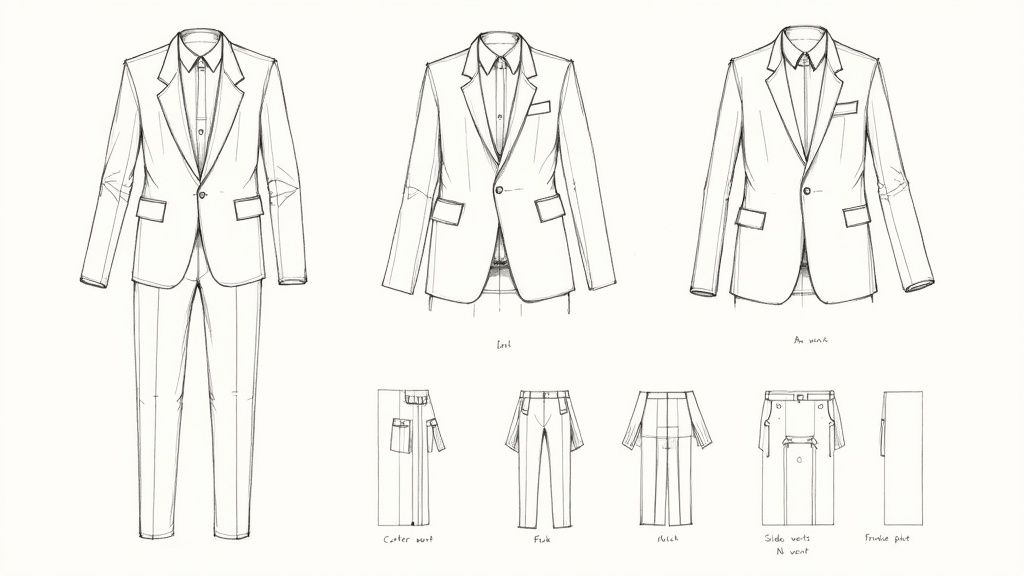
Getting your head around the style of suits really just means looking at three core parts: how the jacket is cut, the shape of the lapels, and the silhouette of the trousers. A classic single-breasted jacket is your versatile go-to, whereas a double-breasted cut carries a more formal, commanding presence.
These aren't just details; they're the fundamental language of a gentleman's tailoring.
Key Takeaways
Core Components: A suit's style is primarily defined by its jacket front (single vs. double-breasted), lapel type (notch, peak, or shawl), and trouser cut. Understanding these elements is the first step to mastering your look.
International Silhouettes: The three classic cuts—structured British, relaxed Italian, and traditional American—offer different philosophies on fit. Choose the one that best complements your body type and personal style.
Fabric and Pattern Matter: The choice of cloth dictates a suit's formality, seasonality, and character. Worsted wool is a versatile workhorse, while patterns like pinstripes or checks add personality.
Context is King: Matching your suit to the occasion is crucial. A dark business suit commands respect in the office, while lighter fabrics and black-tie attire have their place at celebrations and formal events.
Bespoke is Personal: The ultimate expression of style is a bespoke suit, crafted from a unique pattern made just for you. It's a collaborative process that results in a garment that is a true extension of your personality.
A Quick Guide to Suit Styles
Choosing a suit can feel a bit much at first, but honestly, mastering the basics is simpler than it seems. The trick is to stop thinking of a suit as one single item. Instead, see it as a collection of key decisions that come together to create a specific look.
Each element plays its part, defining the suit's character, its level of formality, and, most importantly, how well it flatters your frame. You can get a feel for how these styles evolve by looking at insights from fashion shows, but the foundational elements of good tailoring never really change.
The Building Blocks of Style
At its heart, every suit style is defined by just a handful of critical features. Getting these right is the first step towards building a wardrobe that's both functional and genuinely expressive.
Think of them as the primary components:
Jacket Construction: Is it single-breasted (with a single column of buttons) or double-breasted (with two columns and an overlapping front)? This is the biggest initial choice.
Lapel Type: The shape of the lapel—be it notch, peak, or shawl—massively influences the suit's formality and feel.
Trouser Cut: From a timeless straight-leg to a sharp, modern slim-fit, the trousers are what anchor the entire silhouette.
This guide will break down each of these components, piece by piece. The goal is to give you the confidence to not only identify different styles but to choose the perfect one for any occasion.
To get started, here’s a quick overview of the key elements we'll be exploring. Think of it as your cheat sheet for understanding the language of suit design.
This table provides a snapshot of the choices you'll make when designing or selecting a suit. As we go through the guide, we'll dive into what makes each of these options unique and how to pick the right one for you.
Deconstructing the Suit: Its Core Components
A truly great suit is far more than just a jacket and trousers; it's an assembly of deliberate choices, where every single element works in harmony to create a particular impression. Learning to see these individual parts is like learning a new language—it gives you the power to express exactly what you want and to appreciate the subtle mastery in different styles. It’s the difference between just wearing a suit and understanding why it feels so right.
The first, most fundamental decision you’ll make is between a single-breasted and a double-breasted jacket. This choice has the biggest impact on your silhouette and sets the stage for everything else. Think of them as the two primary families from which nearly every other suit style descends.
Jacket Fronts: Single vs Double-Breasted
The single-breasted jacket is the modern workhorse of menswear. You’ll recognise it by its single column of buttons—usually one, two, or three—and a narrow overlap of fabric. This clean, simple closure creates a strong vertical line that naturally lengthens the torso. Its versatility is its greatest asset; it looks just as sharp in the boardroom as it does at a relaxed weekend gathering.
By contrast, the double-breasted jacket is all about structure and presence. It’s defined by two columns of buttons and a much wider, overlapping front. This design adds perceived width and creates a powerful, more formal silhouette. Long associated with naval officers and the icons of Hollywood's Golden Age, it’s made a huge comeback, offering a confident alternative for the man who wants to make a statement.
A single-breasted suit is a conversation; a double-breasted suit is a declaration. The former is open and approachable, while the latter projects an air of authority and sartorial confidence.
The Language of Lapels
After the jacket front, the lapels are the next most important detail in shaping a suit's personality. They frame your chest and face, guiding the eye and setting the overall tone of formality. There are three primary styles to know, and each one tells a different story.
Notch Lapel: This is the most common style you'll see, identified by the triangular 'notch' where the lapel meets the collar. It's the go-to for single-breasted suits, business wear, and sports jackets—reliable and timeless.
Peak Lapel: More formal and dynamic, the peak lapel points upwards towards the shoulder, creating an elongating effect. It’s the default for double-breasted jackets but also adds a dash of flair to more formal single-breasted suits.
Shawl Lapel: A smooth, rounded lapel with no notches or peaks at all. This style is reserved almost exclusively for black-tie attire, lending an air of relaxed elegance to dinner jackets and smoking jackets.
Each of these elements contributes to the suit's overall aesthetic. If you're keen to dive deeper, you can learn more about the complete parts of a suit in our dedicated guide.
Vents and Pleats: Comfort and Shape
Finally, let's talk about the details that work behind the scenes: vents and pleats. They play a surprisingly critical role in a suit’s function and fit. Jacket vents—the vertical slits at the back—are essential for comfort and freedom of movement. A double vent is a classic British hallmark, designed to let the jacket drape cleanly over your seat, preventing creasing when you sit down. The single vent, an American classic, is a touch more casual. A ventless jacket, favoured in Italian tailoring, offers the sleekest, most unbroken line but sacrifices some mobility.
In the same way, trouser pleats—small folds of fabric at the waistline—affect both comfort and silhouette. Pleated trousers give you more room through the hip and thigh, which is perfect for more athletic builds or for anyone who appreciates a more traditional, comfortable fit. On the other hand, flat-front trousers provide a clean, modern line that creates a slimmer, more streamlined appearance.
Finding Your Perfect Suit Silhouette
Once you’ve got a handle on the individual parts of a suit, it’s time to look at the big picture: the overall silhouette. This is what truly gives a suit its character. It’s where geography and tailoring history collide, giving us three distinct international styles that have shaped menswear for over a century.
Think of these less as rigid rules and more as proven philosophies for creating a flattering shape. Choosing the right one is about finding a cut that doesn't just hang on your frame but feels like it was made for it, playing up your best features and boosting your presence.
The Structured British Cut
Born from the military uniforms and equestrian traditions of the British aristocracy, the British suit is all about structure. It features strong, often padded shoulders, a nipped-in waist, and high armholes. This combination creates that classic V-shape, a powerful and traditionally masculine silhouette.
This cut is a fantastic choice for men with an athletic or broader build. The defined shoulders and suppressed waist create a sculpted, authoritative look that is simply timeless.
Shoulders: Padded and roped for a strong, defined line.
Waist: Clearly suppressed to create an hourglass shape.
Vents: Typically double-vented for comfort and a clean drape.
Overall Feel: Structured, formal, and commanding.
This enduring style remains a cornerstone of formal menswear. Even with shifts in workplace culture, the UK's suit market is still significant, set to represent 15.60% of the European custom suits market in 2025. While the market might see a slight decline, the demand for classic, well-structured garments remains strong. You can discover more insights about the UK suits market on Statista.com.
The Relaxed Italian Silhouette
In a complete departure from British formality, the Italian silhouette is all about effortless elegance and comfort. Hailing from Naples, this style is known for its soft, unpadded shoulders—a feature called spalla camicia or "shirt shoulder"—along with a higher gorge and a much lighter construction overall. The result is a suit that feels less like armour and more like a second skin.
This relaxed approach makes the Italian style a dream for slimmer men, as it drapes naturally without adding any unnecessary bulk. It projects an air of nonchalant confidence, perfect for warmer climates or less formal occasions where looking good and feeling comfortable are equally important. You might be interested in our guide exploring the differences between single vs double-breasted suits, as both can be executed beautifully in the Italian style.
The British suit is built to command a room; the Italian suit is made to enjoy it. One is about structure and authority, the other about softness and personal expression.
The Classic American Sack Suit
The American sack suit is the most traditional and conservative of the three. It became popular at Ivy League universities in the mid-20th century and its defining feature is a straight, undarted body with very little shoulder padding and a single centre vent. The silhouette is intentionally loose and "sack-like," designed to prioritise comfort over a close-fitting, tailored look.
While you don't see the sack suit in its purest form much these days, its influence lingers in classic business wear. Its generous cut is forgiving for larger body types, offering plenty of comfort without feeling restrictive. For most men, however, a more modern interpretation with some subtle shaping at the waist will create a far more flattering line.
Choosing the right international style is a crucial first step in defining your personal look. By understanding how each silhouette works with different body types, you can select a foundation that not only fits you perfectly but enhances your best features with confidence and poise.
Choosing the Right Fabric and Pattern
If the cut gives a suit its shape, the fabric gives it its soul. The choice of cloth dictates absolutely everything: how the suit drapes across your body, how it feels against your skin, and the occasions where it truly belongs. Getting this right is fundamental.
The material is the very foundation of your garment's character. It determines the texture, the weight, and even the subtle sound the suit makes as you move. A great tailor can work magic, of course, but even the best craftsman is ultimately guided by the properties of the cloth in their hands.
The Essential Suiting Cloths
While the world of textiles is vast, a gentleman's wardrobe is really built upon a few core fabrics. Each has its own distinct personality and purpose. Understanding their strengths will empower you to choose the right style of suit for any context, from a high-stakes meeting to a relaxed summer wedding.
The undisputed king of suiting is worsted wool. This is your versatile, year-round workhorse, known for its smooth finish, incredible durability, and beautiful drape. It’s the reliable foundation for most business and formal suits. As the weather turns, flannel offers a cosier alternative with its soft, brushed texture that adds a real touch of visual depth.
For warm weather, nothing beats linen for its exceptional breathability, though its tendency to wrinkle is just part of its laid-back charm. Finally, cotton, especially in a chino or seersucker weave, provides a more casual, structured option for those less formal settings.
If you'd like to dive deeper into these materials, our guide on the best fabrics for suits offers a comprehensive look at what makes each one unique.
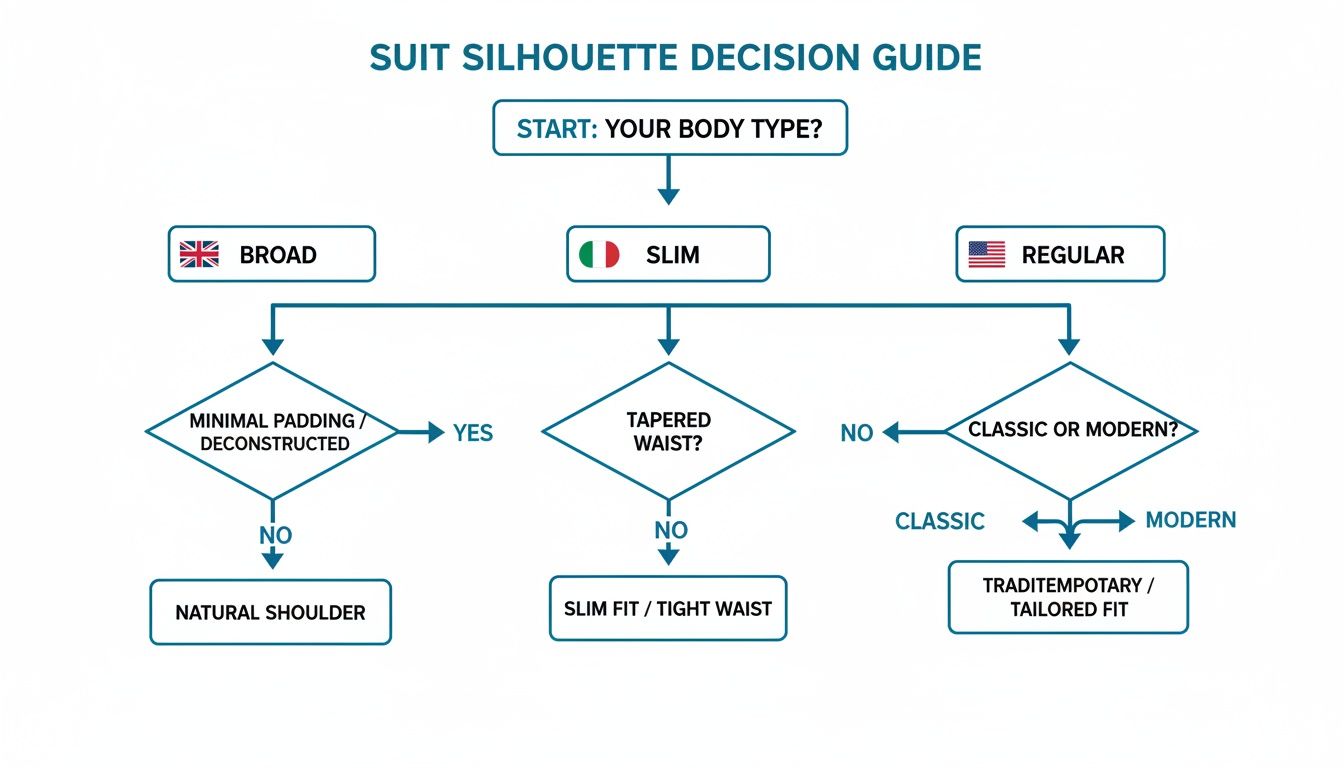
The following chart helps visualise how different silhouettes—often linked to classic British, Italian, and American styles—are best suited for various body types.
The key takeaway here isn't about chasing trends. It's about understanding the principles of proportion that will best complement your natural build, creating a silhouette that looks and feels right.
A suit's fabric choice is heavily influenced by the season and the formality of the occasion. Here is a simple guide to help you navigate the most common options and understand where each one shines.
Suit Fabric Seasonality and Formality Guide
Fabric
Primary Season
Formality Level
Key Characteristics
Worsted Wool
All-Season
High
Smooth, durable, versatile, drapes beautifully. The go-to for business.
Flannel
Autumn/Winter
Medium-High
Soft, brushed texture, excellent for adding warmth and visual depth.
Tweed
Autumn/Winter
Medium
Hardy, textured, traditionally rustic. Ideal for countryside and smart casual.
Linen
Spring/Summer
Low-Medium
Highly breathable, lightweight, prone to characterful wrinkling.
Cotton
Spring/Summer
Low
Crisp, structured, more casual than wool. Think chino or seersucker.
Velvet
Autumn/Winter
High (Evening)
Plush, rich texture, deep colour saturation. Perfect for black tie.
This table serves as a starting point. A great tailor can help you explore nuances within each category, such as high-twist wools for travel or wool-linen blends that balance elegance with comfort.
Decoding Classic Patterns
Once you've settled on a fabric, the pattern introduces another layer of personality. While a solid navy or charcoal suit is the most versatile starting point you can own, patterns add character and visual interest that can truly set you apart.
Each classic pattern tells its own story:
Pinstripes: Traditionally the uniform of finance and business, these fine vertical lines create a powerful elongating effect, making you appear taller and slimmer.
Herringbone: A subtle, V-shaped weaving pattern that adds rich texture without being loud. It's a fantastic way to bring depth to cloths like tweed or flannel.
Prince of Wales Check (Glen Check): A sophisticated pattern of large and small checks, often with a coloured overcheck. It projects an air of classic, countryside elegance.
Windowpane Check: A simple, confident pattern of intersecting lines forming large squares. It's a bolder, more contemporary choice that works beautifully on sports jackets.
Choosing a pattern is a bit like choosing your words. A solid colour is a clear, direct statement. A subtle herringbone is a quiet, confident whisper. And a bold check? That's an engaging conversation starter.
Ultimately, selecting the right fabric and pattern is a deeply personal process. It’s your opportunity to move beyond the basics and start crafting a look that is truly your own. By understanding this interplay between material, season, and pattern, you can build a collection of suits that aren't just garments, but genuine expressions of your individual style.
Matching Your Suit to the Occasion
Knowing which suit to wear for which occasion is every bit as important as how it fits. A beautifully tailored suit can still send all the wrong signals if it’s out of context. The way I see it, your suit is a form of communication—it needs to align with the tone of the event, showing you respect your host and the setting.
But navigating dress codes doesn’t have to be a minefield. Once you get your head around a few key categories, you can confidently pick out an outfit that’s not just appropriate, but a genuine reflection of who you are. This is your guide to making sure your suit always makes the right impression.
The Modern Workplace
The office dress code has never been more varied. The classic business formal suit is still a non-negotiable for serious corporate environments, client-facing roles, and big presentations. This usually means a dark charcoal or navy single-breasted suit in worsted wool, paired with a crisp white or light blue shirt and a conservative silk tie. It’s your professional armour.
Then you have smart casual, which is where many workplaces now live. This is your chance to inject a bit more personality. Think a blazer with a softer shoulder in tweed or flannel, worn with separate trousers like quality chinos or tailored wool flannels. It’s a style that opens the door to more creative uses of pattern and texture, finding that sweet spot between professional and individual.
The demand for menswear in the UK, covering both formal and casual styles, is a huge part of the economy. It brought in USD 35,223.1 million in 2024 and is expected to climb to USD 47,552.9 million by 2030, showing just how much men across the country value looking sharp in every setting. You can dive into the full research on this expanding sector at Grand View Research.
Celebrations and Weddings
Weddings and big celebrations are the perfect opportunity to wear a suit that feels, well, celebratory. For a traditional daytime wedding, you can’t go wrong with a mid-grey or petrol blue suit. If it’s a summer or destination wedding, you might want to consider lighter fabrics like linen or cotton blends, which look the part and keep you comfortable.
This is also where you can afford to experiment a little. A subtle Prince of Wales check or a well-chosen three-piece suit can add a touch of flair without any danger of upstaging the main event. It’s all about striking that balance between tradition and personal expression to create a look that feels special.
A business suit is your armour; a wedding suit is your celebratory attire. The first is about projecting competence and authority, while the second is about sharing in a moment of joy and elegance.
The Rules of Formalwear
When we step into the world of formalwear, especially Black Tie, the rules get a lot more specific. This is not the time for your go-to business suit. The absolute cornerstone of this dress code is the dinner jacket (or tuxedo), instantly recognisable by its satin-faced lapels—either a sharp peak or a soft shawl.
A classic Black Tie outfit is built from these key components:
A black or midnight blue dinner jacket: Midnight blue is a fantastic choice, as it often looks even richer and darker than black under artificial light.
Trousers: These should match the jacket perfectly and have a single satin braid running down the outside seam.
A white dress shirt: Traditionally, this will have a pleated or marcella bib front and double cuffs for cufflinks.
A black bow tie: It absolutely has to be one you tie yourself. No clip-ons.
Polished black shoes: Patent leather Oxfords are the classic, gold-standard choice.
Getting these details right is what allows you to walk into a formal event with complete confidence. For a deeper dive, particularly for wedding events, have a look at our detailed guide on what to wear to a black-tie wedding. Mastering these codes means you’ll not only honour the occasion but look your absolute best doing it.
The Art of Bespoke Tailoring
Step beyond the world of off-the-rack and even made-to-measure, and you’ll find bespoke—the truest expression of personal style. This isn't just about getting a suit that fits perfectly; it's a deep, collaborative process between you and a master tailor to forge a garment that is yours and yours alone. Here at Dandylion Style, that philosophy is the very heart of what we do.
The journey starts not with a tape measure, but with a conversation. In your first consultation with Igor, you’ll talk about your lifestyle, your tastes, and the story you want your suit to tell. This dialogue becomes the foundation upon which every single stitch is built, making sure the finished piece is a flawless extension of your personality.
The Craftsmanship of a True Bespoke Suit
What truly sets a bespoke garment apart are the details you often can't see, but can always feel. It’s about the countless hours of painstaking handwork that go into creating a suit with a life and soul of its own.
A cornerstone of this is the hand-sewn canvas. Unlike the fused or glued interlinings you find in most off-the-rack suits, a bespoke canvas is meticulously stitched by hand. This allows the jacket to gradually mould to your body over time, creating a superior drape and a level of comfort that a machine simply cannot replicate.
Another hallmark is the inclusion of thoughtful details like surgeon's cuffs, where the buttons on the sleeve are fully functional. What was once a practical feature for doctors is now a quiet but clear signal of genuine craftsmanship and an unwavering commitment to detail.
Bespoke tailoring is where clothing transcends function and becomes art. Each seam, stitch, and buttonhole is a deliberate choice, creating a garment that is not just worn, but experienced.
The Collaborative Design Process
Once the vision is clear, you move on to selecting the cloth from an exclusive library of the finest British fabrics. This tactile stage is where the suit's character really begins to emerge. The collaboration continues as you fine-tune every last detail, from the width of the lapel and the style of the pockets to the lining and the choice of buttons.
The pursuit of the perfect fit and personal style extends beyond suits; you can apply bespoke principles to other deeply personal items, like learning how to design your own bespoke engagement ring. This shared philosophy of creating something unique and meaningful is precisely what makes custom craftsmanship so special.
The UK's clothing retail industry, valued at an estimated £50.0 billion in 2025, is undergoing a fascinating shift. Social commerce is set to grow from £7.4 billion in 2024 to £16 million by 2028, showing just how much consumers are craving more personal and direct relationships with brands. This trend perfectly mirrors the bespoke experience, which has always been built on that direct, personal connection between client and artisan.
This is the pinnacle of the craft—where every single element comes together to create a unique style of suits that is an authentic reflection of you. If you're ready to explore this personal journey, you can begin to design a suit with us and experience the art of bespoke firsthand.
About the Author
Igor is the founder and creative force behind Dandylion Style, a bespoke house born from a deep-rooted passion for the art of gentlemen's clothing. His philosophy is simple: a well-made suit is more than just clothing—it's a powerful form of self-expression and a tool for building confidence. With an exacting eye for detail, Igor works personally with every client, ensuring each garment is a true reflection of the wearer's character, creating a style of suits that feels both timeless and perfectly pitched for the modern man.
Frequently Asked Questions
What is the best first suit a man can own?
A single-breasted, two-button suit in solid navy or charcoal grey worsted wool is the most versatile starting point. This classic style acts as the ultimate wardrobe chameleon, sharp enough for formal business meetings or a wedding, yet easily dressed down for smart-casual events. Its standard notch lapels and neutral colour provide the perfect canvas for almost any shirt and tie combination. This suit is the undisputed bedrock of a gentleman's wardrobe, ensuring you are appropriately turned out for nearly any occasion.
What’s the real difference between bespoke and made-to-measure?
The core difference lies in the pattern. A made-to-measure (MTM) suit begins with a pre-existing standard pattern, or 'block', which is then altered to fit your measurements. While it offers some customisation, you are fundamentally working within the limits of that initial template. Bespoke tailoring is entirely different. Your tailor drafts a unique pattern from scratch, based not just on measurements but on your posture and individual nuances. This allows for a far more precise fit and limitless customisation possibilities.
How many vents should my suit jacket have?
This choice largely depends on the style you want to achieve. Double vents, a hallmark of classic British tailoring, are often the most flattering and functional option for most men. They allow the jacket to drape cleanly over your seat, preventing it from bunching up when you sit or reach into your pockets. A single, central vent is more of an American style and lends a slightly more casual feel. Ventless jackets, favoured in Italian tailoring, offer the sleekest silhouette but sacrifice mobility.
Are double-breasted suits still in style?
Absolutely. Double-breasted suits have made a significant comeback and are firmly back in fashion. They are no longer seen as the stuffy, old-fashioned choice of a bygone era. Modern versions feature softer construction and a much sharper, more tailored fit, giving them a powerful and contemporary feel. They offer a confident alternative to the standard single-breasted jacket and make a real style statement. For anyone looking to elevate their tailored wardrobe, they are an excellent and stylish choice.
At Dandylion Style, Igor guides you through every decision, ensuring your finished garment is a perfect reflection of your personal style. Begin your bespoke journey and create a suit that is uniquely yours by visiting us at dandylionstyle.co.uk.
Written by:
Igor Srzic-Cartledge
Igor is the founder of Dandylion Style, a tailoring house built on the simple, deeply held belief that a suit should be like a second skin—a true extension of a gentleman’s personality. For Igor, tailoring isn't just about cutting cloth; it's an art form dedicated to creating unique, perfectly fitted attire for the discerning man. His passion is rooted in classic sartorial traditions, yet he maintains a keen eye for contemporary style, ensuring his creations are both timeless and relevant. This approach has cemented his reputation for genuine craftsmanship and a truly personal service.
Key Takeaways The Core Two: Navy blue and charcoal grey are the essential, non-negotiable suit colors for any professional wardrobe. Navy offers versatility and approachability, while charcoal projects authority and seriousness. Context is Crucial: The best suit color...
When you find a piece of clothing you absolutely love, getting the fit just right is the final, transformative touch. But how much should you expect to pay? In the UK, alteration costs can be as modest as £15 for a simple trouser hemming, or climb to £150 and beyond...
Getting the right pink shirt and tie combination is the mark of a well-dressed man. It’s a detail that separates the novices from those who truly understand their wardrobe. For a look that’s classic and can’t miss, pair your pink shirt with a navy, grey, or burgundy...
Key Takeaways For those seeking a quick overview, this section summarises the essential rules and recommendations for incorporating turn-up trousers into your wardrobe. Sartorial Purpose: Turn-ups add weight to the trouser hem, ensuring a cleaner, sharper drape,...
Deciding what colour tie to wear with a pink shirt is a common style query I hear from clients. For a classic, professional look that never fails, your safest and most effective choices are navy blue and charcoal grey. If you're heading to a more contemporary or...
You've just picked up a newly finished bespoke suit, and the cloth still has that clean, disciplined line only a real fitting room can give it. The temptation is to put it straight in the wardrobe and trust the label to do the rest. That's where expensive...
Book Your Tailoring Consultation
Looking for a suit or garment made specifically for you?
At Dandylion Style, we create bespoke and made-to-measure
garments tailored to your individual shape, style and occasion.
From suits and shirts to dresses, waistcoats and alterations,
our experienced tailors can help you create something truly unique.