It’s a point of confusion that trips up even seasoned dressers: what, precisely, is the difference between a button-up and a button-down shirt? The terms are often used interchangeably, but for a gentleman looking to command his wardrobe, the distinction is fundamental.
Key Takeaways
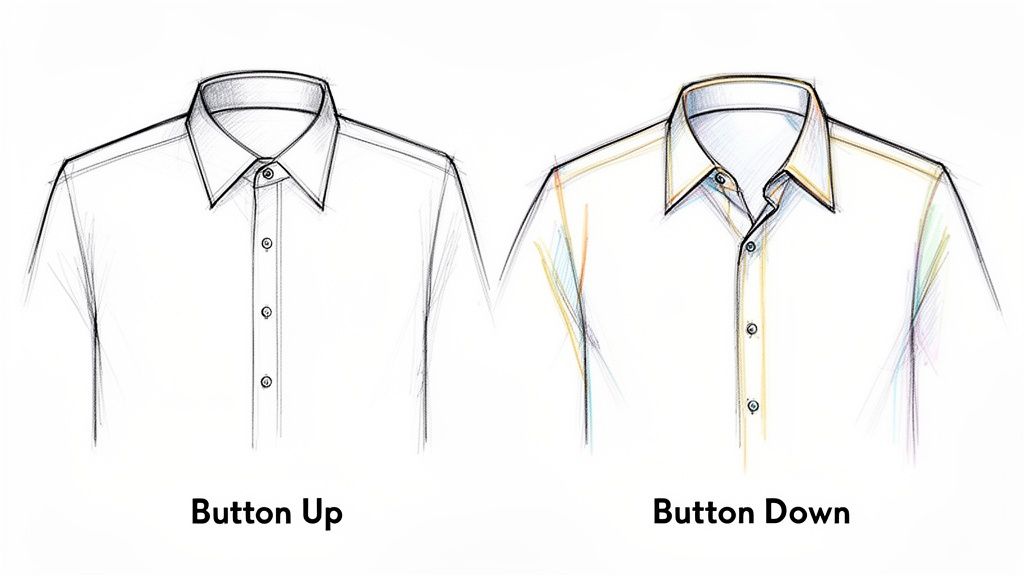
Button-Up vs. Button-Down: A button-up is any shirt that buttons up the front. A button-down is a specific type of button-up, distinguished by small buttons that fasten the collar points to the shirt.
Formality is Key: Button-up shirts with spread or point collars are more formal, designed for suits and ties. Button-down shirts have sporting origins and are inherently more casual, perfect for smart-casual settings.
Occasion Dictates the Choice: Wear a button-up shirt for formal events, business meetings, and any occasion requiring a tie. Opt for a button-down for business-casual offices, weekend events, or when pairing with a blazer without a tie.
Bespoke Matters: A bespoke approach elevates either style by ensuring a perfect fit, superior fabric choice (like crisp poplin for a button-up or soft Oxford cloth for a button-down), and flawless construction details, such as the collar's "roll."
Defining Button-Up vs Button-Down Shirts
The secret, as is so often the case in fine tailoring, lies in the collar. A button-up refers to any shirt that fastens with a placket of buttons running up the front. It’s a broad, all-encompassing category.
A button-down, on the other hand, is a specific type of button-up shirt. Its defining feature is the pair of small buttons that fasten the points of the collar directly to the shirt’s fabric.
While every button-down is technically a button-up, the reverse is certainly not true. This single detail—those two little buttons—dramatically alters the shirt’s formality, its history, and how it should be worn.
At Dandylion Style, mastering this nuance is the first step in commissioning the perfect garment. A crisp spread collar button-up is essential for a formal Sussex wedding, whereas a soft Oxford button-down is the cornerstone of relaxed weekend elegance. The choice is significant. You can explore our approach to crafting perfectly fitted shirts that honour these essential tailoring traditions.
To put it simply, here’s how they compare at a glance.
Feature
Button-Up Shirt
Button-Down Shirt
Collar
Unfastened; comes in various styles (spread, point, cutaway).
Collar points are fastened to the shirt body with small buttons.
Formality
Generally more formal; the standard for business and formal events.
More casual by nature; a quintessential smart-casual staple.
Category
A broad term for any shirt with a front button placket.
A specific subtype of the button-up shirt, defined by its collar.
Decoding The Difference: It’s All in The Collar
To settle the great button-up vs. button-down debate, you need to look at just one thing: the collar. It really is that simple.
Think of 'button-up' as the umbrella term for any shirt that fastens down the front with a full placket of buttons. It’s the broad category that nearly all dress shirts fall into.
The 'button-down', on the other hand, is a very specific type of button-up shirt. What sets it apart are the two small, functional buttons that fasten the points of the collar directly to the shirt's fabric. This single detail changes everything about the shirt's character and intended use.
This design wasn’t born in a fashion house; it was engineered for the polo field. British polo players in the late 19th century needed a clever way to stop their collars from flapping up into their faces during a match. The solution was simple and brilliant: just button them down.
This sporting heritage fundamentally grounds the button-down in a world of refined, yet practical, casualness. It’s a detail engineered for movement and ease, which is why it retains a more relaxed spirit to this day.
This practical origin story is a world away from the purpose of a formal button-up, where the collars are left unfastened to perform a very different, much more aesthetic, role.
The Anatomy Of A Formal Collar
A formal button-up shirt features a range of structured, unbuttoned collar styles, each designed with a clear sartorial goal. These collars are built to be the perfect frame for a tie, creating that sharp, intentional silhouette essential for professional and formal settings.
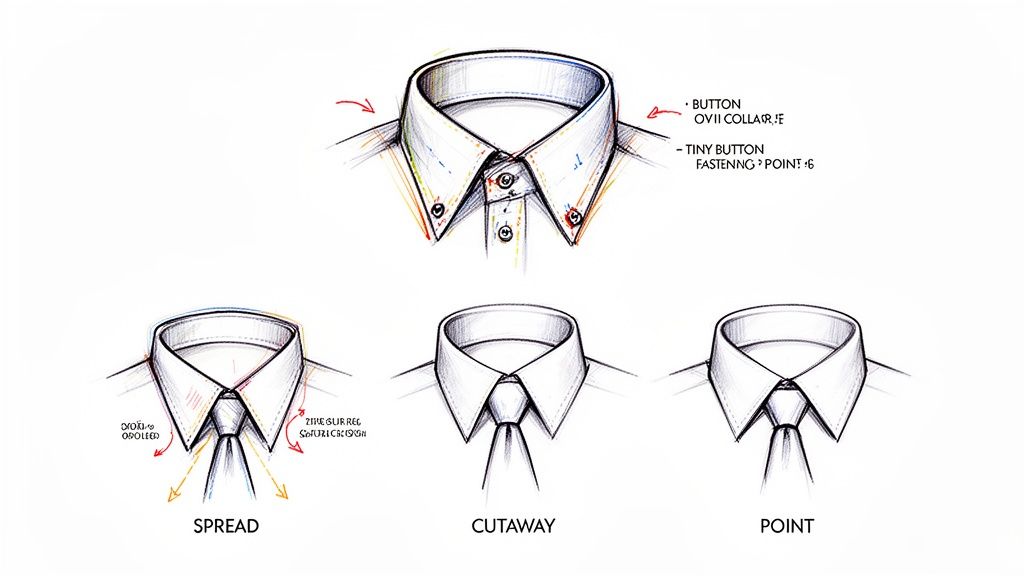
Some of the most common formal collar styles include:
The Point Collar: This is the most traditional style, with its collar points set close together. The narrow gap it creates is perfect for smaller, classic tie knots.
The Spread Collar: A wonderfully versatile and popular choice. Its points are spread wider apart, making it an elegant home for a Half-Windsor or full Windsor knot.
The Cutaway Collar: An even more dramatic and confident take on the spread, with points that angle sharply back towards the shoulders. It makes a bold statement and demands a substantial tie knot.
Each of these is constructed with internal stiffeners—known as stays—to keep them crisp and maintain their shape all day. This structure is non-negotiable for professional or ceremonial wear, as it projects an air of precision and authority. For an interesting hybrid that merges a unique collar with this functionality, consider a long-sleeve button-down silk top with a band collar.
Purpose Dictates Design
At the end of the day, the presence or absence of those two tiny collar buttons determines a shirt’s entire purpose.
The crisp, floating collar of a formal button-up is specifically designed to support the knot of a tie, making it the only real choice for business suits, formal events, and black-tie. If you're weighing your options for a formal occasion, our guide on the right shirt to wear with a dinner jacket offers more detailed advice.
In contrast, the secured collar of a button-down creates a softer profile and a gentle 'roll', establishing it as the king of smart-casual. So, the button-up vs. button-down shirt question is really answered by asking another: where are you going? The answer always begins, and ends, with the collar.
The Heritage Behind Each Shirt Style
To truly grasp the distinction between a button-up and a button-down, you have to look beyond the collar. You have to look at the story woven into its very fabric. The history of a shirt dictates its formality and its rightful place in a gentleman's wardrobe, telling a tale rooted in either aristocratic sport or the evolution of formal menswear.
The button-down shirt’s journey began not in a quiet tailor's workshop, but on the polo fields of late 19th-century England. This is where the story starts. British polo players, frustrated by their stiff collars flapping about during high-speed chukkas, came up with a brilliantly simple solution: they sewed buttons onto their shirt points to fasten them down. This practical innovation, born from necessity, later crossed the Atlantic to find a home on Ivy League campuses but its origins are firmly British. By the 1920s, the style had found its way into the casual wardrobes of the gentry, particularly in rural counties like Sussex and Kent. You can explore more data on British apparel trends on Statista.com.
From The Polo Field To The Ivy League
This sporting origin cemented the button-down’s identity as an icon of smart-casual style. It carries an air of relaxed confidence, a perfect blend of practicality and polish that made it a natural fit for the burgeoning "Ivy League" look in America during the mid-20th century.
Worn with tweed jackets, chinos, and loafers, it became shorthand for a certain kind of educated, understated elegance. The gentle 'roll' of the collar, a hallmark of a well-made button-down, speaks directly to this heritage—it’s less rigid, more expressive, and altogether more comfortable than its formal counterpart. It was, and still is, a shirt for a gentleman at ease.
The Formal Lineage Of The Button-Up Shirt
In stark contrast, the classic button-up shirt comes from a much more formal lineage. Its history is tied directly to the development of 19th-century dress codes and the rise of the modern suit as the de facto uniform for business and society. As menswear shed the ornate styles of previous centuries, a cleaner, more structured aesthetic took hold.
The primary function of the formal button-up was to act as a pristine canvas for a tie. Its clean, unadorned collar—whether a point, spread, or cutaway—was engineered to stand crisply, providing the perfect frame for a gentleman's neckwear. This shirt was never meant for sport; it was designed for the boardroom, the evening reception, and ceremonial occasions.
A formal button-up shirt is an architectural garment. Its purpose is to create clean lines and support the structure of a suit and tie, conveying authority and a respect for occasion.
This historical context really sets the stage for the fundamental roles of each shirt. The button-up is the default, the standard-bearer for any formal event. It is the correct and only choice for black-tie affairs, corporate settings, and any situation where professionalism is paramount. Its heritage is one of structure, decorum, and sartorial precision.
The button-down, with its roots in aristocratic leisure, offers a stylish counterpoint. It’s the versatile choice for occasions that demand polish without rigidity—the smart business-casual meeting, a weekend lunch in the country, or an evening out with friends. Its history gives it a character that is approachable yet always refined, making it an indispensable part of a modern gentleman's wardrobe, perfectly realised through the lens of timeless British tailoring.
How to Choose The Right Shirt for Any Occasion
Understanding a shirt’s heritage is one thing; knowing precisely when to wear it is another matter entirely. The distinction between a button up and a button down isn't just a bit of sartorial trivia—it's a practical tool for building a versatile and appropriate wardrobe. Choosing correctly ensures you project the right level of respect and style for any event, from a formal ceremony to a relaxed weekend get-together.
Making the right choice really just hinges on context. The formality of the occasion, whether you’ll be wearing a tie, and the overall look you're aiming for will all point you in the right direction. A well-dressed gentleman doesn’t just wear beautiful clothes; he wears the right clothes for the moment.
For Formal Weddings and Black-Tie Events
When an invitation calls for formal attire, like a black-tie wedding, there’s only one answer: a classic button-up shirt. The structured, unfastened collar of a button up is specifically designed to provide the perfect frame for a bow tie or a traditional necktie, creating the crisp, clean lines that formality demands.
A spread or cutaway collar is perfect here, as its wider points sit elegantly under the lapels of a dinner jacket or a dark suit. A button-down collar, with its soft roll and sporting history, would simply look out of place and throw off the entire intended elegance.
The rule is simple: if a tie is required, a button-up shirt is non-negotiable. Its whole purpose is to support the neckwear and complete that formal silhouette.
For The Boardroom and Key Business Meetings
In a professional corporate environment, the button-up shirt remains the undisputed champion. It communicates authority, seriousness, and a respect for tradition. Paired with a well-tailored suit, a crisp poplin or twill button up signals that you're there to conduct business with precision and confidence.
Button-up shirts, with their more formal spread collars, are a cornerstone of UK business and wedding tailoring, completely dominating high-stakes occasions. Originating from 19th-century British evening dress codes, these shirts are found in 68% of three-piece suit ensembles in South East England, according to luxury tailoring surveys. For wedding parties, button-ups are the clear winner: 75% of Sussex grooms select them for black-tie events, often paired with handmade ties from Dandylion that offer the superior stiffness needed for bow ties. You can discover more insights about these tailoring trends on Accio.com.
For The Business-Casual Workday
This is where the button-down shirt really comes into its own. In a modern business-casual office, a button-down strikes the perfect balance between professional and approachable. Its softer collar, worn without a tie, looks intentional and put-together, avoiding that collapsed, untidy look a formal button-up collar can get when left unbuttoned.
Try pairing a high-quality Oxford cloth button-down with a blazer or sports coat, smart trousers, and some leather loafers. This look projects confidence and style without feeling overly rigid. It’s the ideal uniform for a creative meeting, a client lunch, or a day when you need to be both productive and comfortable. For more styling inspiration on this look, you can check out our guide on how to artfully wear a suit without a tie.
For a Relaxed Weekend
For weekend brunches, countryside walks, or a casual evening at the pub, the button-down shirt offers unmatched versatility. It can be dressed down effortlessly, worn on its own with chinos or smart denim, or layered under a chunky knit sweater or a casual field jacket.
Its inherently relaxed nature means it never looks like you’ve just stepped out of the office. A linen button-down in the summer or a soft flannel version in the autumn provides both comfort and a touch of refinement, making sure you look sharp even in your most off-duty moments.
Sometimes you just need a quick answer. Here’s a simple guide to help you decide which shirt to grab at a glance.
Button Up vs Button Down Occasion Quick Reference Guide
Occasion
Recommended Shirt Style
Why It Works
Tie Recommendation
Formal Wedding
Classic Button Up
Its structured collar is essential for elegantly framing a bow tie or necktie.
Required (Bow Tie/Silk Tie)
Business Meeting
Classic Button Up
Projects professionalism and authority; designed to be worn with a suit.
Required (Silk/Grenadine)
Business-Casual Office
Button Down
Appears polished without a tie and pairs perfectly with a blazer.
Optional (Knitted/Wool)
Weekend Casual
Button Down
Offers a relaxed yet refined look that's versatile for layering.
Not Recommended
Ultimately, knowing which shirt to choose boils down to respecting the occasion. A button-up prepares you for formality and tradition, while a button-down offers a polished yet relaxed alternative for everything else.
The Bespoke Advantage in Fabric and Fit
Once you’ve grasped the difference between a button-up and a button-down, the conversation naturally evolves. It moves from what shirt to wear, to how that shirt should be made. This is where the real artistry of tailoring enters the picture, turning a simple garment choice into a deeply personal expression of style. Any decent ready-to-wear shirt can get the category right, of course, but only a bespoke piece can truly perfect the execution.
The journey starts with the cloth, which is absolutely fundamental in defining the shirt's character. For a formal button-up, designed to sit flawlessly under a suit jacket, a high-quality poplin or twill is the ideal foundation. These fabrics have a smooth, tight weave that provides just the right amount of structure and a subtle lustre, ensuring the collar stands proud and the cuffs hold their shape perfectly.
A button-down shirt, on the other hand, comes alive in fabrics with a softer, more relaxed feel. Classic Oxford cloth is the quintessential choice; its distinctive basket-weave texture lends a smart-casual air that's both durable and incredibly comfortable to wear. For warmer weather or a more leisurely occasion, nothing beats the breathability and distinguished, lived-in elegance of linen or a good linen-cotton blend.
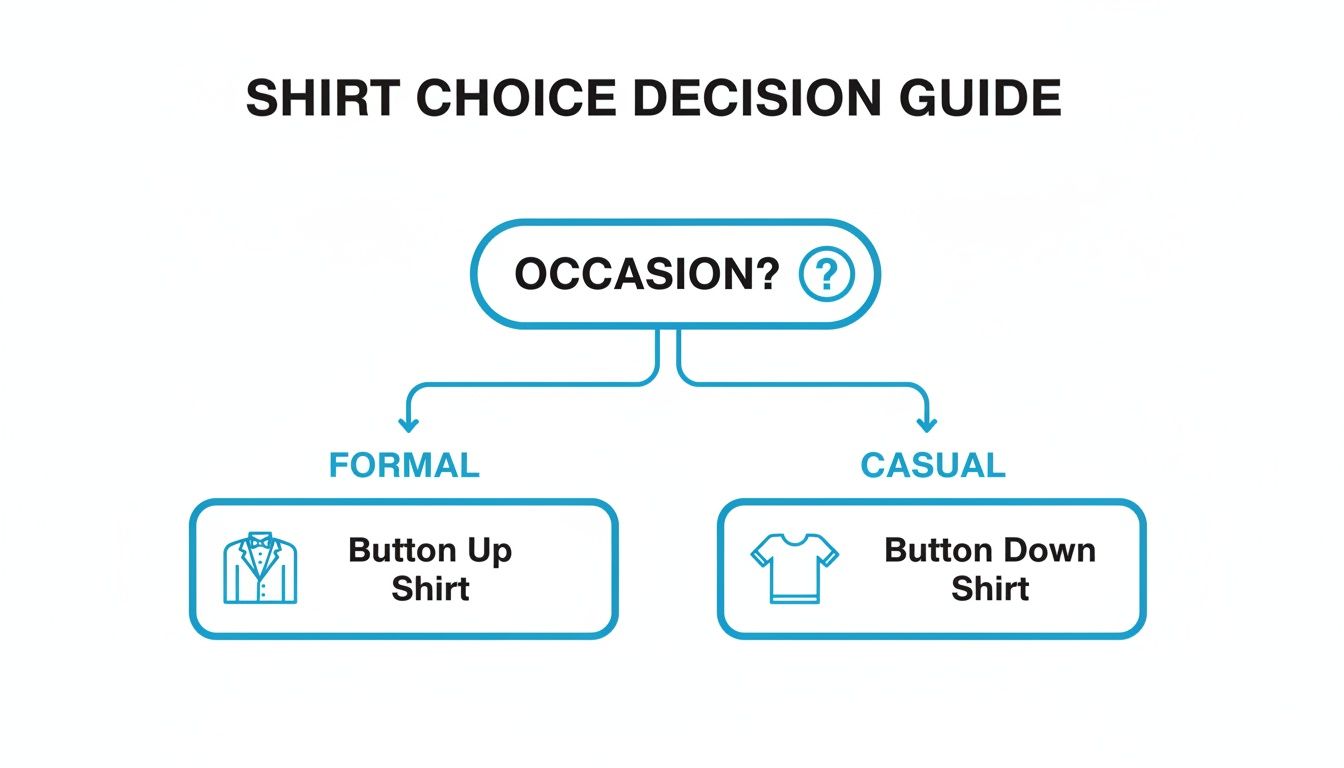
This simple decision guide helps to visualise which path to take, based entirely on the occasion.
As you can see, the event is the main driver. It will point you towards the crisp structure of a button-up for more formal affairs, or the easy-going versatility of a button-down when the setting is more relaxed.
Crafting The Perfect Collar and Fit
Beyond the fabric itself, a master tailor’s skill is most obvious in the construction of the collar. For a button-down, achieving the perfect ‘S-roll’—that gentle, graceful curve of the collar points—is a true hallmark of superior craftsmanship. It’s an effect that can’t be rushed; the collar is carefully shaped and sewn to create a soft, expressive frame for the face, something mass production simply cannot replicate.
For a formal button-up, the focus shifts to structure and precision. A bespoke tailor will ensure the collar's spread, height, and stiffness are perfectly calibrated to complement your facial structure and the type of tie knot you favour. This isn't just a small detail; it's what ensures the collar frames your tie perfectly throughout the day, without any hint of collapsing or pulling.
Here in the UK, the button-down's popularity is surging. In fact, market data suggests the UK shirt market will reach US$5.56bn by 2025, with button-downs expected to capture 28% of the men's casual segment. For our Dandylion Style clientele across Sussex and London, button-downs made from fine British fabrics have a multi-functional appeal. It's no surprise that 70% of our bespoke shirt commissions are specifically designed to transition seamlessly from the office to the weekend.
Eliminating Off-The-Rack Compromises
Ultimately, the most significant benefit of a custom approach is the fit. Off-the-rack shirts nearly always force you into a compromise. A collar that fits might mean a body that's too baggy, or sleeves that are just that little bit too long. A bespoke shirt, however, is built from a unique pattern created just for you.
The essence of bespoke is the elimination of compromise. Every element—from the shoulder slope and cuff circumference to the shirt's length—is cut and sewn to your exact measurements, resulting in a garment that feels like a second skin.
This precision is what elevates a good shirt into a truly exceptional one. Understanding the difference between a button-up and a button-down is the starting point. Bringing that choice to life with the perfect fabric, collar construction, and an impeccable fit is the bespoke advantage. For those keen to explore custom tailoring further, our guide on made to measure vs bespoke offers more detailed insights.
Final Recommendations From a Master Tailor
After exploring the heritage, construction, and etiquette of the button-up versus the button-down, the final decision rests not on a set of rigid rules, but on your personal context. There is no universally ‘better’ shirt—only the right shirt for the man, the moment, and the purpose at hand. The true art of dressing well lies in making that choice with confidence and intention.
As a tailor, my role is to guide you through this decision, ensuring the garment you choose not only fits the occasion but also perfectly reflects your personal aesthetic. The most important questions are always about you: your lifestyle, your profession, and the events that fill your calendar.
Your Personal Decision Framework
To find your perfect shirt, consider these three pillars. They will guide you far better than any passing trend or generic style advice ever could.
Your Lifestyle: Are your days spent in formal boardrooms or creative studios? Do your weekends involve country walks in Sussex or city dinners in London? Answering this will immediately tell you whether the structured button-up or the versatile button-down should be the workhorse of your wardrobe.
Your Personal Aesthetic: Do you favour a sharp, clean silhouette, or do you gravitate towards a softer, more relaxed elegance? Your innate style should be the foundation of our conversation. A bespoke shirt is an extension of your personality, not a costume.
Your Upcoming Events: Look at your calendar for the next six months. Are there weddings, important business presentations, or milestone celebrations? Planning your shirt commissions around these key moments ensures you are always impeccably prepared.
Ultimately, a shirt is a tool. The button-up is a precision instrument for formal occasions, while the button-down is a versatile multi-tool for smart, everyday life. Choosing correctly is the first step towards effortless style.
Beyond the cut of the cloth, achieving a professional finish—with crisp, flat seams vital for a perfect fit—often involves using a tailor's clapper during the pressing stage to set seams perfectly. It is this unwavering attention to every small detail that truly defines craftsmanship.
At Dandylion Style, our process is a calm, considered conversation about these very elements. We invite you to our Ardingly studio to explore our collection of fine British fabrics and receive expert, honest guidance. Together, we will translate your needs into a perfectly crafted bespoke shirt—a garment that feels entirely, enduringly, your own.
Frequently Asked Questions
What is the simple difference between a button up and a button down shirt?
The core difference is in the collar. A button-up refers to any shirt with a front button placket, encompassing many styles. A button-down is a specific type of button-up shirt where the collar points have small buttons that fasten them to the shirt's fabric. This single detail makes the button-down more casual by nature, stemming from its origins in British polo where players needed to keep their collars from flapping. Essentially, every button-down is a button-up, but not vice-versa.
Can I wear a tie with a button-down shirt?
Yes, you certainly can. This pairing is a classic smart-casual look, popular in both British and Ivy League style. The key is to choose the right kind of tie. Opt for more textured, less formal neckwear, such as a wool, grenadine, or knitted silk tie, which complements the relaxed nature of the button-down collar. Avoid shiny, formal silk ties, as they can create a stylistic clash. A well-made button-down collar will have a gentle "roll" that beautifully frames the tie knot.
Which shirt is more formal, a button-up or a button-down?
A button-up shirt is definitively more formal. Its unfastened collar styles—like the spread, point, or cutaway—are specifically designed to be worn with a tie and sit crisply under a suit jacket or blazer. This structure makes it the non-negotiable choice for business, formal events, and black-tie occasions. The button-down, with its sporting heritage and softer collar, is the quintessential smart-casual shirt. Its purpose is to look polished and intentional without the rigid formality of its counterpart.
What is an Oxford shirt?
This often causes confusion, but it’s quite simple: "Oxford" refers to the fabric, not the collar style. Oxford is a durable, basket-weave cotton cloth known for its texture and comfort. While many Oxford cloth shirts are made with button-down collars—creating the iconic "Oxford button-down"—the fabric can also be used for button-up shirts with other collar types. So, a shirt can be an Oxford button-down, an Oxford button-up, or just a button-down made from a different fabric like poplin or linen.
Why should I invest in a bespoke shirt?
Investing in a bespoke shirt is about achieving a level of fit, quality, and personalisation that ready-to-wear garments cannot offer. A bespoke shirt is made from a pattern created exclusively for your body, ensuring a perfect drape without any pulling or excess fabric. You also gain complete control over every detail, from the choice of the finest British fabrics to the specific collar style, cuff shape, and button selection. It is a long-term investment in a garment that is crafted to last and fit you flawlessly.
About The Author
Igor is the founder and master tailor behind Dandylion Style, a luxury bespoke tailoring house nestled in Ardingly, West Sussex. With a deep-seated passion for the art of classic British tailoring and a steadfast commitment to his craft, Igor creates truly one-of-a-kind garments that are as personal as they are enduring. He works with Britain's finest fabrics—from rugged tweeds to sumptuous cashmeres—shaping each commission with precision and a calm, considered hand. Igor’s expertise guides his clients through every last detail, ensuring each suit or shirt is a perfect reflection of their own personal style.
Key Takeaways The Core Two: Navy blue and charcoal grey are the essential, non-negotiable suit colors for any professional wardrobe. Navy offers versatility and approachability, while charcoal projects authority and seriousness. Context is Crucial: The best suit color...
When you find a piece of clothing you absolutely love, getting the fit just right is the final, transformative touch. But how much should you expect to pay? In the UK, alteration costs can be as modest as £15 for a simple trouser hemming, or climb to £150 and beyond...
Getting the right pink shirt and tie combination is the mark of a well-dressed man. It’s a detail that separates the novices from those who truly understand their wardrobe. For a look that’s classic and can’t miss, pair your pink shirt with a navy, grey, or burgundy...
Key Takeaways For those seeking a quick overview, this section summarises the essential rules and recommendations for incorporating turn-up trousers into your wardrobe. Sartorial Purpose: Turn-ups add weight to the trouser hem, ensuring a cleaner, sharper drape,...
Deciding what colour tie to wear with a pink shirt is a common style query I hear from clients. For a classic, professional look that never fails, your safest and most effective choices are navy blue and charcoal grey. If you're heading to a more contemporary or...
You've just picked up a newly finished bespoke suit, and the cloth still has that clean, disciplined line only a real fitting room can give it. The temptation is to put it straight in the wardrobe and trust the label to do the rest. That's where expensive...
Book Your Tailoring Consultation
Looking for a suit or garment made specifically for you?
At Dandylion Style, we create bespoke and made-to-measure
garments tailored to your individual shape, style and occasion.
From suits and shirts to dresses, waistcoats and alterations,
our experienced tailors can help you create something truly unique.