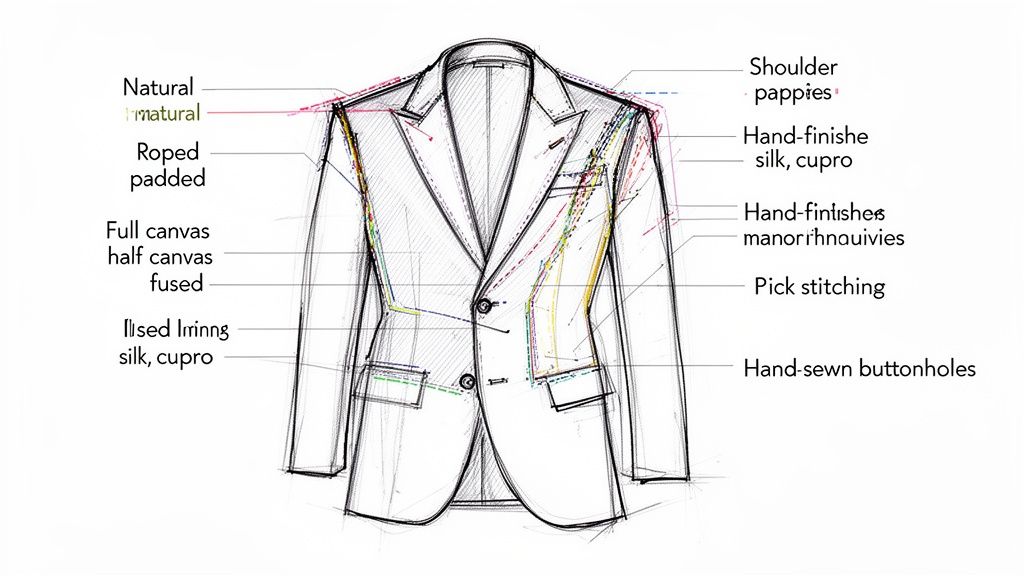
To commission a suit that feels truly yours, you first have to speak the language. It’s a rewarding process, but knowing the difference between a lapel and a vent, or understanding how pleats and the break of a trouser shape the final look, is essential. Each choice, from the cut of the jacket to the style of the waistcoat, is a brushstroke in the final portrait.
These decisions are what define a suit’s formality, its character, and ultimately, your personal style.
Key Takeaways: Deconstructing the Modern Suit
Think of this as your quick reference guide—a brief introduction to the anatomy of a gentleman's suit. We'll touch on the critical components of the jacket, trousers, and the optional waistcoat. Getting familiar with these elements is the first step towards making choices you’ll be happy with for years to come.
This will give you an immediate grasp of the key tailoring terms we’ll be exploring in more detail.
Jacket Essentials: The real character and structure of a jacket come from its lapels, vents, pockets, and the all-important internal canvassing.
Trouser Details: A trouser’s fit is dictated by the style of its waistband, the presence (or absence) of pleats, and how the hem ‘breaks’ over your shoes.
Waistcoat Styles: This third piece is a classic way to add formality, and its impact is shaped by the button configuration and the cut.
With this foundation set, you're ready to begin your bespoke journey.
The Suit Jacket Anatomy Explained
The jacket is the undisputed centrepiece of any suit, the garment that truly defines its silhouette and sets the tone for its formality. Every choice matters. The key parts of the suit jacket—from the lapels and buttons to the pockets and vents—offer a host of distinct style variations that we, as tailors, guide our clients through every day.
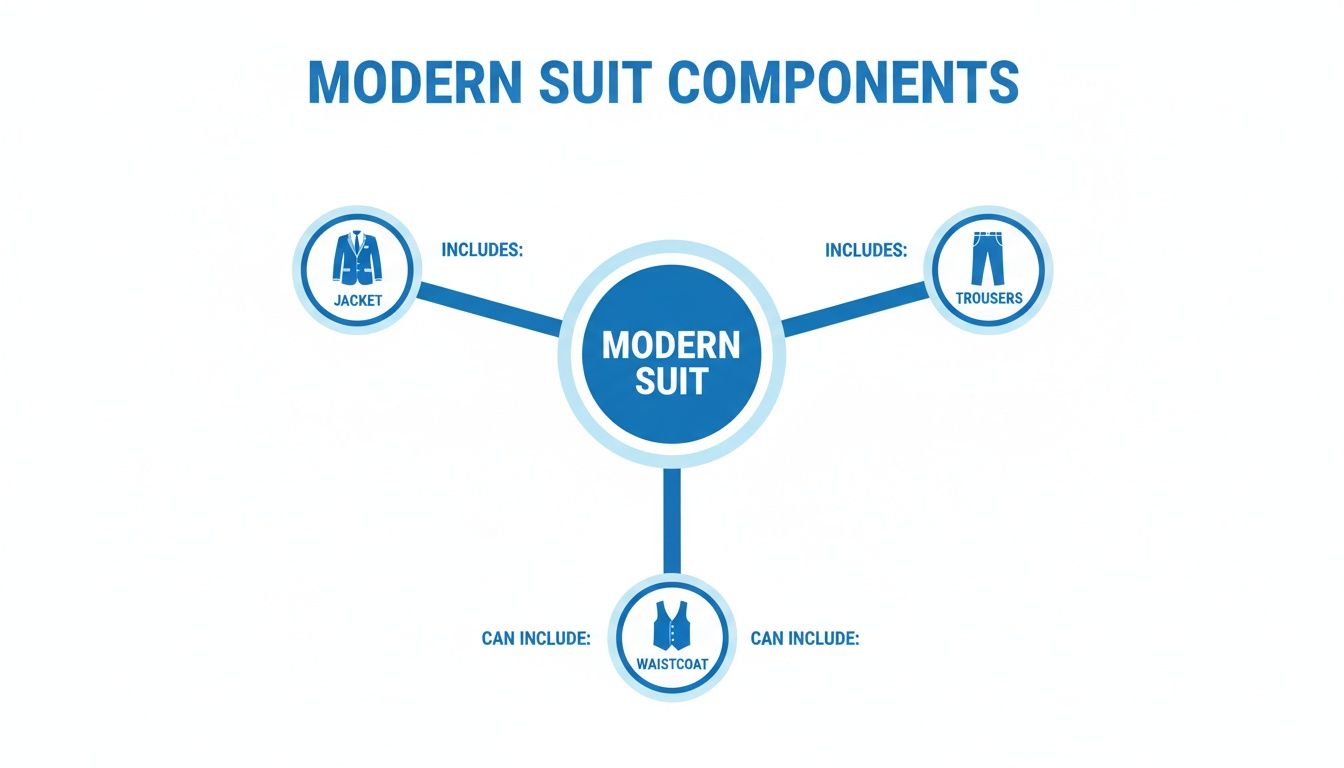
This visual guide breaks down how the jacket, trousers, and optional waistcoat come together to form the modern suit as we know it.
As you can see, every single component, from the roll of the lapel of a jacket down to the break of the trouser, must work in perfect harmony. In the UK, the enduring significance of quality tailoring is clear in recent market trends. Suppliers have reported a staggering 123% increase in orders for internal components like linings and canvas, a sure sign of strong confidence in the industry's future. You can read more about the UK garment industry's future growth from Just-Style.com.
Understanding Your Suit Trousers
A suit is far more than just its jacket; the trousers are every bit as essential in shaping the final silhouette. They are the foundation of the look, and getting the details right is what separates a decent suit from an impeccable one.
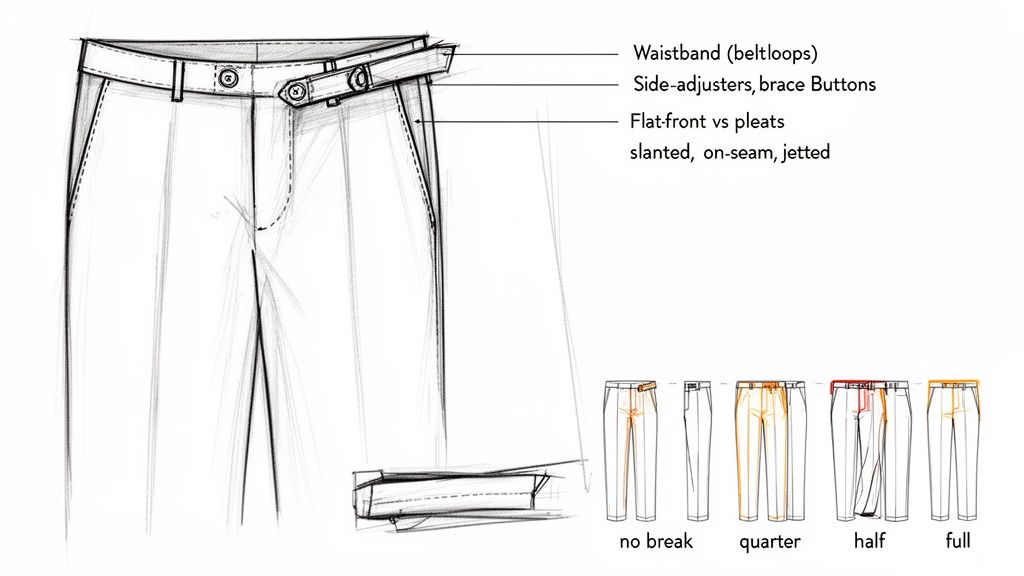
From the waistband down to the hem, every choice matters. Will you go for classic belt loops, sleek side-adjusters, or the traditional formality of brace buttons? Then there's the front: a clean, modern flat-front style, or the timeless comfort and drape of pleats? Each decision subtly shifts the overall impression.
Perhaps the most scrutinised detail is the ‘trouser break’—that subtle fold of fabric where the hem meets your shoes. Getting this just right can make or break an entire outfit, and we go into all the nuances in our guide on how should suit trousers fit.
It’s this level of detailed craftsmanship that explains why, in a high-end bespoke suit, the trousers can account for 30-40% of the total cost. It’s a testament to their importance, a fact reflected across the premium tailoring market and its recent growth.
The Waistcoat: A Mark of Distinction
More than just an extra layer, the waistcoat (or vest, if you prefer) is what elevates a two-piece into a full, distinguished three-piece suit. It’s the sartorial bridge that creates a seamless, elegant line from jacket to trousers, ensuring you look perfectly put-together even with your jacket unbuttoned.
Whether you lean towards a classic single-breasted style or a more commanding double-breasted cut, the waistcoat is a defining feature. Getting it right means considering key parts of the suit like the number of buttons, the presence (or absence) of lapels, and the essential rear cinch for a flawless fit. For a much deeper dive, we have a complete guide to our tailor-made waistcoats.
The Hidden Details: A Look Inside Your Suit's Construction
While the cut of the lapel and the style of the pockets define a suit's personality, it's the unseen internal construction that truly dictates its lifespan, comfort, and how it drapes across your body. The most critical of these hidden parts of the suit is the canvassing—the interlining that gives the jacket its shape and structure.
In a truly bespoke garment, this layer is what we call 'fully canvassed'. It's a carefully crafted interlining of horsehair and wool, meticulously stitched between the outer cloth and the inner lining. It's this canvas that, over time, gradually moulds to your unique shape, creating a fit that simply can't be replicated off-the-rack. This is the very soul of genuine craftsmanship.
Of course, other internal elements play their part. The choice of lining (we favour silk or breathable cupro), the build of the shoulder (a structured 'roped' shoulder versus a soft, natural one), and the subtle hand-finishing details like pick stitching all contribute to the suit's feel and durability. These are the details that justify a true investment in quality.
A Quick Guide to Jacket Construction
Understanding the different methods of canvassing is key to knowing what you're investing in. Here’s a simple breakdown to help you distinguish between the options available.
Suit Canvassing Comparison
Construction Type
Description
Benefits
Ideal For
Full Canvas
A layer of canvas (typically horsehair & wool) runs from the shoulder to the hem, stitched to the outer fabric.
Superior drape, moulds to the body over time, exceptional longevity, and breathability. The gold standard.
The discerning client seeking a true bespoke investment piece for any occasion.
Half Canvas
The canvas layer extends from the shoulder down to the middle of the chest. The lower part is fused (glued).
Offers good structure and drape in the chest and lapel area at a more accessible price point.
A great balance of quality and value, suitable for business suits and frequent wear.
Fused
An adhesive interlining is glued to the entire front of the jacket. The quickest and cheapest method.
The most affordable option, provides a clean but often stiff and less durable structure.
Off-the-rack suits or those on a strict budget. We do not use this method for our garments.
Ultimately, a full-canvas construction is the hallmark of high-quality tailoring. It allows the suit to move with you and evolve, becoming a second skin—a difference you can truly feel.
A Glossary of Suit Fabrics and Finishing Touches
The real character of a suit isn't just in the cut; it’s defined by the cloth you choose and the small, deliberate details that bring the whole thing together. This quick guide will walk you through the essential finishing parts of the suit that elevate it from a simple garment to something that feels truly yours.
From the weight and texture of the fabric—be it classic wool, rugged tweed, or breathable linen—to the choice of horn or corozo buttons, every single element matters. It's the finishing touches like surgeon’s cuffs (working buttonholes) and the subtle pick stitching along a lapel that are the true hallmarks of craftsmanship. To really get into the specifics of materials, you can explore our dedicated guide on the best fabrics for suits.
Commissioning Your Bespoke Suit at Dandylion Style
Getting to grips with every part of a suit is really the first step in creating a garment that feels truly yours. Here at Dandylion Style, Igor will personally walk you through every decision, making sure each detail—from the cut of your lapel to the unseen construction inside—is perfectly aligned with what you need, whether it’s for a wedding, the boardroom, or a relaxed weekend.
When you decide to commission a suit, it’s about more than just measurements; it's about understanding the art of true bespoke tailoring. This is a collaborative journey, one that underscores the value of a garment where every single stitch has a purpose, resulting in a flawless fit and a style that will stand the test of time.
To start this journey and see how we craft our exceptional bespoke suits, take a look at our process.
Frequently Asked Questions About Suit Anatomy
What are the three main parts of a suit?
A traditional gentleman's suit consists of three primary components: the jacket, the trousers (or pants), and the waistcoat (or vest). While a two-piece suit (jacket and trousers) is common for business and casual wear, the three-piece ensemble adds a layer of formality and classic elegance. Each part has its own set of customisable details, like lapel style on the jacket or pleats on the trousers, which collectively define the suit's character and are essential to understand when commissioning a bespoke garment.
What is the most important part of a suit jacket?
The internal construction, specifically the canvassing, is the most crucial part of a suit jacket. A full canvas, made of materials like horsehair, is stitched into the jacket's front, allowing it to drape naturally and mould to your body over time. This is the foundation of a high-quality, long-lasting garment. While visible parts like the lapels define the style, the unseen canvas dictates the suit's shape, comfort, and durability, making it the true hallmark of superior tailoring.
How do vents on a suit jacket work?
Vents are the slits at the back of a suit jacket, designed to improve comfort and freedom of movement. A centre vent is a single slit, common in classic American tailoring, offering a clean look. Double vents, one on each side, are a hallmark of English tailoring and are generally preferred as they prevent the jacket from creasing when you sit and allow for a more flattering drape across the back. The choice between them influences both the functionality and the silhouette of the suit.
Why are working buttonholes on a suit cuff important?
Working buttonholes on a suit cuff, known as 'surgeon's cuffs', are a subtle but significant sign of high-quality, bespoke tailoring. Historically, they allowed doctors to roll up their sleeves. Today, they are a hallmark of craftsmanship because creating them requires precision and skill that is not feasible for mass-produced, off-the-rack garments. Leaving the last button undone is a quiet way to signal that your suit was made specifically for you, showcasing an appreciation for the finer details of the craft.
About The Author
Igor is the founder and master tailor behind Dandylion Style. From his workshop in Ardingly, West Sussex, he has spent years immersed in the world of luxury bespoke tailoring, driven by a deep respect for timeless British fabrics and the art of precision cutting. His specialism lies in creating truly one-of-a-kind garments, shaped perfectly to the individual. Igor’s calm and considered approach ensures he provides honest, practical guidance through every step of the bespoke journey, helping clients create personal, comfortable, and enduring suits.
Key Takeaways The Core Two: Navy blue and charcoal grey are the essential, non-negotiable suit colors for any professional wardrobe. Navy offers versatility and approachability, while charcoal projects authority and seriousness. Context is Crucial: The best suit color...
When you find a piece of clothing you absolutely love, getting the fit just right is the final, transformative touch. But how much should you expect to pay? In the UK, alteration costs can be as modest as £15 for a simple trouser hemming, or climb to £150 and beyond...
Getting the right pink shirt and tie combination is the mark of a well-dressed man. It’s a detail that separates the novices from those who truly understand their wardrobe. For a look that’s classic and can’t miss, pair your pink shirt with a navy, grey, or burgundy...
Key Takeaways For those seeking a quick overview, this section summarises the essential rules and recommendations for incorporating turn-up trousers into your wardrobe. Sartorial Purpose: Turn-ups add weight to the trouser hem, ensuring a cleaner, sharper drape,...
Deciding what colour tie to wear with a pink shirt is a common style query I hear from clients. For a classic, professional look that never fails, your safest and most effective choices are navy blue and charcoal grey. If you're heading to a more contemporary or...
You've just picked up a newly finished bespoke suit, and the cloth still has that clean, disciplined line only a real fitting room can give it. The temptation is to put it straight in the wardrobe and trust the label to do the rest. That's where expensive...
Book Your Tailoring Consultation
Looking for a suit or garment made specifically for you?
At Dandylion Style, we create bespoke and made-to-measure
garments tailored to your individual shape, style and occasion.
From suits and shirts to dresses, waistcoats and alterations,
our experienced tailors can help you create something truly unique.