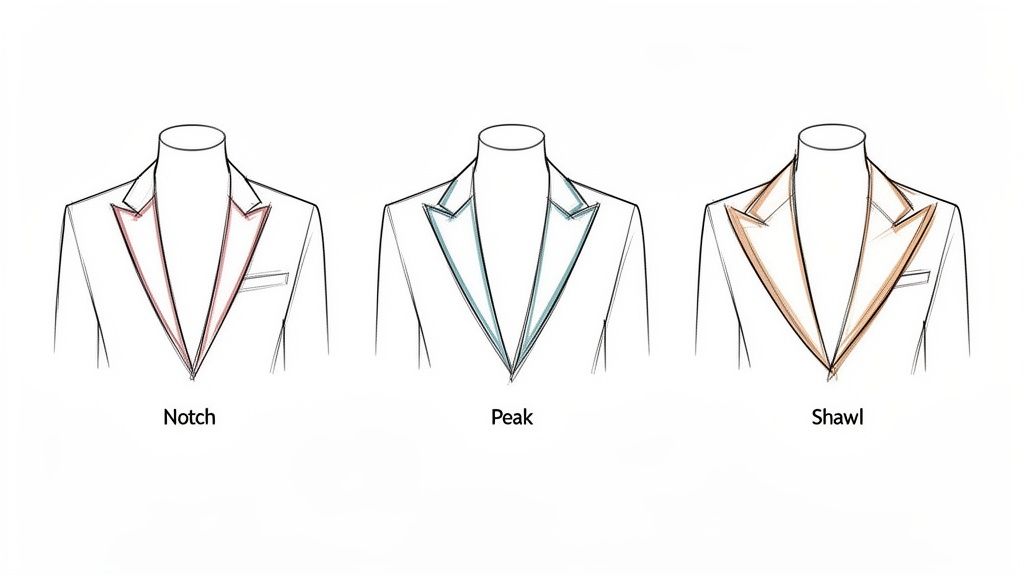
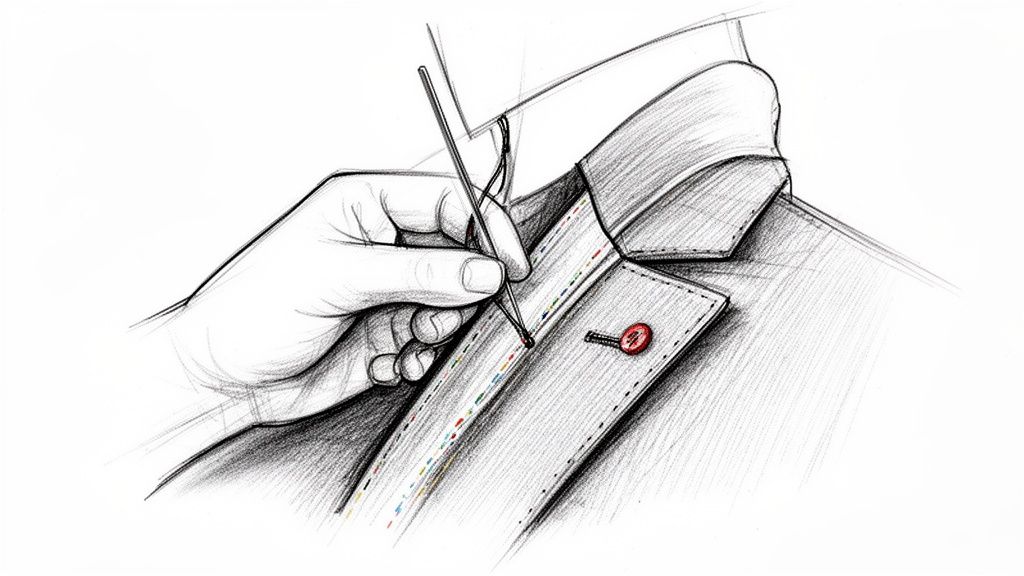
Three Core Styles: The three primary lapel styles are the versatile Notch Lapel (for business/casual wear), the formal Peak Lapel (for statement suits and double-breasted jackets), and the elegant Shawl Lapel (exclusively for tuxedos).
Proportion is Paramount: The width of the lapel is crucial for a balanced silhouette. A well-proportioned lapel should complement your shoulder width and chest, typically extending to about the halfway point between your collar and shoulder seam.
Craftsmanship Matters: Bespoke jackets feature a hand-padded lapel roll, creating a three-dimensional curve that distinguishes them from flat, machine-pressed off-the-rack garments. Details like pick stitching and Milanese buttonholes are hallmarks of superior quality.
Care is Crucial: Never iron a lapel flat, as this will destroy its handcrafted roll. Use a steamer for wrinkles and store your jacket on a wide-shouldered hanger to preserve its shape.
The lapel of a jacket is, quite simply, the folded flap of fabric on the front of a coat or blazer that sits just below the collar. But to leave it there would be a massive understatement. This single design element is critical; it frames your chest and sets the entire tone for the garment's formality and style. The three pillars of the lapel world are the ever-versatile notch lapel, the more formal peak lapel, and the elegant shawl lapel.
Your Quick Guide to Jacket Lapels
Think of the lapel as the handshake of your jacket—it makes an immediate impression. This seemingly small detail speaks volumes about your personal style, your understanding of sartorial tradition, and the occasion you're dressing for. It's often the first thing people notice, setting the stage for your whole outfit before you've said a single word.
Your first major decision comes down to choosing between the three core styles.
Notch Lapel: This is the dependable workhorse, the go-to for business suits and casual blazers.
Peak Lapel: A bolder, more formal choice that adds a sense of occasion, visual height, and authority.
Shawl Lapel: A smooth, rounded style you'll find exclusively on tuxedos and dinner jackets.
Beyond the shape itself, the lapel’s width is absolutely crucial for achieving a balanced silhouette. A well-proportioned lapel works in harmony with the breadth of your shoulders and chest, creating a flattering frame. Getting the lapel right is a true cornerstone of bespoke tailoring, capable of transforming a simple jacket into a powerful statement of refined taste.
Deconstructing the Anatomy of a Jacket Lapel
To truly get to grips with a well-made jacket, you have to look past the overall cut and get into the finer details. A jacket's lapel is so much more than a simple fold of fabric; it’s an engineered feature with its own distinct anatomy. Understanding how it’s put together is what reveals the massive difference between a mass-produced garment and true bespoke craftsmanship.
At first glance, a lapel seems pretty straightforward. But several key elements work together to create its final shape and character. These are the foundational building blocks a master tailor uses to flatter your physique and match the occasion. To learn more about the complete structure, you can explore our detailed guide on the various parts of a suit.
The Core Components
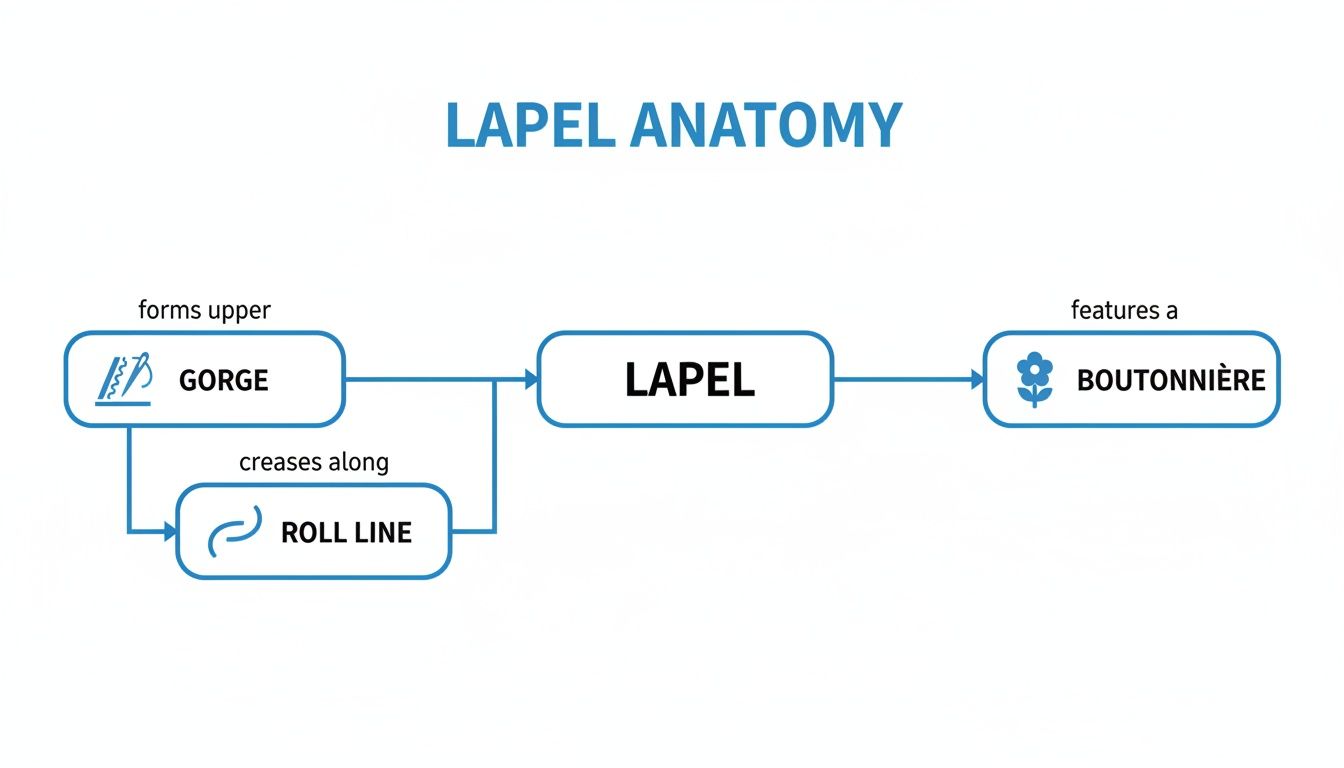
Every jacket lapel, regardless of style, is built around three core features: the gorge, the roll line, and the boutonnière. Each one plays a critical role in the garment’s overall balance and aesthetic.
The Gorge: This is simply the seam where the jacket collar meets the lapel. The height of the gorge—whether it sits high on the chest or a bit lower down—is a stylistic choice that can really change the jacket’s feel, making it look more modern or classic.
The Roll Line: This is the gentle, curved fold running from the jacket’s top button all the way up to the collar. It’s not a sharp, ironed-in crease but a soft, three-dimensional curve that gives the lapel life and shape.
The Boutonnière: This is that small, functional buttonhole you see on the upper part of the left lapel. Its purpose today is mostly decorative, but it holds a rich history.
The boutonnière on UK jackets, for instance, traces its roots back to a rather romantic gesture from Prince Albert at his wedding to Queen Victoria on 10 February 1840. The story goes that he famously cut a hole in his own lapel to hold a small bouquet from her, a trend that caught on almost immediately. By the 1850s, it’s estimated that a staggering 95% of formal coats made by London tailors included this feature, cementing its place in menswear.
The Soul of the Jacket: The Lapel Roll
Now, here’s where you see the most significant difference between an off-the-rack jacket and a bespoke creation from Dandylion Style: the lapel roll.
Think of the graceful curve of an old stone bridge—it has depth, strength, and an undeniable elegance. This is exactly the effect a hand-shaped lapel roll creates. It has a gentle, continuous curve that lifts the fabric away from the chest, adding beautiful dimension.
In stark contrast, a machine-pressed lapel on a mass-market suit is like a flat plank of wood. It’s functional, sure, but it completely lacks the artistry, soul, and sculptural quality that define superior tailoring.
A bespoke tailor spends hours hand-padding the lapel with hundreds of tiny, invisible stitches. This process literally builds shape and memory into the cloth, ensuring it holds its elegant roll for the entire life of the garment. This meticulous, time-consuming detail is what gives a bespoke jacket its character and peerless fit, turning a simple piece of clothing into a genuine work of art.
Mastering The Three Core Lapel Styles
Now that we’ve got the anatomy down, we can get into the real character of a jacket: the lapel style. Think of the three main types—the notch, the peak, and the shawl—as distinct personalities. Each one sends a different signal, communicating everything from tradition and formality to your own personal taste. Getting it right is all about matching the lapel to the moment and the impression you want to make.
This diagram breaks down how a lapel is constructed, showing the interplay between the gorge, the roll line, and the boutonnière.
It’s a great visual reminder that a lapel isn’t just a simple fold of fabric; it’s an engineered system of components that work together to create its final, elegant shape.
The Notch Lapel: The Dependable Diplomat
The notch lapel is the absolute workhorse of modern menswear. You’ll know it by the clean, V-shaped indentation where the collar meets the lapel. It’s the reliable diplomat in your wardrobe—understated, incredibly versatile, and almost always appropriate.
It’s the default choice for single-breasted business suits, blazers, and sports coats for good reason. Its clean, unassuming lines make it the perfect companion for the office, a smart-casual event, or a wedding guest outfit. Its real strength lies in its neutrality; it doesn’t shout for attention, allowing the fit, fabric, and construction of the jacket to do the talking.
The notch lapel's ubiquity is its greatest asset. It conveys a sense of quiet confidence and effortless style, making it a failsafe option for any gentleman building a timeless wardrobe.
The Peak Lapel: The Power Player
In sharp contrast, the peak lapel is built to make a statement. Its defining feature is the sharp edges that point upwards towards your shoulders, creating a strong, sweeping line. This has a powerful visual effect, drawing the eye outwards and upwards to create an illusion of broader shoulders and a taller, leaner torso.
This style is inherently more formal and carries a certain old-world flair. It’s the traditional, and frankly best, choice for double-breasted vs single-breasted suits, where its bold lines perfectly complement the jacket's structure. Peak lapels also look superb on single-breasted suits destined for big moments, like a crucial business deal or a wedding.
The style truly came into its own during the interwar period in the UK, becoming a hallmark of fine British tailoring. By 1929, tailoring records show that over 65% of high-end suits from top London workshops featured the wider, more assertive lapels championed by the peak style.
The Shawl Lapel: The Elegant Artist
Finally, we arrive at the shawl lapel, the most formal and distinctive of the trio. Unlike its angular cousins, the shawl lapel is all about a smooth, continuous curve. It flows unbroken from the collar down to the top button, creating a soft, elegant, and uninterrupted line.
This style is reserved almost exclusively for black-tie events, gracing the fronts of tuxedos and dinner jackets. Its sleek, rounded form lends a touch of decadent charm that feels right at home at a gala, a formal dinner, or a red-carpet affair. To dial up the luxury, the lapel is often faced with a contrasting fabric like silk or satin, which adds a subtle lustre.
Choosing a shawl lapel signals a deep appreciation for the finer points of evening wear. It's a sophisticated and graceful option that embodies pure elegance, making it the ultimate choice for life’s most memorable occasions.
To make the choice even clearer, here’s a quick-reference table breaking down the key differences between these three essential styles.
Comparing Notch, Peak, and Shawl Lapels
Lapel Style
Defining Feature
Formality Level
Best For
Notch
A V-shaped 'notch' where the lapel meets the collar.
Business/Casual
Single-breasted suits, blazers, sports coats.
Peak
Sharp points aiming upwards toward the shoulders.
Formal/Statement
Double-breasted jackets, formal suits, tuxedos.
Shawl
A smooth, continuous curve with no notch or peak.
Black Tie/Formal
Tuxedos and dinner jackets exclusively.
This table should help you quickly identify which lapel works best for any given garment or occasion, ensuring your choice is always spot-on.
How Lapel Width Defines Your Silhouette
While the style of a lapel sets the tone for an occasion, its width is what truly sculpts your physique. This is where the real artistry of tailoring comes into play. A jacket’s lapel width should never exist in a vacuum; it needs to have a visual conversation with your shoulders, your chest, and even the width of your tie.
Think of it like framing a piece of art. The frame’s job is to complement the painting, drawing your eye to its best features without ever overwhelming it. In exactly the same way, the lapel must complement your body, enhancing your natural lines to create a silhouette that’s both balanced and flattering.
The Power of Proportion
The fundamental rule here is one of balance. A wider lapel visually broadens the chest and shoulders, creating that powerful, masculine V-shape. This works particularly well for gentlemen with a slimmer build, as it adds a bit of perceived breadth and presence. It gives off an air of confidence and classic authority, a subtle nod to the golden age of tailoring.
On the flip side, a slimmer lapel offers a more contemporary, streamlined look. This can be a great choice for men with a naturally broad frame, as it cleverly avoids adding any extra bulk to the upper body. A word of caution, though: trends for extremely narrow lapels—often dipping below 2.5 inches—tend to come and go in a flash. A lapel that’s too skinny can throw everything off, making a man’s head appear disproportionately large and looking dated within just a few seasons.
The real goal is to find that timeless middle ground. A lapel width that’s in perfect harmony with your body’s proportions will ensure your jacket looks just as elegant in a decade as it does the day you first put it on.
Finding Your Ideal Lapel Width
So, how do you land on the right width for you? It’s less about following some rigid formula and more about training your eye to see what looks and feels balanced. The most enduring sweet spot for a lapel's width is where it extends to roughly the halfway point between your collar and your shoulder seam. This classic proportion has stood the test of time for one simple reason: it flatters the vast majority of body types.
You’ll want to consider these key factors:
Your Body Type: Slender men often benefit from slightly wider lapels to add breadth. Conversely, larger men should avoid lapels that are either too wide (which adds bulk) or too narrow (which creates an unflattering imbalance).
Your Tie Width: For a cohesive, put-together look, the width of your lapel should be in the same ballpark as the width of your favourite ties. A wide lapel paired with a skinny tie looks disjointed, and the same is true in reverse.
The Jacket’s Shoulders: The jacket’s overall structure is also a crucial piece of the puzzle. A jacket with a strong, padded shoulder line can easily support a wider lapel, whereas a soft, unstructured shoulder calls for something a touch more moderate.
Ultimately, achieving this perfect balance is a cornerstone of bespoke tailoring. A skilled tailor doesn't just chase trends; they analyse your unique physique to recommend a lapel width that feels both personal and perfectly proportioned. This is a key part of the journey when you design a bespoke suit with an expert who truly understands these nuances.
A Historical Perspective on Lapel Trends
Lapel widths have swung back and forth dramatically throughout menswear history. The 1930s and 1970s, for instance, saw the rise of incredibly wide, expressive lapels, often reaching 4 inches or even more. These were bold, confident statements of style in their day.
In stark contrast, the early 2000s and 2010s were dominated by a trend towards ultra-slim lapels, pushed heavily by high-fashion designers. While it was a modern look, it often lacked the timeless gravitas of a more classic width. By understanding these historical shifts, you can better appreciate why a moderate, balanced width is a far safer and more sustainable investment for your wardrobe. It insulates you from fleeting fads, ensuring your jacket remains a classic staple, not a relic of a bygone trend.
Exploring Bespoke Lapel Craftsmanship
Beyond the broad strokes of style and width, there’s a whole world of intricate detail that separates a good jacket from a true masterpiece. This is the realm of bespoke craftsmanship, where the lapel is transformed from a mere component into a testament to artistry and tradition. It’s here, in the subtle, hand-finished details, that you find the soul of the garment.
These time-honoured techniques are what elevate a jacket into a piece of wearable art. While an off-the-rack garment is built for efficiency, a bespoke piece is sculpted with patience and precision. These small touches might not scream for attention, but together, they create an unmistakable sense of quality and elegance that you can both see and feel.
The Signature of a Master Tailor
Several key finishing details are hallmarks of superior construction, each contributing to the lapel's form and beauty. These are the elements that artisans at Dandylion Style obsess over to create a garment with unparalleled character.
Hand-Padded Lapels: This is perhaps the most crucial technique of all. A tailor uses hundreds of small, invisible stitches to attach the canvas interlining to the lapel fabric. This painstaking work creates that signature three-dimensional roll, giving the jacket life and ensuring the lapel never lies flat but instead curves gracefully away from the chest.
Pick Stitching: Look closely along the edge of the lapel, and you might see tiny, subtle stitches. When done by hand, they have a slight, charming imperfection that a machine simply can't replicate. While decorative, they also serve a practical purpose, helping to keep the lapel’s edges crisp and clean over time.
The Milanese Buttonhole: Widely considered the pinnacle of buttonhole craftsmanship, the Milanese is a true work of art. It requires immense skill to create its raised, lustrous appearance using a fine silk thread wrapped around a gimp cord. It’s a bold, beautiful declaration of a jacket’s handmade origins.
A Nod to Tailoring History
The very construction of the lapel tells a story of its own, having evolved significantly over time. Historical UK tailoring methods reveal a deep understanding of structure and elegance. From the 1830s to the 1890s, for instance, the lapels on frock coats—worn by an estimated 85% of professional men—were cut separately from the jacket's body, which allowed for a more natural, bottom-up roll.
By the Edwardian era, attached 'wholecut' lapels emerged, simplifying production by around 40% and appearing on over 60% of lounge suits by 1910. It's fascinating to delve deeper into how historic tailoring techniques have influenced the very garments we create today.
"A machine can make a jacket, but only a human hand can give it a soul. The roll of the lapel, the feel of the cloth—that's where you find the tailor's signature."
This dedication to manual skill is central to the bespoke philosophy. It’s about more than just measurements; it’s about shaping fabric to create a garment that is uniquely, unequivocally yours. Understanding these details is a key part of appreciating what a full bespoke suit truly represents. The lapel, with its hand-sewn structure and artful finishing, is the perfect embodiment of this process—a quiet but powerful statement of quality that endures long after fashion trends have faded.
Preserving the Shape of Your Jacket Lapels
A well-crafted bespoke jacket is a genuine investment, and its lapels demand dedicated care to maintain their elegant, three-dimensional form. This isn't just about keeping it clean; it's about preserving the delicate roll that a master tailor spends hours painstakingly crafting into the garment. That structure is what gives a jacket its soul, separating true tailoring from off-the-peg alternatives.
The single most important rule is to never, ever iron a lapel flat. Pressing a hot iron directly onto the lapel will crush the internal canvas and hand-stitching that create its signature curve. The result is a lifeless, flattened strip of fabric—an irreversible error that undoes hours of skilled work. Instead, if you must deal with a wrinkle, use a steamer held several inches away to gently release it, allowing the lapel to keep its natural roll.
Proper Storage and Handling
How you store your jacket has a massive impact on its longevity. Always use a substantial, wide-shouldered hanger that properly supports the entire shoulder structure of the jacket. A flimsy wire hanger will cause the shoulders to sag over time, which in turn distorts the collar and pulls the lapels completely out of alignment.
Giving your jacket room to breathe in the wardrobe is also essential. When garments are crushed together, the lapels can become flattened or misshapen. A well-spaced wardrobe is the first line of defence in preserving your jacket's intended silhouette.
Should a lapel get accidentally crushed in transit, don’t panic. A simple trick is to hang the jacket in a steamy bathroom for about 20 minutes. The moisture often encourages the natural fibres and internal canvas to relax and spring back to their original shape.
Understanding Alterations and Their Limits
While a skilled tailor can work wonders, the lapel is one part of a jacket with serious structural limitations when it comes to alterations. A tailor can sometimes perform a complex 'gorge lift' or slightly narrow a lapel, but these are difficult and costly procedures. It is practically impossible, however, to change a lapel’s fundamental style—transforming a notch into a peak, for example. That would require recutting the entire front quarter of the jacket.
Because these changes are so intricate and often not feasible, it's vital to get the lapel choice right from the very beginning. To get a better sense of what’s possible with tailoring and what isn’t, it’s helpful to understand how much alterations typically cost and what the process involves. Protecting your investment starts with proper care and realistic expectations about what can be changed later on.
Frequently Asked Questions About Jacket Lapels
Getting to grips with the finer points of gentlemen's tailoring can often feel like learning a new language. To help you become more fluent, here are some straightforward answers to the questions we hear most often about the lapel of a jacket.
What is the most versatile lapel style?
Without a doubt, the notch lapel is the most versatile and common style a gentleman will encounter. It’s the standard for single-breasted suit jackets, blazers, and sports coats for a reason. Its clean, understated design makes it a natural fit for almost any business environment and most social occasions, stopping just short of black-tie events. If you are investing in your first high-quality suit, a classic notch lapel is a safe and timeless choice that guarantees maximum wearability.
Can the lapel of a jacket be altered?
This is a tricky area. Minor tweaks are sometimes possible for a master tailor, such as slightly narrowing a lapel, but this is an incredibly complex and costly job. However, changing the fundamental style—like turning a notch into a peak lapel—is generally impossible. This would require recutting the entire front of the jacket. For this reason, it is vital to choose the lapel style you truly want from the outset, as it is a foundational part of the garment’s structure.
Does lapel width really matter?
Absolutely. Lapel width is critical for creating a balanced, proportionate silhouette for any gentleman. Think of it as the frame for your upper body; it must be in harmony with your shoulder width, torso shape, and even your necktie. Very slim lapels can make a broad-shouldered man look unbalanced, while overly wide lapels can overwhelm a slender frame. The most elegant and timeless choice is a moderate width that complements your specific body type, ensuring your jacket looks sharp for years to come.
Why do some lapels have a buttonhole?
That small buttonhole on the left lapel is called a boutonnière. Historically, it was functional, used to fasten the jacket to the top for warmth or, as Prince Albert famously did, to hold a flower. Today, its purpose is mostly stylistic, acting as a hallmark of quality tailoring. On high-end bespoke suits, you will often find this buttonhole is meticulously hand-sewn (such as the Milanese style), which is a subtle way for the artisan to display their skill.
About The Author
Igor is the founder of Dandylion Style, a tailoring house built on the simple, deeply held belief that a suit should be like a second skin—a true extension of a gentleman’s personality. For Igor, tailoring isn't just about cutting cloth; it's an art form dedicated to creating unique, perfectly fitted attire for the discerning man. His passion is rooted in classic sartorial traditions, yet he maintains a keen eye for contemporary style, ensuring his creations are both timeless and relevant. This approach has cemented his reputation for genuine craftsmanship and a truly personal service.
At Dandylion Style, we believe the perfect lapel is the cornerstone of a truly exceptional jacket. Let our master tailor, Igor, guide you through every choice to create a bespoke garment that is a true reflection of your personal style. Begin your tailoring journey by booking a consultation at https://dandylionstyle.co.uk.
Written by:
Igor Srzic-Cartledge
Igor is the founder of Dandylion Style, a tailoring house built on the simple, deeply held belief that a suit should be like a second skin—a true extension of a gentleman’s personality. For Igor, tailoring isn't just about cutting cloth; it's an art form dedicated to creating unique, perfectly fitted attire for the discerning man. His passion is rooted in classic sartorial traditions, yet he maintains a keen eye for contemporary style, ensuring his creations are both timeless and relevant. This approach has cemented his reputation for genuine craftsmanship and a truly personal service.
Key Takeaways The Core Two: Navy blue and charcoal grey are the essential, non-negotiable suit colors for any professional wardrobe. Navy offers versatility and approachability, while charcoal projects authority and seriousness. Context is Crucial: The best suit color...
When you find a piece of clothing you absolutely love, getting the fit just right is the final, transformative touch. But how much should you expect to pay? In the UK, alteration costs can be as modest as £15 for a simple trouser hemming, or climb to £150 and beyond...
Getting the right pink shirt and tie combination is the mark of a well-dressed man. It’s a detail that separates the novices from those who truly understand their wardrobe. For a look that’s classic and can’t miss, pair your pink shirt with a navy, grey, or burgundy...
Key Takeaways For those seeking a quick overview, this section summarises the essential rules and recommendations for incorporating turn-up trousers into your wardrobe. Sartorial Purpose: Turn-ups add weight to the trouser hem, ensuring a cleaner, sharper drape,...
Deciding what colour tie to wear with a pink shirt is a common style query I hear from clients. For a classic, professional look that never fails, your safest and most effective choices are navy blue and charcoal grey. If you're heading to a more contemporary or...
You've just picked up a newly finished bespoke suit, and the cloth still has that clean, disciplined line only a real fitting room can give it. The temptation is to put it straight in the wardrobe and trust the label to do the rest. That's where expensive...
Book Your Tailoring Consultation
Looking for a suit or garment made specifically for you?
At Dandylion Style, we create bespoke and made-to-measure
garments tailored to your individual shape, style and occasion.
From suits and shirts to dresses, waistcoats and alterations,
our experienced tailors can help you create something truly unique.