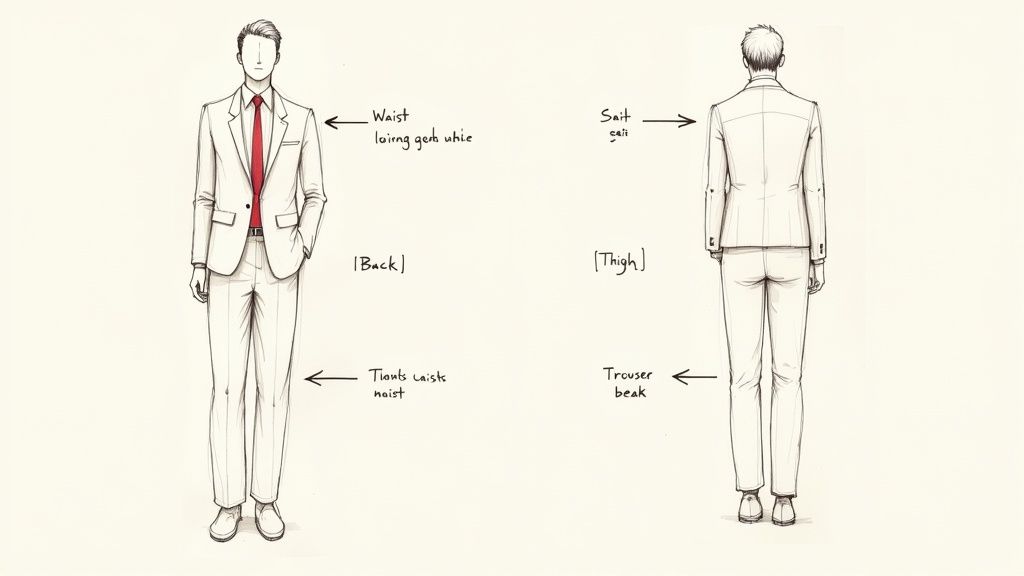
A well-fitting pair of suit trousers is the very foundation of a sharp silhouette. When they’re right, the waistband sits securely on your natural waist—no belt required—and the fabric drapes cleanly over your seat and thighs, finishing with a subtle, elegant break over your shoes. It's this balance of comfort and clean lines that separates the men from the boys.
Key Takeaways
Foundation First: The fit of the waist, rise, and seat is non-negotiable. Trousers should sit at your natural waist without a belt, the rise should allow comfortable movement, and the seat should drape smoothly without pulling or sagging.
The Pinch Test: For the perfect thigh fit, you should be able to pinch about one inch of spare fabric. This ensures a clean line without restricting movement.
The Break Matters: The trouser break (where the hem meets the shoe) defines the style. A slight break is the most versatile and modern choice for most occasions.
Tailoring is Key: Off-the-rack trousers almost always need adjustments. A tailor can perfect the waist, length, and taper, but can't easily fix a poor fit in the rise or seat.
Your Definitive Guide to a Perfect Trouser Fit
Figuring out how suit trousers should fit isn't about memorising a rigid set of rules. It’s about understanding the principles that create a flattering line from waist to ankle. Think of it like building a house: if the foundation is off, the whole structure will look slightly wrong. The waist, seat, and rise are that foundation, while the shape of the leg and the length are the walls you build upon it.
This guide is your roadmap. We’ll walk through every critical checkpoint, from the waistband right down to the hem, demystifying the tailor’s jargon and giving you simple, practical tests you can do yourself. The goal is to arm you with the confidence to properly assess any pair of trousers, whether you’re buying off-the-rack or commissioning a bespoke piece.
Key Principles for a Superior Fit
Getting the fit right involves more than just your measurements. It’s also about appreciating how the fabric should move with your body. A crucial concept in tailoring is “ease,” which is simply the extra room a tailor builds into a garment to allow you to, well, live in it. It's the difference between a garment that's merely your size and one that's truly made for you.
A great pair of trousers should feel like a natural extension of yourself—never restrictive, but certainly not sloppy. The fabric should follow your form, not fight against it.
Ultimately, mastering the fit is what transforms an ordinary suit into a powerful statement of personal style. Whether this is your first suit or you're refining your collection with a made-to-measure commission, these principles are universal. It all comes back to understanding ease in sewing for a perfect fit, which is the secret to trousers that don't just look good, but feel incredible too.
Building the Foundation: Waist, Rise, and Seat
Think of your suit trousers like a bespoke piece of architecture. Before you can even consider the finer details, the foundations have to be absolutely perfect. For a pair of trousers, that unshakeable foundation is built from three critical elements: the waist, the rise, and the seat. Nail these three, and the rest of the trouser leg will drape beautifully, creating a silhouette of effortless elegance.
Everything starts with the waist. A proper suit trouser should sit comfortably at your natural waistline—that’s usually around your navel, not slung low on your hips like your weekend jeans. The fit should be so precise that it feels secure all day long without the need for a belt. A good rule of thumb is that you should be able to slide one or two fingers between the waistband and your body, but no more than that.
If you find the waistband is too loose, you’ll get that tell-tale bunching and folding the second you put a belt on. Too tight, and it will dig into your midsection, which is not only uncomfortable but also ruins the clean line of your torso. The goal here is a clean, secure anchor that provides structure from the very top.
Finding the Perfect Rise
Next up is the rise, which is simply the measurement from the crotch seam right up to the top of the waistband. It might sound like a small detail, but this single measurement has a massive impact on both your comfort and the overall proportion of your outfit. If the rise is too short, you’ll feel a constant, uncomfortable pull. If it's too long, you end up with that sloppy, dropped-crotch look that does no one any favours.
The ideal rise allows the trousers to sit at your natural waist while giving you just enough room to move and sit without any restriction at all. It needs to follow your body’s natural curve smoothly. This is one of the most crucial measurements to get right, and we go into more detail in our guide on how to measure yourself for a suit.
This idea of a higher waist isn't some new trend; it's a cornerstone of classic tailoring. Take the post-war decades from 1945–1960 as an example. High-waisted trousers were the standard on the UK high street. Archival photos and patterns show waistbands often sat 1.5–3 inches higher than the low-slung styles that came into fashion much later. This placement created a longer leg line and a far more balanced silhouette—a tailoring principle that remains completely timeless.
The rise determines where your trousers sit and how they divide your body visually. A correct rise elongates the legs and anchors your entire look, while a poor rise disrupts your natural proportions.
Achieving a Clean Seat
Finally, we arrive at the seat—the area covering your glutes. This is arguably where fit problems become most glaringly obvious. What you're aiming for here is a clean, smooth drape that follows your natural shape without being tight enough to cling or so loose that it sags.
Here’s a quick way to check the fit of the seat:
Too Tight: You’ll see horizontal pulling or stress lines across the fabric. Pockets might flare open, and you'll probably feel a distinct "wedgie" effect. It’s not a good look.
Too Loose: If you see excess, sagging fabric below your glutes that creates a sort of U-shaped droop, the seat is too big. This just adds visual bulk and looks untidy.
A well-fitted seat should have just enough ease for movement—usually a couple of inches of fabric beyond your body measurement. This means that when you walk, sit down, or bend over, the fabric can accommodate the movement without straining at the seams. It should contour, not constrict.
Together, a perfect waist, rise, and seat form the unshakable trio upon which the rest of your sartorial excellence is built.
Shaping the Leg: Thigh, Knee and Calf
With a secure foundation at the waist and a clean drape through the seat, our attention now travels down the leg. The shape of the trouser leg—from thigh down to the ankle—is where your personal style and the suit's overall silhouette truly come to life. An impeccably fitted leg creates a single, clean line that is both flattering and comfortable. It's the detail that shows you understand how suit trousers should fit beyond the obvious.
The journey starts at the thigh. The fabric here should lightly skim your leg, giving you just enough room to move without ever looking baggy. A common pitfall is trousers that are too tight in this area. This instantly creates unsightly horizontal pulling and stress lines, especially when you sit down or walk. On the other hand, too much fabric will billow and add unnecessary bulk, completely disrupting the sharp silhouette you're after.
The Pinch Test: A Practical Guide to Thigh Fit
To get a real sense of the fit, use the simple but highly effective "pinch test." While standing naturally, try to pinch the spare fabric on either side of your thigh. You should be able to comfortably gather about one inch.
This simple action tells you everything you need to know:
Less than an inch: The trousers are almost certainly too tight. You'll feel restricted, and the fabric will pull taut as you move, creating obvious tension lines.
More than two inches: The fit is too loose. This excess material creates a baggy, unkempt look that undermines the suit’s structure.
The perfect thigh fit is a delicate balancing act—it needs to allow complete freedom of movement while closely following the natural line of your leg. Think of it as being supportive without ever feeling restrictive.
This one-inch rule ensures the ideal amount of ease is present, letting you sit, stride, and even climb stairs without the fabric straining at the seams. It's what maintains that crucial clean drape for a polished appearance.
Understanding Taper and Trouser Cut
As we move down from the thigh, we get into the concept of "taper." This simply refers to how the trouser leg gradually narrows from the knee down to the ankle opening. The degree of taper is a massive factor in defining the overall style of the suit, pushing it towards either a classic or a more contemporary feel.
The two main styles you'll come across are the classic straight cut and the modern tailored fit. Getting your head around the difference is vital for choosing a silhouette that complements your build and your personal style. For a deeper dive into this, you can learn more about the nuances between slim vs tailored fit trousers in our detailed guide. It will help you figure out which cut aligns best with the look you're going for.
Classic Straight vs. Modern Tapered: A Comparison
Choosing the right cut really comes down to your body shape and the look you want to project. Neither is better than the other; they just serve different stylistic purposes.
Feature
Classic Straight Cut
Modern Tapered Cut
Silhouette
A consistent width from knee to ankle, creating a straight, uniform line.
Narrows from the knee down, following the natural shape of the leg more closely.
Thigh & Knee
Offers more room, prioritising comfort and traditional proportions.
Often slimmer through the thigh and knee to create a sleeker profile.
Ankle Opening
Wider, allowing the trouser hem to sit comfortably over a broader range of shoes.
Narrower, creating a clean finish that pairs well with streamlined footwear.
Best For
Gentlemen with larger thighs or those who prefer a timeless, more conservative look.
Men with slimmer builds or those aiming for a sharp, contemporary aesthetic.
Ultimately, the goal is to achieve one clean, unbroken line from your hip all the way down to your shoe. Whether you opt for a classic straight leg that offers a commanding, traditional drape or a modern taper that gives a sharp, streamlined finish, the key is consistency. The fabric should flow without interruption, never snagging at the calf or bunching awkwardly at the ankle. This continuous line is the true hallmark of a perfectly fitted pair of trousers.
Mastering the Finishing Touch: Trouser Break and Hem
The way your suit trousers meet your shoes is the final, defining detail of a well-executed outfit. It’s a crucial interaction point known as the trouser break, and it speaks volumes about how thoughtfully your entire look has been put together. Far from being a minor detail, the break can visually alter the length of your leg, set the formality of your suit, and signal your personal style.
Mastering this is what separates a good suit from a great one. Think of it as the sartorial equivalent of a firm handshake—it communicates confidence and a keen eye for detail. This isn't something that happens by accident; it's a deliberate choice.
What Exactly Is a Trouser Break?
Simply put, the break is the horizontal fold or crease in the fabric that forms just above the bottom of your trousers, right where the hem rests on your shoes. The amount of break you have is all down to the length of the trouser leg in relation to both your height and the shoes you're wearing.
There isn't a single "correct" break. Instead, different styles serve different purposes and create distinct aesthetics. Understanding your options is the key to matching your suit trousers to your personal taste and the occasion.
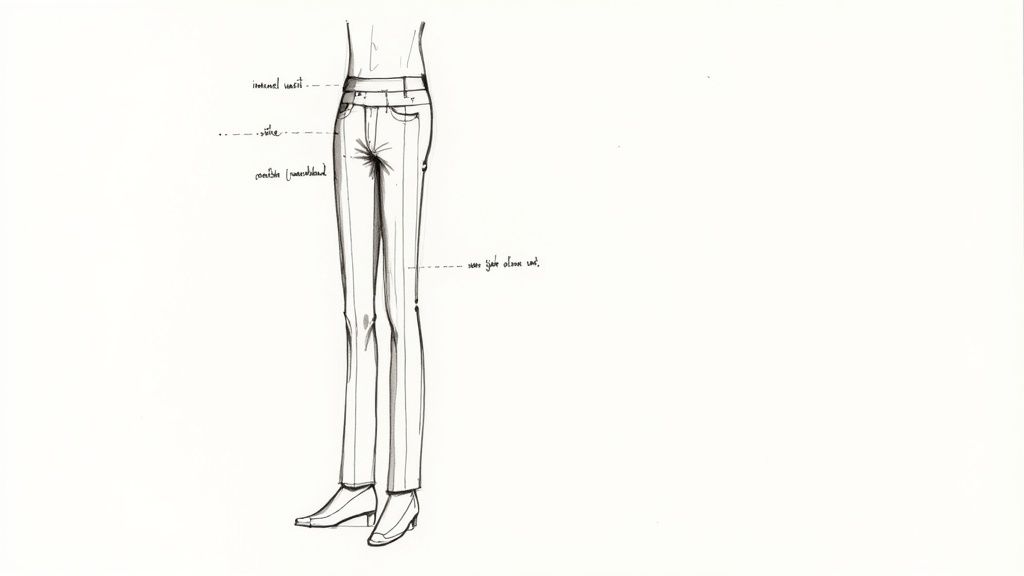
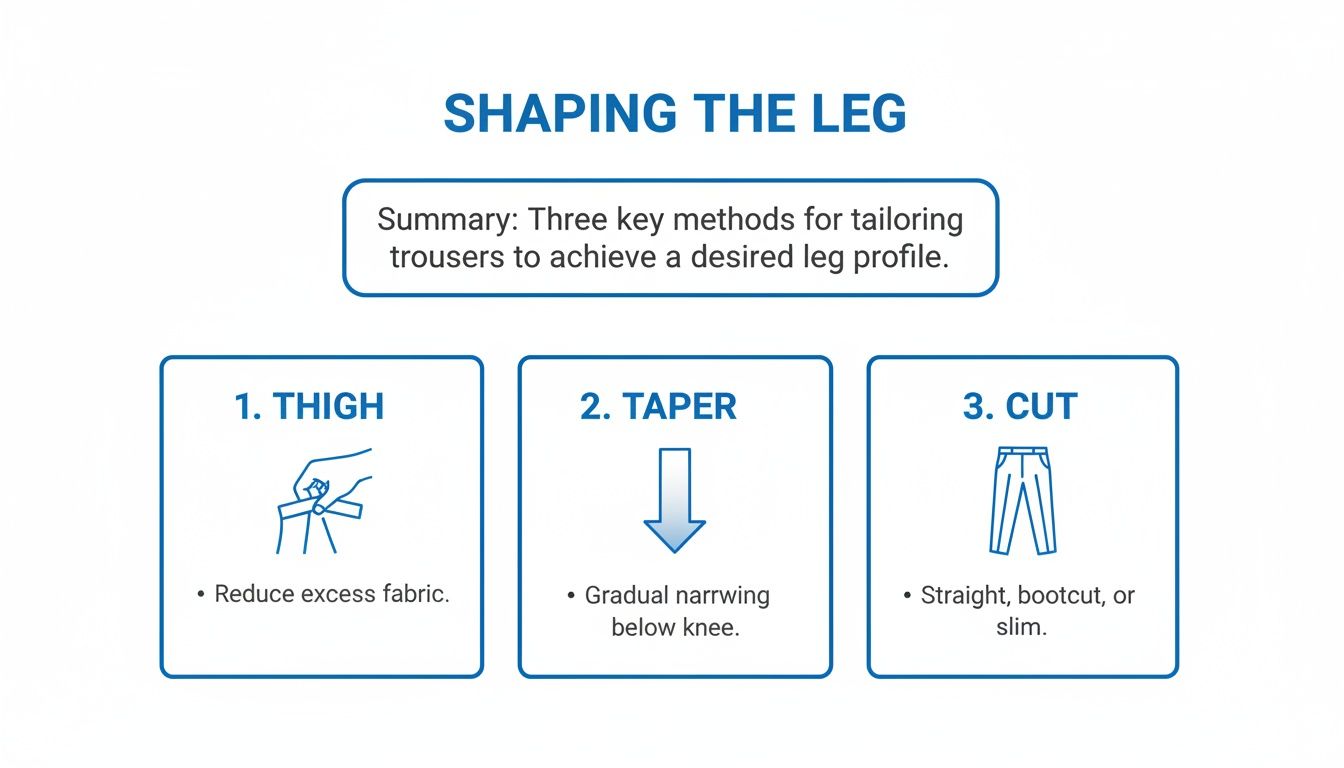
The diagram below shows how the shaping of the trouser leg—from thigh to taper—all contributes to that final, clean line that makes a perfect break possible.
As you can see, the thigh, taper, and overall cut all work together. Get these right, and the break will follow.
The Different Types of Trouser Break
Your choice of break says a lot about you. Are you aiming for a razor-sharp, modern look or a more traditional, classic silhouette? Let's break down the main styles.
No Break: This is the most contemporary and arguably the sharpest look going. The trouser hem just skims the top of the shoe, creating no fold whatsoever. It produces a very clean, elongated leg line and is best suited for slim, tapered trousers. It’s perfect for a modern, fashion-forward aesthetic but demands precise tailoring. No room for error here.
Slight Break (or Quarter Break): This is the modern gentleman’s go-to. The hem gently kisses the top of the shoe, creating a very subtle, minimal crease. It’s universally flattering, incredibly versatile, and strikes an impeccable balance between classic and contemporary. It's a failsafe option for almost any occasion.
Medium Break (or Half Break): This is a more traditional and conservative choice. Here, the trouser creates one distinct horizontal fold over the shoe. It’s a classic look that has been the standard for decades, offering a timeless appearance that feels both professional and established.
Full Break: The most traditional and formal style. This involves a generous amount of fabric resting on the shoe, creating a deep, prominent crease. While it can add a sense of weight and drape to heavier fabrics like tweed, it can also look sloppy if not executed perfectly. Be warned: it also tends to visually shorten the leg.
Your choice of trouser break is a stylistic signature. A no-break says sharp and modern, while a slight break communicates timeless elegance. The key is to make a conscious choice that aligns with the suit's cut and the image you wish to project.
The Trio: Break, Hem, and Shoe
The ideal trouser break doesn't exist in a vacuum. It’s a three-way conversation between the trouser, the shoe, and the width of the hem opening.
A wider hem, which you'd typically find on a classic straight-cut trouser, can easily accommodate a medium or full break without looking clumsy. The extra fabric has somewhere to go.
On the other hand, a narrow hem on a tapered trouser looks infinitely better with a slight or no break. If you try to force a full break onto a slim trouser, the fabric will just end up bunching messily around your ankles. The goal should always be a harmonious relationship between trouser and shoe, creating an unbroken, elegant line from waist to toe.
Perfecting this very detail is at the heart of what we do with our made-to-measure trousers, ensuring every single element works in concert.
Common Fit Problems and Tailoring Solutions
Let’s be honest, even the best off-the-rack suit trousers rarely fit perfectly from the moment you try them on. They’re cut for a standard mannequin, not for your individual shape. This is where a good tailor becomes your most trusted partner, turning a decent fit into a truly exceptional one with a few skilled adjustments.
Learning to spot the common issues is the first step. Does the waistband gape at the back? Does the seat feel a bit… well, baggy? Perhaps the fabric pulls across your thighs when you sit down, or the hem just isn’t breaking cleanly over your shoes. These aren’t flaws in the garment; they’re simply opportunities for a tailor to make it yours.
Diagnosing and Fixing Common Issues
Most of these little imperfections are straightforward work for an experienced tailor. The trick is to buy trousers that fit well in the areas that are trickiest to alter—that’s mainly the rise and the seat—and then let your tailor perfect the rest.
Here’s a quick rundown of what can be done:
Gaping Waistband: This is an incredibly common problem. A tailor can easily take in the waist, either by adding a couple of small darts to the waistband or altering the centre back seam for a clean, flush fit against your lower back.
Baggy Seat: If you’ve got too much fabric back there creating a droopy effect, a tailor can take in the seat along its central seam, essentially recutting it to follow your natural contour.
Tight Thighs: This one can be a bit more challenging, as there’s often not a lot of spare fabric in the seams to play with. However, if there is a decent seam allowance, a tailor can let out the inseam and outseam to give you that crucial bit of extra room.
Incorrect Length: The simplest and most frequent alteration. A tailor can hem your trousers to achieve whatever break you prefer, whether it’s a modern no-break look or a more traditional slight break.
Think of your relationship with your tailor as a partnership. When you can speak the language of fit and clearly explain what you want, you’re guaranteeing the final result will be exactly what you had in mind.
It’s clear that these small tweaks are a normal part of the process. In fact, UK consumer surveys show that 22–28% of men end up needing alterations on their trousers after buying them, usually for the waist and hem. It just goes to show that a little tailoring is the standard route to achieving that bespoke feel.
Preserving the Perfect Fit
Once your tailor has worked their magic, it’s up to you to keep that perfect fit. Careless washing can undo all that hard work in an instant. To avoid the nightmare of your perfectly fitted trousers suddenly becoming too tight or too short, it's worth understanding the basics of preventing clothes from shrinking.
Always, always check the care label. For fine wool trousers, this will almost certainly mean a trip to a professional dry cleaner. It’s also wise to have an idea of what these services might set you back; our guide on how much alterations should cost can help you budget accordingly.
Frequently Asked Questions
Should I be able to wear suit trousers without a belt?
Absolutely. A perfectly fitting pair of suit trousers should sit securely on your natural waist without any support. The waistband should be snug enough to prevent slipping but comfortable enough that you barely notice it's there. A belt should always be a stylistic accessory, not a functional necessity. If you need a belt to hold your trousers up, it's a clear sign the waist is too large and needs a trip to the tailor for adjustment.
What is the best trouser break for most occasions?
For maximum versatility and a look that is both modern and timeless, the slight break (or quarter break) is the gold standard. This is where the hem gently kisses the top of your shoe, creating a single, minimal crease. It’s universally flattering, works with both slim and classic-cut trousers, and strikes the perfect balance between traditional elegance and contemporary sharpness. It is a sophisticated and reliable choice for almost any formal or business setting, ensuring you always look polished.
How much fabric should there be around my thigh?
The "pinch test" is the most reliable way to check for a perfect thigh fit. While standing, you should be able to comfortably pinch about one to one-and-a-half inches of excess fabric on either side of your thigh. Any less, and the trousers are likely too tight, which will cause pulling and restrict movement. Any more, and they will look baggy and disrupt the clean silhouette. This amount of ease ensures a flattering drape while allowing you to sit and walk in complete comfort.
Can a tailor fix poorly fitting trousers?
A skilled tailor can work wonders, but they have their limits. Standard alterations like taking in the waist, hemming the length, or tapering the leg from the knee down are routine. However, fundamental issues are much harder to fix. If the rise is too short or the seat and thighs are too tight, there is often not enough spare fabric in the seams to let them out sufficiently. Always prioritise a good fit in the seat and rise when buying off-the-rack.
How do I choose between pleated and flat-front trousers?
This choice depends on your body type and style preference. Flat-front trousers offer a clean, slimming silhouette that creates a very streamlined look, making them a modern staple. Pleated trousers, which are enjoying a resurgence, provide more room around the hips and thighs, offering greater comfort and freedom of movement. They are an excellent option for men with more athletic builds or those who appreciate a classic, sartorial aesthetic. Ultimately, choose the style that feels most comfortable and best complements your shape.
About The Author
Igor is the founder and master tailor behind Dandylion Style, a name synonymous with impeccable British tailoring and timeless elegance. His passion for sartorial craftsmanship began in his early years, evolving into a lifelong dedication to the art of the perfect fit. For Igor, a well-made suit is more than clothing—it's an extension of a gentleman’s character. By blending time-honoured techniques with a modern sensibility, he creates bespoke garments that empower his clients to look and feel their absolute best.
At Dandylion Style, we believe the perfect fit is the very foundation of true style. For a suit that is crafted not just for your measurements but for your life, explore our bespoke tailoring services.
Igor is the founder of Dandylion Style, a tailoring house built on the simple, deeply held belief that a suit should be like a second skin—a true extension of a gentleman’s personality. For Igor, tailoring isn't just about cutting cloth; it's an art form dedicated to creating unique, perfectly fitted attire for the discerning man. His passion is rooted in classic sartorial traditions, yet he maintains a keen eye for contemporary style, ensuring his creations are both timeless and relevant. This approach has cemented his reputation for genuine craftsmanship and a truly personal service.
Key Takeaways The Core Two: Navy blue and charcoal grey are the essential, non-negotiable suit colors for any professional wardrobe. Navy offers versatility and approachability, while charcoal projects authority and seriousness. Context is Crucial: The best suit color...
When you find a piece of clothing you absolutely love, getting the fit just right is the final, transformative touch. But how much should you expect to pay? In the UK, alteration costs can be as modest as £15 for a simple trouser hemming, or climb to £150 and beyond...
Getting the right pink shirt and tie combination is the mark of a well-dressed man. It’s a detail that separates the novices from those who truly understand their wardrobe. For a look that’s classic and can’t miss, pair your pink shirt with a navy, grey, or burgundy...
Key Takeaways For those seeking a quick overview, this section summarises the essential rules and recommendations for incorporating turn-up trousers into your wardrobe. Sartorial Purpose: Turn-ups add weight to the trouser hem, ensuring a cleaner, sharper drape,...
Deciding what colour tie to wear with a pink shirt is a common style query I hear from clients. For a classic, professional look that never fails, your safest and most effective choices are navy blue and charcoal grey. If you're heading to a more contemporary or...
You've just picked up a newly finished bespoke suit, and the cloth still has that clean, disciplined line only a real fitting room can give it. The temptation is to put it straight in the wardrobe and trust the label to do the rest. That's where expensive...
Book Your Tailoring Consultation
Looking for a suit or garment made specifically for you?
At Dandylion Style, we create bespoke and made-to-measure
garments tailored to your individual shape, style and occasion.
From suits and shirts to dresses, waistcoats and alterations,
our experienced tailors can help you create something truly unique.