When you hear the term “bespoke suit,” what comes to mind? For many, it conjures images of ultimate luxury, a garment that’s the absolute pinnacle of personalised menswear. And that’s exactly right. A true bespoke suit is created entirely from scratch for one person, and one person only.
The process begins not with a pre-existing design, but with a blank sheet of paper. A master tailor crafts a unique pattern based on dozens of your precise measurements, ensuring a fit that’s simply second to none. Think of it less like buying clothing and more like commissioning a piece of art; it’s shaped exclusively for you, reflecting your unique physique and personality in every single stitch.
Key Takeaways
- Unique Pattern is Essential: The defining feature of a true bespoke suit is a unique paper pattern drafted from scratch for each client, ensuring a perfect fit based on individual measurements and posture.
- Collaborative Process: Creating a bespoke suit involves multiple fittings (skeleton baste, forward fitting), allowing for a sculptural process where the tailor refines the garment directly on your body.
- Total Customisation: You have complete control over every element, from the choice of fabric and lining to the style of the lapels, pockets, and buttons, making the final suit a true reflection of your personality.
- A Long-Term Investment: A bespoke suit is crafted to last for decades using superior materials and techniques. It can be altered over time, making it a sustainable and valuable addition to your wardrobe.
- Craftsmanship Defines Quality: The process involves 50-80 hours of meticulous handwork, from hand-padded lapels to hand-sewn buttonholes, which gives the suit a superior shape, comfort, and longevity that machine-made garments cannot replicate.
What Defines a True Bespoke Suit
Forget the simple labels for a moment; let's get to the soul of what bespoke tailoring really is. The word itself comes from the idea of a cloth being "spoken for" by a specific client, and that sense of unique ownership is still at the heart of the craft. A true bespoke suit isn't just adjusted or tweaked; it's imagined and built from a blank slate, for one person and one person only.
Think of it like commissioning an architect. You wouldn't expect them to start with a generic floor plan and just move a few walls around. They'd study the land, learn how your family lives, and draw a completely original blueprint from scratch. That’s exactly how a master tailor approaches a bespoke commission.
The Foundation: A Unique Paper Pattern
The single most defining element of the entire bespoke process is the creation of a unique paper pattern. This isn't just about taking a chest and waist measurement. The tailor takes dozens of meticulous measurements, observing everything from the slope of your shoulders to the natural way you stand, and then hand-drafts your individual pattern onto paper.
This pattern becomes the architectural blueprint for your suit. It captures every nuance of your posture and build, which is the fundamental difference that sets bespoke apart from everything else. Made-to-measure, for instance, starts with a pre-existing "block" pattern and adjusts it. While that's a world away from off-the-rack, it can never quite achieve the flawless precision of a garment born from a pattern created just for you.
The Art of Hand Craftsmanship
Another critical part of the story is the sheer amount of handwork involved. The entire structure of the suit is built with skill and patience, from the hand-padded lapels that give them that signature roll to the individually hand-sewn buttonholes. This traditional approach allows the garment to have a softness and three-dimensional shape that machine construction simply can't mimic.
This dedication to craft is the very essence of London’s iconic Savile Row. A genuine Savile Row suit is the ultimate expression of this art, demanding a minimum of 50 hours of meticulous handwork. It is always crafted from scratch, never adapted from a base pattern, guaranteeing a result that is both a perfect fit and a piece of wearable art.
"A bespoke suit is an intimate collaboration between artisan and client. The final garment is more than just clothing; it's a piece of wearable architecture, designed to enhance form and express personality."
This intense focus on detail ensures the suit not only fits like a second skin but also drapes beautifully and moves with you. It creates a level of comfort that's impossible to find elsewhere. To really get to grips with what makes this process so special, you can learn more about the definition of a full bespoke suit.
Multiple Fittings: A Sculptural Process
Finally, the multi-stage fitting process is a non-negotiable part of the bespoke journey. It's a collaborative, sculptural process with several key stages:
- The Skeleton Baste Fitting: This is your first look. The suit is loosely stitched together with white basting thread, allowing the tailor to check the fundamental balance, proportions, and how the cloth drapes on your body.
- The Forward Fitting: Things are more advanced here. Details like pockets and lapels are in place, giving you a much clearer idea of the final garment and letting the tailor make finer adjustments.
- The Final Fitting: One last check to make sure every single detail is perfect before the suit is finished and given its final press for delivery.
This iterative process is like a sculptor working with clay, gradually refining the shape until it's perfect. Each fitting is a chance for the tailor to make precise changes, ensuring the finished garment is a flawless extension of you. It's this shared journey that truly defines the bespoke experience.
The Bespoke Journey From Consultation To Final Fitting
Ordering a bespoke suit isn't like buying off the shelf. Think of it less as a purchase and more as a collaborative project between you and your tailor. It's a personal journey that demystifies the whole process, turning what might seem complex into an exciting, step-by-step creation.
The entire experience is designed to be calm and considered. Each stage builds on the last, gradually bringing your vision to life and ensuring every detail is a reflection of you.
The Initial Consultation and Measurements
Your journey starts with a simple conversation. Before a tape measure even comes out, we need to understand who you are. What's your profession? What's your lifestyle like? Where do you plan on wearing this suit? This chat is absolutely vital because it shapes every choice we make later, from the cloth we select to the width of the lapels.
Once we have a clear picture, the measuring begins. This is a world away from a simple chest and waist measurement. A skilled tailor takes dozens of readings, but it’s not just about the numbers. We’re looking at the nuances of your posture, the slope of your shoulders, and any subtle asymmetries in your build. It's these tiny details that make a bespoke garment fit like nothing else. If you're curious about the level of detail, our guide on how to measure yourself for a suit offers a peek behind the curtain.
This first stage lays the foundation for everything to come, turning our conversation and your physique into a tangible blueprint.
From Paper Pattern To Skeleton Baste
With your measurements and style notes in hand, the real craft begins. Your tailor will draft a unique paper pattern from scratch—this is the architectural plan for your suit, and it exists only for you. This pattern is then laid over your chosen cloth and cut, the pivotal moment where two-dimensional fabric starts its journey to becoming a three-dimensional garment.
The next major milestone is the first fitting, known as the skeleton baste fitting. At this point, the suit is loosely held together with temporary white basting stitches. It's essentially a rough shell of the final piece.
This fitting is all about the fundamentals: structure, balance, and proportion. It allows the tailor to see how the fabric drapes on your body and make foundational adjustments before any permanent stitching is done.
It won't look much like a finished suit yet, but this is arguably the most crucial stage. Getting the core elements right here ensures the final result will be flawless.
The infographic below offers a simplified look at the key stages that bring a bespoke suit to life, moving from initial measurements to the final handcrafted details.
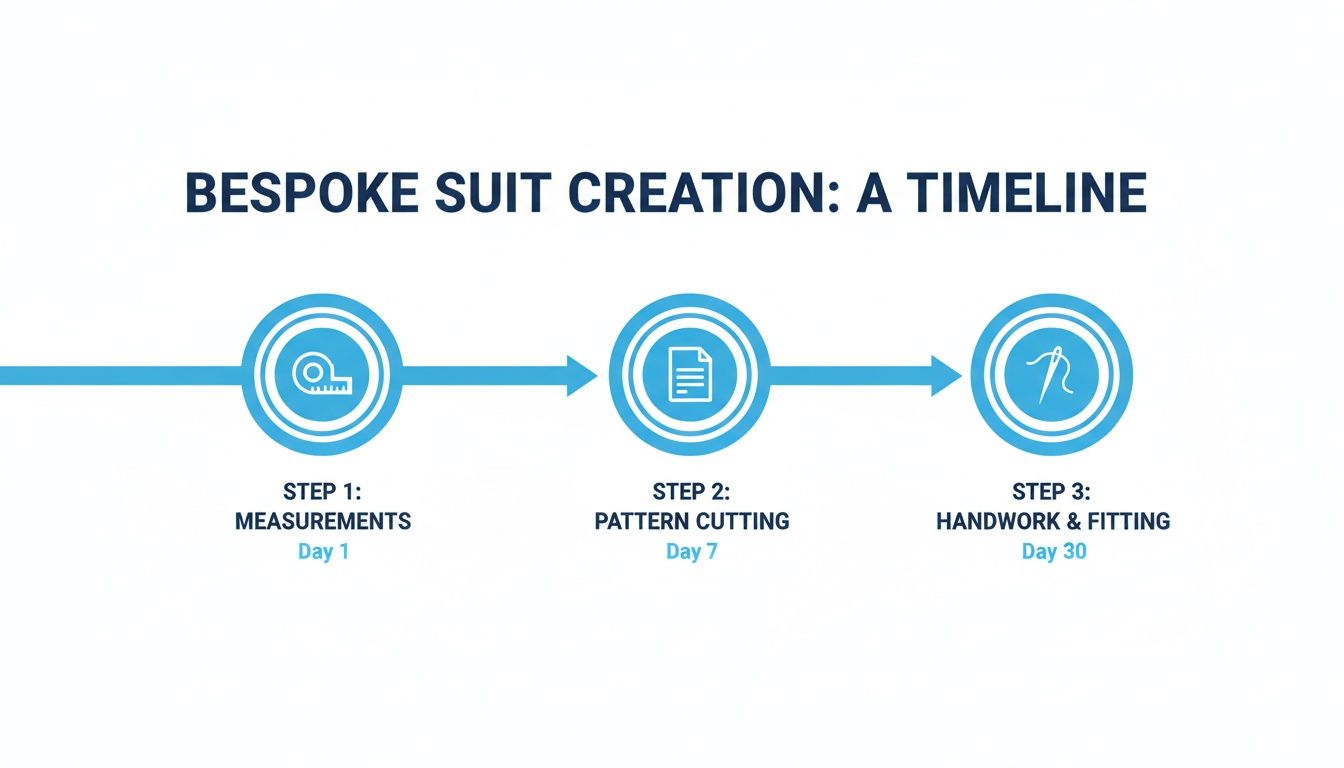
This highlights the progression from precise data collection to pattern creation and, finally, to the intensive handwork that defines the entire bespoke process.
The Forward Fitting and Final Touches
After the baste fitting, your suit is taken apart. The pattern is re-chalked with all the adjustments, and the garment is reassembled for the forward fitting. Now, it looks much more like a suit. The pockets are set, the lapels have taken shape, and you can really see the silhouette emerging.
This fitting is all about refinement. Your tailor will make more subtle tweaks, fine-tuning the fit across your shoulders, chest, and waist. It’s also your chance to see how everything is coming together and give your own feedback, making sure the garment is perfectly in tune with your expectations.
From that first chat to holding the finished garment, the whole process typically takes between 8 to 12 weeks. This unhurried timeline is essential. It allows for meticulous handwork and the necessary breathing room between fittings for adjustments to be made properly.
The last leg of the journey involves all the finishing touches:
- Hand-sewn buttonholes: A true hallmark of quality craftsmanship.
- Lining and buttons: Your chosen lining and buttons are carefully attached.
- Final press: The suit is expertly pressed to give it its definitive shape and structure.
Your last meeting is the final check, where you try on the completed suit. This is the moment you truly feel the result of the bespoke journey—a garment sculpted perfectly to your body, a true extension of your personal style.
Choosing Your Cloth: The Heart of a Bespoke Suit
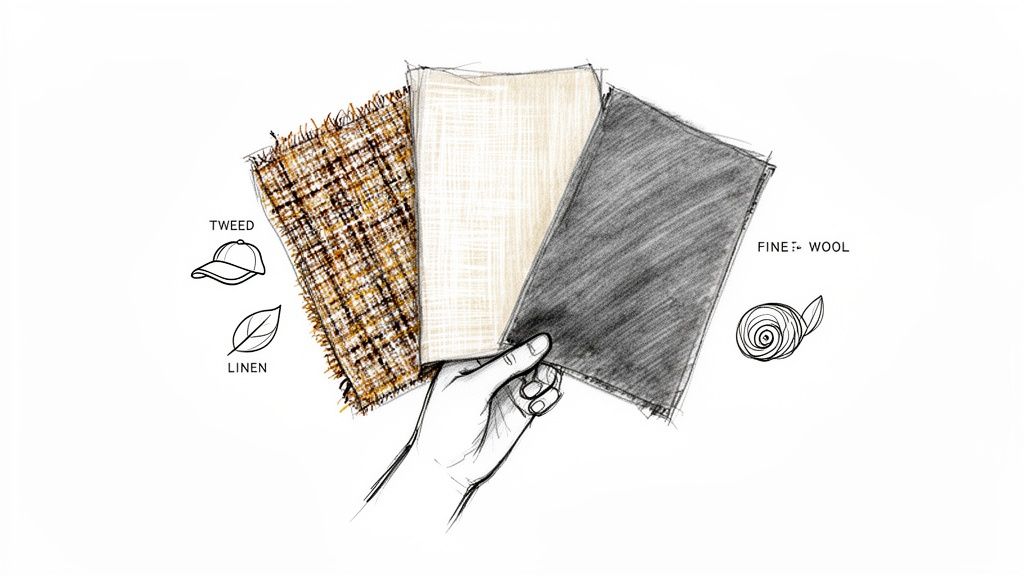
While the journey to your ideal bespoke suit starts with a conversation, the first tangible decision you’ll make is choosing the cloth. This is where the suit's real personality starts to emerge. Think of the fabric as its foundation; it dictates the garment's weight, the way it drapes over your body, its texture, and how it performs through different seasons and occasions.
It’s a bit like selecting the core building material for a house. Just as brick, stone, or wood each give a building a distinct character and function, so do the world's finest cloths. Your choice is about so much more than just colour—it’s about feel, durability, and creating a garment that is perfectly suited to your life.
The Workhorse: Wool and Its Many Forms
When you picture a classic suit, you're almost certainly imagining one made from wool. It's the cornerstone of a gentleman’s tailoring, and for good reason. Its natural fibres are remarkably versatile, breathable, and wrinkle-resistant, which makes it an absolute champion across a huge range of environments.
But "wool" is a broad church. The performance of a wool suit depends entirely on its weight and weave. A heavier worsted wool, with its smooth and tough finish, is perfect for a business suit that needs to look sharp through daily wear and travel. On the other hand, a lighter, more open-weave wool like fresco is engineered for warmer weather, offering fantastic airflow while holding a crisp silhouette.
For anyone looking for year-round utility, a mid-weight wool of around 11-12 ounces is often the ideal starting point for a first bespoke suit. This weight provides just enough body to drape beautifully without feeling too heavy for a day at the office.
Seasonal Specialists: Tweed and Linen
Beyond the brilliant all-round performance of wool, certain fabrics are true masters of specific environments. They have a character all their own, making them perfect for particular seasons or settings.
- Tweed: Born in the rugged landscapes of Scotland and Ireland, tweed is a durable, moisture-resistant woollen fabric with a rich, textured appearance. It’s the quintessential choice for country pursuits and cooler autumn or winter days, offering serious warmth and a touch of rustic elegance.
- Linen: Spun from the flax plant, linen is the very soul of summer style. It's incredibly lightweight and breathable, making it the most comfortable option you can choose for warm climates or summer weddings. While it famously wrinkles, that’s actually part of its charm, giving it a relaxed, lived-in feel.
- Cashmere and Mohair: For a dose of luxury, blends can introduce new qualities. Cashmere brings an unparalleled softness and warmth, while mohair—from the Angora goat—provides a subtle sheen and excellent crease resistance, making it a fantastic choice for travel or evening wear.
The cloth you select tells a story. A hardy tweed speaks of countryside heritage, while a crisp linen evokes Mediterranean ease. The choice is a direct reflection of the purpose and personality you want your suit to convey.
Making the Right Choice for You
Picking the perfect fabric isn't a decision you should make alone. It’s a collaborative process with your tailor, balancing what you want aesthetically with what you need practically. The key is to think about when and where you'll be wearing the suit most. Is it for the boardroom, a wedding, or weekend events?
A good tailor will walk you through the swatch books, encouraging you to feel the weight and texture of each option. This tactile experience is vital. Honestly, understanding how a cloth feels in your hand is the best way to imagine how it will feel as a finished garment against your skin. For a deeper dive into the different materials, our guide to the best fabrics for suits offers some extra insight.
Ultimately, the cloth is the soul of your suit. It’s the element that brings your vision to life, ensuring your finished garment is not only beautiful but also a perfectly functional and comfortable extension of you.
Understanding the Investment in a Bespoke Garment
Thinking of a bespoke suit as just another purchase is to miss the point entirely. It's much better to see it as a long-term investment in yourself—in your presentation and your confidence. The price tag isn't just for a piece of clothing; it's for the exceptional materials, the countless hours of a master artisan's skill, and a process built around you and you alone.
Unlike an off-the-rack suit designed to have a short shelf life, a bespoke garment is crafted to last. The real value is found in its durability, its perfect comfort, and the quiet confidence it gives you every single time you put it on. It becomes a reliable cornerstone of your wardrobe, made to serve you impeccably for years, even decades.
The True Cost of Craftsmanship
The price of a bespoke suit is a direct reflection of the tailor's time and expertise. A single suit can demand anywhere from 50 to 80 hours of meticulous handwork. That's everything from drafting your unique paper pattern to stitching the final buttonhole by hand. It’s a level of dedication a machine simply cannot replicate.
This commitment to craft is a huge part of what makes the UK's custom clothing market so vibrant. The United Kingdom has become a major player in the global custom suits market, and it's projected to grow to USD 205.27 million by 2032. This growth shows a real, tangible appreciation for the quality and longevity that only bespoke tailoring can offer.
Longevity Versus Fast Fashion
When you commission a bespoke suit, you’re making a conscious choice to step away from the disposable cycle of fast fashion. An off-the-rack suit might seem like a bargain at first, but its fused construction and lower-quality fabrics often mean it starts to look tired and lose its shape surprisingly quickly.
A bespoke suit, on the other hand, is an exercise in sustainability and lasting quality.
- Superior Materials: We use only high-quality cloths and canvases. This ensures the suit keeps its shape and character through years of wear.
- Adaptable Fit: A good tailor always leaves extra inlay fabric in the seams. This means the suit can be altered later if your body shape changes, protecting your investment for the long term.
- Timeless Style: The focus is always on classic, enduring design, not fleeting trends. Your suit will look just as good in ten years as it does today.
A bespoke suit isn't just made for you; it's made to last with you. It's an asset that provides value year after year, outliving dozens of its mass-produced counterparts and often proving more economical in the long run.
This durability makes a bespoke suit the perfect way to mark life's most important moments. And it's not just for the wedding day; a bespoke suit is an excellent choice for other milestone events. For more ideas, explore tips on perfecting your look for engagement sessions. The confidence that comes from a perfect fit is truly immeasurable.
Ultimately, the investment goes far beyond the physical garment. It’s an investment in unparalleled comfort, a flawless silhouette, and the assurance that you look your absolute best. If you're considering taking the leap, our guide on how much a bespoke suit costs offers a completely transparent breakdown of what to expect, helping you make an informed decision.
Frequently Asked Questions About Bespoke Suits
What's the main difference between bespoke and made-to-measure?
The core difference lies in the pattern. A bespoke suit starts with a unique paper pattern drafted from scratch exclusively for you, based on dozens of measurements. This allows for a perfect fit that accommodates your specific posture and body shape. Made-to-measure, in contrast, uses a pre-existing standard pattern or "block" which is then adjusted to your measurements. While a good option, it can never achieve the same level of precision and personalisation as a true bespoke garment created just for you.
How long does a bespoke suit take to make?
The entire bespoke process, from the initial consultation to the final fitting, typically takes between 8 to 12 weeks. This timeframe is essential to allow for the meticulous craftsmanship required at each stage: drafting your unique pattern, cutting the cloth, constructing the garment for multiple fittings (baste and forward), and finishing every detail by hand. This unhurried pace ensures the highest quality and a flawless fit, making the wait a worthwhile part of the experience for a truly personalised gentleman's garment.
How much control do I have over the design?
You have complete control. The bespoke journey is a collaboration where you are the creative director. We will guide you, but every decision is yours to make. This includes selecting the fabric from thousands of options, choosing the lining, picking the buttons, and deciding on all the stylistic details. You determine the lapel width and shape, pocket style, number of buttons, and type of vents. The result is a garment that is not just made for you, but is a true expression of your personal style.
How should I care for my bespoke suit?
Proper care is key to ensuring your suit lasts a lifetime. Always hang it on a wide, shaped wooden hanger to support the shoulders and maintain its structure. After wearing, allow it to air out for at least 24 hours before returning it to your wardrobe. Avoid frequent dry cleaning, as the chemicals can damage natural fibres. Instead, use a steamer to remove wrinkles and spot-clean minor stains. A professional cleaning once or twice a year should be sufficient for your gentleman's suit.
Can a bespoke suit be altered later on?
Yes, absolutely. A key feature of a quality bespoke suit is its adaptability. During its creation, the tailor intentionally leaves extra fabric inside the seams, known as 'inlay'. This thoughtful detail means the suit can be let out or taken in if your body shape changes over the years. This foresight protects your investment, ensuring that your garment can continue to fit you perfectly for decades, making it a truly sustainable and lifelong piece in your wardrobe.
About The Author
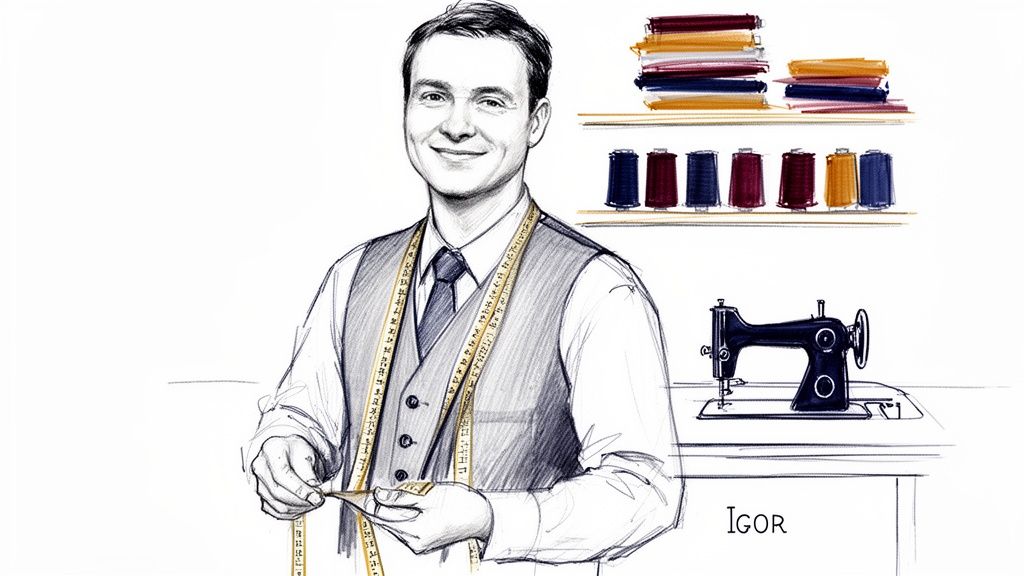
Igor is the founder and master tailor behind Dandylion Style. With a deep-seated passion for the heritage of gentlemen's tailoring, he combines the time-honoured techniques of Savile Row with a modern, client-focused approach. Igor believes that the experience of commissioning a suit should be as impeccable as the final garment itself. He is dedicated to demystifying the process, making bespoke tailoring an accessible, enjoyable, and collaborative journey for every client.
Based in West Sussex, Igor serves gentlemen across Sussex and London, offering personal fittings at your home or office. His philosophy is simple: create timeless, perfectly fitting garments that reflect the wearer's individuality and are built to last a lifetime. You can learn more about Igor's background and tailoring philosophy here.
Ready to begin your own bespoke journey? At Dandylion Style, I combine traditional craftsmanship with a personal, convenient service to create garments that are a true extension of you. Book your consultation today and experience the difference for yourself.