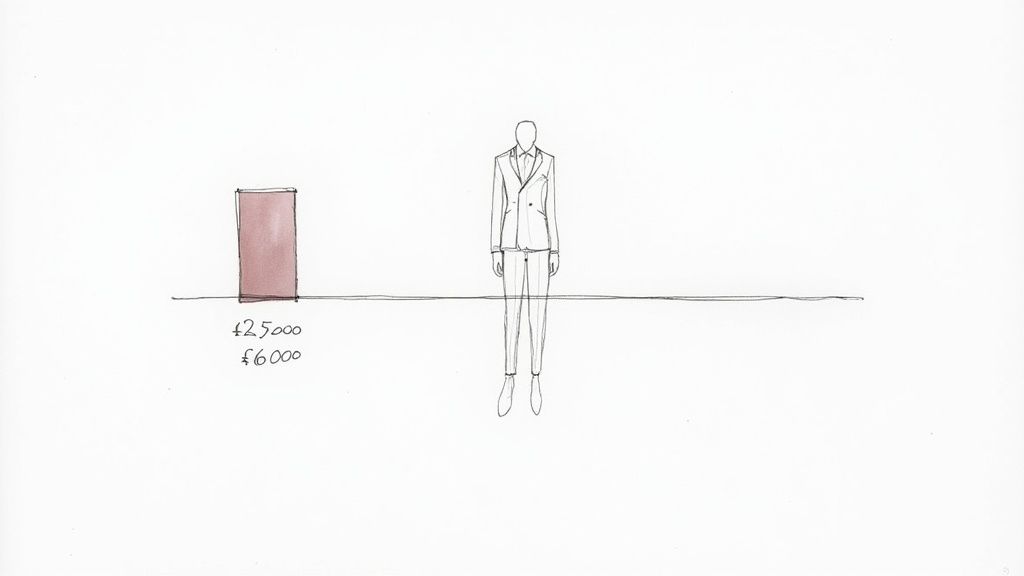
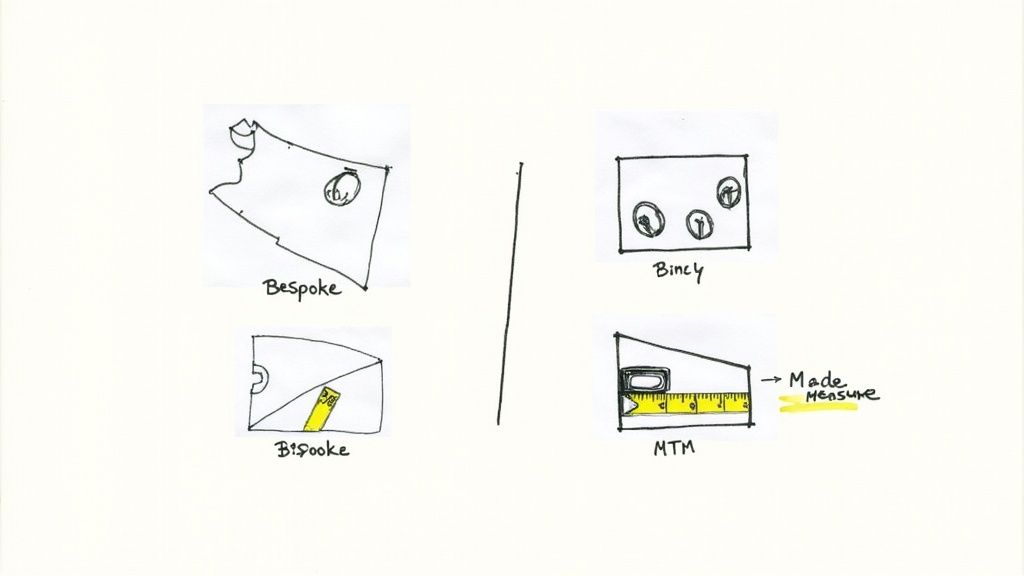
So, you're wondering how much a bespoke suit costs in the UK. The honest answer is that it varies quite a bit, but you can generally expect to invest anywhere from £2,500 for a solid entry-level commission to well over £6,000 for a creation from a prestigious Savile Row house.
The final price isn't just a number plucked from thin air. It’s a direct reflection of the tailor's skill, the countless hours of painstaking handwork involved, and, of course, the quality of the fabric you choose. This guide will unpack every element, helping you understand the real value behind this classic sartorial investment.
Key Takeaways
Typical Price Range: A bespoke suit in the UK generally costs between £2,500 and £6,000+, with prestigious Savile Row tailors at the higher end. The price reflects craftsmanship, fabric quality, and the tailor's reputation.
Main Cost Factors: The final cost is driven by the 80-100 hours of skilled labour, the choice of fabric (from high-quality wools to rare fibres like vicuña), the tailor's location, and the intricate hand-finishing details.
Bespoke vs. Made-to-Measure: Bespoke involves creating a unique pattern from scratch with multiple fittings, offering unparalleled fit and customisation. Made-to-measure (MTM) adjusts a pre-existing pattern, making it a faster and more affordable alternative.
A Worthwhile Investment: A bespoke suit is a long-term investment. Its superior durability results in a lower cost-per-wear over time compared to off-the-peg options, and it offers intangible benefits like confidence and a perfect fit.
Decoding the Price of a Bespoke Suit
Starting the bespoke journey is about more than just buying another suit; it's about commissioning a piece of wearable art, crafted from scratch exclusively for your body. The question of "how much" doesn't have a single, simple answer because you're paying for a meticulous process, not just an off-the-peg product.
Think of it like commissioning a custom piece of furniture. A simple pine bookshelf will naturally have a different price tag than an ornate, hand-carved oak cabinet. Both hold books, but the materials, craftsmanship, and the artisan's time are worlds apart. It's the same with a bespoke suit—the final cost is shaped by the mastery of the tailor and the quality of every single component.
What Shapes the Final Cost?
Several core elements come together to determine the final investment for your garment. Getting a handle on these helps to make sense of the price spectrum and what you're actually getting for your money. To find the right artisan for you, our guide on choosing from local bespoke suit shops near me is a great place to start.
Here are the main things that influence the price:
The Tailor's Reputation and Location: A world-renowned tailor on Savile Row carries significant overheads and a legacy that commands a premium. An equally skilled tailor elsewhere may offer a more accessible price point.
Hours of Skilled Labour: This is a big one. A true bespoke suit requires an incredible 80-100 hours of meticulous handwork from a master cutter and their team of skilled finishers.
Fabric Choice: Your choice of cloth is a major cost driver. A quality Super 120s wool from a respected British mill is a fantastic starting point, but opting for exotic blends like vicuña or pure cashmere will elevate the price significantly.
Construction Quality: The internal structure of the suit, known as the canvas, and the countless hand-sewn details all contribute to its longevity, shape, and fit. This unseen workmanship is a huge part of what you're paying for.
What Does Bespoke Actually Mean
The word ‘bespoke’ gets thrown around a lot in menswear these days, often incorrectly used as a stand-in for ‘custom’ or ‘made-to-measure’. But true bespoke tailoring is a world apart. It's an art form, a meticulous process that begins not with a measuring tape, but with a conversation. Understanding this is the key to seeing why a bespoke suit's cost is a true investment in craft.
Unlike other methods that just tweak an existing template, a bespoke suit starts from absolute zero. A blank canvas. It all begins with a detailed chat with your tailor about your life, your tastes, and what you need the suit to do for you. This dialogue is every bit as important as the measurements that follow.
From that conversation, the tailor then drafts a unique paper pattern entirely from scratch. Think of it as the architectural blueprint for your suit, created for your body and no one else’s. It accounts for every single nuance—from the natural slope of your shoulders to the way you stand and walk.
The Journey from Pattern to Perfection
Creating that paper pattern is just the first step. The real magic happens during the fittings, a series of appointments where the garment is quite literally sculpted onto your body. This hands-on, iterative process is what genuinely defines the bespoke experience.
The first major milestone is the baste fitting. At this point, the suit is loosely held together with temporary white basting stitches. It’s a skeletal version of the final garment, which allows the tailor to make crucial adjustments to the suit's balance, length, and drape before any fabric is permanently cut.
"A bespoke suit is not merely made for you; it is made on you. Each fitting is a collaborative step between client and artisan, refining the silhouette until it becomes a second skin."
This approach is fundamentally different from made-to-measure, where an existing ‘block’ pattern is simply altered. With bespoke, the suit evolves with you through each fitting, ensuring a level of precision that’s otherwise impossible to achieve. To really get into the weeds of this craft, our guide explains in detail what a full bespoke suit entails.
The Unseen Art of Handwork
A huge chunk of what you're paying for in a bespoke suit is the sheer amount of skilled handwork that you’ll never even see. The jacket's internal structure, for example, is built around a full canvas. This is a layer of material, usually a blend of horsehair and wool, that sits between the outer cloth and the lining.
This canvas is meticulously hand-padded and stitched to the lapels, which is what gives them that signature, gentle roll rather than the flat, lifeless look of a pressed lapel. Over time, this canvas actually moulds to your body, improving the suit's fit and drape every time you wear it. It’s a living, breathing structure—a world away from the fused (glued) linings in off-the-peg suits that often feel stiff and can bubble after a few wears.
The level of detail is extraordinary and includes:
Hand-Sewn Buttonholes: Every buttonhole is cut first and then precisely sewn by hand with silk thread. This creates a strong, beautiful finish that a machine simply cannot replicate.
Hand-Attached Collars and Sleeves: Attaching these crucial parts by hand gives the garment far more flexibility and comfort, ensuring it moves with your body, not against it.
Meticulous Stitching: From the subtle pick stitching along the lapels to the finishing on the internal pockets, every detail is executed with an artisan's care.
Ultimately, ‘bespoke’ is a promise. It’s a promise of unparalleled quality, a one-of-a-kind garment born from hours of conversation, measurement, and masterful hand-craftsmanship. It’s not just a suit; it’s a piece of wearable art, a personal statement created just for you, without a single compromise.
The Key Factors Driving Bespoke Suit Prices
When you commission a bespoke suit, you aren't just buying fabric and thread; you're investing in a symphony of skill, time, and pure artistry. The final number on the invoice is a direct reflection of several key components coming together to create a garment that is truly yours. Once you understand these elements, the cost is demystified, revealing the genuine value behind the price tag.
The most significant factor, without question, is the immense amount of skilled labour involved. A true bespoke suit is the absolute antithesis of mass production. It’s a slow, deliberate process that requires an artisan's complete and undivided attention.
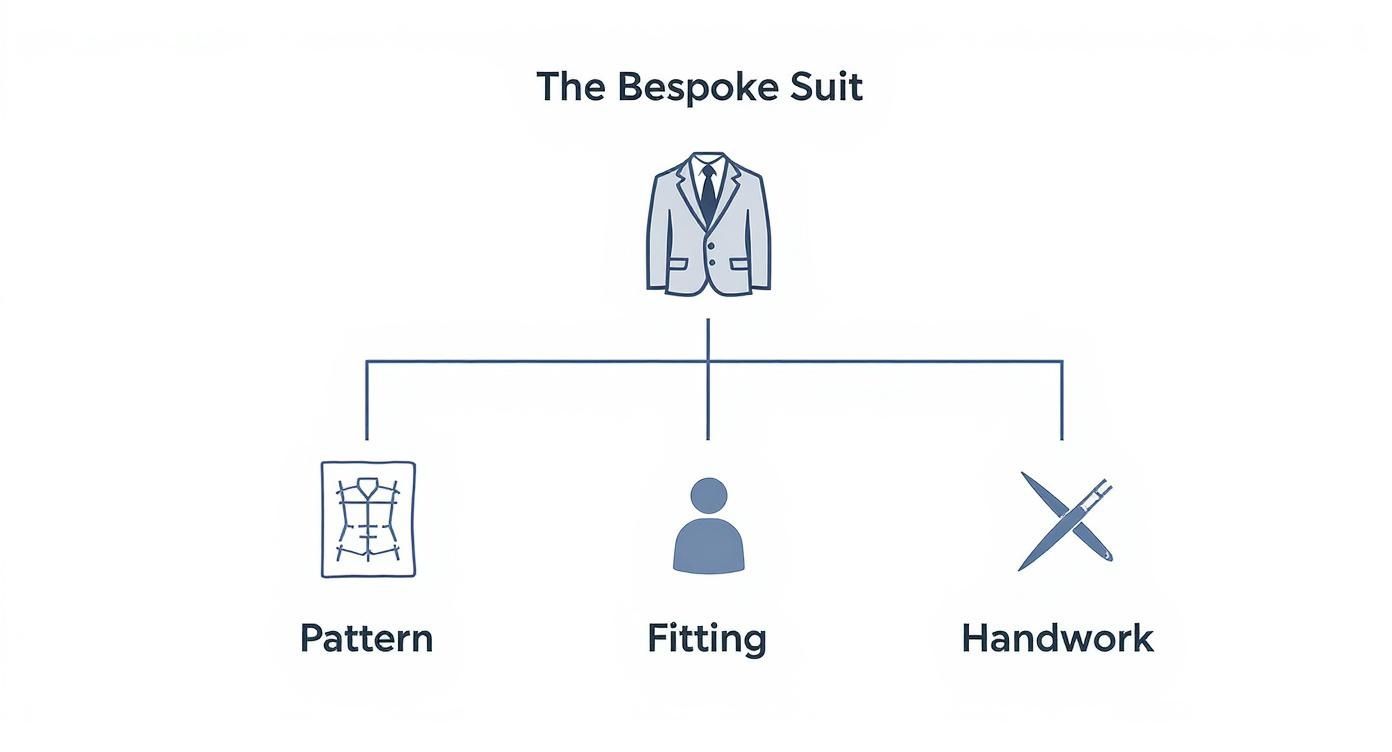
This breaks down the core pillars of the bespoke process—the unique pattern, the multiple fittings, and the extensive handwork—that truly define the craft.
Each of these stages represents a serious investment of a master tailor's time and expertise, which forms the very foundation of the suit's cost.
The Artisan's Time and Skill
Imagine asking a master carpenter to build a custom piece of furniture from a single block of wood. The price isn't just for the timber; it's for their years of experience, their steady hand, and the countless hours spent shaping and finishing the piece to perfection. The very same principle applies to bespoke tailoring.
A typical bespoke suit demands between 80 and 100 hours of meticulous, painstaking work. This time is spread across a small team of specialists: the master cutter who drafts your unique pattern from scratch, the coat maker, the trouser maker, and the finisher who sews every buttonhole and detail by hand.
This substantial time investment is the primary reason for the cost. In the UK, bodies like the Savile Row Bespoke Association uphold these standards, ensuring any garment labelled 'bespoke' meets a strict threshold of craftsmanship and labour.
Your Choice of Fabric
The cloth you choose is the very soul of your suit and a major variable in the final cost. The price difference between a high-quality wool and a rare luxury fibre can run into thousands of pounds.
Think of it like choosing the engine for a high-performance car. A standard engine will perform beautifully, but upgrading to a finely-tuned, more powerful alternative will naturally push up the overall price.
Entry-Level Luxury: High-quality wools, like Super 120s from respected British or Italian mills, provide a fantastic foundation. They are durable, drape beautifully, and offer excellent value for money.
Mid-Tier Excellence: Moving up the ladder, you'll find finer Super 150s wools, mohair blends for a crisp finish, or soft flannels. These cloths offer more nuanced textures and performance characteristics.
Peak Luxury: At the very top end are the exotic and rare fibres. We're talking about incredibly soft cashmere, lustrous silk blends, and the legendary vicuña—one of the finest and most expensive animal fibres in the world.
Choosing the right material is a crucial part of the journey. For a deeper dive, you might find our guide to the best fabrics for suits useful.
The Tailor's Location and Reputation
Where your suit is made, and who makes it, also plays a vital role. A tailor operating from a prestigious address like London's Savile Row has significantly higher overheads—rent, business rates, and staffing—than an independent artisan working out of a regional town.
A tailor's reputation is built over decades of consistent, high-quality work. This heritage and proven track record are part of what you invest in, ensuring a garment of the highest possible standard.
This premium isn't just for the postcode; it's for the accumulated expertise and legacy associated with that tailoring house. A world-renowned cutter with a long list of discerning clients will naturally command a higher price for their time, much like a celebrated artist.
Construction Details and Hand-Finishing
Finally, the unseen details of the suit's construction add considerable value and contribute to the cost. The most important of these is the full-canvas construction. This internal layer of horsehair canvas is hand-stitched into the jacket's front, allowing it to mould to your body over time for a superior fit and drape.
This is a world away from the fused (glued) interlinings found in off-the-peg suits. While a fused construction is fast and cheap, a full canvas is a true mark of quality and longevity.
Other meticulous details that add to the cost include:
Hand-sewn buttonholes created with silk thread for durability and beauty.
Hand-attached collars and sleeves for greater comfort and freedom of movement.
Subtle pick-stitching along the lapels and pockets, a quiet signature of handwork.
Each of these elements requires hours of precise stitching by hand, all contributing to the final cost. It's a testament to a craft where no corners are ever cut.
Comparing Costs: Bespoke vs Made-to-Measure
When you step into the world of proper tailoring, you’ll quickly find yourself at a crossroads: bespoke versus made-to-measure (MTM). While both are a massive leap from an off-the-peg suit, they are entirely different animals with very different price tags. Getting your head around this is key to figuring out where the real value lies for you.
The whole thing boils down to one word: the pattern. A bespoke suit starts its life as a completely unique paper pattern, drafted from scratch just for your body. On the other hand, a made-to-measure suit begins with a pre-existing template—a ‘block’—which is then tweaked to fit your measurements.
Think of it this way: bespoke is like hiring an architect to design a house just for you, from the ground up. Made-to-measure is more like taking a top-tier floor plan and customising it—moving a wall here, changing the kitchen layout there—to better fit how you live. Both result in a great home, but one is a true one-off, while the other is a skilful adaptation.
This fundamental difference in the process has a direct knock-on effect on the final fit, the customisation possibilities, and, of course, the price.
The Financial Divide Explained
So why does bespoke cost so much more? It's all about the sheer amount of skilled human labour involved. Drafting that unique pattern and conducting multiple fittings (often three or more) is an incredibly time-consuming process. We’re talking 80-100 hours of an artisan’s life poured into one garment. It's a hands-on, almost sculptural approach that ensures a perfect fit, accommodating every quirk of your posture and build.
Made-to-measure is a much more streamlined affair. By starting with an existing pattern, a huge chunk of the foundational work is already done. It's faster, needs fewer fittings (usually just one or two), and involves less intricate handwork, all of which makes it much more accessible financially.
While made-to-measure offers a superb fit compared to ready-to-wear, bespoke offers an unparalleled level of precision. The cost reflects the difference between modification and original creation.
The UK's tailoring market is a major player in the global custom suits industry, which was valued at over $5.3 billion USD back in 2021. And within this buzzing market, which holds nearly 23% of the global share, a made-to-measure suit in a city like London can set you back anywhere from £400 to over £3,500. That huge range comes down to the fabric you choose, the quality of the construction, and the reputation of the house. You can find more detail on the custom suits market and its valuation here.
Comparing the Options Side-by-Side
To really get to grips with the trade-offs, it helps to see the differences laid out plainly. While MTM is a fantastic gateway into the world of personalised tailoring, bespoke offers a level of detail and control that is simply unmatched.
Here’s a quick breakdown of what you're getting with each:
Pattern Creation: Bespoke is a 100% unique pattern created just for you. MTM adjusts a pre-existing block pattern.
Fittings: Bespoke usually involves 3-5 fittings, including the critical 'baste' fitting where the suit is temporarily stitched together. MTM typically requires only 1-2 fittings.
Customisation: With bespoke, your options are pretty much limitless—from the width of your lapels to the style of your pockets and the very structure of the jacket. MTM gives you a curated menu of choices, but they’re all within the limits of the original block.
Fit Nuances: Bespoke is masterful at handling unique body shapes, like sloping shoulders or a prominent back, because the pattern is built around them from the start. MTM can adjust for these issues, but it’s always limited by its template.
Ultimately, the choice comes down to what you value most. If you're after a flawless fit and complete creative control over every last detail, then the higher investment for a bespoke suit makes perfect sense. For a deeper dive into the two philosophies, have a look at our complete guide on made-to-measure vs bespoke suits. But if you have a relatively standard build and want a huge upgrade in fit and fabric without the full bespoke price tag, MTM offers brilliant value for money.
Is a Bespoke Suit a Worthwhile Investment?
Thinking about a bespoke suit purely in terms of its initial price is a bit like judging a classic car on its fuel economy; it completely misses the point. A bespoke suit isn’t just another purchase. It’s a long-term investment in yourself—in quality, in confidence, and in your personal brand. The conversation has to shift from "how much does it cost?" to "what is its real, enduring value?"
Beyond the price tag, the superior durability of a bespoke garment makes incredible financial sense over time. These suits are built to last for decades, not just a few seasons, thanks to high-quality materials and meticulous handwork. They will far outlast any off-the-peg garment, which often relies on fused linings and machine construction that simply can't stand the test of time.
The True Value of Cost Per Wear
Here’s a concept that really brings the value home: cost per wear. Let's say you buy an off-the-rack suit for £500. You might get 25 wears out of it before it starts to look tired and lose its shape. That works out to a cost per wear of £20.
Now, consider a bespoke suit from Dandylion Style, with prices starting at £1,495. Because of its superior construction and quality, you could easily wear it 200 times over its long life. Suddenly, the cost per wear plummets to just under £7.50. This simple bit of maths shows how true quality actually becomes more economical in the long run.
A bespoke suit is an asset that pays dividends in longevity. While the initial outlay is higher, its durability and timeless style make it a far more sustainable and valuable addition to your wardrobe.
This durability is matched by its timelessness. Because the suit is crafted to your exact proportions and classic style preferences, it won’t fall victim to the whims of fast fashion.
More Than Money: The Intangible Returns
Honestly, though, the most significant returns on your investment are the ones you can't track on a spreadsheet. There's an unshakable confidence that comes from wearing a garment that fits you perfectly, moving with you like a second skin. It genuinely improves your posture and projects an image of quiet self-assurance and attention to detail.
This creates a powerful professional impression that can be invaluable in business and social settings. It signals that you value quality and respect both yourself and the occasion. And let's not forget the creation process itself—a unique and personal journey where you collaborate with an artisan to create something that is yours and yours alone.
A bespoke suit is, ultimately, an investment in yourself. To dig deeper into this, our definitive guide explains in detail if bespoke suits are worth the investment for your specific needs. It's about securing a piece of enduring quality, personal expression, and the quiet confidence that comes from wearing something made without compromise.
Frequently Asked Questions About Bespoke Suit Costs
Why do bespoke suit prices vary so much between tailors?
Prices vary due to the tailor's reputation, location, and the intensity of labour. A prestigious Savile Row tailor has higher overheads and a legacy commanding a premium. An independent artisan elsewhere has lower costs, offering a more accessible price. The final cost also reflects the 80-100 hours of handwork, the quality of hand-finishing, the complexity of the design, and the exclusivity of the fabric selected. You are investing in a unique combination of skill, experience, and the specific workshop’s operational costs.
How long does a bespoke suit take to make?
A true bespoke suit is a meticulous process that cannot be rushed. From your initial consultation and measurements to the final fitting, you should typically expect the journey to take between 10 to 12 weeks. This timeframe allows for the drafting of your unique paper pattern, a crucial baste fitting where the suit is loosely assembled, and several subsequent fittings to refine the fit and details to perfection. This deliberate pace ensures the highest standards of craftsmanship are met without compromise.
Are alterations included in the price of a bespoke suit?
Yes, absolutely. The price of a bespoke suit is all-inclusive, covering every fitting and adjustment required to achieve a perfect fit. These aren't considered 'alterations' in the traditional sense; they are an integral part of the creation process. Each fitting allows the tailor to sculpt the garment on your body, making iterative refinements. This collaborative process is fundamental to the bespoke promise and is fully encompassed by the initial quoted cost, ensuring there are no hidden charges for achieving the final, flawless garment.
How much should I spend on my first bespoke suit?
For a first bespoke suit, a budget between £2,500 and £4,000 is a realistic starting point in the UK. This price range provides access to highly skilled tailors using excellent quality cloths from reputable British or Italian mills. It ensures you receive the full bespoke experience: a unique pattern, multiple fittings, and a high degree of handwork. This investment secures a durable, perfectly fitting garment that will serve as a fantastic cornerstone for a gentleman’s wardrobe, offering far greater value and longevity than a high-end ready-to-wear alternative.
Can choosing a more expensive fabric significantly increase the suit cost?
Yes, the choice of fabric is one of the most significant variables in the final cost of a bespoke suit. While a high-quality Super 120s wool provides a fantastic starting point, moving to finer wools, cashmeres, mohair blends, or silks will increase the price. Opting for ultra-premium and rare fibres like vicuña, considered one of the most luxurious in the world, can add thousands of pounds to the final bill. Your tailor will guide you through options that match your budget and style.
About The Author
Igor is the founder and creative force behind Dandylion Style. With a lifelong passion for classic gentlemen's tailoring, he established the brand on the principle that a suit should be more than mere clothing—it should be an extension of one's character. Igor believes in a deeply personal approach, collaborating closely with each client to understand their lifestyle and personality. This philosophy ensures every garment is not just perfectly fitted but is a true reflection of the individual, crafted to instill confidence and timeless style.
Ready to invest in a garment that is truly your own? You can start your bespoke journey with Dandylion Style by visiting us at https://dandylionstyle.co.uk.
Written by:
Igor Srzic-Cartledge
Igor is the founder of Dandylion Style, a tailoring house built on the simple, deeply held belief that a suit should be like a second skin—a true extension of a gentleman’s personality. For Igor, tailoring isn't just about cutting cloth; it's an art form dedicated to creating unique, perfectly fitted attire for the discerning man. His passion is rooted in classic sartorial traditions, yet he maintains a keen eye for contemporary style, ensuring his creations are both timeless and relevant. This approach has cemented his reputation for genuine craftsmanship and a truly personal service.
Key Takeaways The Core Two: Navy blue and charcoal grey are the essential, non-negotiable suit colors for any professional wardrobe. Navy offers versatility and approachability, while charcoal projects authority and seriousness. Context is Crucial: The best suit color...
When you find a piece of clothing you absolutely love, getting the fit just right is the final, transformative touch. But how much should you expect to pay? In the UK, alteration costs can be as modest as £15 for a simple trouser hemming, or climb to £150 and beyond...
Getting the right pink shirt and tie combination is the mark of a well-dressed man. It’s a detail that separates the novices from those who truly understand their wardrobe. For a look that’s classic and can’t miss, pair your pink shirt with a navy, grey, or burgundy...
Key Takeaways For those seeking a quick overview, this section summarises the essential rules and recommendations for incorporating turn-up trousers into your wardrobe. Sartorial Purpose: Turn-ups add weight to the trouser hem, ensuring a cleaner, sharper drape,...
Deciding what colour tie to wear with a pink shirt is a common style query I hear from clients. For a classic, professional look that never fails, your safest and most effective choices are navy blue and charcoal grey. If you're heading to a more contemporary or...
You've just picked up a newly finished bespoke suit, and the cloth still has that clean, disciplined line only a real fitting room can give it. The temptation is to put it straight in the wardrobe and trust the label to do the rest. That's where expensive...
Book Your Tailoring Consultation
Looking for a suit or garment made specifically for you?
At Dandylion Style, we create bespoke and made-to-measure
garments tailored to your individual shape, style and occasion.
From suits and shirts to dresses, waistcoats and alterations,
our experienced tailors can help you create something truly unique.