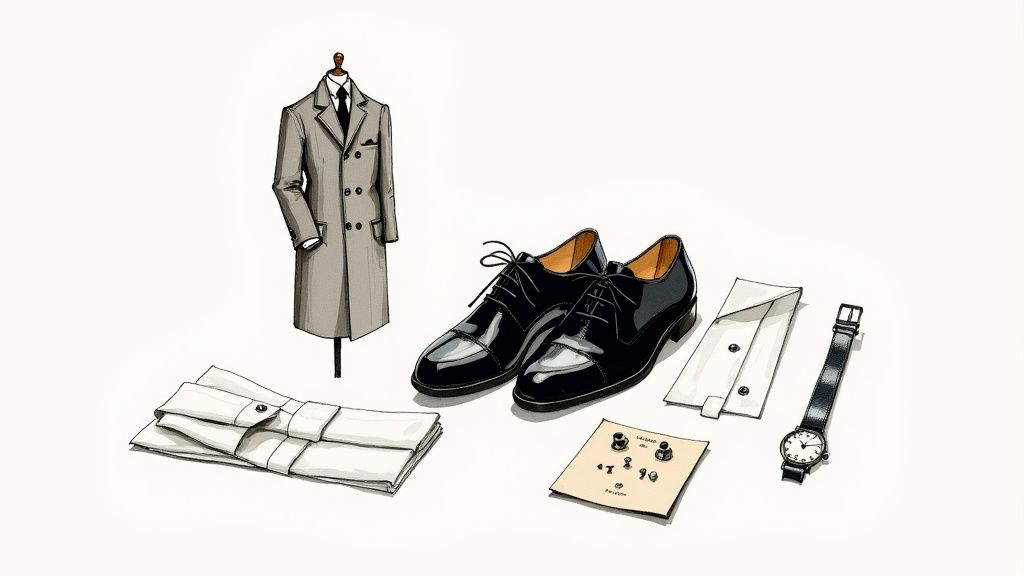
When an invitation lands on your doormat specifying a black tie wedding, it’s calling for the absolute pinnacle of formal evening wear. For gentlemen, this is a clear-cut directive: a black or midnight blue tuxedo, a crisp white formal shirt, a hand-tied black bow tie, and gleaming black patent leather shoes.
Think of it as the definitive uniform for celebratory elegance. It’s a language of respect, style, and occasion.
Key Takeaways
The Uniform is Non-Negotiable: Black tie requires a tuxedo (dinner suit), not a black business suit. Key features are satin or grosgrain lapels and a matching stripe on the trousers.
Core Components are Crucial: A pristine white dress shirt with double cuffs, a self-tie black bow tie, and black patent leather shoes are mandatory elements.
Fit is Paramount: An ill-fitting tuxedo undermines the entire look. Whether renting or buying, ensure the garment is perfectly tailored to your frame.
Details Make the Difference: Accessories like cufflinks, a white pocket square, and a simple dress watch are essential. Trousers should never have belt loops; use side adjusters or braces instead.
Know the Code: 'Black Tie Optional' allows for a dark suit, but 'Black Tie' means a tuxedo is required. Sticking to black or midnight blue is the most respectful choice for a wedding.
Your Essential Black Tie Wedding Checklist
Receiving a black tie wedding invitation is a real honour. It signals a truly special and formal affair, one where the hosts have a distinct vision. That dress code isn't just a suggestion; it's a specific set of sartorial rules designed to create a cohesive and sophisticated atmosphere for everyone.
Getting it right is a sign of respect for the couple and their day. And while the rules might seem firm, they’re actually wonderfully straightforward, making it easy to pull together a polished, confident look.
This checklist is your immediate action plan, breaking down the non-negotiable elements. Before we get into the finer points of lapel styles and fabric choices, mastering these core components is your foundation for impeccable style.
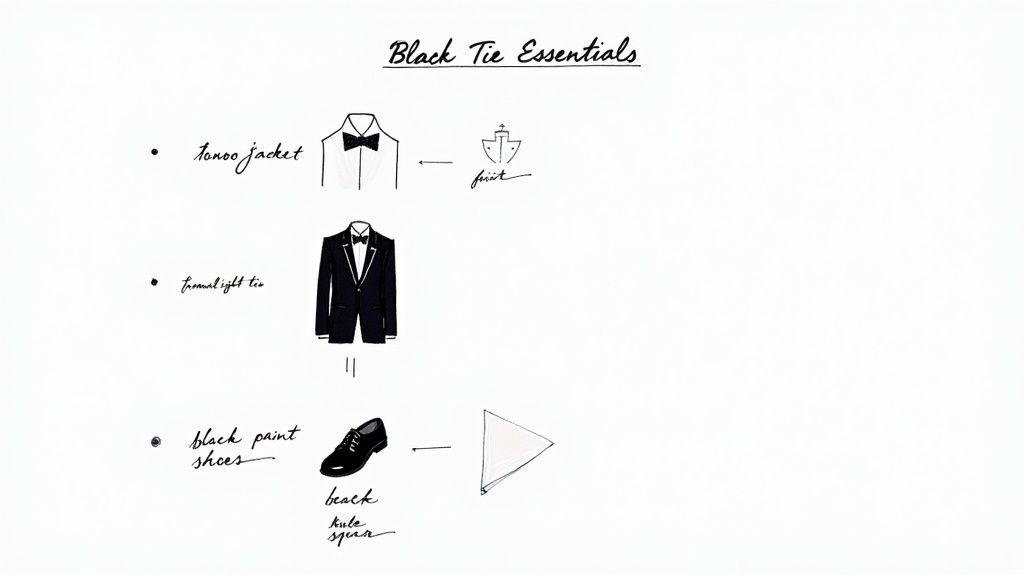
To make things simple, here are the essential items that form the very core of the black tie dress code. Your primary focus should be on getting these four things absolutely spot on.
The Dinner Suit: This must be a tuxedo, often called a dinner suit in the UK, not your standard business suit. The dead giveaway and key differentiator is the satin or grosgrain facing on the lapels.
The Shirt: A pristine white dress shirt is mandatory. Look for styles with a pleated or marcella bib front and, crucially, double cuffs that require cufflinks.
The Neckwear: It has to be a black, self-tie bow tie. Steer well clear of pre-tied versions or, heaven forbid, a standard necktie. They instantly lower the tone and formality of the entire outfit.
The Footwear: Black patent leather shoes are the undisputed gold standard. If you’re in a real pinch, a pair of immaculately polished black leather Oxfords can work as an acceptable alternative.
Of course, ensuring each element is in perfect condition is crucial. The fit of your tuxedo is absolutely paramount; a poorly fitting dinner suit, no matter how expensive, will never look the part. You may need to factor in the cost of alterations to achieve that sharp, clean silhouette.
Nailing these fundamentals will elevate your entire appearance, ensuring you look and feel the part for the celebration.
Understanding the Black Tie Dress Code
Getting an invitation with a "black tie" dress code is always a thrill—it signals an evening of true glamour and style. But what does it really mean when you're a wedding guest? This isn't just a suggestion to wear a nice suit; it's a specific language of elegance the couple is using to craft a truly memorable atmosphere for their big day.
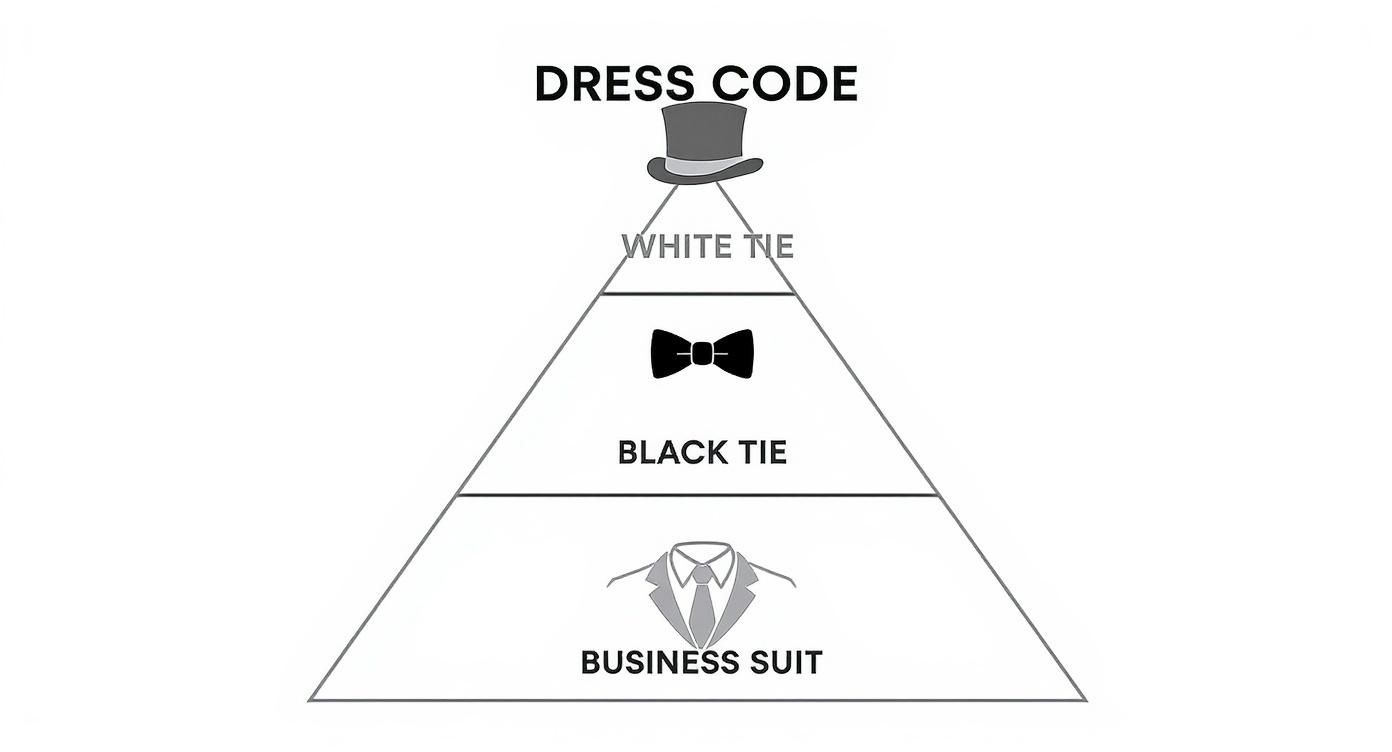
Getting your head around the code is the first step to arriving with confidence. Imagine formality as a ladder. At the very top, you have the ultra-rare ‘white tie’—the sort you see at state banquets. Way down below is your standard business suit. Black tie sits beautifully in between, representing the absolute peak of conventional evening wear.
The Nuance Between Black Tie and Optional
One of the most common trip-ups for guests is the subtle but vital difference between ‘black tie’ and ‘black tie optional’. Getting this wrong can lead to a serious style misstep, so it’s worth paying attention.
Black Tie (Mandatory): This is a direct, clear instruction. For gentlemen, it means a tuxedo is required, period. There's no wiggle room here; a dark business suit, no matter how smart, simply won't cut it.
Black Tie Optional: This gives you a bit of flexibility. While a tuxedo is still the gold standard and most appropriate choice, a dark, impeccably tailored suit (think deep charcoal or classic navy) paired with a conservative tie is also perfectly acceptable.
Think of it this way: 'black tie' is a uniform of celebration, a specific request to join in the formality. 'Black tie optional' offers a choice between that uniform and highly polished business attire. If you have a tux, always default to wearing it.
Understanding this distinction is all about respecting the couple's vision. When the invitation says ‘black tie,’ they’re asking you to fully embrace and contribute to the elegant world they've imagined for their wedding day.
Decoding the Modern Standard
The black tie dress code has a long and storied history, but its modern application for weddings has remained wonderfully consistent. It’s a real testament to truly timeless style.
Black tie weddings are one of the most formal events in UK wedding culture, with clear expectations that have barely shifted over the past decade. Industry insights for 2025 confirm these events demand tuxedos for men and floor-length gowns for women. It’s a level of formality that sits comfortably between casual wedding attire and the much stricter white tie, making it a beloved choice for sophisticated evening celebrations.
For the chaps, the standard uniform is wonderfully straightforward: a black or midnight blue tuxedo, a crisp white formal shirt, a black silk bow tie, and black patent leather shoes. The components are clear and defined, which removes any guesswork and ensures everyone looks polished. You can see these principles in action with this curated selection of men's evening wear and suits.
Ultimately, knowing the ‘why’ behind the dress code is just as important as the ‘what’. For a bit of inspiration, looking at celebrity wedding styles for formal events can offer some brilliant ideas on both classic and current interpretations. It’s all about playing your part in a collective aesthetic of elegance, creating a stunning backdrop for the happy couple.
Mastering the Elements of the Tuxedo
The tuxedo, or dinner suit as we call it in the UK, is the undeniable centrepiece of black tie. It's not a business suit. It wasn't designed for the boardroom; it was crafted purely for celebration, and that distinction is crucial. Getting to grips with its unique components is the secret to not just meeting the dress code, but truly mastering it with a polished silhouette.
Think of it like assembling a precision watch. Every single piece, from the lapels to the trousers, has a specific job to do. When they all work in harmony, the result is flawless. Let's break down these essential components, one by one.
To see exactly where the tuxedo sits in the hierarchy of men's formal wear, this chart paints a clear picture.
As you can see, black tie is the pinnacle of evening wear, second only to the exceptionally rare white tie. It’s a significant step up in formality from a standard business suit.
The Dinner Jacket: The Heart of the Ensemble
The dinner jacket is where your black tie outfit makes its first and most lasting impression. What truly sets it apart from a regular suit jacket is the facing on the lapels. This will be either a gleaming silk satin or a more reserved grosgrain (a ribbed, matte silk). That simple touch of contrasting texture is a non-negotiable hallmark of proper evening wear.
Traditionally, the colour is black. However, midnight blue is an equally classic—and often more striking—alternative. Under the artificial lights of an evening event, a deep midnight blue can actually appear blacker than black itself, giving it a phenomenal depth and richness.
The style of the lapel is another defining feature, with two main options reigning supreme:
Peak Lapels: These lapels sweep upwards and outwards, pointing towards the shoulder. The style creates a powerful V-shape that visually broadens the chest and slims the waist, lending a sharp, traditionally formal look.
Shawl Lapels: This is a continuous, rounded lapel with no notches or points. It offers a softer, more fluid line that brings an air of classic, old-world elegance to the jacket.
A notched lapel, the standard for business suits, is simply too casual for a proper dinner jacket and should be avoided at all costs. The single-breasted, single-button jacket remains the most timeless choice, though a well-cut double-breasted dinner jacket offers a dash of sophisticated flair for those looking to stand apart.
Formal Trousers: The Unsung Hero
Tuxedo trousers are a masterclass in elegant simplicity, but they come with very specific rules. They must be cut from the same cloth as the jacket and are distinguished by a single braid of silk satin or grosgrain running down the outside of each leg, perfectly echoing the material on your lapels.
The most crucial rule for formal trousers? No belt loops. Ever. A belt shatters the clean, unbroken line of the outfit and is never worn with a tuxedo. Instead, the trousers are held up by side adjusters or, more traditionally, a pair of braces.
This detail is a dead giveaway. It’s one of the clearest signs that you understand the subtleties of black tie. The fit should be clean and straight, finishing with a gentle break over the shoe—no bunching or puddling at the ankle.
The Formal Shirt and Bow Tie
The shirt is the crisp white canvas that makes the dark tuxedo pop. A proper formal shirt is a world away from your daily office button-down. It should feature either a pleated front or a marcella (piqué) bib, which adds texture and visual interest. Crucially, it must have double cuffs, which are always fastened with cufflinks, never buttons.
When it comes to neckwear, the bow tie is your only option. It must be black and made from a silk that matches the texture of your jacket's lapels. Most importantly, it has to be a self-tie bow tie. A pre-tied version is the sartorial equivalent of a clip-on; it just doesn't have the character or charm of a genuine, hand-tied knot.
The Waist Covering: A Seamless Finish
The final piece of the puzzle is the waist covering. This isn't just for show; it serves the very practical purpose of hiding the trouser waistband where your shirt is tucked in. This creates a clean, unbroken line from your chest down to your legs, which is the essence of formal elegance.
You have two primary choices:
A Cummerbund: This is a pleated sash of silk worn around the waist (always with the pleats facing upwards). It’s a classic, streamlined choice that keeps things simple and sharp.
A Waistcoat: Often called a vest, a formal waistcoat for black tie is typically low-cut in a deep U or V shape, made from black silk or the same cloth as the jacket. It offers a slightly more traditional and buttoned-up finish.
You must wear one or the other—never both, and certainly never neither. Exposing your shirt and trouser waistband below the button of your jacket is a major style misstep. This finishing touch is what makes the look complete and considered.
Choosing Your Accessories and Footwear
Now that we’ve sorted the main components of the tuxedo, it’s time to focus on the final touches. These are the details that truly separate the men from the boys—the elements that signal you’re not just wearing a dinner suit, but you understand it. Accessories and footwear aren't just afterthoughts; they’re the supporting cast that can make or break your entire look.
This is where you can inject a little personal flair, but it has to be done with an understanding of the rules. The journey to an impeccable black-tie outfit starts, quite literally, from the ground up.
The Definitive Footwear Guide
In the world of black tie, the choice of footwear is both incredibly simple and strictly enforced. There is one undisputed king: the black patent leather shoe. Its mirror-like shine is specifically designed to catch the light during evening events, providing the perfect polished foundation for your suit. The classic choice is an Oxford, or for the traditionalist, a court shoe (also known as an opera pump).
While patent leather is the gold standard, there are a couple of acceptable alternatives, provided you tread carefully:
Polished Black Oxfords: A pair of high-quality calfskin Oxfords can work, but they must be polished to an immaculate, mirror-like shine. We’re talking absolutely no scuffs, marks, or dull spots. They need to look brand new.
Velvet Slippers: For the more sartorially daring man, a pair of black or midnight blue velvet slippers—perhaps with a subtle, tasteful embroidered motif—can be a wonderfully stylish flourish. This is a confident move, though, and one best reserved for winter weddings or less conservative venues.
Your shoes are there to complement the tuxedo, not to shout for attention. Stay away from brogues, loafers, or any other casual style. Think sleek, simple, and elegant.
Essential Finishing Touches
With your shoes sorted, it’s time for the smaller details that pull the entire outfit together. Getting these right is non-negotiable for a truly refined appearance.
The double cuffs on your formal shirt demand cufflinks. This is the perfect place to show a sliver of personality. Stick to simple, elegant designs in silver, gold, or mother-of-pearl. If your shirt has a studded front, ensure your studs match the metal of your cufflinks for a cohesive look.
A crisp white pocket square is another absolute must. It adds a final dash of polish to your jacket's breast pocket. It should be neatly folded—a simple, flat square fold is timeless and foolproof. Stick to linen or silk; cotton is far too casual for this level of formality. To explore a range of high-quality options, you can browse a curated selection of formal accessories that will perfectly complement your attire.
Selecting Your Watch and Outerwear
Your choice of watch really matters. A chunky sports watch or a smartwatch will instantly shatter the elegant lines you’ve worked so hard to create. The only correct choice is a simple, slim dress watch, ideally with a black leather strap. The goal is understated class.
Finally, think about your arrival and departure. If there's a chill in the air, your coat needs to be just as formal as your suit. A classic dark overcoat, like a black or navy Chesterfield, is the ideal partner. It ensures you look impeccable from the moment you step out of the car to the final farewell of the evening.
While our focus here is on menswear, understanding how to coordinate accessories is key for every guest. For those attending a black-tie wedding, knowing what jewelry to wear with a black dress is just as crucial as a gentleman getting his cufflinks right.
Deciding Between Renting and Bespoke Tailoring
So, you've got the black-tie components down. Now for the big question: where do you get the suit? This is where the rubber meets the road, and for any man attending a black-tie wedding, the fit is everything. It's the one factor that separates looking passable from looking truly sharp and feeling incredible.
You're standing at a crossroads with two main paths ahead: renting a tuxedo or commissioning a bespoke garment. Each has its place, but they offer wildly different experiences.
Renting often seems like the easy, wallet-friendly option, especially if you think this is a one-off event. It's fast, straightforward, and avoids a bigger financial commitment. But that convenience almost always comes with a trade-off, usually in the fit and the inability to express your own style.
Rental tuxedos are built for the masses, designed to sort-of-fit everyone, which means they rarely fit anyone perfectly. You might end up with trousers that billow, a jacket that pulls tight across the shoulders, or sleeves just a smidge too long. Any of these small imperfections can instantly undermine the crisp, powerful silhouette that black tie is all about.
The Case for Renting Your Tuxedo
Let's be clear, renting can be a perfectly practical solution in a few specific scenarios. If you genuinely attend formal events less than once every few years, the investment in a bespoke piece might not add up for you. It's also a lifesaver if an invitation lands on your doormat at the last minute and you don't have the typical 8–12 weeks needed for the bespoke process.
The key upsides are obvious:
Lower Upfront Cost: Renting is hands-down cheaper than buying.
Convenience: The process is designed to be quick and simple.
No Maintenance: Wear it, return it. No need to worry about cleaning or finding wardrobe space.
Just go in with your eyes open. You'll likely face a limited choice of styles, the potential for visible wear and tear from past outings, and that one-size-fits-all fit we mentioned.
Investing in a Bespoke Garment
A bespoke tuxedo, on the other hand, is a completely different world. Think of it not as a purchase, but as an investment—in a flawless fit, in your personal style, and in long-term value. Instead of trying to squeeze into a pre-made size, a bespoke garment is born from a pattern cut exclusively for your body.
The bespoke process ensures every single detail—from the width of the lapel and the stance of the buttons to the precise break of the trouser—is crafted to your exact measurements and taste. It’s the difference between wearing a suit and wearing your suit.
This level of personalisation goes far beyond just the fit. You have total creative control over the cloth, the lining, and all the small finishing touches that make a garment uniquely yours. While the initial outlay is higher, a beautifully made tuxedo is built to last a lifetime, ensuring you are impeccably turned out for every single formal occasion on the horizon.
Our detailed guide breaks down the critical differences between made-to-measure vs bespoke tailoring, helping you appreciate the true craftsmanship involved.
This move towards personalisation isn't just a menswear trend; it's happening across the wedding industry. Modern weddings are all about balancing tradition with individuality. For example, recent data shows the number of bridesmaids wearing identical dresses plummeted from 51% in 2014 to just 15% in 2024. This shift perfectly captures the growing desire for personal expression within formal events—a feeling that aligns perfectly with choosing bespoke. You can explore more of these fascinating wedding data insights from The Knot.
About the Author
Igor Srzic-Cartledge is the founder and sartorial eye behind Dandylion Style. With a career rooted in the art of bespoke tailoring, he brings a deep appreciation for classic menswear and a relentless focus on the smallest details to every commission. He works from a simple belief: that the right clothes are more than just fabric—they're a direct line to self-expression and a source of genuine confidence. At Dandylion Style, Igor channels the time-honoured techniques of Savile Row through a modern lens, helping clients define their own standard of elegance.
Frequently Asked Questions
Even with the rules laid out, a few grey areas can pop up when you're finalising your black tie wedding outfit. Let's tackle some of the most frequent questions we get, so you can walk into that wedding feeling completely at ease and looking the part.
Can I just wear a black suit instead of a tuxedo?
Unfortunately, no. A tuxedo, or dinner suit, is fundamentally different from a business suit due to its satin-faced lapels and matching trouser stripe. These details signal a garment made for celebration, not the office. Wearing a standard suit to a black tie event, no matter how well-cut, can look out of place and inadvertently disrespects the formality requested by the couple. For a wedding, adhering to this specific dress code is a sign of respect for the hosts and their special day.
Is a normal long tie okay if it's black?
This is a definite no. The dress code is called "black tie" for a specific reason—it explicitly requires a black bow tie. A long necktie belongs to the world of business and formal daywear, and it alters the entire silhouette of the outfit, reducing its formality. The bow tie is a non-negotiable component of the look. For authenticity and character, always opt for a self-tie version over a pre-tied one, as the small imperfections of a hand-tied knot add a touch of charm.
What colour tuxedo is acceptable for a wedding?
Black is the timeless, unimpeachable classic; you can never go wrong. However, midnight blue is an equally correct and incredibly sophisticated alternative. Under the warm glow of evening lights, a deep midnight blue often appears richer and darker than true black, making it a favourite of discerning dressers for decades. While you may see trendy options like burgundy or green, a wedding is not the place for experimentation. Sticking to black or midnight blue is the most respectful and stylish choice.
Are velvet dinner jackets appropriate?
A velvet dinner jacket can be a fantastic and entirely appropriate choice, especially for an autumn or winter wedding where its rich texture feels particularly fitting. If you opt for one, stick to a dark, luxurious colour like black, deep navy, or burgundy. Crucially, it must be paired with all other traditional black tie elements: proper formal trousers with a satin stripe, a white dress shirt, a black bow tie, and patent leather shoes. It’s a confident sartorial statement.
Do I need to wear a cummerbund or waistcoat?
Yes, a waist covering is an essential finishing touch that should not be skipped. Its purpose is to conceal the waistband of your trousers where the shirt tucks in, creating a clean, seamless line from your chest to your legs. You must choose one or the other—a cummerbund or a low-cut formal waistcoat—but never both. Going without either is considered a significant style misstep, as it breaks the elegant silhouette that black tie aims to achieve.
If you're looking for guidance on creating a timeless garment that not only adheres to any formal dress code but is made exclusively for you, explore the bespoke services at Dandylion Style. Book a consultation and let's begin the journey towards your own piece of impeccable tailoring.
Written by:
Igor Srzic-Cartledge
Igor is the founder of Dandylion Style, a tailoring house built on the simple, deeply held belief that a suit should be like a second skin—a true extension of a gentleman’s personality. For Igor, tailoring isn't just about cutting cloth; it's an art form dedicated to creating unique, perfectly fitted attire for the discerning man. His passion is rooted in classic sartorial traditions, yet he maintains a keen eye for contemporary style, ensuring his creations are both timeless and relevant. This approach has cemented his reputation for genuine craftsmanship and a truly personal service.
Key Takeaways The Core Two: Navy blue and charcoal grey are the essential, non-negotiable suit colors for any professional wardrobe. Navy offers versatility and approachability, while charcoal projects authority and seriousness. Context is Crucial: The best suit color...
When you find a piece of clothing you absolutely love, getting the fit just right is the final, transformative touch. But how much should you expect to pay? In the UK, alteration costs can be as modest as £15 for a simple trouser hemming, or climb to £150 and beyond...
Getting the right pink shirt and tie combination is the mark of a well-dressed man. It’s a detail that separates the novices from those who truly understand their wardrobe. For a look that’s classic and can’t miss, pair your pink shirt with a navy, grey, or burgundy...
Key Takeaways For those seeking a quick overview, this section summarises the essential rules and recommendations for incorporating turn-up trousers into your wardrobe. Sartorial Purpose: Turn-ups add weight to the trouser hem, ensuring a cleaner, sharper drape,...
Deciding what colour tie to wear with a pink shirt is a common style query I hear from clients. For a classic, professional look that never fails, your safest and most effective choices are navy blue and charcoal grey. If you're heading to a more contemporary or...
You've just picked up a newly finished bespoke suit, and the cloth still has that clean, disciplined line only a real fitting room can give it. The temptation is to put it straight in the wardrobe and trust the label to do the rest. That's where expensive...
Book Your Tailoring Consultation
Looking for a suit or garment made specifically for you?
At Dandylion Style, we create bespoke and made-to-measure
garments tailored to your individual shape, style and occasion.
From suits and shirts to dresses, waistcoats and alterations,
our experienced tailors can help you create something truly unique.