The double breasted dinner suit is a commanding and undeniably sophisticated choice for any black-tie event. It offers a powerful silhouette that immediately sets you apart from the more common single-breasted jacket. Its defining feature, the overlapping front, creates a broader shoulder line and a beautifully tapered waist—a statement of confidence and classic European style.
Key Takeaways
Here are the essential points to keep in mind:
A Confident Black-Tie Alternative: The double breasted dinner suit is a perfectly correct and highly stylish choice for black-tie functions. It offers a bolder, more considered statement than the single-breasted standard.
The Golden Rule of Buttoning: Always keep the jacket buttoned when standing. This is non-negotiable, as it maintains the structured, flattering shape. Only the main fastening button (usually the middle or top one) and the inner ‘jigger’ are fastened.
A Flattering Silhouette: When tailored correctly, this style works wonders. It broadens the shoulders and slims the waist, creating a strong, masculine V-shape that flatters a surprising range of body types.
Bespoke is Best: An off-the-rack suit simply cannot replicate the magic of a bespoke commission. A bespoke garment is crafted to your exact measurements, ensuring a perfect drape, impeccable comfort, and a style that endures for years.
Your Guide to the Double Breasted Dinner Suit
This guide is designed to demystify the double breasted dinner suit, a true cornerstone of discerning formalwear. We’ll break down the most critical information into actionable advice, helping you appreciate its unique character and, more importantly, wear it with genuine authority. Understanding its distinct shape and styling nuances is the first step toward mastering this elegant garment.
To build a complete look, it helps to understand the wider context of evening wear. For a deeper dive, explore our detailed guide on selecting a formal outfit for a man.
The Double Breasted Dinner Suit at a Glance
To give you a quick overview, here’s a look at how the double breasted dinner suit has evolved and where bespoke tailoring truly makes its mark.
Element
Traditional Style
Modern Bespoke Interpretation
Silhouette
More structured, often with a lower buttoning point.
Sharper waist suppression, higher armholes for movement.
Lapels
Almost exclusively peak lapels, often wider.
Peak lapels remain standard, but width can be adjusted.
Buttoning
Typically 6×2 or 4×2 configurations.
Greater variety; 4×1 offers a cleaner, modern line.
Trousers
Often fuller cut with double pleats.
Slimmer, flat-front or single-pleat trousers are common.
Vents
Ventless was the traditional formal standard.
Side vents are now widely accepted for comfort and practicality.
This table highlights the subtle shifts in taste, but the core principles of elegance and a strong silhouette remain unchanged. The beauty of bespoke is the ability to blend these traditional and modern elements to create something uniquely yours.
Defining Rakish Elegance in Formalwear
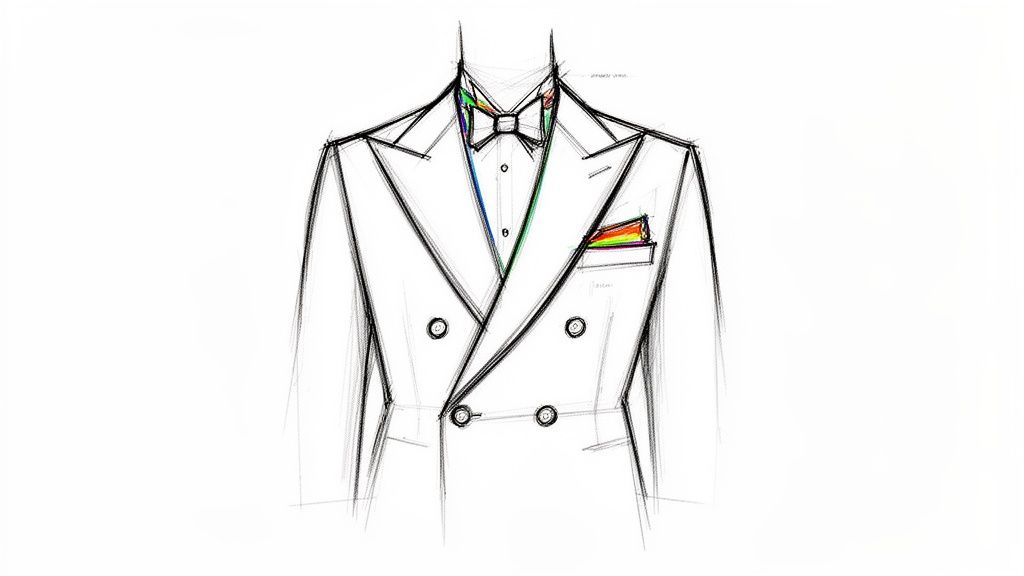
While the single-breasted jacket is the dependable workhorse of any formal wardrobe, the double-breasted dinner suit is the thoroughbred. It’s defined by its signature overlapping front panels, which are fastened by two columns of buttons. This structure isn’t just for show; it’s the very soul of the garment's commanding presence.
Unlike its single-breasted cousin, which simply meets in the middle, the DB jacket wraps the torso. This creates a powerful, unbroken sweep of cloth across the chest that broadens the shoulders and cinches the waist dramatically. The result is a distinctly masculine V-shape silhouette that conveys authority and a certain old-world charm.
You could almost think of it as personal architecture. A single-breasted jacket is a straightforward, functional structure. The double-breasted, on the other hand, is like a cantilevered design—dynamic, ambitious, and visually striking. It makes a bolder statement by its very construction.
The Anatomy of Authority
The unique character of a double-breasted dinner suit comes from several key elements working in perfect harmony. Each piece of the puzzle contributes to its distinctive aesthetic and powerful form.
The Button Stance: The button arrangement—a 6×2 (six buttons, two fastening) or a 4×2 configuration, for example—is crucial. Where those fastening buttons sit dictates the length of the lapel line and the position of the waist, fundamentally shaping the jacket’s entire proportions.
The Overlapping Panels: That generous overlap of fabric provides a clean, unbroken canvas that draws the eye upwards towards the face. This is precisely why the jacket must always remain buttoned when standing—to maintain that elegant, architectural line.
Peak Lapels: While other styles do exist, peak lapels are the quintessential choice for a double-breasted dinner suit. Their upward-pointing tips accentuate that strong V-shape, adding height and an undeniable sense of formality. You can learn more about the crucial role of the lapel of a jacket in defining a garment's personality.
The double-breasted dinner suit isn’t just a piece of clothing; it's a carefully engineered garment designed to project confidence. Its lines are deliberately crafted to enhance the wearer’s physique, making it an intentional choice for the man who understands the power of a strong silhouette.
Ultimately, choosing a double-breasted garment is a conscious decision to embrace a more distinctive and assertive kind of elegance. It signals a deeper appreciation for sartorial history and a quiet confidence in your personal style, ensuring you command attention in the most refined way possible.
From Naval Roots to Royal Approval
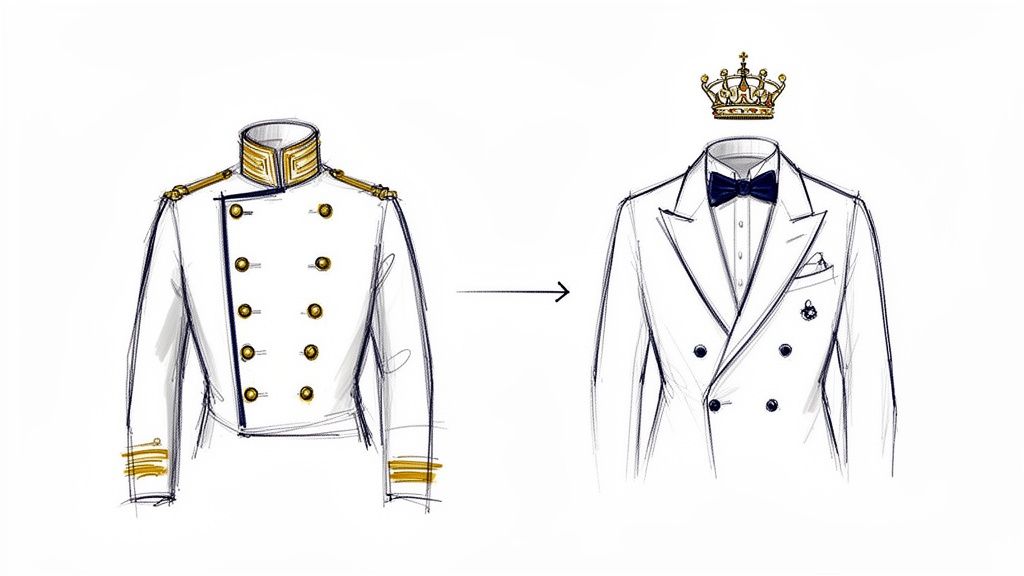
The story of the double-breasted dinner suit isn’t one of stuffy drawing rooms and formal tradition. Quite the opposite, actually. Its tale begins on the rugged decks of 19th-century British naval ships, with the practical, hard-wearing ‘reefer jacket’ worn by officers at sea. This was a functional garment, designed for warmth and movement, but it provided the architectural blueprint for an icon of elegance.
Before it was ever considered for a black-tie gala, this nautical design was adopted by gentlemen on land—not for formal events, but for sporting pursuits. Its robust nature made it perfect for yachting and other leisurely activities. For decades, it existed firmly in the world of casual daywear, a world away from the hallowed status it holds today.
The Rise to Prominence
The garment's slow climb into high society began in the early 20th century, but it was the 1930s that truly cemented its place in the sartorial hall of fame. This era, often called the Golden Age of menswear, saw the double-breasted jacket championed by some of the most influential style-setters of the time.
Chief among them was the Duke of Windsor, then Edward VIII. His impeccable and often daring wardrobe choices were watched and emulated across the globe. He favoured the double-breasted cut for its strong, flattering lines, and his endorsement lent it an air of effortless sophistication and, crucially, royal approval. His influence single-handedly transformed the jacket from a mere piece of clothing into a powerful symbol of status and refined taste.
The double-breasted jacket’s journey from a sailor's uniform to a prince's preferred attire is a perfect example of classic menswear's ability to adapt and elevate. Its history is woven into the fabric of British style, representing a blend of practicality and peerless elegance.
A Royal and Enduring Legacy
The double-breasted suit’s journey is one of incredible transformation. Initially inspired by the naval reefer jacket, it was first adopted by the British aristocracy in the late 19th century for sporting. It was considered so informal, in fact, that it was banned in some UK offices right up until the 1920s.
Its fortunes changed dramatically in the 1930s, when it became a formalwear staple and Savile Row tailors saw a surge in commissions. The style’s popularity took a hit during WWII due to cloth rationing—its construction simply required more material—but it made a strong comeback post-war. Today, its enduring appeal is underscored by the modern royal family; King Charles III, for instance, has shown a distinct preference for the style, wearing DB suits at a significant number of his formal appearances.
This rich heritage is something we deeply respect at Dandylion Style. When we craft a bespoke double-breasted dinner suit for a modern gentleman, we feel we are continuing a long and proud tradition of British excellence. For a glimpse into how this tradition is celebrated today, you might be interested in reading about our experience at a Buckingham Palace garden party. It's this connection to a living legacy that makes each commission not just a suit, but a small piece of history.
Mastering How to Wear This Timeless Garment
Wearing a double-breasted dinner suit is an exercise in precision and quiet confidence. Unlike its single-breasted cousin, this garment comes with a stricter set of rules, all designed to preserve its powerful, architectural shape. Sticking to them is what turns a beautiful suit into an impeccable statement of elegance and authority.
The first and most important rule is non-negotiable: the jacket must always remain buttoned when you are standing. This is the secret to maintaining the clean, sweeping lines across the torso that define the double-breasted cut. If you unbutton it, the front panels will splay outwards, completely disrupting the silhouette and giving you a dishevelled look.
The Art of Buttoning
Mastering the buttoning is simpler than you might think. The goal is to create a secure anchor point that allows the jacket to drape perfectly, and that means fastening both an external and an internal button.
The Anchor Button: This is the main exterior button you fasten. On a classic 6×2 configuration (that’s six buttons in total, with two that are functional), this is usually the middle one. Fastening it cinches the waist at just the right point, creating that sought-after V-shape.
The Jigger Button: Look inside the jacket and you'll find a small, concealed button. This is the jigger. Its job is to hold the overlapping front panel flat and secure against your body, stopping it from sagging or shifting as you move. Always fasten the jigger before you do up the main anchor button.
By securing both, you ensure the jacket lies cleanly and moves with you, maintaining its sharp lines whether you’re standing still or mingling at an event.
Building the Complete Ensemble
With the jacket correctly fastened, the rest of your outfit must rise to the same standard. Every single element, from the trousers down to the shoes, plays a crucial role in creating a cohesive and polished black-tie look.
The trousers for a dinner suit should be just as refined as the jacket. They must be cut from the same cloth and feature a satin braid down the outer seam. Critically, they should never have belt loops; instead, you’ll want side adjusters for a clean, uninterrupted waistline. This detail is non-negotiable for maintaining a sleek profile, as a belt would just add unnecessary bulk.
Your choice of shirt is equally important. A crisp, white dress shirt is the only real option, but the details make all the difference. You can learn more about selecting the perfect foundation with our guide on the right shirt to wear with a dinner jacket.
The double-breasted dinner suit is a complete system. Every component, from the jigger button to the side adjusters on your trousers, works in harmony to create a single, elegant silhouette. Overlooking one detail can compromise the entire effect.
Knowing where to showcase your double-breasted dinner suit is key; consider sophisticated elegant dinner cruises for a truly memorable evening. This provides the perfect backdrop to appreciate the garment's timeless appeal.
Perfecting the Finishing Touches
The final accessories are what elevate the look from merely correct to truly distinguished. Each choice should be deliberate and in keeping with the formal black-tie code.
Footwear: Black patent leather shoes are the only way to go. Their high-gloss finish is designed specifically for evening wear and perfectly complements the satin details on the suit. Oxfords are the classic choice, but immaculately polished whole-cuts are also an excellent, sleek alternative.
Neckwear: A self-tied bow tie is absolutely essential. The material—typically silk satin or grosgrain—should match the facing on your jacket’s lapels. A pre-tied version simply lacks the character and authenticity that an occasion like this demands.
Pocket Square: A simple white linen or silk pocket square, folded neatly into a straight line (known as a Presidential fold), adds a final touch of crispness. It should offer a clean, sharp contrast against the dark fabric of the jacket.
The double-breasted suit saw a massive surge in popularity during Britain's post-war economic boom in the 1920s and 1930s, largely driven by the Duke of Windsor. As UK consumer spending on clothing rose by roughly 25% between 1920 and 1930, this commanding style became a symbol of renewed prosperity. Its wide peak lapels and structured cut made wearers appear taller, and by 1930, retailers like Moss Bros reported selling over 50,000 double-breasted garments annually, bringing aristocratic style to the middle class.
Why a Bespoke Fit Makes All the Difference
Choosing a double breasted dinner suit is already a statement. Taking that step into a bespoke commission, however, turns a statement into a piece of personal art. Think of it this way: an off-the-rack garment is a mass-produced print, made for an average shape that doesn’t really exist. A bespoke suit is a commissioned painting, capturing the true essence of its subject.
A bespoke fit isn't just about the tailor taking your measurements; it's a conversation. It's a collaborative journey between you and your cutter that unfolds over 8-12 weeks, where every nuance of your physique—from the slope of your shoulders to the way you naturally stand—is meticulously considered. The final garment moves as you do, drapes perfectly, and feels less like clothing and more like a second skin.
This intensive process ensures the suit flatters you in ways a standard size never could. A skilled tailor can use the cut to carve out a more defined waist, add the illusion of height, or bring your entire torso into balance. It becomes more than a suit; it's a piece of architecture, built just for you.
The Anatomy of a Bespoke Commission
The real magic of bespoke lies in the details that you, the client, get to control. Every choice is a brushstroke in the final portrait, allowing you to create a garment that is unequivocally yours. These decisions go far deeper than just picking a colour.
The Button Stance: The button configuration—whether a classic 6×2 or a more contemporary 4×2—is a critical architectural decision. Its placement dictates the length of the V-shape formed by the lapels, guiding the eye and subtly altering the perception of your height and waistline.
The Lapels: While peak lapels are the traditional, and frankly most appropriate, choice for a double-breasted dinner suit, bespoke allows you to define their width and character. A broader lapel signals classic confidence, while a slightly slimmer one lends a more modern feel.
The Cloth: Your choice of fabric is fundamental to the suit's character. A fine British wool offers a crisp, formal drape that holds its shape beautifully. A wool-mohair blend, on the other hand, provides a subtle lustre that comes alive in the evening light.
This is where the collaboration truly shines. A master tailor isn't just taking orders; they're providing guidance, explaining how each choice will shape the final silhouette and the presence you command when you walk into a room. You can explore this process in more detail in our guide on what defines a full bespoke suit.
A Journey in Craftsmanship
The bespoke journey is also a nod to a rich sartorial history. Back in the Golden Age of menswear in the 1930s, the double-breasted dinner jacket was the undisputed king of UK formalwear, seen at an estimated 65% of high-society events by 1939.
Its popularity was, however, reined in by sheer practicality. Requiring 15-25% more cloth than its single-breasted counterpart, its production plummeted during wartime rationing. To commission a bespoke double-breasted piece today feels like a revival of that pre-war elegance—a deliberate choice of style over pure utility.
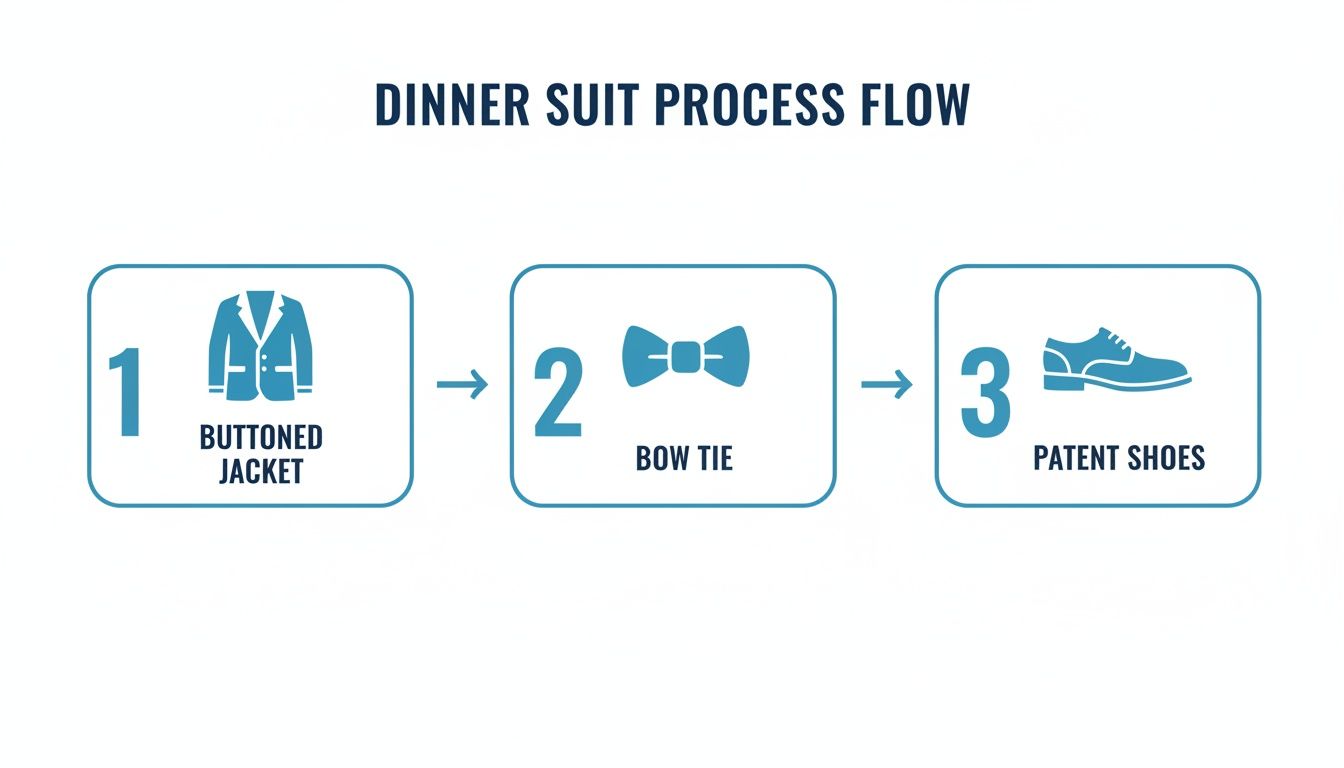
This visual guide reinforces that the core principles of wearing a dinner suit—a properly buttoned jacket, correct neckwear, and formal shoes—are the essential final touches to honouring the craftsmanship of the garment.
A bespoke dinner suit is an investment in your personal narrative. It tells a story of attention to detail, an appreciation for craftsmanship, and an understanding that true style is not about following trends, but about perfecting a timeless form to your exact specifications.
When you invest in a bespoke double-breasted dinner suit, you're commissioning far more than just an item of clothing. You're creating an heirloom piece that fits you perfectly through every stage of life, reflects your personal style, and will simply never feel dated. It is the ultimate expression of enduring elegance.
Caring for Your Bespoke Investment
A bespoke double-breasted dinner suit is far more than just another garment hanging in your wardrobe. It's a genuine investment in your personal style, meticulously crafted not for a fleeting season, but to serve you faithfully for a lifetime. Ensuring it lasts requires a bit of care—but think of it less as a chore and more as a simple, respectful ritual.
Neglecting its upkeep is like leaving a fine vintage car out in the rain; you slowly erode the very quality and character you invested in from the start. After an evening's wear, the first and most crucial step is how you put it away. Whatever you do, don't leave it crumpled on a chair.
Proper Storage and Cleaning
The very foundation of good suit care begins and ends with the hanger. A thin, generic wire hanger is the sworn enemy of a bespoke jacket's architecture, as it will slowly but surely distort the carefully padded and structured shoulders.
Invest in a Quality Hanger: Your suit deserves a substantial, well-shaped wooden hanger with broad, curved shoulder supports. This mimics the natural slope of your own frame, preserving the jacket's intended structure and preventing any unsightly puckering or sagging over time.
Give It Space to Breathe: After wearing, allow your suit to air out for at least 24 hours before placing it back in your wardrobe. This simple step lets any residual moisture evaporate and helps the natural fibres relax and settle back into their original, elegant shape.
Avoid Over-Cleaning: Dry cleaning should be a rare occasion, reserved only for emergencies or significant stains. The harsh chemicals involved can strip the natural oils from the wool, which can shorten the fabric's life. For minor dust or marks, a gentle brush-down and careful spot cleaning is a much better approach. To freshen it up, a light steaming will do wonders.
A well-made bespoke garment is a living thing, crafted from natural fibres that respond to their environment. Treating it with care—giving it time to rest and breathe—is the single most effective way to ensure it serves you beautifully for years.
The Promise of Longevity Through Alterations
One of the defining, yet often overlooked, features of a true bespoke suit is its inherent capacity for future alteration. Unlike off-the-rack garments, which are produced with minimal seam allowance to cut costs, a bespoke suit is built with your entire future in mind.
We intentionally leave generous inlay fabric hidden within the seams of the jacket and trousers. This isn't an oversight; it's a promise of longevity. This extra material allows a skilled tailor to make precise adjustments down the line as your body naturally changes over the years. A suit that fits you perfectly today can be let out or taken in tomorrow, ensuring it remains your trusted companion for any formal occasion life throws your way.
This built-in adaptability is what transforms your double-breasted dinner suit from a simple purchase into an enduring piece of your personal history—a reliable friend that evolves right alongside you.
About the Author
Igor is the founder and master tailor behind Dandylion Style, a bespoke studio he established in Ardingly, West Sussex, born from a deep-seated passion for classic menswear and the art of tailoring. He specialises in taking fine fabrics like tweed and wool and shaping them into perfectly fitted suits that feel as good as they look. For Igor, the process is a calm and considered one. He believes in offering honest guidance, ensuring every commission is personal, comfortable, and truly enduring—helping gentlemen build not just garments, but genuine confidence.
Frequently Asked Questions
Is a double-breasted dinner suit appropriate for black tie events?
Absolutely. A double-breasted dinner suit is a perfectly correct and highly sophisticated choice for any black-tie affair. While the single-breasted style is more common, the double-breasted silhouette offers a bolder statement of classic European elegance. Its inherent structure and traditional peak lapels meet the highest standards of formalwear. By choosing this style, especially in classic black or midnight blue, you demonstrate a confident and considered appreciation for sartorial tradition, ensuring you stand out for all the right reasons at your next formal event.
What kind of body type suits a double-breasted jacket?
The double-breasted jacket is surprisingly versatile and can flatter a wide range of body types, particularly when custom-tailored. It excels on slimmer gentlemen by adding breadth to the shoulders and creating a strong V-shaped torso. However, a skilled tailor can adapt the cut for broader frames by adjusting the button stance and lapel width to create a slimming, elongating effect. The key is achieving the correct balance and proportion, which a bespoke process ensures, making it a powerful silhouette for almost any man.
Should I wear a waistcoat or cummerbund with a double-breasted dinner suit?
Generally, no. A waistcoat or cummerbund is unnecessary with a double-breasted dinner suit. The jacket is designed to remain buttoned while standing, which completely conceals the shirt and trouser waistband, making a waist covering redundant. This creates a clean, uninterrupted line from chest to hip. Adding a cummerbund would be superfluous, while a waistcoat would add unnecessary bulk beneath the overlapping front panels of the jacket. The beauty of the style lies in its streamlined, self-contained elegance without extra accessories.
How should I button a double-breasted dinner suit?
The rule is simple: always fasten the main anchor button and the inner 'jigger' button when standing. The anchor button is the primary fastening button on the outside, which on a classic 6×2 configuration is the middle one. The jigger is a small, concealed button on the inside that holds the overlapping fabric panel flat against your body. Fastening both ensures the jacket maintains its sharp, architectural silhouette and drapes correctly. You can unbutton it only when you sit down for comfort.
What is the typical timeframe for a bespoke double-breasted dinner suit?
Creating a true bespoke garment is a meticulous craft that cannot be rushed. A typical timeline for a bespoke double-breasted dinner suit, from initial consultation to final fitting, is between 8 and 12 weeks. This period allows for detailed measurements, the creation of a unique paper pattern, a basted fitting where the suit is temporarily stitched together for adjustments, and the final hand-finishing. This careful, multi-stage process ensures a flawless fit and a garment built to our exacting standards of quality and craftsmanship.
At Dandylion Style, we specialise in creating bespoke garments that are as unique as you are. Begin your bespoke journey with us and experience the unmatched quality of a suit made just for you.
Key Takeaways The Core Two: Navy blue and charcoal grey are the essential, non-negotiable suit colors for any professional wardrobe. Navy offers versatility and approachability, while charcoal projects authority and seriousness. Context is Crucial: The best suit color...
When you find a piece of clothing you absolutely love, getting the fit just right is the final, transformative touch. But how much should you expect to pay? In the UK, alteration costs can be as modest as £15 for a simple trouser hemming, or climb to £150 and beyond...
Getting the right pink shirt and tie combination is the mark of a well-dressed man. It’s a detail that separates the novices from those who truly understand their wardrobe. For a look that’s classic and can’t miss, pair your pink shirt with a navy, grey, or burgundy...
Key Takeaways For those seeking a quick overview, this section summarises the essential rules and recommendations for incorporating turn-up trousers into your wardrobe. Sartorial Purpose: Turn-ups add weight to the trouser hem, ensuring a cleaner, sharper drape,...
Deciding what colour tie to wear with a pink shirt is a common style query I hear from clients. For a classic, professional look that never fails, your safest and most effective choices are navy blue and charcoal grey. If you're heading to a more contemporary or...
You've just picked up a newly finished bespoke suit, and the cloth still has that clean, disciplined line only a real fitting room can give it. The temptation is to put it straight in the wardrobe and trust the label to do the rest. That's where expensive...
Book Your Tailoring Consultation
Looking for a suit or garment made specifically for you?
At Dandylion Style, we create bespoke and made-to-measure
garments tailored to your individual shape, style and occasion.
From suits and shirts to dresses, waistcoats and alterations,
our experienced tailors can help you create something truly unique.