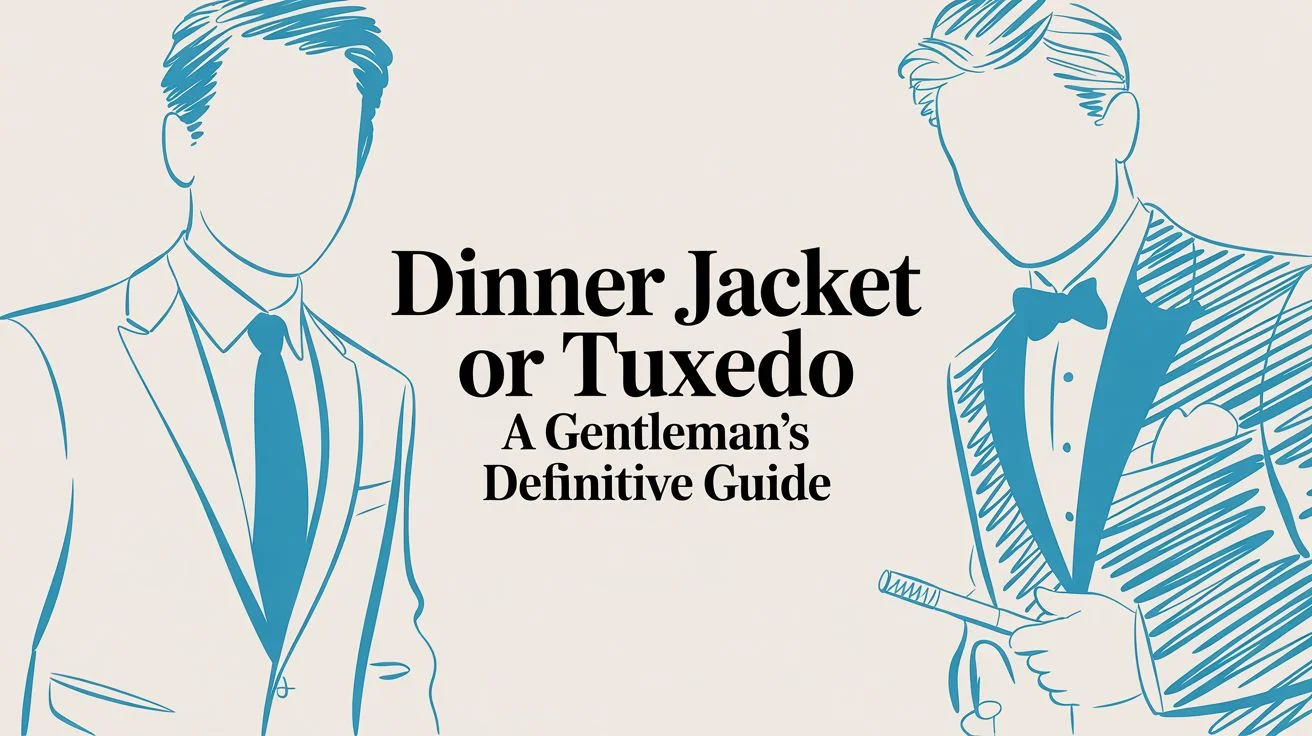
Same Garment, Different Names: In essence, a "dinner jacket" (British English) and a "tuxedo" (American English) refer to the same formal jacket for black-tie events.
Subtle Modern Distinctions: While traditionally interchangeable, ‘dinner jacket’ in the UK can also refer to more creative velvet or coloured jackets, whereas ‘tuxedo’ typically implies the classic black suit.
The Rules are in the Details: True black-tie attire is defined by specific features: satin or grosgrain-faced lapels (peak or shawl style), covered buttons, jetted pockets, and trousers without belt loops that feature a side braid.
Dress Code is King: Understand the difference between ‘Black Tie’ (strict rules apply), ‘Black Tie Optional’ (a dark suit is a fallback, but a dinner suit is preferred), and ‘Creative Black Tie’ (permission to use colour and texture, like a velvet jacket).
Bespoke is Best: For a perfect fit and timeless quality, a bespoke dinner suit is an unparalleled investment. It is crafted to your exact measurements and style preferences, ensuring a flawless garment that lasts a lifetime.
Walk into any formalwear discussion, and you’ll quickly hear two terms thrown about: the dinner jacket and the tuxedo. So, which is it? The honest answer is that they are, for the most part, simply two names for the same distinguished garment.
It's a classic case of regional dialect. What an American calls a tuxedo, his British counterpart will almost always refer to as a dinner jacket. The core item—the formal jacket worn for black-tie—remains the same.
The Core Differences: More Than Just a Name?
While the fundamental garment is the same, modern usage has introduced a subtle distinction. In the UK, the term ‘dinner jacket’ can now also refer to a velvet or boldly coloured jacket—perhaps in burgundy or bottle green—worn as a more rakish alternative to the classic black or midnight blue wool.
Ultimately, both are the centrepiece of a proper black-tie outfit for man, an ensemble governed by a time-honoured set of rules. Think satin-faced lapels, jetted pockets, and trousers without a single belt loop in sight.
Here’s a quick glance at how the terms are generally perceived today:
Feature
Dinner Jacket
Tuxedo
Primary Terminology
British English
American English
Modern Connotation
Can also refer to velvet/coloured jackets
Typically means the classic black/blue suit
Untangling the Terminology: The History of Black Tie
The story of black-tie attire doesn’t begin with the rigid set of rules we know today, but rather with a simple, aristocratic desire for comfort. Throughout the mid-19th century, a gentleman’s evening was dictated by the formal tailcoat and white tie—stiff, cumbersome, and frankly, a bit much for an intimate dinner or a quiet evening at his club.
This gap between public pomp and private ease gave rise to the smoking jacket. Typically crafted from a soft, plush velvet, this was a garment a gentleman would don after dinner, retiring to the smoking room to protect his more formal clothes from the lingering scent of tobacco. It was functional, but it planted a seed.
The Royal Connection
The first true step toward the modern dinner jacket was taken by none other than King Edward VII. In 1865, while he was still the Prince of Wales, he approached his tailors on Savile Row, Henry Poole & Co., with a specific request: to create a tailless blue silk smoking jacket. His intention was to wear it for informal dinners at his Sandringham estate, a far more comfortable proposition than the restrictive tailcoat.
This new, shorter jacket was a quiet rebellion against the starched formality of the Victorian court. It was designed exclusively for private affairs among peers, never intended for the public eye. This royal seal of approval lent the garment a certain sophisticated ease, setting the stage for its eventual journey across the Atlantic.
The dinner jacket’s origin is a story of comfort, a deliberate move away from the strictures of the tailcoat. It began its life as a private garment for the elite, not the public-facing formalwear it is today.
The American Debut at The Tuxedo Club
The garment's American chapter—and its most famous moniker—starts with a man named James Brown Potter. A wealthy New Yorker and a member of the exclusive Tuxedo Park Club, Potter met the Prince of Wales in 1886. He was so taken with the Prince’s tailless evening jacket that he had Henry Poole & Co. make one for him before he sailed back to the States.
Upon his return, Potter started sporting the jacket at the Tuxedo Club's informal gatherings. What was at first seen as a radical departure from convention soon caught on with other influential members. The "tuxedo" was born, named quite literally after the very club where it made its name. The term stuck, and in America, tuxedo became the go-to name for this new style of evening wear.
Back in Britain, however, the garment kept its original, more descriptive title: the dinner jacket, a name that perfectly captured its intended purpose. This transatlantic split cemented two names for what was, in essence, the same piece of clothing—a legacy that continues to define formalwear terminology today. For a more detailed look at navigating these modern-day dress codes, you might find our guide on how to dress for a black tie event quite useful.
The Anatomy of Black Tie: A Detailed Feature Comparison
Beyond the transatlantic squabble over what to call it, the real character of a black-tie garment is revealed in its construction. A proper dinner suit—whether it’s a dinner jacket to you or a tuxedo—is a world away from a standard business suit. Its very anatomy is engineered for the soft glow of evening light, for elegance, and for a sense of occasion. It marks a deliberate departure from the world of daytime professional wear, and understanding these features is what separates the discerning gentleman from the novice.
True elegance lives in the details. With formalwear, these details are not just suggestions; they are the very rules of the game. To an untrained eye, any dark suit might pass muster, but to those in the know, the differences are as stark as night and day.
The diagram below neatly captures this simple linguistic split between the UK and the US for what is, in essence, the very same garment.
It’s a clear illustration that while the names may differ, the garment’s DNA is shared, defined by a specific set of sartorial codes that pay no mind to borders.
Lapels and Facings: The Defining Feature
The single most significant detail, the one that instantly defines the garment, is the lapel facing. A dinner jacket’s lapels are faced with a contrasting, lustrous material—typically silk satin or a finely ribbed grosgrain. This isn’t just for show; the material is chosen for its ability to catch the soft evening light, creating a subtle sheen that a standard wool lapel simply cannot match.
For true black tie, only two lapel styles are correct:
Shawl Lapel: A continuous, rounded curve that flows seamlessly around the neck. It offers a classic, smooth, and traditionally formal silhouette.
Peak Lapel: A more dynamic choice, with points that sweep sharply upwards towards the shoulder. This style creates a powerful, structured look that can visually broaden the chest.
Notch lapels, the default on almost every business suit you’ll ever see, are considered far too casual and are simply incorrect for traditional black-tie dress.
Fabric and Construction
While your workaday suits might come in a vast array of wools, tweeds, and linens, the classic dinner suit is crafted from a much more exclusive palette. The gold standard is a high-twist wool in black or midnight blue, often blended with mohair for a crisp drape and a very slight sheen. Velvet has also become a popular and handsome choice, especially for coloured or patterned jackets destined for more creative black-tie events.
The appreciation for these fine garments is certainly growing. In fact, the UK menswear market, which includes formal topwear like dinner jackets, hit an impressive £35,223.1 million in 2024 and is projected to continue its strong growth. You can discover more about the rising value of quality menswear in the UK market from Grand View Research.
Buttons and Trousers: The Supporting Cast
The devotion to detail doesn’t stop at the lapels. The buttons on a dinner jacket are covered in the exact same material as the lapel facings—be it silk or grosgrain—to create a unified, seamless look. A business suit, by contrast, uses standard horn, corozo, or even plastic buttons.
A dinner suit is an ecosystem of considered details. The satin lapels, covered buttons, and braided trouser seams are not optional embellishments; they are the very grammar of black tie. To omit one is to miss the point entirely.
Finally, we come to the trousers, which have their own strict set of rules. They must never have belt loops. Instead, they are held up by side adjusters or, more traditionally, braces. The finishing touch is a single vertical braid of satin or grosgrain running down the outer seam of each leg, perfectly echoing the material on the lapels.
To make these distinctions crystal clear, it helps to see the key differences side-by-side. The table below breaks down what separates a true dinner suit from your everyday business attire.
Dinner Jacket vs Standard Suit Key Differentiators
Feature
Dinner Jacket / Tuxedo
Standard Business Suit
Lapels
Peak or shawl style, faced with silk satin or grosgrain.
Typically notch lapel, made from the same suit fabric.
Buttons
Single button closure is most traditional; covered in satin or grosgrain.
Two or three buttons, usually horn, corozo, or plastic.
Pockets
Jetted pockets for a clean, formal line.
Flap or patch pockets are common.
Trousers
No belt loops; side adjusters or braces. Features a satin side stripe.
Belt loops are standard. No side stripe.
Fabric
Black or midnight blue wool/mohair, or velvet.
A wide range of fabrics, patterns, and colours.
Grasping these fundamental components means you can instantly spot a genuine dinner suit and understand the thought that has gone into its creation. Of course, the suit is only half the story; a key companion piece is the formal shirt. You can learn more about selecting the right shirt to wear with a dinner jacket in our dedicated guide.
Navigating Formal Dress Codes with Confidence
That little line of text at the bottom of an invitation—the dress code—is your first and most important clue to sartorial success. Cracking the code, understanding the subtle yet crucial differences between terms like 'Black Tie' and 'Black Tie Optional', is a matter of respect for your host and the spirit of the occasion. Far from being restrictive, these guidelines provide a framework for elegance, giving you the confidence to turn up looking impeccable.
Whether you're reaching for a classic dinner jacket or a full tuxedo, knowing what's truly expected is everything. Each dress code has its own traditions and tolerances, from the ironclad rules of a formal gala to the expressive freedom of a creative ball.
Black Tie
This is the gold standard of evening wear, and it is beautifully straightforward. 'Black Tie' is a precise instruction, not a gentle suggestion. When you see those two words, a very specific, time-honoured uniform is required.
The Jacket: A dinner jacket in black or, even better, midnight blue wool. The lapels must be faced in silk satin or grosgrain and should be either peaked or a shawl collar.
The Trousers: Matching trousers are essential, distinguished by a single braid of silk down the outseam. Critically, they have no belt loops.
The Shirt: A pristine white dress shirt, traditionally with a pleated or marcella bib front. It should have a turn-down collar and double cuffs for your best cufflinks.
The Finishing Touches: A black, self-tied bow tie is non-negotiable, as is a waist covering—either a cummerbund or a formal evening waistcoat. The look is completed with a pair of highly polished black patent leather shoes.
For landmark events like formal weddings or charity balls, adhering to these rules isn't just about looking the part; it's a nod to timeless elegance. We offer more focused advice in our guide on what to wear to a black tie wedding.
Black Tie Optional
This dress code is a polite acknowledgement from the host that while they desire a formal atmosphere, they understand not every gentleman owns a full black-tie rig. It offers a little breathing room. While a dinner suit is absolutely the preferred and most appropriate choice, a dark, impeccably tailored business suit is an acceptable alternative.
'Black Tie Optional' is a concession, not a free-for-all. If you own a dinner suit, you should always wear it. If not, a dark navy or charcoal suit, paired with a conservative tie and smart black leather shoes, will see you through.
Creative Black Tie
Here’s where you get to play. 'Creative Black Tie' is an invitation to infuse your personality into formalwear while keeping the overall level of elegance high. It’s your chance to swap the traditional black wool dinner jacket for something with a little more panache.
Think about these kinds of variations:
A velvet dinner jacket in a rich jewel tone like burgundy, emerald green, or a deep, inky blue.
A jacket with a subtle pattern, perhaps a refined jacquard or a tasteful brocade.
Distinctive accessories, like a bow tie with a sophisticated pattern or an eye-catching pair of cufflinks.
Even with this creative licence, the core of the outfit must remain formal. Proper evening trousers, a formal shirt, and polished evening shoes are still the expected foundation of the look. You’ll often see this code at awards ceremonies, stylish Christmas parties, and fashion-forward events.
The growing popularity of these formal events is having a real impact. In the UK, the tuxedo rental market alone is projected to grow from $1.46 billion in 2025 to $1.58 billion in 2026, partly fuelled by a wedding culture where black-tie is increasingly common. While renting can seem economical, discerning gentlemen understand that for a truly perfect fit and a garment that reflects their own style, nothing compares to a custom piece.
The Bespoke Advantage: Crafting Your Own Black Tie Legacy
While an off-the-rack dinner suit certainly serves its purpose, a bespoke commission is an entirely different conversation. Choosing bespoke means you are stepping away from the inherent compromises of mass-produced garments and entering a true collaboration with a master tailor. It’s an investment not just in clothing, but in your own sartorial story—a piece that becomes a timeless cornerstone of your wardrobe.
Unlike a single-use rental or a standard-sized suit, a bespoke dinner jacket is sculpted to your precise measurements, your posture, and your individual proportions. The result is a garment that not only fits perfectly but moves with you, providing a level of comfort that ready-to-wear simply cannot match, whether you’re at a gala dinner or an awards ceremony.
From Cloth to Creation: The Bespoke Journey
The bespoke journey begins with a conversation, not a transaction. At Dandylion Style, we guide you through every choice, starting with the very heart of the garment—the cloth. You’ll have your pick from a curated library of the finest British fabrics, from classic high-twist wools and mohair blends to sumptuous velvets in rich, captivating colours.
This collaborative process then extends to every single design detail. Together, we will define the elements that reflect your personal style and best complement your physique:
Lapel Style and Width: Will it be the classic rounded shawl collar or the commanding lines of a peak lapel? We’ll tailor the width to perfectly balance your shoulders.
Facing Material: We’ll help you select the perfect finish, whether it’s a lustrous silk satin for a modern sheen or a traditional ribbed grosgrain for subtle, old-world texture.
Button Stance and Style: The precise placement and covering for your buttons will be decided upon to ensure a harmonious and elegant silhouette.
Pocket Design: For a clean, formal line, you can opt for classic jetted pockets, keeping the silhouette sharp and uncluttered.
Through a series of fittings, the garment is meticulously shaped, adjusted, and refined on your body. It’s a patient and considered practice that ensures the final piece is nothing short of perfection. If you're interested in the nuances of this traditional craft, you can learn more about what bespoke tailoring truly entails in our detailed guide.
A bespoke dinner suit is more than just clothing; it is a piece of wearable art. It is cut from a unique pattern created just for you and built to last a lifetime, making it the most sustainable and personal choice for any gentleman's wardrobe.
An Investment in Enduring Style
Commissioning a bespoke dinner jacket is an investment that pays dividends for years to come. While the initial outlay is higher than off-the-rack or rental options, the true value becomes clear over time. You receive a garment of superior quality, crafted from premium materials, that will fit you perfectly for decades.
It becomes a reliable companion for life’s most important occasions, from milestone celebrations to formal weddings. Instead of settling for a temporary solution, you build a lasting relationship with a garment that is unequivocally yours—a true cornerstone of your black-tie legacy.
Frequently Asked Questions
Navigating the finer points of black tie often brings up a few recurring questions. Here, we address some of the most common queries we hear from gentlemen as they decide between a dinner jacket or tuxedo and work to perfect their formalwear.
Can I Wear a Black Suit Instead of a Tuxedo?
While tempting, a standard black business suit simply isn’t a substitute for a true dinner suit at a ‘Black Tie’ event. The very soul of a dinner suit lies in its distinctive facings—the lustrous satin or grosgrain that adorns the lapels, buttons, and trouser seams. These details aren't merely decorative; they are specifically designed to catch the soft evening light, creating a sophisticated air that a regular wool suit simply cannot replicate. While a dark suit might just pass muster for a ‘Black Tie Optional’ affair, wearing a proper dinner suit shows profound respect for your host and the formality of the occasion.
What Is the Difference Between a Shawl and Peak Lapel?
The choice between a shawl and peak lapel comes down to personal taste and the silhouette you wish to create, as both are impeccably correct for black tie. A shawl lapel, with its continuous, rounded curve, offers a softer, more traditional and classically smooth look. In contrast, the peak lapel points sharply upwards towards the shoulder. This creates a more structured, dynamic silhouette that has the added benefit of visually broadening the shoulders. Notched lapels, the standard for business suits, are considered far too informal for traditional black tie and should always be avoided.
Is a Cummerbund or Waistcoat Necessary?
Yes, a waist covering is a non-negotiable component of traditional black tie. Whether you choose a cummerbund or a low-cut evening waistcoat, its purpose is essential: to cover the waistline and ensure a clean, unbroken visual line from the trousers to the shirt. This simple detail elegantly conceals the bit of white shirt that can bunch or show at the waist—a minor but significant sartorial oversight. Going without either disrupts the entire formal aesthetic and is considered incorrect in classic black tie etiquette, whether you're wearing a dinner jacket or a full tuxedo.
Are Velvet or Coloured Dinner Jackets Appropriate?
Absolutely, but context is everything. The timeless gold standard for any ‘Black Tie’ invitation will always be a dinner jacket in black or midnight blue wool. It’s the safest and most classic choice. However, a velvet jacket in a rich colour like burgundy or bottle green is an excellent and stylish alternative for ‘Creative Black Tie’ functions, festive holiday parties, or if you happen to be the host. These jackets, which trace their lineage back to the original smoking jacket, add a dash of personality and flair. For a classic ‘Black Tie’ dress code, though, sticking to traditional black wool is always the most respectful and appropriate path.
About the Author
Igor is the tailor and creative force behind Dandylion Style, a bespoke tailoring house based in the heart of West Sussex. With over 20 years of experience dedicated to the art of true bespoke tailoring, he has built a reputation for crafting exceptional garments for clients across London, Sussex, and the South East. His work is driven by a deep respect for the traditions of British menswear and an appreciation for the world’s finest fabrics. Igor's expertise covers the entire landscape of a gentleman's wardrobe, but he holds a particular passion for formalwear, guiding clients through the nuances of creating impeccable black-tie attire, from the perfect dinner jacket to a complete tuxedo ensemble. At his Ardingly studio, he fosters a calm, thoughtful process, offering his honest, expert guidance to ensure every commission is not just a suit, but a piece of personal history designed to last a lifetime.
Key Takeaways The Core Two: Navy blue and charcoal grey are the essential, non-negotiable suit colors for any professional wardrobe. Navy offers versatility and approachability, while charcoal projects authority and seriousness. Context is Crucial: The best suit color...
When you find a piece of clothing you absolutely love, getting the fit just right is the final, transformative touch. But how much should you expect to pay? In the UK, alteration costs can be as modest as £15 for a simple trouser hemming, or climb to £150 and beyond...
Getting the right pink shirt and tie combination is the mark of a well-dressed man. It’s a detail that separates the novices from those who truly understand their wardrobe. For a look that’s classic and can’t miss, pair your pink shirt with a navy, grey, or burgundy...
Key Takeaways For those seeking a quick overview, this section summarises the essential rules and recommendations for incorporating turn-up trousers into your wardrobe. Sartorial Purpose: Turn-ups add weight to the trouser hem, ensuring a cleaner, sharper drape,...
Deciding what colour tie to wear with a pink shirt is a common style query I hear from clients. For a classic, professional look that never fails, your safest and most effective choices are navy blue and charcoal grey. If you're heading to a more contemporary or...
You've just picked up a newly finished bespoke suit, and the cloth still has that clean, disciplined line only a real fitting room can give it. The temptation is to put it straight in the wardrobe and trust the label to do the rest. That's where expensive...
Book Your Tailoring Consultation
Looking for a suit or garment made specifically for you?
At Dandylion Style, we create bespoke and made-to-measure
garments tailored to your individual shape, style and occasion.
From suits and shirts to dresses, waistcoats and alterations,
our experienced tailors can help you create something truly unique.