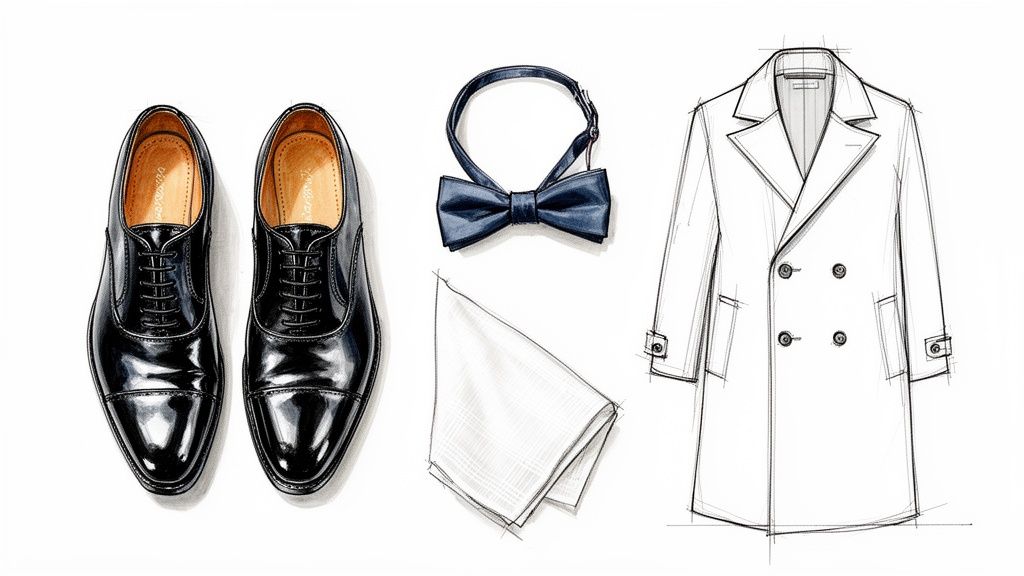
Dressing for a black tie event isn't just about wearing a nice suit; it's about adhering to a time-honoured dress code. It starts with the essentials: a well-cut dinner suit, a proper formal shirt, and immaculately polished Oxford shoes. It's this respect for tradition, combined with a flawless bespoke fit, that truly sets a man apart.
Key Takeaways
The Foundation is Key: A black tie outfit is built on a dinner suit (tuxedo), a white formal shirt with a bib front (pleated or marcella), a self-tie bow tie, and black patent or highly polished Oxford shoes.
Fit Over Everything: A bespoke or perfectly tailored suit is paramount. An ill-fitting tuxedo, no matter the brand, will always look inferior to a modest but flawlessly fitted one.
Lapels and Vents Matter: Opt for formal peak or shawl lapels on your dinner jacket. Avoid notch lapels. For the cleanest silhouette, your jacket should be ventless.
Cover the Waist: The trouser waistband must never show. Use either a low-cut formal waistcoat or a cummerbund (pleats facing up). Belts are forbidden; use braces instead.
Details Define the Look: Always choose a self-tie bow tie over a pre-tied version. Complete the look with a simple white linen or silk pocket square with a neat, straight fold.
Understanding the Core Components of Black Tie
Think of black tie as a specific language. Get the grammar right, and you speak volumes about your style and respect for the occasion. Getting these fundamentals spot on is the first step to ensuring you look and feel the part, navigating the event with confidence and genuine elegance. It’s less of a suggestion and more of an established code, designed to create an atmosphere of uniform distinction.
The absolute, non-negotiable foundation of any black tie outfit includes:
The Dinner Suit: This is the cornerstone. You might know it as a tuxedo, but whatever you call it, this is where it all begins.
The Formal Shirt: Specifically, a crisp white dress shirt. Look for one with either a pleated or a marcella (piqué) bib front.
Correct Footwear: There's really only one choice here. Highly polished leather or patent leather Oxford shoes. Anything else misses the mark.
Essential Accessories: A self-tie bow tie is a must. Then, you’ll need cufflinks and a simple pocket square to complete the look.
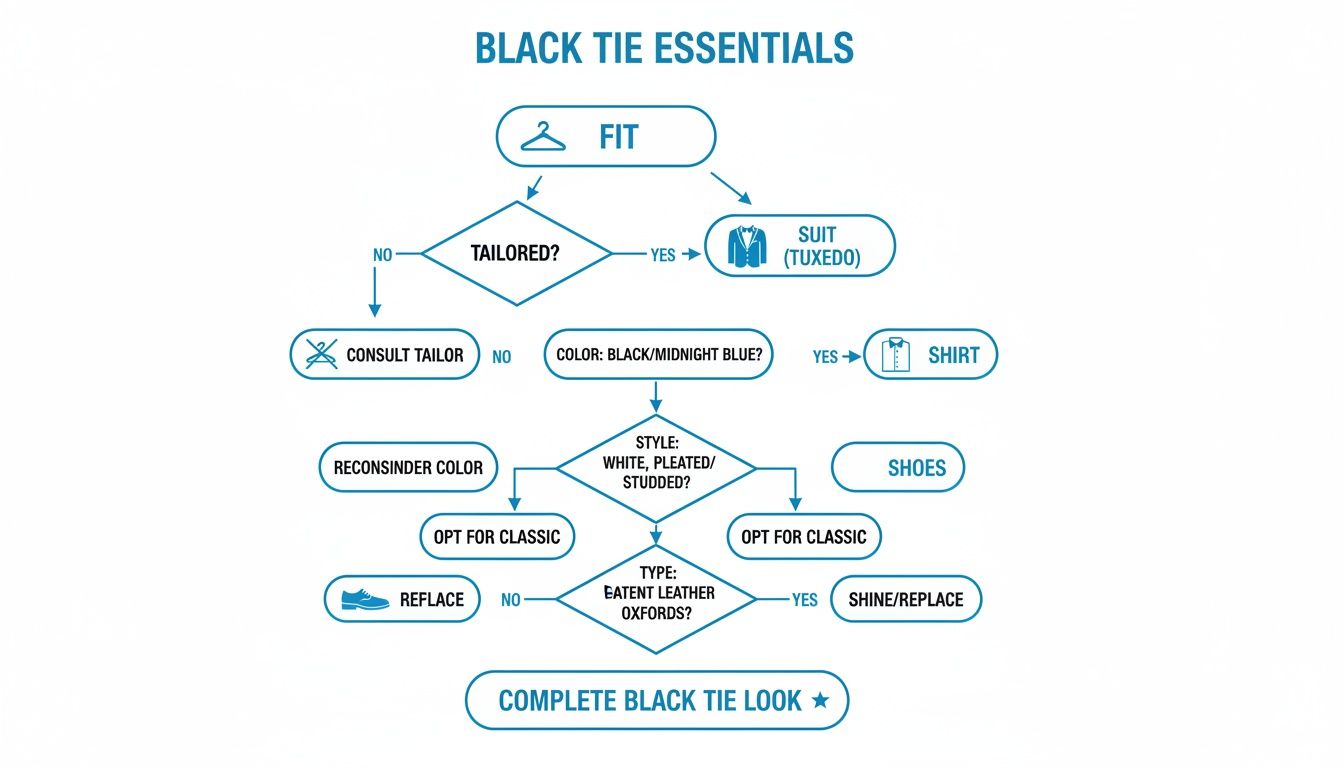
This simple decision tree maps out the essential flow for putting your black tie outfit together, from the suit right down to the shoes.
As the flowchart shows, a successful black tie look is a sequence of correct choices. Each element must complement the last to create a cohesive, impeccable whole.
The Paramount Importance of Fit
Beyond the individual garments, the single most critical element is the fit. I’ve seen it countless times: an ill-fitting tuxedo, no matter how expensive the label, will always look worse than a modest but perfectly tailored one.
A bespoke approach truly transforms the outfit. It ensures the jacket sits cleanly on the shoulders without pulling and that the trousers have a flawless, unbroken drape. After all, you want your dinner suit and shirt to look pristine all evening, and proper care is essential. Have a look at these tips for preventing wrinkles in your formal wear.
For a deeper dive into assembling the perfect look from scratch, you can explore our complete guide to choosing a formal outfit for a man.
The Foundation: The Dinner Suit
The dinner suit—or tuxedo, as our American cousins call it—is the absolute heart of the black tie ensemble. It sets the tone, defines your silhouette, and instantly communicates a grasp of formality. This is no place for half-measures; getting the dinner suit right is the most critical part of mastering the black tie dress code.
This is precisely where a bespoke garment proves its worth. An off-the-rack suit is cut for a standard mannequin, but a bespoke dinner suit is built from a pattern created just for you. It guarantees the jacket drapes perfectly from your shoulders and the trousers hang flawlessly—a level of precision that ready-to-wear simply cannot match.
Choosing Your Cloth: Black, Blue, or Velvet
Your first major decision is the fabric. While classic black is the undisputed champion, a few other choices can make a subtle yet powerful statement.
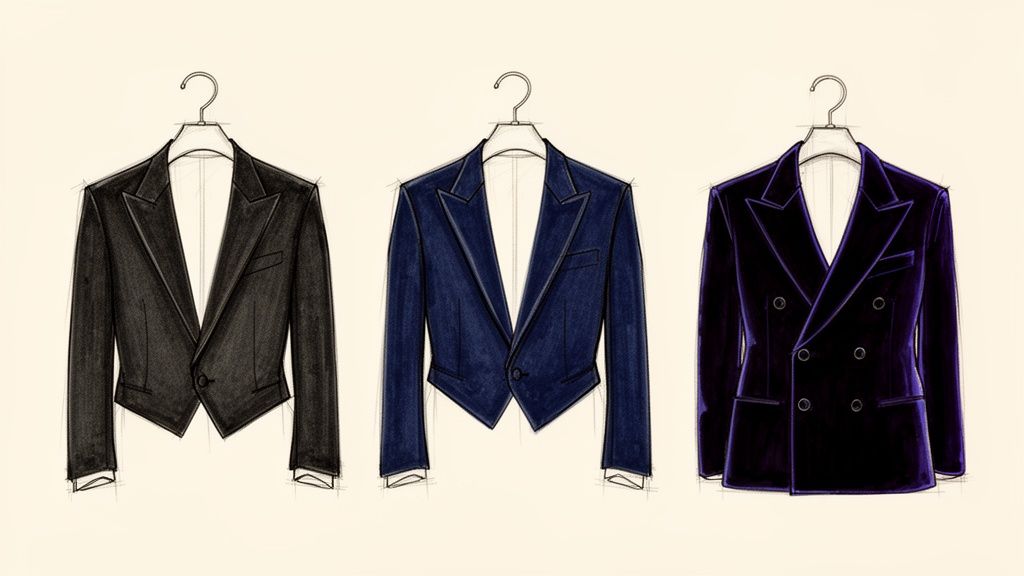
Black Barathea Wool: This is the quintessential choice, and for good reason. Its matte finish and slight texture absorb light beautifully, creating a deep, rich black that is purpose-built for formal evenings.
Midnight Blue Wool: A wonderfully sophisticated alternative, long favoured by those in the know. Under the artificial light of an evening event, midnight blue can appear even blacker than black, lending it a unique depth and richness.
Velvet Smoking Jacket: Reserved for slightly less formal or more creative black tie events, a velvet jacket in a deep jewel tone like burgundy or forest green is a rakishly stylish choice. Just be sure to pair it with traditional black barathea trousers to keep the look grounded in formality.
Black tie events have seen a remarkable return across the UK, with the UK Events Report noting a 15% increase in formal gala dinners. For these occasions, a single-breasted peak lapel tuxedo in midnight blue or black barathea wool remains the gold standard. In fact, sartorial analyses show peak lapels can add up to 20% more formality to the look. Investing in bespoke is crucial, as surveys reveal that off-the-rack options fail to fit 70% of wearers properly. Discover more from the 2025 UK Events Report here.
Understanding Lapel Styles
The lapel is arguably the most defining feature of a dinner jacket. The style you land on has a huge impact on the overall formality and aesthetic of your suit.
Peak Lapels These are the most formal and traditional of the bunch. The lapels sweep upwards towards the shoulder, creating a strong, V-shaped torso that has the welcome effect of broadening the shoulders and slimming the waist. They are always our top recommendation for a classic, authoritative look.
Shawl Lapels With its continuous, rounded edge, the shawl lapel offers a slightly softer, more elegant feel than its sharp-peaked cousin. It’s an excellent and equally correct choice for black tie, lending a certain debonair charm to the ensemble.
For a gentleman seeking timeless elegance, the peak lapel is the premier choice. Its structure and history lend an unmatched air of formality, making it the most reliable option for any significant black tie occasion.
Notch Lapels Commonplace on business suits, notch lapels are the least formal option and are generally considered incorrect for a proper dinner suit. They simply lack the celebratory flair of peak or shawl lapels and should be avoided if you want to adhere to the classic dress code.
Single-Breasted vs. Double-Breasted
How your jacket fastens is another key decision, influencing both style and silhouette. The single-breasted jacket, typically with one button, is the most common and versatile choice. Its clean, uncluttered lines make it a foolproof option that flatters most body types.
A double-breasted jacket, on the other hand, offers a powerful, confident alternative. Its overlapping front creates a distinctive look that requires the jacket to remain buttoned to maintain its sharp silhouette. It projects a certain old-world elegance and can be a fantastic way to stand out with quiet confidence. For those intrigued by this distinguished style, learn more about our take on the double-breasted dinner suit.
Finally, a word on the jacket's vents. A traditional dinner jacket should be ventless. This creates the cleanest possible silhouette from behind, ensuring an unbroken line that is the hallmark of true formalwear. Side vents or a single centre vent, which you'll find on lounge suits, disrupt this sleek profile and are best left for the office.
Perfecting the Supporting Ensemble
Once you’ve settled on the dinner suit itself, the real artistry of black tie begins. It’s the supporting cast—the shirt, waist covering, and trousers—that truly elevates the look, distinguishing a man simply wearing a tuxedo from a gentleman who understands formal attire. These elements must work in harmony to create a seamless, polished whole.
The formal shirt isn't just any white shirt you pull from your wardrobe. For authentic black tie, it must have a decorative front, known as a bib. This comes in two classic styles: the subtly textured marcella (also known as piqué) and the more decorative pleated front. Both are perfectly correct, and both add a vital touch of formality that a plain shirt simply can't offer.
Just as critical is the collar. The standard turn-down collar is the definitive and most elegant choice for black tie. You'll often see wing collars, but they're technically reserved for the stricter demands of white tie and can look a bit theatrical or out of place at a black tie event.
The Shirt Details That Matter
Beyond the bib and collar, the finer points of the shirt are what truly signal your attention to detail. A proper black tie shirt must, without exception, have double cuffs (often called French cuffs), which are fastened with cufflinks. This is non-negotiable.
The shirt’s fastening is another key detail. Instead of the usual buttons, a formal shirt uses dress studs. These are small, decorative fasteners, typically made from onyx or mother-of-pearl, that are inserted through the stiffened bib.
Onyx Studs: The classic choice. They provide a sharp, handsome contrast against the white shirt.
Mother-of-Pearl Studs: A slightly softer, more traditional option that lends a quiet, old-world elegance.
Getting these small details right is what separates a good outfit from a great one. If you need a deeper dive, we've outlined everything you need to know about choosing the perfect shirt to wear with a dinner jacket.
Covering the Waist Correctly
One of the cardinal rules of black tie is that the waistband of your trousers should never, ever be visible. This is where your waist covering—either a cummerbund or a waistcoat—comes in. Each brings its own history and character, but they both serve the same crucial purpose.
Choosing Your Waist Covering
A direct comparison of the two traditional options for covering the waist in a black tie ensemble, helping you select the most appropriate style for your garment and personal taste.
Feature
Low-Cut Waistcoat
Cummerbund
Formality
Considered the more classic and formal option, especially in the UK.
A slightly less formal, more modern option. Excellent for warmer climates.
Appearance
Adds structure and sartorial depth. The U-shaped cut reveals the shirt bib.
Creates a clean, streamlined look around the waist.
Best For
Cooler weather, traditional events, and gentlemen who prefer a layered look.
Warm weather events, streamlined silhouettes, or for a touch of classic Hollywood style.
Styling Note
Must be low-cut to expose the shirt front. Paired with braces.
Pleats should always face upwards ("to catch the crumbs").
The cummerbund, a pleated silk sash worn around the waist (pleats up!), offers a clean, streamlined look. It’s particularly well-suited to warmer climates or for gentlemen who simply prefer a less layered ensemble.
The waistcoat, however, is often seen as the more classic and formal choice, particularly here in the UK. For black tie, it must be a low-cut, U-shaped waistcoat that covers the trouser waistband while revealing plenty of the decorative shirt bib beneath. It adds a layer of structure that is hard to beat.
At Dandylion Style, Igor's made-to-measure black tie ensembles (with cashmere blends starting at £1,495) always account for these sartorial necessities. A low U-shaped cut waistcoat (£395) is essential, as its primary job is to properly conceal the braces. This is where so many men go wrong; a glance at UK tailoring forums reveals that an estimated 40% of men incorrectly wear belts with formal trousers, which completely disrupts the clean lines that braces are designed to create.
The Formal Trouser Essentials
Finally, we come to the trousers. Just like the jacket, formal trousers have a specific set of rules that distinguish them from their everyday suit counterparts. Stick to these, and you'll maintain the correct formal silhouette from top to bottom.
The most obvious feature is the single braid of silk or grosgrain running down the outside seam of each leg. This braid should always match the material of your jacket's lapels, creating a pleasing visual harmony throughout the entire suit.
The most significant error a man can make with black tie trousers is wearing a belt. Formal trousers should never have belt loops. Instead, they are held up by braces and feature side adjusters for a perfect fit at the waist.
Using braces (or suspenders) isn't just a stylistic whim; it's functional. They allow the trousers to hang cleanly from the shoulders, creating a smooth, uninterrupted line from the waist to the shoe. A belt, in contrast, cinches the fabric and causes bunching, breaking the elegant drape that is the very hallmark of a well-fitted dinner suit.
Applying the Finishing Touches
Once you've settled on the core of your dinner suit and shirt, it’s time to turn our attention to the final details. These finishing touches are anything but afterthoughts. They're what separate a merely correct outfit from an exceptional one, signalling a genuine understanding of the black-tie code.
Think of them as the subtle cues of sartorial intelligence that pull the entire look together with polish and confidence.
Starting from the Ground Up: Footwear
Let’s be perfectly clear: the only acceptable footwear for a black-tie event is a pair of black leather dress shoes. The gold standard is, and always will be, the Oxford. Its closed-lacing system creates the sleekest, most formal silhouette imaginable.
You have two main choices when it comes to the finish:
Patent Leather: This is the most traditional option, delivering a high-gloss, almost mirror-like shine that is purpose-built for evening wear.
Highly Polished Calfskin: A perfectly acceptable and arguably more versatile alternative. A meticulously polished black calfskin Oxford can look every bit as elegant, provided you’ve put in the effort to bring it to a brilliant lustre.
Anything else—brogues with their perforations, casual loafers, or open-laced derbies—will instantly let down the rest of your ensemble. The clean, uncluttered lines of the Oxford are non-negotiable.
The Self-Tie Bow Tie: A Mark of Distinction
A pre-tied bow tie is a shortcut that has no place in an authentic black-tie outfit. It completely lacks the character and charming, subtle imperfection of a bow you’ve tied yourself. Honestly, learning to tie one is a rite of passage for any well-dressed man.
The bow tie should always be made from the same fabric as your jacket's lapels, which is typically black silk in either a satin or grosgrain finish. This creates a pleasing harmony of textures. While the process might seem a bit fiddly at first, a few practice runs in front of the mirror are all it takes to master it. The result is a knot with real dimension and personality—something a flat, pre-tied version can never hope to replicate. You can explore our collection of hand-finished silk bow ties to find the perfect match for your lapels.
A self-tied bow is one of the most important distinctions in formalwear. Its slight asymmetry and natural drape are markers of authenticity and effort, quietly signalling a respect for tradition.
The Pocket Square: A Final Flourish
The pocket square adds that last touch of polish to your jacket. For black tie, simplicity is king. The best, and really the only correct choice, is a white pocket square, preferably in either linen or silk.
Linen gives you a crisp, matte finish, while silk offers a subtle sheen. The real key, though, is the fold. Forget flamboyant, puffy arrangements. A simple, neat television fold—just a clean, straight edge peeking out about a quarter of an inch above the pocket—is all you need. It's a detail of quiet, confident elegance.
Arriving and Departing in Style: Outerwear
Finally, don't forget to consider how you'll arrive and depart. Your outerwear needs to be just as elegant as the suit it's covering. Tossing a casual parka or your everyday work coat over a beautifully tailored tuxedo is a major misstep that ruins the entire effect before you’ve even walked through the door.
The most appropriate choice is a classic overcoat. A dark, single- or double-breasted coat in black, charcoal grey, or navy is ideal. The Chesterfield coat, with its clean lines and often a velvet collar, is the quintessential formal option. It ensures you look impeccable from the moment you step out of the car right through to the end of the evening.
Navigating Modern Dress Code Variations
While traditional black tie is, thankfully, a well-defined uniform, modern invitations have a habit of introducing nuances that can cause a bit of a headache. Phrases like 'Black Tie Optional' or 'Creative Black Tie' are thrown around more and more, but they shouldn’t be a source of panic.
Getting to grips with what your host really means allows you to navigate the event with confidence, showing respect for the occasion while still flexing a bit of personal style.
Let's be clear: these dress codes are not an invitation to rip up the rulebook. Think of them as offering a controlled degree of flexibility. You’re being asked to adapt the core principles of eveningwear, not discard them entirely.
Decoding Black Tie Optional
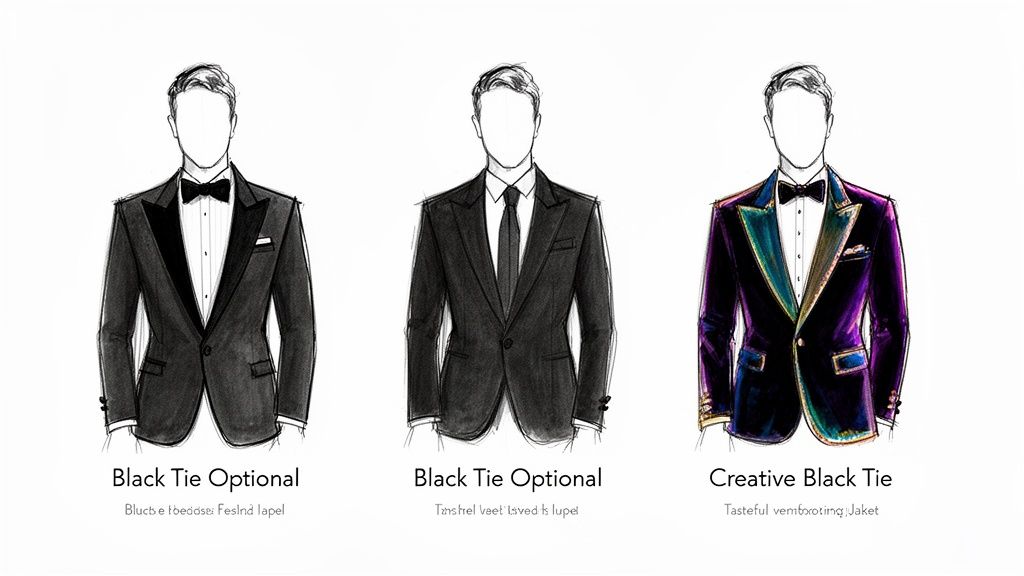
When an invitation says ‘Black Tie Optional’, it’s a considerate gesture from your host. They’re signalling a very formal event where a dinner suit is absolutely the preference, but they don't want to oblige guests who may not own one.
The Best Choice: A classic dinner suit. If you have one, this is the time to wear it. It’s always the strongest and most appropriate option.
The Acceptable Alternative: If a tuxedo isn't in your wardrobe, a dark, impeccably tailored suit in deep navy or charcoal is the only other viable choice. Pair it with a crisp white dress shirt, a conservative silk tie (never a bow tie in this context), and polished black Oxford shoes.
Think of it this way: the host has set the formality bar at the level of a dinner suit. Your job is to get as close to that standard as you possibly can. This is not the moment for a light-coloured linen suit or casual loafers. The ‘optional’ part applies only to the tuxedo itself, not the overall standard of formality.
'Black Tie Optional' should always be interpreted as 'Black Tie Heavily Encouraged'. Opting for the dinner suit shows a real appreciation for the occasion and ensures you'll feel perfectly at ease among the other guests.
Embracing Creative Black Tie
‘Creative Black Tie’ is where you get a genuine licence to inject some personality into your outfit, but—and this is critical—within very specific boundaries. It’s an invitation to play with colour and texture, all while keeping the fundamental structure of formal eveningwear intact.
The key is to innovate with just one or two elements. Keep the rest of the ensemble classic.
For instance, this is the perfect opportunity to swap your black dinner jacket for a smoking jacket in a rich, unexpected fabric.
Velvet Jackets: A jacket in a deep jewel tone—think burgundy, forest green, or midnight blue velvet—is a superb and sophisticated choice.
Subtle Patterns: A tastefully patterned dinner jacket, perhaps a subtle jacquard or a dark brocade, can also work wonderfully.
When you do opt for a more adventurous jacket, it's absolutely crucial to keep the other components of your outfit traditional. This means classic black formal trousers, a white formal shirt, a black self-tie bow tie, and black patent Oxfords. This foundation grounds the entire look, ensuring it remains sophisticated and doesn't veer into costume territory.
The goal is to add a dash of individual flair, not to reinvent the dress code from the ground up.
Frequently Asked Questions
Can I wear a normal black suit to a black tie event?
While it might seem like a close substitute, a standard black suit is not appropriate for a true black tie event. The key differentiators of a dinner suit are its satin or grosgrain lapels and the matching braid down the trousers. These details signal a higher level of formality. For ‘Black Tie Optional’ events, a dark suit is acceptable, but for a strict black tie dress code, adhering to the tuxedo tradition shows respect for the host and the occasion.
What is the difference between black tie and white tie?
White tie is the highest level of formal dress, a step above black tie. It requires a black evening tailcoat, a white waistcoat, and a white bow tie. It is extremely rare today, reserved for state dinners or specific ceremonial events. Black tie centres on the dinner jacket (tuxedo) without tails and a black bow tie. For virtually all modern formal functions, from galas to weddings, black tie is the pinnacle of evening elegance you'll be expected to meet.
What are the most common black tie mistakes?
The most frequent errors are often the simplest. Wearing a pre-tied bow tie is a major faux pas, as is substituting it with a long necktie. Another common mistake is wearing a belt; formal trousers should never have belt loops and must be held up with braces. Other missteps include choosing a wing collar shirt (which belongs to white tie), wearing inappropriate footwear like loafers or scuffed shoes, and forgetting to include a simple, well-folded white pocket square.
Should I choose a cummerbund or a waistcoat?
Both a cummerbund and a low-cut waistcoat are correct for covering the trouser waistband, and the choice often comes down to personal preference and climate. A cummerbund is a pleated sash of silk that provides a clean, streamlined look, often favoured in warmer weather. A waistcoat adds a layer of structure and is considered slightly more formal in traditional British tailoring. Both are excellent options, but the key is that one must be worn to maintain an unbroken silhouette.
About the Author
Igor Dobran is the founder and master tailor behind Dandylion Style. With a profound respect for the heritage of British tailoring and a passion for the finest fabrics, Igor has dedicated his career to the art of bespoke garment making. He believes that true style is not about trends, but about a perfect, personal fit that instills confidence in the wearer. From his studio in West Sussex, Igor offers a personal, client-focused experience, ensuring every suit is a timeless reflection of individual character. You can learn more about Igor Dobran’s journey.
For a truly exceptional garment that honours the traditions of black tie while reflecting your personal style, a bespoke approach is essential. At Dandylion Style, Igor provides expert guidance through every step, ensuring your dinner suit is a masterpiece of fit and form. Begin your bespoke journey with Dandylion Style.
Key Takeaways The Core Two: Navy blue and charcoal grey are the essential, non-negotiable suit colors for any professional wardrobe. Navy offers versatility and approachability, while charcoal projects authority and seriousness. Context is Crucial: The best suit color...
When you find a piece of clothing you absolutely love, getting the fit just right is the final, transformative touch. But how much should you expect to pay? In the UK, alteration costs can be as modest as £15 for a simple trouser hemming, or climb to £150 and beyond...
Getting the right pink shirt and tie combination is the mark of a well-dressed man. It’s a detail that separates the novices from those who truly understand their wardrobe. For a look that’s classic and can’t miss, pair your pink shirt with a navy, grey, or burgundy...
Key Takeaways For those seeking a quick overview, this section summarises the essential rules and recommendations for incorporating turn-up trousers into your wardrobe. Sartorial Purpose: Turn-ups add weight to the trouser hem, ensuring a cleaner, sharper drape,...
Deciding what colour tie to wear with a pink shirt is a common style query I hear from clients. For a classic, professional look that never fails, your safest and most effective choices are navy blue and charcoal grey. If you're heading to a more contemporary or...
You've just picked up a newly finished bespoke suit, and the cloth still has that clean, disciplined line only a real fitting room can give it. The temptation is to put it straight in the wardrobe and trust the label to do the rest. That's where expensive...
Book Your Tailoring Consultation
Looking for a suit or garment made specifically for you?
At Dandylion Style, we create bespoke and made-to-measure
garments tailored to your individual shape, style and occasion.
From suits and shirts to dresses, waistcoats and alterations,
our experienced tailors can help you create something truly unique.