You're standing in front of a mirror in a fitting room, or perhaps scrolling through suit references before commissioning one, and the question seems smaller than it is. Notch lapel or peak lapel? Most men think they're choosing a style detail. In reality, they're choosing the tone of the jacket.
A lapel changes how a suit speaks before you say a word. It affects how broad your chest appears, how formal the coat feels, and whether the garment reads as steady, celebratory, authoritative, or understated. That's why the notch lapel vs peak lapel decision matters so much in bespoke tailoring. It is not decoration. It is architecture.
If you'd like a broader grounding in jacket anatomy first, a clear guide to the parts of a suit makes the rest of this decision much easier to judge with confidence.
An Introduction to a Defining Detail
A good suit doesn't begin with cloth alone. It begins with line. The lapel frames the shirt, directs the eye to the face, and determines how the front of the coat opens across the chest. Change the lapel and you change the entire character of the garment.
In practice, most clients arrive with a vague preference rather than a reasoned one. They'll say peak lapels look sharper, or notch lapels feel safer. Both instincts can be right. The proper choice depends on what impression you want, what your proportions need, and where you'll wear the coat.
That is the point many guides miss. They explain the visual difference, but not the consequence. A lapel is successful only when it works in harmony with the man wearing it, the fabric carrying it, and the room he walks into.
Here is the simple framework I use when advising clients.
Key Takeaways
- Choose by social setting: A conservative business suit usually benefits from restraint, while a celebratory or more formal suit can justify stronger lapel expression.
- Choose by proportion: Peak lapels tend to create more visual emphasis through the shoulders and upper chest. Notch lapels usually balance rather than dramatise.
- Choose by cloth: Crisp, clean fabrics suit sharper statements. More textured cloth often benefits from a slightly quieter line.
- Choose by wardrobe role: If this is your first serious suit, the lapel should work hard across many situations. If it is a second or occasion-specific commission, you can be more distinctive.
- Choose by personality: The best bespoke choice is not the boldest one. It is the one that looks inevitable on you.
Practical rule: If you're hesitating because you want one suit to do many jobs well, caution usually points toward notch. If you want one suit to make an entrance, peak deserves attention.
Defining the Notch and Peak Lapel
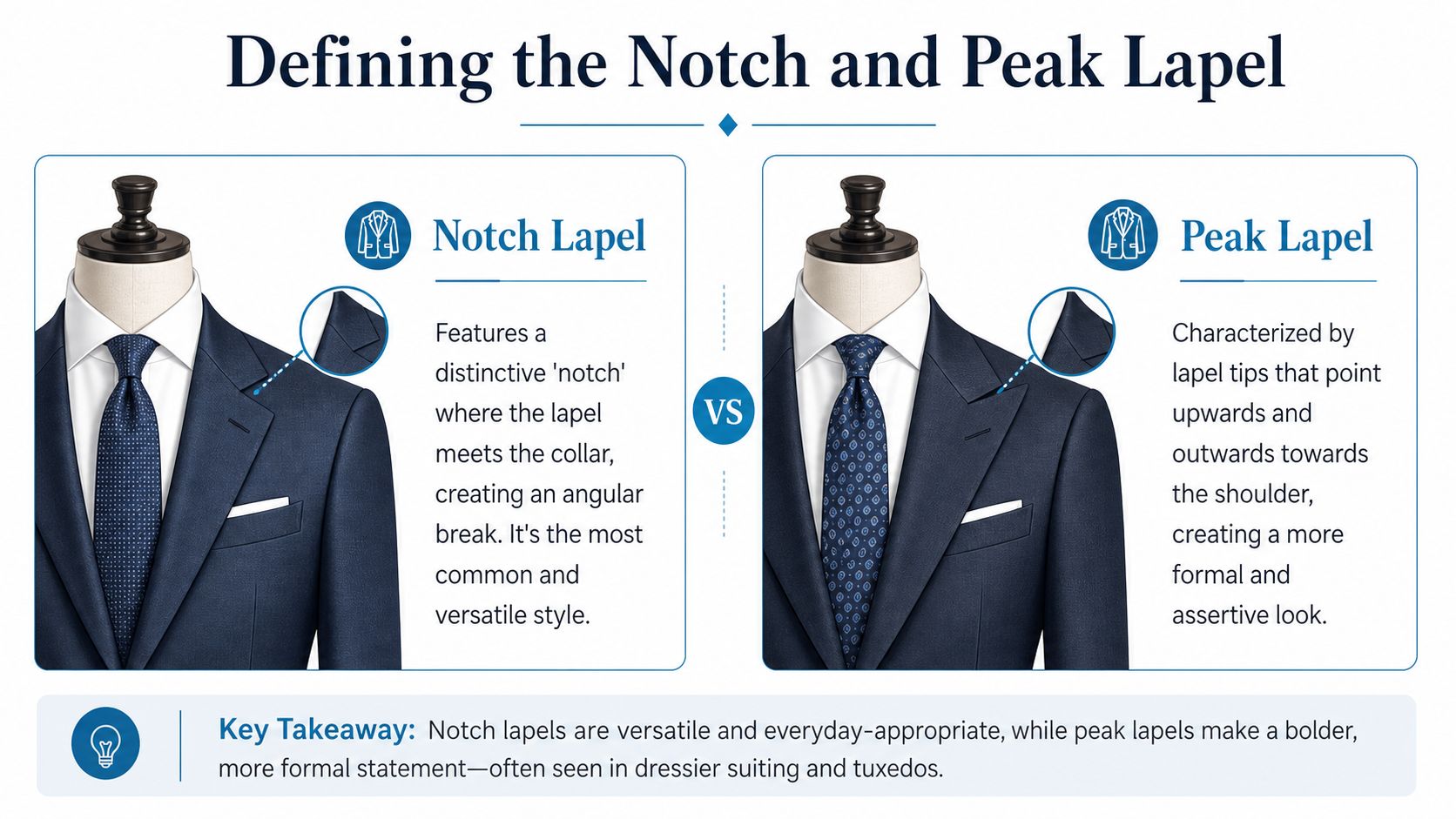
The cleanest way to understand this choice is to look at the point where the collar meets the lapel. Tailors call this area the gorge. It is where the jacket's front line announces itself.
What a notch lapel is
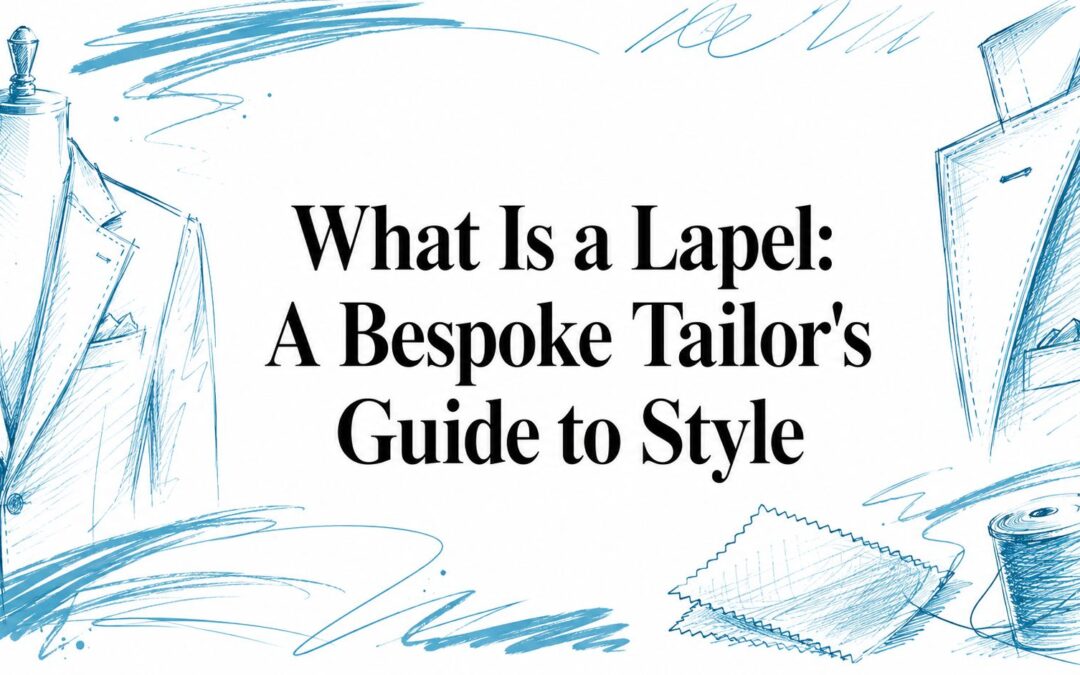
A notch lapel has a visible cut where the collar and lapel meet. That cut creates the familiar triangular step. It breaks the line neatly, and that break is what gives the notch lapel its calmer, more conventional appearance.
GQ notes that the notch lapel is the most common lapel style in modern menswear and the default choice for the vast majority of single-breasted suits, especially in business and casual settings across the UK market. The same piece also describes it as the least formal of the three main lapel types and the most modern and versatile for everyday wear in its guide to peak lapels and notched lapels.
A more detailed visual explanation of the lapel of a jacket helps if you want to train your eye to spot this instantly.
What a peak lapel is
A peak lapel rises upward and outward. Instead of cutting away into a notch, its tip points toward the shoulder. That upward motion gives the coat more lift, more intention, and more formality.
It creates a longer, cleaner visual sweep across the upper torso. That's why a peak lapel often feels more assertive even before you think about tradition or dress code. The line itself does the work.
The key visual difference
If you want the shortest useful distinction, it is this:
| Feature | Notch Lapel | Peak Lapel |
|---|---|---|
| Shape | Triangular step at the collar | Upward-pointing tip |
| Visual mood | Calm, conventional, versatile | Sharp, formal, assertive |
| Usual role | Everyday single-breasted tailoring | More dressy or more expressive tailoring |
| Best first impression | Reliable | Distinguished |
A notch settles the jacket. A peak energises it.
The Sartorial Code of Lapel Formality
Clothes have a social memory. Even men who know nothing about tailoring still read signals instinctively. A peak lapel feels dressier because it has long been associated with garments meant to carry more ceremony and authority. A notch lapel feels easier because it became the line of modern business dress.
Why peak lapels read as more formal
The peak lapel has a sense of occasion built into it. Its upward point adds force to the silhouette, and that force reads as deliberate. In classic tailoring, it sits naturally on jackets that are meant to stand apart from the ordinary working wardrobe.
That doesn't mean a peak lapel is theatrical by default. It means it asks for more confidence from the wearer and more clarity from the occasion. On the right suit, it looks polished and commanding. On the wrong suit, or in the wrong room, it can seem self-conscious.
Why notch lapels became the modern standard
The notch lapel belongs to the practical, daily life of tailoring. It works because it doesn't push. It gives shape without insisting on itself.
In the UK, the single-breasted suit remains the foundation of professional dress, and the notch lapel is the conventional choice for blazers and sport coats. It is also commonly recommended as the first-choice lapel for job interviews, funerals, and conservative events in the same GQ guide referenced earlier. That tells you something important. The notch lapel is not merely common. It is trusted.
A man rarely regrets wearing a notch lapel to a conservative event. He may regret wearing a peak lapel if the room expects quiet dress.
Formality is not the same as elegance
Many men often become confused. They assume the more formal lapel is automatically the better one. It isn't. A lapel succeeds when it suits the purpose of the coat.
Consider these pairings:
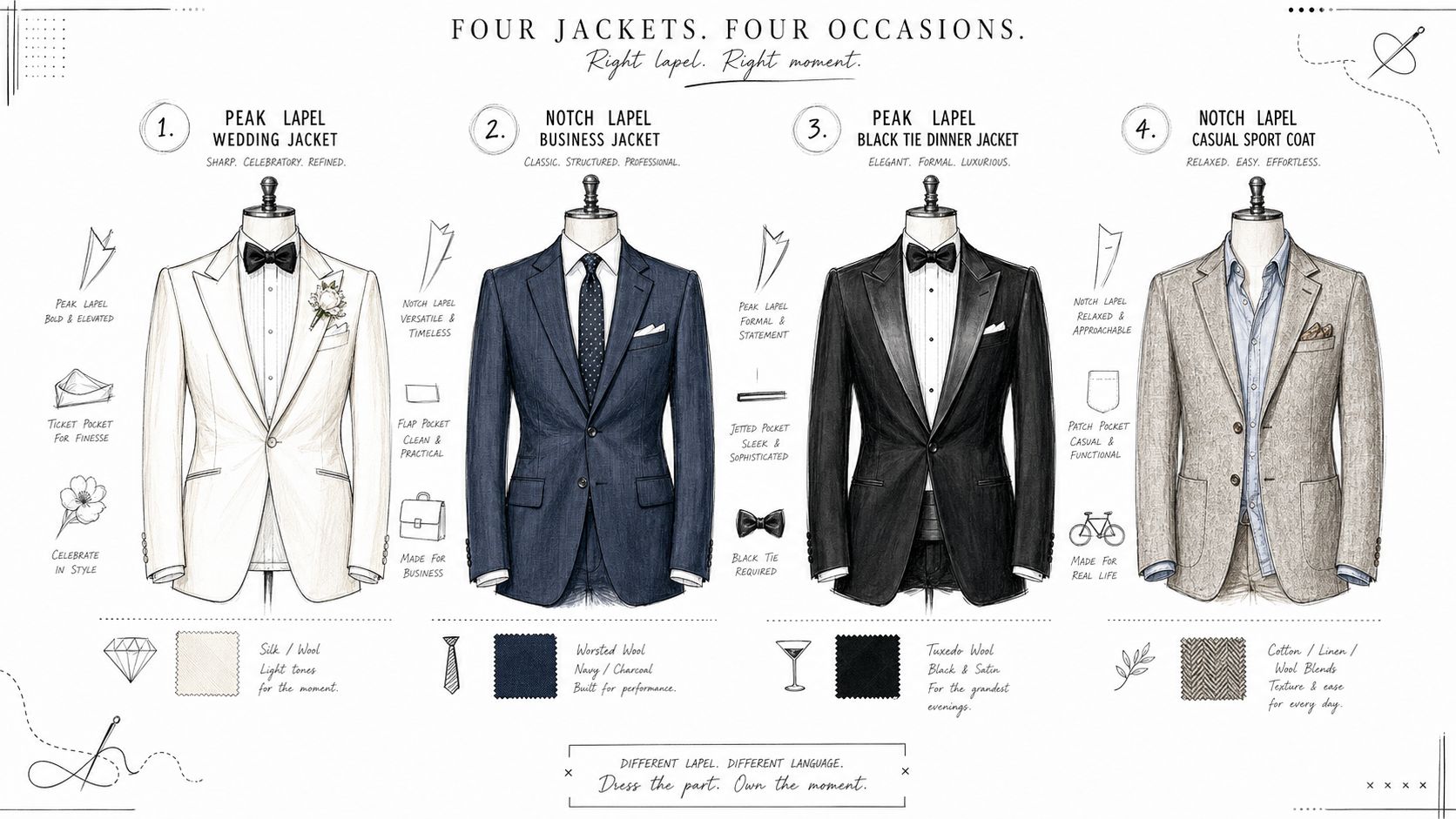
- Navy business suit: Notch usually looks correct because the role of the suit is competence, not display.
- Wedding suit for the groom: Peak often works beautifully because celebration allows a little more flourish.
- Black tie: Peak is a natural and traditional answer when a sharper evening line is desired.
- Weekend sports jacket: Notch generally sits more comfortably with the relaxed nature of the garment.
A peak lapel can enhance. A notch lapel can refine. The difference matters.
How Lapels Flatter Your Frame
The most useful part of the notch lapel vs peak lapel discussion is not formality. It is proportion. Tailoring should improve the eye's impression of the body, not merely cover it.
Peak lapels and visual breadth
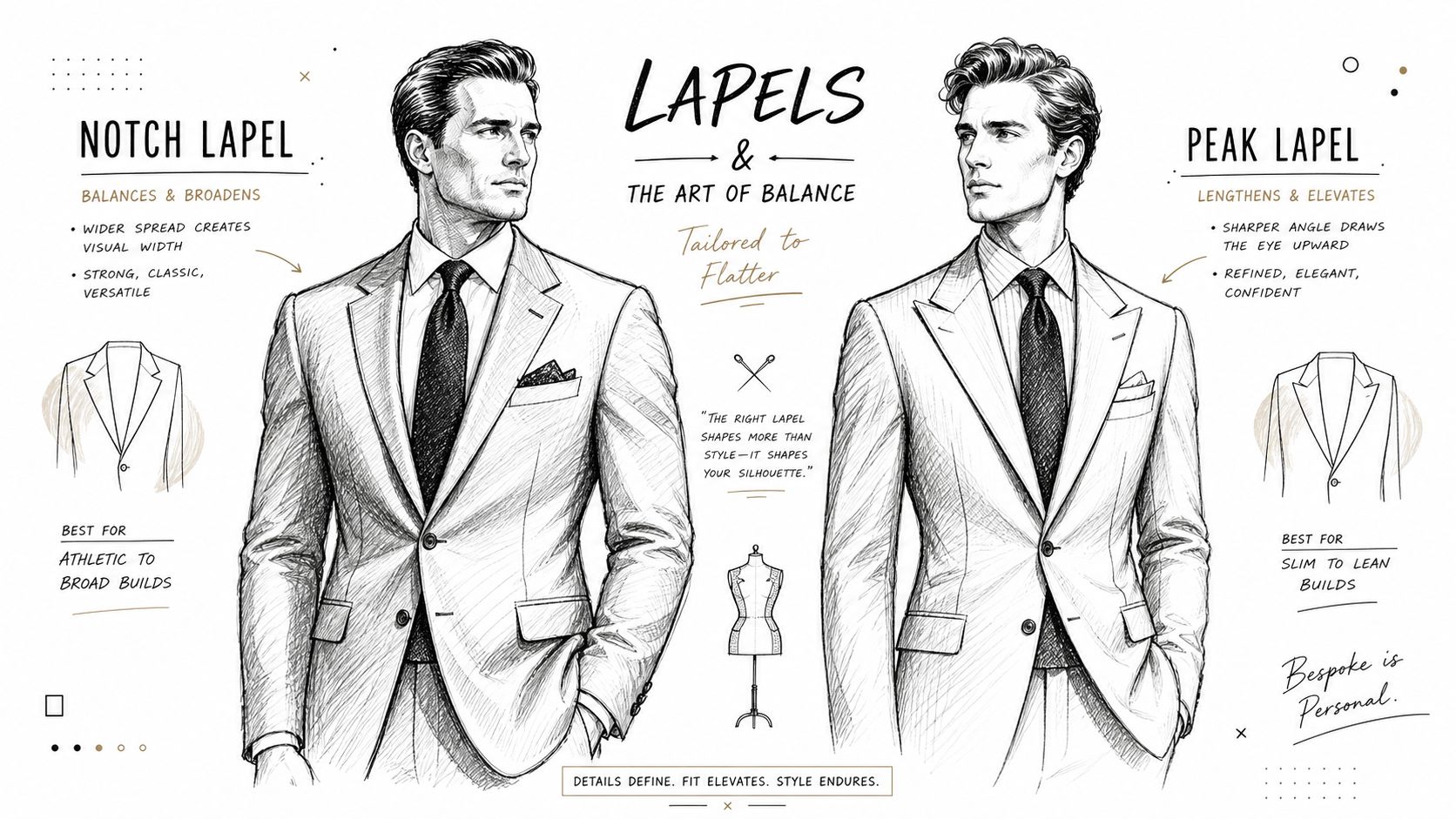
Peak lapels tend to direct the eye upward and outward. That usually strengthens the shoulder line and helps create a more pronounced V-shape through the torso. For a lean man, or a man who wants a little more authority in his upper body, that can be very useful.
Anatoly & Sons notes that many sources say peak lapels emphasise shoulder width, but there is no UK-focused data showing exactly how that effect plays out across local body types, particularly for men with narrower shoulders. Their discussion of a guide to suit lapels makes one thing clear. Body-type guidance still depends heavily on experienced judgement.
That is why a thoughtful tailor matters more than a generic rule.
If you'd like a closer look at the anatomy and purpose of this line, this explanation of what is a notch lapel gives useful context for comparison.
Notch lapels and balance
A notch lapel usually behaves more neutrally. It doesn't pull the eye toward the shoulders in the same way, so it tends to preserve your natural proportions rather than reshape them dramatically.
For many men, that is exactly right. If you already have a broad chest, a strong shoulder line, or a naturally athletic frame, a notch lapel often prevents the jacket from becoming too aggressive. It allows the cloth, cut, and fit to speak first.
What works on different frames
There is no universal formula, but these are dependable observations from fittings.
- Lean build: Peak lapels often add useful strength.
- Broad or athletic build: Notch lapels often look cleaner and more controlled.
- Shorter torso: A moderate lapel, with careful gorge placement, usually matters more than dramatic peaks.
- Tall frame: Either can work well, but exaggerated lapels can quickly look affected if the balance elsewhere is wrong.
The lapel should correct gently, not disguise clumsily. If a design choice announces the correction, the correction has failed.
The trap of oversimplified advice
“Peak for sophistication” sounds elegant, but it isn't precise enough to be useful. Sophistication on one man can look strained on another. A slender client in a firm worsted may benefit from the upward energy of a peak. A broad-shouldered client in dense flannel may look far more distinguished with a measured notch.
The right answer lives in the mirror, not in a slogan.
Matching Your Lapel to the Event
A lapel should suit the setting as much as the wearer. Occasion has a discipline of its own, and good tailoring respects it.
Weddings
A wedding gives more room for expression than the office. The question is how much.
For a groom, a peak lapel often makes sense because it marks the suit as intentional and a little more refined. It photographs well, frames the chest with confidence, and distinguishes the wearer without shouting. If the wedding is formal, evening-based, or styled with real ceremony, peak becomes very persuasive.
A notch lapel is still excellent for weddings, especially daytime ceremonies, country house settings, and men who prefer understatement. It can look elegant, grown-up, and effortless. It doesn't insist on itself in the same way.
Business attire
Most professional wardrobes are better served by notch lapels. They are conventional for a reason. They keep the attention on the man, not the styling choice.
That said, a peak lapel is not forbidden in business. It needs judgement. In a creative field, a senior role, or a setting where confident dress is welcomed, it can look superb. In a conservative City environment, it may feel too expressive on a daily suit.
A refined peak lapel suit can be excellent. It just shouldn't be chosen without considering the culture of the room.
Black tie
Black tie is where stronger lapel language belongs naturally. Peak lapels look entirely at home here because evening dress can support the added sharpness and formality.
If a man wants a dinner jacket with edge and definition, peak is a strong answer. The lapel contributes to the clean, ceremonial front of the coat in a way a business-style notch cannot.
Casual tailoring
Casual jackets, odd blazers, and sport coats usually benefit from the ease of a notch lapel. The lapel harmonises more naturally with textured cloth, softer structure, and relaxed combinations.
Peak lapels can work in casual tailoring, but only if the rest of the coat supports them. Done badly, they look too dressed for the cloth. Done well, they can create a handsome, rakish jacket. The margin for error is smaller.
A quick occasion guide
| Occasion | Safer Choice | Bolder Choice | Tailor's view |
|---|---|---|---|
| Job interview | Notch | Peak | Choose notch |
| Wedding guest | Notch | Peak | Depends on dress code |
| Groom's suit | Notch | Peak | Peak often excels |
| Conservative office | Notch | Peak | Notch is wiser |
| Black tie | Peak | Peak | Peak is a natural fit |
| Casual blazer | Notch | Peak | Notch is easier |
A Tailors Guide to Lapel Width and Fabric
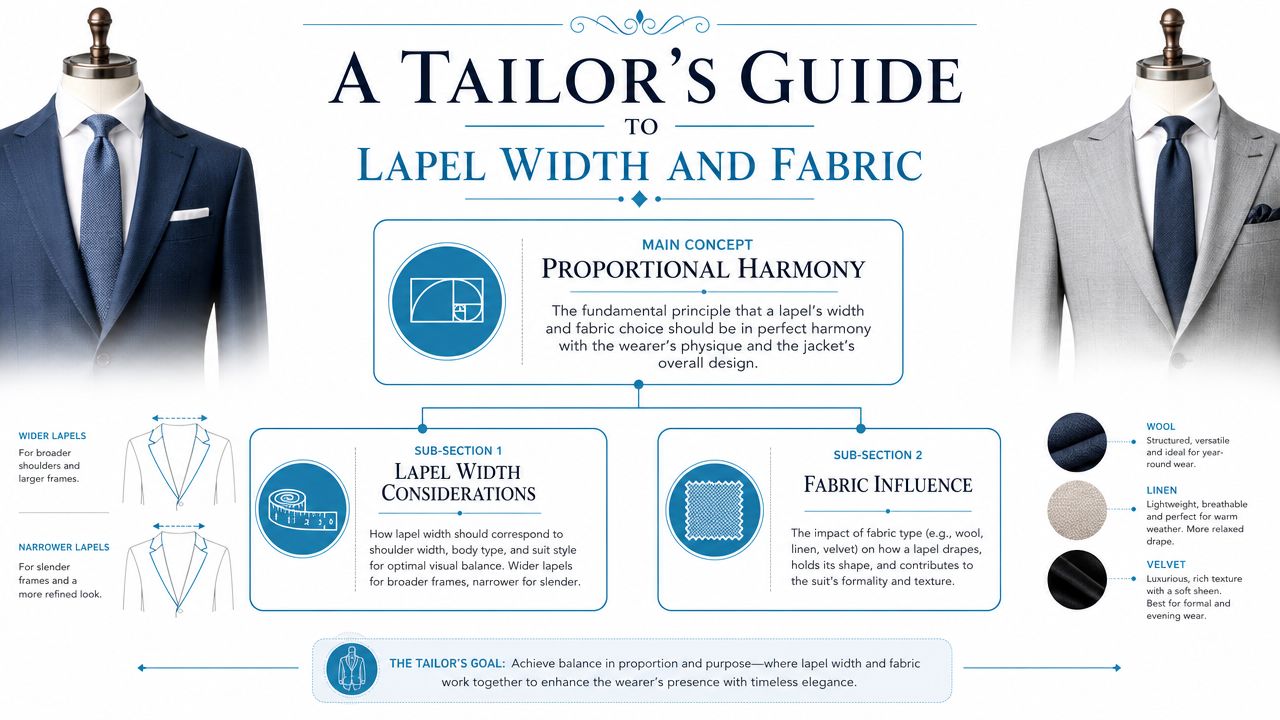
Lapel style is only half the story. Width and cloth determine whether the line looks convincing. A well-chosen lapel can still fail if it is too wide for the chest, too narrow for the coat, or cut in a fabric that won't support it.
Width first
In UK bespoke practice, notch lapel width should sit between 2.75 and 3.5 inches, with 3.0 to 3.25 inches often considered the most timeless and broadly flattering range. Widths above 4.25 inches are advised only for men with exceptionally large chests, while anything above 3.5 inches on a single-breasted business suit risks looking more trendy than classically elegant in that same tailoring guidance from The Peak Lapel's guide to suit lapels.
Those figures matter because proportion is visible even when the observer doesn't know why. A lapel that is too slight looks mean. One that is too broad can overwhelm the coat.
Then consider the fabric
The cloth decides how sharply a lapel can speak.
A firm worsted wool holds a clean edge and supports both notch and peak lapels beautifully. On a business suit, it is often the easiest way to achieve a crisp, architectural front. A peak lapel in a smooth worsted can look especially handsome because the cloth preserves the line.
Textured fabrics behave differently.
- Tweed: Often suits a notch lapel because the cloth already has visual richness.
- Flannel: Softens the line and can make both lapels feel gentler.
- Linen: Looks best when the lapel choice accepts a little irregularity rather than fighting it.
- Cashmere blends: Benefit from restraint because softness can blur overassertive design.
For men comparing options seasonally, a guide to the best fabrics for suits can help place lapel choices in the right cloth context.
A lapel should look as though it belongs to the fabric. If the design and cloth disagree, the jacket will never feel settled.
Tie and collar harmony
One more point matters in practice. The lapel does not stand alone. It sits between the shirt collar and tie, and these elements must agree. A moderate lapel generally works best with a tie of moderate width and a collar with enough presence to frame it properly.
That is why moderation lasts. Extremes tire quickly.
Your Bespoke Recommendation Notch vs Peak
Most clients don't need another list of differences. They need a recommendation they can use. Here it is.
Choose a notch lapel if
A notch lapel is the right answer when your suit needs breadth of usefulness. It suits first business suits, daily professional wear, travel wardrobes, blazers, and coats that must move easily between formal enough and relaxed enough.
Choose notch if these points sound like you:
- You need versatility: One suit must handle meetings, dinners, ceremonies, and ordinary wear.
- You work in a conservative setting: The suit should appear polished, not expressive.
- You already have strong shoulders: You don't need extra visual emphasis up top.
- You prefer understatement: You want the fit and cloth to impress more than the styling detail.
- You're buying your first proper suit: Start with the line that gives you the fewest limitations.
Choose a peak lapel if
A peak lapel is right when the suit has a more specific purpose or when your build benefits from stronger upper-body framing. It can be elegant, forceful, and distinctly personal when used with control.
Choose peak if these points fit better:
- You want presence: The suit should have more authority the moment you enter.
- The occasion is celebratory or formal: Weddings and evening events welcome that extra definition.
- Your frame is leaner: The upward line may help broaden your appearance visually.
- This is not your only suit: You already own a versatile foundation and want something more distinctive.
- You wear the style naturally: Confidence matters. A peak lapel looks best when it seems unforced.
Lapel Decision Summary
| Criterion | Notch Lapel | Peak Lapel |
|---|---|---|
| Formality | Lower to mid formality | Higher formality and stronger presence |
| Best for first suit | Excellent | Better as a second or occasion suit |
| Effect on build | Balances proportions | Emphasises shoulder line |
| Business use | Ideal in conservative settings | Best where dress allows expression |
| Weddings | Elegant and understated | Celebratory and distinguished |
| Casual tailoring | Very natural | Needs more care |
| Personality fit | Quiet confidence | Assertive confidence |
The best bespoke choice rarely comes from asking which lapel is better. The better question is which lapel makes this particular suit more truthful. A lapel should support the role of the coat, flatter the man inside it, and look inevitable once made.
About the Author
Igor Srzic-Cartledge is the founder of Dandylion Style and the master tailor behind its bespoke work in Ardingly, West Sussex. He specialises in one-of-a-kind garments cut from fine British cloths and shaped around the client rather than forced from a standard block.
His approach is calm, exacting, and personal. Each commission is guided with honest advice on cut, cloth, proportion, and finishing, from lapel shape to button choice. Working with clients across Sussex, London, and the South East, Igor focuses on tailoring that feels refined, comfortable, and enduring, with each garment designed to reflect the wearer's life rather than merely follow fashion.
Frequently Asked Questions
Is a peak lapel too much for a single-breasted suit?
Not necessarily. On a single-breasted suit, a peak lapel can look elegant and authoritative rather than excessive. The key is context and proportion. If the cloth is sober, the width is controlled, and the occasion supports a slightly stronger line, it works beautifully. Problems usually arise when the lapel is too wide, the suit is too flashy, or the setting is unusually conservative.
Can broader men wear peak lapels well?
Yes, but the result depends on balance. A broader man can wear peak lapels very well if the width is moderated and the coat isn't already overbuilt through the shoulders. If everything is exaggerated at once, the jacket can become heavy-looking. In many cases, a notch lapel gives a broader frame more control, though a carefully cut peak can still be excellent.
Should my blazer and business suit have the same lapel style?
They don't have to. In fact, many well-dressed men benefit from variety. A notch lapel blazer is often the easiest and most natural choice for odd jackets and sport coats because it works smoothly with textured fabrics and relaxed combinations. A business suit can remain notch for versatility, while a separate occasion suit or dressier commission can carry a peak lapel without redundancy.
Are wider lapels changing the notch vs peak decision?
They complicate it slightly, but they don't erase the old logic. A 2025 trend report notes wider lapels, particularly around 3.5 to 4 inches, as part of current style direction in menswear trends for 2025. What it does not establish is that wider notch lapels suddenly replace peak lapels in conservative formal settings. Trend and appropriateness are not the same thing.
If you're considering a bespoke suit and want clear, honest guidance on lapel shape, cloth, and proportion, Dandylion Style offers private consultations in Ardingly, across Sussex, London, and the South East. Whether you need a first business suit, a wedding commission, or a sharper evening jacket, the process is built around what suits you best.