You're likely standing in front of a rail or wardrobe with two perfectly decent pieces in your hands, and still feeling that something is off. The suit fits. The shirt is good. Yet together they can look either polished or slightly accidental.
That difference rarely comes from buying more clothes. It comes from understanding how colour, cloth, texture, pattern, collar shape, and fit work together. Once you grasp those few principles, suit and shirt combinations stop feeling like guesswork and start feeling deliberate.
Introduction The Art of a Perfect Pairing
You can stand in front of a mirror wearing a fine suit and a fine shirt, and still look slightly off. The trouble usually is not colour alone. It is the relationship between the two fabrics, the weight of the cloth, the shape of the collar, and the level of formality each piece is trying to project.
That is why the best pairings feel settled rather than assembled. A crisp poplin shirt can bring order to a business suit in worsted wool, but it can look too sharp under a soft linen jacket. A brushed tweed coat asks for more substance in the shirt, often with a fuller collar and a cloth that can hold its own against the texture. Remove the tie, and those details matter even more.
Generic advice has its limits. British cloths have their own character. Tweed, flannel, cavalry twill, fresco, and linen do not behave like the same suit in different colours, so they should not be paired as if they do. Good dressing starts with colour, but it is finished by texture, weight, and proportion.
A good combination looks intentional before anyone notices why.
If you are building a wardrobe with purpose, it also helps to understand how different business suit colours change the mood of a shirt pairing.
Key Takeaways
- Start with harmony, not habit: The best suit and shirt combinations are built on colour, cloth, and collar working in the same direction.
- Let the fabric lead: Smooth worsteds, dry high-twist wools, rumpled linen, and rugged tweed each call for a different kind of shirt.
- Use texture deliberately: A shirt should either complement the suit cloth or provide a clean point of contrast, not fight it.
- Treat British fabrics on their own terms: Tweed benefits from shirts with body and presence. Linen suits usually look better with softer, more relaxed shirting.
- Choose collar shape with the jacket in mind: The right collar supports the lapel line, the knot if you wear a tie, and the level of structure in the suit.
- Keep pattern and detail under control: Strong cloth, bold checks, or pronounced texture need a steadier partner elsewhere.
- Dress for the setting: The right pairing for a boardroom is rarely the right one for a summer wedding or a country weekend.
The Foundations of Colour Matching
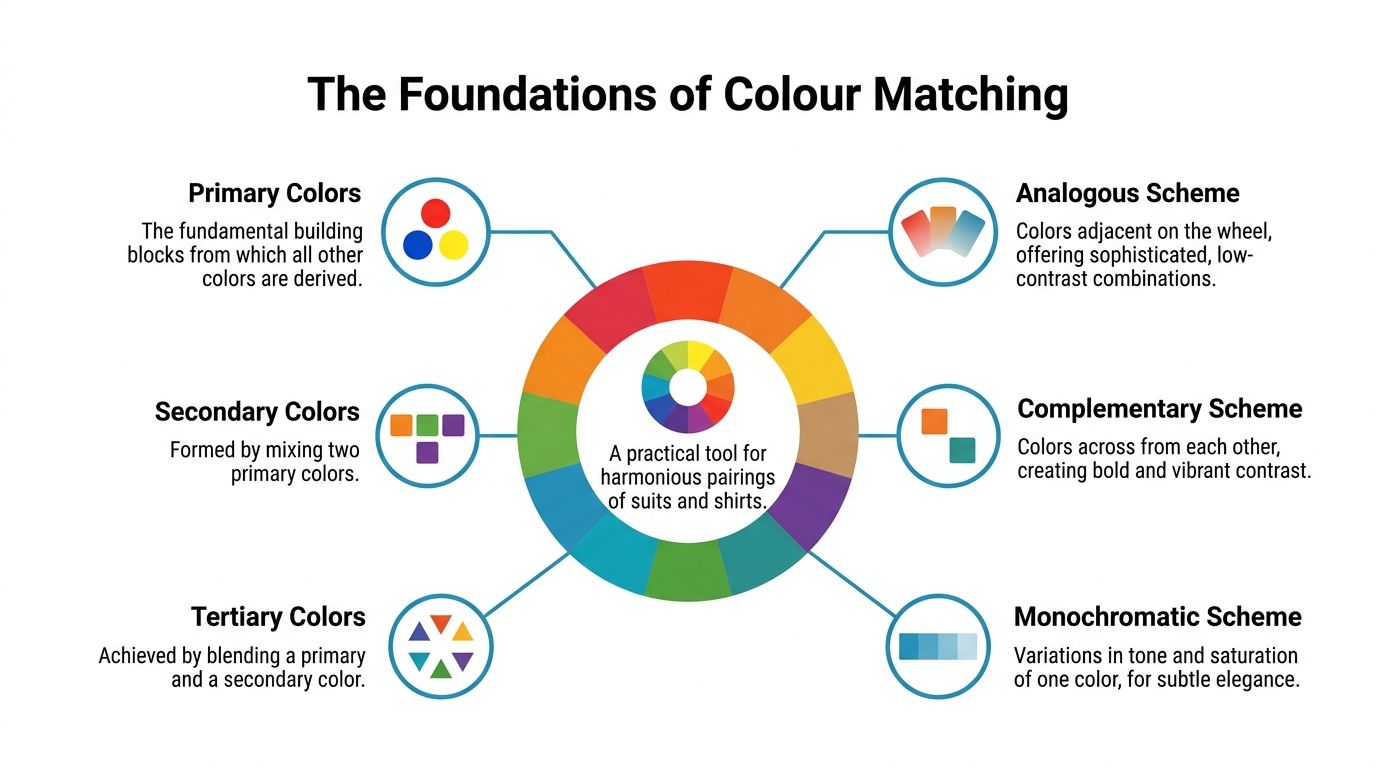
A man can wear the right suit in the wrong shirt and still look slightly off. The fault usually sits in the balance of colour, not in the individual pieces. Good matching starts with contrast, temperature, and clarity. Then the cloth decides how sharp or relaxed that colour story should feel.
The safest foundation remains simple. A navy suit with a white shirt is dependable because it gives the face light, keeps the jacket authoritative, and works across business, weddings, and formal daytime settings. It is the default for a reason. A pale blue shirt is the next step, but it changes the effect. The outfit becomes softer, less ceremonial, and easier to wear repeatedly through the week.
For a broader view of how navy, charcoal, grey, and brown each change the mood of the same shirt, see this guide to suit colours for business.
Use analogous colours for quiet confidence
Colours that sit close together usually give the cleanest result. In tailoring, that means combinations that feel settled rather than showy.
A navy worsted suit with a light blue poplin shirt is an easy example, but the cloth matters. In a dry fresco or a brushed flannel, the same light blue can read differently. Fresco sharpens it. Flannel softens it. With British cloths, this distinction matters because colour is never seen in isolation. Texture changes how colour is perceived at a glance.
Useful analogous pairings include:
- Navy suit with pale blue shirt: Reliable, professional, and easy to dress up with a tie.
- Mid-grey suit with ice blue shirt: Cooler and cleaner, especially in smoother business cloths.
- Brown suit with cream shirt: Warmer, quieter, and better suited to autumn weight fabrics than stark white.
Use complementary colour with restraint
Opposing colours can work well, but only once they are muted. In menswear, full-strength contrast often looks forced.
Grey with pale pink succeeds because the shirt adds warmth without dominating the suit. Charcoal with soft lavender can do the same, though it asks for confidence and works better in evening light than under hard office lighting. I usually advise clients to keep the shirt lighter than the suit when introducing these colours. That preserves structure and keeps attention on the face.
Practical rule: If the suit carries visual weight, whether from darkness, texture, or both, the shirt should bring clarity before it brings personality.
Monochrome depends on tone and surface
Tonal dressing is less forgiving than it looks. The difference between elegant and flat often comes down to weave, finish, and collar presence.
A charcoal twill suit with a white shirt is easy because the contrast is clear. A mid-grey suit with a silver-grey shirt needs more judgement. If both fabrics are smooth and close in value, the outfit can lose shape. If the suit has visible character, say a faint herringbone or a softer flannel finish, the tonal pairing has more depth.
This is also where British fabrics need different handling. Tweed rarely wants a brilliant optic white shirt. The contrast is too hard, and the country texture can make the shirt look detached from the suit. Cream, ecru, or a softly brushed blue shirt usually sits better. Linen behaves differently. A white or washed blue shirt often looks right with linen because the relaxed surface supports that freshness instead of fighting it.
A short guide:
| Suit colour | Safest shirt | Smarter alternative | Best use |
|---|---|---|---|
| Navy | White | Light blue | Business, weddings, interviews |
| Charcoal | White | Pale pink | Formal office, evening events |
| Mid grey | White | Light blue | Flexible daily tailoring |
| Brown | White | Cream or powder blue | No-tie business, social occasions |
Colour sets the hierarchy. Fabric decides whether the pairing feels crisp, soft, formal, or lived-in.
Mastering Patterns Without Clashing
Most men avoid patterns because they've seen them handled badly. The usual problem isn't boldness. It's repetition at the wrong scale.
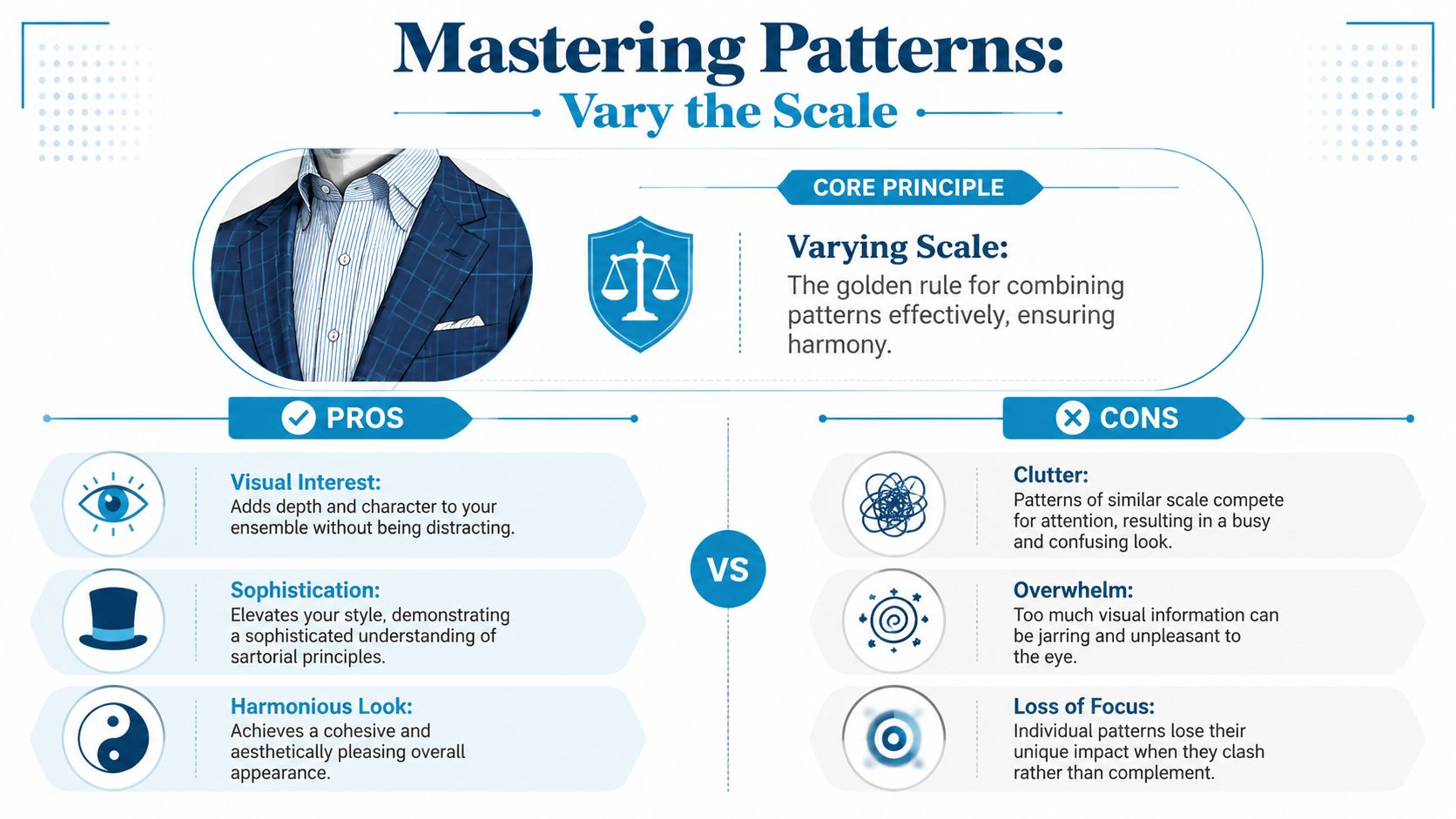
The cleanest rule is simple: vary the scale, not the intensity. If the suit carries a visible pattern, the shirt's pattern should be tighter, quieter, and less dominant. If both patterns ask for equal attention, the eye has nowhere to settle.
What works
A pinstripe suit can look excellent with a micro-check shirt because the two patterns operate at different distances. From across the room, the suit reads first. Up close, the shirt adds detail.
A glen check suit also benefits from restraint underneath. A solid white or pale blue shirt gives the check room to breathe. If you want more texture, a very fine Bengal stripe can work, provided the stripe is much smaller than the suit pattern.
These combinations usually succeed:
- Pinstripe suit with a micro-check shirt: Clear hierarchy, no visual argument.
- Herringbone jacket with a subtle striped shirt: Texture and line, but not at equal volume.
- Checked suit with a solid shirt: Reliable, elegant, and hard to spoil.
What fails
Trouble starts when the patterns speak in the same voice. A narrow-striped suit with a narrow-striped shirt tends to blur into agitation. The same goes for two checks of similar size.
What the eye perceives is conflict, not sophistication. Nothing lands.
Two patterns can live together, but one must lead and the other must support.
A practical way to judge pattern balance
When assessing suit and shirt combinations, step back and ask one question: which garment should read first? In most cases, the suit should establish the structure and the shirt should refine it.
A useful test at home:
- Put the suit on first: Look at the pattern from a few feet away.
- Add the shirt: If the shirt jumps forward immediately, it's too busy.
- Check the mirror in black and white if possible: This strips away colour and shows whether the scales are competing.
If your confidence with pattern is still developing, keep one element plain. There's no weakness in that. Discipline often looks better than ambition.
The Bespoke Difference Fabric and Texture
A navy worsted business suit and a brown donegal tweed jacket can both be called "suits," but they do not ask the same thing of a shirt. Cloth changes how the whole combination reads. It affects drape, formality, collar behaviour, and even whether the layers move cleanly against each other.
That is where bespoke judgment earns its keep. Generic advice usually stops at colour. A proper pairing also considers surface, weight, and the character of the cloth itself. If you want a broader grounding in cloth before choosing combinations, this guide to the best fabrics for suits is a useful companion.
Why weight matters
A jacket cloth needs a shirt that supports it without adding drag. Heavy tweed has depth and body, so a paper-thin broadcloth underneath can look meagre by comparison. At the other extreme, a dense shirt under a firm coat can bunch at the armhole, catch at the sleeve, and make the coat feel heavier than it should.
The aim is simple. Keep the line clean.
In practice, the shirt should usually be lighter than the suit, but not so light that it disappears. British cloths make this especially clear. A brushed flannel suit likes a shirt with a little presence. A crisp mohair blend prefers a cleaner, drier shirt surface. Linen tailoring needs room to crease naturally, so the shirt should share that relaxed quality rather than fight it.
| Suit cloth | Better shirt choice | Why it works |
|---|---|---|
| Tweed | Oxford or substantial fine cotton | Supports texture and weight |
| Mohair blend | Crisp poplin or smooth twill | Echoes the suit's clean surface |
| Linen | Soft, breathable cotton or linen-blend shirt | Keeps the look relaxed and seasonally honest |
Texture changes formality
Texture alters the message before colour has finished speaking. Smooth worsted reflects light evenly and reads as formal. Tweed breaks the light and feels country-minded, even in a city cut. Linen carries air, movement, and crease, which is part of its appeal rather than a flaw.
The shirt should answer that texture.
A sleek shirt under a heavily textured jacket can feel detached from it. The reverse can look muddled. The best combinations acknowledge the cloth's character and then refine it. British fabrics reward that discipline more than most because they tend to have a clear seasonal identity.
Existing advice often misses the relationship between collar shape and fabric texture, particularly with tweed, linen, and mohair. Those cloths need different handling if the outfit is to look intentional.
Matching collar to texture
Tweed usually benefits from a collar with some softness. A button-down works well because it has enough informality to sit comfortably against a coarse or heathery jacket. A soft spread can do much the same with flannel, especially in cooler months when the whole outfit carries more visual weight.
Mohair asks for sharper treatment. Its surface is smooth, crisp, and slightly bright, so it responds better to a spread or cutaway collar with a cleaner edge. That keeps the front of the outfit precise.
Linen sits in the middle. With a tie, a lightly structured spread collar keeps the look tidy without forcing it into stiffness. Without a tie, a softer open collar usually looks more convincing than a rigid, heavily fused one.
Texture should be answered, not ignored. If the suit cloth has a distinct character, the shirt should support it rather than contradict it.
Perfecting the Details Fit and Collar Styles
A suit can be the right colour, the right cloth, and still look wrong once the jacket is on. The usual culprit is proportion at the neck and wrist. Those two points carry more visual weight than many clients expect, because they frame the face and hands, which is where attention goes first.
Start with the cuff. The jacket sleeve should finish at the wrist bone, with a small, deliberate show of shirt cuff beyond it. Enough to separate the layers clearly. Not so much that the sleeve line looks affected. If the jacket covers the shirt completely, the arm loses definition and the coat can look slightly off in size. If too much shirt shows, the balance turns fussy.
That matters even more with bespoke clothing, because clean proportions are part of what makes custom work read as custom.
The sleeve relationship
The shirt and jacket need to be fitted as a pair. I treat them that way in every proper fitting. A fuller tweed coat may need a touch more visual break at the cuff than a lean worsted business suit, because the cloth carries more weight and volume. A summer linen jacket, by contrast, often looks best with an easier sleeve finish and a cuff reveal that feels light rather than rigid.
A quick check at the mirror helps:
- Too short: The shirt cuff dominates and pulls attention to the sleeve instead of the whole coat.
- Too long: The jacket hides the shirt and the finish looks blunt.
- Balanced: The cuff is visible enough to frame the hand and sharpen the line of the sleeve.
Collar shape changes the whole front view
Collar choice is not a minor trim decision. It sets the tone of the outfit, affects how the jacket sits visually around the neck, and determines whether the front of the ensemble feels settled with or without a tie.
Structured suits usually want a structured collar. If the cloth is clean and crisp, such as a dark business worsted or a mohair blend, a spread collar keeps the line precise. A cutaway can work well too, but only if the wearer has the bearing for it and the occasion supports that extra formality.
Textured British cloths need more judgement. Tweed, brushed flannel, and softer country jackets often sit better with a collar that has some ease in it. That is one reason a button-down remains such a reliable option for relaxed tailoring. It holds its shape, but it does not fight the cloth. For a clearer breakdown of collar character, see this guide to the difference between a button-up and a button-down shirt.
Linen is its own case. With a tie, a lightly structured spread collar keeps the outfit tidy. Without a tie, too much stiffness at the collar can look out of place against the natural movement of the cloth. The point is harmony, not uniformity.
| Collar style | Best with | Best setting |
|---|---|---|
| Spread | Smooth wool, mohair, sharper business suits | Office, weddings, formal daywear |
| Cutaway | Dress cloths, strong tie knots, clean structured jackets | Formal events, statement business dress |
| Button-down | Tweed, flannel, softer suits, tie-free tailoring | Smart casual offices, country wear, relaxed city dressing |
The right collar has to satisfy three demands at once. It should suit the cloth, flatter the face, and match the formality of the occasion. If one of those is wrong, the whole front view feels slightly unsettled, even when the rest of the outfit is sound.
Occasion Specific Suit and Shirt Pairings
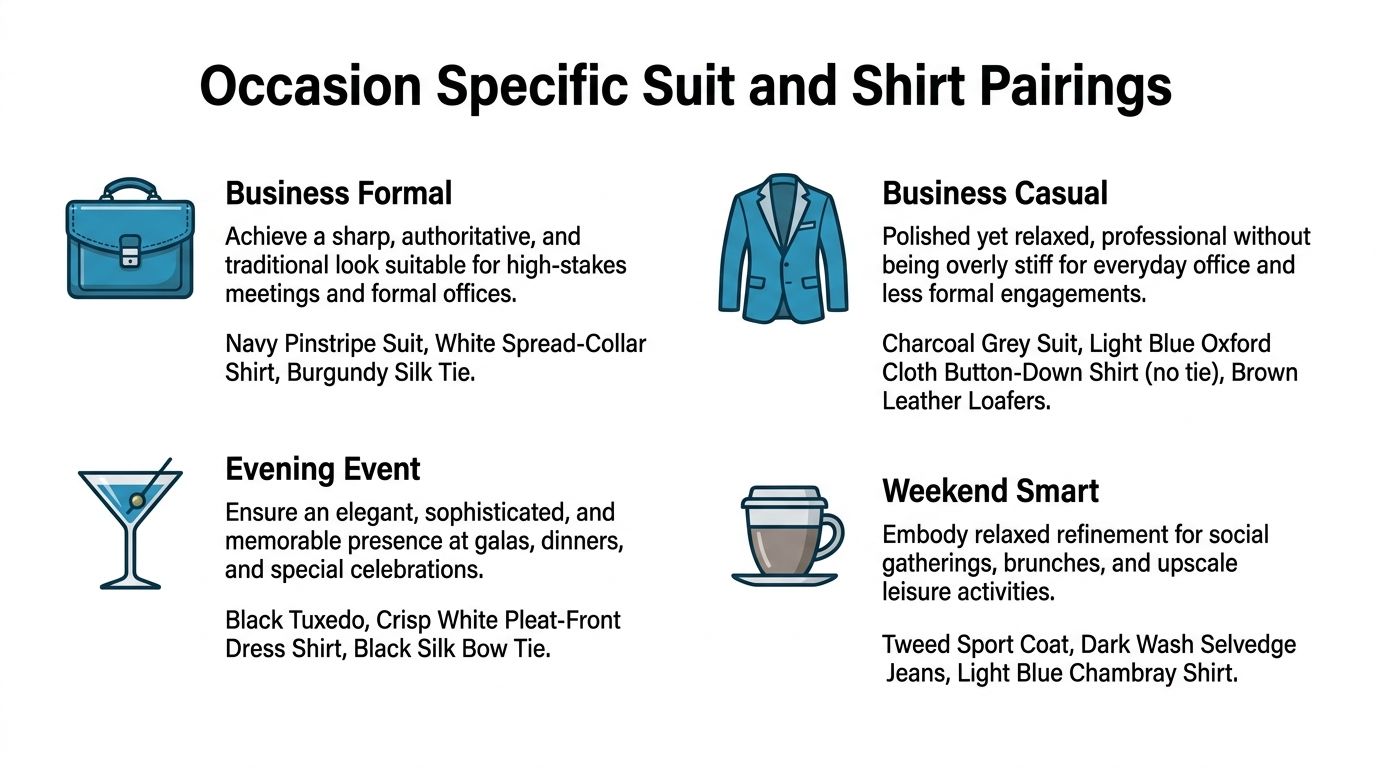
Theory matters most when it helps you dress for real life. The right suit and shirt combinations depend on where you're going, what authority you need, and whether the occasion asks for ceremony or ease.
Current UK advice still leans heavily on a rigid navy or charcoal suit with a white or light blue shirt for business formal, while leaving a noticeable gap around brown suit and shirt combinations for tie-free dressing. That gap is especially interesting because brown suits are singled out as the only colour that “doesn't have that problem” when ties are removed, according to this discussion of modern suit pairing.
The boardroom
In conservative business settings, clarity wins. A navy suit with a white spread-collar shirt still does the job better than almost anything else. It's clean, legible, and authoritative. If the room is formal, add a tie and keep the shirt plain.
In less rigid offices, a charcoal or navy suit with a light blue shirt gives a touch more ease. Remove the tie only if the collar still looks purposeful when open.
Reliable business pairings include:
- Navy suit, white shirt, spread collar: For meetings where formality matters.
- Charcoal suit, light blue shirt, semi-spread collar: For daily office wear with polish.
- Brown suit, cream or powder blue shirt, open collar: For modern offices where a tie feels excessive.
The wedding
Weddings ask for precision, but not all weddings ask for severity. The groom usually benefits from a cleaner, more deliberate version of classic dressing. A dark navy or charcoal suit with a crisp white shirt remains hard to fault. The shirt should feel sharper than an everyday office shirt, often in a smoother weave with a firmer collar.
Guests have more room to express season and personality. Pale blue, soft pink, and cream all have a place, depending on the suit cloth and the time of day.
For weddings, the shirt should honour the occasion first and your personality second.
The weekend and smart casual occasions
Many men misstep. They remove the tie but keep the same formal shirt, and the outfit collapses. Once the tie disappears, the collar and cloth have to carry more of the visual interest.
Brown shines here. A brown suit with a cream shirt feels warmer and less corporate than the standard navy-and-white formula. A tan or tobacco-toned suit with a powder blue shirt can also look excellent, especially in daylight.
Separates deserve the same care. In warmer months and relaxed settings, mixing a linen blazer with wool trousers can work very well, but proportion matters. Andrew Brookes notes that the jacket hem should end at the thumb knuckle, while the trouser hem should graze the top of the shoes with a subtle break.
Good relaxed combinations include:
- Brown suit, cream shirt, open collar: Warm, elegant, and very effective without a tie.
- Linen blazer, wool trousers, soft blue shirt: Seasonal and composed rather than forced.
- Tweed jacket, striped shirt, button-down collar: Informal but still smart.
Finishing Touches Ties and Pocket Squares
Accessories should complete the outfit, not rescue it. If the suit and shirt don't already work, no tie can fix them.
The first rule for a tie is simple. It should complement the shirt-suit relationship, not interrupt it. If the suit and shirt are quiet, the tie can add depth through colour or texture. If the suit or shirt already carries pattern, the tie should usually calm things down.
For more nuanced pairing ideas, this guide to a shirt and tie combination is a useful companion.
One rule for ties
Choose a tie that either echoes one colour already present or introduces one controlled note of contrast. Silk, grenadine, and matte textures all change how forceful that contrast feels.
One rule for pocket squares
A pocket square should harmonise, never match exactly. It may pick up a minor tone from the tie or shirt, but identical tie-and-square sets look purchased rather than styled.
A white linen pocket square remains the safest choice with most business and formal tailoring. For social occasions, a patterned silk square can add welcome life, provided it doesn't duplicate the tie.
Frequently Asked Questions
Can I wear a patterned shirt with a patterned suit?
Yes, but only if one pattern is clearly quieter than the other. A bold pinstripe suit can work with a very fine check or narrow stripe shirt, while two similarly scaled patterns usually look busy. The eye needs hierarchy. If you're uncertain, let the suit carry the pattern and keep the shirt plain.
What shirt works best when I'm not wearing a tie?
The collar becomes much more important once the tie is gone. A button-down or softly structured spread collar usually looks better than a very rigid dress collar left open. That's especially true with textured British fabrics, because many UK guides still overlook how cloth and collar need to work together. For more on tie-free tailoring, see this guide to a suit without a tie.
Is a white shirt always the safest option?
Almost always, yes. It's the cleanest starting point and the easiest way to sharpen a suit. That said, “safe” doesn't mean “best” for every situation. Light blue is often kinder in daytime business wear, and cream can be far more convincing than stark white with brown, tan, or softer summer tailoring.
How do I choose the right collar for tweed, linen, or mohair?
Think about the cloth's surface and formality. Tweed usually suits a softer expression, often with a button-down or gently structured collar. Linen tends to look better with a relaxed collar unless the event is quite formal. Mohair is cleaner and sharper, so it typically benefits from a more structured spread or cutaway style.
Can brown suits work in business settings?
They can, provided the office isn't rigidly conservative. Brown is particularly good when you want to remove the tie without looking unfinished. A cream or powder blue shirt often gives the right balance of contrast and warmth. The mistake is treating brown like navy. It needs softer, more organic pairings to look fully convincing.
About the Author
Igor is the founder of Dandylion Style and a master tailor based in West Sussex. He works with fine British fabrics including tweed, linen, wool, cashmere, and mohair, creating one-of-a-kind garments cut to the individual rather than the average. His approach combines precise fit, measured restraint, and a deep respect for cloth, which is why his advice on suit and shirt combinations is grounded in practice rather than fashion noise.
If you're considering a bespoke suit, wedding outfit, or a more refined working wardrobe, Dandylion Style offers private consultations in the West Sussex studio, at home, or at your office across Sussex, London, and the South East. Igor guides each client through cloth, cut, fit, and finishing details so the final garment feels personal, comfortable, and built to last.