A lot of men arrive at the same point. They need a suit for work, a wedding, a presentation, or a season of events, and they suddenly find themselves sorting through unfamiliar terms: peak lapel, gorge, canvas, button stance, notch. The choice can feel technical when it ought to feel straightforward.
If that's where you are, start with the detail that underpins most of modern tailoring: the notch lapel suit. It's the shape most gentlemen wear more than any other, and for good reason. It works hard without shouting. It suits business, weddings, travel, daily wear, and, when handled properly, even more formal settings.
The mistake is assuming all notch lapels are basically the same. They aren't. A notch lapel can sharpen the chest or flatten it. It can lengthen your frame or make the jacket feel mean and pinched. It can look crisp and balanced, or look like an afterthought cut to a factory template. That difference comes down to proportion, construction, and the judgement behind the pattern.
Key takeaways
- The notch lapel is the standard lapel on single-breasted suits in the UK, which is why it remains the safest and most useful foundation for a wardrobe.
- A notch lapel is defined by a 75°–90° notch where the collar meets the lapel, and that geometry affects how formal or relaxed the jacket reads.
- Lapel width matters as much as lapel shape. UK-facing guidance places regular lapels for average builds at about 2.75"–3.25" when balanced correctly with the torso and jacket front.
- A notch lapel suit is the most versatile option for business, weddings, and many smart social occasions because it sits neatly between overt formality and casual softness.
- Bespoke tailoring changes the result through canvas, roll, gorge placement, button stance, and lapel scale, details that off-the-rack jackets often handle generically.
- Fabric changes the personality of the same lapel. Wool, linen, tweed, and corduroy can all support a notch lapel, but they don't project the same mood.
- Care matters. A good lapel should roll, not lie dead flat, and poor pressing can ruin that character.
An Introduction to the Gentleman's Go-To Suit
Most men don't need a dramatic suit. They need one that earns its keep. It has to look right in daylight, under office lights, in wedding photographs, over dinner, and years later when trends have shifted again. That's why the notch lapel remains the gentleman's go-to.
A notch lapel suit doesn't force the issue. It doesn't announce itself before you do. It frames the shirt and tie cleanly, gives the jacket shape, and leaves room for the rest of the garment to speak through cloth, fit, and finish. For many men, that restraint is exactly what makes it powerful.
There's also a practical reason this lapel matters so much. If you're building a wardrobe rather than buying isolated outfits, the notch lapel does the broadest range of work. A navy business suit, a textured wedding suit, a soft sports jacket, and an understated dinner option can all sit comfortably in this family. That's one reason it appears so often in discussions of classic styles of suits.
A reliable lapel doesn't compete with the wearer. It gives the face and chest a proper frame, then lets the cut do the talking.
What matters is learning to read it properly. The useful questions aren't only “What is a notch lapel?” but “How wide should mine be?”, “How should it sit on my chest?”, “What cloth supports it?”, and “Does this jacket look correct on my frame?”. Those are tailor's questions, and they're the ones that turn a standard feature into a strong suit.
Defining the Notch Lapel Anatomy and Heritage
A notch lapel looks simple. Good tailoring often does. But it has a very precise structure, and once you understand it, you'll never look at jackets the same way again.
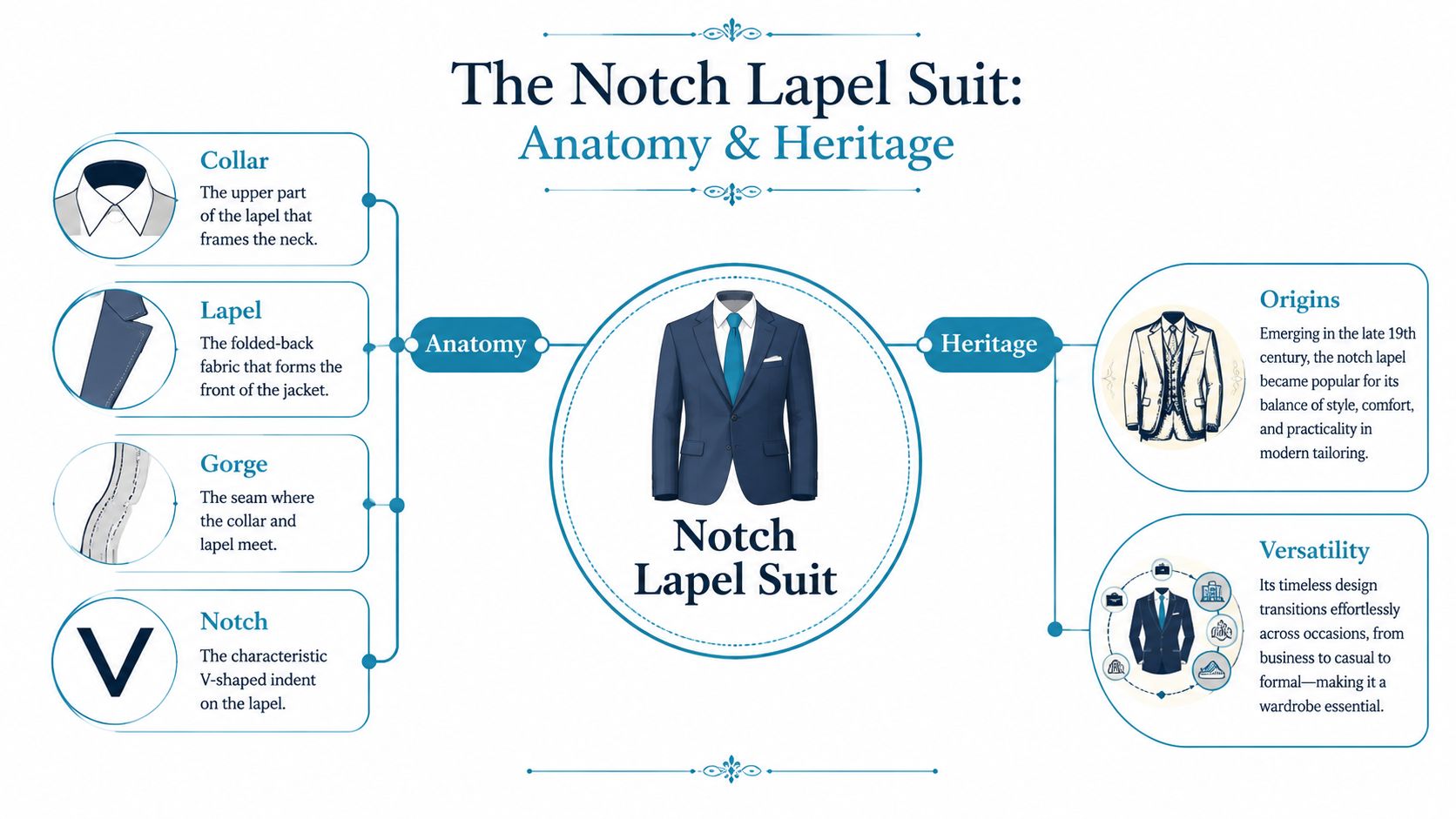
The parts that matter
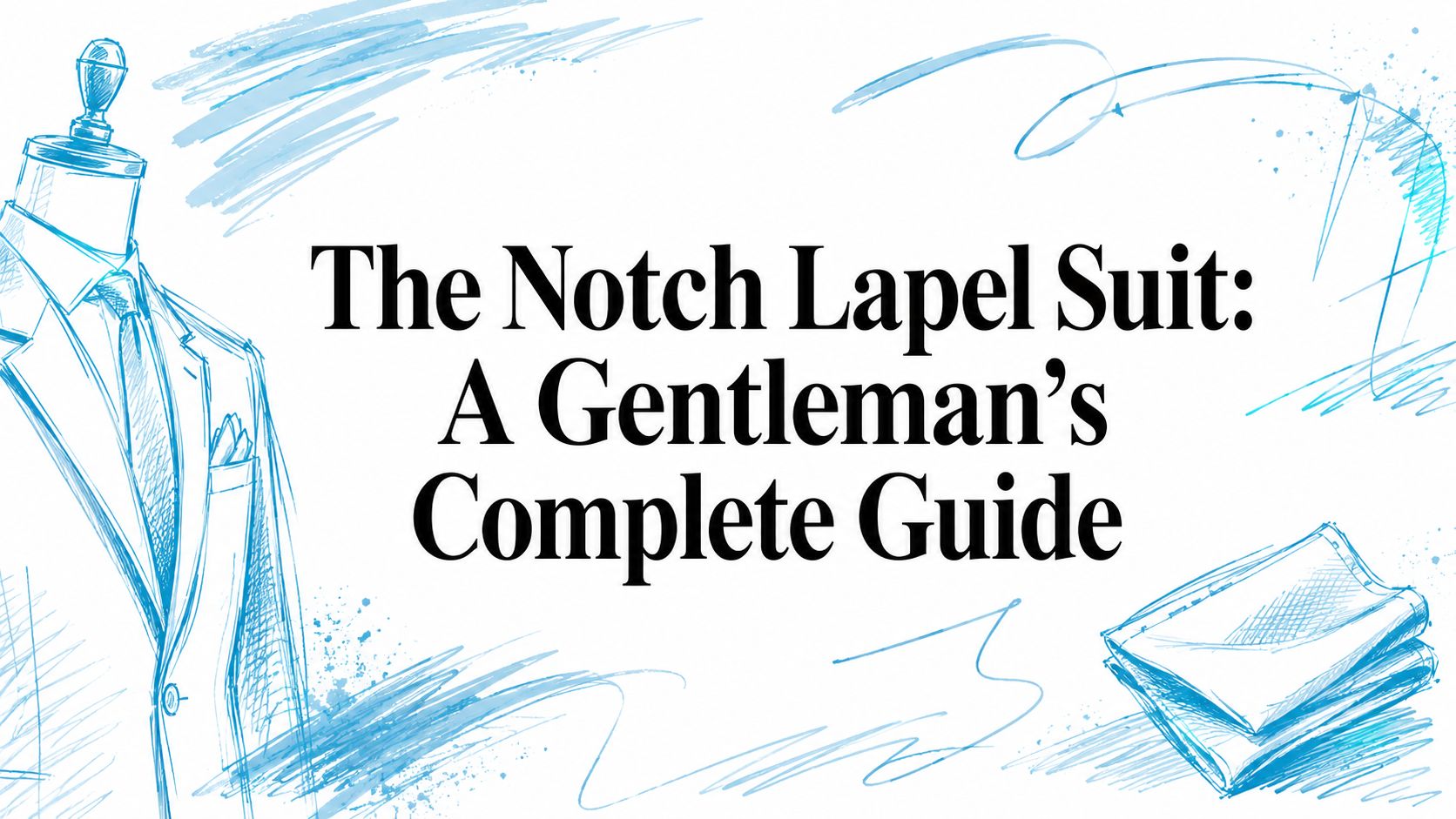
The collar sits around the back of the neck and continues forward to meet the lapel. The lapel is the folded section on the front of the jacket. Where those two meet, you get the gorge, the seam that joins them. The notch is the open V-shaped cut between collar and lapel.
That notch is what gives the style its name. It creates a clear break in the line, which is why the jacket reads as crisp and structured rather than flowing and formal like a shawl collar.
If you want to study the detail more closely, Dandylion Style has a useful guide to the lapel of a jacket, including the features clients often overlook on first inspection.
Why it became the default
The notch lapel didn't become dominant by accident. In UK tailoring references, it's described as the standard lapel on single-breasted suits, and British usage also refers to it as the step collar or step lapel. Its rise is tied to the late 19th century and early 20th century, when lounge suits and business suits displaced older frock-coat conventions, as noted in this history of suit lapels.
That history matters because it explains why the notch lapel feels so natural in modern dress. It wasn't invented as a fashion novelty. It developed alongside the suit form most men still wear.
Historical point: The notch lapel belongs to the working grammar of modern tailoring. It became standard because it suited the move from ceremonial dress to everyday city clothing.
What that heritage means today
A well-cut notch lapel still carries that same role. It belongs to the language of business, travel, marriage, and daily formal dressing. That's why it doesn't feel affected in ordinary use. It has centuries of visual familiarity behind it.
This is also why poor execution stands out so badly. If the notch is clumsy, the lapel too skinny, or the gorge awkwardly placed, the eye notices at once, even if the wearer can't name the problem. The style is common enough that people instinctively recognise when it looks right and when it doesn't.
Notch vs Peak vs Shawl A Comparative Guide
The easiest way to understand a notch lapel suit is to place it beside its two main alternatives. The notch is the all-rounder. The peak is more assertive. The shawl is smoother and more evening-specific. Each has its place, but they don't communicate the same thing.
How the three lapels differ
A notch lapel has a visible cut where collar and lapel meet. It's balanced, familiar, and adaptable. A peak lapel points upward toward the shoulder, which gives the jacket more force and more ceremony. A shawl lapel has no notch at all. It sweeps in a continuous curve and is most closely linked with dinner wear.
That means the decision is never only aesthetic. It's also social. You're choosing how much formality, sharpness, and visual authority the jacket should project.
For readers weighing a more formal alternative, this guide to the peak lapel suit is a useful companion.
Lapel Style Comparison
| Lapel Type | Formality | Common Occasions | Visual Effect |
|---|---|---|---|
| Notch | Moderate and highly adaptable | Business suits, weddings, travel, daily tailoring, many blazers | Clean, balanced, approachable, structured without being forceful |
| Peak | Higher formality and stronger statement | Tuxedos, double-breasted suits, ceremonial dressing, statement business tailoring | Broadens the chest and shoulders, adds authority and upward movement |
| Shawl | Formal and evening-oriented | Dinner jackets, black tie, smoking jackets | Soft, elegant, fluid, less architectural than a notched or peaked front |
What works and what doesn't
If you wear one suit across many settings, the notch is usually the sensible choice. It can carry a tie beautifully, works with plain or textured cloth, and won't look theatrical in a daytime room. It also adapts well to single-breasted patterns, which is where most men start.
Peak lapels work when you want more theatre or rank. They suit formal business dressing in the right environment and are excellent in eveningwear, but they can overwhelm a simple everyday suit if the rest of the jacket lacks substance.
Shawl lapels are a specialist choice. They can be handsome, but they belong to a narrower lane. On ordinary business or wedding tailoring, they often look displaced.
The notch lapel is rarely the most dramatic option in the room. It's often the most correct one.
The key trade-off is this: the more distinctive the lapel, the fewer contexts it will suit naturally. The notch wins by being broad in usefulness, not by being loud.
Mastering Lapel Width and Bodily Proportion
Most off-the-rack conversations about lapels stop at shape. Tailors know better. Width changes the entire balance of the jacket. A notch lapel suit can be elegant or awkward depending on how that width relates to your chest, shoulders, neck, and buttoning point.
Start with the geometry
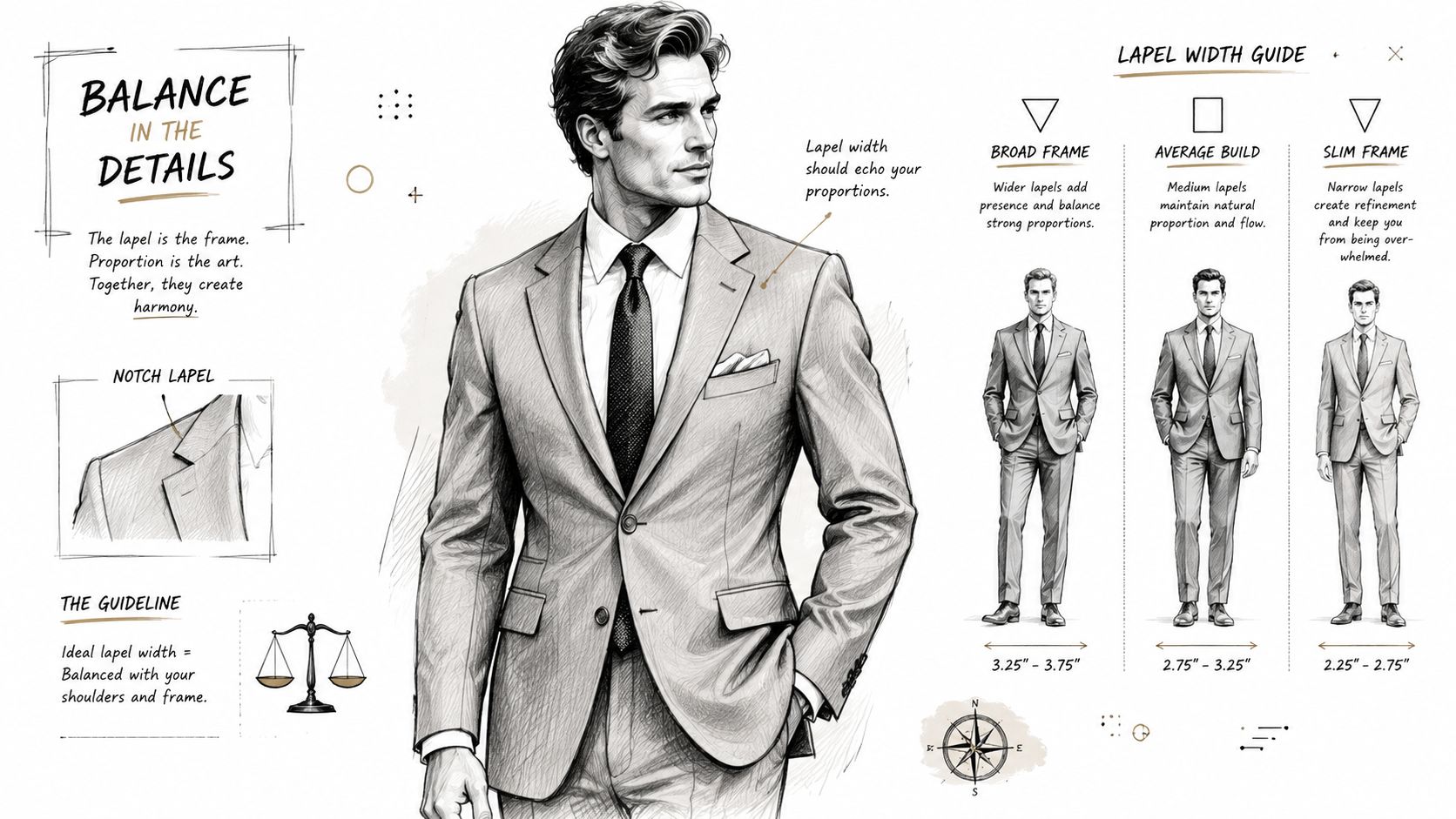
A notch lapel is defined by a 75°–90° notch where the collar meets the lapel, and UK-facing style guidance commonly places regular lapels at about 2.75"–3.25" for average builds, with lapel scale treated as critical to visual balance, according to this guide to suit lapel types.
Those figures are a benchmark, not a commandment. The right width depends on the whole jacket. A wider chest, fuller shoulder, and stronger forepart can support more lapel. A slighter build usually benefits from restraint.
Matching the lapel to the man
Here's the practical reading I use when judging proportion:
- Slim frame: Keep the lapel neat, but not starved. Very narrow lapels make a slim man look more fragile, not sharper. The goal is clean balance.
- Average build: The regular range tends to sit most comfortably. The lapel should feel naturally in scale with the chest and front quarters.
- Broad build: A broader man needs enough lapel to hold the front together visually. If the lapel is too narrow, the jacket looks compressed through the torso.
Height also plays a part. Shorter men often benefit from a lapel that doesn't spread too far across the chest, while taller men can carry more width without the coat feeling top-heavy.
The mistakes clients notice too late
The first mistake is chasing fashion extremes. Skinny lapels date quickly and often cheapen the coat. Overly broad lapels can feel costume-like unless the pattern, shoulder, and cloth support them.
The second mistake is ignoring the relationship between lapel width and other elements. The tie blade, shirt collar spread, pocket placement, and button stance all need to agree with the lapel. If one component speaks a different visual language, the whole front loses coherence.
Cutting rule: Lapel width should serve the chest and the face. If it draws attention to itself before it frames the wearer, it's probably wrong.
Why bespoke handles this better
Factory sizing works from averages. A bespoke cutter works from your actual frame. That means a narrow neck with broad shoulders, a prominent chest with a shorter torso, or an erect posture with a hollow front can all be corrected through proportion.
The notch lapel suit becomes far more than a standard option. In the right hands, it becomes a custom instrument for balance.
Choosing Fabrics and Occasions for Your Notch Lapel Suit
The same notch lapel can feel entirely different depending on cloth. That's one reason it remains so useful. The shape is stable. The mood changes with texture, weight, and finish.
Business and city wear
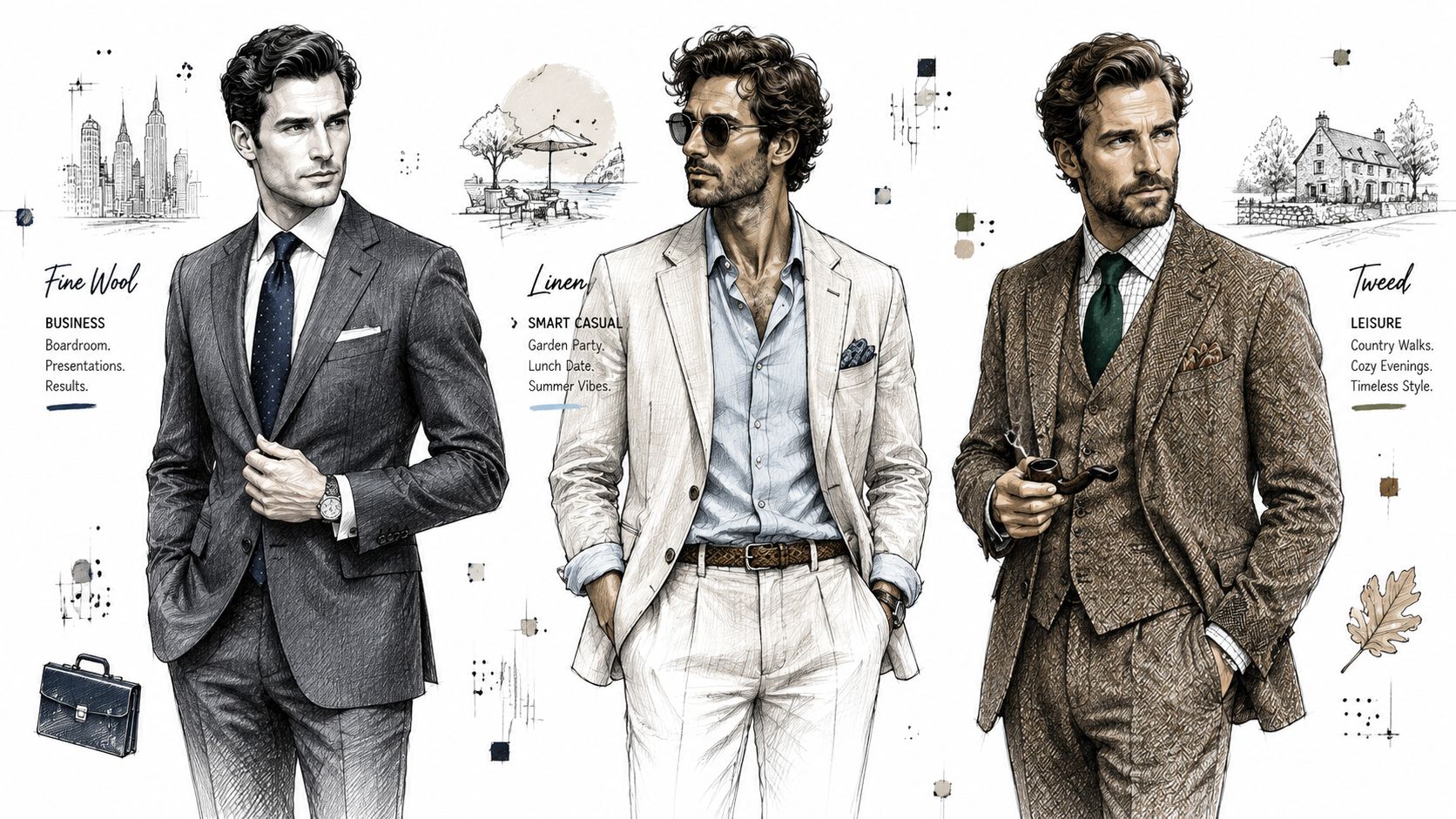
A dark worsted wool notch lapel suit is still one of the soundest pieces a man can own. It presses well, travels reasonably, and keeps a professional line through the day. In plain navy or charcoal, the notch lapel reads calm and disciplined.
That's exactly what many business wardrobes require. You want the jacket to look intentional, not flamboyant. If you're considering cloth choices more broadly, this guide to the best fabrics for suits is a useful starting point.
Weddings and social dressing
For weddings, the notch lapel gives you room to tune the character of the suit through fabric and colour rather than lapel drama. Linen softens it. Tweed grounds it. A fresco or high-twist wool can keep it sharp in warmer weather. Mohair blends can add a cleaner surface and a little more edge.
Country weddings often suit texture. City weddings often reward cleaner lines. The same lapel shape can serve both, provided the cloth is chosen with the venue, season, and light in mind.
Casual tailoring and separates
A notch lapel doesn't have to live only on full suits. On a soft blazer in tweed, cotton, brushed wool, or corduroy, it becomes relaxed without losing structure. That's where it often outperforms more formal lapel styles. It can take knitwear, open-neck shirts, or flannel trousers without looking confused.
This versatility also helps men who want fewer garments that do more work. One navy suit, one textured jacket, and one lighter seasonal suit can cover a surprising amount of life if the lapel style remains adaptable.
Formalwear, with some caution
By the late 1990s, one- and two-button notched-lapel tuxedos had become the most popular style in the UK, showing how the notch lapel crossed from business dress into mainstream formalwear, as noted in this history of the notched lapel.
That doesn't mean it's always the most elegant black-tie choice. Peak and shawl lapels still hold stronger formal associations. But it does prove that the notch lapel suit, and even the notch lapel dinner jacket, has a broader range than many people assume.
The Bespoke Difference Key Details to Consider
The average man can spot colour and fit. He can usually spot cloth as well. What he often can't name is why one notch lapel looks alive and another looks flat. The answer is construction.
Roll, canvas, and shape
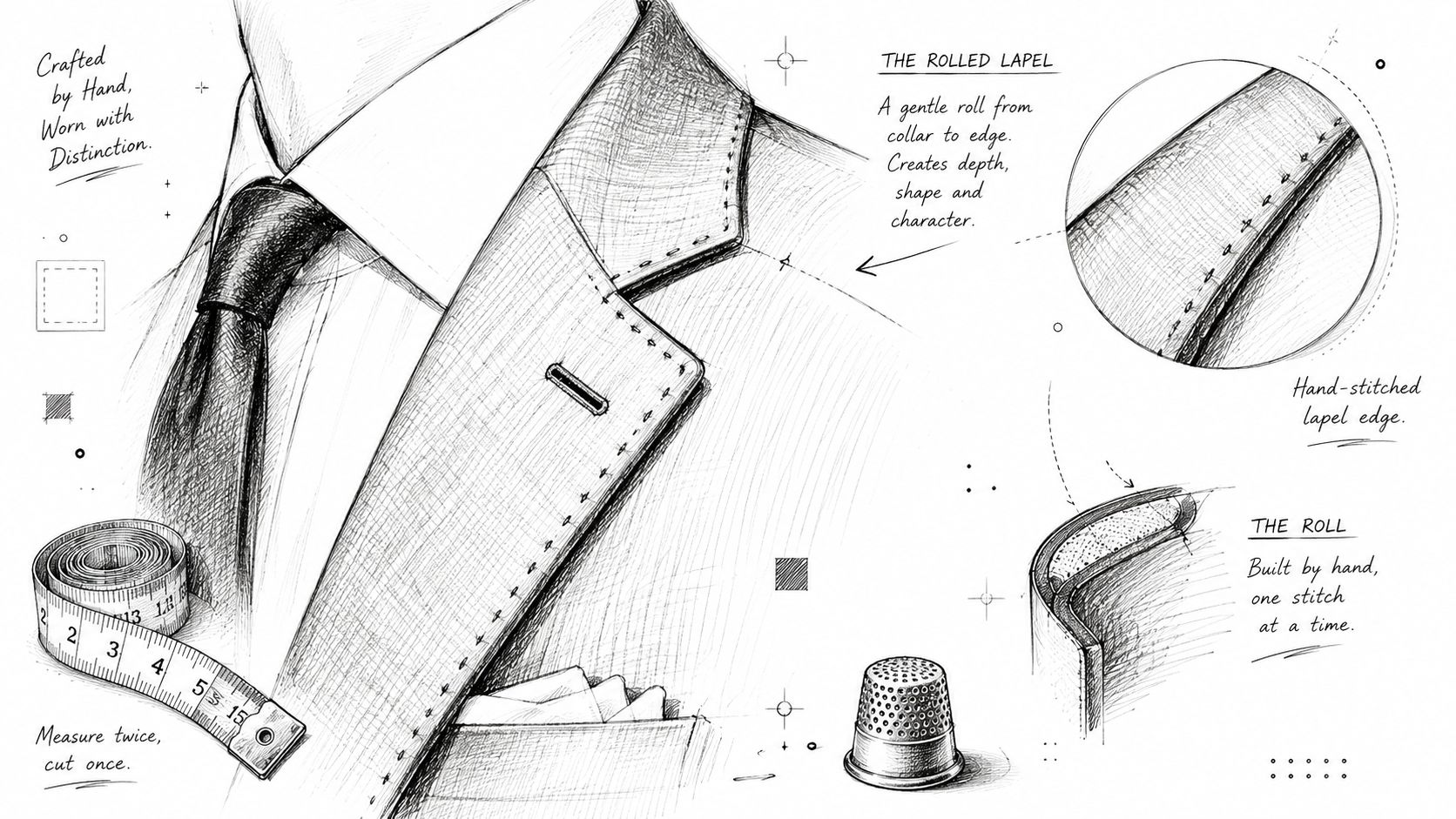
A fine lapel doesn't sit on the chest like a piece of cardboard. It rolls. It has a slight spring and contour because the cloth is being supported from within, not merely glued into submission.
That's why canvas matters. Full-canvas and well-executed half-canvas jackets tend to develop a more graceful front than fused coats. The lapel gains depth, and the coat improves with wear rather than collapsing at stress points.
Button stance and the V-line
The notch lapel doesn't work in isolation. Its effect depends heavily on where the jacket buttons. Raise the button stance too much and the chest can feel crowded. Drop it too low and the coat can lose energy through the waist.
Good bespoke work uses the button point and lapel line together to create the right V-shape for the client. On some men, that means opening the chest. On others, it means controlling fullness and avoiding the appearance of a long, empty front.
The details that separate a finished coat from a generic one
A few features deserve closer attention:
- Pick-stitching: Subtle hand or machine stitching can define the edge without making it look busy. It should support the coat, not decorate it for its own sake.
- Buttonhole finish: A clean lapel buttonhole is a small point, but it often reveals the level of care in the jacket.
- Gorge placement: Even when the wearer can't identify it, the position where collar meets lapel changes the attitude of the coat.
- Pressing and shaping: A tailor shapes the lapel with iron and hand, not only with pattern pieces.
A bespoke lapel is crafted in three dimensions. That's why it reads differently from a flat factory front, even before anyone touches the cloth.
For men comparing routes into custom clothing, what bespoke tailoring means is worth understanding before choosing between stock, made-to-measure, and fully bespoke work.
One practical option in this space is Dandylion Style, a bespoke tailoring house in Ardingly, West Sussex, producing one-of-a-kind garments from British fabrics with fittings in the studio, at home, or at the office. That sort of service matters when the goal is not just a notch lapel suit, but a jacket whose lapel scale, stance, and roll are cut for the individual rather than adapted from a block.
Styling Accessories and Essential Long-Term Care
A notch lapel suit gives you freedom, but it still needs discipline. Start with the tie. The blade should feel in proportion to the lapel, not dramatically narrower or broader. Pair that with a shirt collar that doesn't fight the jacket. If the lapel is moderate and clean, a wildly exaggerated collar spread can throw the whole front off balance.
Pocket squares should add life, not clutter. On a business suit, keep the fold quiet. On a wedding or social suit, you can allow more softness and colour, but the square should still work with the cloth and tie rather than act as a separate performance.
Alterations and what can be changed
Trouser hems, waist suppression, sleeve length, and jacket skirt balance are routine matters in capable hands. Lapel shape is another matter. Once a coat is built, changing the lapel style or dramatically altering its scale is usually invasive, expensive, and rarely worth the compromise.
That's why the initial choice matters. If the notch lapel is right, build around it properly from the start.
Keeping the lapel in good condition
Use a broad wooden hanger so the shoulders and collar are supported. Brush the cloth after wear to remove surface dust. Let the jacket rest between uses. Don't crush the lapel with aggressive pressing. A good lapel should roll softly into place.
Steam is safer than force. If you flatten the lapel edge repeatedly, you can kill the shape that gives the jacket depth.
Store the coat with enough space around it. A lapel that's constantly squeezed between other garments won't keep its line for long.
If you're considering a notch lapel suit for work, a wedding, or a more complete wardrobe, Dandylion Style offers bespoke and made-to-measure tailoring in West Sussex, London, and the South East, with fittings arranged in the studio, at home, or at the office.
FAQ
Is a notch lapel suit formal enough for a wedding
Yes, in most wedding settings it is. The result depends less on the lapel category alone and more on the whole garment: cloth, colour, fit, shirt, tie, shoes, and whether the event is daytime or evening. A notch lapel works especially well for country weddings, civil ceremonies, and elegant daytime celebrations. For very formal evening dress, peak or shawl lapels can feel more traditional, but a well-cut notch lapel still looks entirely proper in many modern weddings.
Does a notch lapel suit suit every body type
It suits almost every body type, but not in the same proportion. The shape is forgiving. The scale is where tailoring matters. A slimmer man usually needs a lapel that gives enough structure without looking oversized, while a broader man needs enough width to balance the chest and shoulder line. The notch lapel itself isn't the problem on most frames. Poor width, weak balance, and generic factory cutting are the primary issues.
Can you wear a notch lapel tuxedo
You can, and this style became widely accepted in modern formalwear. Still, acceptance and elegance aren't always identical. A notch lapel tuxedo tends to feel more contemporary and less ceremonious than a peak or shawl collar dinner jacket. If you already own one and it's cut well, wear it confidently. If you're commissioning black tie from scratch and want a more traditional formal expression, many tailors would still steer you toward peak or shawl.
What tie works best with a notch lapel suit
A tie that matches the lapel in visual weight works best. If the lapel is moderate and classic, choose a tie with enough substance to hold the centre of the outfit together. Very skinny ties can make a proper, well-fitting coat look slight, while an overly heavy tie can dominate the shirt front. Texture also matters. Grenadine, silk twill, wool, and knit ties each change the mood, so pick the tie for the setting, not only the colour.
Why do some notch lapels look better than others even when they seem similar
Because the difference isn't only in the visible outline. Construction changes everything. The canvas, the roll, the gorge placement, the width, and the button stance all shape how the lapel sits on the chest. Two jackets can both be called notch lapel suits and still look completely different in person. One will have life, dimension, and balance. The other will look flat or strained because the pattern and internal build weren't handled well.
About the author
Igor is the founder of Dandylion Style, a bespoke tailoring house based in Ardingly, West Sussex. He specialises in one-of-a-kind garments cut from fine British fabrics, including tweed, cashmere, linen, wool, and mohair, with a focus on fit, proportion, and lasting wear. His work spans business suits, wedding tailoring, black-tie clothing, casual jackets, shirts, waistcoats, alterations, and accessories, with consultations available in the studio, at clients' homes, or at their offices.