Some trousers solve a narrow problem. They work only with one jacket, one season, or one kind of day. Grey flannel trousers endure because they solve a broader one. A gentleman can wear them to a client meeting in the morning, lunch in town in the afternoon, and dinner in the evening without looking underdressed or overdone.
That balance is rare. Most alternatives lean too hard in one direction. Worsted can feel a touch severe when broken away from a full suit. Chinos often become too casual the moment the setting sharpens. Tweed carries country character that does not always suit urban business dress. Grey flannel sits in the middle with unusual confidence.
The Indispensable Wardrobe Cornerstone
A great many wardrobes stall at the same point. The jackets are there. The shirts are there. The shoes are good. But the trousers are either too formal, too casual, or too seasonal. Here, grey flannel earns its place.
It is the pair a gentleman reaches for when he wants ease without carelessness. The cloth has enough depth to soften a business outfit, yet enough dignity to stand up beside a proper sports coat. In practical terms, it is one of the few garments that can anchor a wardrobe rather than merely fill a gap.
For men refining their overall tailoring direction, the broader principles of proportion, cloth and occasion matter just as much as the garment itself. That is why a grounding in the style of suits often helps clients make better trouser decisions as well.
Key takeaways
Grey flannel trousers work because they balance softness, structure and versatility.
The right bespoke pair depends on waistband height, leg shape, pleat choice and cloth weight, not colour alone.
Flannel excels in business, weddings and refined casual dress when paired with the correct jacket and shoes.
Proper care is straightforward. Brush, air, hang well, and dry clean sparingly.
Commissioning bespoke flannel trousers is worthwhile when you want a reliable fit, durable construction and cloth chosen for your actual life.
Why they remain relevant
The enduring appeal is not nostalgia. It is utility with character.
Grey flatters almost every jacket colour a gentleman is likely to own. Navy, brown, olive, cream, charcoal, bottle green, burgundy, and many quieter checks all sit comfortably beside it. Few trouser colours are this accommodating.
What they do better than most trousers
A good pair of flannel trousers does three things at once:
- Softens formality so a blazer or odd jacket looks intentional rather than improvised
- Adds visual depth because the napped surface reflects light gently instead of sharply
- Carries drape well so the line from waist to hem looks cleaner than many lighter casual fabrics
That combination explains why men return to them year after year. They do not shout. They work.
The Enduring Allure of Flannel Fabric
Flannel has character before it is ever cut. A gentleman feels it in the hand first. There is softness, yes, but also body. Proper flannel does not collapse into limpness. It has a brushed face, a quiet bloom to the surface, and a depth of colour that smooth cloth rarely matches.
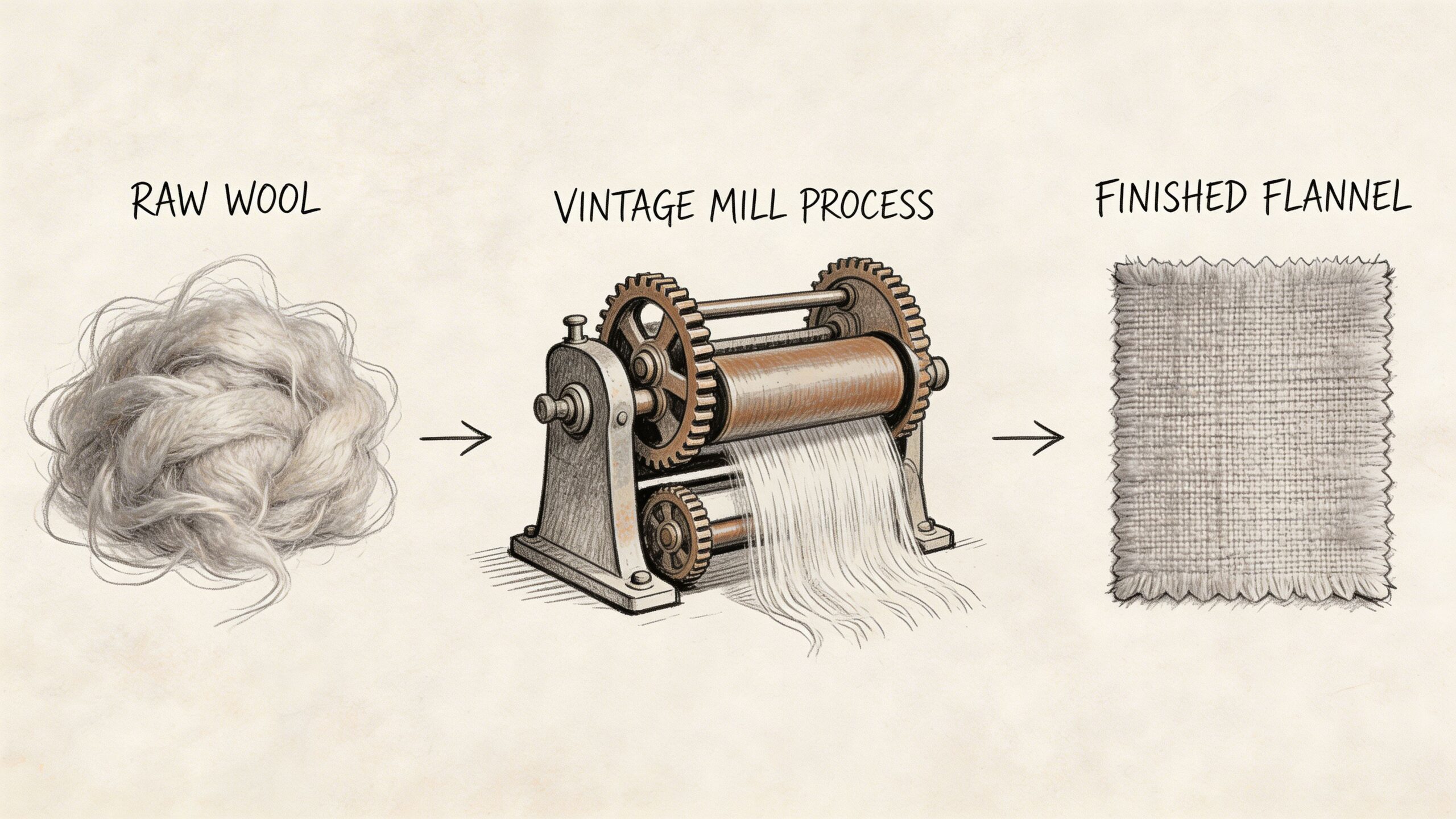
That distinction matters. A smooth worsted often reads from a distance as flat and exact. Flannel reads as richer and more forgiving. The nap catches light unevenly, which gives grey more nuance. One pair can seem lighter in daylight and deeper by evening, especially in mid-grey.
What gives flannel its personality
Flannel is not merely wool in another colour. Its finish creates the difference.
The cloth is brushed to raise a faint nap on the surface. That gives it the familiar softness and the muted appearance many gentlemen associate with autumn and winter dressing. It also changes how the trouser behaves. The cloth tends to fall with more ease and less glare than a crisp business suiting.
For anyone comparing cloths more broadly, a useful companion reading is Dandylion Style’s guide to best fabrics for suits, which helps place flannel among other classic tailoring choices.
A fabric tied to British dress
Flannel is woven into British sartorial history in a way few fabrics can claim. Grey flannel trousers dominated British menswear from the mid-1920s through the 1950s, and during that period '232 Flannels,' launched in 1922, was selling 300,000 pairs annually by 1930. By the 1950s, the grey flannel suit had become a symbol of the professional wardrobe in Britain and America alike, as noted in Cathcart London’s history of flannel trousers as a British classic.
That popularity was not accidental. Grey flannel trousers crossed class lines with unusual ease. They were worn with sports jackets, in educational settings, and later in professional life. Very few garments can move from student dress to corporate uniform and still retain style credibility.
Why the history still matters
A fabric survives when it keeps answering real needs. Flannel did that.
It offered warmth, dignity, affordability, and adaptability. Men could wear it formally, semi-formally, and casually with only modest changes in the rest of the outfit. That remains true now. A well-cut pair of grey flannel trousers still does more work than many newer garments marketed as versatile.
Practical rule
If a cloth looks better the more naturally it is worn, rather than the more sharply it is pressed, it usually has long-term value. Flannel belongs in that group.
Its allure rests on that union of history and performance. You are not wearing a museum piece. You are wearing one of the most tested ideas in men’s tailoring.
How Flannel Differs From Other Trouser Fabrics
A gentleman should choose cloth by use, not sentiment. Grey flannel may be excellent, but it is not the answer to every brief. The clearest way to understand it is to place it beside its nearest rivals.
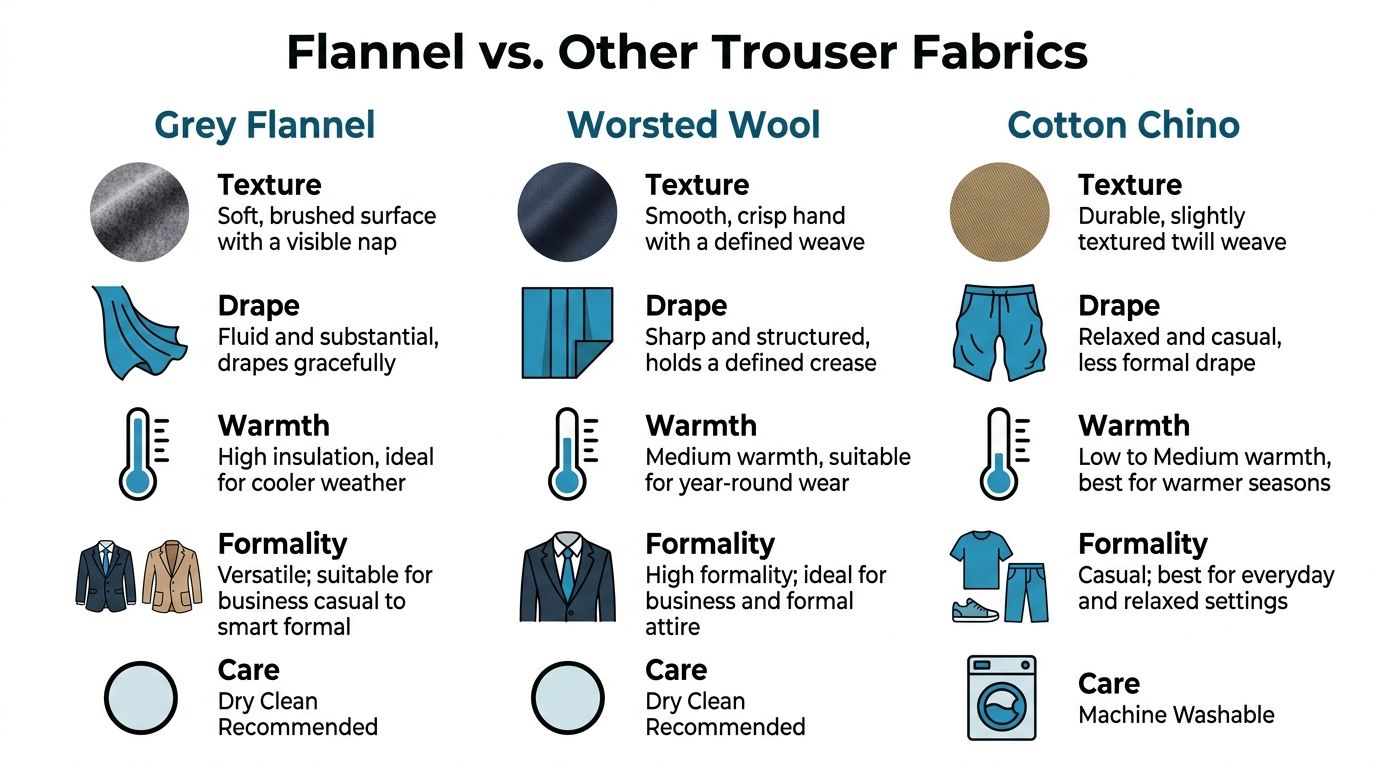
The practical comparison
| Fabric | Handle and texture | Drape | Warmth | Best use |
|---|---|---|---|---|
| Grey flannel | Soft, brushed, slightly matte | Fluid, substantial, elegant | Strong in cooler weather | Business, weddings, refined casual dress |
| Worsted wool | Smooth, crisp, cleaner finish | Sharper, more structured | Moderate | Formal business, full suits, year-round office wear |
| Cotton chino | Dryer hand, casual twill feel | Lighter, less sculpted | Better in milder weather | Casual and smart casual |
| Tweed | Coarser, more rugged surface | Heavier and sturdier | Warm and weather-friendly | Country wear, casual jackets, colder casual settings |
Flannel against worsted
Worsted wool is the formal cousin. It excels when the brief is precision. If you want a clean crease, a sharper line, and a boardroom edge, worsted has the advantage.
Flannel wins when you want the same seriousness with less severity. It is still well-cut, still proper, but more relaxed in expression. This is why odd jackets and flannel trousers look so natural together, while odd jackets with very sleek worsted trousers can sometimes look assembled rather than composed.
Flannel against chinos
Chinos are useful. They are also frequently over-relied upon.
The problem is drape. Cotton does not fall like wool, and once the rise is slightly off or the thigh is a touch too tight, chinos show it immediately. Flannel is kinder. It skims rather than clings. It moves with more grace and usually looks better after a long day.
If your wardrobe already leans casual, you may also find interest in related separates such as navy corduroy trousers, which solve a different problem and offer a different texture entirely.
Flannel against tweed
Tweed is richer, rougher, and more assertive. It brings country associations with it, even in town. That can be appealing, but it narrows the garment’s range.
Grey flannel is easier to dress up. It can sit under a blazer at work or beneath a softer jacket at a wedding without seeming misplaced. Tweed rarely makes that transition so smoothly.
Where flannel does not win
Flannel is not ideal for hot, sticky weather. Nor is it the first cloth I would choose for a highly formal black business suit replacement. It has softness by design, and some situations call for something cleaner and harder.
That is the trade-off. You give up a degree of crispness in exchange for warmth, depth and versatility. For most gentlemen, that is an excellent bargain.
Crafting the Perfect Bespoke Flannel Trousers
Ready-to-wear flannel trousers often fail in predictable places. The rise is too low. The thigh is cut without enough room. The hem is chosen for trend rather than balance. A bespoke commission solves those issues only if the decisions are made with care.
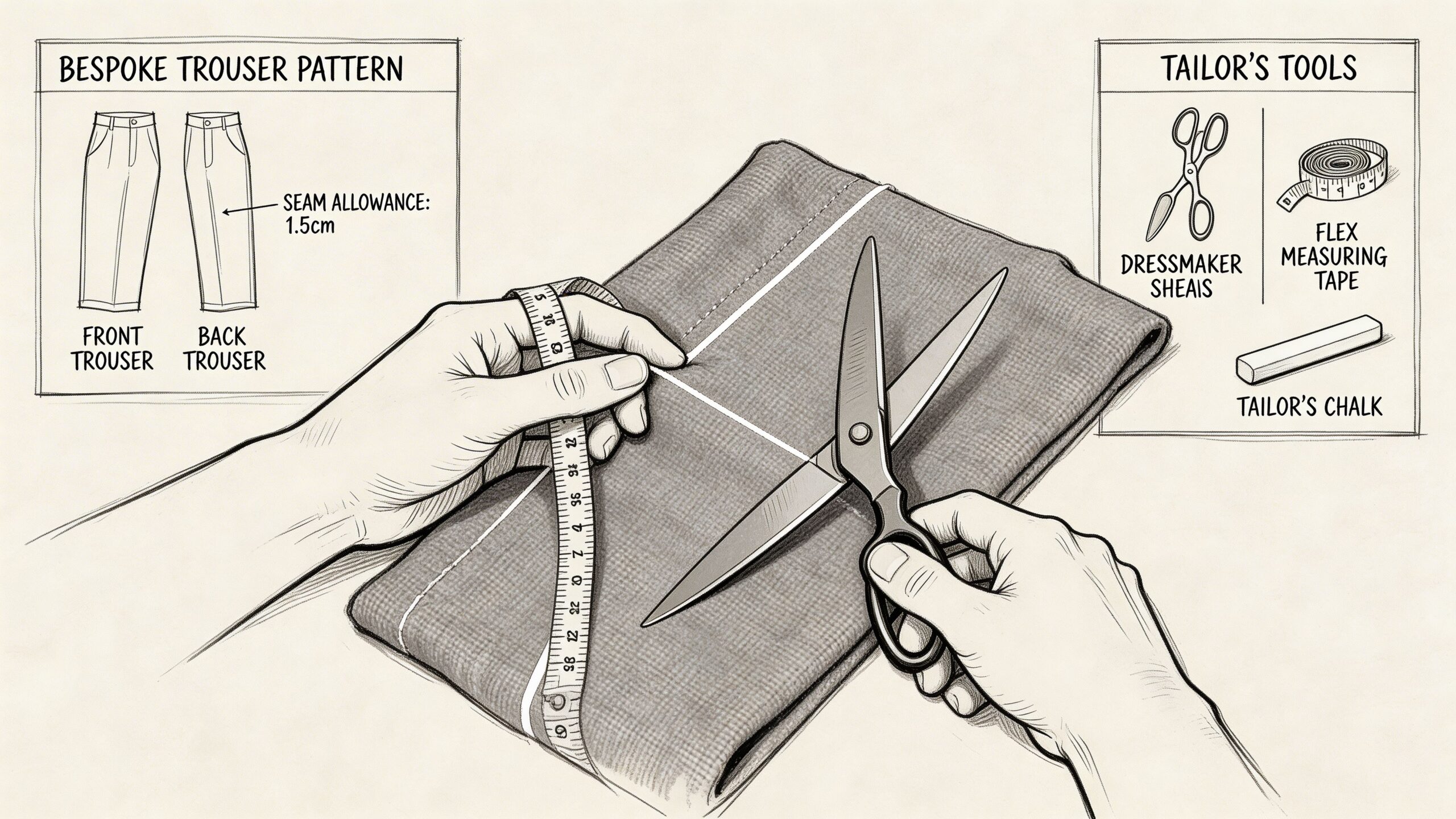
Start with cloth and construction
In UK bespoke tailoring, flannel trousers are commonly cut from semi-worsted virgin wool flannel at 320g/m², a weight valued for drape and insulation. Technical details matter as well. A high fishtail-back waistband anchors the trouser, while a split waistband can allow a 1-2 inch girth allowance for future alteration, as outlined in Rampley & Co’s discussion of flannel wool trousers.
At this stage, many men underestimate bespoke. They focus on the visible choices and miss the hidden engineering. Yet hidden engineering is what allows a pair of trousers to wear well for years instead of months.
A useful starting point for the broader process is understanding what is bespoke tailoring, because a proper commission is not merely measurement. It is pattern, balance, and revision.
The waistband and rise
The rise determines whether the trouser feels secure and looks elegant. Flannel responds especially well to a higher rise because the cloth wants to fall from the waist in a long, uninterrupted line.
A lower rise usually weakens that effect. It can also cause the waistband to shift when you sit, walk, or place your hands in the pockets. On a fuller cloth such as flannel, that instability becomes obvious.
Consider these options:
- Higher rise with side adjusters suits most gentlemen who want clean lines and comfort without a belt.
- High fishtail back for braces works well when the wearer wants the trouser to remain fixed through long days or formal occasions.
- Standard waistband with belt loops can work, but usually gives away some elegance unless the rest of the wardrobe strongly depends on belts.
Tailor’s note
If a client wants flannel because he admires its drape, I rarely advise a low-rise cut. The cloth cannot show its best qualities if it starts from the wrong point on the body.
Pleats or flat front
This decision should be based on body shape, movement and taste, not fashion anxiety.
A flat front gives a cleaner, pared-back appearance. On a lean man with straight hips and a preference for minimalism, it can be excellent. But many men force a flat front when a pleat would serve them better.
Single pleats are often the most forgiving and the most useful. They add room through the top of the trouser, improve comfort when seated, and preserve a neat line when cut properly. Double pleats push the silhouette a little more classic and suit men who enjoy a fuller drape.
What does not work is combining a very low rise, a very narrow thigh and a heavy flannel. The result usually pulls at the front and collapses at the knee.
Leg line and hem
The modern gentleman does not need exaggerated width to enjoy flannel, but he does need enough room for the cloth to move. The leg should skim the body, not grip it.
Three principles matter most:
- Keep the thigh honest. Too much suppression here makes the trouser buckle and strain.
- Taper from the knee, not the hip. This preserves elegance.
- Match the hem to the shoe. Chunkier shoes accept a little more width. Sleeker shoes need a tidier finish.
Turn-ups often suit flannel beautifully because they add weight at the bottom and help the line settle. A plain hem can be smart as well, especially on a very clean business pair.
The hidden details that pay off
Knee lining improves wear and helps the cloth move more smoothly over the leg. A curtained waistband feels more comfortable and keeps the top of the trouser stable. Firm pocketing prevents sag. Strong internal finishing gives the garment a calmer life.
These details do not photograph well. They wear well.
This is a key advantage of a bespoke pair of grey flannel trousers. The garment is built around how the cloth behaves and how the client lives, rather than around a generic block pattern.
Styling Grey Flannel Trousers for Any Occasion
Grey flannel trousers succeed because they accept different roles without losing their identity. The key is not to style them the same way every time. The jacket, shirt, knitwear and shoes should shift with the context.
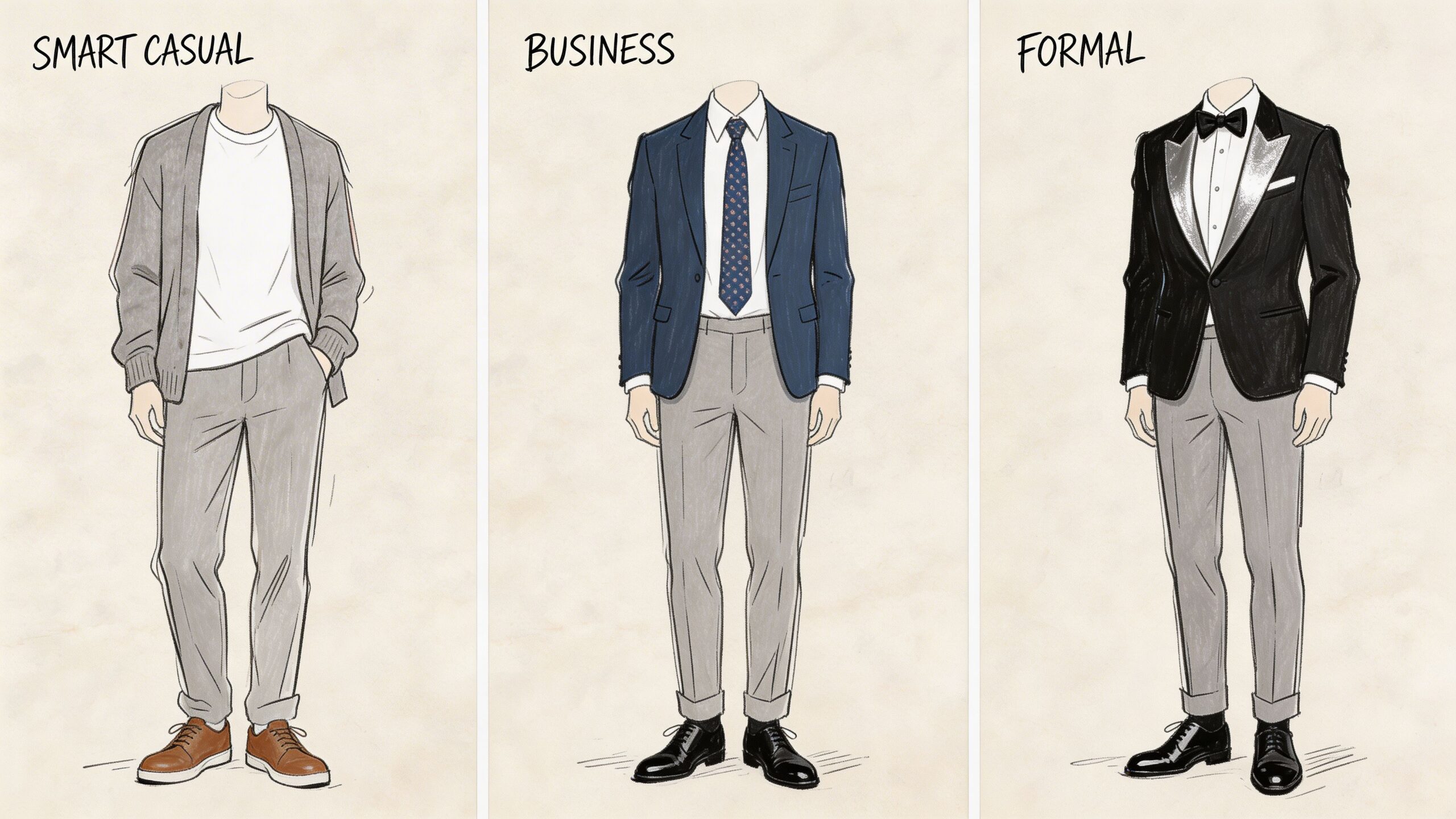
For business
This is perhaps the easiest setting for them. Pair mid-grey flannel trousers with a navy blazer, white or pale blue shirt, and black Oxford shoes. The contrast is disciplined and reliable.
The reason this works is balance. The blazer provides structure and authority. The flannel softens the outfit enough to avoid the stiffness that can creep into business dress when every element is too hard and too formal.
A few practical refinements help:
- Choose a darker navy jacket if the office is conservative
- Keep the shirt plain when the jacket already has texture
- Use black shoes when you want the outfit to read more formal
- Add a grenadine or knitted tie if you want polish without too much shine
Gentlemen often ask whether blue and grey still feel fresh. The answer is yes, provided the tones are chosen well. Dandylion Style’s guide on does gray and blue go together gives a useful colour perspective on that pairing.
For weddings
Grey flannel can be an excellent choice for wedding guests, and in some cases for the groom, depending on the tone of the event. The trick is to respect the occasion without becoming heavy.
A cream, stone or soft brown sports coat works beautifully with grey flannel. Add a light blue or ivory shirt and brown loafers or dark brown lace-ups. If the wedding is in the cooler months, the texture feels entirely at home.
What does not work is making the outfit too corporate. A harsh business tie, severe black shoes, and a dark city coat can pull the mood in the wrong direction. Weddings usually ask for warmth and charm, not office discipline.
Styling tip
For weddings, use flannel as the grounding piece and let the jacket lift the mood. The trouser should bring calm, not steal attention.
For casual elegance
Many men discover the full value of grey flannel trousers in this setting. They are far more useful casually than people expect.
A fine gauge roll neck in navy, chocolate, camel or dark green can look superb with them. Add suede chukka boots, a suede loafer, or a clean derby. On top, a casual overcoat or unstructured jacket keeps the line refined.
The success of this outfit comes from texture. Smooth knitwear can look lifeless with smooth trousers. Flannel introduces softness and visual interest without resorting to obvious pattern.
Combinations worth keeping in mind
Some pairings prove themselves repeatedly:
| Setting | Jacket or top | Shirt or knit | Shoes |
|---|---|---|---|
| Business | Navy blazer | White or pale blue shirt | Black Oxfords |
| Wedding guest | Cream or light brown sports coat | Ivory or pale blue shirt | Brown loafers |
| Casual | Cashmere roll neck or soft jacket | Fine knit | Suede chukka boots |
Common styling mistakes
The most common error is trying to make flannel behave like lightweight summer tailoring. It should not.
Avoid ultra-thin loafers, flimsy shirts, and overly shiny jackets. Flannel prefers substance around it. It does not demand heaviness everywhere, but it does appreciate companions with enough character to match its texture.
The second error is over-styling. Grey flannel trousers do not need dramatic checks, loud ties, or novelty shoes to seem interesting. Their strength lies in restraint.
Essential Care for a Lifetime of Wear
Flannel rewards calm handling. Most damage comes not from use but from over-cleaning, careless pressing, and poor storage.
The cloth’s brushed nap already helps on the day-to-day front. Mid-grey flannel tends to disguise minor marks well, and a 24-hour hang allows the wool’s natural memory to release many creases. For longevity, professional dry cleaning once or twice a year is generally enough because good wool resists odour and dirt more effectively than many men realise, as discussed in Put This On’s piece on affordable gray flannel trousers.
The routine that works
After wear, hang the trousers properly and let them rest. A hanger with a firm bar or clamp is far better than folding them over a chair.
Use a clothes brush lightly, especially around the seat, hems and pockets. That removes surface dust before it settles into the nap.
What to avoid
Do not press flannel aggressively until it shines. A scorched, over-flattened surface loses the very bloom that makes flannel attractive.
Do not send it to the cleaner after every wear. Repeated unnecessary cleaning can strip life from the cloth far sooner than regular use does.
Simple care rule
Brush more. Clean less. Let the cloth recover between wears.
If the trousers become damp, allow them to dry naturally on a hanger away from direct heat. Patience preserves the handle. Heat often does not.
Commissioning Your Trousers at Dandylion Style
Commissioning bespoke trousers should feel precise, not mysterious. The process works best when the client arrives with a clear idea of how and where the trousers will be worn. A pair for weekday business is not cut exactly like a pair intended for winter weddings and weekend jackets.
The wider market for bespoke menswear has grown with interest in local cloth and considered making. One published market summary states that the UK men’s bespoke tailoring market is expanding and notes demand for locally sourced options. It also states that Dandylion Style offers commissions in fine British fabrics, including West Sussex mohair-wool blends, with a process that typically takes 8–12 weeks from consultation to completion, according to The Anthology product page for flannel suit trousers in mid grey shadow stripes.
How the process should feel
The first conversation establishes purpose. Is this trouser meant to sit under a navy blazer every week, or is it meant to support a wider wardrobe of sports coats and knitwear. The answer changes the rise, the weight, the hem, and often the shade of grey.
Measurements come next, but measurements alone are not the whole story. Balance, stance, posture and preference all matter. Two men with the same waist can require different cuts through the seat, thigh and fork.
Decisions worth making carefully
A proper commission usually turns on a handful of choices:
- Shade of grey. Mid-grey is often the most adaptable.
- Waist treatment. Side adjusters, braces buttons, or belt loops each signal a different use.
- Front. Flat, single pleat, or double pleat.
- Hem finish. Turn-ups for a little more weight, or plain hem for a cleaner look.
- Intended partners. The jackets and shoes already in the wardrobe should influence the cut.
Why bespoke makes sense here
Grey flannel trousers are one of the clearest cases for bespoke because fit determines whether the cloth looks noble or merely heavy. A rise that is too short, a thigh too narrow, or a hem too abrupt can undo the fabric’s natural elegance.
When the pattern is right, the result becomes a dependable foundation. The trousers stop being an occasional indulgence and start becoming the pair that solves dressing decisions quickly and well.
Frequently Asked Questions and About the Author
FAQ
Can grey flannel trousers be worn outside winter?
Yes, within reason. They are most at home in cooler weather, but many gentlemen wear them comfortably across much of autumn, winter and spring. The key is weight, lining and what you pair them with. A softer jacket and lighter knit can keep them from feeling heavy. In very hot weather, they are usually less comfortable than lighter wool or linen alternatives.
What shade of grey is the most useful?
Mid-grey is usually the strongest first choice. It is dark enough for business, light enough for odd-jacket combinations, and forgiving in daily wear. Very pale grey can become seasonal and slightly delicate. Very dark charcoal pushes the look closer to formal city dress. If you want one pair only, mid-grey tends to give the broadest range.
Are pleated grey flannel trousers still modern?
Absolutely, if they are cut properly. The issue is not whether pleats are modern. The issue is whether the trouser is balanced. A single pleat often gives a cleaner drape and more comfort than a flat front, especially in flannel. What looks dated is excess cloth without control, not the pleat itself.
Should I wear a belt with grey flannel trousers?
You can, but many bespoke clients prefer side adjusters or braces because they keep the waist cleaner. A belt can interrupt the line of the trouser, especially with a higher rise. If your wardrobe relies heavily on belts, that is perfectly workable. If elegance is the priority, side adjusters usually look calmer and more refined.
Do turn-ups suit grey flannel trousers?
Very often, yes. Flannel benefits from a little weight at the hem, and turn-ups can help the leg fall more neatly. They also complement the slightly fuller character of the cloth. That said, they are not compulsory. A plain hem can look excellent on a trim business pair, particularly if the rest of the outfit is sharp and understated.
About the author
Igor is the founder of Dandylion Style in Ardingly, West Sussex. He works as a master tailor with a focus on bespoke garments cut from fine British fabrics, including wool, tweed, cashmere, linen and mohair. His approach centres on proportion, cloth behaviour and real-world wearability rather than short-lived fashion. He advises clients across Sussex, London and the South East on business tailoring, wedding dress, black tie and refined casual clothing, with fittings available in the studio, at home, or at the office.
If you are considering a pair of grey flannel trousers and want guidance on cut, cloth and occasion, Dandylion Style offers consultations for bespoke tailoring in West Sussex, London and the South East.