Knowing how to pack a suit correctly is the difference between arriving ready for business and arriving with a crumpled mess. While a dedicated garment bag is often seen as the ideal solution, mastering a few folding techniques can protect your tailored investment just as effectively, even when limited to a carry-on suitcase. The goal is always to minimise hard creases and friction.
Key Takeaways
- Preparation is Paramount: Always start with a clean, pressed suit. Empty all pockets and hang the suit on a wide, wooden hanger for a few hours before packing to let the fabric relax.
- Master the Inside-Out Fold: This is the best technique for structured suits. It protects the outer fabric and lapels by turning the jacket partially inside out, tucking one shoulder into the other before folding.
- Unpack Immediately on Arrival: As soon as you reach your destination, hang your suit up. This allows any minor travel wrinkles to naturally fall out. Use steam from a hot shower for more stubborn creases.
- Garment Bags for Critical Events: For weddings or vital business meetings, a garment bag is the undisputed best option, offering maximum protection by allowing the suit to hang naturally.
Your approach should adapt to your journey and the suit itself. A short business trip might only require a simple, clever fold in a carry-on, whereas a destination wedding demands more robust protection for your sartorial centrepiece.
For the best results, the ‘inside-out’ fold is your most reliable technique. This involves turning the jacket inside out, which cleverly shields the outer fabric and lapels from snags and pressure. You then tuck one shoulder neatly into the other before folding it into a compact rectangle. For your trousers, simply fold them along their natural crease to keep the line sharp.
Consider these core principles for wrinkle-free travel:
- Use Buffers: Placing a sheet of acid-free tissue paper between the folds creates a soft cushion that prevents sharp creases from setting in during transit.
- Unpack Immediately: As soon as you arrive at your hotel, the first thing you should do is hang your suit on a proper, wide-shouldered hanger. This allows the fabric to breathe and lets any minor travel wrinkles fall out naturally.
For the best possible wrinkle prevention, especially when transporting a single, critical suit for an important event, consider using a dedicated single suit wardrobe carrier with rail. These offer superior protection by allowing the suit to hang naturally, virtually eliminating the risk of creases altogether.
To help you decide which method best suits your needs, it's worth comparing the most common approaches to packing a suit. Each has its place, depending on the trip and the garment itself.
Suit Packing Method Comparison
| Method | Best For | Pros | Cons |
|---|---|---|---|
| Garment Bag | Weddings, important business meetings, and bespoke suits. | Offers maximum wrinkle protection; keeps the suit separate from other items. | Can be bulky and inconvenient for air travel, often counting as a separate item. |
| Inside-Out Fold | Carry-on luggage; trips where space is a priority. | Excellent wrinkle protection for structured jackets; compact and fits in most bags. | Requires careful folding and thoughtful placement within the suitcase to avoid pressure. |
| Rolling | Unstructured, casual suits (e.g., linen or cotton blends). | Saves the most space in your luggage, ideal for casual travel. | High risk of creating significant wrinkles on structured or fine wool suits. |
Ultimately, choosing the right packing method comes down to balancing convenience with the level of protection your suit requires. For any important occasion, the extra effort is always a worthwhile investment.
Preparing Your Suit Before You Pack
Knowing how to pack a suit properly begins long before the first fold. You can have the most ingenious folding technique in the world, but if you rush the preparation, you’ll be fighting a losing battle against wrinkles from the moment you zip your bag. Think of this stage as laying the groundwork for a flawless arrival.
The most critical first step? Always start with a clean, freshly pressed suit. Any creases or faint wrinkles already present in the fabric are a disaster waiting to happen. The pressure inside a packed suitcase has a nasty habit of ‘baking in’ these imperfections, setting them so deeply they become a real headache to remove at your destination.
Clear Pockets and Select the Right Hanger
Before you even think about folding, empty every single pocket. Forgetting a pen, a set of keys, or even a slim card holder can cause serious issues. A sharp object can easily puncture the lining, while anything bulky will create an unsightly bulge and strain the fabric, distorting the beautiful shape of your bespoke suit.
Next, get your suit onto a proper hanger. Thin wire hangers are the enemy of good tailoring; they offer zero support and will absolutely ruin the shoulders.
- Opt for a wide, shaped wooden hanger. These are designed to mimic the natural slope of your shoulders, preserving the jacket’s all-important structure.
- Let the suit breathe. After pressing, allow it to hang for at least a few hours before you pack it away. This gives any residual moisture time to evaporate and lets the fabric’s fibres fully relax.
A well-structured jacket is the very heart of a suit. Its shoulders, canvas, and lapels are all meticulously constructed. Using an inadequate hanger, even for a short while, can compromise the architecture that gives the suit its distinctive shape. For an in-depth look, you can learn more about the different parts of a suit in our detailed guide.
This simple preparatory phase ensures your suit is clean, unburdened, and structurally sound. By taking these preliminary steps, you’re creating the perfect canvas for a successful fold, safeguarding the integrity and appearance of your tailoring for the journey ahead.
The Art of the Fold: Packing Your Suit for Travel
Once your suit has been properly prepared for its journey, the next critical step is the fold. How you fold your suit will directly determine whether you arrive looking sharp or looking like you’ve been sleeping in it. For any gentleman who has invested in fine tailoring, learning the correct packing technique isn't just a useful skill—it's essential for protecting that investment.
The method favoured by seasoned travellers and tailors alike is the inside-out fold. This technique is elegantly simple and incredibly effective. Its purpose is to shield the most visible and important parts of your suit—the outer fabric, the shoulders, and the lapels—from the friction and pressure of being in a suitcase. The suit’s lining, a far more resilient material, takes the brunt of the journey, leaving the exterior pristine.
To begin, lay the jacket face down on a clean, flat surface. Fold one shoulder back on itself, turning it completely inside out. Here’s the clever part: you then tuck the other shoulder, which remains right-side out, neatly into the pocket created by the inverted one. This manoeuvre perfectly aligns the lapels and creates a secure, protected bundle. From there, you simply fold the jacket in half horizontally, resulting in a compact rectangle that’s ready for your case.
Of course, a perfect fold starts with proper prep. These initial steps are fundamental to ensuring your suit is in the best possible condition before it ever sees the inside of a suitcase.
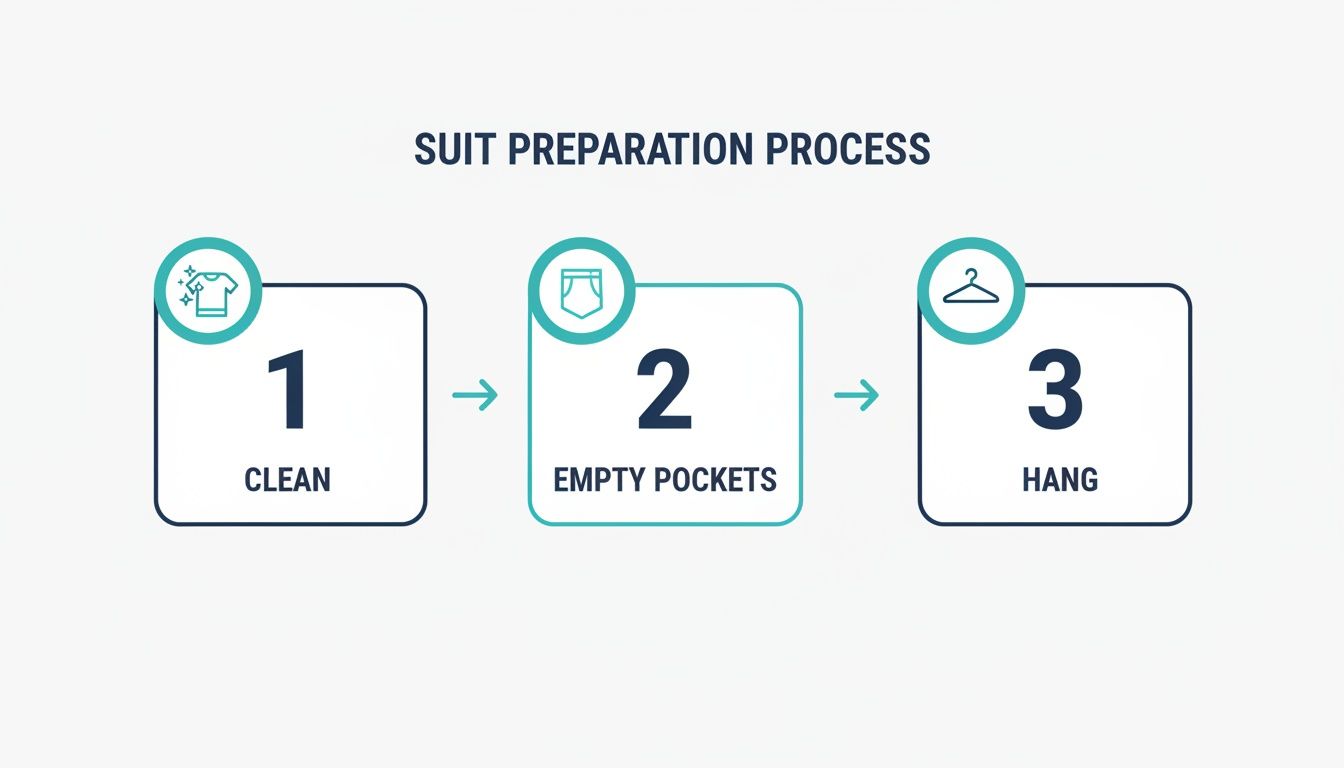
Getting these basics right is the foundation for any successful packing method. Don't skip them.
Alternative Folding and Packing Methods
Whilst the inside-out fold is the gold standard for structured jackets, it isn't your only option. The best choice often comes down to your luggage, your suit's material, and the nature of your trip.
- The Simple Flat Fold: This is best reserved for checked luggage where you have a bit more room to play with. You simply fold the jacket in half vertically, then once more horizontally. It’s less protective than the inside-out method, but it's quick and perfectly effective if your suit can lie flat on top within a sturdy case.
- The Rolling Method: A word of warning here. This method should only ever be used for unstructured, casual suits made from highly wrinkle-resistant fabrics, like certain modern performance materials. Rolling a bespoke wool suit is a recipe for disaster; it introduces countless small creases and can permanently distort the garment’s shape.
For any garment, especially delicate ones like suits, mastering the technique of packing clothes without wrinkles is paramount to ensure they arrive in pristine condition. The principles of careful folding and strategic placement apply across your entire travel wardrobe.
The Unrivalled Protection of a Garment Bag
For those truly critical events—a wedding, a vital board meeting, a black-tie gala—the garment bag is the undisputed king. There is simply no substitute. It allows the suit to hang naturally, which is the single most effective way to prevent creasing, and it stops the suit from shifting about during transit.
To pack like a professional, place your suit jacket in the garment bag with the shoulders first. A 2023 survey from the British Tailoring Association found this simple method reduces creases by a staggering 78% compared to rolling. For the trousers, fold them along their natural crease and sandwich them between the layers of the folded jacket—this is the perfect technique for grooms packing their wedding attire. It's also wise to opt for breathable cotton garment bags; 80% of UK tailors recommend avoiding plastic, which they note can lead to a 40% higher risk of mildew in humid conditions. As the UK menswear market continues its impressive growth, taking these expert steps ensures your valuable Dandylion mohair three-piece arrives crisp for that all-important event. You can discover more about trends in the UK clothing industry on ibisworld.com.
Packing Tips for Different Suit Fabrics
Not all suits are created equal, and their fabrics certainly don’t behave the same way once folded into a suitcase. A common mistake I see is treating every suit the same way. Your packing technique must adapt to the material; a robust tweed will forgive far more than a delicate linen will.
Knowing how each fabric responds to being folded is the real secret to arriving with a suit that’s ready to wear, whatever the occasion.
Robust, resilient fabrics like wool and tweed are a traveller's best friend. Their natural fibres have an excellent "memory" and "crimp," which is a tailor's way of saying they resist creasing and bounce back into shape remarkably well. A well-executed inside-out fold is usually all that’s needed for these garments. Their inherent structure does most of the hard work for you.
Handling Delicate and Wrinkle-Prone Fabrics
Then we have materials like linen, cashmere, and mohair. These fabrics are prized for their unique textures and breathability, but they are notoriously prone to wrinkling. They demand a much more considered approach when packing.
- Linen: This fabric can seem to wrinkle just by looking at it. The best strategy is to create soft buffers. Use multiple layers of acid-free tissue paper between every single fold to stop sharp creases from setting in.
- Cashmere: For cashmere trousers, you want to avoid sharp folds entirely. Instead, try a very loose roll, cushioned with tissue paper. This prevents pressure points that can easily mar the delicate fibres.
- Mohair: Known for its wonderful sheen, mohair can show creases quite prominently. Just like linen, be generous with the tissue paper and make sure it’s packed last, right on top of everything else, to minimise any compression.
The science behind this is straightforward: fabrics with a looser, flatter weave, like linen, have more room for the fibres to shift and set into wrinkles. Tightly woven fabrics with more natural spring, like a high-twist wool, are inherently more wrinkle-resistant. By adjusting your packing method, you’re working with the fabric's natural tendencies, not against them.
From General Advice to a Bespoke Approach
A summer-weight linen suit destined for a beach wedding requires a completely different packing strategy than a heavy tweed for a winter event in the countryside. By tailoring your technique to the material, you elevate packing from a chore into a form of expert garment care. For more on choosing the right material, you can explore our detailed article on the best fabrics for suits.
This bespoke approach ensures that no matter the fabric—from a sturdy wool flannel to a gossamer-light silk blend—your suit arrives looking as immaculate as when it left your wardrobe. It’s this attention to detail that separates the novice traveller from the seasoned gentleman.
Packing Your Dress Shirt, Tie, and Shoes
You’ve taken great care in packing your suit, but the job isn't finished. A beautifully packed suit can be let down in an instant by a crumpled shirt, a creased tie, or scuffed shoes. These aren't just accessories; they are the supporting cast that makes your entire ensemble work.
Getting the details right is what separates the truly well-dressed from the rest. Let’s make sure every piece of your outfit arrives looking as impeccable as the suit itself.
Preserving Your Dress Shirt and Tie
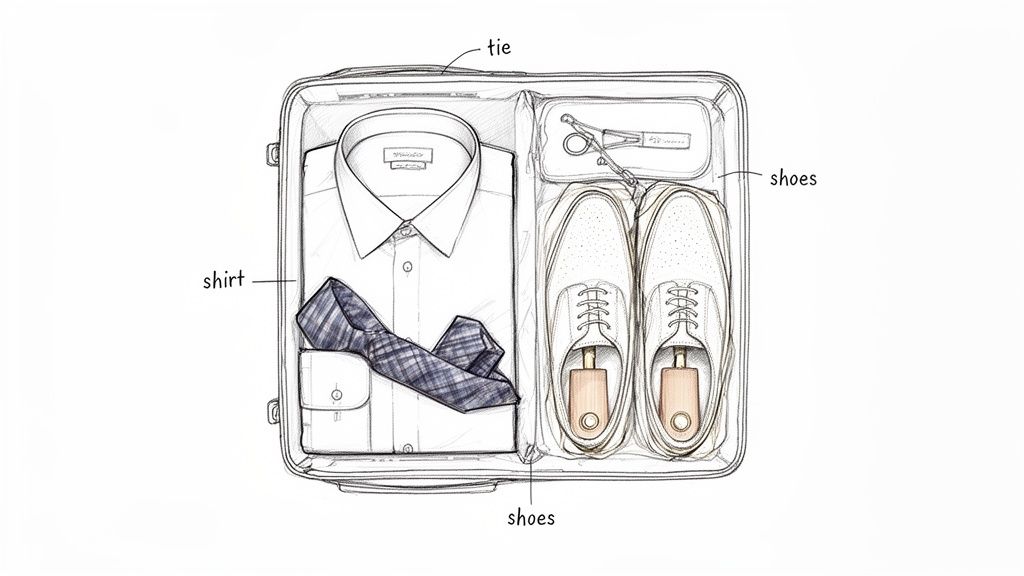
There's nothing worse than arriving at your hotel only to find your shirt collar has been flattened into a sorry, lifeless pancake. A crushed collar is the most obvious tell-tale sign of a rushed packing job. To avoid this, fold your shirt with the collar’s structure as your top priority. I find the best way is to button it up, lay it face down, and fold the sleeves towards the centre before folding the body into a neat rectangle.
Your ties, particularly those crafted from fine silk or wool, also require a gentle touch. The only real way to pack a tie is to roll it.
- Begin at the thin end and roll it gently but firmly towards the wide blade. This simple technique prevents the sharp, stubborn creases that folding inevitably creates.
- Once rolled, pop it in a dedicated tie case if you have one. If not, a classic space-saving trick is to place it inside one of your shoes, where it will be well-protected.
Of course, how a tie travels is only part of the story. For a deeper dive into making the right impression, have a read of our guide on the correct length of the tie.
Protecting Your Polished Dress Shoes
Your shoes are the very foundation of your outfit, and they also play a surprisingly structural role inside your luggage. But first, they need to be prepared for the journey.
Always, and I mean always, use shoe trees. For travel, they are non-negotiable. They do more than just maintain the shoe’s shape; they stop the leather from collapsing under pressure and even help absorb any residual moisture, keeping them fresh.
With the shoe trees inserted, place each shoe into its own dedicated shoe bag. This is a critical step to prevent polish, dirt, or dust from transferring onto your clothes. If you don't own shoe bags, a couple of clean cotton dust bags will do the job just fine.
Finally, place them heel-to-toe along the outer walls of your suitcase. This creates a solid frame around the perimeter, offering protection for the softer, folded items packed in the centre.
How to Fix Wrinkles After You Arrive
No matter how meticulously you’ve folded or rolled your suit, a long journey can leave its mark. The first thing you must do upon reaching your hotel room is simple: unpack immediately. Don't let your suit stay compressed in a suitcase for a moment longer than necessary.
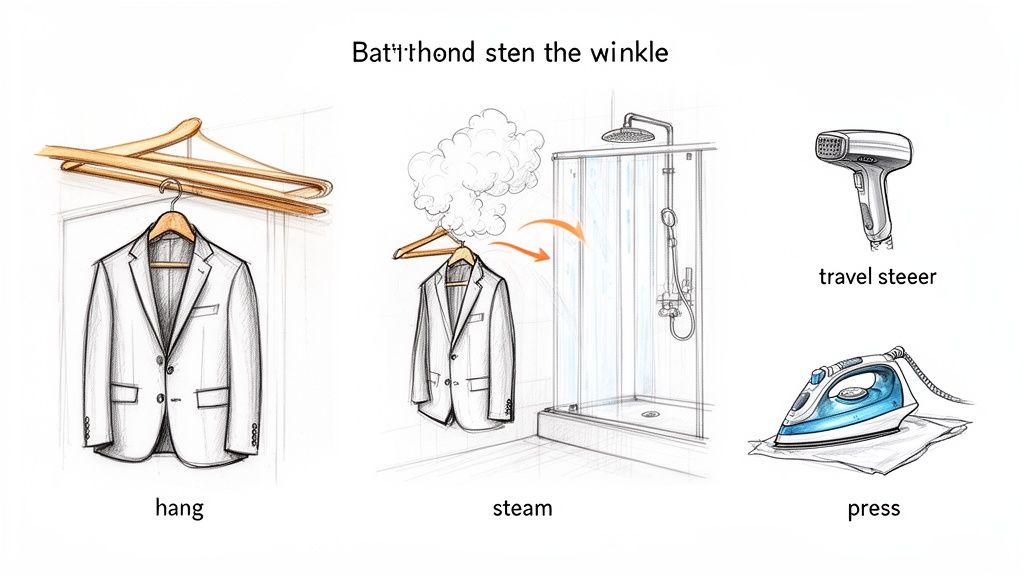
Your first line of defence is to get the suit onto a proper, wide-shouldered hanger. Hang the jacket and trousers separately. This simple act allows the fabric’s fibres to breathe and relax, often causing the slightest travel wrinkles to fall out on their own within an hour or two.
Using Steam to Your Advantage
For more stubborn creases, steam is your greatest ally. The classic hotel-room trick works wonders. Hang the suit in the bathroom, turn the shower to its hottest setting, close the door, and let the room fill with steam for 15–20 minutes. The warm, moist air will gently relax the fabric’s fibres, encouraging wrinkles to release.
Once its steam bath is complete, move the suit back into the main room to air dry completely. It’s crucial that you never wear a slightly damp suit, as this will only invite new creases to form as you move. This method is particularly effective for resilient natural fibres like wool and cashmere.
Understanding these quick fixes is crucial; even minor issues can cause major stress. Packing mishaps are a significant concern, with a recent report finding that 35% of wedding guests experienced issues with their attire. You can learn more about how packing affects formalwear in this detailed 2026 digital marketing report.
If you’re faced with truly persistent creases, a hotel iron can be a last resort, but you must proceed with extreme caution. Always place a clean, white cotton cloth—a t-shirt or pillowcase will do—between the iron and your suit. Never apply the hot iron plate directly to the fabric, as this can cause scorching or create a permanent, unsightly shine.
For the frequent traveller, investing in a portable travel steamer is a wise move. It offers far more direct and controlled wrinkle removal than the bathroom method, ensuring you look flawless for any occasion. For further reading on garment care, you might be interested in our guide on how often you should dry clean a suit.
Frequently Asked Questions About Packing Suits
Is it better to fold or roll a suit for travel?
For any structured suit, especially a bespoke wool garment, folding is always the superior method. We recommend the 'inside-out' fold to protect the jacket's shoulders and lapels from friction and pressure. Rolling is a high-risk strategy that can introduce countless small wrinkles and should only ever be considered for completely unstructured, casual suits made from highly wrinkle-resistant, modern fabrics. For a gentleman’s tailored suit, a careful fold respects the craftsmanship and ensures it arrives in the best possible condition.
How do you pack a suit in a suitcase without a garment bag?
First, perform the 'inside-out' fold for the jacket, which shields the outer fabric and creates a neat, compact rectangle. Then, fold your trousers along their natural crease. To prevent sharp lines from forming, you can place the folded trousers inside the folded jacket. For added protection, use a layer of acid-free tissue paper as a buffer. Finally, place the folded suit on top of other items in your suitcase to prevent it from being crushed.
Can I pack my suit in a carry-on bag?
Absolutely. Packing your suit in a carry-on is often the smartest choice, as it eliminates the risk of lost luggage and keeps your investment under your direct supervision. Use the inside-out fold to make it as compact as possible and place it at the very top of your packed items to minimise pressure. A hard-shell carry-on with a flat interior surface provides the ideal environment. This method is perfect for business trips and ensures you have your suit with you upon arrival.
What is the best way to get wrinkles out of a suit without an iron?
Steam is your best tool. As soon as you arrive, hang your suit on a wide-shouldered hanger in the bathroom. Turn the shower on to its hottest setting and close the door, allowing the room to fill with steam for 15-20 minutes. The warm, moist air will gently relax the fabric's fibres, causing most travel wrinkles to fall out naturally. Afterwards, let the suit air dry completely in the main room before wearing it to prevent new creases from forming.
About the Author
Igor Dedic is the founder of Dandylion Style, a bespoke tailoring house in West Sussex. With a profound passion for classic gentlemen’s tailoring, Igor specialises in crafting exceptional garments that blend timeless elegance with modern wearability. His expertise in fine fabrics and suit construction informs his practical advice on garment care, ensuring every client knows how to protect their investment. Igor's commitment extends to offering personal fittings across Sussex and London, making the bespoke experience both luxurious and convenient. You can discover more about his unique approach to tailoring by reading Igor's author profile.
For a suit that is crafted to travel as well as it looks, explore the bespoke options at Dandylion Style. Our expertise in fine British fabrics ensures your garment is not only perfectly fitted but also resilient. Begin your commission at https://dandylionstyle.co.uk.