A suit bespoke is the absolute pinnacle of tailoring. It’s a process where a unique pattern is cut and created just for you, leading to a fit and level of personalisation that’s simply impossible to achieve otherwise.
Unlike its cousins, made-to-measure and ready-to-wear, commissioning a bespoke suit involves multiple fittings and hours of meticulous hand-finishing. This ensures the final garment is a perfect extension of your physique and personal style. It’s a journey that typically takes 8-12 weeks, a timeline that honours the artistry and precision poured into every stitch.
Key Takeaways
Unique Pattern Creation: A true bespoke suit is built from a paper pattern drafted entirely from scratch based on your individual measurements, posture, and proportions. This is its key differentiator from made-to-measure.
Collaborative Process: The journey is a partnership between you and your tailor, involving an initial consultation, fabric selection, and multiple fittings (basted, forward, and final) to sculpt the garment.
Unrivalled Personalisation: Every detail, from the British fabric and lining to the button material, lapel style, and pocket configuration, is chosen by you, creating a one-of-a-kind garment.
Timeline and Investment: Expect the process to take 8-12 weeks. The cost reflects the hours of skilled craftsmanship and superior materials, making it a long-term investment in quality and fit.
Lasting Quality: Built with superior construction like a full canvas and meticulous hand-finishing, a bespoke suit is designed to last for decades with proper care, offering exceptional value over time.
Your Essential Guide to Bespoke Suits
Embarking on the bespoke journey is an investment, not just in clothing, but in unparalleled quality and self-expression. It’s a true collaboration between you and your tailor, a dialogue that transforms fine cloth into something that is genuinely yours. This isn't about simply buying a suit; it's about commissioning a piece of wearable art.
The entire experience is defined by its fanatical attention to detail, a world away from the compromises of off-the-rack clothing. From the first conversation about your lifestyle to the final stitch, every single choice is deliberate.
The Core Pillars of Bespoke
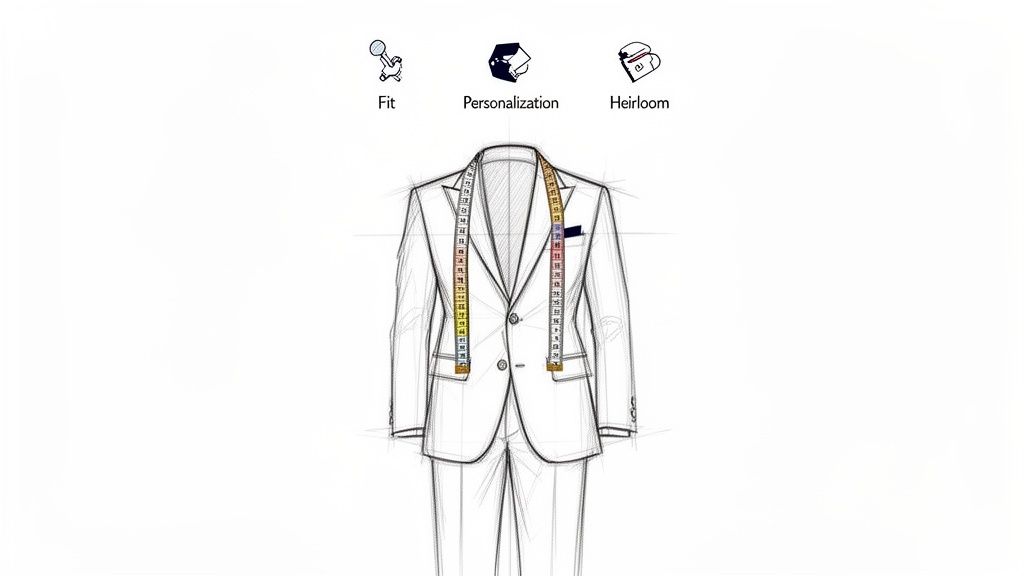
To really get to grips with what a suit bespoke experience entails, it helps to understand the three fundamental pillars that set it apart from every other way of buying a suit.
A Flawless Fit: Your suit is built from a pattern drafted entirely from scratch, based on dozens of your individual measurements. This isn't about adjusting a pre-made template; it's about creating a blueprint that perfectly accommodates your unique posture and proportions.
Unlimited Personalisation: You have complete creative control. Every element is up for discussion, from selecting exquisite British fabrics and linings to deciding on lapel styles, pocket configurations, and even the material of the buttons.
Heirloom Quality: With its superior internal construction, full canvassing, and hours of hand-finishing, a bespoke garment is built to last for decades. It’s an investment that offers exceptional long-term value.
Think of this as your foundational guide—the key facts to give you a clear picture of what to expect. We'll walk you through the entire process, demystifying each stage from your initial consultation to the moment you take home a garment made for you, and only you. It’s a process that respects the craft, typically requiring 8-12 weeks from start to finish.
What Bespoke Truly Means in Modern Tailoring
The word ‘bespoke’ gets thrown around a lot these days, but its true meaning is steeped in centuries of proper craftsmanship. It was first coined on London's legendary Savile Row to describe cloth that was literally 'spoken for' by a client—set aside for their suit and their suit alone before a single cut was made. That history gets right to the heart of what a suit bespoke is: it’s made for one person, period.
This isn’t just about exclusivity for its own sake. It’s a philosophy, a relationship between you and your tailor, and an art form. It’s far more than just buying a piece of clothing.
From Blueprint to Garment
Think of it like building a house. Commissioning a bespoke suit is like hiring an architect to design a home from scratch on an empty plot of land. The entire design is dictated by the unique contours of that land (your body), how you live your life, and what you find beautiful.
A made-to-measure suit, on the other hand, is more like choosing a pre-designed floor plan and making some modifications. You can shift a few walls or pick different finishes, but you’re ultimately working within the constraints of an existing template. We break this down in more detail in our guide comparing made-to-measure vs bespoke suits.
This is the critical difference. With a suit bespoke, there's no pre-existing pattern or standard size that gets tweaked. The entire process starts with nothing more than a bolt of cloth and your measurements.
A true bespoke garment begins its life as a unique paper pattern drafted from the ground up. This pattern is your sartorial DNA—a blueprint capturing every nuance of your posture, balance, and proportions. Nothing else comes close.
Your tailor takes dozens of precise measurements and translates them into this two-dimensional paper pattern. It accounts for everything: the specific slope of your shoulders, the curve of your back, even the way you stand naturally. This pattern is the master key to creating a garment that doesn't just fit, but drapes perfectly and moves with you.
A Collaborative Creation
Ultimately, commissioning a bespoke suit is a journey you take with your tailor. It's a series of conversations, fittings, and refinements as you work together to bring a vision to life. You’re not just picking options from a list; you're an active partner in the creation of your garment.
Every single detail is a point of discussion in this partnership:
The initial dialogue: We talk not just about what the suit is for, but how you want to feel when you wear it. Confident? Powerful? Effortlessly relaxed?
Fabric selection: This is a tactile experience, getting your hands on fine British cloths and understanding how the weight and weave of each will influence the final drape.
The fitting process: Your feedback is essential at every stage as the suit takes shape on your body, from the first basted fitting to the final, tiny adjustments.
This deep involvement is what ensures the final product is so much more than a well-fitting suit. It becomes a personal statement, a true expression of your individual style, brought to life by an expert artisan. It's this human connection—this direct relationship between client and cutter—that lies at the very heart of what a suit bespoke truly means.
The Bespoke Journey from Consultation to Collection
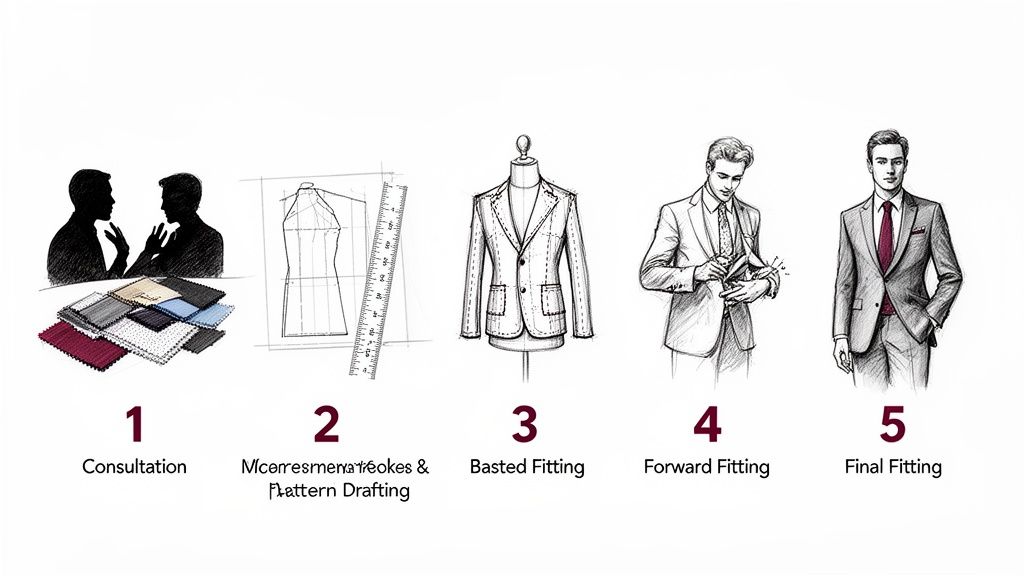
To commission a suit bespoke is to embark on a story of true craftsmanship. It’s a calm, considered journey from a simple idea to a finished garment that is yours and yours alone. The entire process is built on conversation, precision, and collaboration. At Dandylion Style, we've refined this experience into five distinct stages, ensuring you feel completely involved from our first meeting to your final collection.
This is far more than a simple transaction; it's an immersive experience in the art of personal tailoring. Each fitting is a milestone, an opportunity for us to quite literally sculpt the suit on your body and refine its silhouette with an accuracy that ready-to-wear could never hope to match.
1. The Initial Consultation
Our journey begins with a relaxed conversation. We’ll sit down and talk about your lifestyle, what the suit is for, and—most importantly—your personal sense of style. This is your chance to explore our curated collection of fine British fabrics, feeling the unique character of each cloth and selecting the one that truly speaks to you.
From the width of the lapels and the style of the pockets to the lining and button selection, we will guide you through every single design choice. The goal is simple: to translate your vision into a clear sartorial plan. Feel free to get a head start by exploring some ideas with our online suit design tool before you visit.
2. Measurement and Pattern Drafting
With the design decided, we move on to taking dozens of precise measurements. These aren't just numbers on a page; they capture the subtle nuances of your posture, your balance, and your unique proportions. These measurements then form the foundation for your own paper pattern, which is drafted entirely from scratch.
Think of this pattern as your personal sartorial blueprint, a two-dimensional map that will guide the cutting of the cloth. Unlike made-to-measure, this pattern is created for you and you alone, ensuring the final garment honours your individual form completely.
3. The Basted Fitting
This is your first real glimpse of the suit taking shape. Here, the garment is loosely stitched together with temporary white basting thread, creating a kind of three-dimensional shell. The suit has no pockets or lining at this point; its sole purpose is for us to assess the fundamental balance and fit.
During this fitting, we check the shoulder line, the length of the jacket, and the overall drape. We’ll make chalk markings and adjustments directly onto the cloth, making sure the core structure is perfect before we go any further.
4. The Forward Fitting
After the basted fitting, the suit is taken apart, re-cut according to our chalk marks, and then constructed more fully. Pockets are put in, lapels are shaped, and the internal canvas is sewn in place. The forward fitting is where we start to refine the finer details of the silhouette.
We meticulously check the line of the collar, the pitch of the sleeve, and the suppression at the waist, making precise adjustments to create clean, elegant lines. This stage is crucial for perfecting the garment’s shape and ensuring it moves with you, not against you.
A key advantage of the bespoke process is its adaptability. Each fitting allows us to make iterative refinements, sculpting the garment to your body with a level of precision that is simply impossible with any other method.
5. The Final Fitting and Collection
By the time we reach the final fitting, your suit is nearly complete. Just the finishing touches, like the hand-sewn buttonholes and buttons, remain. This is our last chance to make any minor tweaks to ensure absolute perfection. We check every single detail to confirm you are completely happy with how it looks and feels.
Once you give your final approval, the suit is taken back for its final hand-finishing. Soon after, you'll collect a garment that is a true extension of yourself. It's this meticulous, multi-stage process that explains why consumers are increasingly drawn to dedicated tailoring houses. In fact, the global bespoke tailoring services market is projected to reach $8.6 billion by 2033, expanding at a remarkable 11.80% compound annual growth rate.
Choosing Your Fabric and Finishing Details
With your unique paper pattern drafted, we now move into what is arguably the most creative part of the suit bespoke process. This is the stage where your personality is quite literally woven into the garment, starting with its very soul—the cloth. The fabric you choose is about so much more than looks; it dictates the suit’s feel, its drape, and how it will perform for you across different seasons and occasions.
Here at Dandylion Style, we have a deep appreciation for the unparalleled quality of fine British fabrics. Each cloth has its own unique character, and guiding a client through selecting the right one is a deeply personal and satisfying experience.
The Heart of the Suit: Your Fabric Choice
Getting a feel for the properties of different materials is the first step towards making a decision you'll be happy with for years to come. Your tailor is there to guide you, of course, but having some foundational knowledge helps you articulate exactly what you're looking for.
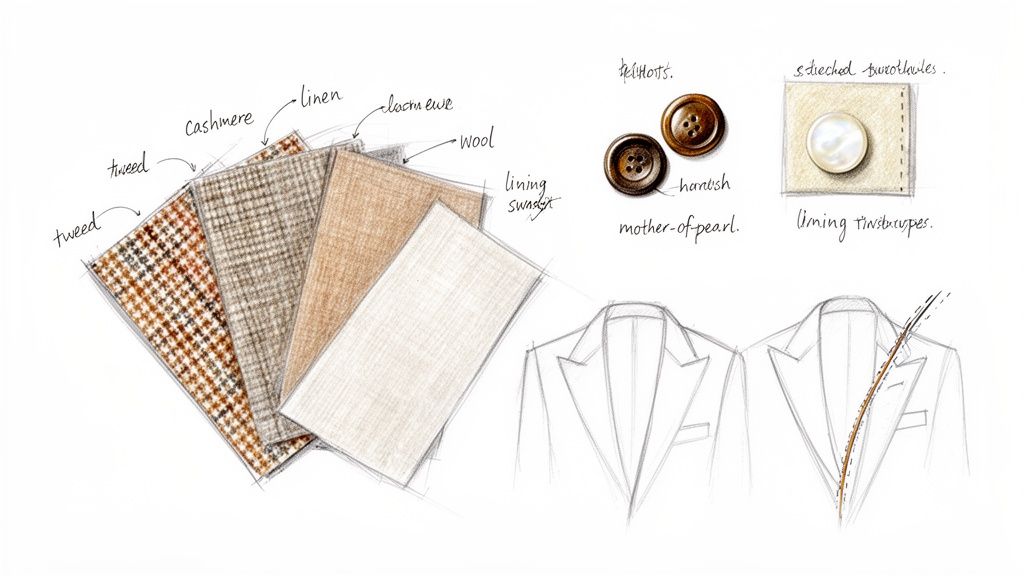
Wool: The absolute cornerstone of classic tailoring. Wool is wonderfully versatile, breathable, and drapes beautifully. From lightweight worsteds that create a sharp business suit to heavy flannels for cosy winter warmth, it remains a timeless choice.
Tweed: Quintessentially British, tweed is a rugged, durable woollen fabric that’s perfect for country attire or a truly distinctive sports jacket. Its rich texture and earthy tones offer incredible depth and character.
Linen: Nothing says summer elegance quite like linen. It’s exceptionally lightweight and breathable, making it ideal for warmer events. Its natural tendency to wrinkle is simply part of its charm, lending a sense of relaxed, continental style.
Cashmere: For pure, unadulterated luxury, nothing comes close to cashmere. We often blend it with wool to add a remarkable softness and a subtle lustre, creating a garment that feels as incredible as it looks.
The UK's legacy in bespoke craftsmanship is inextricably linked to its world-renowned fabric mills. This deep heritage is why the suit bespoke sector remains such a vital part of our national identity in fashion. Market analysis shows that Europe's custom suits market was valued at around £1.56 billion in 2025, with the UK commanding a significant 15.60% of that revenue. It’s a clear testament to the enduring global appreciation for British tailoring.
Defining Your Style with Finishing Details
Once the main fabric is settled, our attention shifts to the smaller elements—the subtle details that make a bespoke garment truly one-of-a-kind. They may seem minor on their own, but together they define the suit's entire personality and make it unequivocally yours.
A bespoke suit is a canvas for self-expression. The buttons, the lining, the shape of the lapel—these are the brushstrokes that transform a well-fitting garment into a personal statement.
Think of these finishing touches as the final, most personal layer of the process. They elevate the suit from a simple piece of clothing into an article that tells your story. We have an extensive guide where you can learn more about the best fabrics for suits and how these choices influence the final product.
Here are just a few of the key details you’ll get to decide on:
Buttons: Will you choose the classic, earthy feel of horn buttons, or perhaps the quiet, iridescent elegance of mother-of-pearl? Each material brings a completely different character to the suit.
Lining: The lining is your suit’s hidden secret—a private world of expression. You could go for a conservative, tonal shade for a classic look, or a bold, vibrant silk that reflects your personality every time you put the jacket on.
Lapels: The style of the lapel—be it a classic notch, a more formal peak, or a relaxed shawl—profoundly impacts the suit's formality and overall aesthetic.
Pockets: From slanted "hacking" pockets that give a nod to equestrian heritage to formal jetted pockets, the configuration is tailored to both your functional needs and stylistic preferences.
Stitching: Even the thread used for the buttonholes can be customised. It’s a final, subtle flourish of colour and craftsmanship that truly sets a bespoke garment apart.
What to Expect: Timelines and Investment
When you commission a bespoke suit, you're making an investment—not just in your wardrobe, but in the time it takes to create something truly exceptional. A good relationship with your tailor is built on trust, so it’s important to understand why the process is measured in weeks, not days, and how the final price reflects the artistry poured into every stitch.
This deliberate pace is the very hallmark of true craftsmanship. Unlike the instant gratification of fast fashion, the bespoke world runs on a schedule dictated by meticulous handiwork, precise adjustments, and an unwavering commitment to getting every single detail perfect.
The Value of Time in Bespoke Tailoring
The entire bespoke journey, from our first conversation to the moment you collect your finished suit, typically takes between 8 and 12 weeks. This isn't a sign of inefficiency; it's a direct reflection of the quality being built into your garment. It’s a timeframe that respects the art of tailoring.
Each stage is a careful, unhurried process:
Pattern Drafting: Creating your unique paper pattern from the ground up is a highly skilled art form that simply cannot be rushed.
Hand-Finishing: Countless hours go into the details that matter—like hand-sewn buttonholes and the internal canvassing that gives the suit its structure and longevity.
Multiple Fittings: The process is punctuated by several essential fittings, with a huge amount of work and adjustments happening behind the scenes between each appointment.
This methodical approach ensures the final product isn't just a suit, but a perfectly sculpted second skin.
Understanding the Investment
It’s easy to see the price of a bespoke suit as an expense, but it’s more accurate to frame it as a long-term investment in yourself. The final cost comes down to a few key things, most notably your choice of fabric and the complexity of the design. A classic two-piece in a traditional worsted wool will naturally have a different price point than an intricate three-piece tweed suit.
The true value of a bespoke suit isn't found on its price tag, but in its perfect fit and sheer longevity. Think of it as an asset designed to give you unparalleled comfort, confidence, and style for decades—far outlasting countless off-the-rack alternatives.
That final figure reflects the hundreds of hours of skilled labour and the superior quality of the materials we use. To get a clearer picture of what’s involved, you can learn more about how much a bespoke suit costs and what goes into the price.
Ultimately, you’re investing in a garment that fits you flawlessly, is built to last a lifetime, and is a genuine expression of your personal style. It’s a commitment to enduring quality over fleeting trends.
Caring for Your Bespoke Garment to Ensure Longevity
A suit bespoke is a remarkable investment in your personal style, a piece crafted from the finest materials with the intention of lasting for decades. But like any fine instrument, its longevity hinges entirely on how you care for it. A few simple routines will protect its structure, fabric, and impeccable fit, ensuring it remains a cornerstone of your wardrobe for many years to come.
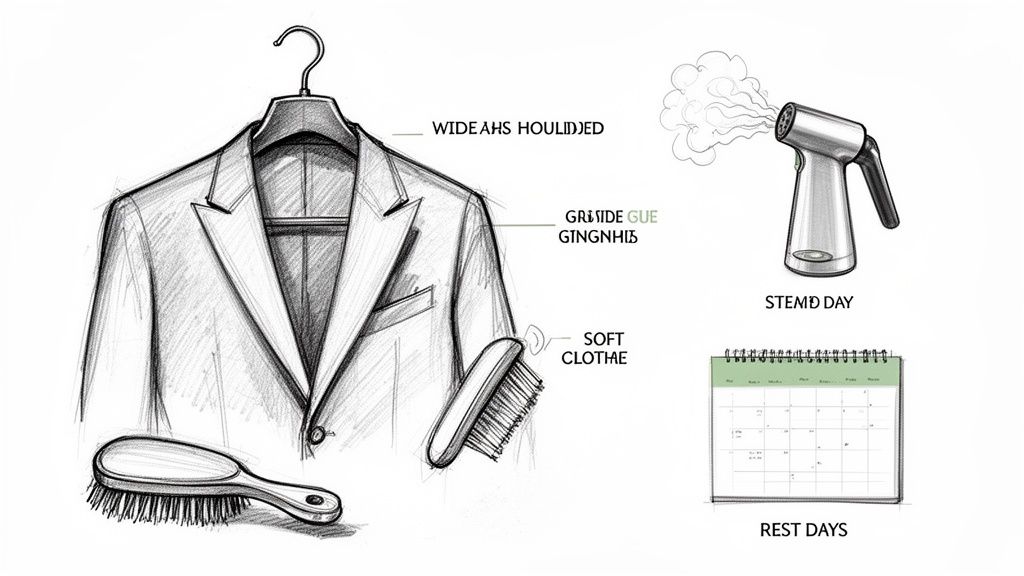
Think of your suit as a piece of fine engineering; its shape and drape have been meticulously built. The single most important habit you can adopt is to always use a wide, well-shaped hanger. A quality wooden hanger with broad shoulder supports mimics your own shoulders, preventing the garment from sagging or developing unsightly puckers. Wire hangers, on the other hand, will simply destroy the jacket’s form over time.
Daily and Weekly Care Routines
Proper care begins the moment you take the suit off. A well-made garment needs time to recover and breathe after a day’s wear. Natural fibres like wool have a remarkable memory and will shed most wrinkles all on their own if just given the chance.
After each wear, give the suit a gentle brush with a soft-bristled clothes brush. This simple action lifts away the dust, lint, and other surface particles that can abrade the fabric fibres over time. Brush downwards, following the grain of the cloth, to keep it looking pristine.
Proper storage is non-negotiable for a bespoke garment. Allowing your suit to rest for at least 24 hours between wears lets the natural fibres recover, extending its life significantly.
For any minor wrinkles that remain, a garment steamer is your best friend. A light steaming will relax the fibres and refresh the suit without the harshness of an iron. You should avoid direct ironing whenever possible, as excessive heat can damage the delicate wool and leave a permanent, unsightly shine.
Professional Cleaning and Long-Term Storage
Here's the single biggest mistake you can make: over-cleaning your suit. Dry cleaning involves harsh chemicals and processes that strip the natural oils from wool fibres, shortening the garment's lifespan considerably. You should only need to dry-clean your suit once or twice a year, or if it becomes significantly stained.
When you do need professional help, find a specialist cleaner you trust implicitly. A reputable cleaner will understand how to handle the delicate hand-stitching and canvassing that gives a suit bespoke its unique structure and feel.
For long-term storage, such as between seasons, just follow these simple steps:
Make sure the suit is clean and completely dry.
Store it inside a breathable garment bag to protect it from dust and moths.
Never use plastic bags, as they can trap moisture and lead to mildew.
By adopting these simple habits, you aren't just cleaning a suit; you're preserving a piece of personal artistry, ensuring it serves you with elegance for years to come.
About the Author: Igor, Founder of Dandylion Style
Meet Igor, the man behind the shears and the founder of Dandylion Style. With a genuine, lifelong passion for classic gentlemen's tailoring and the art of the craft, Igor has poured his expertise into every stitch and seam of the brand. For him, a suit bespoke is never just an item of clothing; it's a statement about who you are and a nod to quality that lasts.
His entire approach is built on a calm, considered philosophy, making sure every client feels completely at ease and, more importantly, inspired. Igor's commitment to using the finest British fabrics is matched only by his dedication to making the whole experience deeply personal. It's this focus on building real trust and rapport that makes the process feel less like a transaction and more like a collaboration.
Igor’s award-winning craftsmanship is the heart of Dandylion Style. He masterfully blends time-honoured techniques with a sharp, modern eye for fit and style. The goal is always to create garments that aren't just beautiful, but are also comfortable and built to be worn for years. His approachable nature and expert guidance mean every commission ends in a suit that is a true reflection of the gentleman wearing it.
Your Bespoke Suit Questions, Answered
Stepping into the world of bespoke tailoring for the first time can feel a little mysterious. To pull back the curtain and make you feel completely at ease with the process, we've put together answers to some of the questions we hear most often about commissioning a suit bespoke.
How is a bespoke suit different from made-to-measure?
The defining difference lies in the pattern. A bespoke suit is built from a unique paper pattern created from scratch, just for you. This allows for infinite adjustments to perfectly accommodate your unique posture, balance, and proportions. In contrast, a made-to-measure suit starts with an existing standard-sized block pattern, which is then altered to fit your measurements. While an improvement on ready-to-wear, it doesn't offer the same level of granular precision or complete personalisation as a true bespoke garment.
How many fittings are needed for a bespoke suit?
Typically, you should expect three to four fittings throughout the bespoke process. The journey starts with an initial consultation and measurement session. This is followed by a 'basted' fitting to check the basic structure, a 'forward' fitting for refining the silhouette, and finally, a concluding fitting to make any minor tweaks before the garment is finished. Each stage is a crucial checkpoint, ensuring the final suit is sculpted perfectly to your body, and your feedback is vital every step of the way.
Is a bespoke suit a good investment?
Absolutely. A bespoke suit is an investment in unparalleled fit, superior quality, and enduring style. While the initial outlay is higher, its value is realised over its long lifespan. The garment is built to last for decades, far outlasting off-the-rack alternatives. For gentlemen who struggle with standard sizing, have a specific vision in mind, or simply appreciate fine craftsmanship, a bespoke suit offers a return in confidence and comfort that is truly priceless, making it a cornerstone of a sustainable wardrobe.
How should I prepare for my first bespoke consultation?
Preparation is simple: just come with an open mind and a general idea of what you need the suit for. Think about the occasion—is it for business, a wedding, or casual wear? Consider styles or colours you are drawn to. Bringing inspiration photos can be very helpful, but it is not essential. Most importantly, be ready to have a conversation. Your tailor is there to guide you through fabric choices and design details, ensuring the final garment is a perfect reflection of you.
Can alterations be made to a bespoke suit later on?
Yes, one of the significant advantages of a bespoke suit is that it is designed with future alterations in mind. Tailors traditionally leave extra material within the seams, known as 'inlay'. This allows for adjustments to be made years down the line if your body shape changes. Whether you need the waist taken in or let out, this thoughtful construction ensures your investment continues to fit you perfectly, reinforcing its status as a truly long-term piece in your wardrobe.
Key Takeaways The Core Two: Navy blue and charcoal grey are the essential, non-negotiable suit colors for any professional wardrobe. Navy offers versatility and approachability, while charcoal projects authority and seriousness. Context is Crucial: The best suit color...
When you find a piece of clothing you absolutely love, getting the fit just right is the final, transformative touch. But how much should you expect to pay? In the UK, alteration costs can be as modest as £15 for a simple trouser hemming, or climb to £150 and beyond...
Getting the right pink shirt and tie combination is the mark of a well-dressed man. It’s a detail that separates the novices from those who truly understand their wardrobe. For a look that’s classic and can’t miss, pair your pink shirt with a navy, grey, or burgundy...
Key Takeaways For those seeking a quick overview, this section summarises the essential rules and recommendations for incorporating turn-up trousers into your wardrobe. Sartorial Purpose: Turn-ups add weight to the trouser hem, ensuring a cleaner, sharper drape,...
Deciding what colour tie to wear with a pink shirt is a common style query I hear from clients. For a classic, professional look that never fails, your safest and most effective choices are navy blue and charcoal grey. If you're heading to a more contemporary or...
You've just picked up a newly finished bespoke suit, and the cloth still has that clean, disciplined line only a real fitting room can give it. The temptation is to put it straight in the wardrobe and trust the label to do the rest. That's where expensive...
Book Your Tailoring Consultation
Looking for a suit or garment made specifically for you?
At Dandylion Style, we create bespoke and made-to-measure
garments tailored to your individual shape, style and occasion.
From suits and shirts to dresses, waistcoats and alterations,
our experienced tailors can help you create something truly unique.