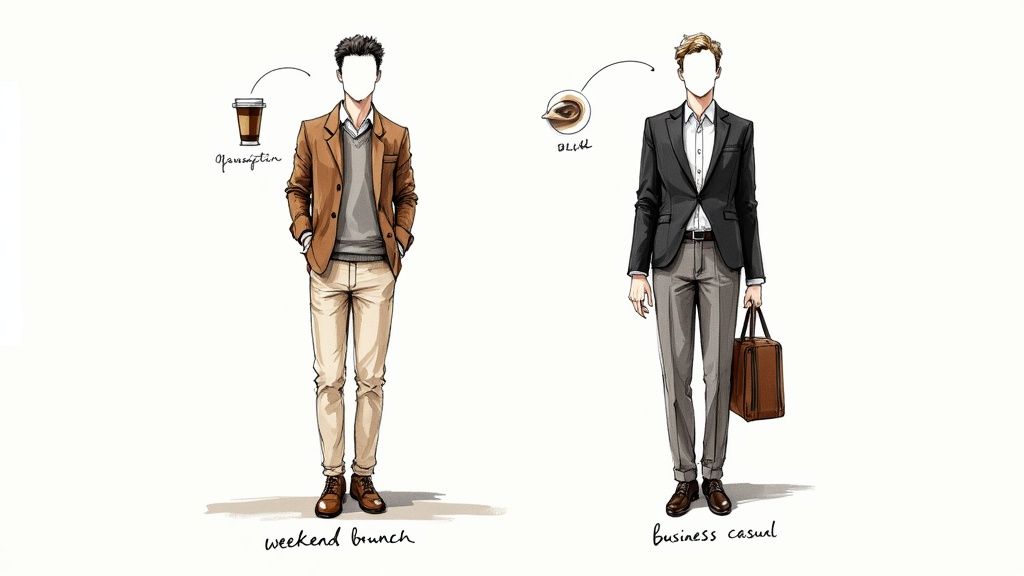
At its heart, the difference between a sports coat and a blazer boils down to heritage and formality. A sports coat is the more casual of the two—a textured, often patterned jacket born from rustic, country pursuits. The blazer, on the other hand, is a smarter, solid-coloured jacket with nautical roots, typically set apart by its distinctive contrasting buttons.
Your choice really depends on the look you're after: relaxed, layered sophistication or a sharper, more put-together presence.
Key Takeaways
Formality is Key: A sports coat is inherently casual, while a blazer is semi-formal. Choose based on the occasion's dress code.
Fabric Tells the Story: Sports coats feature textured fabrics like tweed and houndstooth. Blazers are made from smoother cloths like worsted wool or serge.
Origins Define Character: The sports coat comes from countryside sporting pursuits, hence its rugged, practical feel. The blazer descends from naval uniforms, giving it a structured, uniform appearance.
Buttons Make a Statement: Blazers often feature contrasting metal, horn, or mother-of-pearl buttons. Sports coats have more subtle buttons made from leather or horn that blend in.
Construction Differs: Sports coats are softly constructed with natural shoulders for comfort. Blazers are more structured with padded shoulders for a sharper silhouette.
Key Differences: Sports Coats vs Blazers
Getting to grips with the nuances between these two wardrobe workhorses is essential for any well-dressed gentleman. While they're both jackets designed to be worn with separate trousers, the way they're built, the fabrics used, and the social settings they belong in are quite distinct.
Let's break down what truly sets them apart.
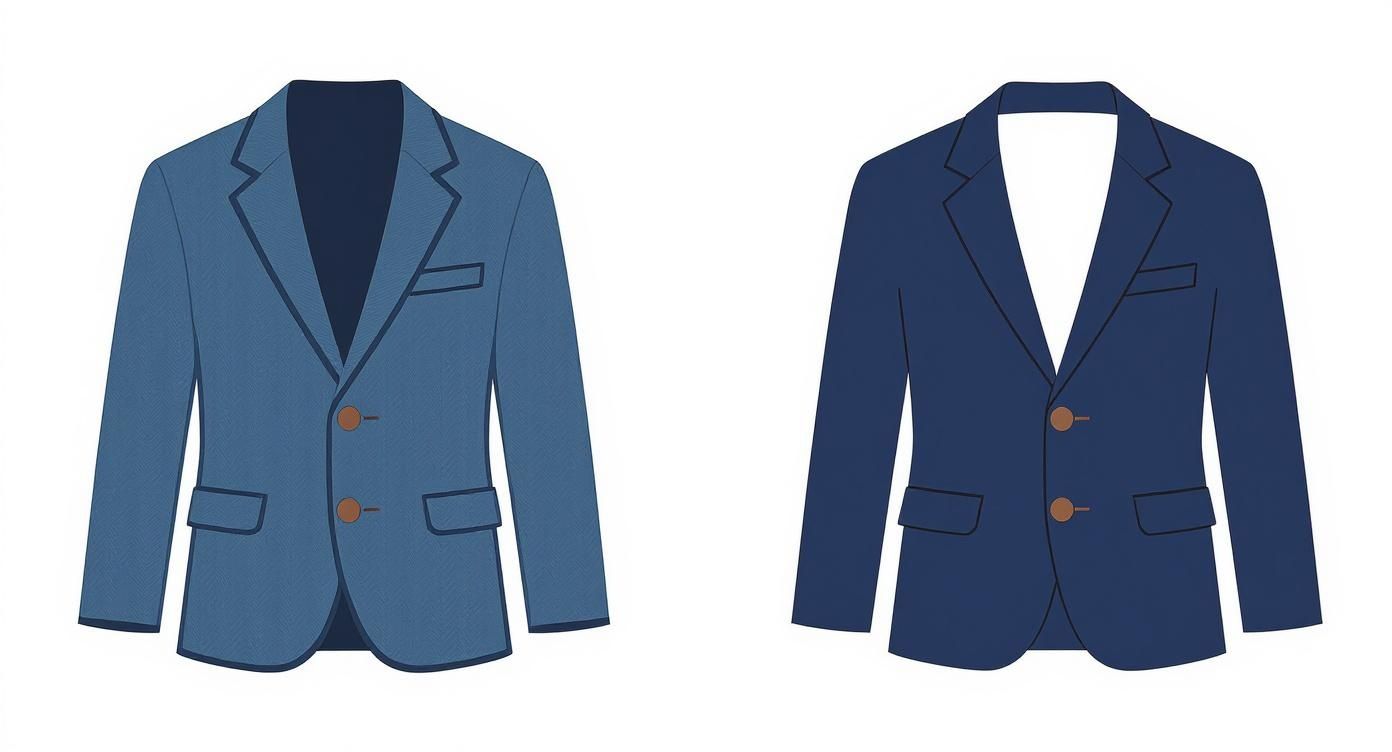
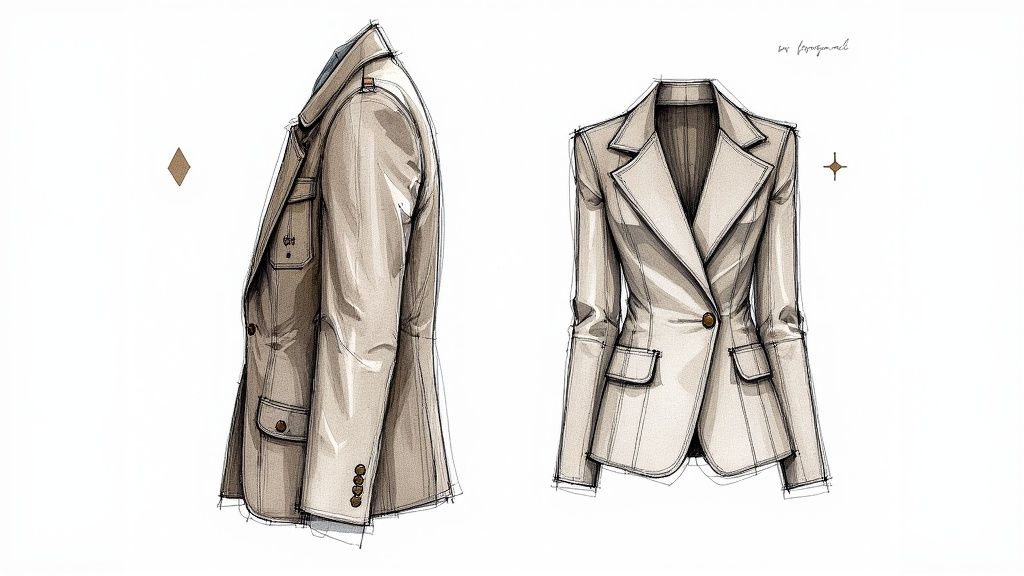
As you can see, the sports coat leans into its casual nature with visible texture and a less rigid form. The blazer, by contrast, presents a more structured, uniform appearance defined by its solid colour and smoother fabric.
Sports Coat vs Blazer At a Glance
To make the comparison even clearer, this quick table cuts straight to the chase, outlining the core characteristics of each garment.
Characteristic
Sports Coat
Blazer
Formality
Casual
Semi-formal
Fabric
Textured (e.g., tweed, corduroy)
Smooth (e.g., worsted wool)
Colour & Pattern
Often patterned (checks, houndstooth)
Typically a solid colour (navy is classic)
Buttons
Usually horn, leather, or wood
Often contrasting metal, horn, or pearl
Construction
Softer, less structured
More structured with defined shoulders
Origin
Sporting and country pursuits
Naval and rowing club uniforms
Ultimately, these differences in origin story are what give each jacket its unique character today. The sports coat remains a rugged, versatile piece for smart-casual wear, while the blazer is a reliable staple for occasions that call for a touch more polish.
Tracing the Heritage of Each Jacket
To really get to the heart of the difference between a sports coat and a blazer, you have to wind the clock back to their separate origins in 19th-century Britain. Each jacket was created to solve a specific problem, and that original purpose still shapes its character today. These aren't just trivial historical footnotes; they're the very reason one jacket feels relaxed and textured, while the other is sharp and structured.
The story of the sports coat doesn't start in a tailor's shop. It begins in the fields and on the estates of the British countryside, where gentlemen needed a tough, comfortable jacket for pursuits like shooting. This was no place for a formal suit jacket; they needed something that could handle the outdoors.
The Country Gentleman's Essential Garment
At its core, the original sports coat was a functional piece of kit. It was cut much looser than a suit jacket, allowing for a full range of movement and easy layering over a waistcoat or jumper.
Practicality drove every feature:
Durable Fabrics: Thick, rugged materials like tweed were the obvious choice for their warmth and resistance to snags and tears.
Camouflage Patterns: Earthy tones and patterns like checks and houndstooth were not just for show—they helped the wearer blend into the landscape.
Functional Details: Patch pockets offered easy access for carrying shells or a flask, and some jackets even featured leather elbow patches for extra reinforcement.
This is exactly why the modern sports coat still has that rustic charm and feels right at home in smart-casual settings. It's a garment born from activity, not the boardroom.
The Blazer's Naval and Collegiate Roots
The blazer’s family tree, on the other hand, is all about structure and uniformity. One of the most popular origin stories traces it back to the crew of HMS Blazer in the British Royal Navy. In 1837, so the story goes, their captain commissioned smart, double-breasted navy jackets with brass buttons to make a sharp impression on a visiting Queen Victoria.
The blazer's journey from a naval uniform to a civilian staple highlights its inherent formality. Unlike the sports coat, which evolved from a need for practical sportswear, the blazer was always intended to signify membership and present a polished, unified appearance.
This naval tradition was later picked up by British university rowing clubs. Members of the Lady Margaret Boat Club at Cambridge, for example, wore bright red jackets that were said to "blaze" in the sun, cementing the blazer's link with club membership and a more formal, preppy aesthetic. The history of quintessentially British tailoring is filled with these kinds of practical evolutions, something we explored in our look at Sicilian summer style.
This background explains why a classic blazer is almost always a solid colour with contrasting buttons—it was designed as a uniform. Its role as a formal staple remains unshakable, with the UK professional attire market, where the blazer is a cornerstone, estimated to be worth around £2 billion annually. You can learn more about the growth of the UK blazer market here.
Comparing Fabric, Construction, and Formality
While heritage tells us why these jackets exist, the tangible differences between a sports coat and a blazer are woven into their very fabric and construction. These aren't arbitrary details; they directly influence how each jacket drapes, feels, and, crucially, the level of formality it projects. Getting to grips with these nuances is the key to choosing the right garment for the right moment.
A sports coat is all about texture. Its DNA comes from the rugged British countryside, a place that demanded fabrics that were both tough and visually interesting. This history is why you’ll always find sports coats made from materials with a pronounced, tactile quality.
Fabric: The Foundation of Formality
The blazer, by contrast, presents a much smoother, more refined face to the world. Its naval and collegiate roots called for a uniform, crisp appearance, which is achieved through finer, more tightly woven fabrics. This is where the distinction becomes clearest.
A simple rule of thumb: The more texture a jacket has, the more casual it is. The ruggedness of tweed immediately signals a relaxed setting, whereas the clean finish of worsted wool suggests a more formal, business-appropriate occasion.
Common fabrics for each include:
Sports Coats: Think tweed, houndstooth, corduroy, and flannel. These materials are heavier and often feature intricate patterns like checks or plaids that disguise wear and add real visual depth.
Blazers: The classic choice is worsted wool or serge, known for its smooth finish and beautiful drape. Hopsack is another popular option for its breathability, while flannel and cashmere blends offer a luxurious touch for cooler weather.
The choice of material is fundamental. For those keen to dive deeper, we have a detailed guide on the best fabrics for suits that offers more insight into cloth selection.
Construction: How the Jacket is Built
Beyond fabric, the internal structure—or lack of it—is a critical differentiator. A sports coat is typically softly constructed. It often features natural, unpadded shoulders and a lighter canvas (or is entirely unstructured), creating a relaxed silhouette that moves with you.
This softer build is a direct nod to its sporting origins, where freedom of movement was everything. The pockets are often patch pockets—sewn onto the outside of the jacket—which further enhances its casual, utilitarian feel.
A blazer, however, is built with more definition. It usually has padded or roped shoulders to create a stronger, more commanding shoulder line. The construction is much closer to that of a suit jacket, providing a structured shape that drapes cleanly and communicates a higher degree of formality.
Its pockets are typically jetted or flap pockets, which are sleeker and more formal than patch pockets. And, of course, the buttons are a signature feature. While a sports coat uses subtle horn or leather buttons, a blazer's contrasting metal, mother-of-pearl, or enamel buttons serve as a distinct sartorial hallmark, reinforcing its identity as a standalone formal jacket. This clear difference in construction directly impacts how each garment should be styled and worn.
Styling Each Jacket for the Right Occasion
Understanding the bones of a sports coat and a blazer is one thing. Knowing exactly when and how to wear each is what truly sets a well-dressed gentleman apart. It’s not just about the garment; it’s about the context—the event, the company, and the impression you want to make. Getting this right shows a subtle mastery of style that goes far beyond simply throwing on a jacket.
Nailing this sartorial skill means you can walk into any room and navigate the dress code with complete confidence. The real key is matching the jacket's inherent formality to the occasion, so you're never over- or under-dressed, but perfectly pitched.
When to Wear a Sports Coat
The sports coat is your trusted ally for those smart-casual moments where a full suit would feel far too stuffy. Its textured fabric and softer construction give it a relaxed, approachable feel that's perfect for bridging that gap between casual and formal.
Think of it as the ultimate layering piece for events that call for a bit of polish, but without the rigidity.
Ideal Scenarios for a Sports Coat:
Weekend Brunch or a Country Pub Lunch: A classic tweed or houndstooth sports coat over dark denim or corduroys is a timeless, relaxed combination.
Creative Business Meetings: In less corporate settings, a sports coat worn over a fine-gauge knit or an open-collared shirt hits just the right note of professional yet approachable.
Casual Autumn or Winter Events: Its robust fabric makes it a natural fit for outdoor gatherings, from a crisp walk in the park to a casual garden party.
When to Wear a Blazer
The blazer is, without question, the definitive choice for semi-formal occasions and professional settings where you need to look sharp and pulled together. Its structured silhouette, smooth fabric, and often-contrasting buttons project a certain authority and sophistication, making it a clear step up from the sports coat.
This isn't just a stylistic nuance; it's reflected in real-world spending habits. In the UK, the men's blazer market was valued at an estimated £2.1 billion in 2025, representing a significant 13.3% of the global segment. This demand is fuelled by a clear preference for refined office wear, underlining the blazer's perception as a more formal, business-ready garment than its rustic cousin. You can find more insights on men's jacket retail sales here.
A blazer is your go-to jacket for making a strong, positive first impression in any professional or smart social setting. It signals respect for the occasion and a genuine appreciation for classic tailoring.
Prime Occasions for a Blazer:
Business-Casual Office Days: The quintessential business-casual uniform is a navy blazer paired with grey flannel trousers and a crisp white shirt. It never fails.
Networking Events and Conferences: It communicates professionalism and confidence, helping you stand out for all the right reasons.
Weddings or Smart Social Gatherings: For events with a smart or cocktail dress code, a blazer provides a polished alternative to a full suit. For more inspiration, have a look at our guide to creating the perfect formal outfit for a man.
Yacht Club or Rowing Regattas: Honouring its nautical roots, the blazer remains the impeccable choice for such events.
Why Fit and Bespoke Tailoring Matter
You can know all the theory in the world about sports coats and blazers, but it counts for nothing if the garment fits you poorly. A jacket that pulls across the shoulders, hangs too long in the sleeves, or billows around your waist loses every ounce of its intended elegance. At the end of the day, the right fit is the very foundation of style.
Whether you’re aiming for the relaxed charm of a sports coat or the sharp polish of a blazer, how it drapes on your frame is everything. An ill-fitting jacket, no matter its price tag, just looks careless. A perfectly fitted one, however, enhances your silhouette, creating clean lines and a commanding presence that off-the-rack simply can't touch.
The Nuances of Fit in Each Jacket
The ideal fit isn't identical for both jackets; it reflects their different histories and jobs. A good tailor lives in these subtle distinctions, balancing comfort with structure to get it just right.
Shoulder Alignment: For a blazer, you want the shoulder seam sitting squarely where your shoulder ends. This creates a strong, defined line. A sports coat, on the other hand, allows for a slightly softer, more natural shoulder, giving you more freedom of movement.
Jacket Length: A blazer typically follows the more formal rule of thumb, with the hem ending around the curve of your seat. A sports coat can be cut a touch shorter for a more casual, modern feel.
Waist Suppression: Blazers are generally cut closer to the body to create a sharp, tapered silhouette. A sports coat is designed with layering in mind, so it's usually cut with a bit more room through the torso.
Embracing Bespoke for a Perfect Result
This is precisely where the art of bespoke tailoring proves its worth. Off-the-rack jackets are designed for a mythical "average" man who rarely exists. A custom-made garment, however, is built from the ground up to your exact measurements, accounting for every detail of your posture and build.
Opting for bespoke means you are not just buying a jacket; you are commissioning a piece of wearable art. It is a collaborative process between you and your tailor, ensuring the final garment is a true extension of your personal style and fits flawlessly.
When you invest in a custom jacket, you gain total control. You choose the cloth, the lining, the buttons, and the pocket style, resulting in a piece that is unequivocally yours. For anyone seeking this level of personalisation, exploring made-to-measure tailoring services is the first step toward building a truly timeless wardrobe. The difference isn't just something you see; it's something you feel every single time you put it on.
About The Author Igor Founder of Dandylion Style
Igor is the founder and visionary behind Dandylion Style, driven by a profound passion for the art of classic gentlemen's tailoring. With extensive experience in the bespoke industry, he has dedicated his career to helping men build confidence through perfectly crafted garments. Igor believes that understanding sartorial nuances, such as the difference between a sports coat and blazer, is fundamental to developing a truly personal and elegant wardrobe. His expertise ensures every client receives a piece that is not just worn, but lived in. You can learn more about Igor on our author page.
Frequently Asked Questions
Understanding the finer points of gentlemen's tailoring can bring up a few common questions. Here are clear answers to help you navigate the difference between a sports coat and a blazer with confidence, ensuring you always make the right sartorial choice.
Can a suit jacket be worn as a blazer?
A suit jacket should not be worn as a blazer. Suit jackets are cut from the same cloth as their matching trousers and are designed as part of a single, unified garment. Wearing one as a standalone piece often looks out of place, as its fabric is typically too fine and its buttons too understated. A blazer is intentionally designed to be an 'odd jacket,' with a distinct fabric and buttons that complement a wide range of contrasting trousers, achieving a purposeful and polished look.
How do I choose between a blazer and a sports coat?
The choice depends entirely on the occasion's formality. For business-casual settings, networking events, or smart social gatherings, the blazer is the superior choice. Its structured silhouette and smooth fabric project a polished, professional image. For more relaxed scenarios like weekend lunches, country outings, or creative meetings, the sports coat is ideal. Its textured fabric and softer construction convey an approachable yet sophisticated style that feels perfectly at ease in a casual environment. Let the dress code be your guide.
What are the most versatile colours for each jacket?
For a blazer, navy blue is the undisputed cornerstone of a gentleman's wardrobe. It offers maximum versatility, pairing effortlessly with everything from grey flannel trousers for a classic look to tan chinos for a more casual feel. For a sports coat, earthy and neutral tones are most adaptable. A brown or grey tweed, or a subtle check pattern in these shades, provides a fantastic base that works well with trousers in olive, navy, beige, and cordovan, creating countless smart-casual outfits.
Are metal buttons required for a blazer?
While polished metal buttons are a nod to the blazer's classic naval heritage, they are not a strict requirement today. Modern blazers are frequently finished with high-quality horn, corozo, or mother-of-pearl buttons. The key feature is that the buttons provide a distinct contrast to the jacket's fabric, reinforcing its identity as a standalone piece. This contrast is what truly separates a blazer from a suit jacket, so the material is less important than the intentional, eye-catching effect.
At Dandylion Style, we believe a perfectly fitted jacket is the cornerstone of a gentleman's wardrobe. Whether you need the polished structure of a bespoke blazer or the relaxed elegance of a made-to-measure sports coat, our expert tailoring ensures a flawless result that reflects your personal style. Begin your bespoke journey with us at https://dandylionstyle.co.uk.
Written by:
Igor Srzic-Cartledge
Igor is the founder of Dandylion Style, a tailoring house built on the simple, deeply held belief that a suit should be like a second skin—a true extension of a gentleman’s personality. For Igor, tailoring isn't just about cutting cloth; it's an art form dedicated to creating unique, perfectly fitted attire for the discerning man. His passion is rooted in classic sartorial traditions, yet he maintains a keen eye for contemporary style, ensuring his creations are both timeless and relevant. This approach has cemented his reputation for genuine craftsmanship and a truly personal service.
Key Takeaways The Core Two: Navy blue and charcoal grey are the essential, non-negotiable suit colors for any professional wardrobe. Navy offers versatility and approachability, while charcoal projects authority and seriousness. Context is Crucial: The best suit color...
When you find a piece of clothing you absolutely love, getting the fit just right is the final, transformative touch. But how much should you expect to pay? In the UK, alteration costs can be as modest as £15 for a simple trouser hemming, or climb to £150 and beyond...
Getting the right pink shirt and tie combination is the mark of a well-dressed man. It’s a detail that separates the novices from those who truly understand their wardrobe. For a look that’s classic and can’t miss, pair your pink shirt with a navy, grey, or burgundy...
Key Takeaways For those seeking a quick overview, this section summarises the essential rules and recommendations for incorporating turn-up trousers into your wardrobe. Sartorial Purpose: Turn-ups add weight to the trouser hem, ensuring a cleaner, sharper drape,...
Deciding what colour tie to wear with a pink shirt is a common style query I hear from clients. For a classic, professional look that never fails, your safest and most effective choices are navy blue and charcoal grey. If you're heading to a more contemporary or...
You've just picked up a newly finished bespoke suit, and the cloth still has that clean, disciplined line only a real fitting room can give it. The temptation is to put it straight in the wardrobe and trust the label to do the rest. That's where expensive...
Book Your Tailoring Consultation
Looking for a suit or garment made specifically for you?
At Dandylion Style, we create bespoke and made-to-measure
garments tailored to your individual shape, style and occasion.
From suits and shirts to dresses, waistcoats and alterations,
our experienced tailors can help you create something truly unique.