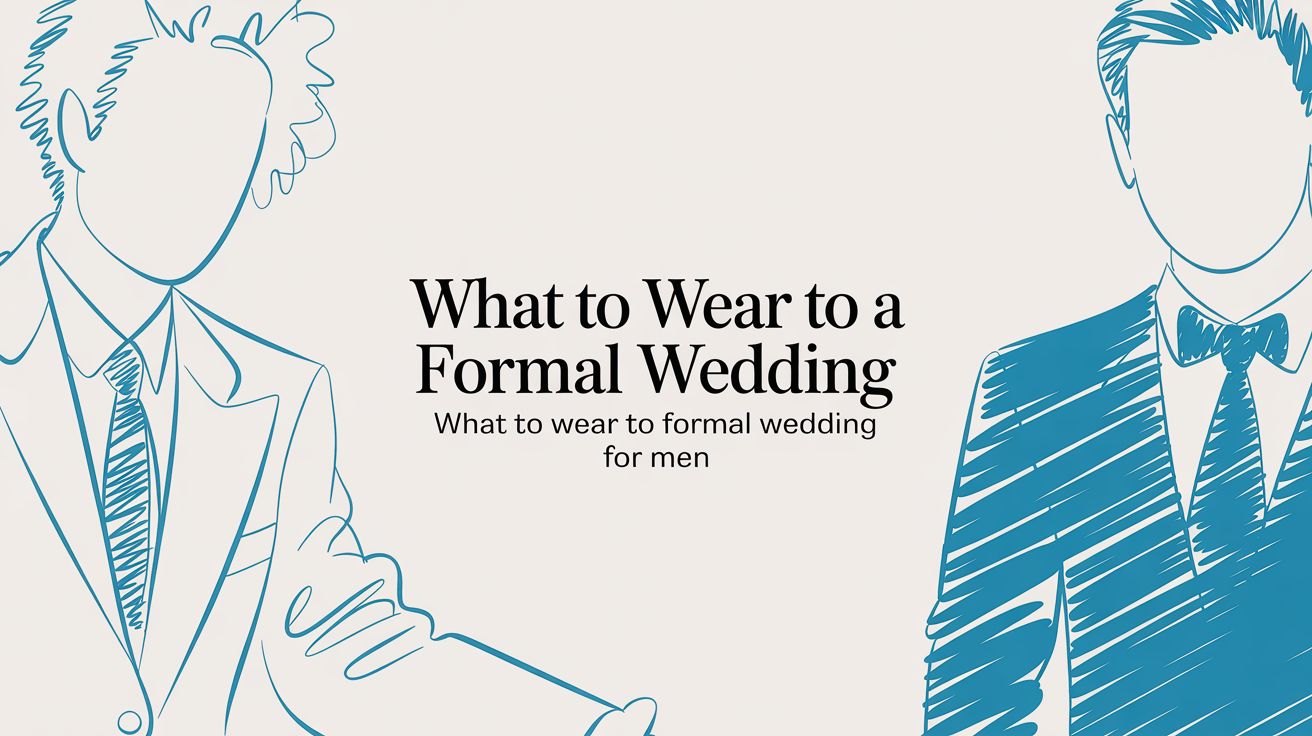
When you get an invitation for a formal wedding, the starting point is always the same: show respect for the occasion. For gentlemen, that usually means either a black tie tuxedo or a sharp, dark suit in a classic shade like navy or charcoal grey. Getting this first choice right is the foundation for a polished and perfectly appropriate look.
Key Takeaways
- Decode the Dress Code: “Black Tie” means a tuxedo, no exceptions. “Formal” or “Black Tie Optional” allows for a dark suit (navy or charcoal) as a sophisticated alternative.
- Fit is Paramount: A well-tailored suit is non-negotiable. Pay close attention to the shoulders, jacket closure, and trouser length for a sharp silhouette.
- Dress for the Season: Choose heavier fabrics like wool or flannel for autumn/winter and breathable options like lightweight wool or linen blends for spring/summer.
- Accessorise Wisely: Elevate your look with polished leather dress shoes (patent for Black Tie), a quality tie or bow tie, and subtle details like a white pocket square and classic cufflinks.
Your Guide to Formal Wedding Attire
A ‘formal’ dress code on a wedding invitation is telling you this is a significant event, and your outfit should reflect that. Think of it as a language of respect, spoken through fabric, fit, and the careful choices you make. A common mistake is to confuse ‘formal’ with ‘business’. A wedding calls for celebratory elegance, not the kind of sharp severity you’d wear to the boardroom. The aim is to look refined and comfortable, entirely in step with the gravity and joy of the day.
Figuring out the nuances of formalwear can sometimes feel like you’re trying to crack a code, but the core ideas are actually quite simple. The most crucial first step is understanding the difference between the various levels of formality. A ‘Black Tie’ instruction, for instance, is specific and not just a suggestion—it demands a tuxedo. ‘Formal’ or ‘Black Tie Optional’, on the other hand, gives you more room to move, welcoming a dark suit as an equally sophisticated alternative.
Key Principles for Formal Wedding Guests
To make sure you arrive feeling confident and looking the part, keep these foundational principles in mind:
- Read the Invitation Carefully: The dress code is your number one guide. Terms like “Black Tie,” “Formal,” and “Cocktail” each have distinct meanings, which we’ll break down in detail.
- A Perfect Fit is Everything: An off-the-rack suit that has been properly tailored will always look better than an expensive one that doesn’t fit well. Pay close attention to the shoulder seams, the length of the jacket, and how the trousers break over your shoes.
- Choose Your Colours Wisely: Dark, classic colours are your safest and most stylish bet. You can’t go wrong with a deep navy or a charcoal grey; they’re versatile and elegant for any formal wedding.
- It’s All in the Details: The small things are what take an outfit from good to great. We’re talking about polished leather shoes, a quality tie or bow tie, and subtle, well-chosen accessories.
Decoding the Formal Wedding Dress Code Spectrum
Trying to decipher the language on a wedding invitation can sometimes feel like you’re cracking a code. But don’t worry, understanding the world of formal dress codes is much simpler than it looks. Think of each term as a friendly instruction from the couple, a way to paint a picture of the atmosphere they’re creating for their big day. Getting it right is a sign of respect, and it’s the best way to make sure you feel completely comfortable and confident.
At the very top of the formalwear ladder sits Black Tie. This isn’t a suggestion; it’s a clear-cut directive for a specific, classic uniform. For a gentleman, this means one thing and one thing only: a dinner suit (often called a tuxedo). It should be black or midnight blue, with elegant satin or grosgrain lapels. Pair it with a crisp white dress shirt, a self-tied black bow tie, and patent leather shoes polished to a mirror shine. There’s no grey area here. Black Tie is a timeless, defined, and exceptionally smart dress code reserved for the most formal evening celebrations.
Black Tie Optional and Formal Attire
One step down from the strictness of Black Tie, you’ll find the more common Black Tie Optional or Formal dress code. This is where you get a bit more room to play. While a dinner suit is still absolutely welcome—and frankly, always the sharpest option—it’s not a requirement.
Here, a dark, perfectly tailored suit is a fantastic and stylish alternative. If you’re going this route, keep these points in mind for a ‘Formal’ dress code:
- Suit Colour: Stick to classic, sober colours. A deep navy or a dark charcoal grey suit is the perfect choice, giving you that formal edge without the starkness a black business suit can sometimes have.
- Shirt: A pristine white dress shirt is still your best friend. It acts as a clean, sharp canvas for your tie and lets the suit do the talking.
- Footwear: Polished black leather dress shoes, like a good pair of Oxfords, are a must. Make sure they’re well-cared-for and gleaming.
This dress code gives you flexibility while keeping the standard of dress high. The ‘optional’ part is really a courtesy from the hosts, acknowledging that not every guest will have a dinner suit hanging in their wardrobe.
This handy flowchart breaks down the key differences between Black Tie and Formal attire, helping you choose your path based on what the invitation says.
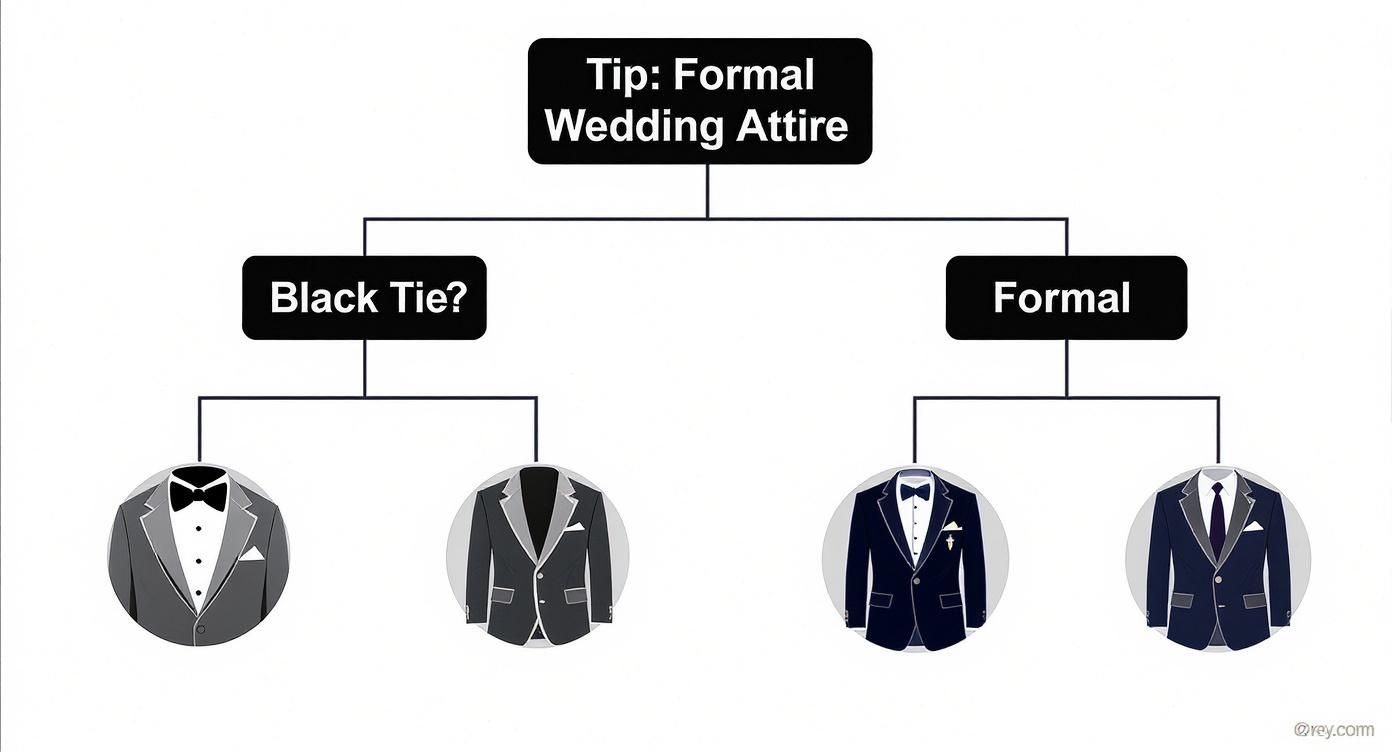
As you can see, while a dinner suit is the only way to go for true Black Tie, a dark suit is a perfectly polished alternative for a Formal or Black Tie Optional event.
Research shows that UK guests often lean towards tradition. In fact, a recent survey found 89% of male guests wore a full dinner suit for a formal wedding, and 63% of respondents felt a formal UK invitation still implies a Black Tie expectation.
Understanding Cocktail Attire
The final major player in the formal dress code family is Cocktail Attire. This code dials down the formality a notch from Black Tie Optional, but it’s still decidedly smart and celebratory. It strikes that perfect balance between formal and semi-formal, making it ideal for elegant afternoon or early evening weddings.
For gentlemen, cocktail attire still means a suit, but the rulebook on colour and coordination loosens up a bit. You could absolutely go for a suit in a lighter shade of grey or blue, especially for a spring or summer wedding. Even smart separates, like a well-fitted blazer with contrasting formal trousers, can work beautifully if you pull them together with care. A tie is generally still expected, though. It’s less rigid than its more formal cousins but a world away from casual. Understanding the subtle differences between a morning suit vs lounge suit can also help place these various levels of formality in context.
A dress code is the host’s way of telling a story about their event before it even begins. By adhering to it, you become a seamless part of that story, contributing to the beauty and respect of the occasion.
Ultimately, cracking the dress code is all about understanding the couple’s vision for their day. Whether it’s the strict elegance of Black Tie, the flexible sophistication of Formal, or the polished charm of Cocktail attire, your outfit is your way of adding to the wonderful atmosphere they’re hoping to create.
Choosing the Right Fabrics for the Season
A truly stylish outfit is about more than just the dress code on the invitation; it has to make sense for the season. Think of your suit’s fabric as the grammar of your style statement. It communicates nuance, comfort, and a real understanding of the occasion. Getting the material right ensures you not only look impeccable but actually feel it, whether you’re celebrating in the crisp autumn air or during a balmy summer evening.
Thinking seasonally is a hallmark of a well-dressed gentleman. It shows you’ve considered the entire context of the day. A heavy wool suit at a July wedding is just as out of place as a breezy linen blend in the middle of December. This attention to detail is what separates a good outfit from a truly great one.
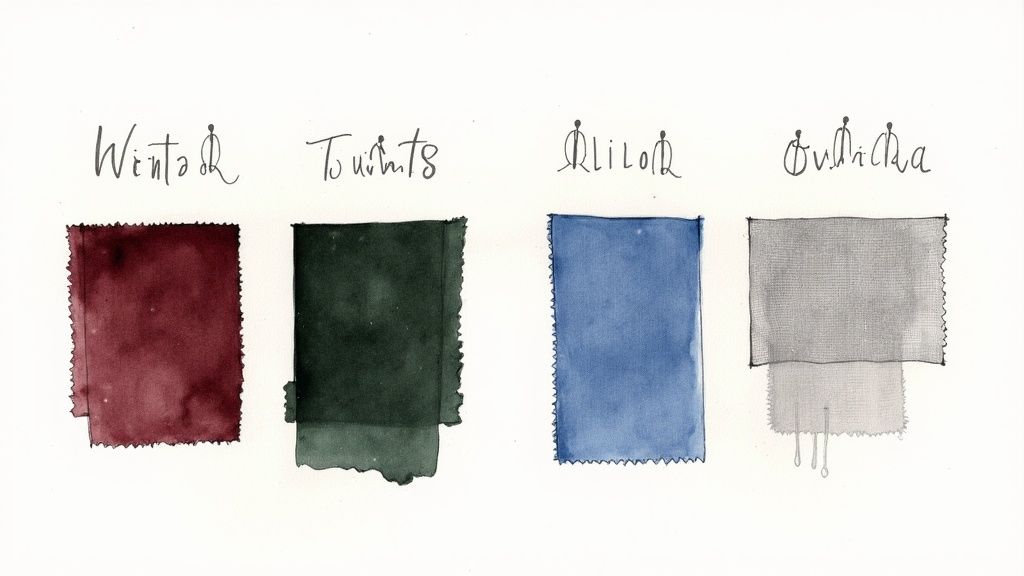
Autumn and Winter Weddings: Rich Textures and Deep Hues
When the temperature drops, your fabric choices need to offer both warmth and a certain visual weight. Autumn and winter weddings are the perfect opportunity to embrace richer, more substantial materials that add a real layer of depth to your formalwear.
These cooler months call for fabrics with a natural heft and texture. Here are some excellent options:
- Wool: The absolute cornerstone of classic tailoring. A medium-to-heavyweight wool offers brilliant structure and insulation. You can never go wrong with a fine worsted wool in charcoal or navy.
- Flannel: For a softer, more textural look, a flannel suit is exceptionally elegant. Its brushed surface adds a touch of cosy refinement, perfect for a countryside winter wedding.
- Velvet: A velvet dinner jacket is a superb choice for a Black Tie Optional event, especially in a deep jewel tone like burgundy or forest green. It’s luxurious, festive, and undeniably sophisticated.
These materials just feel right for the mood of the season. Deep, saturated colours are right at home, reflecting the rich and often more formal atmosphere of a cold-weather celebration.
A well-chosen fabric does more than just look good; it connects your attire to the environment, making your presence feel natural and perfectly attuned to the day’s atmosphere.
Spring and Summer Weddings: Breathable Elegance
For warmer weather, the focus shifts entirely. It’s all about breathability and comfort, but without ever sacrificing formality. The goal is to maintain a sharp, clean silhouette while allowing for airflow, ensuring you stay cool and collected from the ceremony to the last dance. Heavy fabrics won’t just be uncomfortable; they’ll look stuffy and out of place.
To navigate a spring or summer formal wedding with style, look for lightweight materials that hold their shape. The right choice will keep you looking crisp even as the temperature rises. For a deeper dive into cloth options, you can explore our detailed guide on the best fabrics for suits, which covers the properties of various materials year-round.
Lighter colours also come into play during this time of year. While navy remains a strong contender, shades of lighter grey and classic blue feel fresh and perfectly appropriate for the sunnier seasons.
Your top choices for warm-weather formalwear should include:
- Lightweight Wool: This isn’t your winter wool. High-twist or tropical-weight wools are specifically designed for breathability. Crucially, they resist wrinkling far better than linen or cotton, making them the superior choice for maintaining a sharp look all day.
- Linen Blends: A suit made from a linen and wool or linen and silk blend offers the best of both worlds. You get the characteristic texture and coolness of linen with the structure and wrinkle-resistance of its partner fabric.
- High-Quality Cotton: A cotton suit, especially in a twill or gabardine weave, can be a smart option. Just be sure to choose a structured cotton to avoid it looking too casual, and ensure it’s impeccably tailored.
Why a Perfect Fit Is Your Greatest Style Asset
You could be wearing a suit woven from unicorn hair and sewn with thread of gold, but if it doesn’t fit you, it’ll look cheap. Simple as that. A perfect fit isn’t just a nice-to-have; it’s the absolute foundation of great style, the secret weapon that makes a garment look like it was created just for you.
When a suit fits you properly, it speaks volumes. It says you have an eye for detail and you respect the occasion. It works with your body, not against it, carving out a sharp, clean silhouette that’s genuinely flattering. For a major event like a formal wedding, getting this right is non-negotiable.
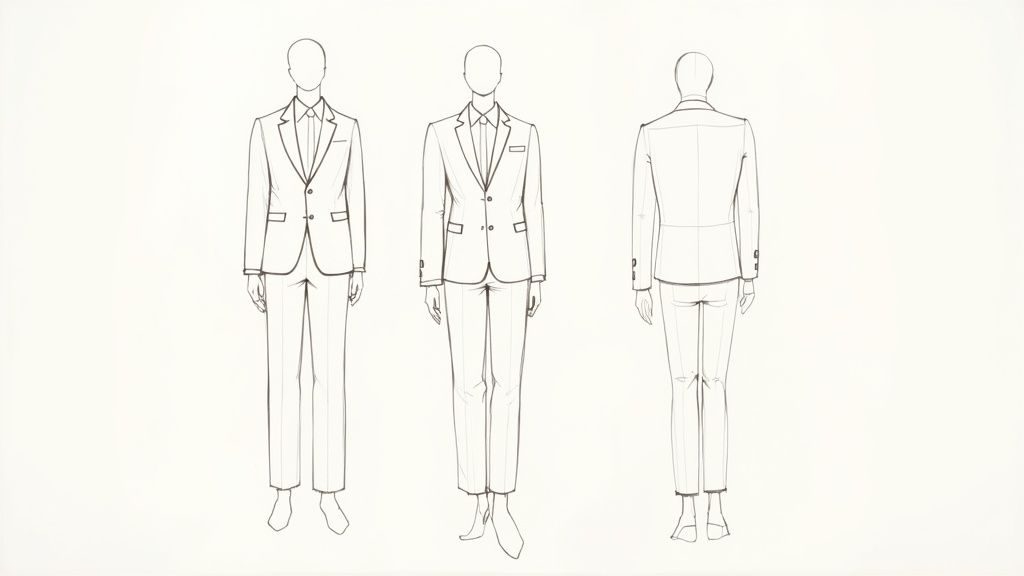
A Practical Guide to the Perfect Suit Fit
First things first, you need to know what a good fit actually looks like. Whether you’re buying off-the-rack or having something made, keep this checklist in your back pocket. Nailing these key areas will make all the difference.
Here’s what to look for in both your jacket and trousers:
- The Shoulders: This is the anchor of the whole jacket. The shoulder seam must end exactly where your natural shoulder does. If it droops over the edge, it’s too big. If it’s pulling, it’s too small. No exceptions.
- The Jacket Closure: When you do up the top button (and never the bottom on a two-button suit), the lapels should lie flat against your chest. If the fabric pulls into a strained ‘X’ shape, the jacket is too tight.
- The Sleeve Length: Your jacket sleeve should finish just above your wrist bone. The goal is to show about a quarter to half an inch of your shirt cuff. It’s a small detail that makes a huge impact.
- The Trouser Waist: Your trousers should sit comfortably on your natural waist without a belt having to winch them into place. A belt should be there for style, not for structural support.
- The Trouser Break: The ‘break’ is that little fold of fabric at the bottom of your trousers where they meet your shoes. For formalwear, a clean, subtle, single break is the modern standard. It keeps the line of the leg long and sharp.
The Power of Alterations
Let’s be honest: off-the-rack suits are designed to fit a mannequin, not a real person. They’re a starting point, which is why a good tailor is your greatest ally in the style game. A few smart alterations can take an average suit and make it look exceptional.
A well-tailored suit is like a second skin. It doesn’t just fit your body; it fits the occasion, empowering you with a sense of effortless confidence that can’t be bought off a hanger.
Investing in alterations is probably the single best-value style upgrade you can make. Simple jobs like hemming trousers, taking in the jacket waist, or shortening the sleeves are relatively inexpensive but have a massive effect on how you look. It’s the difference between you wearing the suit, and the suit wearing you.
Reaching for the Pinnacle: The Bespoke Process
For those wanting the ultimate in personal style for a formal wedding, nothing comes close to a bespoke or custom-made suit. This isn’t about simple alterations; this is about building a garment from scratch, designed around your exact measurements and tastes. For a deeper dive into this world, our guide to made-to-measure suits walks you through the entire journey.
The biggest advantage of going bespoke is control. You get to choose everything—the fabric, the lining, the style of the lapels. But this level of artistry takes time. A typical bespoke commission takes 8–12 weeks from the first consultation to the final fitting.
If you’re the groom, a groomsman, or a guest who wants to look absolutely impeccable, you need to plan ahead. Kicking off the process a few months before the wedding guarantees a relaxed, enjoyable experience and results in a suit that fits not just your body, but your personality, to perfection.
Selecting Accessories to Elevate Your Look
Once your suit is perfectly fitted and chosen for the season, the final act is accessorising. This is where you transform a great outfit into a truly personal and polished statement. Think of your suit as the main course; the accessories are the carefully selected accompaniments that bring the entire meal together, adding flavour, texture, and a touch of distinction.
The details aren’t just details; they’re what complete the outfit and show you understand the nuances of formal etiquette. A few well-chosen pieces will always make a stronger statement than an overabundance of flashy items. The guiding principle here is subtlety and quality, making sure every element works in harmony.
Starting From The Ground Up: Footwear
Your entire ensemble is anchored by your choice of footwear. For a formal wedding, there’s simply no room for casual options. Your shoes must be as impeccably chosen as your suit, and thankfully, the dress code provides a clear roadmap.
For the strictest of codes, there’s really only one correct answer:
- Black Tie: Requires black patent leather Oxfords. Their high-gloss finish is specifically designed to complement the satin details of a dinner suit, making them an essential part of the uniform.
- Formal or Cocktail Attire: Calls for highly polished black or dark brown leather shoes. Classic Oxfords are the sleekest choice, but a smart pair of Derbies can also work beautifully. The key is a clean, elegant silhouette and a brilliant shine.
Neckwear: The Centrepiece of Your Shirt
The tie area is the focal point of your upper body, drawing the eye and framing your face. For a formal wedding, your neckwear choice is dictated entirely by the suit you’re wearing.
A Black Tie invitation demands a self-tied black bow tie. While pre-tied versions exist, taking the time to learn the art of tying one yourself adds a touch of authentic character that just can’t be replicated. For a Formal or Cocktail dress code, a sophisticated silk tie is the correct choice. Opt for a classic colour or a subtle, tasteful pattern that complements your suit and shirt, avoiding anything too loud or distracting.
A gentleman’s accessories are his signature. They are the quiet details that speak volumes about his taste, his attention to the occasion, and his respect for his hosts.
The Finishing Touches: Subtlety is Key
With your shoes and neckwear sorted, the final elements are about adding quiet refinement. This is where you can inject a small measure of personality, but the rule of “less is more” reigns supreme. A few key pieces will complete your look with understated elegance.
- The Pocket Square: A simple white linen or silk pocket square, folded neatly into a straight TV fold, is a timeless and elegant addition. It adds a crisp finishing touch without competing with your tie.
- Cufflinks: If you’re wearing a double-cuffed shirt (a French cuff shirt), cufflinks are a necessity. Choose simple, classic designs in silver, gold, or mother-of-pearl.
- The Dress Watch: A slim, analogue dress watch with a leather strap is the most appropriate timepiece. It should be discreet enough to slip easily under your shirt cuff.
By focusing on these essential, high-quality pieces, you ensure your look is cohesive and polished. To truly elevate your formal wedding look, you might even explore some unforgettable wedding jewelry ideas that perfectly complement your chosen attire. For more guidance on selecting timeless pieces, you can browse our curated collection of Dandylion Style gentlemen’s accessories.
Style Guidance for the Wedding Party and Guests
While the spotlight is rightly on the couple, a truly stylish wedding is a team effort. When the entire wedding party and all the guests are on the same page, it creates a beautiful, harmonious atmosphere that elevates the whole day. It’s about creating a unified, elegant look where everyone feels confident and perfectly dressed for the occasion.
This guidance isn’t just for the groomsmen playing their vital supporting role; it’s for every single guest who has come to celebrate. For everyone involved, the principle is simple: dress with respect for the couple and the significance of their day.
For the Groomsmen: Harmonising with the Groom
The groomsmen’s first job is to complement the groom, not to outshine him. Their outfits should create a sense of unity and visual harmony, which is usually done through coordinated details that link them to the groom without being carbon copies.
There are a few classic ways to get this right:
- Coordinated Accessories: Groomsmen could wear matching silk ties or pocket squares in a colour from the wedding palette, while the groom wears a distinct, perhaps more luxurious, version.
- Varying Suit Shades: The groom might be in a sharp three-piece navy suit, with his groomsmen in two-piece suits of a slightly lighter or darker tone. It’s a subtle but effective difference.
- Subtle Boutonnières: Matching floral buttonholes are a timeless way to signify who is in the wedding party, creating a clear and elegant visual link.
The key is subtle differentiation. Exploring options for tailored suits for a wedding can help the whole party strike that perfect balance between individual style and collective elegance.
Guidance for Female Guests
For ladies attending a formal wedding, the dress code really sets the tone for the silhouette and length of their outfit. A Black Tie invitation calls for a truly elegant, floor-length gown. For Formal or Cocktail dress codes, a chic midi dress, a sophisticated knee-length number, or even a very dressy jumpsuit are all fantastic choices. And for everyone, understanding what jewelry to wear on your wedding day can be the final touch that pulls a formal ensemble together perfectly.
Wedding guest etiquette is timeless. The most important rule is to honour the bride by avoiding colours traditionally reserved for her. Your attire should celebrate the couple, not compete for the spotlight.
This brings us to a crucial point of etiquette: your choice of colour. It’s a deeply rooted tradition to avoid wearing white, ivory, or even champagne. This simple courtesy ensures the bride remains the clear focal point of her day.
This tradition holds particularly strong here in the UK. A 2023 report analysing guest attire sales found the most popular dress colours were navy (28% of sales), black (24%), and deep jewel tones like burgundy (22%). In stark contrast, white and ivory made up a mere 3% of sales, showing a clear respect for this long-standing rule.
A Few Final Pointers on Formal Wedding Attire
Even after you’ve got the dress codes down, a few nagging questions always seem to pop up when you’re finalising your outfit. Let’s tackle some of the most common queries head-on, giving you the clear, straightforward advice you need to feel completely confident in your choice. Think of this as your final check before the big day.
Can I Wear a Black Suit to a Formal Wedding?
Technically, yes, but it’s rarely the best move. A standard black lounge suit can often feel a bit corporate, or worse, funereal—not quite the celebratory vibe you’re going for. A deep navy or a sharp charcoal grey suit hits the same level of formality but with a much more sophisticated and occasion-appropriate feel.
The only time black is a must is for a Black Tie event, which demands a proper black tuxedo (or dinner suit). A tuxedo is a different beast entirely from a regular business suit, with its distinct satin lapels and unique details. For almost any other formal wedding, stick with navy or charcoal; you simply can’t go wrong.
Is a Bow Tie or a Regular Tie Better?
This isn’t a matter of personal preference; the dress code has the final say here. A Black Tie invitation is a strict directive: you must wear a black bow tie with your tuxedo. It’s a non-negotiable part of the uniform.
For any other formal code, like ‘Formal’ or ‘Cocktail’, a classic silk necktie is the more fitting and polished choice to pair with your lounge suit. Go for a subtle pattern or a solid colour that complements your suit and shirt. Trying to wear a bow tie with a regular suit at a wedding often looks a little out of place, as if you’re trying to be a bit too quirky.
What if the Invitation Has No Dress Code?
When an invitation leaves you guessing, you have to play detective. Let the context clues be your guide. First, consider the venue. A grand hotel or a historic country estate naturally calls for a higher degree of formality than a rustic barn or a beachside setting.
Time of day is another big hint—evening weddings are almost always more formal than afternoon affairs. When in doubt, it’s always better to be slightly overdressed than underdressed. A beautifully tailored dark navy or charcoal suit, a crisp white shirt, and polished leather shoes is an impeccable, fail-safe choice for just about any wedding scenario. It shows respect for the couple and the gravity of the day.
Are Smart Trainers Ever Acceptable?
Let’s make this crystal clear: for any event described as ‘formal’, trainers are never, ever appropriate. It doesn’t matter how clean they are, how expensive they were, or what brand they are. A formal dress code is a signal of respect for the couple and the occasion, and your footwear is the anchor of that respect.
Your shoes ground your entire outfit. You need to stick to polished leather dress shoes—think classic Oxfords or Derbies. If the code is Black Tie, patent leather is the only correct option. Choosing trainers would instantly dismantle the formality of your suit and all the effort you’ve put into looking sharp. Don’t be that guy.
Frequently Asked Questions
What is the safest colour suit to wear to a formal wedding?
The safest and most stylish choices are a dark navy or charcoal grey suit. These classic colours are universally appropriate for formal occasions, striking the perfect balance between celebratory elegance and respectful formality. They are versatile for both daytime and evening events and provide an excellent canvas for a crisp white shirt and a tasteful silk tie. Avoid a standard black business suit, as it can sometimes appear too severe or funereal for a wedding celebration.
Do I have to wear a tuxedo for a ‘Black Tie Optional’ wedding?
No, a tuxedo is not mandatory for a “Black Tie Optional” event. While a tuxedo is always a welcome and impeccably sharp choice, this dress code gives guests flexibility. The ‘optional’ part is a courtesy, allowing you to wear a dark, perfectly tailored suit instead. Opt for a navy or charcoal suit paired with a white dress shirt, a conservative silk tie, and polished black leather shoes. This ensures you still look elegant and appropriate for the formal setting.
How can I make my suit look more formal?
To elevate a standard suit for a formal wedding, focus on the details. Start with a pristine, well-ironed white dress shirt as your base. Choose a high-quality silk tie in a subtle, classic pattern or a solid dark colour. Add a simple white linen or silk pocket square with a clean, straight fold. Finally, ensure your shoes are polished black leather Oxfords, your belt matches your shoes, and you wear simple, elegant cufflinks. These refinements collectively create a much more formal impression.
Is it acceptable to wear a patterned shirt to a formal wedding?
It’s best to stick to a solid white or, at a push, a very light blue dress shirt. A formal wedding calls for a classic and understated look, and a plain white shirt acts as the perfect clean canvas for your suit and tie. A patterned shirt, even a subtle one, can look too busy and detract from the overall formality of your attire. The goal is timeless elegance, and a crisp white shirt is the most reliable way to achieve that.
About the Author
Igor is the founder and visionary behind Dandylion Style, a brand built on a profound passion for the art of gentlemen’s tailoring. With years of experience in the bespoke industry, Igor has dedicated his career to helping men discover the confidence that comes from a perfectly fitting garment. He believes that true style is timeless, transcending fleeting trends to focus on quality craftsmanship, impeccable fit, and personal expression. At Dandylion Style, Igor’s mission is to provide expert guidance, creating enduring pieces that become cornerstones of a modern gentleman’s wardrobe.
At Dandylion Style, we create garments that are a true reflection of you. Explore the art of bespoke tailoring and book your personal consultation today.