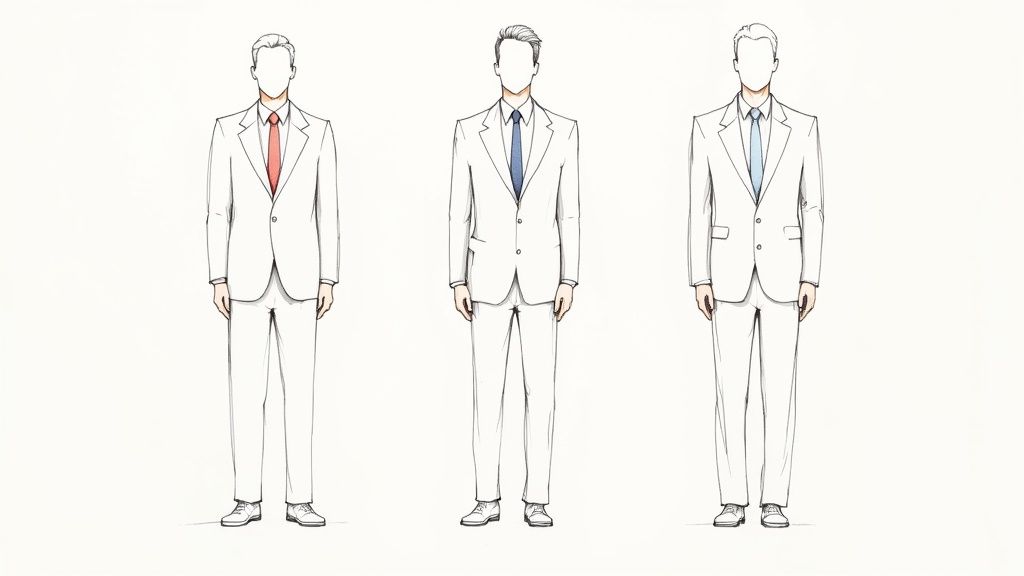
Your wedding suit is far more than just something to wear; it's a defining part of one of the biggest days of your life. Nailing that perfect look comes down to understanding the tailoring timeline, making smart fabric choices, and knowing the difference between a bespoke and a made-to-measure suit. This checklist is your game plan to ensure you feel incredible and look impeccable when it counts.
Key Takeaways
Start Early: Begin your suit tailoring process at least 4-6 months before your wedding to allow ample time for consultations, fittings, and adjustments without stress.
Fabric is Foundational: The choice of fabric dictates the suit's comfort, style, and seasonality. Opt for lightweight linen for summer weddings and richer wools or tweeds for cooler months.
Bespoke vs. Made-to-Measure: Understand the difference. Bespoke suits are crafted from a unique pattern made just for you, offering ultimate customisation, while made-to-measure adapts a pre-existing template.
Details Define the Suit: Personal touches like button choice, lining fabric, and monogramming are what elevate a tailored suit into a unique, personal statement piece for your wedding day.
Your Essential Wedding Suit Checklist
Stepping into the world of tailoring can feel like a big undertaking, but it’s an incredibly rewarding process that ends with a suit that fits you perfectly. Let's break it down into simple, manageable steps to make sure the suit you end up with is exactly what you’ve been picturing.
Here are the key points to keep front of mind:
Timing is everything. Seriously. You’ll want to kick off the process at least 4-6 months before the wedding. This gives you plenty of breathing room for consultations, a few fittings, and any final tweaks without a frantic rush at the end.
Set a realistic budget. Get a clear picture of what goes into the cost—the fabric you choose, the way the suit is constructed, and any custom details you add. It's also wise to plan for potential extras like a matching waistcoat or a custom-made shirt.
Think about fabric and season. The material of your suit should feel right for the time of year and your venue. A lightweight linen is brilliant for a summer wedding, whereas rich wools and tweeds are a much better fit for the cooler months. For more inspiration, check out our guide on different suits to wear for a wedding.
While your suit is a major focus, remember it's just one piece of the puzzle. As you're planning, it's a good idea to explore other essential wedding services to make sure every detail of your day comes together beautifully.
Starting Your Bespoke Journey
That first meeting with your tailor is where the magic really begins. This isn't a sales pitch; it's a collaborative design session where the vision for your wedding suit starts to take shape. It’s your chance to build a relationship, share your ideas, and tap into the expertise of a craftsman who will guide you through every choice ahead.
Think of this meeting as laying the foundation for your entire wedding day look. A good tailor will want to get a real feel for your wedding, not just what you want to wear. It’s this conversation that turns the process from simply buying a suit into creating a personal statement piece for one of the biggest moments of your life.
Preparing for Your First Consultation
Coming prepared makes the conversation flow so much better and ensures we’re on the same page from the get-go. No one expects you to be a fabric expert, but having a starting point helps your tailor grasp your aesthetic and the atmosphere you're trying to create.
Bring along anything that inspires you. Seriously, anything.
Inspiration Photos: Pull together images of suits, styles, or even small details you love from magazines, blogs, or Pinterest boards.
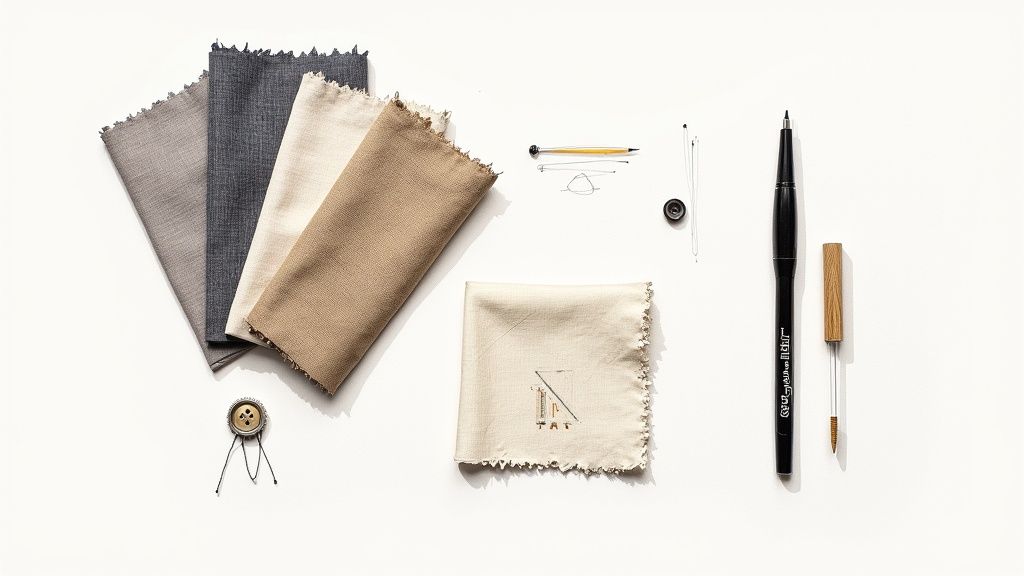
Colour Swatches: If you’ve got specific colours for your wedding theme—like bridesmaid dresses or floral arrangements—bring physical swatches. It makes matching or finding a complementary tone a hundred times easier.
Venue Details: Photos of your venue are incredibly helpful. A suit for a rustic barn wedding is going to be very different from one for a formal ceremony in a city hotel.
"Your initial meeting is a dialogue. The more context you provide—your personal style, the wedding's theme, the season—the better your tailor can translate that into a garment that feels authentically you."
This first appointment is also your chance to ask those all-important questions. Being ready with some general key questions to ask all your wedding vendors can help establish a brilliant working relationship right from the start.
Communicating Your Vision Effectively
Don't just rely on pictures and swatches. Talk openly about the feeling you want on your wedding day. Is it a relaxed, bohemian affair on the coast, or a classic, black-tie event? Discussing these elements helps the tailor recommend the right fabrics, cuts, and styles that won't just look great but will feel comfortable and right for the setting.
Your job is to share the dream; your tailor's is to bring it to life with technical skill and an artistic eye. We've seen a huge surge in demand for tailored suits for wedding celebrations recently, and it really shows a shift towards personal expression.
This growing appetite is clear across the UK. According to Bridebook's UK Wedding Report, a massive 68% of grooms now choose a bespoke or tailored suit. That’s a huge jump from just 52% five years ago. It’s clear that men want unique, versatile outfits that truly reflect their individual style.
It's this collaborative spirit that separates a truly special garment from something you just pick up off the rack. For anyone weighing their options, understanding the differences between a fully bespoke creation and a high-quality made-to-measure suit is a great next step. A great tailor will listen, offer suggestions you might not have even considered, and ultimately become a trusted partner in crafting a suit that makes you feel incredible.
Choosing Fabrics, Linings, and Personal Details
Once you’ve had your initial consultation and we’ve sketched out the vision, we get to one of the best parts of the entire journey: making the choices that give your suit its true character. This is where we move from ideas to the tangible elements. It’s the moment your suit’s personality really starts to take shape.
The fabric is the very soul of the garment. It dictates everything—how it looks, how it feels, and how it performs on the day. This choice is deeply personal and will be guided by the season, the formality, and the overall feel of your wedding. A summer celebration on the coast calls for something completely different than a formal winter event in a historic manor, after all.
Selecting the Perfect Fabric
The weight and weave of the cloth are critical. Fabric weight, measured in ounces or grams per square metre, determines how the suit drapes and how warm it will be. Lighter cloths are typically under 9oz, while heavier winter options can be 12oz or more. For a groom, getting this right is non-negotiable for both comfort and style.
Here are a few popular options we often work with:
Wool: The absolute cornerstone of men's tailoring. A mid-weight worsted wool is a brilliant all-rounder for most British weather, offering a beautiful drape and natural wrinkle resistance.
Linen: The go-to for warm-weather or destination weddings. Linen is lightweight, breathable, and its tendency to crease is all part of its relaxed charm—perfect for less formal ceremonies.
Tweed: A robust, textured wool fabric that’s spot-on for autumn and winter weddings, especially those with a rustic or countryside theme. It brings warmth and a distinctively classic British look.
Velvet: For a touch of festive opulence, nothing beats a velvet dinner jacket for an evening reception or a formal winter wedding. It just adds an incredible texture and luxurious feel.
Making an informed decision is key. If you want to take a deeper dive into cloth options, our guide on the best fabrics for suits can provide a bit more clarity.
"The cloth you choose is your suit's first impression. It sets the tone before any detail is even noticed. Take your time, feel the swatches, and imagine how it will perform on your wedding day."
To help you navigate the options, we've put together a quick guide that breaks down the best fabrics by season and formality. This should give you a solid starting point for our discussions.
Wedding Suit Fabric Guide by Season and Formality
Fabric Type
Best Season
Formality Level
Key Characteristics
Worsted Wool
All Year
Versatile (All Levels)
Durable, drapes beautifully, wrinkle-resistant
Linen
Spring/Summer
Casual to Semi-Formal
Highly breathable, lightweight, relaxed texture
Tweed
Autumn/Winter
Semi-Formal to Casual
Warm, textured, rustic, extremely durable
Velvet
Autumn/Winter
Formal (Evening)
Luxurious, soft, rich colour depth
Cotton
Spring/Summer
Casual
Breathable, crisp, less formal than wool
Silk Blends
Spring/Summer/Warm Autumn
Formal
Lustrous sheen, lightweight, luxurious feel
Ultimately, the best way to choose is to see and feel the fabric swatches in person. There's no substitute for experiencing how the material handles and how its colour looks in natural light.
The Hidden World of Linings
While the outer fabric gets most of the attention, the lining is where you can inject a real dose of personality. Think of it as a hidden detail that’s just for you, revealed only when your jacket is unbuttoned. This is your chance to add a secret story to your garment.
Your choices range from understated classics to bold statements. You might opt for a traditional silk in a solid colour that complements your suit, or perhaps a vibrant paisley or geometric pattern that echoes your wedding colours. We've even had grooms choose custom-printed linings featuring maps of a meaningful location or a unique motif.
A quality lining does more than just look good; it helps the jacket glide on smoothly and adds a layer of structure. Materials like silk or cupro (a breathable, silk-like cellulose fibre) are excellent choices for both comfort and durability.
Finishing Touches That Make It Yours
The small details are what elevate a well-made suit into a truly personal masterpiece. These are the final flourishes that distinguish a bespoke garment from anything you could find off the rack. It’s here your personality can shine through in subtle yet significant ways.
These custom details are where the artistry of tailoring really comes into its own:
Buttons: Never underestimate the impact of good buttons. You can choose from classic horn, mother-of-pearl for a touch of lustre, or even metal for a more contemporary edge. The right colour and material can subtly tie the whole look together.
Monogramming: A classic bespoke detail is having your initials, or perhaps your wedding date, embroidered on the inside of your jacket. It’s a timeless, personal mark that makes the suit unequivocally yours.
Lapel Buttonhole: A working buttonhole on your lapel, known as a boutonnière, is a hallmark of a high-quality tailored suit. We can even stitch it in a contrasting colour thread to match your wedding theme for a subtle yet distinctive touch.
Every one of these choices contributes to the final character of your tailored suits for wedding attire. They are conversation starters and personal signatures that ensure your garment is as unique as the day itself.
Defining Your Cut Style and Silhouette
Once you’ve settled on the fabric, it’s time to get into the architecture of your suit. The cut and silhouette are what truly sculpt the garment to your body, influencing not just how it fits, but how it makes you feel. The right silhouette projects confidence, creates a sense of occasion, and perfectly complements your wedding's entire aesthetic.
Think of the cut as the suit's blueprint. It’s a combination of tradition and personal preference that gives the jacket its structure. This is where you decide between the sharp, defined shoulders of a classic British suit or the softer, more relaxed drape of an Italian silhouette. Neither is better; the goal is to find the style that works with your body type and the atmosphere of your wedding day.
Key Architectural Elements of Your Suit
Several key details work together to create the final look, and each one has a distinct impact on the suit's formality and overall shape. Getting these elements right is crucial for crafting a suit that feels both timeless and personal.
Here are the primary components your tailor will walk you through:
Lapels: Arguably the most defining feature of a jacket, the lapel style immediately sets the tone.
Button Stance: This is all about the placement of the buttons, which influences the 'V' shape on your chest and the suit's overall proportion.
Vents: These are the slits at the back of the jacket that allow for movement and affect how the suit hangs.
Recent trends in the UK wedding scene show a real return to timeless styles. According to one report, a significant 73% of grooms opted for a classic lounge suit. Versatility is clearly a driving factor here, with 45% choosing a single-breasted, two-button jacket with side vents—a combination celebrated for its adaptability across different formalities.
Making Informed Choices About Lapels and Buttons
The lapel is a powerful tool in tailoring. It can draw the eye upwards, broaden the shoulders, and signal the importance of the event. Understanding your options is the first step towards defining your suit's character.
Lapel Styles Explained
Notch Lapel: The most common style you'll see, where the lapel and collar meet in a 'V' shape. It’s a versatile and classic choice, at home on everything from a business suit to relaxed wedding attire.
Peak Lapel: More formal and dynamic, the peak lapel points upwards towards the shoulder. It creates a strong line that can add a bit of perceived height and sartorial flair, making it a hugely popular choice for wedding suits.
Shawl Lapel: A smooth, rounded lapel with no notches or peaks. This style is reserved for evening wear and is most commonly seen on dinner jackets and tuxedos.
The lapel you choose is a statement. A peak lapel adds a touch of drama and elegance, perfect for a groom looking to stand out, while a classic notch lapel offers an air of understated sophistication.
Equally important is the buttoning of your jacket. The main decision here is between single-breasted and double-breasted styles. Single-breasted jackets feel modern and are incredibly versatile. Double-breasted jackets, on the other hand, offer a more traditional, formal, and commanding presence. If you're weighing the options, our detailed comparison can help you decide between a double-breasted vs single-breasted suit.
The Subtle Impact of Vents and Pockets
While they might seem like minor details, the vents at the back of your jacket play a crucial role in both fit and function. They're there to make sure you can move comfortably without the jacket pulling or creasing.
Vent Options
Centre Vent: A single slit up the middle of the back. It’s a more traditional, American style that gives a clean, simple line.
Side Vents: Two slits, one on either side of the back. This is a classic British style that allows for greater movement, prevents the jacket from creasing when you sit down, and offers a more flattering drape over the hips.
No Vent: A sleek, Italian-inspired option that offers a very clean silhouette but can restrict movement a bit.
Pockets also contribute to the suit's overall style. Jetted pockets (thin slits) are the most formal, while flap pockets are the standard for most lounge suits. Patch pockets, which are sewn onto the outside of the jacket, give a much more casual, relaxed feel, often found on summer blazers or sports coats.
Each of these small but significant choices adds up, layering together to create a cohesive and impeccably styled silhouette for your wedding day.
Bringing Your Suit to Life: The Fitting Process
This is where the real magic happens. The fitting process is where a two-dimensional paper pattern and a length of cloth start their journey to becoming a garment that’s sculpted perfectly to your body. It’s not just a quick appointment; think of it as a series of collaborative sessions where we work together to refine every single line and contour.
Understanding what goes on at each stage really helps demystify things, turning what could be a bit daunting into one of the most exciting parts of your wedding prep. Each fitting builds on the last, all leading to that flawless final suit. Honestly, a proper fitting process is what makes a bespoke suit truly special.
Your First Fitting: The Skeleton Baste
Once your measurements are taken and the cloth is cut, your first proper fitting involves what we call a 'baste' or 'skeleton' suit. It’s a loosely stitched-together version of your jacket and trousers, usually with big white basting threads still showing. There's no lining, no proper pockets—it’ll feel rough and unfinished, and that's exactly the point.
This first stage is all about getting the fundamental balance of the garment right on your frame. We’re looking at the big picture here.
The Shoulders: Is the jacket sitting cleanly without any pulling or bunching?
The Chest and Back: Have we allowed the right amount of room for a smooth, clean drape?
Trouser Rise and Seat: How do the trousers hang? Are they comfortable from the waist down?
At this point, I’ll be using chalk and pins to make some pretty significant structural adjustments. It’s a crucial step because it’s far easier to alter the core shape now than when the suit is nearly finished. For anyone new to this, it’s always fascinating to see the suit start taking shape right there on your body. If you’re curious about the measurements that get us to this point, our guide on how to measure yourself for a suit has all the details.
The Second Fitting: Refining the Details
When you come back for your next fitting, usually a few weeks later, you’ll see something that looks much more like an actual suit. The big structural changes from the first fitting have been made, the main seams are properly sewn, and key elements like pockets and lapels are now in place.
This meeting is all about refinement. We shift our focus from the broad strokes to the finer details that really perfect the fit. We’ll check the sleeve pitch (the angle they hang from your shoulder), get the jacket length just right, and sort out the trouser break (how the hem sits on your shoes). It's also when we fine-tune the waist to create that flattering, sculpted shape.
"A bespoke suit is a conversation between the cloth and the body, moderated by the tailor. Each fitting is a new chapter in that dialogue, moving closer to a perfect resolution."
This is your moment to give real feedback on how the suit feels. Is there enough room to lift your arms without restriction? Does it pull anywhere when you sit down? Honest communication is absolutely vital here; the goal is a garment that not only looks incredible but feels like it was made for you. Because, well, it was.
The Final Fitting and Collection
The final fitting is where you see all the painstaking work come together. By now, the suit should be looking and feeling nearly perfect. The lining is in, the buttons are on, and all the buttonholes have been beautifully stitched. This last session is really for making those tiny, final tweaks—maybe letting the waist out by a couple of millimetres or adjusting a sleeve length ever so slightly.
Once both of us are 100% happy, the suit gets a final press and is prepared for you to take home. This whole journey, from that first chat to this final moment, is precisely why starting the process early is so important. You’re not just buying another suit off the rack; you’re commissioning a piece of personal craftsmanship.
Bespoke Wedding Suit Timeline and Milestones
To give you a clearer picture of the journey, here’s a typical timeline for commissioning a bespoke wedding suit. Remember, these are averages—the exact timings can vary based on fabric availability and how complex your design is. Starting early is always the best policy.
Milestone
Typical Timing (Before Wedding)
What to Expect
Key Decisions to Make
Initial Consultation
6-12 Months
A relaxed chat to discuss your vision, wedding theme, and style preferences. We'll explore cloths and linings.
Your detailed measurements will be taken—around 30 different points. The cloth is ordered.
Finalise fabric and lining choices. Confirm design details.
First Fitting (Skeleton Baste)
3-4 Months
Trying on the loosely stitched 'skeleton' suit. Major structural adjustments are made.
Give feedback on the core fit: shoulders, chest, back, and trouser hang.
Second Fitting (Refinement)
2-3 Months
The suit is now mostly constructed. We'll focus on fine-tuning the silhouette and details.
Assess comfort and movement. Fine-tune sleeve length, jacket waist, and trouser break.
Final Fitting & Collection
4-6 Weeks
The suit is complete. We'll make any final, minor adjustments and ensure it's absolutely perfect.
Final approval of the fit and finish. Arrange collection.
Planning ahead removes any stress and makes the entire experience enjoyable. It gives us the time we need to get every single detail right for your big day.
Understanding the Cost and Value of Your Suit
When you decide to get a suit tailored for your wedding, you're not just buying an outfit. You're investing in the fit, the quality that lasts, and the sheer confidence that comes from wearing something made just for you. The final price tag is shaped by a few key things, and knowing what they are helps you see where the real value lies and plan your budget properly.
The biggest factor, hands down, is the fabric. A beautiful wool from a historic British mill will naturally sit at a higher price point than a standard cotton or linen blend. After that comes the construction. A fully canvassed jacket, which drapes better and lasts longer, takes a lot more skill and time to create than a fused or half-canvassed one. It’s these details that make all the difference.
Breaking Down the Investment
Commissioning a tailored suit means you’re paying for deep expertise and a completely personal experience. Every single choice, from the hand-stitched buttonholes to the lining and buttons, helps shape the final garment. All these details, along with the multiple fittings needed to get that perfect silhouette, are factored into the final cost.
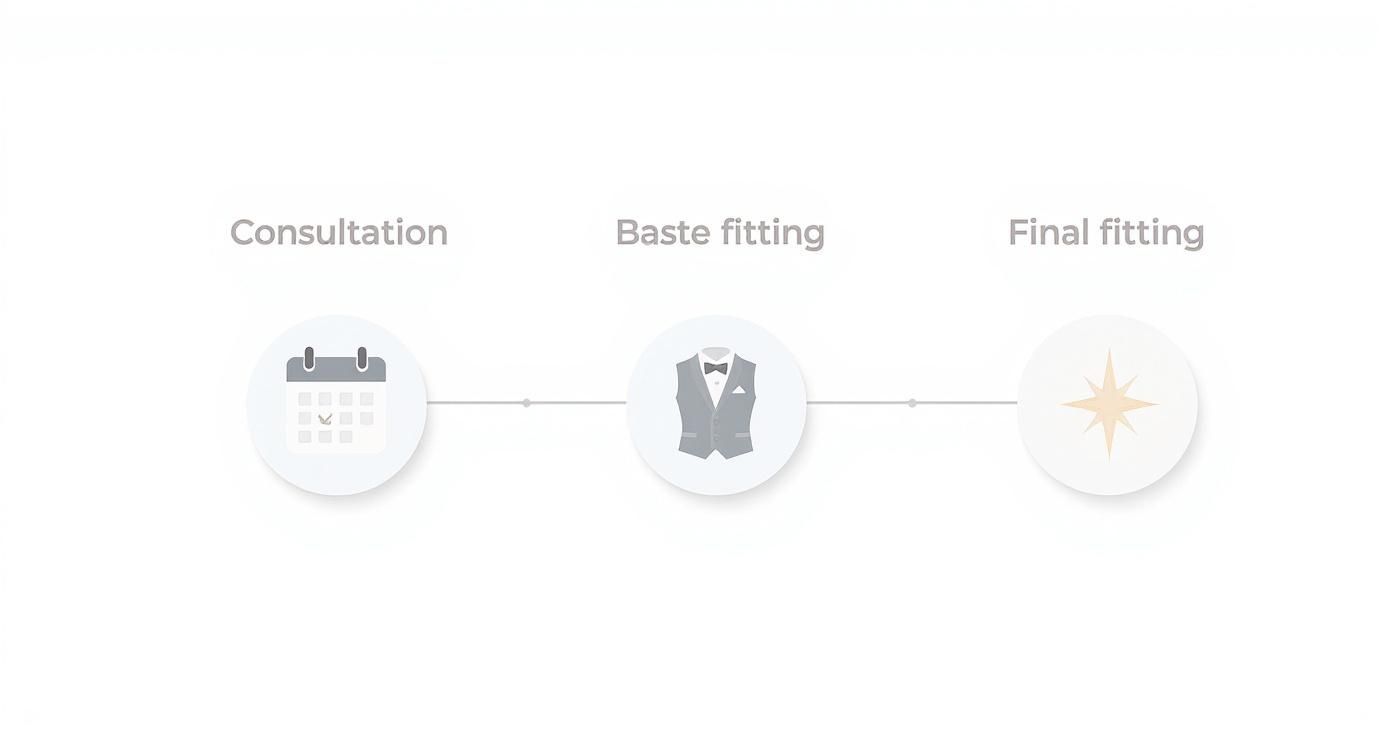
This isn't an off-the-rack purchase; it's a process. This infographic gives you a glimpse into the typical fitting journey, which is a massive part of the value you're getting.
As you can see, you’re investing in a service as much as a product. Each stage is dedicated to perfecting the suit until it fits you like a second skin.
And it’s a service that’s becoming more popular. The UK’s custom suits market shot up from £980 million to £1.2 billion in just four years, largely because grooms want something special for their wedding day. The average spend on a bespoke wedding suit hit £850, with 22% of grooms investing over £1,200 for top-tier materials and personalisation. It’s clear that quality craftsmanship is something people are willing to pay for. You can dive deeper into the numbers in the custom suits market report.
Planning for Extras and Alterations
It’s always a good idea to think beyond just the suit itself. Budgeting for a few extras can really pull your entire wedding day look together, giving you that polished, cohesive feel.
Here are a few things to consider:
Matching Waistcoat: Nothing says "wedding day" quite like a three-piece suit. It just adds that extra layer of formality and sophistication.
Custom Shirt: A made-to-measure shirt fits perfectly under your jacket, so you won’t have to deal with any annoying bunching or pulling.
Accessories: Think about custom ties, pocket squares, or even cufflinks that connect back to your wedding’s colours or theme.
While a bespoke suit costs more upfront than one from a high street shop, its real value comes out over time. A perfectly fitted suit made from quality cloth will last you for years, becoming a go-to piece in your wardrobe long after you’ve said "I do."
One last thing. Even though a bespoke suit is made to your exact measurements, small final tweaks are sometimes needed, especially if your weight changes a bit as the big day gets closer. A good tailor will handle these minor adjustments, but it’s smart to keep a small contingency fund in your budget for any last-minute changes. It’s all about making sure your investment fits absolutely perfectly when it matters most.
Frequently Asked Questions
How far in advance should I order my wedding suit?
You should begin the process at least four to six months before your wedding. This timeline provides a comfortable buffer for the initial consultation, fabric selection, and multiple fittings required for a perfect result. For highly sought-after tailors or intricate designs, starting even earlier, around nine months out, is advisable. This ensures a relaxed, enjoyable experience and guarantees your suit is ready well ahead of your wedding day, eliminating any last-minute stress about your attire.
What is the difference between bespoke and made-to-measure suits?
A bespoke suit is created entirely from scratch, using a unique pattern drafted specifically for your body. This allows for unlimited customisation and a perfect fit. In contrast, a made-to-measure suit starts with a standard, pre-existing pattern which is then adjusted to your measurements. While a step up from off-the-rack, it offers less personalisation than bespoke. For a truly unique garment that fits like a second skin, the bespoke process is the pinnacle of gentlemen's tailoring.
Can I wear my tailored wedding suit after the event?
Absolutely. One of the greatest benefits of investing in a classic tailored suit is its longevity and versatility. By choosing a timeless fabric like a mid-weight wool in navy, grey, or charcoal, your wedding suit becomes a valuable staple in your wardrobe. It can be worn for other formal events and business meetings, or styled as separates. The jacket can be paired with chinos or the trousers with another blazer, extending its life far beyond your wedding day.
What if I gain or lose weight before the wedding?
This is a common concern and a key reason why the fitting process is so important. A professional tailor anticipates minor weight fluctuations. We schedule the final fitting very close to the wedding date to make any necessary last-minute adjustments. Seam allowances are intentionally built into the garment, allowing it to be taken in or let out slightly. Open communication about any fitness plans ensures we can work together to guarantee a perfect fit when it matters most.
What should I bring to my first tailor consultation?
For your first consultation, bring anything that inspires you. This can include photos of suits you like from Pinterest or magazines, colour swatches that match your wedding theme, and even pictures of your venue. This context helps the tailor understand the desired aesthetic and formality. Discussing the overall feeling you want to achieve—be it formal elegance or relaxed charm—is just as important. The more information you provide, the better your tailor can translate your vision into the perfect suit.
About the Author
Igor is the founder of Dandylion Style, a brand built on a lifetime's passion for classic British tailoring and true craftsmanship. He has dedicated his career to the art of helping gentlemen discover and express their own unique style through perfectly cut and finished clothing. For Igor, a suit—especially a wedding suit—is never just an item of clothing. He sees it as a statement of intent, the mark of a truly significant moment in a man's life, and something that should be crafted well enough to become a future heirloom.
Written by:
Igor Srzic-Cartledge
Igor is the founder of Dandylion Style, a tailoring house built on the simple, deeply held belief that a suit should be like a second skin—a true extension of a gentleman’s personality. For Igor, tailoring isn't just about cutting cloth; it's an art form dedicated to creating unique, perfectly fitted attire for the discerning man. His passion is rooted in classic sartorial traditions, yet he maintains a keen eye for contemporary style, ensuring his creations are both timeless and relevant. This approach has cemented his reputation for genuine craftsmanship and a truly personal service.
Key Takeaways The Core Two: Navy blue and charcoal grey are the essential, non-negotiable suit colors for any professional wardrobe. Navy offers versatility and approachability, while charcoal projects authority and seriousness. Context is Crucial: The best suit color...
When you find a piece of clothing you absolutely love, getting the fit just right is the final, transformative touch. But how much should you expect to pay? In the UK, alteration costs can be as modest as £15 for a simple trouser hemming, or climb to £150 and beyond...
Getting the right pink shirt and tie combination is the mark of a well-dressed man. It’s a detail that separates the novices from those who truly understand their wardrobe. For a look that’s classic and can’t miss, pair your pink shirt with a navy, grey, or burgundy...
Key Takeaways For those seeking a quick overview, this section summarises the essential rules and recommendations for incorporating turn-up trousers into your wardrobe. Sartorial Purpose: Turn-ups add weight to the trouser hem, ensuring a cleaner, sharper drape,...
Deciding what colour tie to wear with a pink shirt is a common style query I hear from clients. For a classic, professional look that never fails, your safest and most effective choices are navy blue and charcoal grey. If you're heading to a more contemporary or...
You've just picked up a newly finished bespoke suit, and the cloth still has that clean, disciplined line only a real fitting room can give it. The temptation is to put it straight in the wardrobe and trust the label to do the rest. That's where expensive...
Book Your Tailoring Consultation
Looking for a suit or garment made specifically for you?
At Dandylion Style, we create bespoke and made-to-measure
garments tailored to your individual shape, style and occasion.
From suits and shirts to dresses, waistcoats and alterations,
our experienced tailors can help you create something truly unique.