Finding the best bespoke suits in London isn't about a quick purchase; it's about entering a unique partnership with a tailor. This collaborative process involves creating your pattern from scratch, a journey that typically takes 8-12 weeks and several fittings to perfect. Think of it as an investment in a flawless fit and a style that is unequivocally you—a world away from made-to-measure services.
Key Takeaways
True Bespoke vs. Made-to-Measure: The defining feature of a true bespoke suit is a unique paper pattern drafted from scratch for each client, unlike made-to-measure which alters a pre-existing template.
The London Cut: London's iconic tailoring style is characterised by structured shoulders, a sculpted chest, and clean, architectural lines, creating a powerful and elegant silhouette.
Process & Timeline: Expect a collaborative journey of 8-12 weeks, involving an in-depth consultation and at least two to three fittings to achieve a perfect fit.
Choosing a Tailor: Look for a "house style" that matches your aesthetic, assess the quality of sample garments, and ensure transparency in pricing and the fitting schedule.
Sustainable Investment: Bespoke suits are an inherently sustainable choice, designed for longevity. Many London tailors now prioritise ethically sourced, natural materials.
Your Guide to the Perfect London Bespoke Suit
Commissioning a bespoke suit is one of the most exciting ventures in personal style you can undertake. It’s a world apart from simply buying clothes off a rail. This is a true partnership between you and your tailor, a creative process designed to build a garment that is yours in every single sense of the word. Forget thinking of it as a transaction; it's an experience, one that results in something that perfectly reflects both your body and your personality.
Consider this guide your roadmap. We’re here to demystify the entire journey, breaking down each step from that first conversation right through to the final, perfect stitch. We'll boil down the sometimes-intimidating world of London tailoring into clear, practical advice.
Understanding the Core Components
To navigate the world of bespoke with confidence, you need to get to grips with the three pillars that define any commission. Understanding these will empower you to ask the right questions at a consultation and make choices you feel great about.
Craftsmanship: This is the soul of the suit—the human touch. It’s the skill of the cutter who drafts your unique pattern and the sewer who brings it to life. You’ll see it in the hand-padded lapels that roll beautifully, the perfectly matched patterns across seams, and the effortless way the jacket drapes from your shoulders.
Cloth: The fabric is the very heart of your suit. Your choice here dictates everything: its weight, its texture, and how it will perform through different seasons and in various settings. A great tailor will guide you through cloths from the most esteemed British and Italian mills, helping you find the perfect match.
Cost and Timeline: True bespoke tailoring is an investment of both time and money, and there's no rushing perfection. The process typically involves several fittings spaced out over two to three months. This timeline isn't a delay; it's a guarantee that every single detail is being refined until it's just right.
The real magic of bespoke lies in the creation of a unique paper pattern for every single client. This pattern is your personal sartorial blueprint, capturing every nuance of your posture and build. It's the single biggest difference between true bespoke and made-to-measure.
By grasping these fundamentals, you shift from being a passive customer to an active collaborator in the creation of your suit. For a more detailed look into our own craft, you can learn more about our approach to bespoke tailoring in London. With this knowledge in hand, a process that might seem daunting becomes a genuinely enjoyable adventure.
The Enduring Legacy of London's Bespoke Tailoring
London's standing as the world capital of gentlemen’s tailoring isn't an accident. It’s a legacy built over centuries, one meticulous stitch at a time. While Savile Row might be the postcard image everyone knows, the city's authority in bespoke runs far deeper than a single street. It's woven into the very fabric of London's history, founded on a bedrock of rigorous training and an almost obsessive pursuit of perfection. This heritage isn't some dusty relic; it’s a living, breathing craft that continues to set the global standard for what a suit should be.
The path to becoming a master tailor in London is famously gruelling, often demanding apprenticeships that stretch on for years. This intense, hands-on training ensures that skills are passed down through generations with absolute integrity. It’s here that artisans learn to create not just clothes, but functional works of art. This unwavering dedication to the craft is precisely why a search for the best bespoke suits London has to offer leads you into a world of unparalleled quality.
The Anatomy of the London Cut
At the heart of this legacy is the iconic ‘London Cut’. This isn't just a style; it's a distinct philosophy of tailoring that prizes structure, shape, and presence above all else. Unlike the softer, more fluid silhouettes you might see from Italian tailors, the London Cut is defined by its clean, almost architectural lines.
A Structured Shoulder: The shoulder is often built up with light padding to create a strong, confident line that subtly broadens the wearer's frame. We're not talking about bulk here, but about sculpting a powerful and flattering silhouette.
A Sculpted Chest: The tailor uses a technique known as 'draping' to create a sense of fullness across the chest, which then tapers sharply into a nipped waist. This creates that classic V-shape that enhances the masculine form.
Clean, Understated Lines: The overall effect is one of refined elegance. The London Cut avoids any unnecessary fuss, focusing instead on perfect proportions and a flawless drape that commands respect without shouting for attention.
This specific construction is what gives a London bespoke suit its unique character. It's a garment that feels as good as it looks, giving a sense of unshakeable confidence and composure to the man who wears it. It’s a testament to the idea that true style is born from precision and structure.
A Tradition of Excellence Meets Modern Demand
Those core principles that established London's tailoring supremacy centuries ago are still very much alive and kicking. The city's tailoring houses continue to honour the traditions of hand-stitching, individual pattern drafting, and the series of fittings that define genuine bespoke. This commitment to quality hasn't just preserved the craft; it has fuelled its modern resurgence.
The enduring appeal of London's bespoke tradition is reflected in its economic vitality. It's not just about history; it's a thriving, growing industry that continues to attract a global clientele seeking the very best.
The demand is clear in the market projections. In 2025, the bespoke suit market in the United Kingdom is forecast to generate approximately $192.4 million in sales revenue. This figure is expected to climb to $243.9 million by 2033, a strong indicator of its healthy growth. This is all driven by a renewed appreciation for the kind of personalisation and lasting quality that London tailors have perfected over generations. You can discover more insights into the bespoke suit market's growth and trends.
Ultimately, choosing a bespoke suit from a London tailor means you're investing in this rich heritage. You aren't just buying an item of clothing; you're commissioning a piece of history, crafted with skills honed over centuries and designed to serve you for a lifetime.
Navigating the Bespoke Process Step by Step
Embarking on the bespoke journey is a genuinely collaborative and rewarding experience, a world away from the anonymous nature of off-the-peg shopping. This is a process where you are an active participant, not just a customer. Understanding each stage demystifies the craft and deepens your appreciation for the final garment that will be uniquely yours.
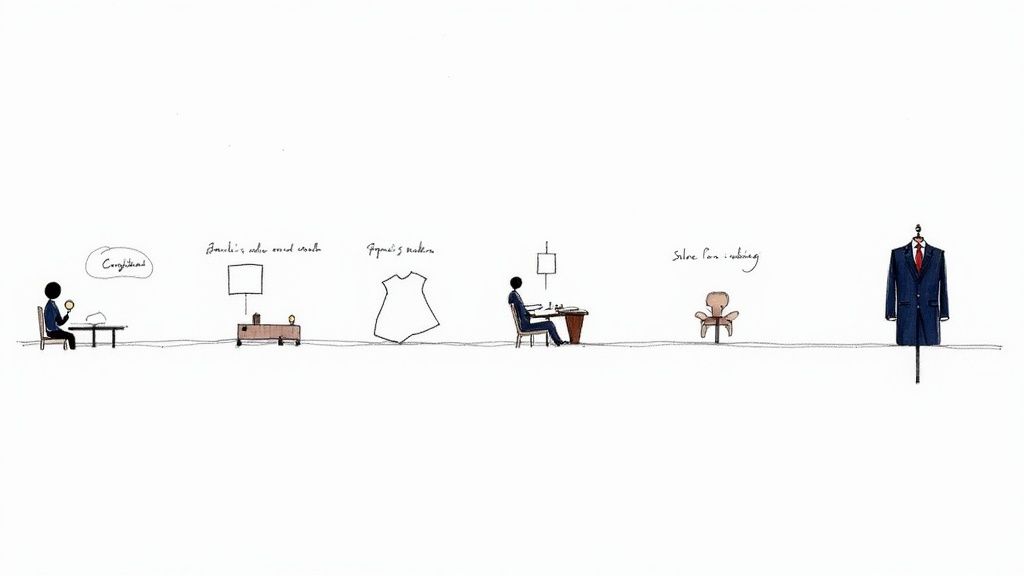
The entire process transforms raw cloth and your individual measurements into a piece of wearable art, a journey rooted in tradition and executed with millimetre precision.
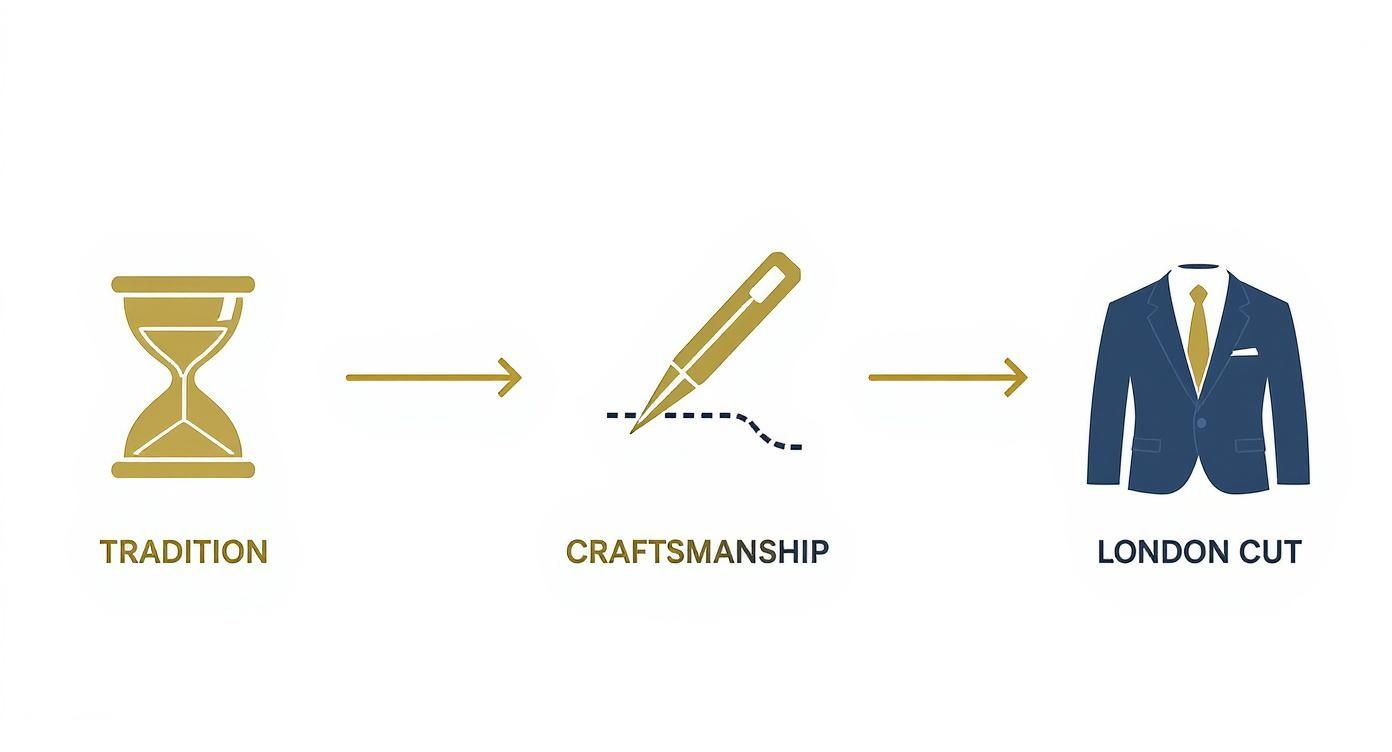
This visual flow shows how London's tailoring legacy combines timeless tradition and meticulous craftsmanship to create the iconic London Cut. The final, celebrated suit is the direct result of this time-honoured process, not just a single creative act.
The Initial Consultation and Measurement
The journey begins not with a tape measure, but with a conversation. Your tailor wants to get to know you: your lifestyle, your profession, and the occasions you have in mind for the suit. This dialogue is absolutely crucial; it informs every single decision that follows, from the choice of cloth to the smallest stylistic details.
Only after this discussion will the tailor take extensive measurements—often more than 20-30 different points. This is about far more than just size. It’s about capturing the unique nuances of your posture, the exact slope of your shoulders, and your individual stance. These are the details that allow the tailor to create a garment that works in perfect harmony with your body.
Drafting Your Personal Pattern
This is the very soul of bespoke tailoring and what truly sets it apart. Using the detailed measurements and notes from your consultation, the cutter drafts a unique paper pattern entirely from scratch. This becomes your personal sartorial blueprint, a two-dimensional interpretation of your form that will guide the creation of your suit.
Every single bespoke commission starts with its own, entirely new pattern. This is the non-negotiable definition of 'bespoke'. There is no pre-existing block or template; the pattern is as individual as your own signature.
This pattern is an invaluable asset, kept on file by the tailoring house for all your future commissions. It can be refined over time, ensuring that every garment they make for you maintains a consistently perfect fit.
The Fitting Stages: From Baste to Finish
Once the pattern is drafted, the cloth is cut and loosely stitched together with prominent white basting threads. This "skeleton" of a suit is what you will try on at your first fitting, known as the basted fitting.
This stage is absolutely critical for shaping the garment. The tailor will chalk, pin, and manipulate the fabric directly on your body, assessing the drape, balance, and overall silhouette. It might look rough and unfinished, but this is where the real magic happens.
After the first fitting, the suit is taken apart and re-cut based on the chalk marks before being sewn together more permanently. You will then have at least one or two further fittings to refine every last detail. These typically include:
The 'Forward' Fitting: At this point, the suit is far more constructed. Lapels are shaped, pockets are set, and the tailor fine-tunes the sleeve pitch and collar fit.
The 'Finish' Fitting: This is the final check before completion. The suit is nearly finished, with details like buttonholes and lining in place. Any final, minor tweaks are made here.
This multi-stage process, which usually spans 8-12 weeks, is fundamental to achieving the flawless fit that defines the best bespoke suits London can produce. To see a detailed exploration of each step, review our guide to crafting your bespoke suit journey. Each fitting is a collaborative step towards perfection, ensuring the end result is nothing short of exceptional.
How to Choose the Right London Tailor
Finding the right artisan is the single most important decision you'll make on your entire bespoke journey. This choice will shape the final garment far more than the cloth you select or the price you pay. It’s not just about finding a partner; it’s about finding someone whose aesthetic vision and way of working click perfectly with yours, ensuring the experience is just as exceptional as the suit itself.
This isn’t about ticking boxes or finding a famous name. It’s about getting under the skin of a tailor’s specific ‘house style’, seeing the tangible quality of their work with your own eyes, and making sure the whole process is transparent and collaborative. A great tailor doesn’t just measure you up; they get to know you, interpret what you need, and translate that into a garment that flatters and enhances your presence. Let’s break down what really matters when you’re looking for the best bespoke suits London has to offer.
Identifying the House Style
Every tailoring house has its own unique signature, what we call a 'house style' or a 'cut'. This is the foundational silhouette, the philosophy that underpins every single thing they create. Some favour the structured, architectural lines of a classic English cut, while others might lean towards a softer, more fluid Italianate shape.
Before you even think about booking a consultation, spend some proper time looking at a tailor’s work. Do their jackets have a strong, built-up shoulder, or is it soft and natural? Are their trousers high-waisted with pleats, or are they flat-fronted and clean?
Your goal isn't to force a tailor to create something outside their comfort zone. It's to find a house whose natural style already resonates with what you're trying to achieve. Asking a tailor known for a classic Savile Row cut to whip up a slouchy Neapolitan jacket is like asking a classical painter to create a cubist masterpiece—it just works against their inherent skill.
Assessing Craftsmanship and Quality
True quality in a bespoke suit is found in the details, the things you often feel rather than see. When you meet a potential tailor, make a beeline for the sample garments hanging in their workshop. These are your best clue to the standard of their work.
Here are a few specific things to get your hands on and look for:
Buttonholes: Are they hand-sewn? A hand-sewn buttonhole has a distinct, slightly raised look and a tiny 'keyhole' at the end. It's a hallmark of high-level craftsmanship that takes years of practice to get right.
Seam Matching: On a patterned cloth, like a pinstripe or a check, look at how the pattern flows across the seams. Pay special attention to where the sleeve meets the shoulder. Impeccable matching shows an incredible level of skill and painstaking attention to detail.
The Lapel Roll: A bespoke lapel should never be pressed flat like something off the peg. It should have a gentle, graceful roll from the buttoning point right up to the collar, a beautiful curve created by meticulous hand-padding within its structure.
These subtle tells are what separate genuine artisan work from the rest. You'll find more insights on what defines truly high-end garments in our comprehensive guide to tailor-made suits in London.
Cloth Selection and Mill Provenance
A great tailor is also your expert guide through the world of fabrics. They should have an extensive library of cloth bunches from the world's most prestigious mills—think Loro Piana, Scabal, and the finest woollen producers from Huddersfield. Their job is to help you select a fabric that isn't just beautiful but is perfectly suited to your lifestyle and how you plan to wear the suit.
They should be asking you questions like, "Will this be for daily business wear, or more for occasional events?" or "Are you after a heavy winter flannel or a lightweight summer linen?" Their ability to translate your needs into the right cloth—considering its weight, weave, and durability—is a massive part of the service. A tailor who just throws a pile of fabric books at you without any context or guidance isn't offering a complete bespoke experience.
The Fitting Process and Price Transparency
Finally, two practical things are absolutely non-negotiable: a proper fitting schedule and clear, honest pricing. A genuine bespoke process will always involve a minimum of two to three fittings after the initial measurement, starting with a 'basted' fitting where the suit is loosely stitched together. Any tailor suggesting fewer is almost certainly offering a made-to-measure service, not true bespoke.
Equally important is transparency on cost. You should receive a clear, itemised quote before a single stitch is made, with a full breakdown of the costs for the suit and any extra customisations. There should be no hidden fees or nasty surprises down the line. That kind of professional clarity is the sign of a reputable business that values its clients and stands confidently behind the quality of its work.
The Rise of Sustainable Bespoke Tailoring
In a world drowning in fast fashion, commissioning a bespoke suit is more than a style choice—it's a powerful statement. The entire philosophy of bespoke tailoring, which centres on creating one perfect garment designed to last for decades, is the polar opposite of the disposable clothing cycle. It’s an investment in true longevity and craftsmanship.
This move toward conscious consumption isn't just coming from clients; London's best tailors are actively embracing their environmental responsibilities. We're seeing a welcome shift away from murky supply chains and towards a new standard of transparency and ethical production.
From Fibre to Form: A Conscious Choice
The heart of this movement is in the materials. A truly sustainable suit starts with ethically sourced cloth from traceable mills that genuinely prioritise environmental stewardship. This means choosing fabrics woven from natural, renewable fibres like wool, linen, and cotton, often from producers who champion responsible farming and dyeing.
This commitment to quality and ethics goes right down to the smallest, often-overlooked details. Today’s bespoke artisans are increasingly opting for:
Natural Linings: Using breathable materials like silk, cupro (a regenerated cellulose fibre), or organic cotton instead of synthetic polyesters.
Ethical Trimmings: Selecting buttons made from natural horn, corozo (a nut from a tropical palm), or mother-of-pearl, which are biodegradable and add a touch of authentic luxury.
Waste Reduction: Adopting cutting techniques that meticulously plan pattern layouts to minimise fabric offcuts, making sure every inch of precious cloth is put to good use.
Choosing a bespoke suit is more than an investment in your personal style; it's a conscious decision to support a circular economy of quality and care. It’s a vote for a garment that will serve you for twenty years, not just twenty wears.
London Tailors Leading the Charge
This focus on sustainability is becoming a key differentiator when you’re looking for the best bespoke suits London has to offer. It’s not just talk; recent trends show a significant shift in both what customers are asking for and how the industry is responding.
The bespoke suit market here in the UK has seen a remarkable pivot towards ethical production. By 2025, over 60% of the capital's bespoke tailors reported integrating sustainable practices into their workshops. This has been driven by the 78% of London-based buyers who now cite sustainability as a key factor in their decision. You can discover more insights about these fashion trends on Carmeltailoring.com.
The fabric itself is central to this ethos. Understanding the properties and origins of different materials is crucial for making an informed, sustainable choice. You can learn more by exploring our guide on the best fabrics for suits, which details the characteristics of various cloths. Ultimately, a sustainable bespoke suit isn't just about looking good—it's about feeling good about the story behind the garment you wear.
Frequently Asked Questions
What is the real difference between bespoke and made-to-measure?
The core difference is the pattern. A bespoke suit begins with a blank sheet of paper, where a tailor drafts a unique pattern entirely from scratch based on over 20 of your specific measurements. This allows for infinite adjustments. In contrast, made-to-measure starts with a pre-existing template pattern which is then altered to approximate your size. While superior to off-the-rack, it cannot achieve the same level of precision or accommodate the unique nuances of your posture like true bespoke tailoring.
How much should I expect to pay for a bespoke suit in London?
For a genuine two-piece bespoke suit from a reputable London tailor, expect a starting price of around £4,000. For the most prestigious houses on Savile Row, this figure often exceeds £6,000. The final cost is heavily influenced by your choice of cloth, with rare and luxurious fabrics from esteemed mills increasing the price significantly. It is essential to discuss the budget and fabric options during your initial consultation to ensure complete transparency before any work begins. For a full breakdown, see our guide on how much a bespoke suit costs.
How long does the entire bespoke process take?
Patience is key to craftsmanship. Creating one of the best bespoke suits London tailors can offer is a meticulous process that typically takes between 8 and 12 weeks from your first consultation to the final collection. This timeline allows for the drafting of your unique pattern, multiple essential fittings (basted, forward, and finish), and the thousands of hand stitches required to construct the garment. Rushing this journey would only compromise the exceptional quality and perfect fit you are investing in.
Can I commission a suit if I don't live in London?
Absolutely. London's finest tailors serve a global clientele and are adept at working with international customers. Many artisans host regular 'trunk shows' in major cities like New York, Dubai, or Tokyo, allowing you to have consultations and fittings locally. Alternatively, clients often plan a trip to London to have their initial measurements taken and attend the first basted fitting. Subsequent appointments can then be scheduled around future visits, ensuring geography is no barrier to accessing world-class craftsmanship.
Why is the "London Cut" so iconic?
The London Cut is famous for its structured and architectural silhouette, which is designed to enhance the wearer's physique. It is defined by its strong, built-up shoulders, a full chest that drapes cleanly, and a nipped waist, creating a distinct V-shape. This structured approach provides a sense of presence and authority, differing from the softer, more fluid lines of Italian tailoring. It’s a style rooted in military tailoring, prized for its clean lines, perfect proportions, and understated elegance.
About The Author
Igor is the founder of Dandylion Style and a passionate advocate for the art of classic menswear. With years of experience steeped in the world of tailoring, his philosophy is simple: a well-made suit is one of the most powerful investments a gentleman can make in his confidence.
Through Dandylion Style, Igor guides his clients through the entire bespoke journey. He helps them discover that unique distinction that only comes from a garment crafted with personal attention and a deep, genuine respect for the craft—the very things that define the best bespoke suits London has to offer.
Igor is the founder of Dandylion Style, a tailoring house built on the simple, deeply held belief that a suit should be like a second skin—a true extension of a gentleman’s personality. For Igor, tailoring isn't just about cutting cloth; it's an art form dedicated to creating unique, perfectly fitted attire for the discerning man. His passion is rooted in classic sartorial traditions, yet he maintains a keen eye for contemporary style, ensuring his creations are both timeless and relevant. This approach has cemented his reputation for genuine craftsmanship and a truly personal service.
Key Takeaways The Core Two: Navy blue and charcoal grey are the essential, non-negotiable suit colors for any professional wardrobe. Navy offers versatility and approachability, while charcoal projects authority and seriousness. Context is Crucial: The best suit color...
When you find a piece of clothing you absolutely love, getting the fit just right is the final, transformative touch. But how much should you expect to pay? In the UK, alteration costs can be as modest as £15 for a simple trouser hemming, or climb to £150 and beyond...
Getting the right pink shirt and tie combination is the mark of a well-dressed man. It’s a detail that separates the novices from those who truly understand their wardrobe. For a look that’s classic and can’t miss, pair your pink shirt with a navy, grey, or burgundy...
Key Takeaways For those seeking a quick overview, this section summarises the essential rules and recommendations for incorporating turn-up trousers into your wardrobe. Sartorial Purpose: Turn-ups add weight to the trouser hem, ensuring a cleaner, sharper drape,...
Deciding what colour tie to wear with a pink shirt is a common style query I hear from clients. For a classic, professional look that never fails, your safest and most effective choices are navy blue and charcoal grey. If you're heading to a more contemporary or...
You've just picked up a newly finished bespoke suit, and the cloth still has that clean, disciplined line only a real fitting room can give it. The temptation is to put it straight in the wardrobe and trust the label to do the rest. That's where expensive...
Book Your Tailoring Consultation
Looking for a suit or garment made specifically for you?
At Dandylion Style, we create bespoke and made-to-measure
garments tailored to your individual shape, style and occasion.
From suits and shirts to dresses, waistcoats and alterations,
our experienced tailors can help you create something truly unique.