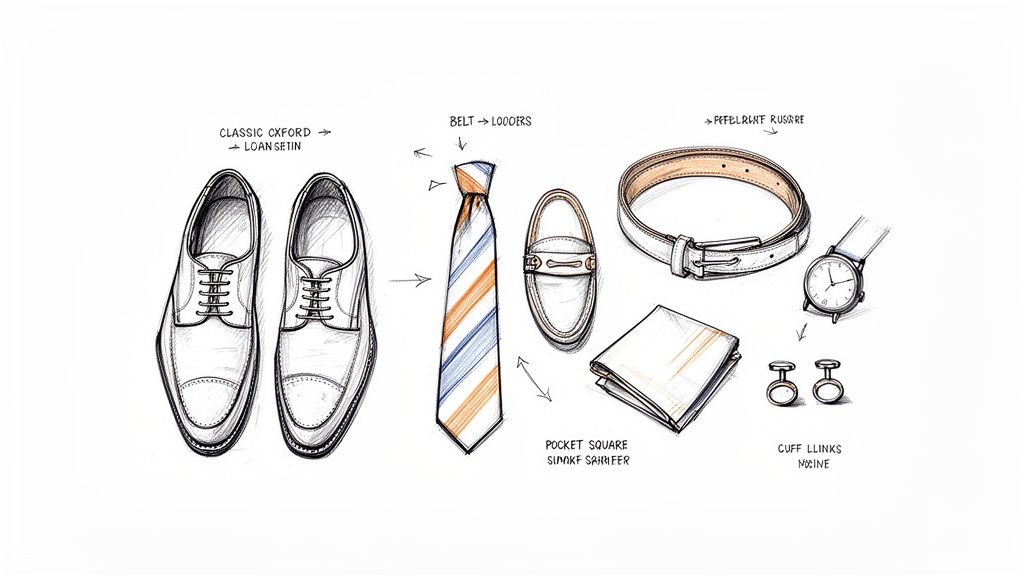
Figuring out what to wear to a wedding can feel like a minefield. Get it wrong, and you stick out for all the wrong reasons. But get it right, and you look sharp, feel comfortable, and pay proper respect to the happy couple. The secret isn't complicated. It boils down to three simple rules: respect the dress code, consider the season and venue, and always, always prioritise a good fit.
Nail those three, and you’ll build the perfect outfit every time.
Key Takeaways
Always Respect the Dress Code: The invitation is your primary guide. Black Tie demands a tuxedo, Formal requires a dark suit, and Smart Casual allows for a blazer and trousers. Adhering to the code is a sign of respect for the couple.
Fit is Paramount: A well-tailored suit, regardless of its price, will always look superior to an ill-fitting designer one. Pay close attention to the shoulders, jacket length, and trouser break for a sharp silhouette.
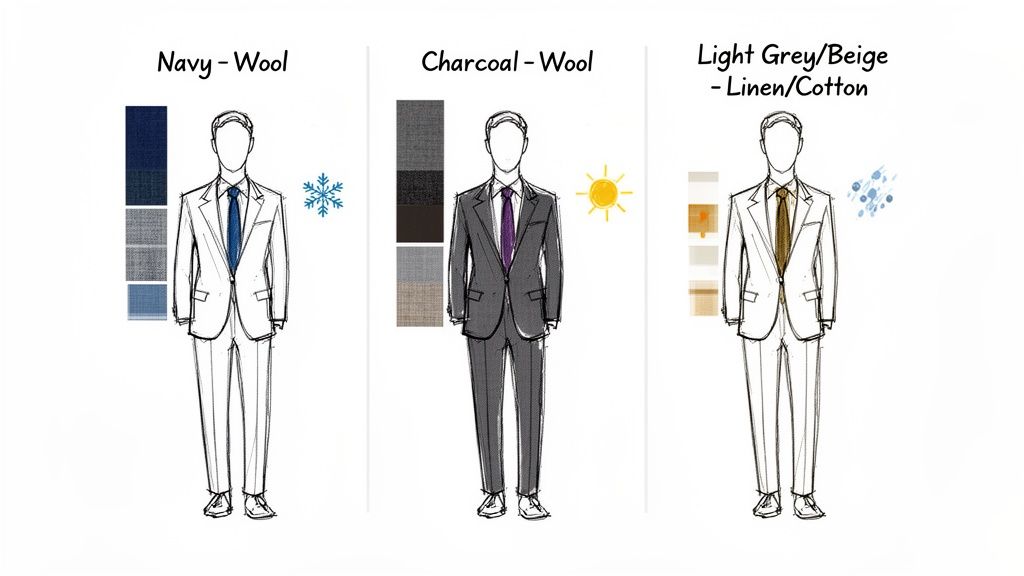
Consider Season and Venue: Lighter fabrics like linen and cotton in colours such as beige or light grey are ideal for summer or beach weddings. For autumn and winter events, opt for heavier wool in darker shades like navy or charcoal.
Accessorise Thoughtfully: Your accessories complete the look. Coordinate, don't match, your tie and pocket square. Ensure your shoes match the formality of the event and that your leathers (belt and shoes) are a similar shade.
Your Essential Wedding Attire Checklist
So, the invitation is on your mantelpiece, but what does ‘cocktail attire’ actually mean in the real world? Is your best navy suit going to cut it for a formal event? It’s easy to get lost in the details, so let's cut through the noise with some immediate, practical advice before we get into the finer points later on.
Think of the dress code as the host’s way of setting the tone. Following it is simply good manners—a nod of respect for the effort and expense they've put into their big day. Your job is to find an outfit that hits their mark while still feeling like you.
To get you started, we’ve put together a quick-reference table below. Think of it as your cheat sheet for cracking any wedding dress code, from the sharp formality of Black Tie to the laid-back vibe of a beach ceremony. It's the foundation for building a stylish, appropriate look that lets you relax and focus on the celebration.
Wedding Dress Code at a Glance
Here’s a quick summary of the most common wedding dress codes for men and the essential items required for each.
Dress Code
Core Essential
Brief Description
Black Tie
A black tuxedo or dinner suit
The highest level of formalwear, requiring a bow tie and black patent leather shoes. Non-negotiable.
Formal
A dark suit (navy or charcoal)
A step down from Black Tie but still buttoned-up. A classic tie, crisp shirt, and smart leather shoes are essential.
Cocktail Attire
A suit in a versatile colour
This is the sweet spot between formal and smart casual. It’s your chance to show a bit more personality with your tie and accessories.
Smart Casual
A blazer and separate trousers
Relaxed but still sharp. A tie is often optional here, but a collared shirt and smart trousers (think chinos or wool) are a must.
Beach
Linen suit or light-coloured trousers
The key here is breathable fabric. Think linen or light cotton. Ditch the socks and opt for loafers or smart sandals.
With this checklist as your starting point, you’ve already won half the battle. Now, let’s move on to the finer details that will truly elevate your look.
Decoding the Wedding Dress Codes
The first clue to figuring out what to wear to a wedding almost always lands on your doormat with the invitation. Think of the dress code not as a set of stuffy rules, but as the couple’s way of setting the mood for their big day. Following their lead is a simple sign of respect, and it guarantees you’ll feel part of the atmosphere they’ve worked so hard to create.
In essence, a dress code is a uniform for the celebration. You wouldn’t show up to a board meeting in shorts, and by the same token, wearing your everyday work suit to a grand evening wedding just won’t cut it. Each code has its own language, and once you learn to speak it, you’ll arrive looking and feeling completely at ease.
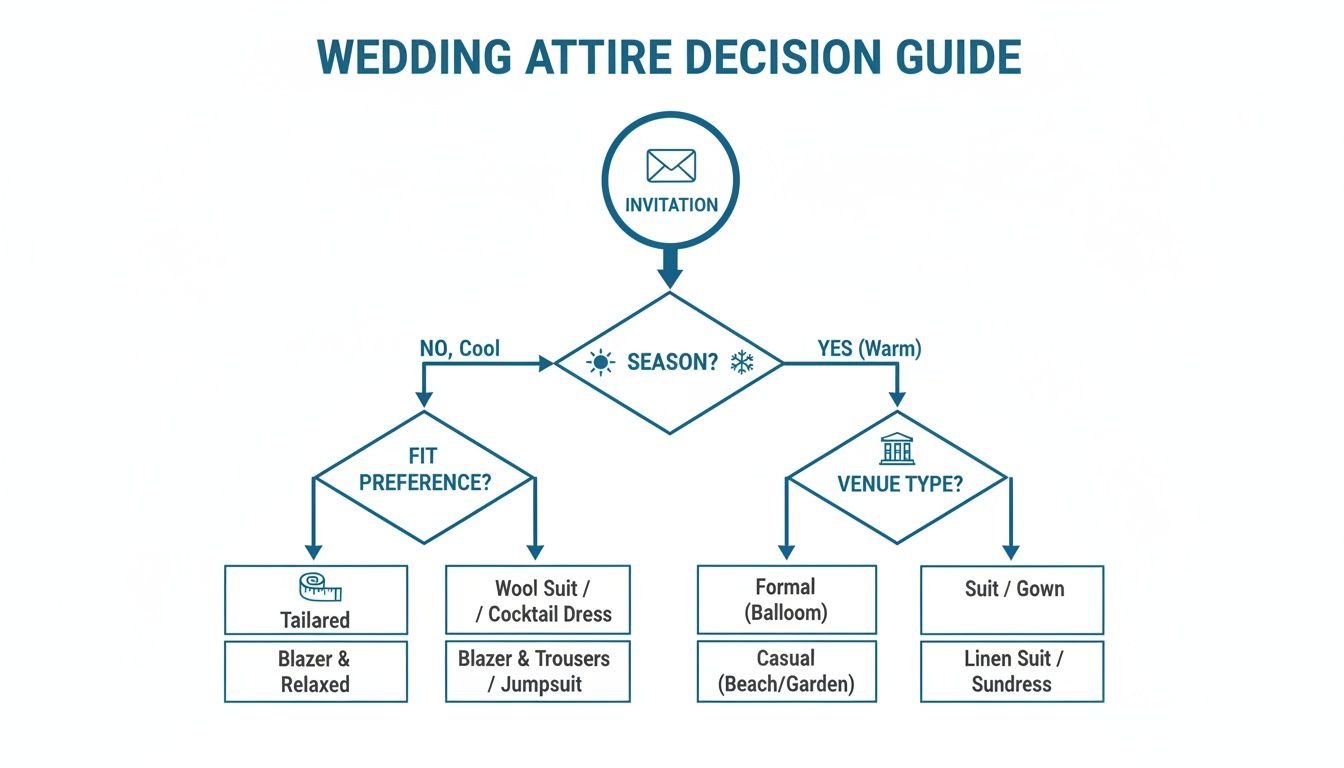
This decision-tree infographic is a brilliant way to visualise the key things you need to consider, mapping out everything from the official dress code to the season and venue.
As the infographic shows, your final outfit is a careful mix of the official rules, practicalities like the weather, and personal touches like how you prefer your suit to fit.
Black Tie: The Pinnacle of Formality
When an invitation says Black Tie, it’s the most formal and specific dress code you’re likely to see. This isn’t a suggestion; it’s a clear instruction to wear a tuxedo (or as it’s more commonly known in the UK, a dinner suit).
Now is not the time to get creative. A classic black tuxedo, a crisp white formal shirt, a black bow tie, and gleaming black patent leather shoes are the absolute non-negotiables. To really nail the look, a cummerbund or a low-cut waistcoat adds that perfect traditional flourish. While a midnight blue tuxedo is an equally sharp and correct alternative, your standard black business suit simply has no place here.
Formal or Black Tie Optional
This dress code gives you a bit more breathing room but still demands a very high standard of dress. A tuxedo is perfectly acceptable—and you’ll likely see a few—but it isn’t mandatory. The word ‘optional’ is your signal that a dark, beautifully tailored suit is also a fantastic choice.
For this dress code, your best bets are:
A dark suit: Navy or charcoal grey are the gold standards here.
A crisp white dress shirt: Go for a double cuff to show off some tasteful cufflinks.
A conservative tie: A silk tie in a solid colour or with a very subtle pattern works perfectly.
Polished leather shoes: Black Oxfords are your safest and most stylish option.
The aim is to echo the elegance of Black Tie without being strictly bound by its rules. It signals a significant, special evening event that’s a clear step above a standard party.
Getting the hang of what to wear to a formal wedding is a great skill to have, as it’s one of the most common dress codes for elegant evening receptions.
Cocktail Attire or Semi-Formal
Cocktail Attire is probably the most frequent wedding dress code you'll encounter today, and for good reason. It hits that sweet spot right between formal and relaxed, giving you more scope to show off your personality while still looking sharp in a suit.
Here, you can confidently move beyond the classic dark navy and charcoal. Suits in various shades of blue, grey, or even those with a subtle pattern are all excellent choices. This is also where your accessories can really shine—a patterned pocket square, a more vibrant tie, or some stylish cufflinks can truly elevate your look. While a suit is still the expectation, the overall feel is less rigid than a full-on formal event.
Smart Casual: The Relaxed Celebration
Often the go-to for more laid-back daytime or rustic weddings, Smart Casual can be the trickiest to get right. Let’s be clear: it definitely doesn’t mean rocking up in jeans and a t-shirt. The goal is to look polished and put-together, just without the structure of a complete suit.
Your winning combination here is a blazer or sports coat paired with separate trousers.
Trousers: Smart chinos in colours like beige, navy, or grey are perfect.
Blazer: A well-fitted blazer in a contrasting but complementary colour is key.
Shirt: A collared dress shirt is still an absolute must.
Tie: A tie is often optional, but wearing one will always make you look that bit sharper.
This dress code is all about looking thoughtful and considerate of the occasion, even if the setting is informal. It’s a masterclass in blending classic tailoring with a more relaxed, modern approach.
Right, you've cracked the dress code. Now for the fun part: picking the suit itself. This is where you get to decide on the colour and fabric, two choices that will completely define your look. Think of it less like a rulebook and more like your toolkit for adapting to the season, the venue, and the whole vibe of the day. Your suit is the canvas, and getting the right shade and texture sets the tone for everything else.
A great suit choice means you'll not only look the part but feel comfortable doing it, whether you're under the sun at a beach ceremony or raising a glass in a cosy winter barn. The trick is finding that sweet spot between what’s right for the wedding and what feels right for you.
Timeless Colours for Any Occasion
When you're stuck, remember two colours are the undisputed champions of men's wedding attire: navy blue and charcoal grey. These are your sartorial workhorses. They're smart enough for almost any formal or semi-formal event, hitting that perfect note between classic sophistication and modern style. They have enough depth for an evening do, but a richness that works just as well for daytime celebrations.
Here in the UK, navy has practically become the official wedding uniform for grooms and guests. It was the top trend in 2023 and has been for a few years now. The numbers back it up, too. Over 70% of wedding suit enquiries are for navy, blue, grey, and black suits, which tells you everything you need to know about their staying power.
And what about a black suit? Tread carefully. While it feels formal, it’s often reserved for the strictness of Black Tie (where a dinner suit is better anyway) or more solemn events. For a wedding, navy or charcoal almost always feels more celebratory and, frankly, more stylish.
Adapting Your Palette for Season and Setting
The time of year and location of the wedding are huge factors. For summer ceremonies or those destination weddings, lighter colours are your absolute best friend.
Beige or Light Grey: These are fantastic for warmer weather. They reflect the sun, which helps keep you cool, and they have a relaxed feel that’s perfect for outdoor or beach settings.
Stone or Light Blue: Brilliant alternatives for a daytime wedding. These shades look fresh and modern, and feel less like you've just come from the office.
Think of your suit colour like a thermostat for your style. Darker, richer tones like charcoal absorb light and convey warmth and formality, perfect for autumn and winter. Lighter shades like beige reflect light, creating a cooler, more relaxed vibe for spring and summer.
Fabric: The Secret to All-Day Comfort
Honestly, the most dapper suit on the planet will feel like a straitjacket if the fabric isn't right for the climate. Your choice of material is the key to staying comfortable from the 'I do's' to the last dance. Getting this right is a game-changer, and you can get a deeper understanding of how different materials perform in our detailed guide on the best fabrics for suits.
Even a basic knowledge of fabrics will set you on the right path.
Wool: This is the cornerstone of classic tailoring for a reason. Wool is incredibly versatile, it breathes, and it drapes beautifully. A heavier wool is your go-to for winter, while a lightweight wool can be worn almost year-round.
Linen: The quintessential summer fabric. It's exceptionally light and breathable, making it the number one choice for weddings in hot climates or on the beach. Don't fight the wrinkles—they're part of its charm.
Cotton: A fantastic shout for a smart-casual wedding. A cotton suit has a bit more structure than linen but feels more relaxed than wool, making it a great middle-ground for a less formal celebration.
At the end of the day, the perfect suit is a harmonious blend of the right colour and a comfortable fabric. By thinking about the season, a venue, and the dress code, you can pull together an outfit that not only looks impeccable but feels genuinely great to wear.
Mastering the Details with Accessories
A perfectly tailored suit is your foundation, but the accessories are where you truly make the outfit your own. These are the finishing touches that elevate a good look into a great one, letting your personality shine through while still respecting the day’s formalities. Think of it this way: your suit is the canvas, and your accessories are the brushstrokes that complete the masterpiece.
From your shoes right up to your tie, every single element plays its part in creating a cohesive and polished appearance. The aim is to pick pieces that not only complement your suit and the wedding's dress code but also add a layer of interest and sophistication without shouting louder than your core attire.
Choosing the Right Footwear
Your choice of shoes can honestly make or break your entire outfit. It’s a detail people notice. The golden rule here is simple: match the formality of your footwear to the dress code.
For Black Tie and Formal Events: Black patent leather Oxfords are the undisputed champions. Their sleek, closed-lacing design is the very definition of elegance. A beautifully polished pair of black leather Oxfords is also a spot-on choice for formal or cocktail attire.
For Cocktail and Smart Casual Weddings: This is where you get a bit more freedom to play. Brown or tan brogues, Derbies, or even a smart pair of loafers can work beautifully. The key is just making sure they are clean, well-maintained, and in a colour that works with your suit.
For Beach or Destination Weddings: Loafers are a superb option here, striking that perfect balance between comfort and style. You might even consider smart leather sandals if the vibe is extremely relaxed, but loafers are generally the safer, more stylish bet.
A simple yet effective rule of thumb is to match your leathers. If you're wearing brown shoes, your belt should be a similar shade of brown. This small detail creates a sense of intentionality and pulls your entire look together seamlessly.
The Tie and Pocket Square Combination
This is where you can inject the most personality into your wedding guest attire. The tie and pocket square offer a brilliant opportunity to play with colour, pattern, and texture.
A common mistake is buying a matching tie and pocket square set. While it seems like an easy solution, it can look a bit dated and, frankly, unimaginative. What you should be aiming for is coordination, not a perfect match.
A far better approach is to pick a pocket square that has a secondary colour that matches the main colour of your tie. For example, a navy tie would pair beautifully with a white pocket square that features a subtle navy pattern. It creates a much more sophisticated and visually interesting connection. To explore this art further, you can find some inspiration in our collection of exquisite silk pocket squares.
Essential Finishing Touches
Beyond the main players, several smaller details contribute to a polished final look. Paying attention to these elements shows you've really considered every aspect of your appearance.
Cufflinks: If you're wearing a double-cuff shirt (which I’d highly recommend for formal and cocktail weddings), cufflinks are an absolute must. They can be simple silver knots or something more personal that reflects your hobbies or interests.
Socks: Don't let your socks be an afterthought. For formal events, they should match the colour of your trousers to create a clean, unbroken line from your waist to your shoes. For smart casual settings, you can afford to experiment with subtle patterns or a complementary colour.
The Tie Knot: The knot you choose should complement your shirt collar. A classic Four-in-Hand is wonderfully versatile, while a Half-Windsor is a bit more substantial and symmetrical, making it perfect for a spread collar.
Ultimately, mastering what to wear to a wedding as a man comes down to getting these thoughtful details right. They are the final layer of polish that demonstrates not only respect for the occasion but also real confidence in your own personal style.
The Unspoken Rule of Wedding Style: A Perfect Fit
After wading through dress codes, colours, and fabrics, we land on what is arguably the single most important rule in men's style: fit is everything. It's the simple truth. An affordable suit that’s been perfectly tailored will always look miles better than an expensive designer one hanging poorly off your frame. It’s the invisible line between looking sharp and looking sloppy.
Think of a bespoke or made-to-measure suit as architecture for your body. It's engineered to create clean lines, a strong silhouette, and a sense of effortless polish. When a suit fits as it should, it moves with you, playing up your best features and giving you a powerful shot of confidence that no brand name can ever replicate.
Hallmarks of a Superb Fit
Spotting a great fit is actually simpler than you might think. It really just comes down to a few key areas that, when they're all correct, work together to create that flawless look. You don’t have to be a tailoring expert to see the difference, and knowing what to look for can completely change the way you shop.
Shoulders: The jacket's shoulder seam should end precisely where your own shoulder does. Simple as that. If it droops over the edge, the jacket is too big; if it pulls or bunches up, it's too small.
Jacket Length: Let your arms hang naturally at your sides. The bottom of the jacket should hit right around the middle of your hand, just where your fingers meet your palm.
Sleeve Length: This is a classic. The jacket sleeve should finish just above your wrist bone, letting about a quarter to half an inch of your shirt cuff peek out. It creates a clean, deliberate break.
Trouser Break: This is just the term for the crease or fold at the bottom of your trousers where they meet your shoes. For a sharp, modern silhouette, aim for a slight break or even no break at all.
A well-fitting garment is a long-term investment in your personal brand. It tells people you care about the details, you respect yourself, and you understand timeless style—making sure you look your best at any celebration.
Tailoring as an Investment
Getting that polished look for a wedding often means appreciating the finer points of designer style and quality, which always comes back to the importance of a perfect fit. An off-the-peg suit might get you close, but only proper tailoring can achieve that next-level perfection. This is where the real value of a bespoke suit becomes crystal clear.
It’s less about the initial price tag and more about the lasting benefit. A made-to-measure suit is built from the ground up to your exact specifications, which gets rid of all the little compromises you have to make with ready-to-wear clothing. For anyone keen to get the fundamentals right, our guide on how to measure yourself for a suit is a great place to start. At the end of the day, investing in a perfect fit is really an investment in yourself.
About the Author
Meet Igor, the founder and master tailor at the heart of Dandylion Style. His passion runs deep for fine British fabrics and the time-honoured techniques of traditional tailoring, a craft he approaches with a calm, considered touch for every person he works with. Igor has always believed that a bespoke suit is so much more than just clothing. He sees it as a true collaboration, creating a garment that fits flawlessly and perfectly reflects the wearer's personality. His expertise is the very foundation of our style advice. You can discover more about his story by reading about Igor, the founder of Dandylion Style.
Frequently Asked Questions
Can I wear a black suit to a wedding?
While a black suit feels formal, it’s best avoided for weddings unless the dress code is very strict. It can often appear too corporate or even funereal for a joyful occasion. A dark navy or charcoal grey suit offers the same level of formality but with more warmth and celebratory style. If the invitation specifies 'Black Tie', this means a tuxedo is required, not a standard black business suit. For nearly all other dress codes, navy or charcoal is the superior choice.
Is it acceptable to wear white to a wedding as a man?
As a guest, you should avoid wearing an all-white suit, as this can draw too much attention. However, a crisp white dress shirt is the timeless and expected foundation for almost any wedding suit. White linen trousers can also be appropriate for a very relaxed beach wedding, but they should be paired with a coloured blazer. The key is to incorporate white as a classic element of your attire rather than making it the dominant colour of your entire outfit.
What should I do if the invitation doesn’t specify a dress code?
When the invitation offers no guidance, your safest and most respectful approach is to aim for Cocktail Attire. A well-fitting suit in navy or charcoal is the perfect choice, as it’s smart enough for most settings without being overly formal. You can then use the venue and time of day as clues. A daytime or countryside wedding might lean towards a slightly lighter suit or more textured accessories, while a city evening event calls for a more classic, conservative look.
Are loafers appropriate footwear for a wedding?
Yes, loafers can be a very stylish choice, but only for the right dress code. For Smart Casual or Beach weddings, a smart pair of leather or suede loafers works perfectly with chinos or linen trousers. They strike a great balance between relaxed and polished. However, for more formal codes like Cocktail Attire or Formal, traditional lace-up dress shoes such as Oxfords or Derbies are the more appropriate option. Loafers should never be worn with a tuxedo for a Black Tie event.
For an outfit that is impeccably styled, perfectly fitted, and built to your exact specifications, consider a bespoke creation from Dandylion Style. Travelling for the event? Ensure your attire arrives pristine with dedicated Wedding Luggage. Book your personal consultation today.
Key Takeaways The Core Two: Navy blue and charcoal grey are the essential, non-negotiable suit colors for any professional wardrobe. Navy offers versatility and approachability, while charcoal projects authority and seriousness. Context is Crucial: The best suit color...
When you find a piece of clothing you absolutely love, getting the fit just right is the final, transformative touch. But how much should you expect to pay? In the UK, alteration costs can be as modest as £15 for a simple trouser hemming, or climb to £150 and beyond...
Getting the right pink shirt and tie combination is the mark of a well-dressed man. It’s a detail that separates the novices from those who truly understand their wardrobe. For a look that’s classic and can’t miss, pair your pink shirt with a navy, grey, or burgundy...
Key Takeaways For those seeking a quick overview, this section summarises the essential rules and recommendations for incorporating turn-up trousers into your wardrobe. Sartorial Purpose: Turn-ups add weight to the trouser hem, ensuring a cleaner, sharper drape,...
Deciding what colour tie to wear with a pink shirt is a common style query I hear from clients. For a classic, professional look that never fails, your safest and most effective choices are navy blue and charcoal grey. If you're heading to a more contemporary or...
You've just picked up a newly finished bespoke suit, and the cloth still has that clean, disciplined line only a real fitting room can give it. The temptation is to put it straight in the wardrobe and trust the label to do the rest. That's where expensive...
Book Your Tailoring Consultation
Looking for a suit or garment made specifically for you?
At Dandylion Style, we create bespoke and made-to-measure
garments tailored to your individual shape, style and occasion.
From suits and shirts to dresses, waistcoats and alterations,
our experienced tailors can help you create something truly unique.