Choosing the right wedding waistcoat is more than just picking a colour; it's about striking the perfect balance between fit, fabric, and formality to create a look that feels both personal and polished. Key decisions will revolve around the classic single-breasted versus the more formal double-breasted style, selecting a material like tweed or linen that truly suits the season, and deciding between the precision of a bespoke fit and the convenience of an off-the-rack piece.
Think of the waistcoat as the anchor of your wedding attire. It's the one piece that pulls everything together, ensuring you look impeccable long after the jacket comes off.
Key Takeaways
Fit is Paramount: A waistcoat must be long enough to cover the trouser waistband, with no shirt showing in between. It should lie flat against the torso without pulling at the buttons. The precision of a bespoke fit is unmatched.
Style Sets the Tone: A single-breasted waistcoat is a versatile classic, while a double-breasted style offers a more formal, traditional statement. Your choice should align with the wedding's level of formality.
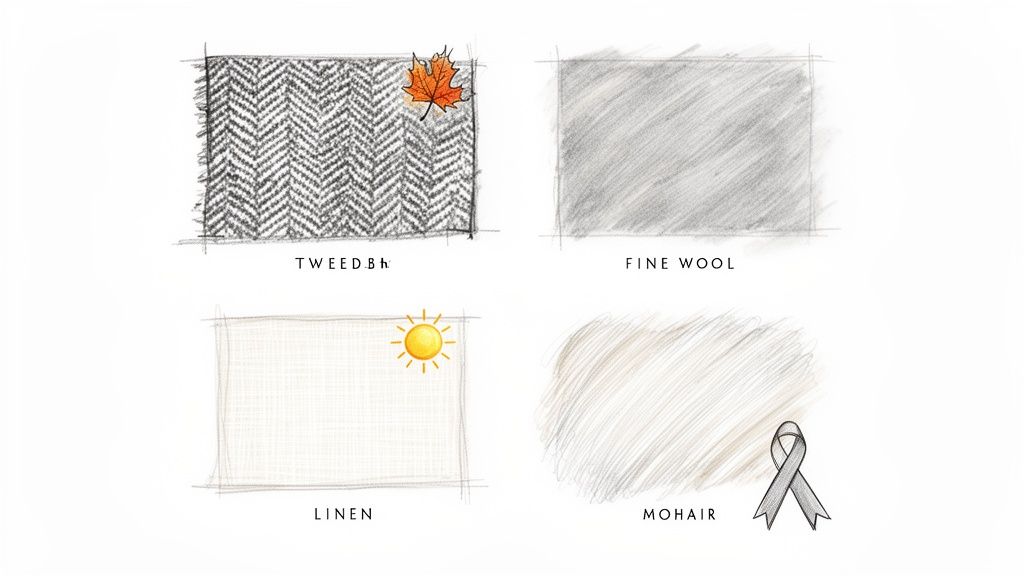
Fabric Dictates Comfort: The material should suit the season. Choose fine wool for year-round versatility, tweed for rustic autumn/winter weddings, and lightweight linen or mohair blends for spring/summer ceremonies.
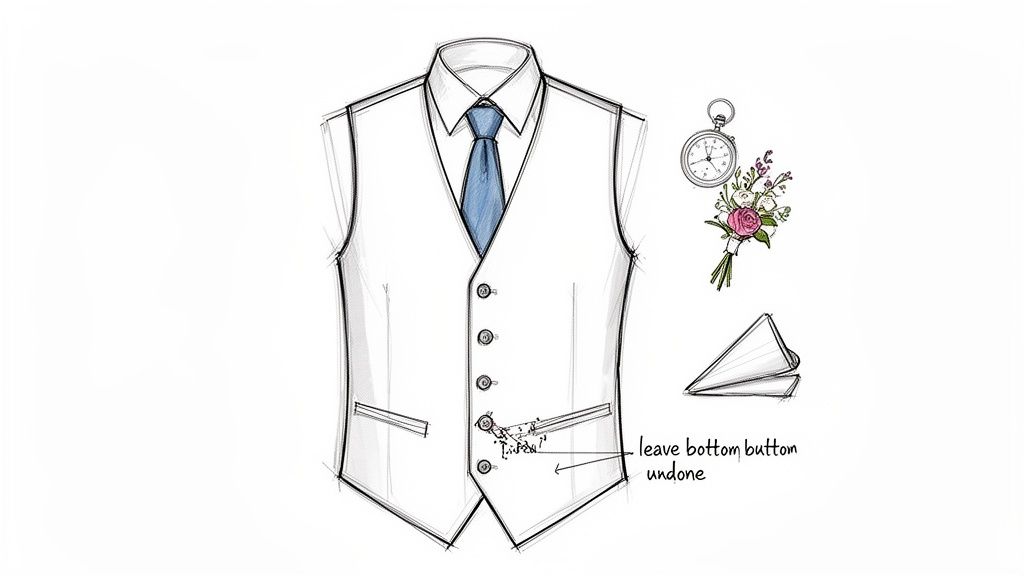
Mind the Details: Honour the tradition of leaving the bottom button of a single-breasted waistcoat undone for a better fit and a touch of sartorial flair. For double-breasted styles, keep all buttons fastened.
Plan Ahead: A true bespoke waistcoat requires a timeline of 8-12 weeks, from initial consultation to final fitting. Start the process at least three to four months before your wedding to ensure a relaxed, pressure-free experience.
Elevating Your Wedding Day Attire
A waistcoat is so much more than an extra layer of clothing; it's the very element that transforms a standard suit into distinguished wedding attire. For the groom and his party, the waistcoat plays a vital role. It maintains a sharp, tailored silhouette throughout the day, especially during the reception when jackets are inevitably removed. It’s the sartorial glue holding the whole look together, offering a fantastic opportunity to inject a bit of colour, texture, and personality.
Whether you're aiming for timeless elegance or something with a more contemporary edge, understanding your options is the first step. The journey is about making deliberate choices that reflect the tone of your celebration.
Core Decisions for Your Waistcoat
To get started, let's break down the fundamental aspects that will guide your selection:
Style and Formality: The cut of your waistcoat really sets the tone. A single-breasted design is a versatile classic that works for most occasions, whereas a double-breasted version makes a bolder, more traditional statement.
Fabric and Season: The material has a huge impact on both comfort and aesthetics. A rich tweed is perfect for an autumn countryside wedding, for example, while lightweight linen is the ideal choice for a sun-drenched summer ceremony.
Fit and Finish: Honestly, nothing beats the precision of a bespoke garment. A waistcoat should contour the torso perfectly, ending just over the trouser waistband without a sliver of shirt showing in between. You can learn more about how this piece fits into the quintessential three-piece suit.
Thinking through these decisions ensures your attire isn't just stylish, but perfectly suited to your big day. And to make sure everything from the suit to the speeches goes off without a hitch, it helps to look at the bigger picture. Exploring comprehensive Essential Wedding Planning Tips can help you prepare for your dream day from head to toe.
Wedding Waistcoat at a Glance
To simplify the process, we've put together a quick-reference table summarising the key considerations.
Consideration
Single-Breasted Waistcoat
Double-Breasted Waistcoat
Fabric Choice
Lead Time
Best For
Versatile, modern look suitable for most wedding themes.
Formal, traditional, and statement-making occasions.
Depends on season: tweed/wool for autumn/winter; linen for summer.
Often has a V-neck opening, pairs well with standard neckties.
Features a higher, overlapping front, best with bow ties or cravats.
Should complement the suit fabric and wedding colour palette.
Allow extra time for alterations, even with off-the-rack options.
Key Feature
A timeless classic that offers a clean, streamlined silhouette.
Creates a broader, more structured look across the torso.
Adds texture and depth, setting the tone for the entire outfit.
Start the process at least 3-4 months before the wedding.
Bottom Button Rule
Tradition dictates leaving the last button undone.
All buttons are typically kept fastened for a sharp finish.
N/A
N/A
This table provides a snapshot to guide your initial thoughts, but the real magic happens during a personal consultation where we can explore these choices in detail.
The Enduring Legacy of the Wedding Waistcoat
The wedding waistcoat is far more than just an accessory; it’s a piece of sartorial history, carrying a legacy that adds real depth and tradition to your special day. Its story didn't begin in a modern tailor's workshop but in the royal courts of 17th-century England. This journey transformed it from a simple garment into a symbol of refined masculinity that has held its own for centuries.
Understanding this history gives powerful context to the stylistic choices a modern groom makes. Every waistcoat worn at a wedding is a quiet nod to this rich heritage. When you select a particular cut or fabric, you're not just getting dressed; you're taking part in a tradition that connects you to generations of gentlemen who have stood exactly where you stand.
From Royal Decree to Sartorial Staple
The waistcoat's official debut in menswear can be pinpointed to a specific moment in British history. In 1666, King Charles II decreed that the waistcoat would be an essential part of a gentleman's wardrobe, a move that forever changed the course of formal dress.
This royal endorsement, famously documented in Samuel Pepys' diary, was heavily influenced by the Persian and Indian garments the king had admired during his exile. This pivotal declaration elevated the waistcoat from a functional battlefield item—where soldiers had long improvised simple vests—to a cornerstone of high fashion. By the 1770s, wedding waistcoats had become tight-fitting, ornate pieces worn under a coat, often lavishly embroidered to signify the gravitas of the occasion. For a deeper dive, you can explore the history of the waistcoat on countrylife.co.uk.
The Evolution of the Silhouette
As fashion moved on, so did the waistcoat. The Regency era, a time famous for its dandyism and sharp focus on the masculine form, saw the garment become shorter and far more structured. Men of this period were chasing a sharp, V-shaped torso, and the waistcoat was their primary tool for achieving it.
This early emphasis on a precise, body-contouring fit is a direct ancestor of the modern groom's desire for a streamlined silhouette. The principles of creating a powerful shape and a clean line from shoulder to waist were perfected centuries ago, and they remain just as relevant today.
A well-fitted waistcoat doesn't just complete an outfit; it sculpts it. It has the unique ability to maintain a groom's polished appearance throughout the celebration, even long after the jacket has been set aside for the dance floor.
This historical pursuit of the perfect form is exactly what makes a bespoke approach so valuable. The craft of bespoke tailoring is rooted in these very traditions, ensuring that every garment is meticulously shaped to enhance the wearer's individual physique. You can get a deeper appreciation for this craft by understanding the art of bespoke tailoring on Savile Row.
Why Tradition Matters for the Modern Groom
Choosing a waistcoat for your wedding is a chance to connect with this enduring legacy. Whether you opt for a classic single-breasted design in fine wool or a more opulent double-breasted style in silk, your choice is informed by centuries of sartorial evolution. It is this connection to the past that gives wedding waistcoats for men their timeless appeal.
The garment acts as a visual anchor, adding a deliberate layer of formality and intention to your ensemble. It signifies respect for the occasion and shows a considered approach to your personal style. Ultimately, the waistcoat is a testament to the idea that true style isn't fleeting—it's built on a foundation of history, craftsmanship, and personal expression.
Choosing Your Perfect Waistcoat Style and Cut
Picking out the right waistcoat is less about rules and more about understanding the story you want to tell. Every detail—the cut, the lapels, the way it buttons—shapes your final look, steering it from classic and relaxed to sharp and formal. At the heart of it all, you'll find two main designs: the single-breasted and the double-breasted. Each brings its own distinct character to your wedding day.
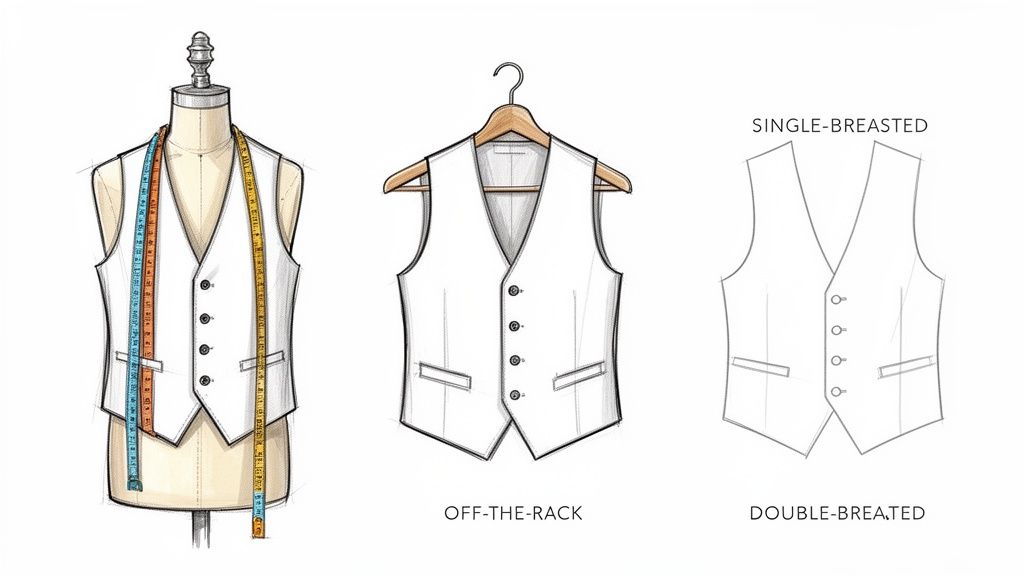
Think of the single-breasted waistcoat as the reliable cornerstone of a gentleman’s wardrobe. It’s defined by a single, neat column of buttons that creates a clean V-shape, giving you a streamlined silhouette that works with almost any suit. Its understated charm makes it a fantastic choice for nearly any wedding, whether you're in a rustic barn or a chic city hotel. It's the epitome of quiet confidence.
The double-breasted waistcoat, on the other hand, makes a much bigger splash. With its two columns of buttons and overlapping front, it projects a more structured, powerful presence. This style is steeped in the traditions of British tailoring and feels inherently more formal, making it a superb choice for black-tie events or grand, traditional weddings. The broader shape it creates across the chest lends an air of sartorial authority and old-world elegance.
Single-Breasted versus Double-Breasted Designs
Ultimately, the choice between these two styles boils down to the level of formality you're aiming for. The single-breasted cut is wonderfully adaptable, pairing just as well with a necktie as it does with a bow tie, all while keeping things looking sharp and modern. It’s the safe bet that always pays off in style.
The double-breasted option requires a bit more thought. Its higher buttoning stance really sings when paired with a bow tie or a cravat, as this avoids any clutter at the neckline. It’s a powerful look that adds a real sense of occasion. To see how these principles apply to the entire ensemble, you can explore the nuances in our guide to single versus double-breasted suits.
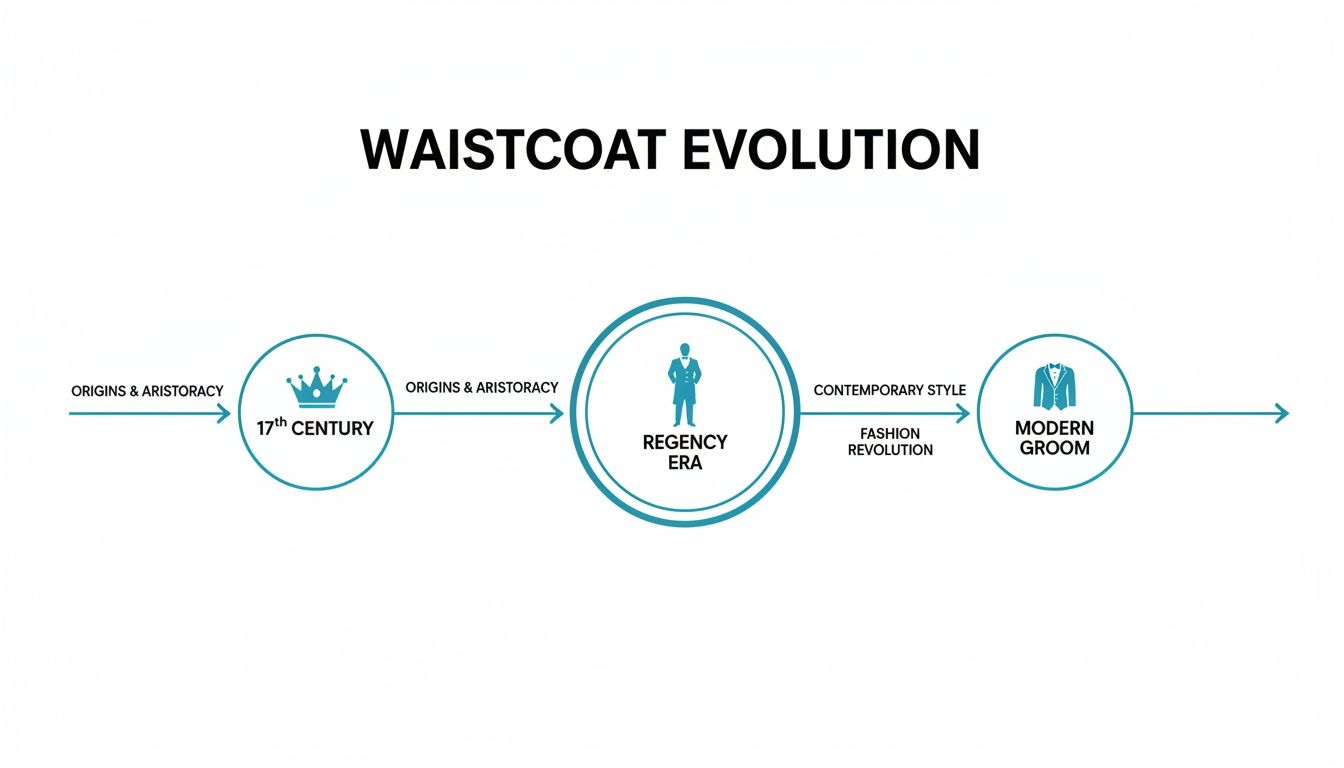
This chart tracks the waistcoat's journey from its aristocratic roots to its modern-day role in a groom's wardrobe.
As you can see, its core purpose—to sculpt and flatter the torso—has remained unchanged, from the courts of the 17th century right through to today's wedding celebrations.
The Significance of Lapels and Cut
Beyond how it buttons, the lapels are what give a waistcoat its personality. Just like a suit jacket, your waistcoat can feature different styles, each with its own unique flavour:
Notched Lapels: This is the most common and versatile style you'll see. The triangular 'notch' where the lapel meets the collar makes it a classic that works perfectly with most single-breasted suits.
Peaked Lapels: A more formal, slightly more flamboyant option. The lapel edges point upwards towards the shoulder, adding a dash of ceremony and flair. You’ll often find them on double-breasted waistcoats.
Shawl Lapels: Characterised by a smooth, rounded edge with no points or notches. This style is typically reserved for evening wear, like dinner jackets, and brings a soft, sophisticated elegance to a wedding waistcoat.
The cut is just as crucial. A well-fitting waistcoat should hug your torso, lying flat against your chest and stomach without any pulling or bunching. Critically, it must be long enough to cover the waistband of your trousers, making sure no sliver of shirt is visible between the two. This small detail is what separates the truly polished from the merely passable.
A bespoke waistcoat isn't just made to your measurements; it's sculpted to your posture and physique. This ensures a flawless drape that enhances your natural shape, creating a powerful and flattering line from shoulder to waist.
In the end, choosing the right style of wedding waistcoats for men is all about creating harmony. Your waistcoat should not only flatter your body type but also sit perfectly with your suit, the wedding's theme, and, most importantly, your own personal style.
Selecting the Right Fabric for Your Wedding
The cut of your waistcoat is only half the story; the fabric you choose is just as crucial. Think of it as the soul of the garment. It dictates how the waistcoat will hang, how it feels against your skin, and whether it’s right for the season. A beautiful design can fall completely flat if it’s made in the wrong cloth, whereas the perfect fabric choice elevates your entire wedding outfit.
On a long wedding day, the fabric is what keeps you comfortable. The breezy coolness of linen on a summer afternoon or the reassuring warmth of tweed on a crisp autumn day—these are practical choices that make a huge difference. Getting it right ensures you'll feel as good as you look, from the "I do" all the way to the last dance.
Classic Wool for Timeless Versatility
Fine wool is the cornerstone of men's tailoring, and for very good reason. Its natural fibres drape beautifully and have a soft handle, creating a waistcoat that looks sharp and feels genuinely luxurious. More than that, wool is incredibly versatile. It comes in different weights, making it a reliable choice any time of the year.
A lightweight wool is a brilliant option for a spring or early autumn wedding, giving you structure without the stuffiness. For a winter ceremony, a heavier flannel or worsted wool offers essential warmth without adding any unwanted bulk. This adaptability makes wool a sophisticated and dependable choice for almost any wedding, from a formal city affair to a classic church service. To dive deeper, you can learn more about the best fabrics for suits in our detailed guide.
Tweed for Rustic and Autumnal Charm
If you’re planning a wedding with a rustic, countryside, or vintage feel, tweed is simply unmatched. Its rich texture and earthy tones bring a warmth and character that feel perfectly at home in a barn, an old estate, or a historic manor. Tweed is traditionally the go-to for autumn and winter celebrations, and its robust nature is an excellent shield against the classic British chill.
It also comes in a wonderful variety of patterns—from classic herringbone to Donegal and houndstooth—so there’s plenty of room to express your personal style. A tweed waistcoat does more than just add a layer; it adds visual interest and a sense of heritage to your whole look.
By selecting a distinct fabric like tweed, you are adding more than just a layer of clothing; you are weaving the story and atmosphere of your wedding day directly into your attire, creating a look that is both personal and memorable.
Linen and Mohair for Seasonal Nuances
When the sun is out and the temperature rises, your fabric choice becomes absolutely critical for staying comfortable. For spring and summer weddings, linen and mohair blends are superb options, each offering unique properties to keep you looking sharp and feeling cool.
Linen: The undisputed champion of summer tailoring. Linen is prized for being incredibly lightweight and breathable. It has a naturally relaxed texture that’s perfect for a wedding on the beach, in a garden, or abroad. While it does crease, that’s all part of its charm, giving it a sense of effortless style.
Mohair: Sourced from the Angora goat, mohair is known for its subtle sheen and fantastic crease resistance. When it’s blended with wool, it creates a fabric that is both durable and breathable, with a crisp feel that’s ideal for a more formal summer event. It catches the light beautifully, adding a touch of lustre to your wedding waistcoat.
To help you decide, here’s a quick overview of how these popular fabrics stack up against each other.
A Groom's Guide to Wedding Waistcoat Fabrics
Fabric
Key Characteristics
Ideal Season
Best Suited For
Fine Wool
Versatile, excellent drape, soft handle
Year-round
Classic, formal, and most traditional weddings.
Tweed
Rich texture, warm, durable, rustic appeal
Autumn / Winter
Countryside, rustic, and vintage-themed weddings.
Linen
Lightweight, breathable, relaxed texture
Spring / Summer
Beach, garden, destination, and casual weddings.
Mohair Blend
Subtle sheen, crease-resistant, crisp feel
Spring / Summer
Formal warm-weather and black-tie optional events.
At the end of the day, the right fabric for your wedding waistcoats for men is the one that works with your wedding's season, fits the theme, and, most importantly, feels right to you.
The Bespoke Difference: Fit, Measurement and Timeline
While fabric and style give a wedding waistcoat its soul, the fit is what brings it to life. You can choose the most luxurious cloth in the world, but if the garment hangs poorly, it will always look messy. This is why a perfect fit is the single most critical element of your wedding attire, and the bespoke process is the only way to truly guarantee it.
Think of it this way: buying a waistcoat off-the-peg is like buying a standard model home. It’s built to a generic size and designed to accommodate a wide range of people, but it never truly fits anyone perfectly. A bespoke waistcoat, on the other hand, is like commissioning an architect. It’s designed and constructed from the ground up, just for you, accounting for every unique contour of your body.
The Art of a Perfect Fit
A genuine bespoke experience means your waistcoat is sculpted to your exact physique, creating a clean, uninterrupted line from shoulder to waist. It must lie completely flat against your chest and stomach without any pulling at the buttons or bunching at the shoulders.
Crucially, it must be long enough to cover your trouser waistband entirely, so no sliver of shirt is visible in between. This detail alone makes an enormous difference to your silhouette.
This obsession with precision isn't just a modern fad. In the early 19th century, British wedding waistcoats became shorter and tighter, designed to create the sharp, pinched-waist silhouette favoured by Regency grooms. To achieve this, tailors would even incorporate whalebone stiffeners and back laces, allowing men of all builds to present a streamlined figure. This historical pursuit of the perfect fit continues today in fine British tailoring. You can see a stunning example of a silk wedding waistcoat from the 1830s in the Metropolitan Museum's collection.
A bespoke waistcoat does more than just fit; it flatters. It works with your posture and build to create an enhanced silhouette, ensuring you look sharp and feel confident from every angle.
The distinction between off-the-peg, made-to-measure, and true bespoke can be subtle but incredibly important. We explore these differences in much more detail in our guide comparing made-to-measure vs bespoke tailoring.
Understanding the Bespoke Timeline
Crafting a garment that is uniquely yours is a meticulous art that simply cannot be rushed. A true bespoke waistcoat requires time, patience, and several key stages to ensure a flawless result. Knowing the timeline helps you plan properly and appreciate the artistry involved in every stitch.
Here is what you can typically expect on this journey:
Initial Consultation (Week 1): This is where it all begins. We’ll sit down to discuss your vision, wedding theme, and fabric preferences. We then take a comprehensive set of over 30 initial measurements to create your unique paper pattern from scratch.
Baste Fitting (Weeks 4-6): Your waistcoat is loosely stitched together for a first fitting. This is a crucial milestone where we assess the drape, balance, and core structure, making foundational adjustments directly on your body.
Forward Fitting (Weeks 7-9): The garment is now taking shape. We refine the fit even further, checking the details like the armholes, button placement, and overall length to ensure absolute precision.
Final Fitting and Collection (Weeks 10-12): Your finished waistcoat is ready. We'll do one last check to ensure every detail is perfect before you take it home, ready for your wedding day.
This dedicated 8-12 week process guarantees a piece that isn't just made for you, but becomes a part of you.
Styling Your Wedding Waistcoat with Finesse
Once you have your perfectly crafted waistcoat, the real fun begins. Styling is the final, crucial step that takes a beautiful garment and turns it into an unforgettable part of your wedding day look. It’s about mastering those small but significant details that create a polished, confident air, ensuring you stand out for all the right reasons.
Think of it as the bridge between tradition and your own personal flair. From the age-old question of which button to leave undone to the modern art of choosing accessories, every choice you make tells a story. The aim is a cohesive look that feels both considered and completely natural.
The Unspoken Rule of the Bottom Button
One of the most enduring customs in menswear is to always leave the bottom button of a single-breasted waistcoat undone. Far from being a mistake, this is a deliberate nod to sartorial history—a small gesture that lends an air of relaxed elegance to an otherwise formal piece.
The tradition is widely thought to have started with King Edward VII back in the early 20th century. As the story goes, his expanding waistline made it more comfortable to leave the last button open. His courtiers and subjects, ever eager to emulate the monarch, soon followed, and what began as a practical fix became ingrained etiquette. This history adds a wonderful layer of heritage to wedding waistcoats for men. If you're keen to dive deeper into its origins, you can discover the evolution of waistcoat fashion.
Honouring the bottom-button rule isn't just about tradition; it also dramatically improves how the waistcoat fits and feels. Leaving it unfastened stops the fabric from pulling and bunching up when you sit down, ensuring a cleaner drape and much greater comfort throughout the day.
This small detail signals that you understand and respect the finer points of classic tailoring. For double-breasted waistcoats, however, the opposite is true—keep all buttons fastened to maintain that sharp, structured silhouette they’re known for.
Creating a Cohesive Ensemble
Your waistcoat should work in harmony with the rest of your outfit, not fight for the spotlight. Striking that perfect balance comes down to a thoughtful approach to colour, pattern, and texture, creating a look that is both visually engaging and beautifully coordinated.
The most classic route is to match your waistcoat to your suit. A three-piece ensemble is timeless, seamless, and exudes elegance. On the other hand, a contrasting waistcoat can introduce a fantastic pop of personality. A light grey waistcoat with a sharp navy suit, for instance, offers a sophisticated contrast, while a tweed waistcoat can bring a touch of rustic charm to a plain wool suit.
The trick is to make sure the colours and textures complement each other. Keep these pointers in mind:
Colour Theory: A colour wheel can be your best friend. A waistcoat in a lighter shade of your suit's colour is almost always a safe and stylish bet.
Texture Pairing: Don't be afraid to mix different textures to add depth. A smooth wool suit paired with a subtly textured linen or silk waistcoat creates a rich, tactile look.
Pattern Coordination: If you opt for a patterned waistcoat, keep your shirt and tie relatively simple. This lets the waistcoat shine without making your overall look feel too busy.
Selecting the Right Accessories
Accessories are the final flourish, the details that inject your personality into the look and take it from great to truly exceptional. The key here is refinement, not overload. A few well-chosen pieces will enhance your attire far more than a jumble of competing items.
A classic pocket watch on a chain adds a wonderful touch of vintage charm, draping beautifully across the front of the waistcoat. A boutonnière, or buttonhole flower, should tie in with the wedding's floral arrangements, adding a natural, elegant touch. Finally, your pocket square should complement the colours of your tie and waistcoat but never match them exactly—it’s that final dash of character that completes the picture.
Frequently Asked Questions
Should my waistcoat match my suit exactly?
Not necessarily. While a perfectly matched three-piece suit offers a timeless and elegant look, a contrasting waistcoat is a superb way to inject personality and depth into your wedding attire. The key is to ensure harmony rather than an exact match. Consider a waistcoat in a lighter shade of your suit's colour or one with a complementary texture, like pairing a tweed waistcoat with a plain wool suit. This approach creates a sophisticated, layered effect that feels both considered and unique to you.
How long does a bespoke waistcoat take to make?
A true bespoke waistcoat, crafted from scratch to your unique measurements and posture, typically requires 8 to 12 weeks from the initial consultation to final collection. This timeline allows for meticulous craftsmanship, including creating your personal pattern, conducting multiple fittings for a perfect silhouette, and finishing every detail by hand. We recommend starting the process at least three to four months before your wedding day. This ensures a relaxed, enjoyable experience and guarantees a flawless garment without any last-minute stress.
Do I have to wear a jacket with a waistcoat?
Absolutely not. Wearing a waistcoat without a jacket is a stylish and practical choice, especially for less formal or warm-weather weddings. This look is perfect for rustic, garden, or destination ceremonies, creating a sharp yet relaxed silhouette. When the waistcoat is the main outer layer, the fit is paramount. It must contour your torso perfectly to maintain a polished appearance. Paired with well-tailored trousers and a crisp shirt, it strikes an ideal balance between formal elegance and effortless comfort for the entire day.
Should the groom's party wear matching waistcoats?
This is a personal style choice that depends on the overall aesthetic you want to achieve for your wedding. Matching waistcoats for the groom and groomsmen creates a very cohesive and traditional look, which works beautifully for formal weddings. Alternatively, the groom can wear a distinct waistcoat to stand out, perhaps in a different colour, fabric, or style (like double-breasted). This subtly elevates the groom's attire while still allowing the wedding party to look unified and sharp.
About the Author
Igor is the founder and master tailor behind Dandylion Style, our luxury bespoke tailoring house nestled in Ardingly, West Sussex. With a deep and abiding passion for fine British fabrics and precision tailoring, he has spent years building a reputation for creating one-of-a-kind garments that are both timeless and deeply personal.
He specialises in guiding clients through a calm, considered process, offering honest, practical advice on everything from cloth and cut to the final finishing details. His expertise is broad, covering everything from classic two- and three-piece suits to distinguished wedding and black-tie attire.
Igor believes that a well-made garment should not only look exceptional but also feel comfortable and enduring—a philosophy he applies to every single commission we undertake here at Dandylion Style.
From helping you select the perfect wedding waistcoats for men to crafting an entire wardrobe from scratch, Igor ensures every piece is a true reflection of the wearer, blending traditional, time-honoured techniques with a sharp understanding of modern style.
At Dandylion Style, we're here to guide you through every choice, helping you create a wedding waistcoat that is uniquely yours. Book your complimentary consultation today and let's begin your bespoke journey.
Key Takeaways The Core Two: Navy blue and charcoal grey are the essential, non-negotiable suit colors for any professional wardrobe. Navy offers versatility and approachability, while charcoal projects authority and seriousness. Context is Crucial: The best suit color...
When you find a piece of clothing you absolutely love, getting the fit just right is the final, transformative touch. But how much should you expect to pay? In the UK, alteration costs can be as modest as £15 for a simple trouser hemming, or climb to £150 and beyond...
Getting the right pink shirt and tie combination is the mark of a well-dressed man. It’s a detail that separates the novices from those who truly understand their wardrobe. For a look that’s classic and can’t miss, pair your pink shirt with a navy, grey, or burgundy...
Key Takeaways For those seeking a quick overview, this section summarises the essential rules and recommendations for incorporating turn-up trousers into your wardrobe. Sartorial Purpose: Turn-ups add weight to the trouser hem, ensuring a cleaner, sharper drape,...
Deciding what colour tie to wear with a pink shirt is a common style query I hear from clients. For a classic, professional look that never fails, your safest and most effective choices are navy blue and charcoal grey. If you're heading to a more contemporary or...
You've just picked up a newly finished bespoke suit, and the cloth still has that clean, disciplined line only a real fitting room can give it. The temptation is to put it straight in the wardrobe and trust the label to do the rest. That's where expensive...
Book Your Tailoring Consultation
Looking for a suit or garment made specifically for you?
At Dandylion Style, we create bespoke and made-to-measure
garments tailored to your individual shape, style and occasion.
From suits and shirts to dresses, waistcoats and alterations,
our experienced tailors can help you create something truly unique.