The best suit for a beach wedding isn't about rigid formality; it's about sophisticated comfort. Think lightweight, breathable fabrics like linen or tropical wool, cut in a relaxed, unstructured way. The colours should complement the setting—stone, beige, or soft blue tones work beautifully against the sand and sea.
Key Takeaways
Fabric First: Prioritise breathable, natural materials. Linen is the classic choice for its cooling properties, while lightweight wool and linen blends offer better crease resistance and a smoother drape.
Lighten Your Palette: Stick to light colours like stone, beige, off-white, or soft blues. These shades reflect sunlight, keeping you cooler, and complement the coastal environment perfectly.
Construction is Crucial: Opt for an unlined or half-lined jacket with soft, natural shoulders. This bespoke approach reduces weight and maximises airflow, ensuring comfort in the heat.
Accessorise Smartly: Choose footwear like loafers or espadrilles over formal dress shoes. Consider going tie-less and complete the look with practical, stylish pieces like sunglasses and a linen pocket square.
Your Guide to Beach Wedding Suit Perfection
A beach wedding throws a unique challenge into the mix. You're asked to balance the gravity of a formal celebration with the laid-back, natural beauty of the coast. The real art is looking impeccable without appearing stuffy or out of place. It forces a complete rethink of traditional suiting, pushing us towards materials and construction that work with the environment, not against it.
This shift towards picturesque, open-air venues is more than just a passing trend. The UK destination wedding market is currently valued at a staggering USD 3.6 billion and is on track to hit USD 4.9 billion by 2035, a clear sign that couples are chasing unforgettable experiences over conventional ones. As you plan your perfect day, it’s crucial to consider all the essential wedding services that bring an event together—and your attire plays a starring role in that story.
The Foundations of Coastal Style
Nailing the right look boils down to a few core principles. Get these right, and you've laid the groundwork for a day that's as comfortable as it is stylish.
Fabric is Paramount: Natural, breathable materials are non-negotiable. Linen is the quintessential choice for its superb cooling properties, though lightweight wool blends offer a fantastic alternative with better crease resistance.
Colour Makes a Difference: Stick to lighter shades. Tones like stone, beige, sky blue, or a soft grey will reflect the sun's heat, keeping you far cooler than a traditional navy or charcoal ever could.
Fit Defines Elegance: A bespoke or made-to-measure suit is absolutely vital here. It allows for a less structured design—think an unlined jacket—which makes a world of difference to your comfort in the heat and humidity.
A well-chosen beach wedding suit should feel like a natural extension of its environment—light, airy, and effortlessly refined. It’s less about rigid formality and more about sophisticated comfort.
To help you keep these key points in mind during your consultation, here's a quick checklist.
At-a-Glance Beach Wedding Suit Checklist
This table summarises the most important elements to consider as you commission your suit, from the core fabric to the final touches.
Element
Key Recommendation
Why It Matters
Fabric
Linen, lightweight wool, or blends.
Breathability and comfort are crucial in the heat.
Reduces weight and improves airflow for maximum comfort.
Cut
Relaxed but tailored fit. Avoid anything too tight.
Allows for movement and air circulation.
Shirt
High-quality linen or lightweight cotton.
A breathable base layer is just as important as the suit.
Footwear
Loafers, espadrilles, or smart leather sandals.
Balances formality with the relaxed beach setting.
Accessories
Sunglasses, linen pocket square, no tie (optional).
Completes the look with practical, stylish details.
Getting these fundamentals right is the first step toward creating an outfit that not only looks the part but feels incredible to wear. For more ideas on warm-weather tailoring, you might want to check out our comprehensive guide on the best suits for summer weddings.
Choosing the Right Fabric for Sun and Sand
The real secret to looking cool and collected at a beach wedding isn’t just about the cut or colour—it’s woven directly into the cloth you choose. Getting the material right is the single most important decision you'll make. It’s what determines how your suit will stand up to the sun, the humidity, and that unpredictable sea breeze. Get this part right, and effortless elegance is practically guaranteed.
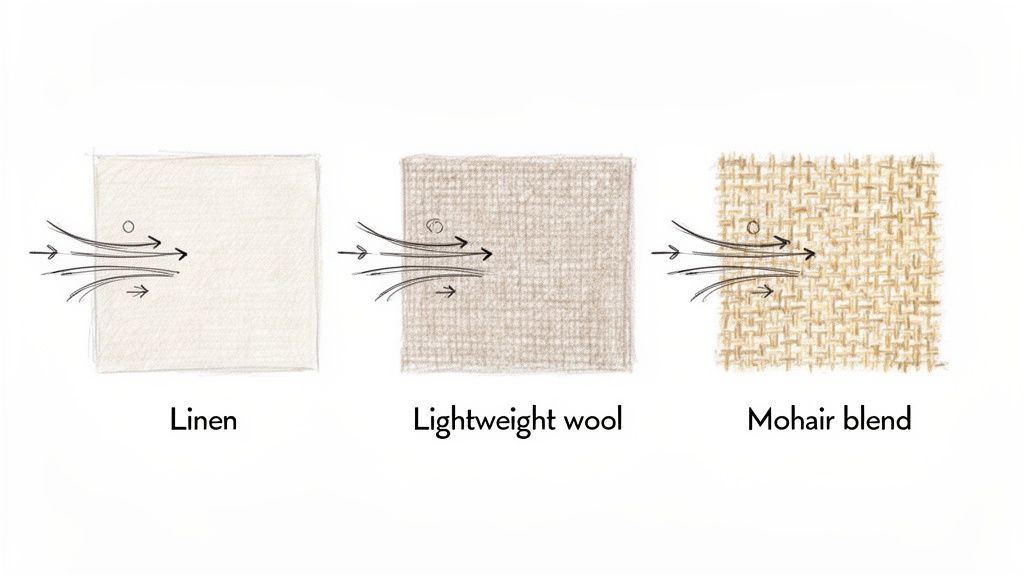
Think of your suit's fabric like the windows on a house. A heavy winter tweed is like thick, double-glazed glass, designed to trap heat and keep the elements firmly out. For a beach ceremony, you need the complete opposite. You need a screen door that welcomes every whisper of a breeze, keeping you cool and comfortable. That quality is breathability, and it's your number one priority.
Linen The Undisputed Champion
When you picture a classic beach wedding suit, you’re almost certainly imagining linen. And for very good reason. The natural fibres from the flax plant create a uniquely open weave, making the fabric incredibly good at letting air circulate and wicking moisture away from the skin. It’s the perfect choice for a warm, humid climate.
Of course, linen is famous for creasing. But in a coastal setting, this is often seen as part of its charm—a relaxed, lived-in texture that feels perfectly at home by the sea. A master tailor, however, knows how to manage this. By using a high-quality linen and constructing the suit with real precision, the drape can be controlled, creating a look that’s relaxed yet still impeccably sharp.
A bespoke linen suit doesn't just look the part; it's engineered for the environment. Its natural breathability is your best defence against the coastal heat, ensuring you remain cool and collected from the ceremony to the final dance.
Sophisticated Alternatives to Pure Linen
While linen is a superb choice, it's far from your only option. For gentlemen who want a smoother finish with better crease resistance, modern fabric blends and lightweight wools offer some fantastic alternatives. These materials prove you don't have to sacrifice a crisp silhouette for comfort.
Lightweight Wool (Fresco): Don't let the word "wool" put you off. Tropical or 'fresco' wool is a high-twist, open-weave fabric designed specifically for hot weather. It's wonderfully airy, surprisingly durable, and resists wrinkling far better than linen. This makes it an excellent choice, especially if you’re travelling for the wedding.
Linen and Silk Blends: When you blend linen with silk, you get a fabric with a beautiful, subtle sheen and a much softer feel. The silk adds a touch of luxury and vastly improves the fabric's drape, helping it resist the sharpest creases you often get with pure linen.
Mohair Blends: Mohair, which comes from the hair of the Angora goat, is known for its incredible resilience and lustre. Blended with a lightweight wool, it produces a crisp, breathable fabric that holds its shape exceptionally well—perfect for keeping a sharp look all day long. Find out more about how we select the best fabrics for suits for every kind of occasion.
Ultimately, choosing between these options comes down to your personal preference for texture and how formal you want to look. Each one provides a clear path to a stunning and practical beach wedding suit, ensuring your comfort is woven into the very fabric of your big day.
Finding the Perfect Colour Palette for a Coastal Ceremony
Your suit's colour is more than just another detail; it’s the single element that sets the entire tone for your wedding day look. When you're standing against a backdrop of sand, sea, and sky, choosing a palette that works in harmony with that natural beauty is essential. The right shade won't just look incredible in the photos—it will keep you comfortable under the sun, too.
Think of your suit as a canvas. The goal is to complement the environment, not compete with it. This is precisely why traditional dark business suits, like charcoal or black, feel so jarringly out of place. They absorb heat like a sponge and create a harsh contrast against the soft, diffused light of the coast.
Timeless Neutrals for Sun-Drenched Settings
The classic, can't-go-wrong choice for any beach wedding is a palette of light, earthy neutrals. These colours are timeless, elegant, and incredibly practical for a ceremony in the heat.
Stone and Beige: These are perennial favourites for a reason. They mirror the colour of dry sand, creating a look that feels seamless, sophisticated, and perfectly grounded in the setting.
Off-White or Cream: A slightly bolder but equally refined option. An off-white suit offers a crisp, clean silhouette that stands out beautifully against the blues of the ocean and sky.
Light Grey: This is a versatile neutral that brings a slightly more formal feel than beige without looking remotely corporate. It also pairs effortlessly with almost any shirt and accessory colour you can think of.
These lighter shades do more than just look the part. Their ability to reflect sunlight, rather than absorb it, is a game-changer for keeping you cooler and more comfortable throughout the day.
Exploring Contemporary Coastal Colours
While you can never go wrong with neutrals, don't be afraid to draw inspiration directly from the coastal landscape itself. Soft blues and greens can create a truly memorable and modern look that feels perfectly attuned to your location.
A well-chosen colour palette for your beach suit should feel like it was borrowed from the scene itself—the soft blue of a calm morning sea, the pale green of dune grasses, or the warm stone of a sun-bleached cliff face.
A suit in seafoam green or sky blue, for instance, can be incredibly striking. The key is to keep the tones muted and soft, avoiding anything overly bright or saturated that might look garish. These colours work exceptionally well when rendered in a lightweight fabric like linen, where the cloth's natural texture adds a beautiful depth to the shade. You can see a great example of this in our guide to wearing a light blue linen suit with confidence.
As beach weddings become more formal affairs, the pressure to achieve a polished look has grown. With the average UK wedding now costing £23,250 and guest numbers averaging 89 people, the investment is significant. This, combined with the expectation for refined aesthetics, highlights the need for bespoke tailoring that can deliver suits that are both elegant and perfectly suited to the environment. You can read the full wedding report to discover more insights about these rising trends on thortful.com.
Matching Colours to Skin Tone and Time of Day
Finally, bring it back to the personal. Your own skin tone can influence which shade is most flattering. Warmer beige and stone tones often look fantastic against olive or darker complexions, while cooler light greys and blues can work beautifully for fairer skin.
Even the time of your ceremony plays a role. Imagine a suit in a soft, golden-hour shade of stone during a sunset ceremony—it would capture the warm light perfectly, making for an unforgettable image.
Mastering the Fit for Effortless Beach Elegance
Beyond the fabric and colour, it’s the actual construction of your suit that truly elevates it from simply ‘appropriate’ to something exceptional for a beach wedding. A bespoke suit isn't just about nailing your measurements; it’s about engineering a garment to perform flawlessly in a very specific, and often challenging, environment. Getting to grips with these construction details means you can walk into a consultation with your tailor feeling confident and ready to collaborate, ensuring every last element is designed for comfort and effortless style.
The mission is simple: create a suit that breathes with you and moves with the coastal breeze, rather than fighting against it. Picture a traditional, fully lined suit as a well-insulated room—perfect for keeping the warmth in during winter. For a beach ceremony, we need to carefully dismantle that insulation, creating a structure that encourages airflow and feels almost weightless on your shoulders.
The Importance of Unlined Construction
One of the single most effective changes a tailor can make for a beach suit is to strip out the lining. This one detail dramatically alters how the suit feels and performs in the heat, turning a potentially stuffy garment into a wearable masterpiece.
Unlined Jacket: This is the gold standard for maximum breathability. With no internal lining, the air passes directly through the suit's main fabric, offering unparalleled cooling. It results in a soft, light garment that feels more like a heavy, structured shirt than a formal jacket.
Half-Lined Jacket: A brilliant compromise, the half-lined jacket has lining only across the shoulders and upper back. This provides just enough structure to help the jacket drape smoothly while leaving the lower back completely open for ventilation.
Removing or reducing the lining is the single most effective way to adapt a suit for a warm climate. It’s like opening a window on a warm day—instantly allowing heat to escape and a cool breeze to enter, keeping you comfortable no matter how high the temperature climbs.
Soft Shoulders for a Relaxed Silhouette
Think about a traditional business suit. It often has a structured, padded shoulder to create a sharp, authoritative silhouette. That’s great for the boardroom, but for the relaxed atmosphere of a beach wedding, a softer construction is far more fitting. Enter the soft shoulder, sometimes called a natural shoulder, which has minimal or no padding at all.
This simple change allows the jacket to follow the natural, rounded line of your own body. It does away with the stiff formality you’d associate with office wear, creating a silhouette that feels refined yet perfectly at home in a laid-back setting. This small detail makes a huge difference in achieving that sense of effortless elegance.
Trousers Tailored for the Coast
The bespoke details in your trousers are just as critical for both your comfort and your style. The choices you'd make for a standard business suit are often impractical or just look plain wrong on the sand.
Side-Adjusters Instead of Belt Loops: For a cleaner, more streamlined look, I always recommend side-adjusters. These small buckles built into the waistband give you a precise fit without needing a belt, which only adds an unnecessary layer of warmth and bulk.
The Perfect Hem Length: The length of your trousers should be dictated by your choice of footwear. If you’re planning on wearing loafers or going sockless, a slightly shorter hem with no "break" (where the fabric folds over the shoe) looks incredibly modern and, crucially, keeps your trousers out of the sand.
For a deeper dive into getting your measurements just right, especially when commissioning a piece remotely, you can learn more about how to measure yourself for a suit in our detailed guide.
Comparing Suit Construction for Different Venues
To really see why these bespoke details matter so much, it helps to put them side-by-side. The differences in approach are night and day, highlighting how a suit must be adapted to its environment.
Suit Construction for Beach vs Traditional Weddings
Construction Detail
Traditional Wedding Suit
Bespoke Beach Wedding Suit
Lining
Fully lined for structure and warmth.
Unlined or half-lined for maximum airflow.
Shoulder
Padded and structured for a formal shape.
Soft, natural shoulder for a relaxed silhouette.
Trousers
Typically features belt loops and a full break.
Side-adjusters and a shorter hem for a clean look.
Canvas
Heavier, full canvas for a sharp drape.
Lighter, minimal canvas for flexibility and comfort.
Ultimately, mastering the fit is all about making deliberate, intelligent choices that prioritise your comfort without ever sacrificing an ounce of style. By focusing on these key construction details with your tailor, you can co-create a suit that feels every bit as good as it looks when you're standing by the shore.
Accessorising Your Beach Wedding Look
The right accessories are the final, defining strokes that take your beach wedding suit from simply well-dressed to genuinely memorable. These details aren't just afterthoughts; they are the essential touches that pull your whole look together, striking the perfect balance between the gravity of the occasion and the laid-back coastal setting. It all comes down to choosing pieces that are both stylish and practical for your surroundings.
Let's start from the ground up, because your footwear is one of the most critical decisions you'll make. Elegant leather loafers in tan, brown, or even a deep navy offer a brilliant middle ground—polished, but without the stuffiness of a traditional pair of Oxfords. If you're aiming for something a touch more relaxed but still sharp, consider high-quality suede loafers or even a classic pair of espadrilles.
Shirts and Finishing Touches
Your choice of shirt is just as vital as the suit fabric itself. Think of it as a breathable base layer against your skin. A crisp, lightweight shirt in a high-quality linen or a fine cotton poplin is essential for staying comfortable in the heat. You can't go wrong with classic white for a timeless look, but a soft pastel blue also works beautifully to complement that coastal palette.
Beyond the shirt, it’s the smaller details that truly complete the picture:
Pocket Squares: A simple linen pocket square in a complementary colour adds a dash of personality. A clean, straight fold keeps the look sharp, while a more relaxed puff fold feels perfectly suited to the beach vibe.
Sunglasses: A practical necessity that doubles as a seriously stylish accessory. You can't beat classic styles like Wayfarers or Aviators in a tortoiseshell or subtle metal frame.
The Optional Hat: For a daytime ceremony under the full sun, a Panama hat is both a practical and incredibly dapper choice, adding a touch of old-world charm to the proceedings.
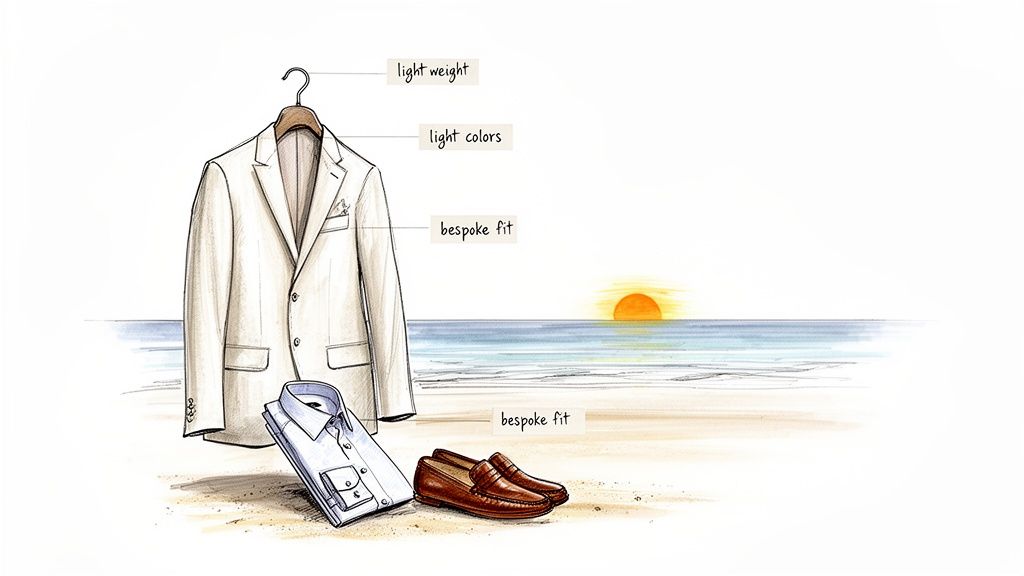
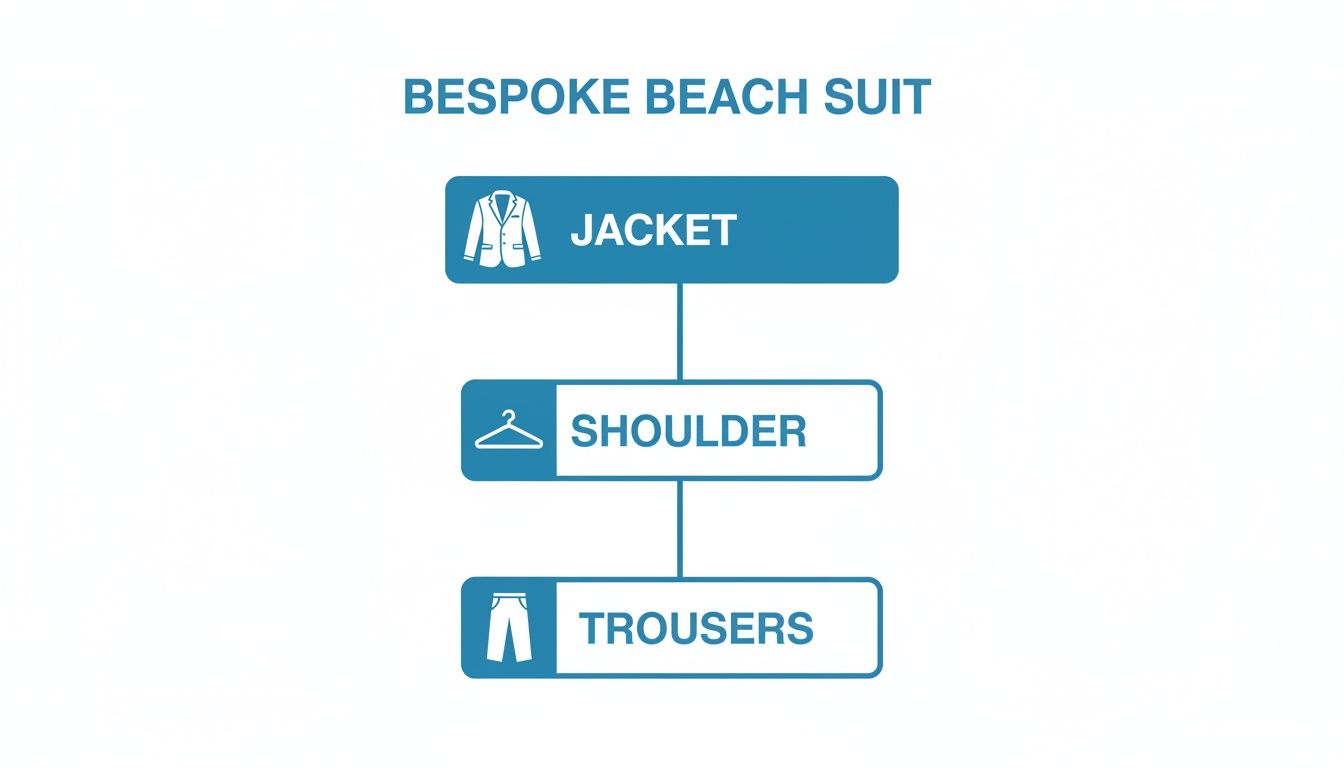
This diagram breaks down the key components of a well-crafted beach suit—the very foundation upon which your accessories will build.
As you can see, every element—from the soft shoulder construction to the cut of the trousers—is designed with comfort in mind, creating the perfect canvas for your chosen accessories.
Pulling the Look Together
Achieving that cohesive, effortless look is all about thoughtful curation. Understanding the finer points, like proper boutonniere etiquette, can add that final, refined touch. If you're looking to explore a wider selection of pieces, you can find the perfect complements to your suit by exploring our range of bespokeaccessories.
This whole conversation is more relevant than ever. In 2023, England and Wales saw 231,949 marriages, and with one in five UK couples now opting for a destination event, that’s roughly 53,200 such weddings every year. This trend highlights a growing demand for specialised formalwear designed for unique settings, making the art of accessorising for a beach wedding an essential skill for the modern groom.
Frequently Asked Questions
What is the best suit material for a hot beach wedding?
The best material is undoubtedly linen due to its exceptional breathability and moisture-wicking properties, which keep you cool. However, linen does crease easily. For a sharper look with better wrinkle resistance, consider lightweight tropical wool (fresco) or a linen blend with silk or wool. These alternatives provide excellent airflow and comfort while maintaining a more structured silhouette throughout the day. A bespoke tailor can guide you to the perfect fabric for your needs.
Should I wear a tie to a beach wedding?
Generally, a tie is optional for a beach wedding. The relaxed setting allows for a more casual approach, and an open-collar shirt often feels more appropriate and comfortable in the heat. If the dress code is more formal or you prefer a classic look, consider a lightweight linen or cotton tie in a complementary colour. Avoid heavy silk ties, which can feel too stuffy. Ultimately, the decision depends on the event's formality and your personal style.
What kind of shoes are appropriate for a beach wedding?
Your footwear should bridge the gap between elegance and practicality. Leather or suede loafers are an excellent choice, as they are smart yet comfortable and can be worn without socks. Espadrilles offer a more relaxed but still stylish option. If the wedding is very informal and right on the sand, high-quality leather sandals can be acceptable. The key is to avoid heavy, formal dress shoes like black Oxfords, which look out of place and are impractical on sand.
Can I wear a three-piece suit to a beach wedding?
While a traditional heavy waistcoat is not recommended due to the heat, a bespoke three-piece suit can be adapted. A tailor can craft a lightweight waistcoat from the same breathable fabric as the suit, often with an unlined back to improve airflow. This provides a formal silhouette without trapping excessive heat. It’s a sophisticated choice, especially for an evening reception, but a two-piece suit remains the most practical and comfortable option for a ceremony under the sun.
About the Author
Igor is the founder and master tailor behind Dandylion Style. With a lifelong passion for the quiet elegance of classic gentlemen’s tailoring and the unmatched quality of British fabrics, he has dedicated his career to the art of creating bespoke garments that feel personal, comfortable, and perfectly cut. Igor finds particular joy in working with lightweight materials like linen and fresco wool, making him an expert guide for clients commissioning suits for beach weddings where style and comfort are paramount.
At Dandylion Style, we specialise in creating bespoke garments that are perfectly suited to your unique celebration. Book a consultation with Igor to begin designing your ideal beach wedding suit.
Key Takeaways The Core Two: Navy blue and charcoal grey are the essential, non-negotiable suit colors for any professional wardrobe. Navy offers versatility and approachability, while charcoal projects authority and seriousness. Context is Crucial: The best suit color...
When you find a piece of clothing you absolutely love, getting the fit just right is the final, transformative touch. But how much should you expect to pay? In the UK, alteration costs can be as modest as £15 for a simple trouser hemming, or climb to £150 and beyond...
Getting the right pink shirt and tie combination is the mark of a well-dressed man. It’s a detail that separates the novices from those who truly understand their wardrobe. For a look that’s classic and can’t miss, pair your pink shirt with a navy, grey, or burgundy...
Key Takeaways For those seeking a quick overview, this section summarises the essential rules and recommendations for incorporating turn-up trousers into your wardrobe. Sartorial Purpose: Turn-ups add weight to the trouser hem, ensuring a cleaner, sharper drape,...
Deciding what colour tie to wear with a pink shirt is a common style query I hear from clients. For a classic, professional look that never fails, your safest and most effective choices are navy blue and charcoal grey. If you're heading to a more contemporary or...
You've just picked up a newly finished bespoke suit, and the cloth still has that clean, disciplined line only a real fitting room can give it. The temptation is to put it straight in the wardrobe and trust the label to do the rest. That's where expensive...
Book Your Tailoring Consultation
Looking for a suit or garment made specifically for you?
At Dandylion Style, we create bespoke and made-to-measure
garments tailored to your individual shape, style and occasion.
From suits and shirts to dresses, waistcoats and alterations,
our experienced tailors can help you create something truly unique.