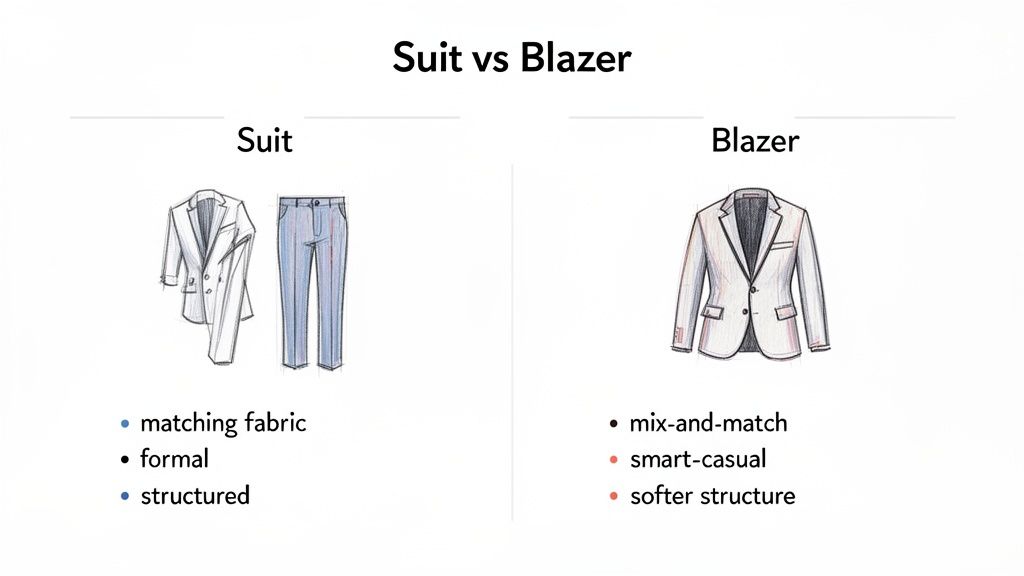
The fundamental difference between a suit and a blazer boils down to one simple, yet crucial, rule: a suit is a matching set of a jacket and trousers cut from the exact same roll of cloth, and is always designed to be worn together. A blazer, on the other hand, is a standalone jacket, intended from the outset to be paired with non-matching trousers, which gives it far greater versatility for smart-casual affairs.
Key Takeaways
Core Difference: A suit jacket is part of a matching set with trousers made from the same fabric. A blazer is a standalone jacket designed to be worn with non-matching trousers.
Formality: Suits are inherently formal, required for business, weddings, and serious occasions. Blazers are versatile, perfect for smart-casual to business-casual settings.
Construction: Suit jackets are typically more structured with padded shoulders for a sharp silhouette. Blazers often have softer, more natural shoulders for a relaxed feel.
Fabric: Suits use smooth, fine fabrics like worsted wool for a uniform look. Blazers embrace textured materials like hopsack, tweed, or linen to create contrast.
The Golden Rule: Never wear a suit jacket as a blazer. The finer fabric and formal cut create a noticeable mismatch when paired with casual trousers.
Suit vs Blazer: An Overview
Grasping the distinction between a suit and a blazer is foundational to building a versatile and truly appropriate gentleman's wardrobe. Though both are tailored jackets, they serve entirely different purposes, a fact dictated by their construction, cloth, and the level of formality they command.
A suit jacket is an integral part of a formal ensemble. Its structure is typically more defined, often with padded shoulders and a canvassed construction that work together to create a sharp, clean silhouette. The fabric is almost always a smooth worsted wool or flannel, ensuring a consistent and uniform appearance from head to toe. This uniformity is precisely its greatest strength, making the suit the non-negotiable choice for serious business, weddings, and other formal events.
A blazer, however, is a sartorial free agent. It happily embraces textural variety and is often crafted from interesting materials like hopsack, tweed, or linen. Its construction is generally softer and more relaxed, providing comfort and a less rigid appearance. It’s this adaptability that allows it to so effortlessly bridge the gap between formal and casual wear. While a blazer offers incredible styling freedom, you may also find yourself curious about the difference between a sports coat and a blazer, a topic that further explores the nuances of versatile tailoring.
To make these core differences crystal clear, here’s a direct comparison.
Suit vs Blazer at a Glance
This table breaks down the essential characteristics of each garment, offering a quick reference for when you're deciding what your wardrobe needs next.
Characteristic
Suit Jacket
Blazer
Trousers
Must match the jacket perfectly; cut from the same bolt of cloth.
Worn with non-matching trousers (e.g., chinos, flannels).
Fabric
Smooth, fine fabrics like worsted wool, flannel, or mohair.
Textured fabrics such as hopsack, tweed, serge, or linen.
Formality
Formal to business professional; worn as a complete outfit.
Smart-casual to business-casual; highly versatile.
Construction
More structured, often with padded shoulders and canvassing.
Softer construction, often with natural shoulders for comfort.
Buttons
Usually body-colour horn or plastic buttons.
Often features contrasting metal, brass, or mother-of-pearl buttons.
Office wear, social gatherings, weekend events, smart-casual dinners.
As you can see, the suit jacket is defined by its relationship to its matching trousers, while the blazer is built for independence and variety. Both have a vital role to play in a well-rounded wardrobe.
Decoding the Anatomy of Tailored Jackets
To truly get to the heart of the suit versus blazer debate, we need to look beyond the obvious—the matching trousers—and get into the very architecture of the jackets themselves. It’s the unseen details, from the construction of the shoulder down to the style of the pocket, that dictate a jacket’s formality, its drape, and its ultimate purpose. This is where the real art of bespoke tailoring reveals itself.
A suit jacket is engineered from the ground up to create a sharp, clean silhouette that commands respect in formal settings. Its construction is deliberately more rigid, designed to build a powerful V-shape torso that projects authority and elegance. The blazer, on the other hand, is built for comfort and adaptability, with a much softer structure that allows for greater movement and a more relaxed feel.
The Critical Role of Shoulder Construction
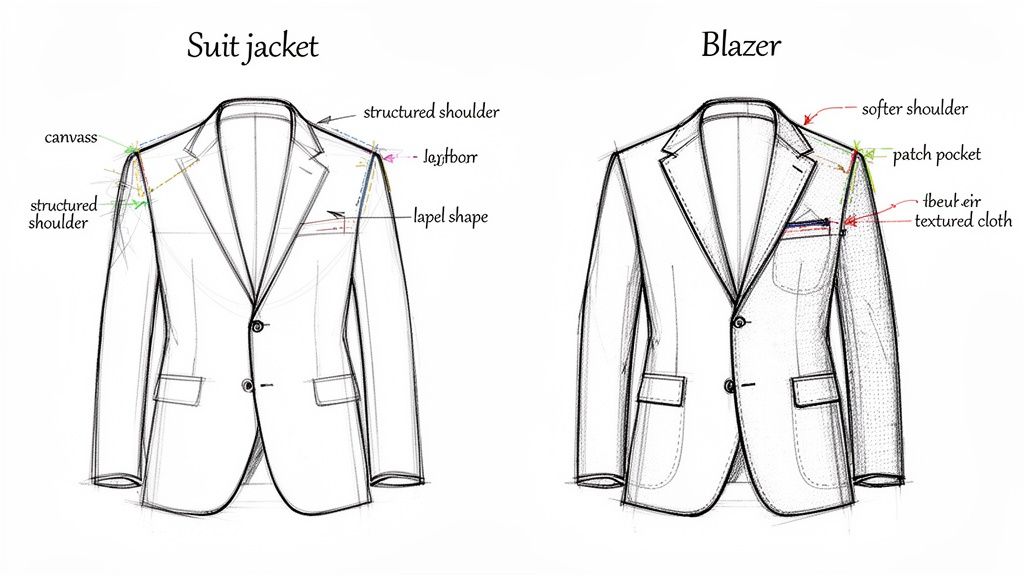
The shoulder is the very foundation of a tailored jacket; it sets the tone for the entire garment. Suit jackets traditionally feature a structured shoulder, often with padding to forge a sharp, definite line. This construction helps to build up the wearer's frame, creating a silhouette that is crisp and undeniably formal.
In stark contrast, blazers very often employ a soft shoulder—or spalla camicia, as the Italians call it (“shirt shoulder”). This style has little to no padding, which allows the jacket to follow the natural curve of your own shoulder. The result is a more relaxed, comfortable fit that feels less like armour and more like a second skin, making it absolutely perfect for smart-casual occasions.
A suit jacket's structured shoulder is designed to create a consistent, formal silhouette, while a blazer's soft shoulder prioritises natural comfort and versatility. This single element fundamentally changes how the garment feels and the impression it makes.
Canvassing: The Jacket's Inner Soul
Beneath the outer cloth of any quality jacket lies the canvas, an internal layer that gives the garment its shape and helps it mould to your body over time. The level of canvassing is a huge differentiator between a high-quality suit jacket and a blazer.
Full Canvas: This is what you’ll find in the finest bespoke garments. A full canvas runs from the lapel all the way down to the hem, providing superior drape and longevity. It’s the gold standard for a formal suit jacket.
Half Canvas: A brilliant, practical compromise. The canvas extends through the chest and lapel, providing structure where it’s most needed while keeping the lower half of the jacket lighter. This is an excellent choice for both suits and high-end blazers.
Fused Construction: Common in off-the-rack garments, this is where an interlining is simply glued to the fabric. While it’s cost-effective, it results in a stiffer, less breathable jacket that never quite conforms to your body.
A bespoke suit jacket will almost always feature a full or half canvas to achieve its signature, elegant drape. While a bespoke blazer can certainly be fully canvassed, its versatile nature also suits a half-canvassed or even an unlined, deconstructed approach for maximum ease and comfort.
Lapels and Pockets: The Finishing Touches
Finally, the details of the lapels and pockets provide the clearest visual cues about a jacket’s intended formality. Understanding these subtle differences is key to mastering true sartorial elegance. For a much deeper dive into all these elements, you can explore our detailed guide on the parts of a suit.
Suit jackets typically feature sharp notch lapels for business wear or commanding peak lapels for more formal or statement-making occasions. Their pockets are often jetted or feature discreet flaps to maintain a clean, uninterrupted line.
Blazers, true to their nature, offer much more creative freedom. While notch lapels are common, the pocket styles are often more casual. Patch pockets, which are sewn directly onto the exterior, are a popular and distinctly more relaxed choice. It's these small but significant details that collectively define the character of a jacket, clearly separating the formal suit from the adaptable blazer.
The Unseen Difference in Fabric and Construction
The real soul of a tailored garment—what truly sets a formal suit apart from an adaptable blazer—is woven right into its fibres. While the cut and construction forge the silhouette, it's the cloth that dictates its drape, texture, and ultimate purpose. You can tell the whole story of the garment just by looking at the fabric.
A suit is a masterclass in perfect uniformity. It's absolutely non-negotiable: both the jacket and trousers must be cut from the exact same roll of cloth. This ensures a flawless match in colour, weave, and finish. It’s why suits are traditionally made from smooth, fine fabrics like worsted wools, flannels, or elegant mohair blends, all of which create a clean, unbroken visual line from shoulder to ankle.
A blazer, on the other hand, is a celebration of individuality and texture. As a standalone piece, it’s designed to create a pleasing contrast with whatever trousers it's paired with. This freedom allows it to embrace a world of characterful fabrics that would look completely out of place in a full suit.
The Suit’s Palette: Precision and Formality
Suit fabrics are chosen for how they perform in a formal or professional setting. They need to drape beautifully, resist creasing, and project an air of quiet refinement. The goal is to minimise distraction and present a single, polished image.
Key suit fabrics include:
Worsted Wool: The quintessential suiting material. It's known for its smooth finish, durability, and year-round comfort, and its tight weave creates that crisp, professional look.
Flannel: A softer, milled wool with a slightly fuzzy texture. It offers warmth and a touch of classic elegance, making it perfect for autumn and winter business wear.
Mohair Blends: Prized for their subtle sheen and fantastic wrinkle resistance, they are ideal for travel and formal events where looking sharp is paramount.
The choice is always driven by the need for a sophisticated, uniform appearance. You can learn more about the properties of different materials in our guide to the best fabrics for suits.
The Blazer’s World: Texture and Versatility
The blazer is where a gentleman can really let his personal style shine through cloth. Because it’s a separate, it can handle bolder textures, richer patterns, and more substantial weaves that add depth and interest to an outfit. This versatility has made it an increasingly popular choice in modern wardrobes.
At Dandylion Style, we believe the right fabric is the soul of the garment. For a suit, we seek precision and elegance from premium British mills. For a blazer, we explore cloths that offer character, durability, and a timeless feel, allowing our clients to build a wardrobe that is both functional and expressive.
This growing appreciation for adaptable tailoring is a clear trend across the UK. The men's blazers market has shown robust growth compared to suits, reflecting a shift towards versatile, casual tailoring. Revenue in the Blazers segment hit a significant figure in recent years, with projections indicating an annual growth rate that outpaces traditional suits. This is driven by rising demand for mix-and-match pieces suitable for both business professionals and wedding parties. This versatility also explains why 42% of the UK women's coats market in 2021 was medium-weight styles—perfect for transitional British weather and aligning with bespoke blazer demand. You can explore more data on this trend in the full Statista report on the UK blazers market.
Popular blazer fabrics that showcase this character include:
Hopsack: A lightweight, basket-weave wool that's highly breathable and naturally wrinkle-resistant. It makes a superb choice for a three-season travel blazer.
Tweed: A rugged, textured wool with a rich heritage. It’s perfect for adding a touch of country elegance and exceptional warmth to a smart-casual look.
Cashmere and Blends: Incomparably soft and luxurious. A cashmere blazer offers supreme comfort and an effortlessly opulent appearance for social occasions.
Linen: The definitive summer fabric, prized for its lightness and breathability. Its natural tendency to wrinkle is simply part of its relaxed, sophisticated charm.
Ultimately, the distinction in fabric highlights the core difference in the suit vs blazer debate. A suit is a unified statement of formality that demands flawless consistency. A blazer is an individual expression of style, embracing texture and creative pairing.
Choosing the Right Garment for Any Occasion
Understanding the fine points of construction and cloth is one thing; applying that knowledge to the real world is the true art of dressing well. The debate isn't about whether a suit is better than a blazer, but which is appropriate. Your calendar, from a formal wedding to a relaxed weekend lunch, is what really dictates the right choice.
A suit makes a statement. Its power is in its uniformity—the matching jacket and trousers create a single, unbroken line that commands respect. For occasions where decorum and polish are the order of the day, it is simply non-negotiable.
When a Bespoke Suit Is Essential
There are moments when only the complete, harmonious look of a suit will suffice. Trying to substitute a blazer in these settings can signal a misunderstanding of the dress code, undermining the very impression you want to make.
A suit is the correct, and often required, choice for:
Formal Weddings: Whether you're a guest or part of the wedding party, a suit shows respect for the gravity of the occasion. A dark navy or charcoal two-piece is timeless and impeccable.
Critical Business Meetings: In high-stakes corporate environments, a well-cut suit projects authority, competence, and a keen eye for detail. It is the uniform of serious business.
Black-Tie and Formal Events: While a tuxedo is specific to black-tie, a dark, perfectly fitting suit is the minimum standard for most formal evening events.
Funerals and Solemn Occasions: A dark, conservative suit is a quiet sign of respect and solemnity.
Scenarios That Call for a Blazer
The blazer comes into its own precisely where the suit feels too rigid. Its entire purpose is to elevate a more casual look, bridging that gap between relaxed and formal with a certain nonchalant style. A blazer offers a world of versatility that a suit jacket, by its very nature, cannot.
Consider a blazer for:
Smart-Casual Office Environments: For workplaces that have moved past the traditional suit and tie, a blazer paired with smart chinos or flannel trousers strikes the perfect note of professional yet approachable.
Weekend Social Events: From brunch with friends to an evening at the pub, a blazer adds a layer of polish to a casual outfit without making you look like you've tried too hard.
Relaxed Receptions and Parties: At a cocktail party or a casual wedding reception, a blazer allows for much more personal expression through interesting textures and colours.
Date Nights: A softly constructed blazer over a fine-gauge knit or an open-collared shirt is sophisticated yet relaxed. It makes an excellent first impression.
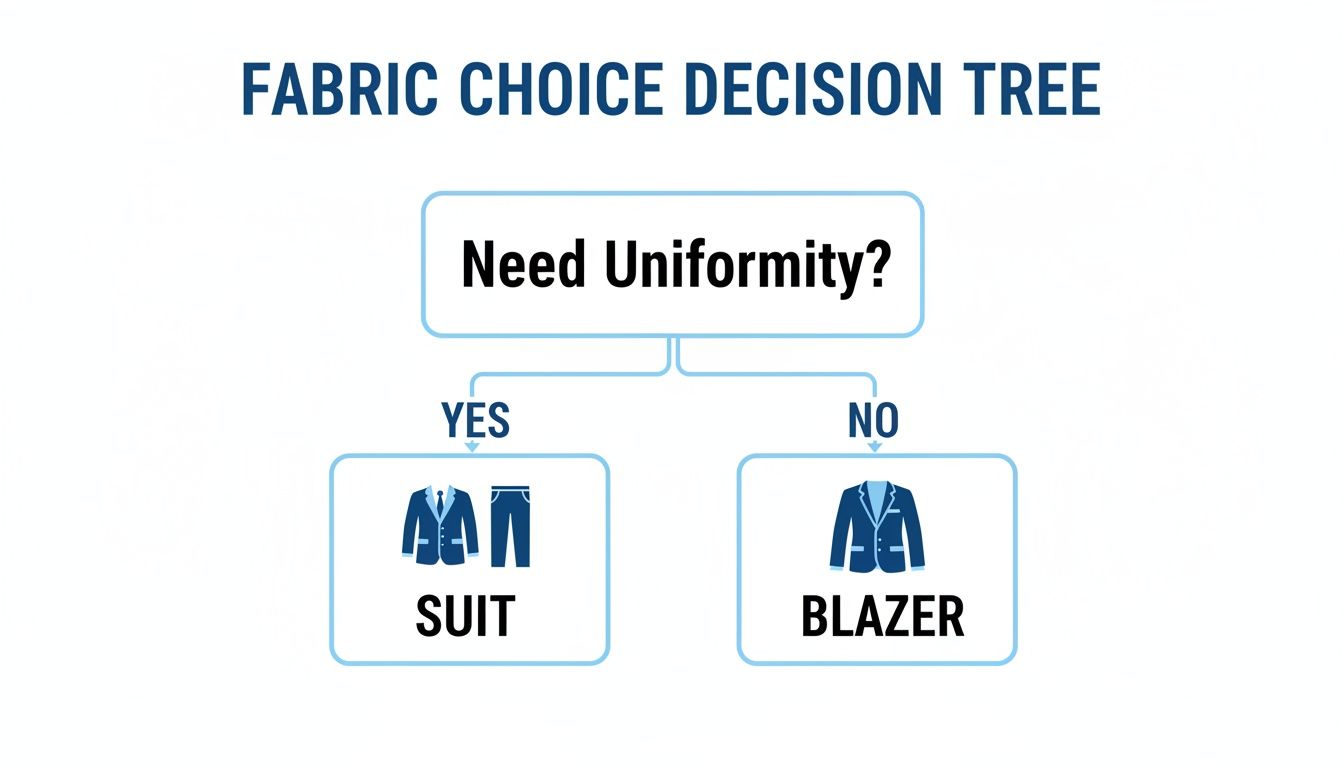
Ultimately, the choice comes down to one question: do you need a unified appearance? This simple decision tree helps visualise that choice.
As the guide shows, if a cohesive, uniform look is the priority, the suit is the only answer. For everything else, the blazer’s adaptability makes it the superior option.
Mastering the art of appropriate dress isn’t about owning countless garments, but about understanding the distinct role each one plays. A suit is for conformity and respect; a blazer is for versatility and personal style.
This shift towards more adaptable pieces is happening right across the formal menswear market. After a significant post-COVID rebound, the UK sector saw a new focus on hybrid workwear, where blazers are far more useful than full suits. Data from IBISWorld shows that blazers have stronger per capita volume growth as men look for versatile pieces to wear to weddings, the office, and casual events. The women's market is seeing a similar trend, with the lightweight jacket segment showing the fastest growth at over 5% CAGR as clients seek out flexible tailored pieces.
A well-curated wardrobe, of course, contains both. A foundational bespoke suit in navy or charcoal will cover your formal obligations, while one or two high-quality blazers in fabrics like hopsack or tweed can handle almost everything else. Once you understand the context of each event, you can choose the right garment with confidence every single time.
The Bespoke Journey from Consultation to Commission
Moving from the theory of suits and blazers to the tangible experience of having one made is where the purpose of the garment truly comes to life. Every bespoke journey starts not with a measuring tape, but with a conversation. This initial consultation is a deep dive into your lifestyle, your needs, and your personal taste, and it's here that the path to commissioning a suit versus a blazer diverges most clearly.
When we sit down to discuss a bespoke suit, the focus is squarely on creating a seamless, elegant whole. The conversation revolves around unity and harmony between jacket and trousers. We'll talk through the occasions—a wedding, a critical business meeting, a formal gala—and select a single bolt of cloth, often a fine worsted wool or flannel, to guarantee absolute consistency in colour, texture, and drape. Every detail is chosen to support a single, cohesive statement.
The Consultation: The Cornerstone of Your Commission
The consultation for a blazer, on the other hand, is an entirely different creative exercise. This conversation is all about versatility and character. We're not looking for uniformity; we're exploring a much wider, more eclectic range of fabric textures designed to stand alone, from rugged tweeds to airy hopsack weaves.
The goal here is to craft a cornerstone piece that pairs effortlessly with a variety of trousers. This means we pay special attention to the details that telegraph personality and individuality, such as:
Distinctive Buttons: We might explore options like polished brass for a classic naval feel, or mother-of-pearl and horn to add earthy character.
Unique Linings: This is an opportunity for a private flash of flair, selecting a bold pattern or a rich colour that says something about the wearer.
Pocket Styles: We often lean towards patch pockets for a blazer, a detail that immediately lends a more relaxed and versatile feel.
From Measurements to Masterpiece
Whether you land on a suit or a blazer, the core of the bespoke journey is an identical, meticulous process of craftsmanship. Following the consultation and fabric selection, we take a comprehensive set of measurements to draft a unique paper pattern that belongs to you and you alone.
This pattern is the foundation for the fitting stages, where the garment is gradually built and shaped on your body to achieve a flawless silhouette. The entire process, from that first conversation to the final delivery, typically takes between 8 to 12 weeks. This timeline is essential to accommodate the hours of detailed hand-stitching and careful shaping that define true bespoke tailoring. For those interested in a deeper look, you can learn more about crafting your bespoke suit journey with us.
The meticulous craftsmanship and personalised experience of creating a custom garment are part of a larger appreciation for unique, made-to-order luxury. This bespoke journey extends to other high-end items, as seen in various bespoke commissions.
Ultimately, whether you are investing in the unified elegance of a suit or the adaptable character of a blazer, the bespoke process ensures the final piece is an authentic reflection of you. It’s a rewarding collaboration that results in a garment that not only fits perfectly but also serves its intended purpose with distinction and style, offering immense value that lasts for decades.
About the Author: Igor, Founder of Dandylion Style
Igor is the founder and master tailor at the heart of Dandylion Style. His deep passion for classic British tailoring and an unwavering commitment to true craftsmanship led him to establish his Ardingly studio, where he creates garments as individual as the gentlemen who wear them. Specialising in transforming fine British cloths into impeccably fitting suits and blazers, Igor believes in a calm, considered process, offering honest guidance to ensure every commission is a personal and enduring investment in style.
No, you should avoid wearing a suit jacket as a blazer. Suit jackets are made from finer, smoother fabrics and have a more formal structure designed to match their trousers perfectly. Pairing one with different trousers, like chinos or jeans, creates a noticeable and often jarring mismatch in texture and formality. A true blazer is cut from more robust, often textured cloth specifically for this purpose, resulting in a much more cohesive and intentional look that successfully bridges the gap between formal and casual.
What should my first bespoke commission be, a suit or a blazer?
Your first bespoke commission should solve your most immediate wardrobe need. If your professional life or social calendar frequently requires formal attire for meetings, weddings, or events, a versatile navy or charcoal grey suit is the ideal foundational investment. However, if your lifestyle is more smart-casual, a bespoke blazer will offer far greater utility. A well-made blazer in a fabric like hopsack or tweed can be dressed up or down, providing exceptional value across a wider range of less formal occasions.
How do you style a blazer correctly?
The art of styling a blazer lies in creating a considered contrast. Unlike a suit, the goal is to pair the jacket with trousers of a different colour and complementary fabric. Classic combinations include a navy blazer with grey flannel trousers, or a tweed jacket with smart chinos or moleskin trousers. Details also matter; blazers often feature more prominent buttons, such as brass or mother-of-pearl, which add character. The overall aim is an outfit that looks effortlessly put-together rather than perfectly matched.
What is the main difference in fabric between a suit and a blazer?
The primary fabric difference is texture and uniformity. Suits demand smooth, fine fabrics like worsted wool or flannel to create a single, unbroken silhouette from shoulder to ankle. The cloth for both jacket and trousers must be identical. Blazers, however, celebrate texture and are designed for contrast. They are often made from materials with more character, such as the open weave of hopsack, the ruggedness of tweed, or the relaxed nature of linen, allowing them to pair with a variety of trousers.
Ready to invest in a garment that is unequivocally your own? At Dandylion Style, Igor guides you through a calm, considered process to create the perfect bespoke suit or blazer for your needs. Book your personal consultation today.
Key Takeaways The Core Two: Navy blue and charcoal grey are the essential, non-negotiable suit colors for any professional wardrobe. Navy offers versatility and approachability, while charcoal projects authority and seriousness. Context is Crucial: The best suit color...
When you find a piece of clothing you absolutely love, getting the fit just right is the final, transformative touch. But how much should you expect to pay? In the UK, alteration costs can be as modest as £15 for a simple trouser hemming, or climb to £150 and beyond...
Getting the right pink shirt and tie combination is the mark of a well-dressed man. It’s a detail that separates the novices from those who truly understand their wardrobe. For a look that’s classic and can’t miss, pair your pink shirt with a navy, grey, or burgundy...
Key Takeaways For those seeking a quick overview, this section summarises the essential rules and recommendations for incorporating turn-up trousers into your wardrobe. Sartorial Purpose: Turn-ups add weight to the trouser hem, ensuring a cleaner, sharper drape,...
Deciding what colour tie to wear with a pink shirt is a common style query I hear from clients. For a classic, professional look that never fails, your safest and most effective choices are navy blue and charcoal grey. If you're heading to a more contemporary or...
You've just picked up a newly finished bespoke suit, and the cloth still has that clean, disciplined line only a real fitting room can give it. The temptation is to put it straight in the wardrobe and trust the label to do the rest. That's where expensive...
Book Your Tailoring Consultation
Looking for a suit or garment made specifically for you?
At Dandylion Style, we create bespoke and made-to-measure
garments tailored to your individual shape, style and occasion.
From suits and shirts to dresses, waistcoats and alterations,
our experienced tailors can help you create something truly unique.