There’s a certain magic to a linen white suit. It’s the definitive look for warm-weather elegance, offering a breezy sophistication that’s simply unmatched. Its lightweight, breathable nature makes it the perfect companion for everything from summer weddings in the Sussex countryside to garden parties and smart-casual events in the city, keeping you cool when the temperature rises. To truly nail that sharp, relaxed silhouette, however, bespoke tailoring isn’t just an option—it’s essential to manage the fabric’s beautiful natural drape and its characteristically charming creases.
Key Takeaways
Ultimate Summer Fabric: Linen’s hollow fibres offer exceptional breathability and moisture-wicking properties, making a linen white suit the ideal choice for staying cool and stylish in warm weather.
Bespoke is Essential: Due to linen’s lack of stretch and unique drape, a bespoke fit is crucial to avoid a sloppy look and achieve a sharp, sophisticated silhouette.
Styling Versatility: A linen white suit can be styled for various occasions, from formal weddings with pastel shirts and loafers to casual weekend outings when worn as separates with chinos or polo shirts.
Care and Maintenance: Proper care involves professional dry cleaning, using a steamer to manage wrinkles (not a direct iron), and storing the suit on a wide, wooden hanger in a breathable garment bag.
Your Essential Guide to the Linen White Suit
Stepping into the world of bespoke can sometimes feel like a lot to take in, but understanding the appeal of a linen white suit is refreshingly straightforward. This isn’t just another item of clothing; it’s a statement of effortless confidence, perfectly suited for the gentleman who values both impeccable style and genuine comfort. Think of this guide as your complete roadmap, explaining everything you need to know before commissioning your own.
Consider this suit the ultimate warm-weather investment. Its greatest strength lies in its versatility, effortlessly dressing up for formal occasions or pared down for a polished, laid-back weekend look. We’ll get into how this single garment can become a true cornerstone of your seasonal wardrobe.
What You Will Discover
This guide will give you the foundational knowledge needed to make a truly informed decision. We’ll walk through the key areas to build your understanding from the ground up:
Fabric Properties: We’ll explore why linen’s natural fibres make it the undisputed champion for tackling heat and humidity.
The Importance of a Bespoke Fit: You’ll understand why an off-the-rack suit simply can’t compare to a garment crafted for your body, especially with a lively fabric like linen.
Styling Versatility: Discover how to adapt your suit for any event, from a formal wedding in Sussex to a casual brunch in London.
Care and Maintenance: Get the essential tips on looking after your suit to ensure it keeps its crisp appearance for years to come.
A well-fitted linen suit doesn’t just keep you cool; it projects an air of relaxed confidence that is difficult to replicate. It is the embodiment of summer style, combining practicality with pure elegance.
By the end of this guide, you’ll have the insight and confidence to commission a linen white suit that not only fits you perfectly but also genuinely reflects your personal style. Let’s begin.
Why Linen Is the Ultimate Summer Fabric
When the mercury starts to climb, a gentleman’s wardrobe faces a serious challenge: how to maintain elegance and composure under the summer sun? While many fabrics wilt under the pressure, one material stands head and shoulders above the rest. Linen is the undisputed champion of warm-weather tailoring, making it the perfect choice for that quintessential linen white suit.
Its journey from the humble flax plant to a roll of fine textile is a masterclass in natural engineering. The real magic lies within the structure of the flax fibre itself. Unlike cotton or wool, which are woven tightly, linen fibres are hollow. This simple fact allows air to circulate with remarkable freedom, creating a natural ventilation system that lets body heat escape while welcoming in a cool breeze.
This inherent breathability is what truly sets linen apart, even from lightweight tropical wools. It’s not just about the weight; it’s about the fabric’s ability to actively manage heat.
The Science of Staying Cool
Linen’s superiority in summer is a one-two punch of exceptional breathability and impressive moisture-wicking capabilities. Think of each linen fibre as a tiny, natural straw. As you perspire, the fabric draws moisture away from your skin and releases it into the air, drying out incredibly quickly.
This constant process creates a cooling effect, preventing that uncomfortable, sticky feeling that so often comes with summer humidity. It’s precisely why a linen white suit feels so crisp and comfortable, even during a long day at a summer wedding or an outdoor event in Sussex.
Exceptional Breathability: The hollow core of flax fibres is nature’s air conditioning, promoting superior airflow to keep you cooler than other materials.
Moisture Wicking: Linen can absorb a huge amount of moisture—up to 20% of its own weight—before it even starts to feel damp.
Quick Drying: Because it releases moisture so rapidly, the fabric stays dry and comfortable against your skin.
This combination of properties makes linen not just a stylish choice, but a genuinely practical one for any warm-weather occasion. You can explore more about how different materials perform in our guide to the best fabrics for suits.
A Symbol of British Sartorial Heritage
Linen’s place in British style is deeply woven into the nation’s history. For centuries, it has been the go-to fabric for gentlemen seeking refuge from the heat, both at home and across the Empire. Its historical significance is immense; between 1678 and 1810, linen was a cornerstone of daily English life, used for everything from undergarments to formal suits. By 1810, it had become the single largest manufactured import into England, proving just how essential it was. You can discover more insights about linen’s historical trade in England on uhra.herts.ac.uk.
The preference for white linen isn’t purely aesthetic; it’s rooted in practicality. Lighter colours, especially pure white, are incredibly effective at reflecting sunlight rather than absorbing it.
This reflective quality enhances the natural cooling properties of the fabric, creating a garment that is scientifically optimised for comfort in the sun. A linen white suit is therefore the perfect synthesis of form and function.
The appealing texture of linen extends beyond clothing, inspiring designs in other categories, such as this personalized roses on linen personalized name luggage. Ultimately, choosing a linen suit is an acknowledgment of a textile perfected by nature and celebrated throughout history for its unmatched ability to deliver comfort and elegance in equal measure.
Achieving the Perfect Fit with Bespoke Tailoring
The whole point of a linen white suit is its character—that relaxed drape, the way it creases with a certain nonchalant elegance. But here’s the thing: that very same character means its style lives or dies by the quality of the fit. An off-the-rack linen suit can all too easily look sloppy, but a garment cut and shaped to your exact proportions? That’s when it becomes a masterpiece of effortless sophistication.
Unlike wool, linen has virtually no natural stretch and a much looser weave. This means a standard, off-the-peg size will almost never do justice to the nuances of an individual’s posture and build. For a linen white suit, going bespoke isn’t a luxury; it’s the only way to achieve that sharp, composed silhouette the garment is famous for.
The Bespoke Journey in Sussex and London
Commissioning a bespoke garment is a conversation, a genuine collaboration between you and your tailor. At our studios, we’ve designed the journey to be as thoughtful and personal as the suit itself, guiding you from a broad vision to a perfectly realised final piece. It’s a world away from just grabbing a size off a hanger.
We always start with an in-depth consultation. This is where we get to know you—your lifestyle, the events you have in mind for the suit, and your personal sense of style. This chat informs every single decision we make down the line, ensuring the finished garment is not just a perfect fit, but a true extension of you.
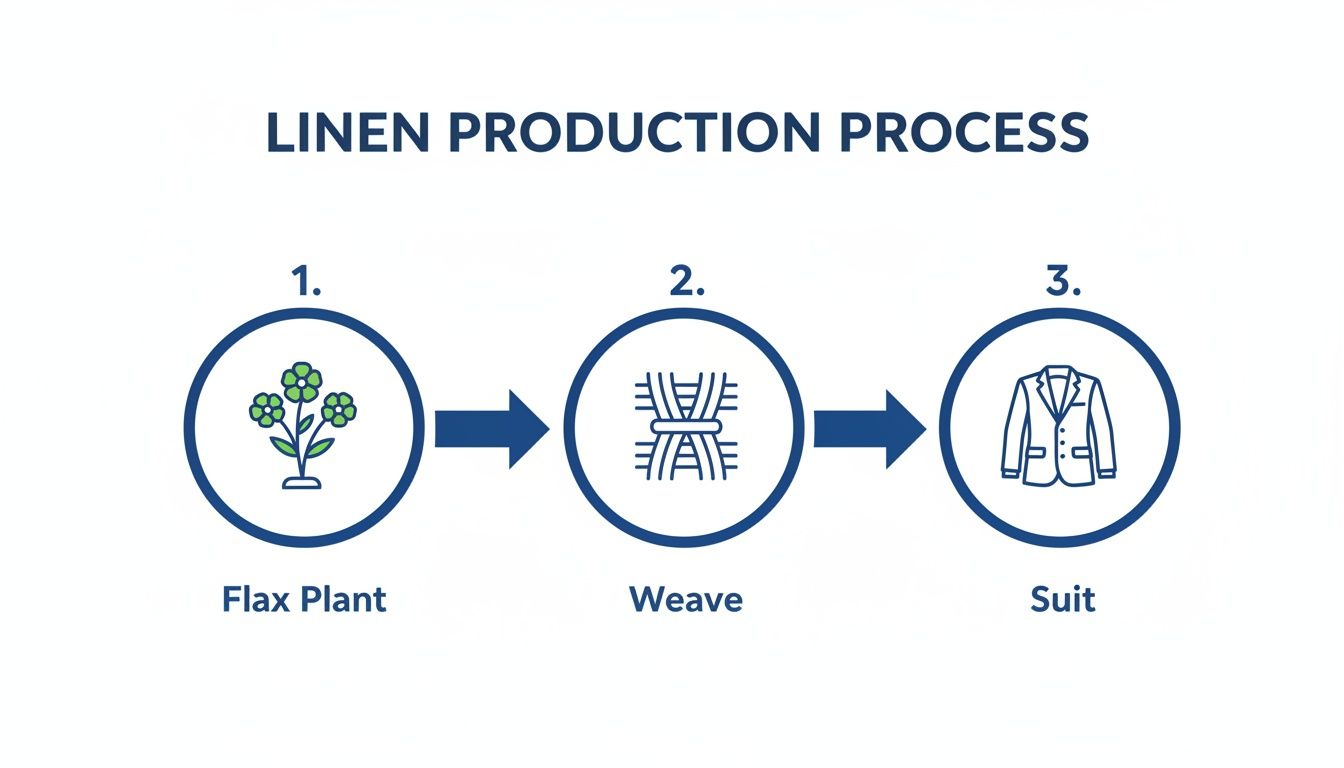
This simple diagram shows how the humble flax plant is transformed, step-by-step, into the final suit.
Every stage, from the way the flax is grown to how it’s woven, influences the fabric’s final texture and drape—a unique canvas for the tailor to then shape and craft.
From Measurements to Fittings
After our initial discussion, we take a comprehensive set of over 30 measurements. These aren’t just your basic chest and waist numbers; they capture every contour of your body, allowing us to create a unique paper pattern entirely from scratch. These figures are far more detailed than anything used for made-to-measure, a critical difference you can explore in our made-to-measure vs bespoke tailoring guide.
Using this unique pattern, we create what’s known as a ‘baste’ fitting—a temporary version of the suit stitched together with white thread. This is a crucial moment in the process. It’s our first chance to refine the fit, making vital adjustments to the shoulders, waist, and length before we ever touch the final cloth.
The baste fitting is where the art of bespoke truly comes alive. It allows the tailor to sculpt the garment directly on your body, ensuring a level of precision that ready-to-wear garments can never achieve.
Subsequent fittings allow us to perfect the silhouette even further, ensuring every seam hangs just right and every line is flawless. This back-and-forth process is absolutely essential when working with a dynamic fabric like linen, guaranteeing both comfort and an impeccable finish.
Key Details for the Perfect Linen Silhouette
A truly exceptional linen white suit is all about the details—subtle choices that work together to create a look that’s balanced, flattering, and modern. Our tailors pay special attention to a few key areas to ensure your suit is completely timeless.
Soft Shoulder Construction: We almost always favour a natural, soft shoulder with minimal padding. This avoids that rigid, corporate look and complements linen’s relaxed nature, creating a silhouette that moves with you, not against you.
A Clean Trouser Break: For a crisp, contemporary line, we suggest a minimal trouser break, or even no break at all. This lets the trousers fall straight, preventing any bunching of fabric at the ankle and dialling up the suit’s sharp profile.
Ideal Jacket Length: The jacket length is carefully calibrated to your specific height and proportions. We might suggest a slightly shorter, more modern cut for a contemporary feel, or stick to a traditional length for classic elegance. It’s a decision we make together to best suit your frame and style.
Ultimately, it’s these focused, expert details, guided by the bespoke process, that make your linen white suit a true testament to personal style and masterful craftsmanship.
How to Style Your Linen White Suit for Any Occasion
The true beauty of a bespoke linen white suit isn’t just its exceptional comfort, but its remarkable versatility. Many men mistakenly pigeonhole it as a garment for a single type of event, but with a few clever adjustments, it can glide through a whole host of social settings. This one suit can genuinely anchor your wardrobe for an entire season, taking you from the most formal summer wedding to the most relaxed weekend get-together.
The secret is all in the details—understanding how different shirts, shoes, and accessories completely transform its character. Swapping a crisp button-down for a quality polo shirt, or trading leather brogues for suede loafers, changes the entire message of the outfit. Once you master these combinations, you unlock the full potential of your investment, ensuring you always look perfectly put-together, whatever the occasion.
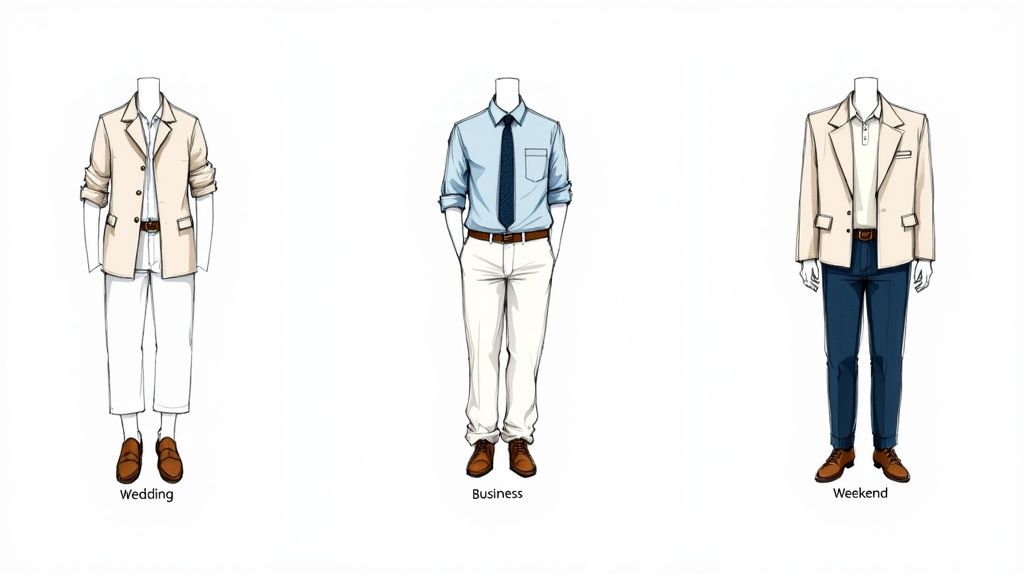
Let’s break down three core dress codes, giving you some clear, practical guidance for styling your linen white suit with confidence and a bit of flair.
For a Summer Wedding
A summer wedding calls for a look that is celebratory and refined, but also practical enough to handle the heat. This is where the linen white suit really comes into its own. The goal here is to introduce soft colour and luxurious texture to play off the suit’s clean, crisp canvas.
Start with a high-quality shirt in a soft pastel shade—think sky blue, pale pink, or even a subtle lavender. These colours add a festive touch without being shouty. Pair this with suede loafers in tan or light brown for a sophisticated, slightly less formal footwear choice that feels just right for the occasion.
The key to nailing wedding guest attire is in the details. A silk pocket square in a complementary pattern or a vibrant colour adds a necessary flourish, while a woven leather belt can tie the shoes and the suit together beautifully.
For a Business-Casual Event
Navigating the business-casual dress code in summer can be tricky, but your linen white suit gives you an excellent head start. The aim is to project professionalism while acknowledging the warmer weather. That means pairing the suit with items that feel smart but not overly corporate.
A light blue button-down shirt is a timeless, reliable choice, offering a sharp contrast against the white linen. To elevate the look, add a knitted silk tie in navy or burgundy. The texture of the knit tie works wonderfully with the natural slub of the linen, creating a look that feels considered and stylish. Complete the ensemble with a pair of classic leather brogues in a rich brown or oxblood.
When pulling the look together, don’t forget the smaller accessories. For a modern touch that reflects personal style without being distracting, you might explore options to mix fashion and style with affordable sport jewelry to complement your style. This can be a subtle way to inject a bit of personality.
To help you visualise the options, here’s a quick reference table for styling your suit.
Linen White Suit Styling Combinations
Occasion
Recommended Shirt
Footwear
Key Accessory
Summer Wedding
Pastel Pink or Sky Blue Linen Shirt
Tan Suede Loafers
Silk Pocket Square
Business-Casual
Light Blue Button-Down Shirt
Brown Leather Brogues
Knitted Silk Tie
Weekend Outing
Navy Polo or High-Quality T-Shirt
White Trainers / Deck Shoes
Woven Belt
This table should give you a solid foundation, but don’t be afraid to experiment to find what works best for you.
For a Relaxed Weekend Outing
One of the most underused aspects of any suit is its power as separates. Deconstructing your linen white suit essentially doubles its usefulness, giving you two exceptional pieces for building smart, relaxed weekend outfits. This approach is perfect for a pub garden lunch, a casual dinner, or a stroll through town.
The Jacket: Wear the white linen jacket as a blazer. Pair it with well-fitting navy or stone chinos and a simple, high-quality T-shirt or a fine-gauge polo shirt. Finish the look with clean white trainers or deck shoes for an outfit that is effortlessly chic.
The Trousers: The white linen trousers can be the hero of a different outfit. Team them with a navy polo shirt or a casual chambray button-down. This creates a classic, slightly nautical look that is perfect for any relaxed sunny day.
This ability to wear the pieces separately makes the suit incredibly practical. You can even learn how to perfect the tieless look by reading our guide on styling a suit without a tie, which is especially relevant for these kinds of casual linen ensembles.
Selecting the Right Linings and Finishing Details
The soul of a bespoke suit isn’t just in the cut; it’s hidden in the details. For a linen white suit, these finishing touches are what separate a good garment from a truly great one. The choices you make on linings, buttons, and pockets aren’t just for show – they fundamentally change how the suit feels, performs, and expresses your personal style.
This is where the real collaboration between client and tailor comes alive. We work together to craft a suit that’s perfect for you, whether that means maximising airflow for a scorching hot summer wedding or adding a bit more structure for a formal evening event. It’s a process of building your suit from the inside out.
The Great Debate: Linings and Breathability
One of the very first decisions for your linen white suit jacket is the lining, and it’s a big one. This choice directly impacts how the suit breathes and feels when the temperature climbs. You’ve got three main routes to go down, each with its own character.
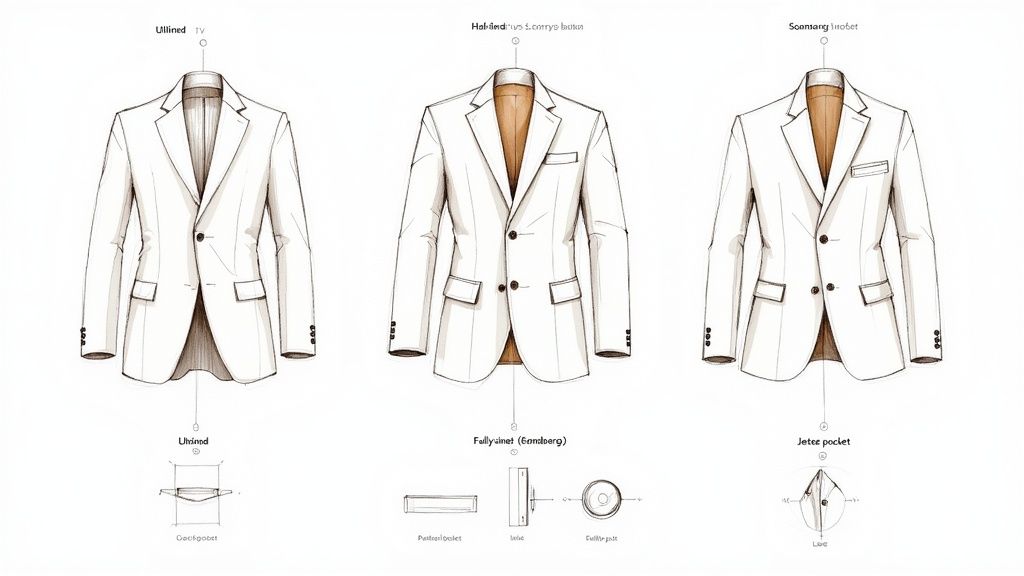
An unlined jacket is the purist’s choice for summer. Stripping out the lining lets the linen fabric do what it does best, giving you incredible airflow and a jacket that feels impossibly light and soft. This is the ultimate construction for the hottest days, creating a wonderfully relaxed, unstructured silhouette.
A half-lined jacket, on the other hand, gives you a brilliant compromise. We line the chest and shoulder areas, which adds a touch of structure and helps the jacket glide smoothly over your shirt. Crucially, the back remains unlined to keep you cool where it counts the most.
For many of our clients across Sussex and London, the half-lined option hits that perfect sweet spot. It keeps the front looking sharp while making sure you stay comfortable through a long day of wear.
Finally, a fully-lined jacket offers the most structure and a more traditional feel. While it does reduce some of the linen’s natural breathability, we use high-quality linings like Bemberg—a silky material made from cotton—that still feel fantastic against the skin. This is a better choice if your linen white suit is destined for more formal evening events or if you simply prefer a cleaner, sharper silhouette.
Finishing Touches That Define Your Suit
Beyond the lining, there are several other details that give the suit its unique personality. These are the small choices that make the garment unmistakably yours.
Button Selection: The classic debate is between mother-of-pearl and corozo buttons. Mother-of-pearl has a beautiful, iridescent lustre that catches the light, adding a touch of luxury. Corozo, which is made from a nut, offers a more natural, matte finish for an understated look.
Pocket Styles: Pockets have a surprisingly big impact on the suit’s formality. Patch pockets, sewn onto the outside of the jacket, give it a casual, almost Italian- Riviera feel. For a much cleaner and more formal line, you’d opt for jetted pockets, which are sleek, minimalist slits in the fabric.
Lapel Stitching: Hand-stitched lapels, often called pick stitching, are a true hallmark of quality craftsmanship. It’s a subtle detail, but it adds a touch of artisanal character and helps the lapel keep its elegant roll over the years.
Getting to grips with these individual elements can really deepen your appreciation for the craft. To learn more, have a look at our detailed guide on the various parts of a suit and how they all come together.
How to Properly Care for Your Linen Suit
A bespoke white linen suit is a beautiful thing, but it’s also a serious investment in your wardrobe. Look after it properly, and it will be your go-to for many summers; get it wrong, and you’ll ruin its shape and feel. The good news is, proper care isn’t complicated, but it does require a gentler touch than your standard garments. The unique nature of linen means your usual laundry routine simply won’t cut it.
First things first: the washing machine is the sworn enemy of your suit’s structure. The aggressive spin cycle, high heat, and harsh detergents are a recipe for disaster. They’ll attack the delicate flax fibres, cause uneven shrinkage, and completely destroy the hand-sewn canvas and padding that give your jacket its elegant shape. There’s only one safe way to clean it: entrust it to a professional dry cleaner who understands fine tailoring.
Managing Linen’s Signature Wrinkles
Those charming creases are part of linen’s appeal, of course. But there’s a fine line between that “effortlessly rumpled” look and just looking plain messy. Your best friend here is a good garment steamer. Steaming gently coaxes out the heavier creases from a day’s wear or from storage, all without the risk of scorching the fabric.
A word of warning: keep a hot iron well away from your linen suit. The intense, direct heat can easily burn or yellow the fibres, and that’s damage you can’t undo. If you absolutely must press a stubborn spot, use a low heat setting and always, always place a pressing cloth between the iron and the suit.
A little care after each wear makes a world of difference, too. As soon as you take it off, hang your suit on a wide, shaped hanger. This lets the garment’s own weight naturally pull out minor wrinkles and helps it air out, keeping it fresh between professional cleans.
The Importance of Correct Storage
How you store your linen suit is just as important as how you clean it. Storing it the wrong way is the quickest path to yellowing and can permanently warp the suit’s shape. Always use a wide, wooden hanger with contoured shoulders. This is non-negotiable, as it supports the jacket’s structure and prevents those ugly puckers you get from wire hangers.
And please, never leave it in the plastic bag from the dry cleaner. Plastic traps moisture, which leads to mildew and causes the fabric to degrade over time. Instead, invest in a breathable cotton or canvas garment bag. This protects your suit from dust and light while still allowing air to circulate—vital for keeping that crisp white linen looking its best. The quality of the original fabric is paramount for longevity, a key consideration as the UK’s textile industry navigates its reliance on imported materials for niche garments like a bespoke white linen suit. You can discover more about the UK textile wholesaling industry on ibisworld.com. Follow these straightforward steps, and your suit will remain a timeless centrepiece of your wardrobe for years to come.
Frequently Asked Questions About the Linen White Suit
Is a white suit difficult to keep clean?
A white linen suit does require more care than darker wool suits, but it’s manageable with the right approach. Promptly spot-treat any minor spills with a gentle cleaner. For a thorough cleaning, always entrust it to a professional dry cleaner who is experienced with delicate fabrics. Storing it in a breathable garment bag is essential to protect it from dust and yellowing. With mindful wear and proper care, your suit will maintain its crisp, immaculate appearance for many seasons.
How should I manage the wrinkles in a linen suit?
Embrace the wrinkles—they are a signature part of linen’s charm. However, to maintain a sharp appearance, use a garment steamer to gently release heavy creases before wearing it. Avoid using a direct hot iron, as it can scorch or yellow the delicate fibres. After wearing, immediately hang the suit on a wide, contoured hanger. This allows the fabric’s weight to naturally smooth out minor wrinkles, keeping your linen white suit looking effortlessly stylish rather than unkempt.
Can any man pull off a white linen suit?
Absolutely. The ability to wear a white suit well is not about body type or skin tone; it’s about the fit and the confidence it inspires. This is where bespoke tailoring is transformative. A suit that is cut precisely for your proportions will create a flattering and sharp silhouette. When the fit is perfect, any gentleman can exude the relaxed elegance and timeless sophistication that a linen white suit offers. It’s a statement of personal style accessible to all.
What is the typical timeline for a bespoke linen suit?
Creating a true bespoke garment is a meticulous process that cannot be rushed. From the initial consultation and detailed measurements to the final fitting, the journey for a bespoke linen white suit typically takes between 8 to 12 weeks. This schedule allows for multiple fittings to perfect the drape and silhouette, and ensures there is ample time for the detailed hand-crafting involved. If you need the suit for a specific event, like a wedding, it is always wise to begin the process well in advance.
About the Author
Igor is the founder and creative force behind Dandylion Style. With a deep-rooted passion for classic menswear and a meticulous eye for detail, he has carefully built Dandylion Style into a premier destination for bespoke tailoring across Sussex and London. His philosophy is grounded in a simple belief: a suit is far more than just clothing; it is a personal statement. Igor combines traditional Savile Row techniques with a modern sensibility, ensuring every garment is crafted not just to fit, but to perfection. You can learn more about Igor’s journey in tailoring and his commitment to the craft.
Ready to commission your own timeless linen white suit? At Dandylion Style, we combine traditional craftsmanship with a personal touch to create garments that are uniquely yours. Explore our bespoke tailoring services and book your consultation in Sussex or London today.
Written by:
Igor Srzic-Cartledge
Igor is the founder of Dandylion Style, a tailoring house built on the simple, deeply held belief that a suit should be like a second skin—a true extension of a gentleman’s personality. For Igor, tailoring isn't just about cutting cloth; it's an art form dedicated to creating unique, perfectly fitted attire for the discerning man. His passion is rooted in classic sartorial traditions, yet he maintains a keen eye for contemporary style, ensuring his creations are both timeless and relevant. This approach has cemented his reputation for genuine craftsmanship and a truly personal service.
Key Takeaways The Core Two: Navy blue and charcoal grey are the essential, non-negotiable suit colors for any professional wardrobe. Navy offers versatility and approachability, while charcoal projects authority and seriousness. Context is Crucial: The best suit color...
When you find a piece of clothing you absolutely love, getting the fit just right is the final, transformative touch. But how much should you expect to pay? In the UK, alteration costs can be as modest as £15 for a simple trouser hemming, or climb to £150 and beyond...
Getting the right pink shirt and tie combination is the mark of a well-dressed man. It’s a detail that separates the novices from those who truly understand their wardrobe. For a look that’s classic and can’t miss, pair your pink shirt with a navy, grey, or burgundy...
Key Takeaways For those seeking a quick overview, this section summarises the essential rules and recommendations for incorporating turn-up trousers into your wardrobe. Sartorial Purpose: Turn-ups add weight to the trouser hem, ensuring a cleaner, sharper drape,...
Deciding what colour tie to wear with a pink shirt is a common style query I hear from clients. For a classic, professional look that never fails, your safest and most effective choices are navy blue and charcoal grey. If you're heading to a more contemporary or...
You've just picked up a newly finished bespoke suit, and the cloth still has that clean, disciplined line only a real fitting room can give it. The temptation is to put it straight in the wardrobe and trust the label to do the rest. That's where expensive...
Book Your Tailoring Consultation
Looking for a suit or garment made specifically for you?
At Dandylion Style, we create bespoke and made-to-measure
garments tailored to your individual shape, style and occasion.
From suits and shirts to dresses, waistcoats and alterations,
our experienced tailors can help you create something truly unique.