When it comes to black tie, the double-breasted dinner jacket represents the very pinnacle of evening elegance. It’s defined by its distinctive overlapping front panels and two parallel rows of buttons, a design that crafts a powerful, structured silhouette unlike any other. Slipping into one is a statement of confidence, a nod to classic sartorial heritage that’s perfectly suited for the most formal of occasions.
Key Takeaways
Mastering the double-breasted dinner jacket is a study in sartorial precision. This quick guide covers the essential points:
Powerful Silhouette: The overlapping front panels create a strong V-shape, visually broadening the shoulders and slimming the waist. This architectural design is its key feature.
Always Buttoned: To maintain its clean, structured lines, the jacket must remain buttoned when standing. It can be unbuttoned only when seated for comfort.
No Waistcoat or Cummerbund: The design naturally covers the waistband, making a cummerbund or waistcoat unnecessary and, in fact, incorrect to wear.
Peak Lapels are Essential: Sweeping peak lapels are the traditional and most flattering choice, drawing the eye upwards and enhancing the jacket's powerful shape.
Bespoke Fit is Crucial: An off-the-rack fit rarely works. The precise wrapping of the fabric requires a bespoke tailor to perfect the shoulder line, chest drape, and waist suppression for a flawless look.
Of course, to truly master this jacket, you need to understand the occasions that demand such elegance. For a deeper dive into navigating formal dress codes like black-tie and white-tie, this guide offers some invaluable context. You can learn more about our approach to classic men's evening wear and all its finer details here.
Tracing the Origins of a Sartorial Icon
To properly get to grips with the double-breasted dinner jacket, you need to understand where it came from. This isn’t a garment that just appeared out of thin air; it evolved, born from a desire for comfort and a new kind of evening elegance that broke away from the rigid, starchy formality of the 19th century. Its story is one of gradual refinement, transforming from a radical alternative into a symbol of masculine grace.
Our journey starts with the tailcoat, which for most of the Victorian era was the undisputed uniform for formal evening events. Stiff, cumbersome, and unforgiving, the tailcoat was the very definition of sartorial rigidity. As society started to loosen its tie, so to speak, gentlemen began looking for an alternative that was still formal but offered a bit more ease.
The Dawn of a New Formalwear
The first real step in this evolution was the single-breasted dinner jacket, or tuxedo, which made its grand entrance in the late 19th century. Originally seen as something quite casual for informal dinners at home, it quickly caught on as a comfortable yet smart substitute for the tailcoat at less buttoned-up gatherings. This laid the groundwork for what was to come.
It was during this period of sartorial experimentation that the double-breasted dinner jacket started to take shape, tracing its lineage back to naval reefer jackets and classic lounge coats. The double-breasted silhouette, with its commanding overlapping front panels, had a structured, authoritative presence that felt both fresh and powerful.
Becoming a British Mainstay
The dinner jacket, now a staple of British black-tie elegance, first gained traction in the UK after its American debut at Tuxedo Park in 1886. By the early 20th century, it was the preferred choice for evening wear among British gentlemen, and the double-breasted styles really took off during the glamorous 1920s and 1930s. Digging through historical tailoring records from London’s great houses, you’ll find jackets with precise proportions, all designed to create a balanced, commanding silhouette perfect for formal dinners and society events. The jacket’s signature overlap and wide lapels were engineered to accentuate the chest, giving off a unique blend of confidence and sophistication. You can explore more on the comeback of this powerful style and its historical influence.
This was the era that cemented the double-breasted dinner jacket's status as a titan of black-tie. Style icons of the day, from Hollywood film stars to royalty, fell for its flattering V-shape and powerful lines. The jacket became synonymous with celebration, confidence, and a certain rakish charm.
The appeal of the double-breasted dinner jacket lies in its architectural quality. It is deliberately designed to build a heroic silhouette, broadening the shoulders and trimming the waist, which is why its proportions have been so meticulously refined over the decades.
These proportions weren't accidental; they were the result of careful study by master tailors. Key measurements were established to make sure the jacket flattered the wearer:
Button Stance: The height of the fastening buttons was absolutely crucial for defining the waist and elongating the torso.
Lapel Width: Wide, sweeping peak lapels were favoured to draw the eye upwards and outwards, beefing up the shoulder line.
Jacket Length: The length was carefully balanced to cover the seat while maintaining a harmonious line with the trousers.
These design principles, established nearly a century ago, continue to define the modern double-breasted dinner jacket. While contemporary cuts might be a touch slimmer, the fundamental geometry is still there. This history is vital; it explains why the garment carries such a powerful sense of heritage and why it remains the ultimate choice for a gentleman looking to make a confident statement at a milestone occasion.
Understanding the Anatomy of Elegance
To really get what makes a double-breasted dinner jacket so special, you have to look at the details. Each little piece, from the sweep of the lapels to where the buttons sit, works together to create something that’s both structurally sound and incredibly stylish. It's a masterclass in precision where every element has a job to do.
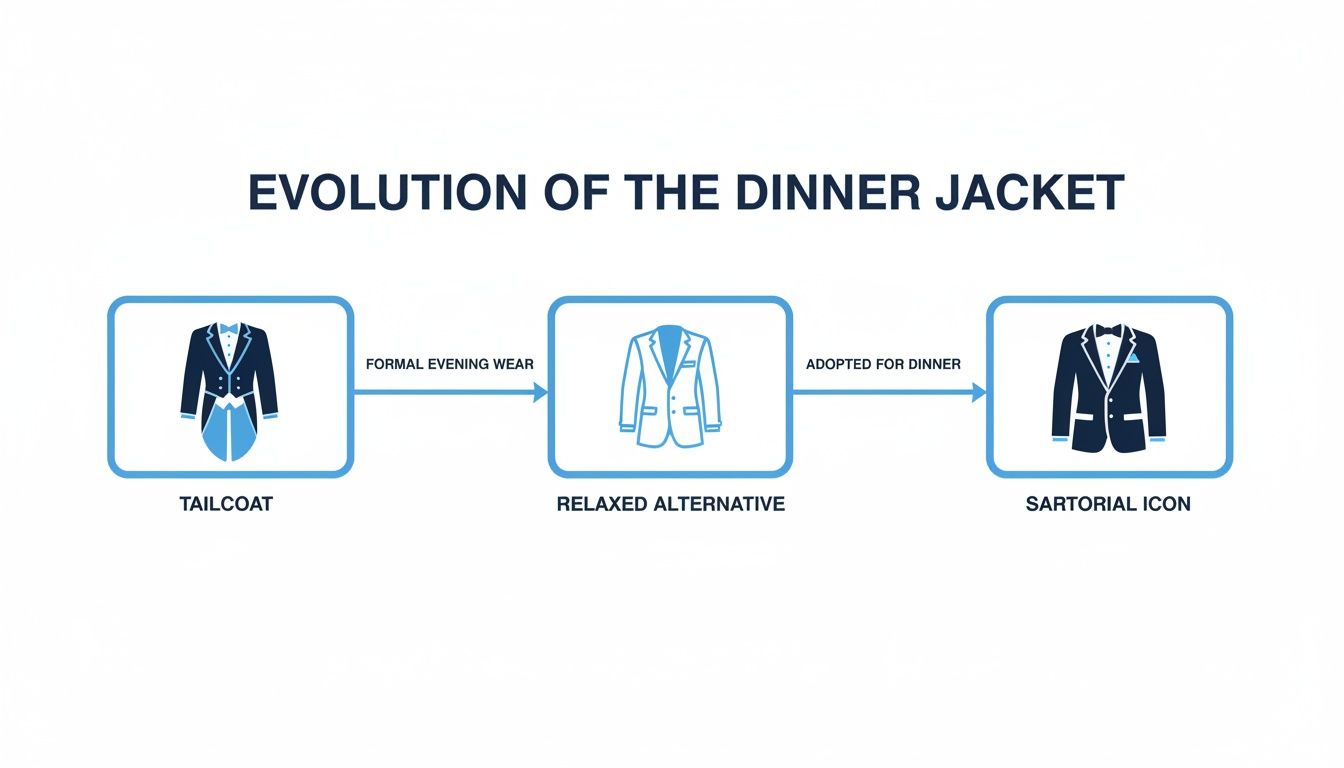
This design didn't just appear out of nowhere; it evolved from much stiffer formalwear into the icon of relaxed elegance we know today. This image below gives you a simplified look at its journey from the tailcoat to its modern form.
As you can see, the dinner jacket started life as a more comfortable, softer alternative to the tailcoat before cementing its place as a cornerstone of eveningwear. Now, let’s get into the key features that give it such a unique character.
The Crucial Role of Lapels
Lapels are perhaps the most defining feature of any jacket, but on a double-breasted dinner jacket, they are everything. The style of lapel you choose has a huge impact on the overall impression, shaping its formality and visual power.
For this kind of jacket, peak lapels are the undisputed classic and, frankly, the only proper choice. Their sharp, upward-pointing tips draw your eye out and up, creating the illusion of broader shoulders and a trimmer waist. This clever trick reinforces the jacket's powerful V-shape, which is the whole point.
A notch lapel, the kind you see on business suits, is a real sartorial blunder on a double-breasted dinner jacket. Its horizontal 'notch' breaks up the elegant, sweeping lines needed for true black tie, completely undermining the garment's formal authority. If you're keen to learn more about how a jacket is put together, you can read all about the parts of a suit in our detailed guide.
Button Configuration and Stance
The button layout is the structural signature of a double-breasted jacket, often described with a formula like '6×2' or '4×2'. It's simple really: the first number is the total count of visible buttons, and the second tells you how many actually fasten.
A well-placed button stance is the anchor of the jacket's silhouette. It governs the drape, defines the waist, and ensures the clean, unbroken line that is the hallmark of this style.
The most traditional and balanced option is the 6×2, which has six buttons in total with two that can be done up. In reality, you only ever use the middle one, which allows the lapel to roll beautifully down to that single fastening point. This setup gives you that classic, commanding presence.
Another popular choice, with a slightly more contemporary feel, is the 4×2. This can be a particularly flattering cut for gentlemen with a shorter torso. A hidden internal button, known as a jigger or anchor button, is also essential. It holds the inside flap in place, ensuring the front of the jacket lies perfectly flat and maintains its impeccable drape.
Vents and Pockets
Finally, the vents and pockets play their part in keeping the jacket's silhouette clean and formal. For maximum formality, a ventless back is the traditional way to go. This creates a completely smooth, unbroken line down your back, enhancing the jacket's sculpted look—perfect for black tie. Side vents are a common and acceptable alternative, giving you a bit more freedom of movement without messing up the silhouette too much.
Pocket styles are just as important for maintaining that streamlined look. Jetted pockets—those sleek, minimalist slits with no flaps—are the standard for dinner jackets. They contribute to the clean, uncluttered front, ensuring nothing distracts from the elegant lines. Flapped pockets are far too casual and should be avoided. While these details might seem small, they all work together to uphold the formal integrity of the double-breasted dinner jacket.
Choosing the Right Fabric and Colour
Selecting the right cloth for your double-breasted dinner jacket is much like an artist choosing their canvas; it sets the entire tone for the masterpiece to come. The fabric and colour you land on are your first, and perhaps most significant, statements of personal style within the formal black-tie framework. This choice dictates everything from the jacket's texture and drape to how it plays with the evening light.
Your decision should be a careful balance of personal taste and a healthy respect for the occasion's formality. Whether you lean towards timeless tradition or a more expressive, contemporary feel, the right material will ensure your garment is both appropriate and truly exceptional.
Timeless Fabric Choices
For the purist, two fabrics have long stood out as the gold standard for a double-breasted dinner jacket, each bringing its own unique qualities to the table.
Wool Barathea: This is the quintessential choice. Its tightly woven, almost hopsack-like texture creates a subtle, matte finish that drinks in the light, resulting in a deep, rich appearance. Barathea is prized for its fantastic drape and durability, ensuring the jacket hangs flawlessly.
Mohair Blends: Weaving mohair into the wool adds a distinct crispness and a very subtle sheen to the cloth. This blend is also far more resistant to creasing, making it an excellent partner for long evenings or for gentlemen who travel to their events.
The choice between black and midnight blue is one of tailoring’s most sophisticated debates. Under artificial evening light, midnight blue often appears deeper and richer than black, a subtle distinction that has been favoured by sartorial connoisseurs for nearly a century.
Expressive and Luxurious Alternatives
While tradition holds immense value, modern black tie certainly allows for more individual expression, particularly through the choice of fabric. These materials make a bolder statement while remaining firmly within the bounds of formal elegance.
In the UK menswear market, double-breasted dinner jackets are enjoying a significant comeback. Forecasts suggest the suits segment, which includes formal black-tie variants, will reach £285 million in revenue by 2025. This growth is especially clear in wedding attire, where double-breasted styles are a top choice for their structured elegance, often in navy or midnight blue as a chic alternative to classic black.
Exploring Velvet and Colour
A velvet dinner jacket is perhaps the most dashing alternative to traditional wool. Its plush pile offers a unique depth of colour and texture that feels incredibly luxurious under the fingers. For a double-breasted model, consider rich jewel tones that exude quiet confidence.
Deep Burgundy: A classic, regal colour that pairs beautifully with black formal trousers.
Forest Green: An elegant and distinctive choice that stands out without shouting.
Rich Navy: A more subdued but equally stylish option that works perfectly for a velvet garment.
When selecting a fabric, it is crucial to understand its properties. To help you make a truly informed decision, you might be interested in our guide covering the best fabrics for suits and their unique characteristics. This knowledge empowers you to commission a double-breasted dinner jacket that not only fits your body but also perfectly aligns with your personal style and the demands of the occasion.
Why a Bespoke Fit is Non-Negotiable
Trying to find an off-the-rack double-breasted dinner jacket that actually fits is a bit of a fool's errand. This garment, perhaps more than any other in a man’s wardrobe, lives and dies by the perfection of its fit. Buying a ready-to-wear version is like trying to appreciate a finely aged single malt in a paper cup—you completely miss the point.
The entire challenge is baked into its architecture. A single-breasted jacket hangs open quite forgivingly, but the double-breasted design wraps the torso with two overlapping panels of cloth. This demands surgical precision from the tailor. Even the slightest miscalculation will immediately broadcast itself as fabric pulling at the buttons, ugly creases forming at the waist, or a general shapelessness that ruins the entire effect.
The Tailor's Focus Areas
A master tailor doesn't just see a jacket; they see a structure. When crafting a double-breasted piece, they focus on a few key areas that determine whether the final garment is a masterpiece or a mess.
The Shoulder Line: This is the foundation for everything that follows. The shoulders need structure to create a strong, clean line, but without looking bulky or restrictive. Get this right, and the rest of the jacket drapes correctly.
The Chest Drape: From the lapel, the cloth must fall cleanly across the chest with no pulling or collapsing. This is essential for showcasing the sweeping, dramatic lines of the peak lapels and creating that powerful sense of presence.
Crucial Waist Suppression: This is arguably the most critical part. The waist must be expertly shaped to sculpt the classic V-shape torso. A bespoke tailor doesn't just take in the sides; they meticulously contour the seams to your body, creating a nipped-in waist that makes the shoulders look broader and the physique more athletic.
The essence of the double-breasted dinner jacket is control. Every seam, every button, and every inch of cloth is engineered to sculpt and define. A bespoke fit isn't a luxury for this garment; it's the fundamental mechanism that allows it to function as intended.
The Ready-to-Wear Compromise
In sharp contrast, a ready-to-wear jacket is a garment of averages, designed to fit a static mannequin rather than a living, breathing person. You might find one that fits in the shoulders but is too baggy at the waist, or one that’s snug in the waist but pulls across your chest. Alterations can only do so much—they're patch-up jobs on a flawed foundation, not a solution built from the ground up.
This is precisely why investing in a bespoke piece is the only way to achieve that truly commanding silhouette. The style's recent surge in popularity only underscores this point. Some UK retailers have reported a 35% year-on-year increase in demand for double-breasted styles, far outpacing their single-breasted counterparts. Tailoring benchmarks show that specific proportions, like getting the lapel width and button stance just right, can visually enhance shoulder breadth by up to 20%. These are the kinds of nuanced adjustments only a bespoke process can deliver.
The bespoke experience is a world away from a simple retail transaction. It’s a genuine collaboration where your body is the blueprint. To truly grasp what this meticulous craft entails, we invite you to explore what bespoke tailoring truly involves. Through a series of fittings, a master tailor at a studio like Dandylion Style doesn’t just alter a garment for you; they build it around you, ensuring every line and curve serves to flatter and empower. It’s an investment that guarantees a double-breasted dinner jacket that is not just worn, but inhabited.
How to Style Your Dinner Jacket Perfectly
Owning a beautifully cut double-breasted dinner jacket is one thing, but knowing how to style it is where the real art lies. A truly impeccable black tie ensemble is a masterclass in balance, where every single element works in harmony with the jacket, never competing for the spotlight. Getting this right is how you project that effortless sophistication and show a genuine respect for the occasion.
This isn't just about throwing on some fancy clothes; it's about constructing a cohesive look. From the shirt that forms your canvas to the final gleam on your shoes, every detail contributes to the powerful statement you're about to make.
The Foundational Elements
Let’s start with the canvas for your jacket: the right shirt and trousers. These are the non-negotiable components, the very bedrock of any authentic black tie outfit.
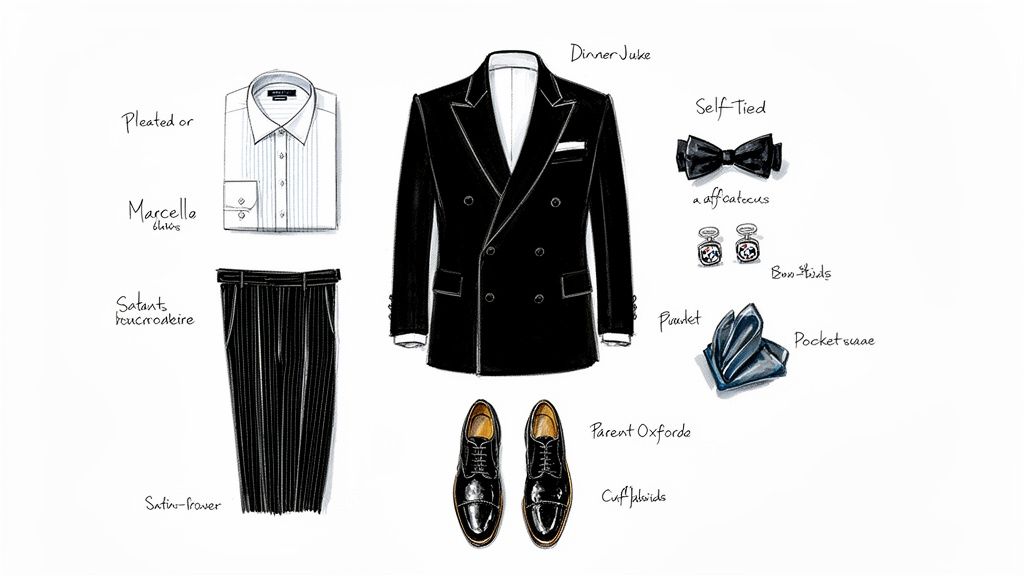
Your dress shirt must be a pristine white, featuring either a classic pleated front or the more formal Marcella bib front. These textures add a subtle depth that a plain shirt simply can't match. If you're weighing your options, our detailed guide can help you choose the right shirt to wear with a dinner jacket.
Formal trousers are just as crucial. They must be cut from the same cloth as the jacket and feature that signature satin stripe running down the outer seam of each leg. Critically, these trousers should never have belt loops; they are designed to be worn with braces, ensuring a clean, uninterrupted line at the waist.
Why a Cummerbund is Omitted
One of the most common questions we get is about waist coverings. With a single-breasted dinner jacket, a cummerbund or waistcoat is absolutely essential to hide the billow of shirt fabric where it tucks into the trousers.
A double-breasted dinner jacket, by its very design, makes waist coverings redundant. Since it must remain buttoned while standing, it provides complete coverage of the waistband, creating a cleaner and more streamlined silhouette without the need for additional accessories.
Adding a cummerbund would only introduce unnecessary bulk beneath the jacket's overlapping panels, completely disrupting its elegant drape. The logic is simple: the jacket is already doing the job, so let its inherent structure shine.
Mastering the Finishing Touches
Accessories are where you can inject a touch of your own personality, but always within the bounds of formal convention. The trick is to choose pieces that are refined and perfectly proportioned to the rest of your outfit.
Footwear: There's only one real choice here: highly polished black shoes. Patent leather Oxfords are the gold standard, offering a sleek, glossy finish that perfectly complements the formality of the occasion. For a slightly more creative black tie event, velvet slip-ons can be a very stylish alternative.
Bow Tie: A self-tied bow tie in black silk is non-negotiable. Pre-tied versions lack the character and the perfect imperfection of one you've tied yourself. Ideally, the texture of the silk should match the satin on your jacket's lapels.
Pocket Square: A simple white pocket square, preferably in silk or linen, adds that final dash of polish. A neat, straight fold is the most classic and appropriate way to present it.
Cufflinks and Studs: Elegant cufflinks are a must for your shirt's double cuffs. If your shirt has a stud-front placket, make sure the studs either match or complement the metal of your cufflinks. It’s these small, considered details that demonstrate a true command of the entire look.
About the Author
Igor is the founder and master tailor at Dandylion Style, a London-based studio dedicated to the art of bespoke menswear. With a lifelong passion for classic tailoring, he specialises in crafting one-of-a-kind garments for discerning gentlemen, especially for milestone occasions like weddings and black tie events. Igor’s approach is defined by personal service and honest guidance, ensuring every commission—from a sharp business suit to a commanding dinner jacket double breasted—is a flawless reflection of the wearer’s personality and a testament to enduring British craftsmanship.
Frequently Asked Questions
Can you wear a double-breasted dinner jacket unbuttoned?
No, a double-breasted dinner jacket is designed to be worn buttoned when standing. Its overlapping front creates a specific silhouette that is lost when left open, resulting in a sloppy appearance. The internal 'jigger' button helps keep the jacket lying flat and secure. The only acceptable time to unbutton it is when you are seated, for comfort and to prevent the fabric from pulling. Remember to fasten it again as soon as you stand up.
Is a cummerbund necessary with a double-breasted dinner jacket?
A cummerbund is not only unnecessary but also incorrect when wearing a double-breasted dinner jacket. Cummerbunds exist to cover the waistband, which is already concealed by the jacket's design since it remains fastened. Adding a cummerbund would create unnecessary bulk under the jacket, disrupting its clean lines and elegant drape. The jacket's construction makes any additional waist covering redundant, ensuring a streamlined and sophisticated look on its own.
When should you wear a double-breasted dinner jacket?
This jacket is reserved for formal "Black Tie" events. Think evening weddings, galas, award ceremonies, charity balls, and sophisticated formal parties. While a single-breasted dinner jacket is always appropriate for black tie, the double-breasted version projects an extra layer of confidence and classic Hollywood glamour. It is a powerful choice for a gentleman looking to make a distinguished statement at the most elegant of occasions. Its formality makes it unsuitable for business or casual wear.
How do you choose the right colour for a dinner jacket?
For a double-breasted dinner jacket, the most traditional and versatile colours are black and midnight blue. Black is the timeless classic, while midnight blue often appears richer and deeper under artificial light. For a bolder statement, especially in a velvet fabric, consider deep jewel tones like burgundy or forest green. These colours add personality while remaining within the bounds of formal elegance. Always pair them with classic black formal trousers to maintain the integrity of the black tie dress code.
Does a double-breasted jacket suit a larger man?
Yes, a well-tailored double-breasted jacket can be incredibly flattering for a larger gentleman. The sweeping diagonal lines of the peak lapels draw the eye upwards and outwards, creating a slimming effect and visually broadening the shoulders. This helps to create a more balanced and defined V-shaped torso. The key is a perfect bespoke fit. An expert tailor will precisely place the button stance and adjust the waist suppression to sculpt the body, enhancing the wearer's proportions rather than adding bulk.
At Dandylion Style, we believe a perfect dinner jacket is built, not bought. To begin your bespoke journey and create a garment that is uniquely yours, book a consultation with us today. Discover the difference true craftsmanship makes at https://dandylionstyle.co.uk.
Key Takeaways The Core Two: Navy blue and charcoal grey are the essential, non-negotiable suit colors for any professional wardrobe. Navy offers versatility and approachability, while charcoal projects authority and seriousness. Context is Crucial: The best suit color...
When you find a piece of clothing you absolutely love, getting the fit just right is the final, transformative touch. But how much should you expect to pay? In the UK, alteration costs can be as modest as £15 for a simple trouser hemming, or climb to £150 and beyond...
Getting the right pink shirt and tie combination is the mark of a well-dressed man. It’s a detail that separates the novices from those who truly understand their wardrobe. For a look that’s classic and can’t miss, pair your pink shirt with a navy, grey, or burgundy...
Key Takeaways For those seeking a quick overview, this section summarises the essential rules and recommendations for incorporating turn-up trousers into your wardrobe. Sartorial Purpose: Turn-ups add weight to the trouser hem, ensuring a cleaner, sharper drape,...
Deciding what colour tie to wear with a pink shirt is a common style query I hear from clients. For a classic, professional look that never fails, your safest and most effective choices are navy blue and charcoal grey. If you're heading to a more contemporary or...
You've just picked up a newly finished bespoke suit, and the cloth still has that clean, disciplined line only a real fitting room can give it. The temptation is to put it straight in the wardrobe and trust the label to do the rest. That's where expensive...
Book Your Tailoring Consultation
Looking for a suit or garment made specifically for you?
At Dandylion Style, we create bespoke and made-to-measure
garments tailored to your individual shape, style and occasion.
From suits and shirts to dresses, waistcoats and alterations,
our experienced tailors can help you create something truly unique.