You're probably here because a date is approaching and the shirt question has stopped being simple. A wedding invitation has landed. A black tie dinner is weeks away. A board meeting matters more than the usual Tuesday. You know the suit counts, but you also know something else: if the shirt is wrong, the whole impression falls apart.
Among mens formal shirts, the first mistake is usually language. In Britain, a dress shirt is not any smarter shirt. The term is traditionally reserved for the highly formal shirts worn with morning dress or white tie, not standard business shirts, as noted in this explanation of dress shirt terminology. That distinction matters because the shirt for office tailoring is not the same garment as the shirt for ceremonial eveningwear.
A proper formal shirt is the foundation of the outfit. It frames the tie, supports the collar line, determines how the cuffs sit beneath the jacket sleeve, and decides whether you look considered or merely dressed.
Introduction
A gentleman choosing a shirt often thinks he is choosing colour. In practice, he is choosing occasion, structure, cloth, collar, cuff, and comfort all at once. Get those right and the shirt disappears into the elegance of the whole. Get them wrong and everyone notices, even if they can't explain why.
For British readers, the most useful starting point is this: not every business shirt is a formal dress shirt. In the UK, that distinction is sharper than many global style guides admit. The shirt worn with a lounge suit for business is one category. The shirt worn with white tie or certain forms of ceremonial dress is another.
That's why a good shirt choice begins with a clear question. What are you dressing for?
- Business tailoring: choose restraint, clean lines, and dependable collar structure.
- Weddings: balance formality with comfort, especially if you'll be dressed for a full day.
- Black tie or white tie: follow the dress code exactly. Shirt details cease to be decorative and instead become rules.
- Bespoke commissions: think in terms of proportion, cloth performance, and how the shirt serves the full ensemble.
Practical rule: The shirt should never fight the jacket, tie, or occasion. Its job is to support the ensemble with quiet precision.
Key Takeaways for the Gentleman in a Hurry
A man usually discovers the quality of his shirt halfway through the day. The collar starts to drift, the cuff looks limp, or the cloth feels tired by late afternoon. A proper formal shirt should hold its line from morning tailoring to evening wear.
Keep these points in mind before you buy.
- Start with the right colours: White remains the formal standard. Pale blue is highly useful in business dress, and soft pink can work well under grey or navy tailoring when the setting allows a little warmth.
- Judge fit at the neck first: The collar should sit cleanly when fastened, with enough room for comfort but no spare slack. If the neck is wrong, the rest of the shirt rarely sits well.
- Read formality through the cloth: Smooth, fine weaves with a quiet finish look smarter than busy patterns or heavy texture. In British shirting, this matters as much as colour.
- Choose cuffs with purpose: Barrel cuffs suit most business and daytime formal use. Double cuffs carry more ceremony and look right when cufflinks are part of the dress.
- Pair collar and tie with some discipline: A modest point collar suits many classic tie knots. A spread collar takes a fuller knot more convincingly. For readers unsure about collar conventions, this guide to button-up and button-down shirt differences helps clarify what belongs in formal dress and what does not.
- Know what you are buying: Off-the-rack is fast and serviceable. Made-to-measure improves balance in the body and sleeve. Bespoke gives the best control over collar shape, cuff depth, shoulder line, and overall proportion.
- Treat evening dress codes strictly: For black tie, and certainly for white tie, shirt front, studs, collar treatment, and cuff choice are part of the code, not personal decoration.
- Look beyond standard cotton: Fine British shirting cloths in cotton, cotton-linen blends, and certain luxury woven structures can give better breathability, cleaner drape, or a drier hand, depending on the season and occasion.
- Favour balance over novelty: The best formal shirts support the jacket, tie, and wearer without calling attention to themselves. That restraint is what gives them authority.
The Anatomy of a Perfect Formal Shirt
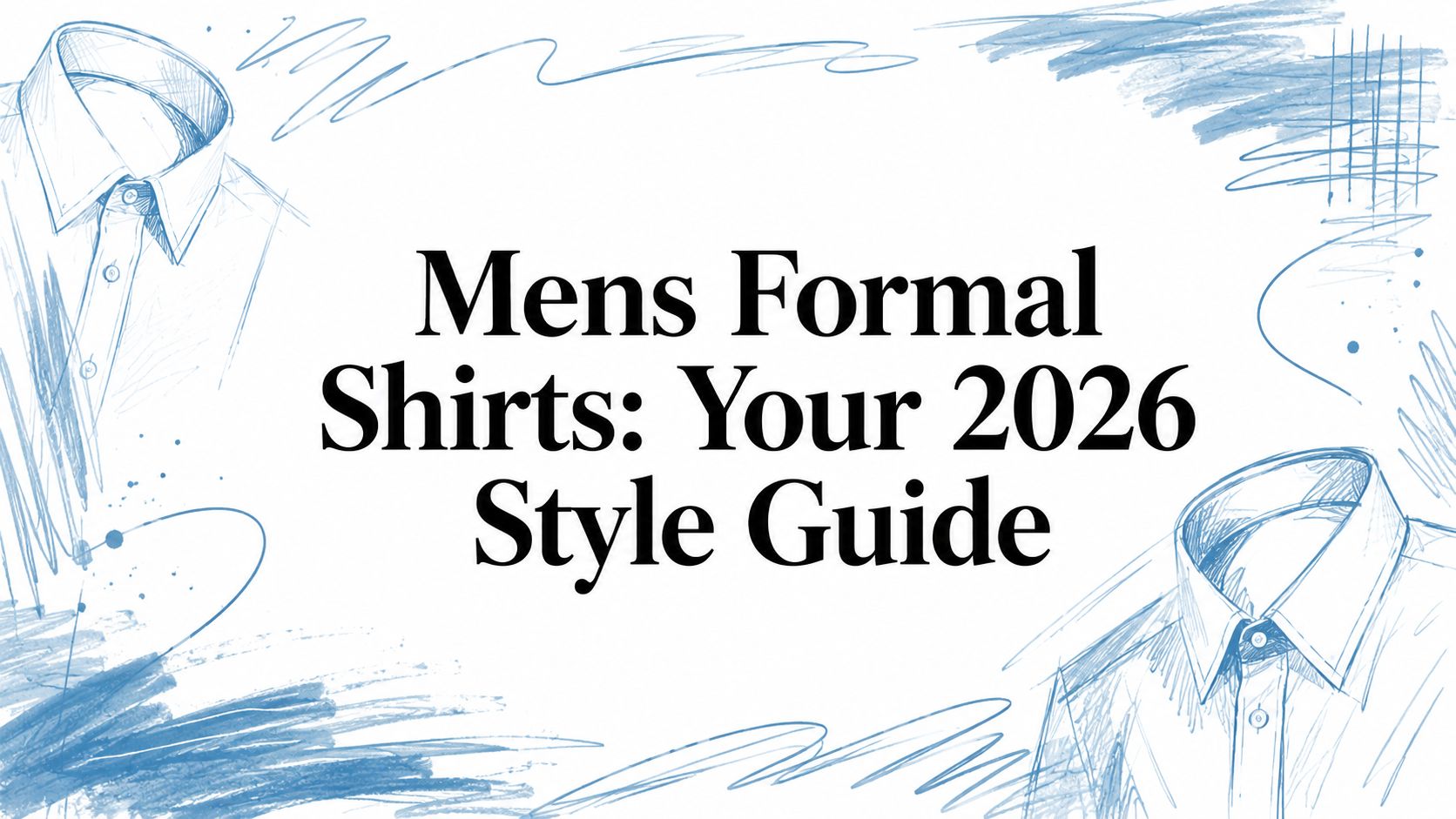
A good shirt looks simple because its components are working together. Collar, cuff, placket, yoke, sleeve pitch, and body shape all need to agree. When one part is off, the shirt rarely recovers.
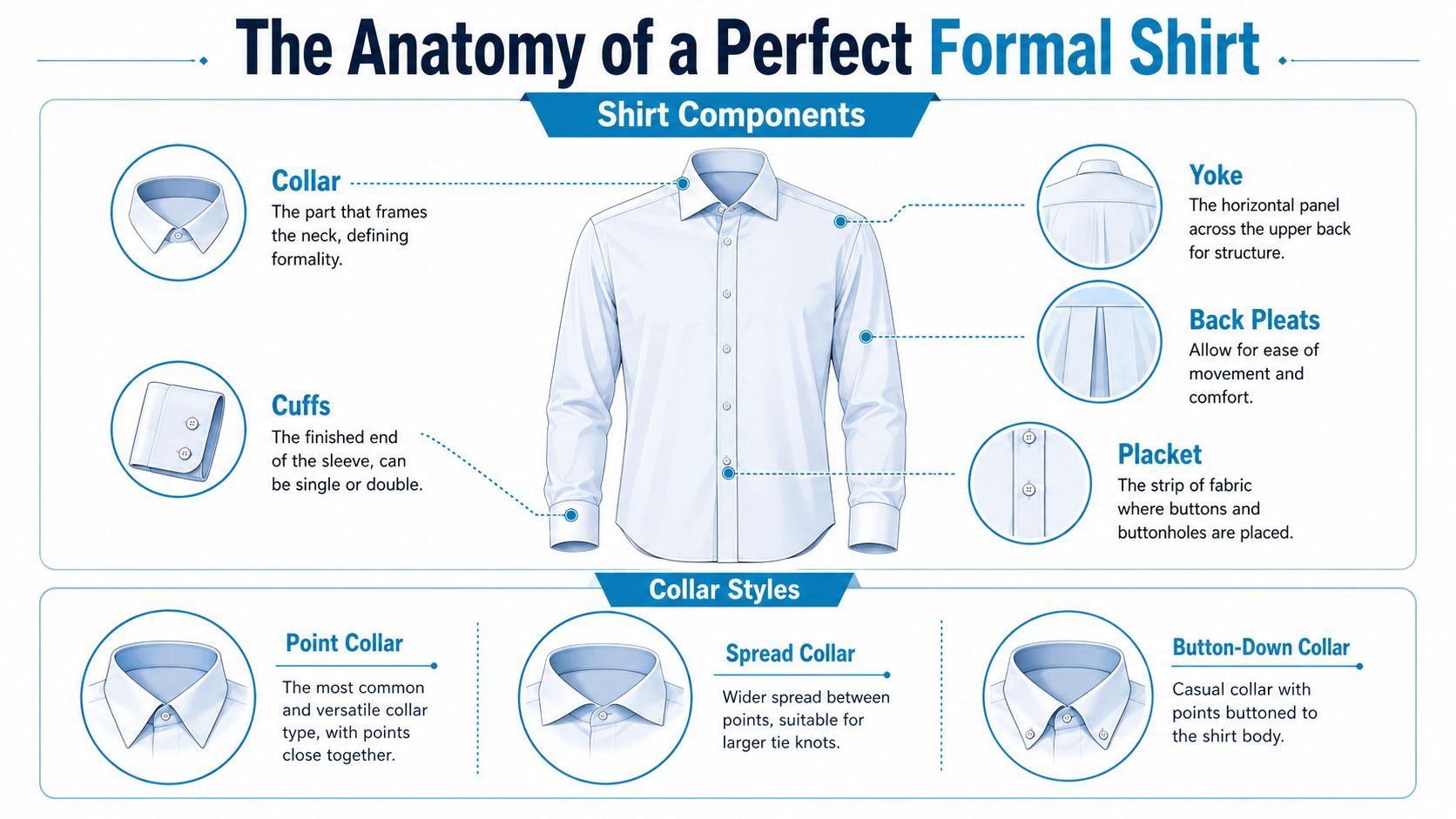
Collar types that set the tone
The point collar is the old dependable choice. It flatters most faces, suits most business settings, and works best with moderate tie knots. If you want one shirt that won't surprise you, start here.
The spread collar opens the shirt front visually and suits a larger knot. It has more presence and often looks especially good under lapels. A spread collar usually feels more intentional than a narrow point, particularly in formal business dress.
The cutaway collar is stronger still. It can look excellent on a confident dresser, but it is less forgiving. Pair it with assertive tailoring and a substantial tie knot or leave it alone.
A wing collar belongs to evening formality, not ordinary office wear. Many men use it too freely. That's a mistake. For most black tie wardrobes, restraint is better than costume.
For a useful distinction between casual and formal collar behaviour, see this explanation of button-up vs button-down shirts.
Cuffs, plackets, and the parts most men overlook
Barrel cuffs are the standard cuff with button fastening. They're practical, tidy, and correct for the majority of business and wedding shirts. A well-cut barrel cuff should sit cleanly at the wrist without collapsing.
French cuffs fold back and fasten with cufflinks. They introduce polish immediately. If the event is formal, or if the suit has clear elegance, French cuffs often finish the look better than a button cuff.
Then there is the placket. A visible front placket creates a structured shirt front. A cleaner front can appear dressier. Neither is automatically superior. The question is whether the line suits the occasion and the cloth.
Fit is not just slim versus loose
Shirt fit is usually discussed badly. Men are sold the language of classic, slim, and fitted, but those labels often hide poor proportion. Key priorities are these:
- Neck fit: secure but comfortable
- Shoulder line: ending where your shoulder ends
- Chest allowance: enough room to move, not enough to billow
- Waist suppression: shaped, not strained
- Sleeve length: enough cuff to show beneath the coat sleeve
A shirt should follow the body, not cling to it. Clean lines read as elegance. Tightness reads as effort.
British cloth and why structure matters
Many shirt guides stop at cotton alone. That's too narrow. Fine wool, mohair blends, and cashmere blends can give a shirt a crisp and dignified character while handling changing temperatures more gracefully than many expect. In a British setting, where a day can move from cool morning to warm room to damp evening, cloth performance matters as much as appearance.
A formal shirt is never just a collar attached to white fabric. It is a piece of engineering, and the best ones never look engineered at all.
Understanding Formal Shirt Fabrics and Weaves
Fabric is where comfort and appearance either become allies or enemies. Most men choose by touch in the shop. Better to choose by performance, drape, and the degree of formality you need.
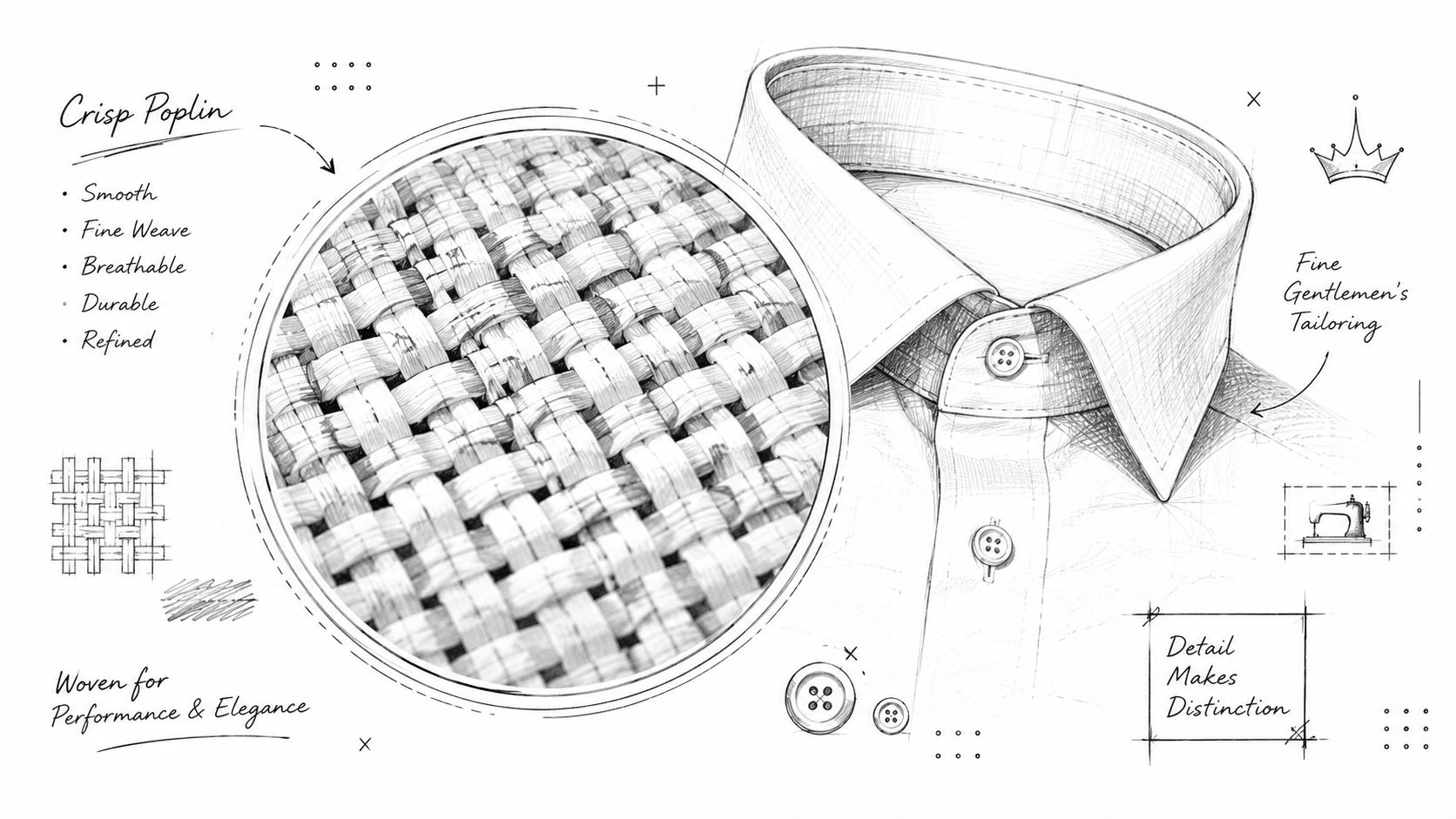
The familiar cotton weaves
Poplin is crisp, smooth, and clean. It has the neat surface most men picture when they think of a formal shirt. It works beautifully in business and ceremonial contexts because it takes pressing well and looks disciplined.
Oxford is more casual. Its basket weave gives it body and durability, but also visible texture. Excellent for smart day wear. Less convincing for true formality.
Twill has a little more visual depth and often a softer hand. It can be elegant for business suiting, especially in cooler months. The slight diagonal texture makes it feel richer than plain poplin.
Herringbone introduces character. When subtle, it can still be refined. When too bold, it starts competing with the suit.
Formality depends heavily on weave and visual quietness. According to this discussion of shirt formality and fabric weave, smaller or absent patterns and finer weaves increase formality, while larger, more colourful patterns reduce it.
For a broader look at cotton shirting options, this guide to the variety of cotton fabric is useful background.
The British fabric advantage
Cotton dominates shirt conversations, but it shouldn't dominate thought. Luxury British fabrics can solve problems that ordinary cotton sometimes creates, particularly in an unsettled climate.
This guide to British mens shirts and fabric notes a 15% increase in demand for non-cotton luxury fabrics such as linen, wool, and mohair among professionals seeking comfort with a crisp formal appearance. That tracks with what many well-dressed men discover once they try them. Fine wool and mohair blends regulate temperature more gracefully and can hold a handsome line without the brittle stiffness some cotton shirts develop after pressing.
Cloth should support the day you're living, not just the mirror you're standing in.
Shirt buying options compared
Because fabric choice is tied to how the shirt is made, it helps to compare buying routes side by side.
| Feature | Off-the-Rack | Made-to-Measure | Bespoke |
|---|---|---|---|
| Fit | Standard block fit | Adjusted from an existing pattern | Built around the individual body |
| Customisation | Limited collar, cuff, and cloth choice | Moderate personalisation | Full control over cloth, collar, cuff, balance, and finishing |
| Convenience | Immediate purchase | Requires ordering and waiting | Requires consultation, fittings, and patience |
| Best for | Urgent needs and basic wardrobe replacement | Men who want improved fit without full bespoke process | Men who value precision, individuality, and long-term wardrobe building |
| Trade-off | Speed over precision | Better shape with some system limits | Highest personalisation, but least immediate |
A shirt's value isn't only in the cloth. It's in whether cloth, cut, and purpose agree.
From Off-The-Rack to Bespoke A Comparison
A client comes in with a morning suit fitting on Tuesday and a wedding on Saturday. In that case, bespoke is not the right answer, however desirable it may sound. Another man wears tailoring four days a week, dislikes the way ready-made collars collapse under a tie, and has one shoulder lower than the other. He is exactly the man who benefits from commissioning properly.
The mistake is usually not poor taste. It is choosing the wrong route for the job.
What each option is really for
Off-the-rack is for speed and straightforward proportions. In British terms, this is the practical choice for wardrobe maintenance. If your neck, shoulder line, sleeve length, and seat are close to a standard block, a good ready-made formal shirt can serve well for business and some daytime occasions. The compromise shows up in the finer points of fit. Collar comfort may be acceptable, yet the chest pulls. Sleeve length may be correct, yet the cuff sits badly under the coat.
Made-to-measure starts with an existing pattern and adjusts it. That usually improves the shirt in the areas a gentleman notices first: collar size, sleeve length, body suppression, cuff depth, and sometimes collar or placket details. It is often the sensible middle ground for professional dress. Still, it remains a modified system. If the wearer has a forward shoulder, an erect posture, a prominent chest, or one side of the body noticeably different from the other, the result can look better without ever looking fully settled.
Bespoke begins with the body, the posture, and the use of the shirt. That distinction matters. A proper bespoke cutter does not stop at adding or subtracting measurements. He accounts for balance, pitch, stance, cuff exposure under the jacket, collar height against the neck, and how the shirt behaves once a tie and coat are added. For formal dressing, those small corrections are often the difference between a shirt that looks expensive and one that looks correct.
How to choose without wasting money or time
Choose off-the-rack for immediate need, fairly even proportions, or shirts that will take hard weekly use and regular replacement.
Choose made-to-measure if ready-made shirts are close but never quite right, and you want cleaner fit without the time and cost of a full commission.
Choose bespoke when the shirt has to work with serious tailoring, eveningwear, or a body that standard sizing handles poorly.
Time matters. So does frequency of wear. A man buying one black tie shirt for an event next month should judge differently from a man building a long-term wardrobe around finely crafted coats and suits. Prestige is a poor buying principle. Use, fit, and timing are better ones.
For readers considering a proper commission, this guide to bespoke shirts in the UK explains how the process typically works from consultation through fitting.
Which route suits which formal need
| Feature | Off-the-Rack | Made-to-Measure | Bespoke |
|---|---|---|---|
| Business shirt | Good if your proportions fit standard sizing well | Very good for men who wear shirts weekly | Best for men who live in tailoring and notice small fit faults |
| Wedding guest shirt | Suitable if the dress code is clear and details are simple | Strong choice for a sharper one-off shirt | Best if the shirt must match commissioned tailoring |
| Groom's shirt | Rarely the strongest option | Can work if time is short and the fitter is skilled | Usually the right choice when photographs, comfort, and balance all matter |
| Black tie shirt | Only if bib, collar, front, and cuff details are correct | Useful when specific eveningwear details are needed | Strongest option for precise formalwear standards |
In Britain, terminology can muddy the decision. Some guides use dress shirt to mean any shirt worn with tailoring. Others reserve it for eveningwear. In this guide, a formal shirt includes business-formal and ceremonial use, while a true dress shirt is the more specific black tie or white tie version. That distinction helps when ordering, because the buying route should match the level of formality, not just the budget.
The best shirt is not the most elaborate one. It is the one made by the right method for the life you actually lead.
How to Select a Shirt for Any Formal Occasion
You are dressed by seven, the suit is pressed, the shoes are polished, and the shirt is the piece that can still spoil the whole impression. Get it right, and the tailoring looks cleaner. Get it wrong, and even an expensive suit starts to look uncertain.
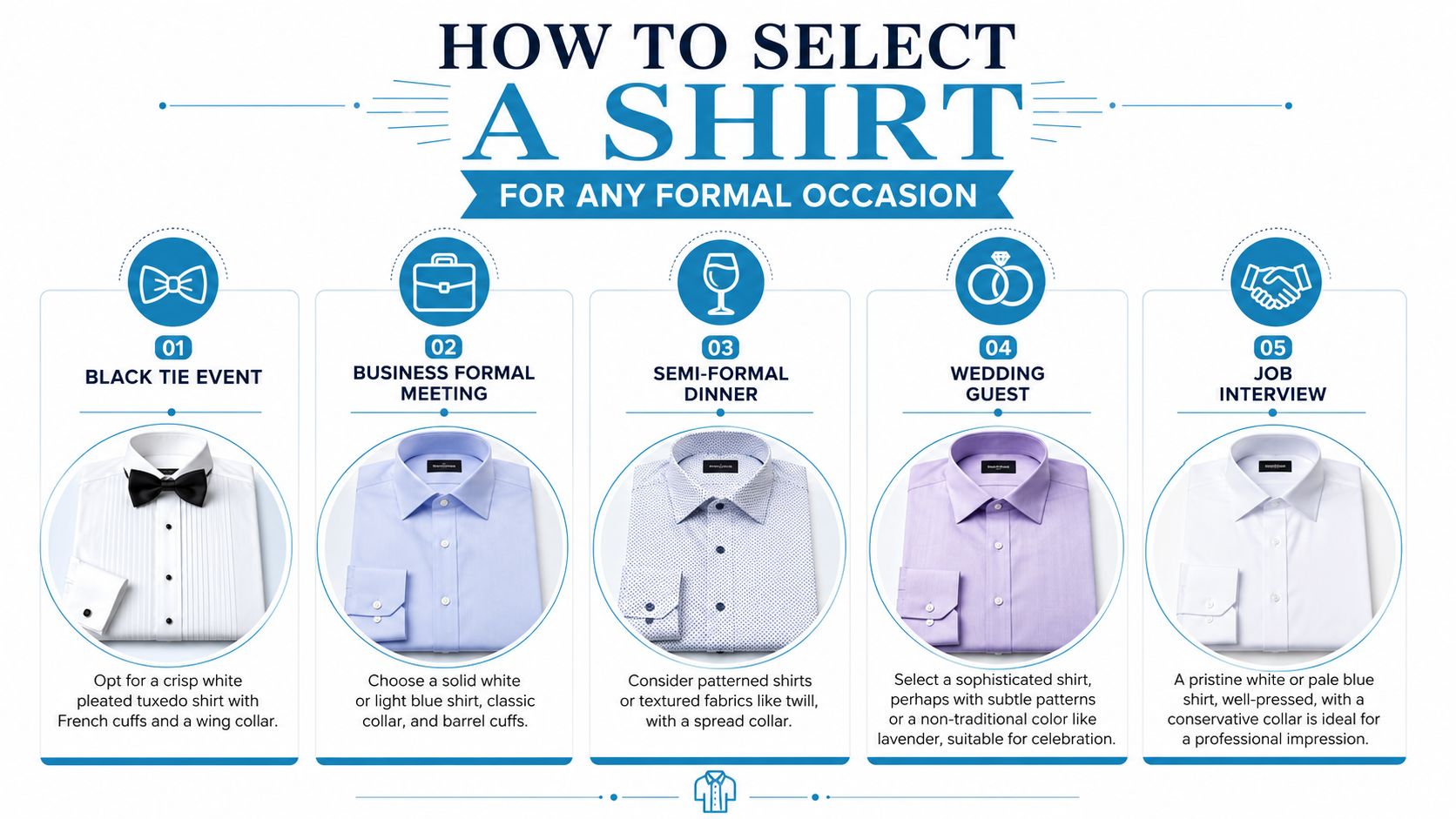
In British tailoring, the first question is simple. Is this business formality, daytime ceremony, or evening dress? That distinction matters because a formal shirt for a board meeting is not the same garment as a dress shirt for black tie, even though some guides blur the terms.
Business and boardroom
For business, restraint reads as judgement. White remains the clearest choice, pale blue is equally sound, and a muted pink can work well in a conservative office if the rest of the outfit stays sober.
Cloth matters here. Poplin gives the sharpest, flattest finish under a dark suit, which is why City dressers still rely on it. Twill is slightly softer in appearance, often more forgiving after a long day, and usually a better choice if you spend hours seated or travelling. In cooler months, a fine British cotton shirt with a touch more body can sit better under flannel or heavier worsted than a very crisp, papery cloth.
Choose a collar that suits both your tie knot and your face, not fashion imagery. A moderate spread is the safest all-rounder in British business dress. Extreme cutaways can look affected in serious offices, while very narrow points can seem mean under modern lapels.
Weddings and celebrations
A wedding allows more nuance, but the shirt should still support the occasion rather than compete with it. Guests have room for gentle texture. Grooms need discipline, because the shirt will be photographed from morning through the last dance.
White is usually the strongest answer, especially with morning dress, a dark lounge suit, or any setting with formal photography. Pale blue can be handsome for a daytime wedding in spring or summer, particularly with navy or mid-grey tailoring. Pink is less universal. It works best when the complexion, tie, and suit cloth all agree with it.
This is also where fabric choice deserves more thought than generic guides usually give it. Luxury British shirtings in fine cotton, cotton-linen blends, or lightweight cotton with a subtle woven texture can perform beautifully across a long wedding day. The trade-off is straightforward. A crisp plain cloth looks cleaner and more formal. A textured cloth often wears more comfortably and can hide light creasing better by late afternoon.
For evening receptions with black tie, the rules tighten considerably. This guide on what shirt to wear with a dinner jacket sets out the correct details.
Black tie and eveningwear
Evening dress has its own standards, and an ordinary office shirt rarely meets them. The collar, front, cuffs, and fastening should all look deliberate under artificial light and at close range.
For black tie, wear a white shirt with a properly formal front and double cuffs. The collar should work with a bow tie, not fight it. Pleated, marcella, or piqué-front shirts each have their place, but all of them should look cleaner and firmer than a standard business shirt. If the event is especially traditional, studs may be appropriate. If it is a modern hotel dinner with a softer dress code, a plainer formal shirt can still work, provided it keeps the right collar and cuff structure.
The common error is overcomplication. Eveningwear rewards accuracy.
A quick pairing checklist
- With navy business suits: white and pale blue are the safest choices
- With charcoal suits: white is usually strongest, with pale blue close behind
- With morning dress or a formal wedding suit: white is the proper starting point
- With black tie: white is the correct answer
- With patterned ties or expressive tailoring: keep the shirt plain and controlled
The more formal the occasion, the less decoration the shirt needs.
Styling and Caring for Your Investment
A formal shirt earns its place in the wardrobe on the days when details are judged at close range. Under a lounge suit in the City, or beneath evening tailoring for a London reception, poor styling shows immediately. Good care keeps the cloth crisp, the collar clean, and the shirt looking like a proper formal shirt in the British sense, not merely a generic dress shirt pulled from a stack.
How the shirt should be finished
Start at the collar and work outward. The tie knot must suit the collar shape. A spread collar carries a fuller knot with confidence, while a point collar usually looks cleaner with a smaller, neater knot. Get that balance wrong and the whole neck area looks unsettled.
The collar fit is the first checkpoint. It should sit cleanly around the neck without pinching or collapsing. Two fingers of space is still a sensible rule of thumb. Less than that feels strained by lunchtime. More than that allows the collar to drift, especially once a tie is added.
Cufflinks should add polish, not demand attention. Plain silver, white metal, or mother-of-pearl usually age better than novelty designs. The same restraint applies to the pocket square. It should complement the tie or jacket, not copy the tie fabric exactly.
British clients often overlook how much the shirt front matters under tailoring. If the placket buckles, if the collar points lift, or if the cuffs disappear into the sleeves, even expensive suiting loses its authority.
Caring for the shirt properly
A fine shirt needs careful laundering, especially if it is made from higher-grade poplin, twill, or one of the finer British shirting cloths that offer more character than standard broadcloth. Wash lightly so collar oils and cuff soil come out without roughening the surface. Moderate temperatures, a measured amount of detergent, and a machine that is not overfilled all help the shirt keep its finish.
Button the shirt before washing, at least through the front, so it twists less in the drum. Turn it out promptly when the cycle ends. Leaving it crushed in the machine sets creases that are harder to press out later.
Ironing is easier while the shirt is still slightly damp. Press the underside of the collar first, then the top side, followed by the cuffs, sleeves, shoulder yoke, and body. Use steam with care on darker mother-of-pearl buttons and avoid dragging the iron across them. For travel days or awkward hotel-room situations, this guide on how to iron a shirt without an iron gives practical ways to restore a presentable finish.
Storage matters as much as washing. Use a proper hanger with enough width to support the shoulder line, and give white shirts space in the wardrobe so collars are not crushed together. If the shirt has removable collar stays, take them out before laundering and put them back only when the shirt is fully dry.
What the bespoke journey often looks like
A bespoke shirt begins with use, not measurements. The first question is what the shirt must do. A shirt for boardroom wear needs different cloth, cuff weight, and collar behaviour from one intended for a winter wedding or a black tie season.
The measuring stage is more exact than many clients expect. Neck size alone tells very little. Shoulder slope, chest balance, posture, wrist size, watch habit, and the position of the trouser waistband all affect how the shirt will sit once tucked and buttoned.
Fittings then refine the balance. A good tailor checks whether the collar hugs cleanly, whether the sleeve hangs true from the shoulder, and whether the cuff breaks at the right point on the hand. That quiet correction is where bespoke proves its worth.
Care starts before the first wear. A shirt that is laundered, pressed, and stored properly keeps its line, colour, and authority for far longer.
The Dandylion Style Bespoke Shirt Experience
A gentleman usually arrives after one of two frustrations. His ready-made shirts collapse under a structured jacket, or the collar looks passable in the mirror but fails the moment a tie is tightened. A proper bespoke commission starts by diagnosing that failure, then building a shirt that suits his wardrobe, posture, and standard of dress.

At Dandylion Style, the conversation comes first. In British tailoring terms, that matters because a formal shirt is not always the same thing as a dress shirt in broader international guides. A client may need a business shirt for city wear, a marcella-front evening shirt for black tie, or a formal white shirt that can sit comfortably beneath a morning coat. The brief decides the cloth, collar, cuff, and level of structure.
Fabric selection is where many generic shirt guides stop too early. British mills offer more than standard poplin cotton. Fine twills, royal oxfords, and cotton-linen or cotton-cashmere blends each behave differently under tailoring, especially in our climate. A cloth with a little more body can hold a collar beautifully through a long day, while a lighter plain weave may serve better under summer tailoring but show creasing sooner. Those are the trade-offs that shape a shirt worth commissioning.
Then the pattern is drafted for the wearer, not for an average size block. That means accounting for shoulder slope, a prominent chest, one cuff sitting higher because of a watch, or the way a client carries his neck and head. Small corrections change the whole impression.
The fitting confirms whether the theory works in practice. The collar must sit close without pinching. The sleeve must fall cleanly from the shoulder. The cuff should show the right amount beneath the jacket sleeve, and the shirt front should stay orderly when seated as well as standing. If any of that is wrong, it is corrected on the pattern, not disguised with wishful pressing.
Good bespoke takes time because precision takes time. In a British workroom, the shirt is discussed, drafted, cut, fitted, and refined with care. For the client, the result is simple to recognise. The shirt feels settled, the collar behaves, and the whole line of the coat improves because the foundation underneath is right.
Conclusion
The best mens formal shirts don't announce themselves loudly. They sharpen the suit, support the collar line, sit cleanly at the cuff, and make the wearer look settled in his clothes. That's their real power.
Once you understand the difference between business shirts and true dress shirts, the rest becomes clearer. Fit must be exact. Fabric must suit the climate and the occasion. Colour should stay disciplined. Formality should be read through cloth, pattern, and detail, not trend.
A gentleman doesn't need an endless shirt wardrobe. He needs the right shirts, made or chosen with intelligence. Whether you buy off-the-rack for speed or commission bespoke for precision, the principle is the same. The shirt is not an afterthought. It is the foundation.
About the Author
Igor is the founder of Dandylion Style, a bespoke tailoring house based in Ardingly, West Sussex. He specialises in garments cut with precision from fine British fabrics, including linen, wool, cashmere, tweed, and mohair. His approach combines traditional tailoring discipline with a modern understanding of how clients live and dress today. Igor works closely with grooms, business professionals, and style-conscious clients across Sussex, London, and the South East, creating clothing that feels personal, elegant, and comfortable. His focus is simple: better cloth, better cut, and honest guidance throughout the process.
Frequently Asked Questions About Mens Formal Shirts
What colour formal shirt should every man own first
Start with white. It works across business, weddings, and evening formality more reliably than any other colour. After that, add pale blue and pink if you want a rounded wardrobe with British classicism behind it. Those three shades are the most dependable foundation because they pair easily with most suits and ties without looking forced or overly fashionable.
How should a formal shirt collar fit
Use the two-finger test. When the shirt is fully buttoned, you should be able to slide your index and middle fingers between your neck and the collar comfortably. Less than that means the collar is too tight. More than that means it is too loose. A proper collar should look clean while still letting you turn your head and sit through a long day comfortably.
Are French cuffs always more formal than barrel cuffs
In most settings, yes. French cuffs carry more ceremony because they require cufflinks and create a more dressed finish at the wrist. That said, barrel cuffs are not inferior. They're often the right choice for business shirts and many wedding shirts. The better question is whether the cuff matches the event, jacket, and level of formality you're trying to achieve.
Is cotton always the best fabric for formal shirts
No. Cotton is familiar and often excellent, especially in poplin and fine twill, but it isn't the only proper choice. Fine wool, mohair blends, and cashmere blends can perform beautifully in the British climate, particularly when temperatures shift during the day. The best fabric is the one that gives you the right balance of appearance, comfort, and structure for the occasion.
When is bespoke worth it for a shirt
Bespoke is worth considering when ready-made shirts repeatedly fail you. Common reasons include an awkward collar fit, sleeve length problems, one shoulder sitting differently from the other, or the need for a shirt to work precisely with formal tailoring. It also makes sense when the shirt is part of an important commission, such as a wedding or evening ensemble, where proportion and detail matter more than speed.
If you're ready for shirts and tailoring that are cut around your life rather than pulled from a rail, Dandylion Style offers a calm, highly personal bespoke experience in Sussex, London, and the South East. Whether you need a wedding shirt, business wardrobe refinement, or a complete formal commission, the right conversation is the best place to begin.