A shirt can leave home neatly folded and still arrive looking as though it spent the journey at the bottom of a weekender. That usually happens ten minutes before you need to leave for a meeting, a dinner, or a wedding, and the hotel wardrobe offers plenty of hangers but no iron.
The good news is that a crisp result is still possible. If you know how to iron a shirt without an iron, you can remove most travel creases with steam, controlled heat, or a bit of pressure, often with less risk to fine cloth than a scorching hotel iron.
An Introduction to Iron-Free Impeccability
A shirt can come out of a case looking respectable enough, then show every fold the moment you put it on under proper light. That is usually the point when travellers reach for the quickest trick they can find. Some of those tricks work well. Some are only half-useful, particularly in a damp British climate.
Key takeaways
- Steam is the safest first choice for most shirts, especially cotton, linen, wool blends, and easy-care cloths.
- Different creases need different methods. Broad travel rumpling responds to ambient steam, while collars, cuffs, and plackets usually need more targeted treatment.
- Spray-and-hang is unreliable in the UK, especially on humid days when moisture sits in the cloth instead of releasing the crease.
- No-iron shirts still need restraint. Too much heat can glaze the surface or flatten the finish that keeps them looking clean.
- British cloths need separate handling. Wool, brushed cotton, and tweed react very differently from a lightweight summer poplin.
- Deep set creases in structured garments are often better left to a cleaner or presser than forced out badly in a hotel room.
The first thing I tell clients is simple. Do not treat every shirt as if it were the same cloth. A fine poplin business shirt, a brushed Oxford, a linen holiday shirt, and a wool overshirt may all crease in transit, but they do not recover in the same way. The wrong method can leave water marks, shine, stretched seams, or a collar pressed flatter than it should be.
Spray-and-hang is the method I trust least in the UK. In a dry climate it can be passable for light creasing. In London, Manchester, or anywhere with a close, damp atmosphere, it often leaves the shirt slightly clammy and still visibly rumpled an hour later. That matters even more with heavier British fabrics. Tweed and wool do not want a casual misting and hopeful patience. They want controlled steam, time on a proper hanger, and a light hand.
That is why iron-free care should be judged by fabric, setting, and time available, not by internet shortcuts. A well-made shirt deserves that level of attention, whether it is ready-to-wear or one of your made-to-measure shirts in London.
Travel routines matter too. If you are packing for a wedding or country-house weekend, your shirt may be sharing a case with bulkier garments and accessories, which makes creasing worse before you even arrive. In that sort of pack, soft protective layers help. The same logic sits behind a good robe style guide for bridal parties. Better packing reduces the work needed later.
The aim is not perfection by force. It is a clean, composed finish with the least risk to the cloth.
Harnessing the Power of Steam for Wrinkle Removal
Steam is the most reliable place to start because it relaxes fibres without pressing them flat with direct contact heat. That's why it has such a long place in British garment care. The use of steam for clothing in the UK reaches back a long way, with the Royal Household adopting steam-based fabric treatments in the 1850s, as noted in the UK steam-care reference here.
The shower method
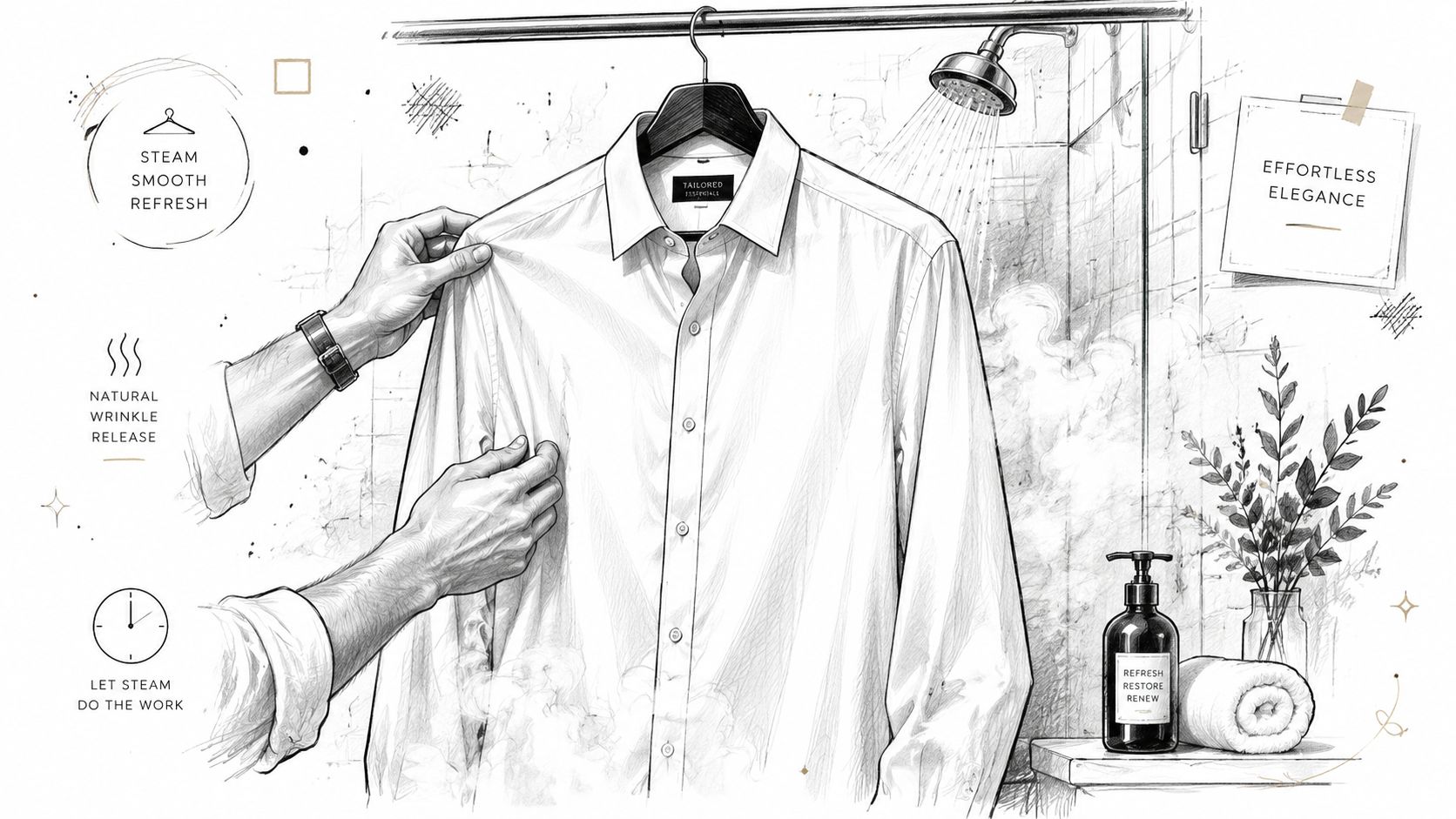
For a shirt with general suitcase creasing, a closed bathroom and a hot shower usually do the most work with the least risk.
Use this approach:
- Hang the shirt properly. Put it on a broad hanger, fasten the top button, and smooth the front placket by hand.
- Keep it away from water. The shirt wants steam, not splashes. Hang it on the back of the bathroom door or as far from the shower head as the room allows.
- Shut the room. Close the door so the steam stays in the air rather than escaping.
- Let gravity help. Once the cloth has warmed and softened, run your palms gently down the front, sleeves, and back.
This works best on moderate wrinkling. It won't rescue a badly crushed shirt with knife-sharp fold marks, but it often restores a presentable finish.
Broad surfaces respond well to ambient steam. Details such as collars and cuffs usually need something more targeted.
Kettle steam for precision areas
A kettle is useful when the body of the shirt looks acceptable but the collar points or cuff edges still look untidy.
Hold the wrinkled area several inches above the steam path. Keep the fabric moving, and never let it become wet. Then shape the area with your fingers while it's warm. This is particularly effective on:
- Collars that have curled in transit
- Cuffs with shallow edge creasing
- Plackets where buttons have created ripples
If you're dressing for a wedding morning and several shirts need freshening at once, practical prep matters. The same sort of orderly thinking that helps with garments also helps the room itself, which is why a tidy getting-ready space and sensible loungewear make a difference. For that sort of occasion, this robe style guide for bridal parties is a useful reference.
A makeshift steam setup
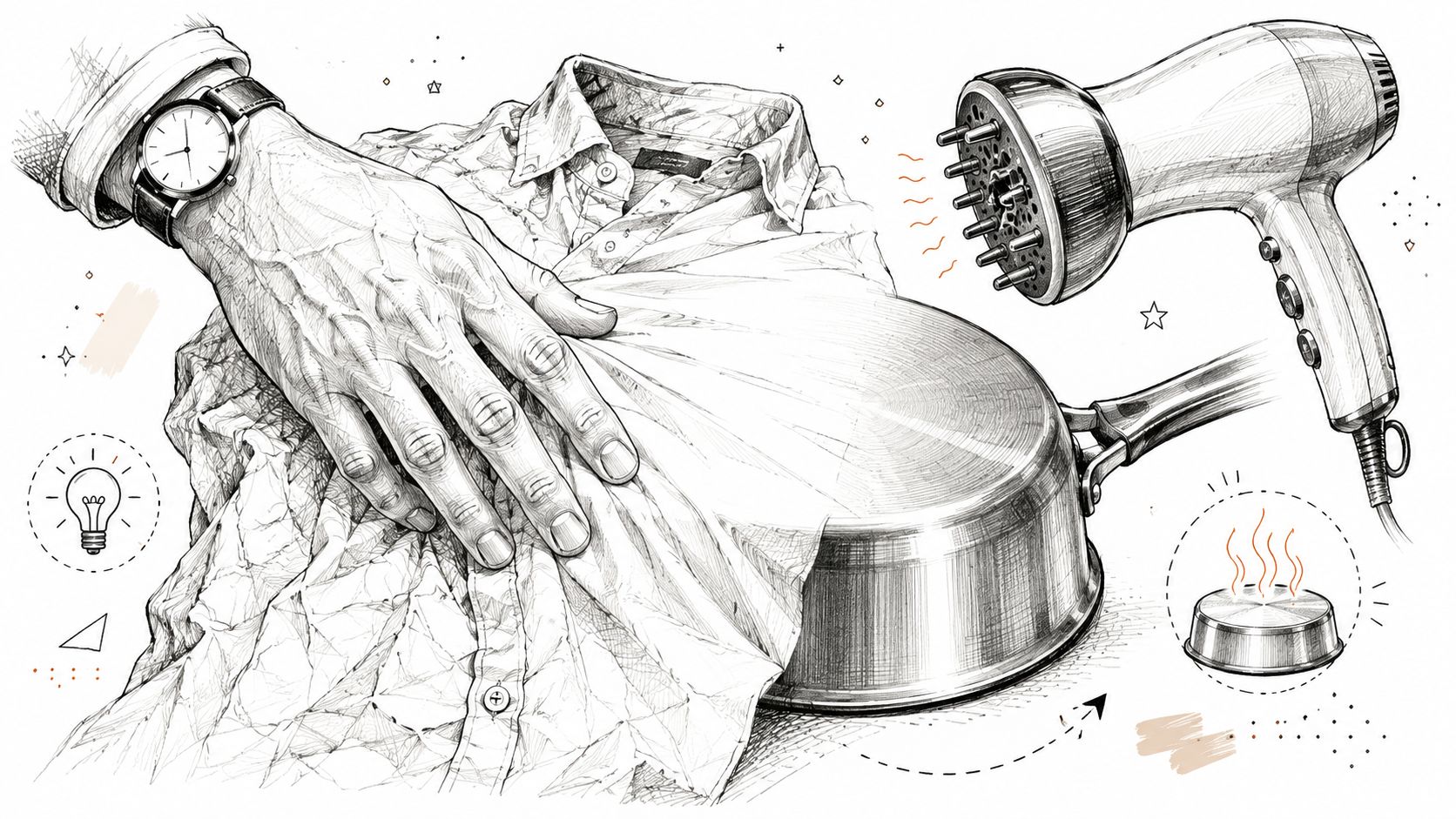
If you have access to a pot and hot water, you can create a simple steam source. Bring the water to a boil, remove it from direct heat, and hold sections of the shirt above the rising steam. Work panel by panel rather than waving the whole garment about.
This is slower than a handheld steamer but kinder than improvised pressing. It's also a sensible option for men who travel with suiting and want to reduce unnecessary cleaning. Excessive pressing and repeated harsh finishing shorten the life of fine clothing just as surely as over-cleaning can, which is why it's worth understanding how often you should dry clean a suit.
Using Household Appliances for Direct Heat
Sometimes steam isn't enough, or you don't have time to wait for a bathroom to fill. In those moments, household appliances can help, but they need a steadier hand. Direct heat removes wrinkles quickly and creates damage just as quickly when used carelessly.
The hairdryer method
A hairdryer is best for light to moderate creases, especially on cotton shirts that only need reviving after unpacking.
Lay the shirt flat on a bed, table, or clean towel. Smooth the cloth with one hand and direct warm air with the other. Keep the dryer moving so one spot doesn't overheat. If the shirt is slightly damp from steam, the result is usually better because the warm airflow finishes the job rather than trying to force dry fibres to relax.
A nozzle attachment helps because it keeps the airflow concentrated. Without one, the heat spreads too widely and you spend longer chasing the same crease.
Where a straightener helps
A hair straightener is a last resort, but it can be excellent for tiny areas if it's clean and used sparingly. The plates must be spotless. Any hair product residue can mark the fabric.
Use it only on parts such as:
- Collar edges
- Cuff ends
- Button plackets
- Pocket flaps on casual shirting
Keep the temperature low and test on an inconspicuous area first. Never clamp hard or linger in one place.
Practical rule: If you wouldn't trust the tool near your tie, don't trust it near your shirt.
What not to do
Some travellers try to press cloth with whatever gets hot. That's where trouble starts. Uneven bases, dirty surfaces, and uncontrolled temperatures create shine, flatten texture, or leave marks that are far worse than a few wrinkles.
If you must use direct heat, think in terms of targeted correction, not full pressing. Broad steam first, spot treatment second. That order usually gives the cleanest result.
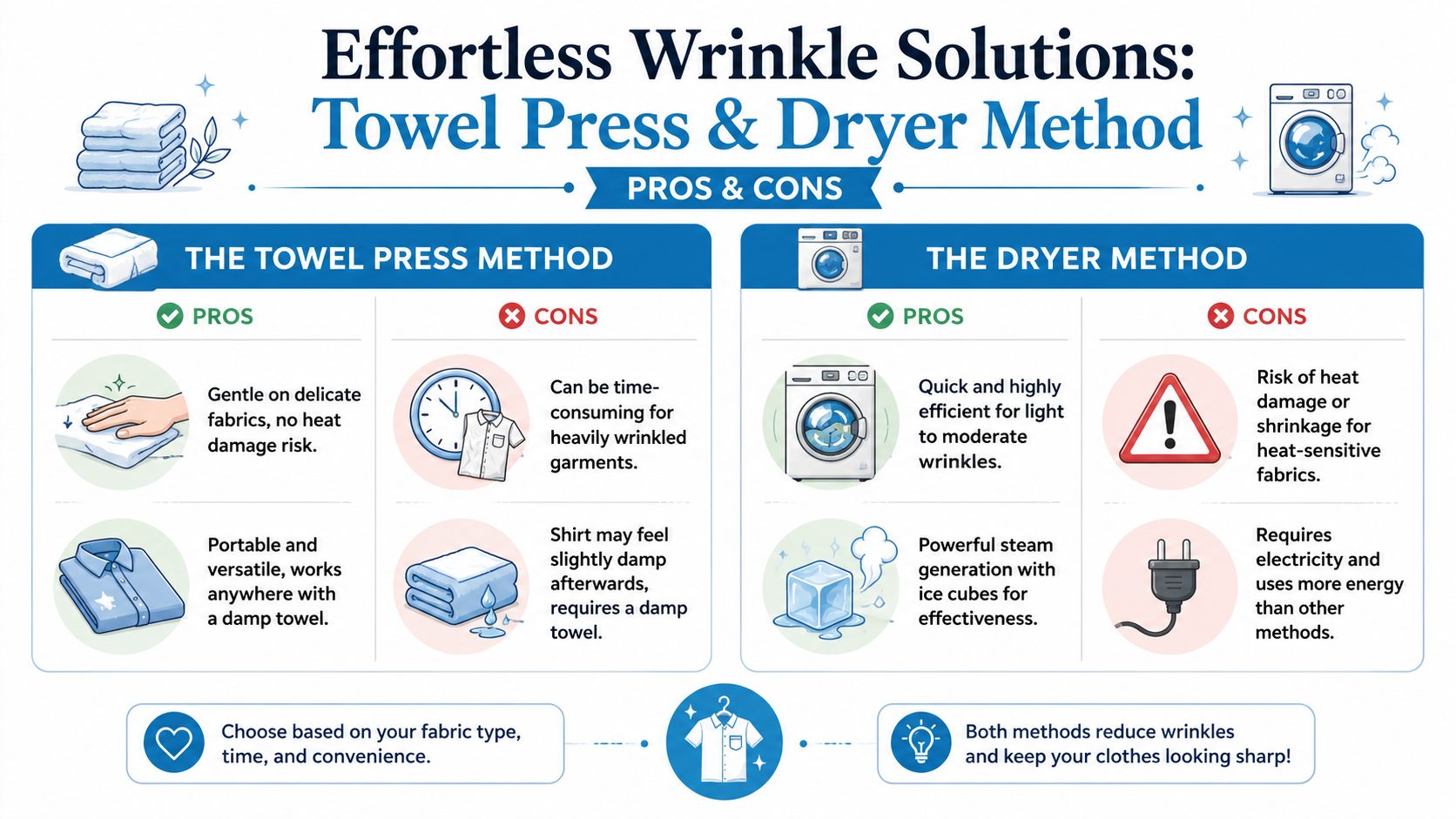
Effortless Solutions The Towel Press and Dryer Method
You arrive at the hotel, hang your shirt, and find the front still badly creased half an hour before dinner. In that situation, I would choose between two low-effort methods based on the cloth, not convenience alone. One is gentle and controlled. The other is faster, but it asks more of the fabric.
The towel press
The towel press suits shirts that need calming rather than aggressive treatment. Spread the shirt on a clean, firm surface. Place a lightly damp towel over the creased area, then press down with the flats of your hands and hold for several seconds at a time. For deeper creases, roll the shirt inside the towel, leave it briefly, then unroll and hang it properly on a broad hanger.
It works best on light to moderate wrinkling, especially in cotton blends and finer shirtings that can mark under improvised heat. It also gives you more control around collars, plackets, and cuffs, where a shirt usually looks untidy first.
There are limits. In a humid UK climate, this method can leave the cloth slightly damp for longer than you expect, particularly in a room with poor airflow. That matters with heavier fabrics. Wool and tweed do not respond well to being left moist and compressed, so use the lightest touch and give them space to air afterwards.
The dryer method
A tumble dryer can rescue an everyday cotton shirt quickly if you use it with restraint. Put in one shirt only, add a few ice cubes or a lightly damp cloth, and run a short hot cycle. Remove the shirt as soon as the cycle ends, then hang it immediately and smooth the seams and placket by hand while the fabric is still warm.
The method works because brief heat, moisture, and movement relax the fibres at the same time. It is often more reliable than the spray-and-hang approach, which struggles badly in muggy weather and often leaves a shirt looking limp rather than cleanly finished.
The trade-off is fabric risk. I would not use a hot dryer for wool shirting, brushed cotton, tweed overshirts, or anything with structure you care about keeping crisp. Excess tumbling can soften the shape, raise lint, and fatigue the cloth long before the shirt looks old.
Which one to choose
Use the towel press if the shirt is delicate, the wrinkles are localised, or you are working in a hotel room with limited kit. Use the dryer if the shirt is cotton, the creasing is general, and you need a respectable result quickly.
| Method | Best for | Main advantage | Main caution |
|---|---|---|---|
| Towel press | Fine shirting, light creases, travel use | Gentle control with no direct heat | Slow drying in humid rooms |
| Dryer with ice cubes | Cotton shirts, broader creasing, quick refresh | Faster, more even result | Too harsh for wool, tweed, and heat-sensitive cloth |
Prevention still saves the most effort. Careful folding, spacing, and jacket protection will spare you far more trouble than any hotel-room fix, especially if you travel with tailoring and want to know how to pack suits without crushing the cloth.
Fabric-Specific Advice for Bespoke Garments
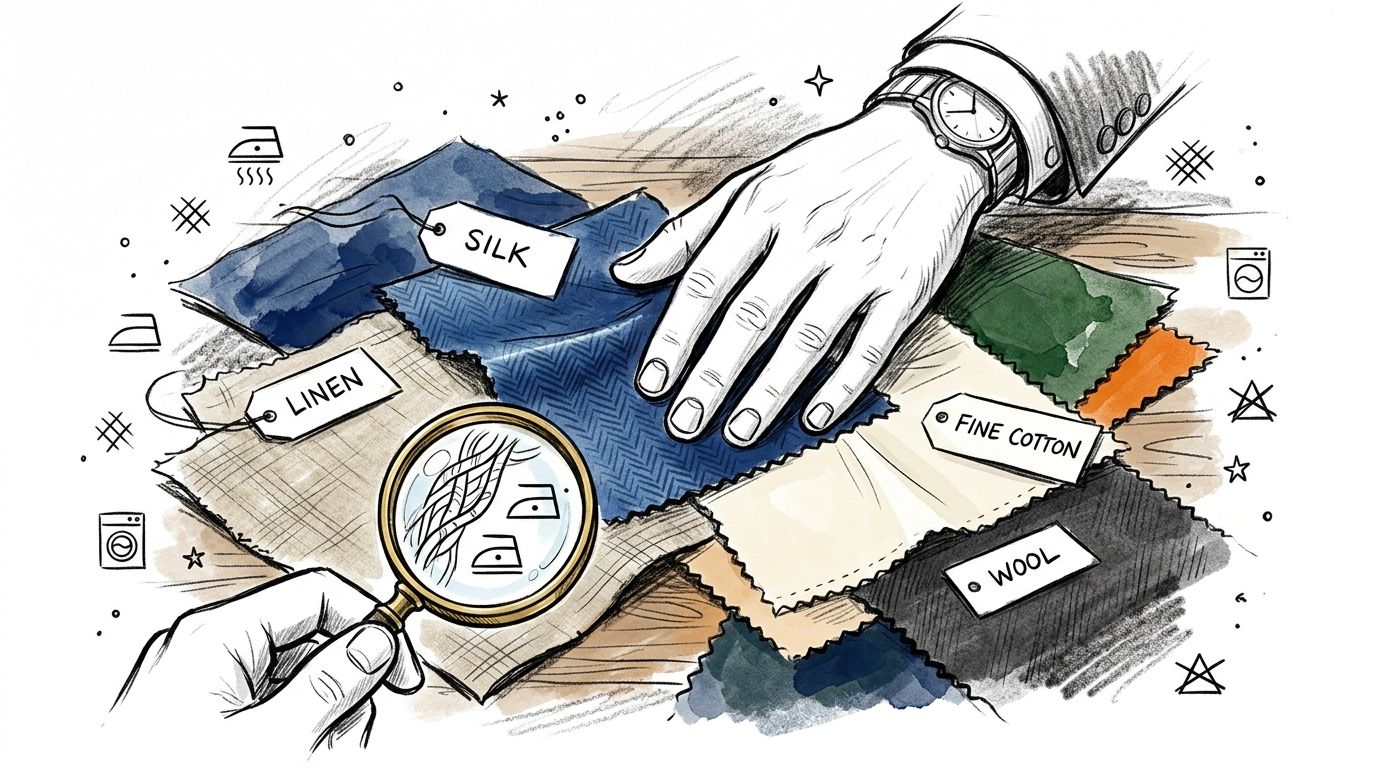
A shirt is never just a shirt. The cloth determines what sort of intervention it will tolerate, and what sort it won't. That matters more with bespoke wardrobes because better fabrics reveal both good care and bad care very quickly.
Cotton and linen
Cotton is forgiving. Most business shirts in poplin, twill, or Oxford cloth respond well to steam, dryer treatment, or a careful hairdryer pass. If the weave is crisp, you may need to shape the seams and placket by hand as the cloth cools.
Linen is different. It releases wrinkles easily, but it also wrinkles again with equal enthusiasm. On linen, the goal isn't a board-flat finish. It's a clean, relaxed surface that still looks like linen rather than pressed cardboard.
Wool, cashmere, and tweed
These fabrics need restraint. A wool or cashmere shirt-jacket, overshirt, or structured garment should almost always be steamed rather than pressed with dry direct heat. The fibre has natural resilience, but harsh heat can flatten the surface and spoil the hand of the cloth.
Tweed deserves even more caution. It often carries texture that gives the garment its character. Pressing that texture too aggressively can make the cloth look tired before its time.
Delicate British cloth usually wants patience more than force.
No-iron and easy-care shirts
Many men make a common error. They assume a no-iron shirt can tolerate more heat because it sounds hard-wearing. In fact, UK textile research shows that no-iron shirts can be damaged by ironing above 150°C, and professionals recommend a steamer at 95°C or hanging the shirt in a steam-filled room to avoid the 22% risk of fabric damage associated with high-heat ironing, as summarised in this reference on shirt heat sensitivity.
That makes practical sense. Easy-care finishes often rely on treatments that don't appreciate aggressive contact heat. If the shirt is treated cotton or a synthetic blend, steam is usually the cleverer option.
For men who want to understand why one cotton behaves beautifully under steam and another doesn't, it helps to know the cloth itself. The weave, finish, and fibre blend all change the result, which is why a closer look at the variety of cotton fabric is worthwhile.
Common Mistakes and When to Seek a Professional
The most common error is assuming every wrinkle can be solved by adding more moisture. In the UK, that's often exactly the wrong approach. In humid conditions, especially in Sussex and London where humidity can exceed 80%, the spray-and-hang method is often ineffective because the fabric stays damp too long and fresh wrinkles set back into the shirt.
That's why generic advice from drier climates often disappoints British travellers. A lightly misted shirt hanging in a close hotel room can end up looking worse an hour later, not better.
Mistakes worth avoiding
- Treating a dirty shirt: Heat and moisture can set marks more firmly into the cloth.
- Leaving the garment bunched up afterwards: Once the wrinkle has softened, the shirt must be hung immediately.
- Using too much water: Damp is helpful. Wet is a nuisance.
- Trying to flatten deep creases in one pass: Work in stages instead.
- Using shirt tricks on structured tailoring: A jacket chest, lapel roll, or canvassed front needs different handling.
When to stop improvising
If the shirt has a firmly set crease across the front panel, a scorched area from a previous attempt, or a fragile vintage fabric, professional pressing is the safer choice. The same goes for dinner jackets, suit coats, waistcoats with structure, and anything made from cloth you'd hate to replace.
A local specialist can also correct the aftermath of poor hotel pressing, which is more common than many men realise. If you need experienced garment care or alteration advice, it's sensible to start with reputable tailors near you.
Frequently Asked Questions
Can I use a pot instead of an iron?
Yes, but only with care. The improvised method works best as a last resort rather than a first choice. The base needs to be smooth and clean, and a pressing cloth should sit between the heated surface and the shirt. For fine shirting, I'd still choose steam before any improvised contact heat. It's easier to control and far less likely to leave shine or flattened texture.
What's the best method for a hotel room with no appliances?
The shower method is usually the safest answer because nearly every hotel room gives you hot water, a hanger, and a closed bathroom. Hang the shirt away from direct spray, let the room fill with steam, then smooth the cloth by hand. If the collar or cuffs still look tired afterwards, targeted kettle steam or a careful towel press usually finishes the job without introducing unnecessary risk.
Does this work on formal shirts for weddings?
Yes, but formal shirts need a more disciplined touch. Marcella bibs, pleated fronts, and crisp collars show mishandling quite quickly. Use steam first and avoid over-wetting the front. If the shirt has strong structure or decorative detailing, don't improvise with heavy direct heat. For a wedding morning, it's wiser to freshen the shirt gently and let studs, collar shape, and proper fit do the rest of the visual work.
Why does my shirt look worse after I spray it with water?
Usually because the fabric stayed damp too long. In humid parts of the UK, moisture can linger in the cloth rather than evaporating cleanly. As the shirt hangs, gravity pulls some areas while other parts dry unevenly, and fresh creases can settle in. Light steam is often more effective than spraying because it relaxes the fibres without soaking one area more than another.
Are steamers better than irons for good shirts?
For many shirts, yes. A steamer is often kinder because it avoids crushing the cloth under a hot plate. That's especially useful for fine cotton, wool blends, treated easy-care shirts, and textured garments. An iron still has its place when you want a very crisp finish and have proper control. But for travel, quick refreshes, and cloth preservation, steam is often the better-mannered tool.
About the Author
Igor is the founder of Dandylion Style and a master tailor based in West Sussex. He works with fine British fabrics including tweed, cashmere, linen, wool, and mohair, creating bespoke garments with a strong focus on fit, longevity, and understated elegance. His approach combines traditional tailoring discipline with practical wardrobe knowledge, including the everyday care that keeps shirts, suits, and occasionwear looking polished long after they leave the studio.
If you'd like help with bespoke shirting, wedding tailoring, or a wardrobe built around fine British cloth, visit Dandylion Style. Igor offers a calm, personal tailoring service for clients across Sussex, London, and the South East, with garments made to look exceptional and wear beautifully.