A linen suit is the absolute epitome of sophisticated warm-weather style. But let's be honest, its relaxed nature can be tricky to master. Pulling off linen with genuine elegance isn't just about throwing on a jacket and trousers; it's an art form.
The real secret to knowing how to wear a linen suit with confidence comes down to three things: getting an impeccable bespoke fit, choosing the right cloth, and styling it with considered, complementary pieces.
Key Takeaways
- Embrace the Wrinkle: Linen's characteristic creasing is a feature, not a flaw. The key is to manage it, not eliminate it. A bespoke fit ensures the wrinkles look stylish and intentional rather than sloppy.
- Fit is Everything: An off-the-rack linen suit often looks shapeless. A bespoke fit is non-negotiable to control the drape and create a sharp silhouette, turning potential sloppiness into sophisticated nonchalance.
- Choose Your Cloth Wisely: The fabric sets the tone. Irish linen offers a crisp, structured feel, while Italian linen provides a softer, more fluid drape. Heavier weaves resist wrinkling better than lighter ones.
- Style for the Occasion: A linen suit is versatile. Wear it whole for formal events like summer weddings, or break it apart (jacket as a blazer, trousers separately) for business casual or weekend wear.
- Proper Care is Essential: Use a garment steamer instead of an iron to relax creases gently. Always store your suit on a wide-shouldered hanger to maintain its shape, and rely on professional dry cleaning for thorough care.
Mastering the Art of the Linen Suit
First, let’s dispel a common myth. Linen isn't inherently sloppy. When it's tailored with precision, it projects an air of effortless charm and confidence that’s hard to beat. The key is to make linen's characteristic crumple work for you, not against you.
Here in the UK, the smartest way to approach a linen suit is to think of it as refined warm-weather tailoring—perfect for a summer wedding or a smart garden party—rather than a substitute for your formal business armour.
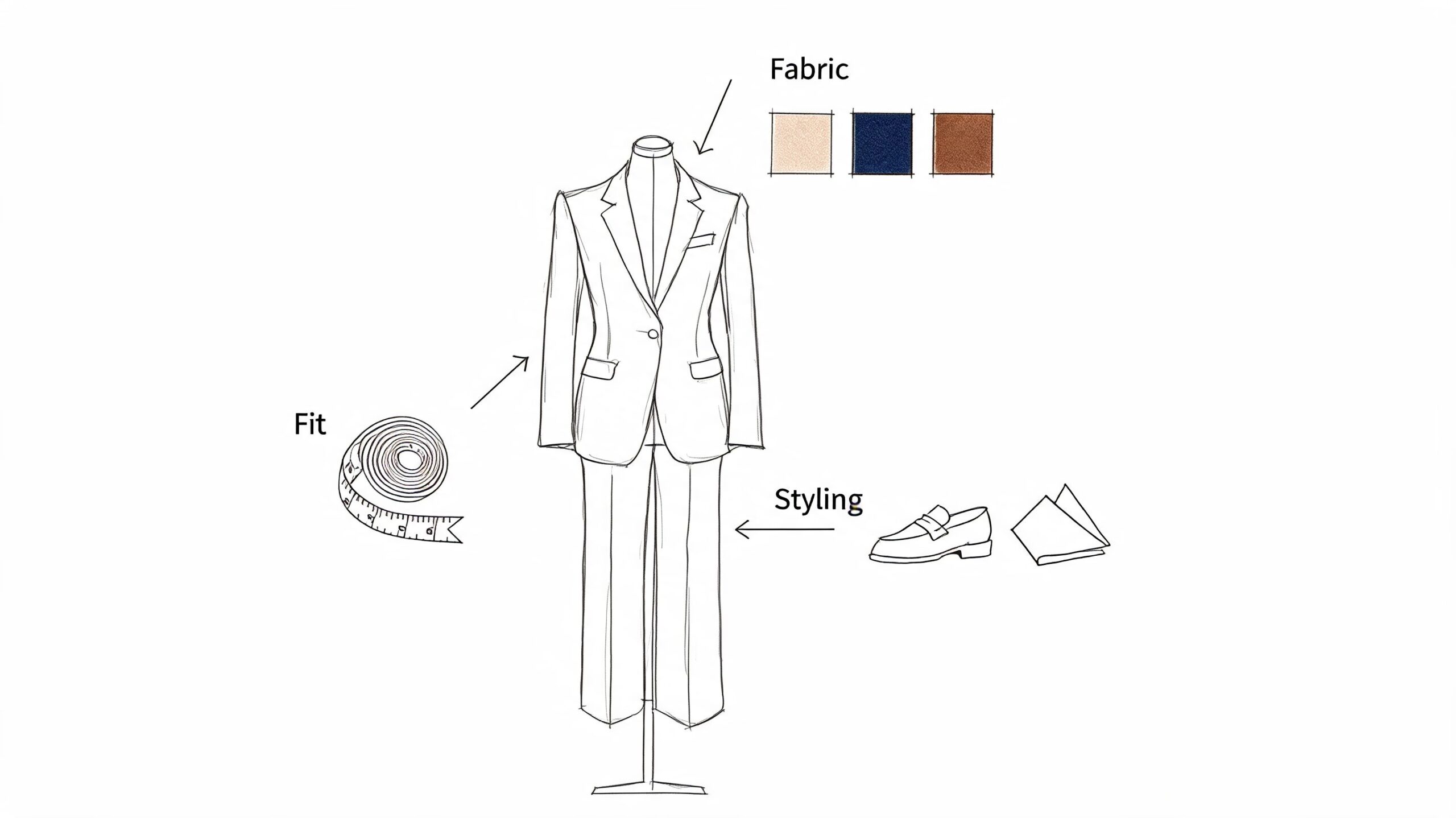
The appeal of linen is nothing new, of course. Its use as a principal textile in Europe dates all the way back to Roman times. For the modern British gentleman, however, the single most important factor is a bespoke fit. This is what ensures the suit looks intentional and sharp, rather than simply rumpled. A good fit transforms the entire outfit from casual to considered.
Selecting the Perfect Linen for Your Suit
The heart and soul of any truly exceptional linen suit is, without question, the cloth itself. Before we even think about cut or style, the choice of fabric sets the entire tone. Getting this right is the first step to sartorial success in the warmer months.
When it comes to fine linen, the conversation almost always lands on two main origins: Irish and Italian. They are quite different beasts. Irish linen is famed for its crisp, robust texture. It has a certain heft and structure that lends a sharp, well-defined silhouette to a suit. It holds a crease beautifully, which, for linen, is a real mark of quality.
On the other hand, Italian linen is typically much softer, with a more relaxed, fluid drape. Think of it as the more easy-going cousin. It gives a gentler, more flowing line to the suit, perfect for that effortless sprezzatura feel.
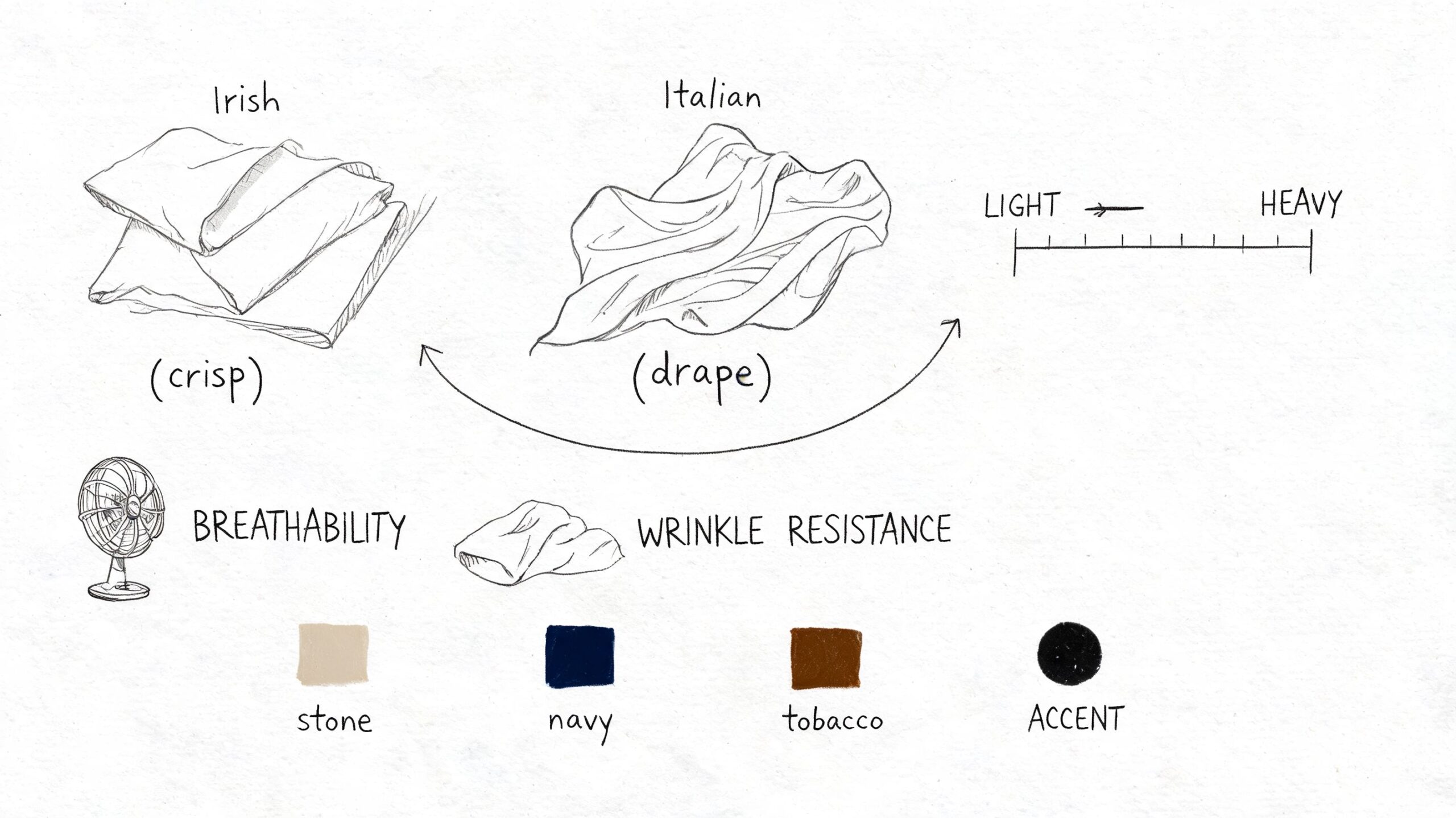
The weight of the cloth is just as critical. A lightweight weave will be incredibly breathable, a godsend in the peak of summer, while a heavier-weight linen offers better resistance to wrinkling and a more substantial hang.
Colour, of course, is where you can truly express yourself. Timeless, versatile shades like stone, navy, and tobacco are wardrobe workhorses that will never let you down. For those looking to make more of a statement at a summer wedding or garden party, bolder hues can be magnificent. If you're exploring cloth options, our guide to the best fabrics for suits is a fantastic resource.
Why a Bespoke Fit Is Non-Negotiable for Linen
Linen's tendency to crease is a fundamental part of its charm. Those characteristic rumples speak of warm days and relaxed elegance. This is precisely why the fit is everything. An off-the-rack linen suit, with no structure to guide the fabric, can very quickly descend from relaxed into simply shapeless and unkempt.
A bespoke garment, in contrast, is engineered to turn that potential for sloppiness into an exercise in sophisticated nonchalance. It all comes down to the architecture of the suit.
A master tailor will create a soft, natural shoulder that follows your body’s lines, not fight them. They’ll ensure the jacket length perfectly balances your silhouette and use multiple fittings to truly master linen's unique personality. Understanding what is bespoke tailoring reveals how this hands-on process is the only way to control how the fabric drapes and moves.
The difference is night and day, as you can see here.
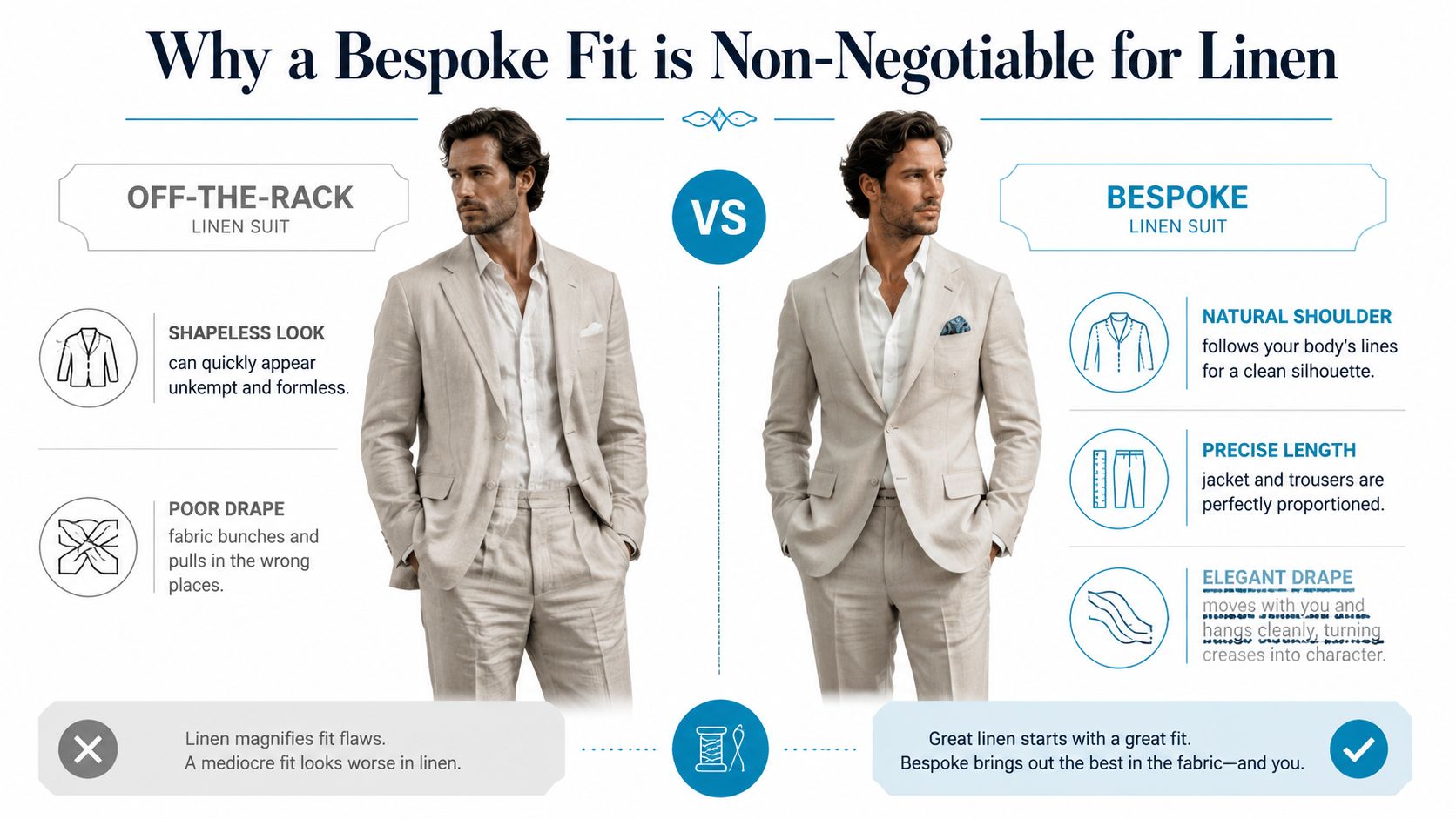
Ultimately, a bespoke fit ensures the suit hangs cleanly and moves with you. This is the secret. It makes every crease look not like a flaw, but a deliberate, stylish feature of the garment.
How to Style Your Linen Suit for Any Occasion
Right, you’ve chosen your cloth and settled on the cut. Now for the fun part: bringing your linen suit to life across the varied landscape of a British summer. The true artistry lies not just in the suit itself, but in how you adapt it to the occasion. A linen suit isn't a single, rigid uniform; it's a canvas for expressing style, whether you're at a wedding, in the office, or simply enjoying the weekend.
Let's talk specifics. Picture a countryside wedding on a warm afternoon. A beautifully textured, stone-coloured linen suit is your foundation. Pair this with a crisp white poplin shirt—the contrast is essential—and a pair of dark brown suede loafers. This look is relaxed yet impeccably sharp.
Now, take that same suit and break it apart for a smart-casual day at the office. The navy linen jacket, for instance, becomes a brilliant blazer when worn with a pair of well-cut charcoal or grey trousers. It’s a look that says you understand the season but respect the professional environment. We explore this versatility in more detail within our complete guide to the summer linen suit.
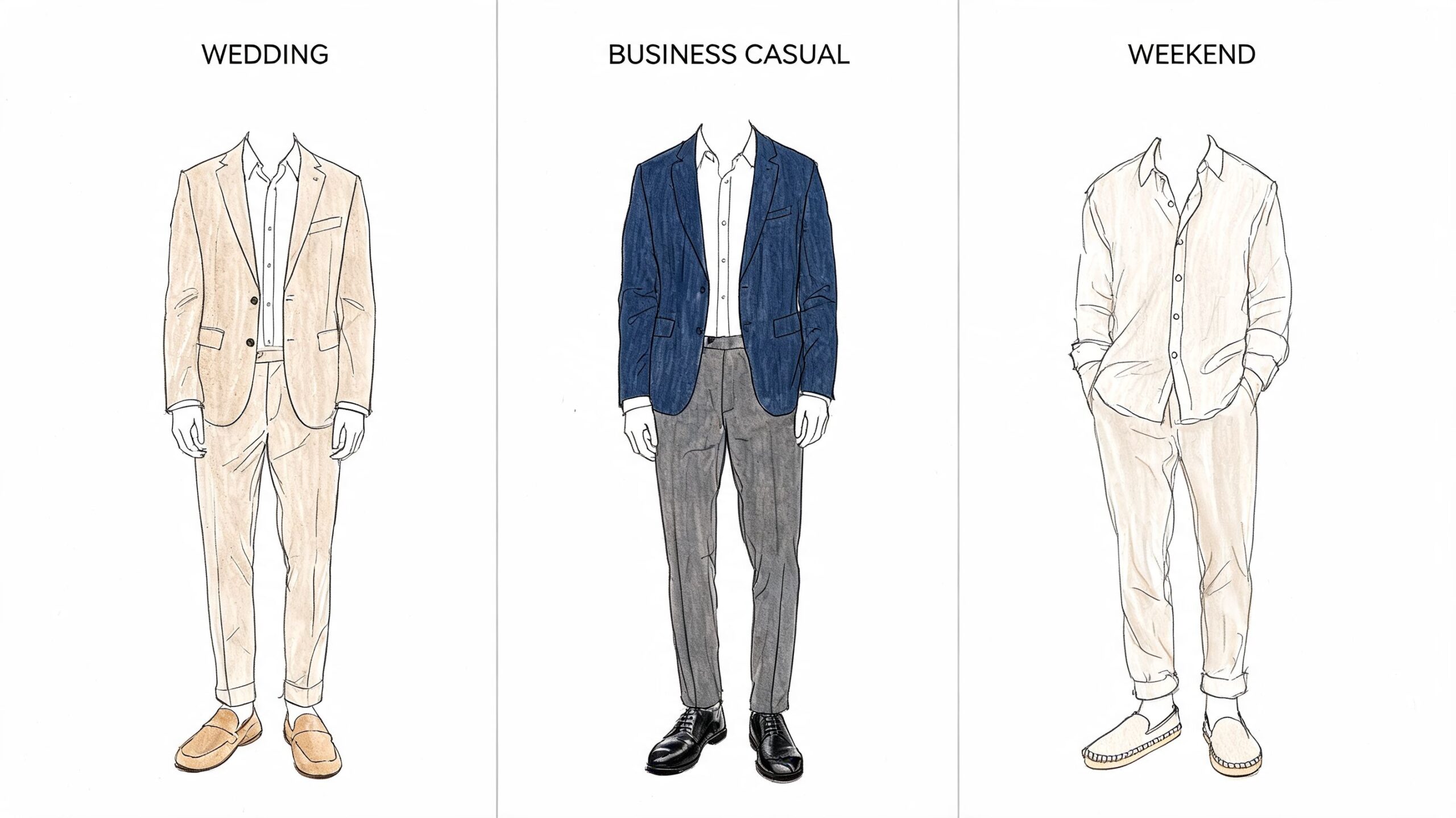
To help you navigate these choices, here’s a quick reference guide. Think of it as a starting point for building your own impeccable linen ensembles.
Linen Suit Styling Guide
| Occasion | Recommended Shirt | Footwear Choice | Accessory Tip |
|---|---|---|---|
| Summer Wedding | Crisp white or pale blue poplin shirt. | Suede loafers (no socks) or polished leather Oxfords. | A silk pocket square in a complementary colour. |
| Business Casual | Fine-gauge knit polo or an open-collar shirt. | Brown or tan brogues or smart leather trainers. | A quality leather belt that matches your shoes. |
| Weekend/Casual | A simple, high-quality white T-shirt or a casual linen shirt. | Suede driving shoes or clean, minimalist trainers. | A pair of classic sunglasses and a woven belt. |
This table provides a solid framework, but don't be afraid to let your personal style shine through. The most important accessory, after all, is confidence.
In the UK, timing is everything. Linen’s deep-rooted connection to summer elegance makes it the quintessential choice for any warm-weather event. Its history is one of sophistication and practicality, a story that continues to unfold in modern tailoring.
Essential Care for Your Bespoke Linen Suit
A bespoke linen suit is a remarkable piece of tailoring, but its longevity truly hinges on how you care for it. Think of it less as a delicate item and more as a garment that needs to be understood. Small spills, for instance, can often be handled with a simple damp cloth, but be gentle – rubbing too vigorously can easily distress and damage the natural fibres.
To keep your suit looking its best and to relax the characteristic creases that give linen its charm, a garment steamer is your most indispensable tool. It’s far kinder to the fabric than the direct, harsh heat of an iron.
When a more thorough clean is in order, however, professional care is non-negotiable. For a deeper dive into this, have a look at our guide on how often you should dry clean a suit.
When you're not wearing it, always store your linen suit on a wide-shouldered hanger. This is a simple but critical step to support its shape, helping to minimise wrinkles and protect the tailoring between wears.
Frequently Asked Questions
How can I stop my linen suit from wrinkling so much?
The first rule of linen is to embrace the wrinkle—it's part of its relaxed charm. However, you can manage it. Opting for a heavier-weight Irish linen or a blend with wool or cotton adds resilience. A bespoke fit also ensures the creases fall elegantly. For storage, always use a wide-shouldered hanger. Before wearing, a quick pass with a garment steamer will relax the fabric far more gently than a harsh iron, keeping you looking sharp yet effortless.
Is a linen suit appropriate for a business environment?
Absolutely, in the right context. For creative or smart-casual offices, a well-tailored linen suit in navy, charcoal, or stone is a superb choice for warmer months. The key is a sharp bespoke fit, which elevates the look from casual to professional. Pair it with a crisp shirt and leather loafers. However, for highly traditional corporate settings, it is best to reserve it for business-adjacent events like a summer work party rather than a formal board meeting, preserving its sophisticated, seasonal feel.
What shirt should I wear with a linen suit?
For formal events like a summer wedding, a crisp white or pale blue cotton poplin shirt is a timeless choice that provides a sharp contrast. For business-casual settings, a fine-gauge knit polo or an open-collar shirt works beautifully. If you’re styling the suit for a relaxed weekend look, a high-quality, plain t-shirt or even another casual linen shirt can create a sophisticated yet comfortable ensemble. The shirt choice helps define the formality of your entire outfit.
Can I wear a linen suit outside of summer?
While linen is a summer hero, its life extends into transitional seasons. A heavier-weight linen or a linen-wool blend offers enough substance for mild late spring and early autumn days in the UK. During these cooler months, stick to darker, richer colours like deep navy, tobacco, or even a dark forest green. However, a lightweight, pastel-coloured linen suit would look out of place in winter. The key is dressing appropriately for the weather and the occasion, as our guide to black linen suits explores.
About the Author
Igor is the founder and master tailor of Dandylion Style, a luxury bespoke tailoring house in Ardingly, West Sussex. His approach is built on a foundation of quiet refinement, precision, and a deep appreciation for the unparalleled quality of British fabrics. Igor’s expertise moves seamlessly from the sharp lines of formal wedding attire to the soft-shouldered ease of relaxed casual tailoring. He provides a calm, considered service for discerning gentlemen across Sussex, London, and the South East, creating one-of-a-kind garments built for a lifetime of enduring style.
Ready to invest in your own piece of bespoke tailoring? Contact Dandylion Style today to begin your consultation at https://dandylionstyle.co.uk.