You're probably here because ready-made shirts have started to disappoint you in familiar ways. The collar feels tight when buttoned yet the body blouses out. The sleeves are right only when your arms are still. Or you've got an occasion approaching, perhaps a wedding, perhaps a new season of client meetings, and you want a shirt that looks calm, clean and intentional rather than merely acceptable.
That's where many men begin their search for custom shirts uk. The difficulty is that “custom” covers very different services. Some are efficient and perfectly sensible. Others are painstaking and highly personal. Knowing which one you need saves time, money and disappointment.
A well-made shirt should disappear in wear. It should sit neatly under a jacket, stay anchored when you sit, open comfortably at the neck, and move with you rather than against you. Those results come from choices that most first-time clients never see at the start: pattern method, cloth weight, collar engineering, wearing ease, and the quality of the fitting process itself.
Key Takeaways
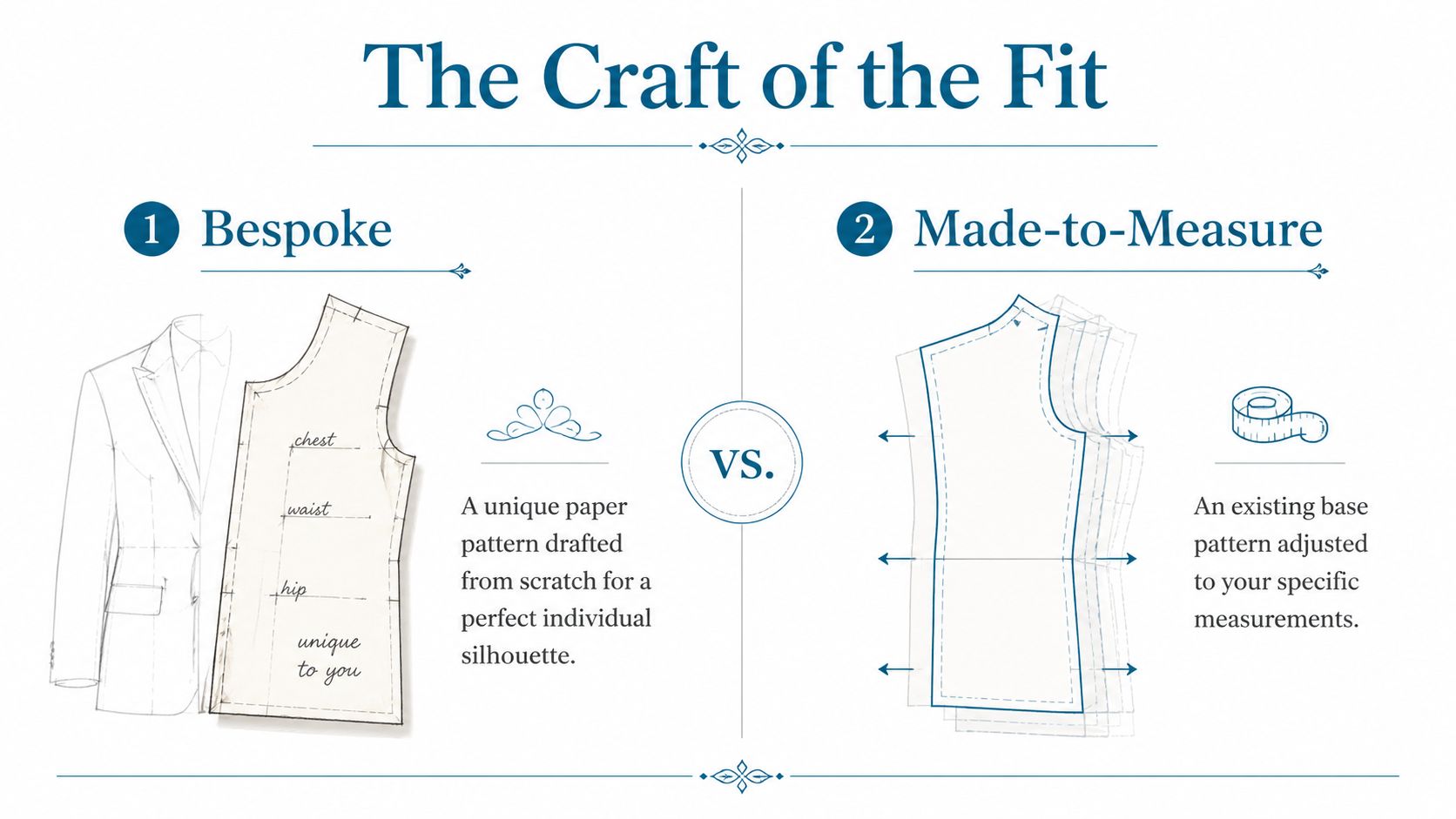
Custom isn't one thing. Bespoke and made-to-measure solve different problems. Bespoke is like drawing a house from a blank sheet. Made-to-measure is more like adjusting an existing plan. If you want posture corrections, asymmetry balancing, and a pattern built around your body, true bespoke is the right category. If you want a cleaner fit than ready-to-wear with a simpler process, made-to-measure may be enough. For a practical overview of online shirt options, see custom shirt services.
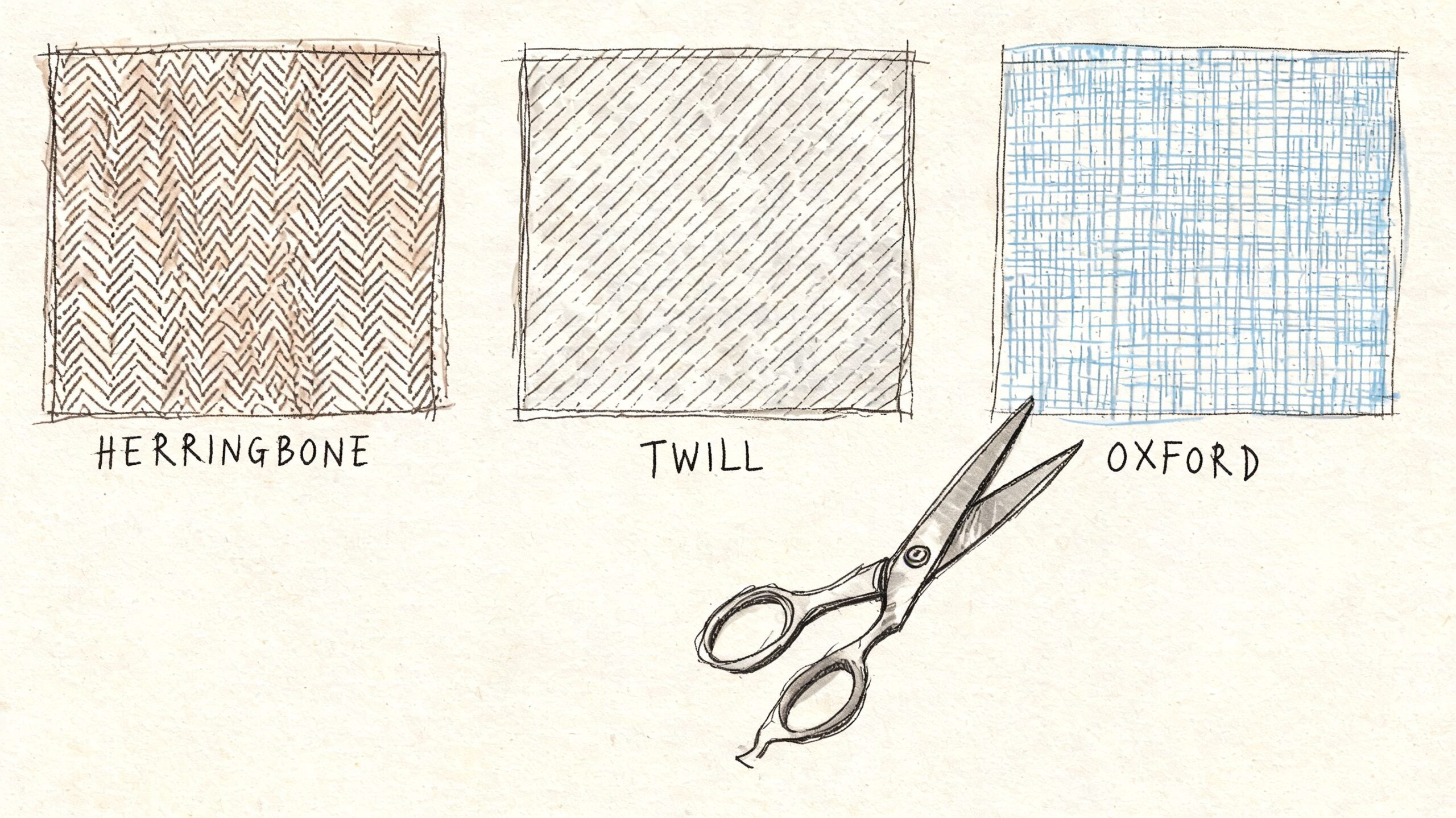
Fabric should match the job. A business shirt, a wedding shirt and a casual weekend shirt shouldn't all be cut from the same cloth. Fine cotton poplin gives clarity and polish. Twill offers a softer handle and richer drape. Oxford is more relaxed. Herringbone adds quiet texture without shouting.
Fit is more than measurements. Neck, chest and sleeve length are only the beginning. A good shirt account for shoulder balance, posture, how you sit, and how much ease you need to move comfortably.
Details change the whole impression. Collar spread, cuff style, placket, buttons and interlining weight all affect how the shirt behaves with a tie, under a jacket and over years of wear.
Expect a considered timeline. Proper shirtmaking takes patience. The more individual the process, the more important the consultation, fittings and finishing become.
Bespoke vs Made-to-Measure A Critical Distinction
Many clients use the terms interchangeably. In practice, they're not the same service, and they don't produce the same result.
What bespoke actually means
A bespoke shirt begins with an individual pattern drafted for one body. The tailor isn't selecting size medium and shifting a few points. He is reading shoulder line, stance, chest shape, neck carriage and arm position, then translating those observations into a pattern that didn't exist before.
That matters most when the body isn't symmetrical, which is to say, almost always. One shoulder may sit lower. One arm may hang more forward. The upper back may be prominent, or the chest may be fuller on one side. Bespoke can correct for those realities because the pattern itself is built around them.
Practical rule: If your usual complaint is “shirts never sit correctly on me,” you're often describing a pattern problem, not a simple measurement problem.
How made-to-measure differs
Made-to-measure starts from a house block. Think of it as a refined base pattern that gets adjusted. It can improve sleeve length, body width, collar size and certain proportions very well. For many men, that's a worthwhile step up from off-the-peg.
But it has limits. If the original block assumes a posture or shoulder balance that doesn't match yours, the shirt may still twist, pull or collapse in one area even after the obvious measurements are altered. That isn't bad workmanship. It's a different system.
A concise explanation of this distinction appears in Display Guru bespoke tailoring insights, which is useful if you want a plain-English view of why bespoke begins with pattern creation rather than template adjustment.
Which service suits which client
Use this simple comparison when deciding:
| Service | Best for | Main strength | Main limit |
|---|---|---|---|
| Made-to-measure | Men with relatively standard proportions who want a better fit than ready-to-wear | Efficiency and cleaner sizing | Restricted by the base pattern |
| Bespoke | Men who notice recurring fit faults or want a shirt built around dress, posture and preference | Full pattern control and deeper personalisation | More time and consultation required |
If you want to explore the distinction in more depth, bespoke and made-to-measure shirt differences are worth reviewing before you book anything.
The Foundation of Quality Selecting Your Shirt Fabric
A first-time client often notices fit first. He notices fabric by three o'clock. That is when a shirt starts to reveal whether it was chosen with care. The collar softens, the sleeve creases, the body either stays composed or begins to look tired.
Good shirting cloth shapes the whole experience of wear. It affects temperature, movement, opacity, how cleanly the shirt irons, and whether it still looks balanced after a day at a desk or on the train home. In practice, the best choice is rarely the finest cloth on the bunch. It is the cloth that suits your week.
For British clients, I usually start with use before luxury. A white poplin for boardroom wear, a twill for long business days, an Oxford for weekends and travel. Fine, lightweight cotton can feel excellent in the hand, but if it turns transparent under office lighting or crushes badly by midday, it will stay in the wardrobe.
Choosing by occasion
A shirt for the City needs different manners from one intended for a summer party in the countryside.
- Business formal. Poplin gives the cleanest line. It has a smooth face, presses sharply, and sits neatly under a suit and tie.
- Long office days. Twill is often the more forgiving option. It drapes a little more softly and tends to show creasing less harshly.
- Country wedding or summer event. Oxford or a washed twill brings texture and ease without looking sloppy.
- Quiet luxury. Herringbone works well when you want subtle pattern and depth that appears only at close range.
Clients booking a home fitting or remote consultation should ask for swatches in at least two weave families, not just two colours. That small step saves guesswork. A fabric that looks right on screen can feel too crisp, too warm, or too casual once it is in the hand.
What to feel in the swatch
When I send cloth samples out, I tell clients to judge them in daylight and handle them properly, not just glance at the label. Four checks matter.
- Surface. Smooth, dry, textured, or silky. This changes how formal the shirt reads.
- Recovery. Lightly crush the swatch in your hand. A cloth that springs back usually lives better through a long day.
- Opacity. Hold it up to the light. Many first-time buyers overlook this, especially with white shirting.
- Drape. Let the swatch hang over two fingers. A good cloth should fall with some grace, not sit like paper.
A technically refined fabric can still be the wrong choice if it fights your routine.
If you want a clearer sense of weave families before ordering, cotton fabric varieties for shirting offer a helpful starting point.
Defining Your Style Collars Cuffs and Finishing Details
Two men can choose the same white cloth and end up with shirts that feel entirely different. That difference usually comes from the architecture: collar, cuff, front, buttons and finishing.
The collar frames the face
The collar is not decoration. It sets the visual line between face, necktie and jacket lapel.
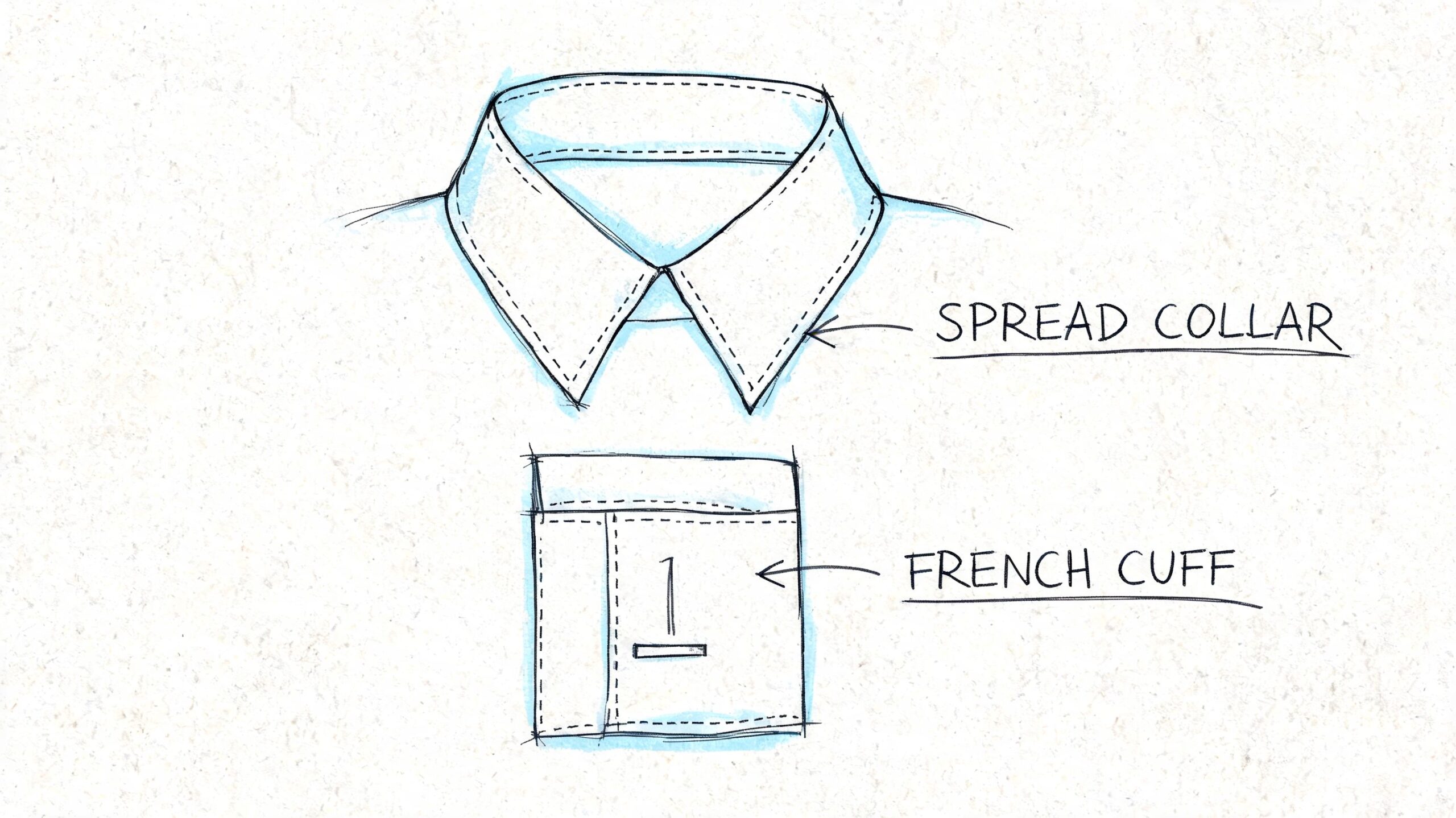
For luxury shirts, collars and cuffs are typically engineered with fused interlinings of 70–90 g/m², and the spread between collar points is usually set around 9–11 cm so the shirt sits well with bespoke suiting and tie knots without gaping, according to UK shirt construction benchmarks.
That technical point matters in daily wear. Too soft, and the collar collapses under a jacket. Too rigid, and it can look flat and lifeless. Too wide a spread on the wrong face shape can make the neck seem broader. Too narrow a point can fight the lapels.
A few reliable options:
- Spread collar suits most business wardrobes and handles a tie with confidence.
- Cutaway collar feels more fashion-forward and works best when the jacket and tie are chosen with it in mind.
- Point collar is leaner and more traditional.
- Button-down collar is relaxed and excellent without a tie.
For readers weighing casual and formal options, button-up and button-down shirt differences are worth understanding before commissioning a first shirt.
Cuffs and finishing choices
French cuffs bring ceremony. They're ideal for weddings, evening wear and clients who enjoy cufflinks. Barrel cuffs are simpler and more adaptable, especially for weekly office use.
The smaller choices matter too:
| Detail | Better for | Effect |
|---|---|---|
| Plain front | Cleaner formal shirts | Minimal, elegant line |
| Placket front | Sportier or sturdier shirts | More structure at centre front |
| Mother-of-pearl buttons | Premium commissions | Depth and lustre |
| Subtle monogram | Personal use or trousseau | Identity without noise |
The best finishing details don't announce themselves across a room. They reward the person wearing the shirt and the person standing close enough to notice.
The Art of Measurement for a Flawless Fit
A first fitting often surprises clients. They expect a quick set of numbers. A good tailor studies how the shirt must behave from eight in the morning to late evening, at a desk, in a car, over lunch, and under a jacket.
Measurement starts before the tape is lifted. Posture, shoulder slope, neck position, and the way each arm hangs all affect how a shirt will sit once it is buttoned and worn for a full day. A man who writes at a keyboard for hours needs something different from a man who stands in meetings, even if their chest size is the same.
Wearing ease decides whether a shirt feels calm or tiring
First-time clients rarely ask about ease, yet it is one of the main reasons a custom shirt feels better than a standard size. Ease is the allowance added beyond the body measurement so the shirt can move, drape, and stay comfortable.
Too little, and the front strains when you reach forward, the collar feels smaller by midday, and the sleeve binds across the bicep. Too much, and the shirt balloons at the waist, collapses under a jacket, and never looks settled. The right amount depends on how you dress, how closely you like a shirt to follow the body, and whether the shirt is meant for formal use or easier weekend wear.
A proper fitting also accounts for details many clients do not think to mention. Watch thickness changes cuff circumference. Trouser rise affects shirt length. A fuller seat or pronounced shoulder blades can alter how the side seam hangs and whether the back hem stays tucked.
What a serious fitting checks
A careful shirt fitting usually covers:
- Collar fit. It should close cleanly, sit against the neck, and remain comfortable once you are seated.
- Shoulder line. The seam must relate to your actual shoulder end, not a factory block.
- Chest and blade room. You need enough space to reach, drive, and type without the front pulling open.
- Sleeve pitch and length. Sleeves should follow the natural position of your arms and finish correctly at the wrist bone.
- Waist and hip balance. The body should look clean without clinging or blousing.
- Front and back length. A shirt intended for tailoring must stay tucked through ordinary movement.
One small correction can change the whole experience. Half a centimetre at the collar, a touch more width across the back, or a better cuff position often matters more than a dramatic change to the chest.
Why fittings are rarely one-and-done
Numbers alone do not produce a refined shirt. The first pattern, or first altered base pattern in a made-to-measure shirt service in London, gives the tailor a starting point. The fitting shows what the body does in motion.
I usually advise first-time clients to raise both arms, sit down, fasten the collar, and mimic the movements they repeat during the week. That is when problems appear. The back may tighten across the shoulder blades. The cuff may ride up once the elbow bends. The collar may look right in the mirror but press at the throat after ten minutes.
Those are not faults in the process. They are the process. A flawless fit comes from measured observation, then calm correction, until the shirt feels natural enough that you stop thinking about it.
Navigating the Ordering Process Timeline and Pricing in the UK
The first order is usually the slowest, and that's a good thing. Decisions made carefully at the start save frustration later.
A typical commission moves through consultation, cloth selection, design choices, measurement or pattern work, then fitting and final finishing. For clients who've only bought ready-made shirts, this can feel slower than expected. In reality, the time is doing useful work. It is refining a garment that will be worn repeatedly and judged at close range.
What you're paying for
Price in shirtmaking isn't only cloth. It reflects several layers of labour and judgment.
- Pattern work. Bespoke requires individual drafting rather than simple size allocation.
- Fitting time. The correction stage is where much of the value appears.
- Cloth quality. Better shirting behaves better in wear and often ages better as well.
- Construction details. Collar engineering, cuff build, button quality and finishing all affect longevity.
- Service model. Home visits, office fittings and remote consultations require time and organisation as well as tailoring skill.
A bespoke commission should feel transparent. You don't need every internal workshop detail, but you should understand why one shirt costs more than another. If a tailor can't explain that clearly, caution is sensible.
Why convenience now matters more
Modern clients often don't have the appetite for repeated trips into town. That's one reason home and office fittings have become more attractive. Dandylion Style, for example, offers consultations in studio as well as at home or office across Sussex, London and the South East, with typical bespoke timelines of 8–12 weeks according to the publisher information provided for this article.
Convenience isn't a compromise when the service is properly organised. For many clients, it improves the quality of the fitting because the appointment happens when they're relaxed and not rushing across the city.
The Modern Bespoke Experience Home Fittings and Remote Service
A first shirt fitting no longer has to mean carving out half a day for a trip into town. Many clients now split their week between home, office and travel, so the service needs to meet them where they live and dress. Done properly, a home visit or remote consultation keeps the standards of bespoke work intact while removing a good deal of the friction around appointments.
For a first-time client, the main question is simple. Can a shirt still be judged properly outside the studio? In many cases, yes. A home or office fitting often gives a clearer picture of how the shirt will be worn, because the client can try options with their own jacket, knitwear, ties and shoes close at hand. That context helps with proportion. It also helps avoid small mistakes, such as choosing a collar that fights the lapel line of a favourite suit.
When home fittings work best
Home or office appointments tend to suit three situations particularly well.
- Professionals with limited time who need an early, lunchtime or evening slot without crossing the city.
- Grooms and wedding parties who want everyone in one place when confirming cloth, collar style and degree of formality.
- Returning clients who already have an established pattern and want to refine details with minimal disruption.
There is another advantage that clients often notice only after the appointment. People stand more naturally in familiar surroundings. Posture relaxes. That makes it easier to assess balance through the neck, shoulder and waist than it can be in a rushed changing room.
How remote elements can support the process
Remote service works best as part of the process, not as a substitute for craft. A useful remote consultation can cover lifestyle, dress code, fabric preferences, laundering habits and the shortcomings of shirts already in the wardrobe. Swatches can be sent by post. Photographs of a well-fitting shirt, and of one that pulls or collapses, can reveal a surprising amount before anyone takes a tape to the body.
The limits matter too. A camera does not reliably show shoulder slope, neck position, or how one side of the body may sit differently from the other. Those details affect comfort every time the shirt is worn. They are the reason a proper in-person fitting still matters, especially for a first commission.
In practice, the strongest model is often hybrid. The initial conversation happens by video or phone. Cloths and design options are narrowed down in advance. The in-person appointment is then used for measurement, posture assessment and fitting judgment, which are the parts that should never be rushed.
For clients across Sussex, London and the South East, Dandylion Style offers consultations in studio as well as at home or office, which suits those who want the attention of bespoke service without unnecessary travel. That arrangement is particularly helpful for clients ordering around a wedding date, a new job, or a period of frequent travel, where scheduling can be as important as the shirt itself.
Long-Term Care and Maintaining Your Bespoke Investment
A bespoke shirt isn't fragile, but it does respond to care. Good cloth and careful construction deserve better than being treated like supermarket multipacks.
Wash shirts gently and avoid overloading the machine. Fast, hot washes are hard on collars, cuffs and buttons. If the shirt is made from finer cotton, a lower temperature and a milder cycle are usually kinder. Don't leave shirts crushed in the drum after the cycle ends. That's where unnecessary creasing sets in.
Iron while the cloth is still slightly damp, or use steam. Start with the collar, then cuffs, sleeves and body. A clean iron matters more than many clients realise, especially on pale business shirts.
Store shirts on proper hangers with enough support through the shoulder. Wire hangers distort shape over time. If a shirt begins to feel slightly off after months or years, don't assume it's finished. Small alterations can often restore balance, especially if your posture or weight has changed modestly.
Conclusion Your Journey to a Perfect Shirt
A first proper custom shirt usually becomes clear at 8:30 on an ordinary weekday. You button the collar without forcing it. The sleeves stay in place as you reach for a bag, type, or drive. The shirt sits cleanly through the chest and waist, so you stop adjusting it and get on with the day.
That is the value of a well-made shirt in the UK. It is not only about appearance. It is about comfort across a full working day, confidence in formal settings, and the relief of knowing the shirt was built for your posture, your habits, and the way you wear tailoring.
For a first-time client, the process does not need to feel obscure. Start with the purpose of the shirt. Decide whether it is for business, travel, evening wear, or regular rotation. Then choose the level of make, settle the cloth, and confirm the fit with proper measuring. If you cannot visit regularly, home fittings and remote consultations can still produce very strong results, provided the tailor asks the right questions and treats measurement, posture, and follow-up seriously.
A good commission should feel clear from the outset. You should know what is being made, why each choice matters, what the timeline looks like, and where adjustments may be needed after the first fitting or first wear.
The right shirt rarely announces itself loudly. It feels correct, and once you have worn one made with care, ready-made shirts tend to feel like a compromise.
Frequently Asked Questions About Custom Shirts
Is a custom shirt worth it if I only wear shirts for work?
Yes, often more so. Work shirts get repeated use, so small fit improvements matter every week. A collar that sits properly, sleeves that break in the right place, and a body shape that stays neat under a jacket will affect how you feel through long meetings and commutes. If you rotate shirts regularly, quality and fit usually become more valuable, not less.
What's the biggest mistake first-time clients make?
Most first-time clients focus too much on visible details and not enough on use. They spend time choosing collar shapes and monograms before deciding what the shirt is for. A wedding shirt, a daily business shirt and a casual weekend shirt need different cloth, structure and ease. Start with occasion, climate and how you move during the day. The styling becomes much easier after that.
How many shirts should I commission in a first order?
For a first order, one or two shirts is usually sensible. That gives enough room to test your preferred fit, collar construction and cloth weight without overcommitting. Once the pattern and preferences are settled, reordering becomes much easier and more confident. A larger first order only makes sense if you already know exactly how you like your shirts to feel and behave.
Can a custom shirt still look relaxed, or does bespoke always mean formal?
It can absolutely look relaxed. Bespoke doesn't mean stiff or ceremonial. It means intentional. A softer collar, a button-down style, an Oxford cloth, a slightly easier body and a more casual cuff can all create a shirt that feels natural and easy to wear. The difference is that it still looks deliberate and well-proportioned instead of loose in the wrong places.
Are home fittings accurate enough for proper shirtmaking?
Yes, provided the tailor treats the appointment with the same seriousness as a studio fitting. The accuracy comes from observation, measuring, note-taking and fitting judgment, not from the postcode. In fact, home fittings can be very effective because clients are more at ease and can try garments with their own wardrobe. The important point is that the service remains hands-on and personalized, not purely digital.
About the Author
Igor Srzic-Cartledge is the founder and master tailor at Dandylion Style, a luxury bespoke tailoring house in West Sussex. He specialises in one-of-a-kind garments cut from fine British fabrics and shaped to the individual wearer. His work centres on traditional tailoring values, careful fit, and a modern service that includes studio, home and office consultations across Sussex, London and the South East.
If you're considering your first bespoke shirt, or refining what you already wear, Dandylion Style offers consultations for clients seeking personalised gentlemen's tailoring with studio, home and office fitting options.