A well-fitting waistcoat is the very anchor of a tailored ensemble. It’s the piece that pulls everything together, projecting confidence and a sharp eye for detail. But unlike a jacket or trousers, a waistcoat offers almost no room for error; it must sit flush against the body, never pulling at the buttons or riding up at the waist.
Learning how to measure for a waistcoat, then, is the first and most critical step towards achieving that perfect, bespoke silhouette.
Key Takeaways
- Core Measurements are Critical: The three most vital measurements are the chest circumference (fullest part), stomach circumference (over the navel), and the front length (from neck to one inch below your trouser waistband).
- Preparation is Paramount: Always use a flexible tailor's tape measure. Wear the type of shirt you plan to pair with the waistcoat, and most importantly, have a partner assist you for accuracy.
- Stand Naturally: Do not suck in your stomach or puff out your chest. The measurements must reflect your relaxed, natural posture to ensure a comfortable and flattering fit.
- Don't Add Ease: Provide your true, snug body measurements. A skilled tailor will add the necessary 'ease' (extra room for movement) based on the fabric, style, and your fit preference.
Your Guide to Perfect Waistcoat Measurements
At Dandylion Style, we believe the measuring process should be as considered as the garment itself. This guide is built on our deep experience in bespoke tailoring, giving you the knowledge to take accurate, reliable measurements from the comfort of your home.
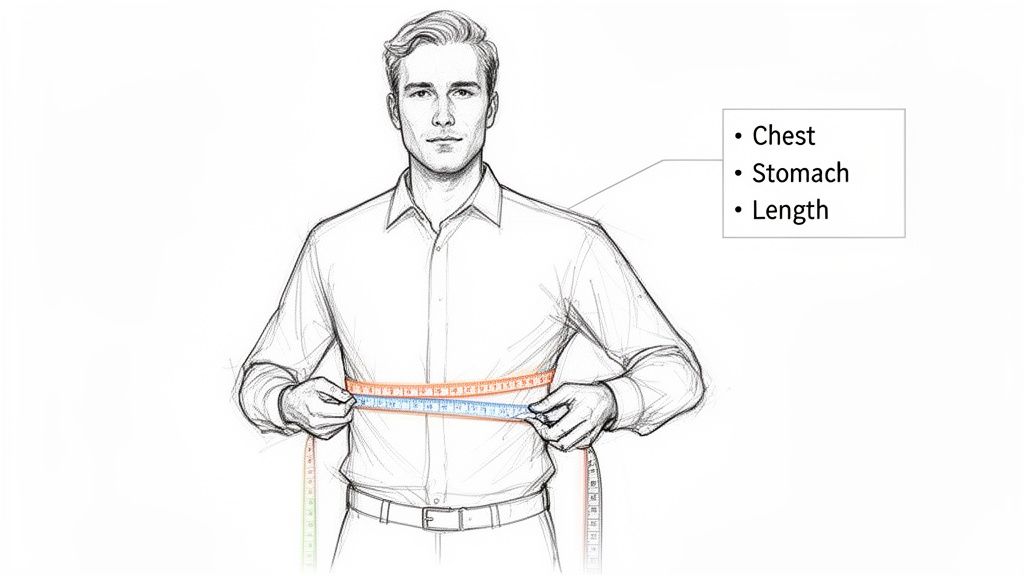
The Foundation of a Flawless Fit
The real goal here isn't just to jot down numbers. It’s about capturing a true, three-dimensional profile of your torso. This is what ensures the finished garment moves with you, providing both comfort and elegance day in, and day out.
These measurements are fundamental, whether you're commissioning a classic wedding waistcoat or adding that key final piece to a three-piece suit.
Key Takeaway for Measuring: The three most essential measurements for any waistcoat are the Chest Circumference, the Stomach Circumference (taken over the navel), and the Front Length (from your neck to just below the trouser waistband). Nailing these forms the foundation for a garment that fits impeccably from the moment you first put it on.
Before you pick up the tape, keep these simple but vital principles in mind:
- Wear the Right Shirt: Always measure over the exact type of shirt you plan to wear with your new waistcoat. Its thickness will affect the final fit.
- Stand Naturally: Don’t be tempted to suck in your stomach or puff out your chest. Just stand relaxed. We need your true posture.
- Grab a Partner: It's nearly impossible to get accurate back and shoulder measurements on your own. A helping hand is essential for precision.
Preparing for a Flawless Fit
Securing a set of accurate measurements is less about mastering complex techniques and more about diligent, methodical preparation. Before you even reach for a tape measure, taking a few moments to set the scene correctly is paramount. This initial care will ensure the numbers you record are a true, honest reflection of your physique.
For a garment that sits as close to the body as a waistcoat, this preliminary stage is absolutely fundamental to the bespoke process. It’s what stands between a flawless fit and those all-too-common errors that result in a fit that’s just slightly off—a frustrating pull across the buttons or a small gap at the shoulder.
The Right Tools and Attire
Forget the rigid metal tape measure from your toolbox; it’s simply not built for this task and will lead to flawed readings. For tailoring, there is only one tool for the job:
- A flexible tailor’s tape measure: This is soft and pliable, designed specifically to wrap smoothly around the natural contours of the body. It’s the only way to get a precise circumference for your chest, stomach, and hips.
Just as crucial as the right tool is what you wear during the process. The final dimensions of your waistcoat are directly influenced by the thickness of the shirt you'll be wearing underneath it.
To achieve the most accurate results, you must measure yourself over the exact shirt you intend to wear with your waistcoat. The difference between a thick winter flannel and a fine poplin can easily alter your chest measurement, directly affecting the final drape and comfort of the garment.
Enlist a Helper for True Precision
While it might seem convenient to measure yourself, we strongly advise against it. The simple act of trying to measure your own back length or wrap a tape around your chest forces you to twist and alter your posture, which will inevitably skew the results.
Recruiting a friend, partner, or family member is the key to accuracy. Their job is to make sure the tape measure is held snug but not tight, and kept perfectly parallel to the floor for all circumference measurements. This simple step is often the single biggest factor in achieving precise measurements at home. For more detailed guidance, our comprehensive article on how to measure yourself for a suit provides additional valuable insights.
Finally, your posture is everything. Stand in a relaxed, natural stance—how you would normally stand throughout the day. You must not puff out your chest or suck in your stomach. Doing so will only result in a waistcoat that is uncomfortably tight during normal wear. We need to measure your body as it truly is, not as you think it should be. This honest approach ensures the final garment is crafted for your true form, providing both a flawless line and genuine comfort.
Taking Your Core Body Measurements
With your tools and helper at the ready, it's time to capture the three foundational measurements that truly define the silhouette of your waistcoat. Think of these as the architectural blueprint for your garment. A tailor uses these core dimensions to construct the waistcoat's entire shape, ensuring it drapes flawlessly and creates a sharp, flattering line.
Getting these circumferences right is the single most important step you can take towards a perfect fit. Remember the golden rule: keep the tape measure snug against the body, but never so tight that it digs in. For every horizontal measurement, it must remain perfectly parallel to the floor.
To get started, this visual guide shows the simple flow for preparing for your measurements.
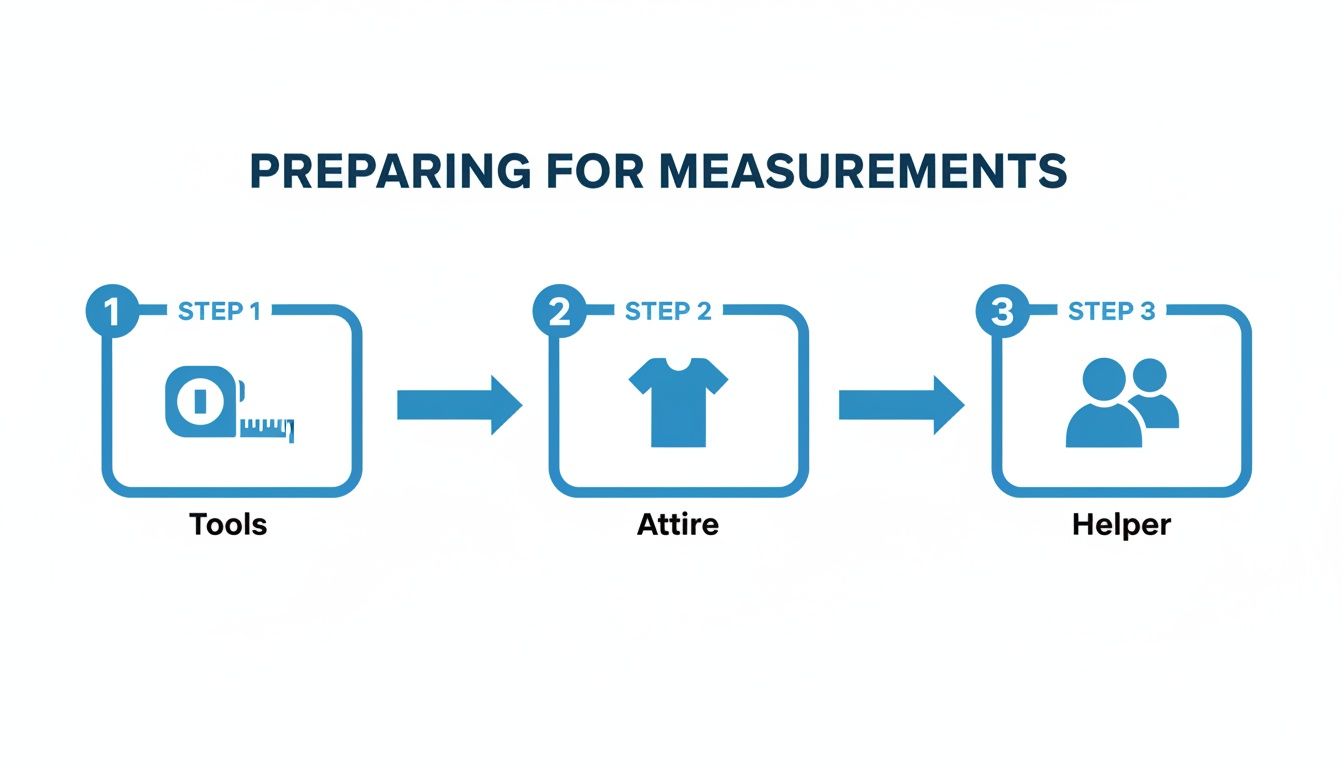
This process highlights that having the right tools, wearing the correct attire, and getting help from a partner are the essential first steps before you even begin.
Your Chest Circumference
The chest measurement is arguably the most critical dimension for any tailored jacket or waistcoat. It sets the entire width of the garment, ensuring you have ample room for movement without the fabric pulling or looking strained.
Here’s how to capture it accurately:
- Wrap the tape measure around the fullest part of your chest. This point is usually just under your armpits and across the shoulder blades.
- Make sure the tape is high up under your arms and runs straight across your back, not dipping down.
- Breathe normally and take the reading. Whatever you do, don't puff out your chest.
This single number informs the whole upper block of the waistcoat's pattern. Nailing this measurement is the first major milestone in learning how to measure for a waistcoat correctly.
Your Stomach Circumference
For a waistcoat, the stomach measurement is every bit as crucial as the chest. Why? Because a well-cut waistcoat is designed to follow the natural tapering of your torso. Getting this wrong is the most common pitfall we see, leading to a poor, unflattering fit.
Do not measure where your trousers sit. For a waistcoat, you must measure over the widest part of your stomach, which is usually directly over your navel (belly button). This is your true 'waistcoat waist'.
Failing to measure at this widest point is what causes that tell-tale pulling on the buttons—a dead giveaway of an ill-fitting garment. Stand relaxed and, most importantly, don't hold your stomach in. We need your natural, comfortable posture.
Your Seat Circumference
The final core measurement is your seat, often referred to as your hips. This measurement ensures the bottom edge of the waistcoat sits smoothly over the top of your trousers. It prevents the garment from flaring out awkwardly or bunching up, a detail that’s especially important for longer-line styles.
Simply wrap the tape around the widest part of your hips and buttocks. Have your helper double-check that the tape is level all the way around. This dimension ensures a clean, uninterrupted line from your waist down into your trousers, completing the core silhouette.
For a complete overview of all the measurements we use, you can refer to our detailed suit measuring chart for additional context and guidance.
Nailing the Finer Details for a Truly Bespoke Look
Once you've got the main chest, waist, and hip measurements sorted, it’s time to move on to the details that really make a waistcoat sing. These are the measurements that separate a garment that simply fits from one that feels like it was sculpted just for you.
This is where the magic happens. We’re talking about the precise lengths, the shoulder width, and the armhole depth—the subtle dimensions that dictate how the waistcoat drapes, how it moves with you, and how it creates that sharp, polished silhouette.
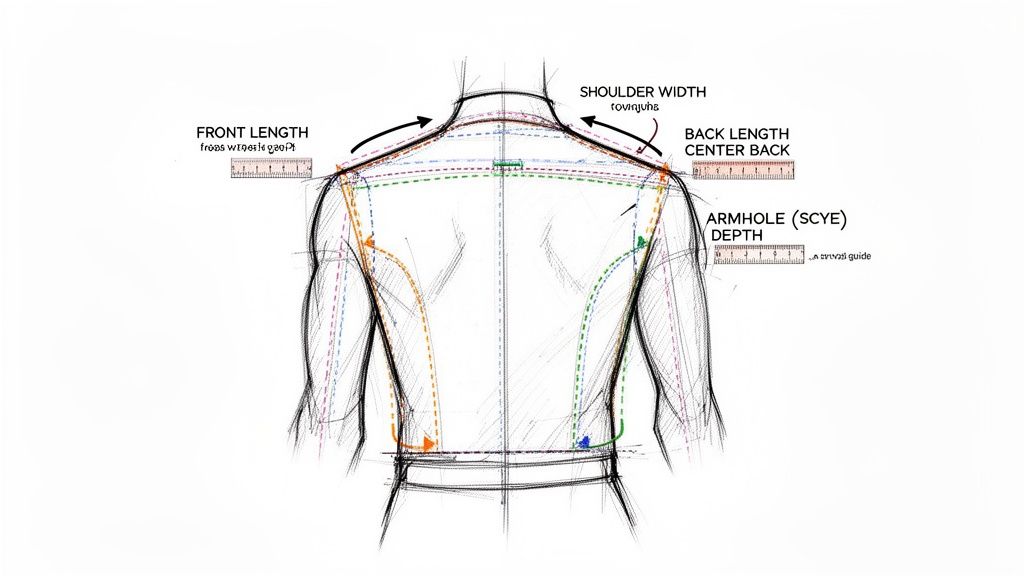
Front and Back Lengths
Getting the length right is absolutely non-negotiable. Too short, and you’ll get that dreaded sliver of shirt showing between your waistcoat and trousers. Too long, and it will bunch up awkwardly the moment you sit down.
Front Length: Start the tape at the side of your neck, right where a shirt's shoulder seam would naturally lie. Guide it down over the fullest part of your chest to the point where you want the waistcoat to end. For a classic look, this should be about one inch below your trouser waistband.
Back Length: From the prominent bone at the base of your neck, run the tape down the centre of your spine. Stop exactly where the top of your trouser waistband sits.
A perfectly measured waistcoat creates a clean, unbroken line from chest to hip. The front points should elegantly cover the trouser waistband, while the back sits smoothly against the small of your back without riding up.
When we talk about fit, we're also talking about comfort. An often-overlooked element in bespoke tailoring is the concept of ease in sewing, which is the small amount of extra room built into the garment. This allowance for movement is what makes a waistcoat comfortable to wear all day.
For example, a Dandylion Style tailor might add 2-3 inches of ease to the chest and waist measurements. It’s this kind of expert judgement that helps prevent the common fit issues seen in off-the-rack garments, which can have an alteration rate as high as 15%.
Shoulder Width and Armhole Depth
These final two measurements are crucial for ensuring a sharp shoulder line and complete freedom of movement. Get these wrong, and you end up with a waistcoat that either pulls tightly across your back or bunches uncomfortably under your arms. The armhole, known in tailoring as the scye, is particularly important.
Shoulder Width: This is a simple one. Have your helper measure straight across your back, from the bony point of one shoulder to the bony point of the other.
Armhole Depth (Scye): Place the tape measure at the top of the shoulder (again, think of a shirt seam). Measure straight down to a point roughly one inch below the armpit.
For most men, a well-measured scye will fall somewhere between 9-11 inches. This depth ensures you can layer the waistcoat over a shirt without feeling any tightness or restriction, a detail that’s vital for day-long comfort.
With these detailed measurements in hand, you have everything needed to commission one of our expertly crafted tailor-made waistcoats.
Common Measurement Mistakes to Avoid
The tape measure doesn’t lie, but it can certainly mislead. When you're learning how to measure for a waistcoat, knowing what not to do is just as crucial as following the steps correctly. Even tiny errors can cascade into a garment that just feels… off. Avoiding these common pitfalls is what separates an acceptable fit from a truly bespoke one.
The first instinct for many is to pull the tape measure as tight as possible, chasing an "accurate" number. But this is a classic mistake. Doing so compresses your body and gives a false reading, leading to a waistcoat that feels restrictive and uncomfortable. The tape should feel snug, certainly, but never constricting. A good rule of thumb is that you should be able to slip a single finger between the tape and your body.
Style and Fabric Considerations
The character of your waistcoat—its style and the cloth it’s cut from—also has a say in how it's made. While your core body measurements are constant, the allowances a tailor adds will change dramatically depending on what you've chosen.
- Single-Breasted Waistcoats: These are the more straightforward of the two, with a construction that calls for a standard amount of ease to allow for movement and comfort.
- Double-Breasted Waistcoats: With their overlapping front panels, these require a completely different approach. The pattern must be drafted with specific allowances to ensure the fronts lie flat and close cleanly, without any unsightly pulling.
In the same way, a heavy tweed for a winter waistcoat needs to be handled differently from a breezy linen for a summer wedding. Thicker fabrics take up more space, and an experienced tailor will adjust the pattern to account for this, ensuring the final fit is just as precise as it would be with a lighter cloth.
A bespoke tailor’s true skill lies not just in reading the tape measure, but in interpreting the numbers in the context of fabric, style, and the client’s unique posture. It’s this expertise that transforms raw measurements into a perfectly sculpted garment.
Avoiding Posture and Positioning Errors
Another classic blunder is getting the waist measurement in the wrong place. Too often, people measure where their trousers naturally sit, which is usually far lower than their true waist. For a waistcoat to achieve that elegant V-shape, you need to find the narrowest point of your torso—typically an inch or so above your navel.
It’s also absolutely vital to measure over the right shirt. Donning a bulky jumper will add inches to your chest and waist, resulting in a waistcoat that’s comically oversized. Always take your measurements while wearing a dress shirt of a similar weight to what you’ll wear with the finished piece.
Getting these details right matters more than ever. With 52% of grooms in the UK now choosing to wear waistcoats, the demand for a perfect fit is high. This is where bespoke shines; tailors achieve a 98% first-fit approval rate precisely because they account for posture, fabric, and modern body shapes—a world away from the high return rates of ready-to-wear. The waistcoat's fit has certainly evolved over time, but the need for precision has always been the key to its timeless appeal. You can delve into the garment's rich past over on The Bespoke Tailor.
Your Next Steps on the Bespoke Journey
With your measurements in hand, the exciting part can truly begin. This is where the numbers on the page start their transformation into a tangible piece of craftsmanship, a waistcoat that is uniquely yours. It’s the moment your preparation meets our sartorial expertise.
Whether you choose to submit your measurements for a remote consultation or book a fitting at our studio, this is the start of a creative collaboration.
The Commissioning Process
Once we have your details, we'll guide you through our curated selection of fine British fabrics. We'll help you find the perfect cloth and lining for your needs, from classic tweeds that tell a story to lightweight linens perfect for a summer occasion.
The creation process itself is a considered affair, and a testament to true craftsmanship. It typically spans 8-12 weeks from consultation to the final handover. Our goal isn't just to make a garment that fits you, but one that feels like a true reflection of your personal style.
Caring for Your Investment
When your waistcoat is complete, it's built to last. A little care will ensure it remains a timeless part of your wardrobe for many years. We generally recommend gentle spot cleaning for minor spills and periodic professional dry cleaning to maintain its shape and character.
Of course, bodies can change, and minor adjustments might be needed down the line. To get a better sense of what's involved, you can learn more from our guide on how much alterations can cost, ensuring your bespoke garments always fit perfectly.
This journey, from a simple set of numbers to a beautifully finished garment, is one we’re excited to take with you.
Frequently Asked Questions
Here are answers to some common questions we receive about getting the right waistcoat measurements.
What if my stomach is larger than my chest?
This is perfectly normal and a common reason why men seek bespoke tailoring. The key is to take honest, accurate measurements of both your chest and stomach at their widest points, without sucking in your stomach. A skilled tailor will use these precise dimensions to draft a pattern that creates a flattering, clean line, ensuring the waistcoat buttons comfortably without pulling and drapes correctly over your torso. This is where the art of bespoke truly shines, accommodating your unique shape.
How do I know if the waistcoat length is correct?
A perfectly measured waistcoat should always cover the waistband of your trousers. When you measure the front length, the tape should extend about one inch below your trouser waistband. This prevents the unsightly gap of your shirt showing, maintaining a seamless silhouette whether you are standing or moving. The back length should finish precisely at the top of the waistband. This ensures it doesn't bunch up when you sit down while still providing full coverage.
How much ease should I add to my waistcoat measurements?
You shouldn’t add any ease at all. Your responsibility is to provide the truest, most accurate body measurements you can. A tailor's expertise lies in taking those raw numbers and adding the appropriate amount of 'wearing ease'—typically 2-3 inches—to the pattern. This is a crucial calculation that depends on the fabric weight, the style of the waistcoat, and your personal comfort preference. Adding your own ease will likely result in a garment that is baggy and ill-fitting.
What is the most common measurement mistake to avoid?
The most frequent error is measuring the stomach at the wrong point. Many gentlemen measure where their trousers sit, which is often too low. For a waistcoat, you must measure over the widest part of your stomach, usually at the navel. Failing to do this causes the buttons to pull and strain, the most obvious sign of a poor fit. Another common mistake is sucking in your stomach; always measure your natural, relaxed posture for a comfortable result.
About the Author
Igor is the founder and head tailor of Dandylion Style. With over a decade of experience in bespoke menswear, he has a deep passion for the craft of traditional Savile Row tailoring. Igor believes that a well-made suit is a powerful form of self-expression and is dedicated to helping gentlemen discover their personal style. He founded Dandylion Style to make the authentic bespoke experience accessible, combining timeless techniques with a modern, client-focused approach.
For a truly personal tailoring experience, book a consultation with Dandylion Style. Let us translate your measurements into a garment you will treasure for years to come. Visit our website to learn more about the bespoke journey at https://dandylionstyle.co.uk.