Key Takeaways
- Timeless Versatility: A tweed suit is a highly versatile garment, equally at home in formal settings like weddings and casual environments. Its components—jacket, trousers, and waistcoat—can be worn separately to multiply wardrobe options.
- Fabric is Key: The type of tweed you choose (e.g., Harris, Donegal) and its weight determine the suit's character, warmth, and suitability for different seasons. Lighter weaves can even be worn in summer.
- Bespoke is Best: A bespoke tweed suit offers unparalleled fit and personalisation. Key design choices like two-piece vs. three-piece, lapel style, and pocket type define the suit's formality and silhouette.
- Styling Matters: To style tweed effectively, pair it with complementary textures and colours. Use crisp shirts and polished shoes for formal looks, and roll-necks or suede boots for a smart-casual aesthetic.
- Proper Care is Essential: To ensure longevity, always use a quality wooden hanger, brush gently after wear, and limit professional dry cleaning to preserve the wool's natural oils.
There's something uniquely reassuring about a tweed suit. It’s a garment that speaks of resilience and heritage, connecting the modern gentleman to the rugged landscapes of the Scottish countryside where it was born. Yet, it feels just as at home striding through the city streets of London. This isn't just clothing; it's a piece of British history, reimagined.
The Enduring Appeal of the Gentleman's Tweed Suit
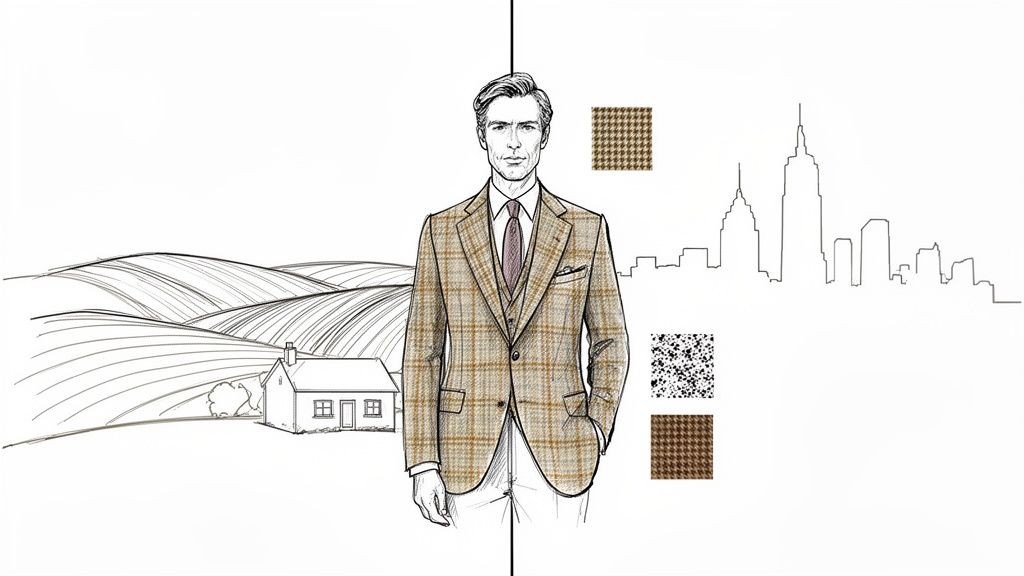
To wear a tweed suit for mens fashion is to appreciate a fabric with a story woven into every thread. It’s a choice that signifies an understanding of both character and versatility. This guide is your map to navigating the world of tweed, from its hardy origins to its place as a cornerstone of sophisticated, contemporary style.
As your tailor, I'll share my experience in selecting the perfect cloth, achieving a flawless bespoke fit, and styling your suit with the quiet confidence it deserves. We'll explore exactly why this durable, richly textured fabric remains an indispensable part of a discerning gentleman’s wardrobe.
From Countryside to Cityscape
Before it was a symbol of style, tweed was a marvel of function. You could call it the original performance fabric, engineered to protect against the damp and chill of the British climate. Its tightly woven structure offered unparalleled warmth and water resistance for the farmers and landowners who first depended on it.
This practical heritage gives a tweed suit an authenticity that few other garments can claim. It wasn't designed in a fashion house; it was perfected by necessity, giving it a substance and integrity that you can feel.
A tweed suit is a statement of quiet confidence. It doesn't shout for attention but earns respect through its texture, heritage, and the impeccable way it holds its shape. It’s a garment that’s not just worn, but lived in.
Why Tweed Remains a Modern Essential
In an era of disposable fashion, a tweed suit represents something more enduring. Its lasting appeal is rooted in its remarkable adaptability and its inherently sustainable nature. A single, well-made bespoke tweed suit can be broken down and styled for a wealth of occasions.
- Formal Events: A full three-piece suit is a superb choice for an autumn or winter wedding, offering texture and warmth.
- Business Casual: The jacket alone, worn as a separate, pairs beautifully with everything from smart chinos to flannel trousers.
- Weekend Style: The waistcoat becomes a sharp layering piece over a crisp shirt for a relaxed yet put-together look.
This chameleon-like quality makes a tweed suit mens wardrobes can be built around. It’s an investment in a style that outlasts any trend. The story of tweed is deeply intertwined with the enduring legacy of the British textile industry, which you can explore further. Let this guide serve as your first step toward commissioning a garment that truly tells your story.
Exploring the Rich Tapestry of British Tweed
A tweed suit is so much more than an article of clothing. It's a piece of history, woven right into the very fibres of the cloth. Its story doesn’t begin in a refined tailor’s workshop, but on the windswept, rain-lashed hills of 18th-century Scotland. Here, farmers and crofters needed something that could truly stand up to the unforgiving climate, and so they wove a dense, weather-resistant woollen cloth that was practical, warm, and astonishingly durable. This was tweed in its most raw, authentic form.
This humble, rugged fabric would find an unlikely and powerful champion in Prince Albert. After he purchased the Balmoral estate, he commissioned a unique tweed that mimicked the colour of the local granite, creating the perfect camouflage for stalking deer. This royal seal of approval was all it took. Tweed was instantly elevated from a rural workhorse to a hallmark of sporting elegance, and the British aristocracy eagerly adopted it for country pursuits, commissioning their own “estate tweeds” to signify their land and lineage.
The Legend of Harris Tweed
Of course, no conversation about tweed is complete without paying homage to the dramatic story of Harris Tweed. Its origins lie with the crofters of Scotland's Outer Hebrides, who began hand-weaving this remarkable wool from their own sheep back in the 18th century. After Lady Dunmore introduced it to the aristocracy in the 1840s, its fame grew, and by the 1960s, production hit a staggering seven million metres a year.
But the story took a dark turn. By 2006, facing shifting fashions and a disastrous attempt to monopolise production, output had plummeted by 90%. This vital piece of British heritage was on the very brink of extinction. You can dive into the full, compelling comeback story of this iconic fabric by learning more about the history of tweed here. Thankfully, the resilience of the island community and the power of its protected status drove a revival, bringing its vibrant, authentic patterns back to the world.
The Orb Mark: A Symbol of Authenticity
When we select a cloth for a genuine tweed suit, there is one symbol that stands as an ironclad guarantee of quality: the Harris Tweed Orb Mark. Established in 1909, it’s the oldest British trade mark of its kind, and its presence certifies that the cloth meets an exacting, legally protected set of standards.
The Harris Tweed Act of 1993 enshrines this definition in law: "Harris Tweed must be handwoven by the islanders at their homes in the Outer Hebrides, finished in the Outer Hebrides, and made from pure virgin wool dyed and spun in the Outer Hebrides."
This isn't just clever branding; it's a legal promise of authenticity. It assures you that the fabric in your hands was created through a traditional, human-powered process passed down through generations. Every single metre of the cloth is inspected by hand and stamped by the Harris Tweed Authority before it can ever be sold.
For a tailor, that Orb Mark represents a commitment to unparalleled quality. For the gentleman wearing it, it signifies that their tweed suit mens garment is part of a living, breathing tradition. Understanding this legacy enriches the entire experience of owning a bespoke tweed suit, transforming it from a simple purchase into an investment in British heritage. It’s this connection to place and history that gives tweed its unique character and timeless appeal.
How to Select Your Ideal Tweed Fabric and Pattern
Choosing the right tweed is arguably the most important, and certainly the most personal, first step in commissioning a bespoke suit. Think of it as an artist selecting their canvas; the raw material itself is packed with character and potential. This is where we demystify the rich world of tweed, guiding you through the storied cloths available for your next suit.
Before we dive into the specifics, it's worth understanding the journey of this remarkable fabric. Its history is woven into its very appeal.
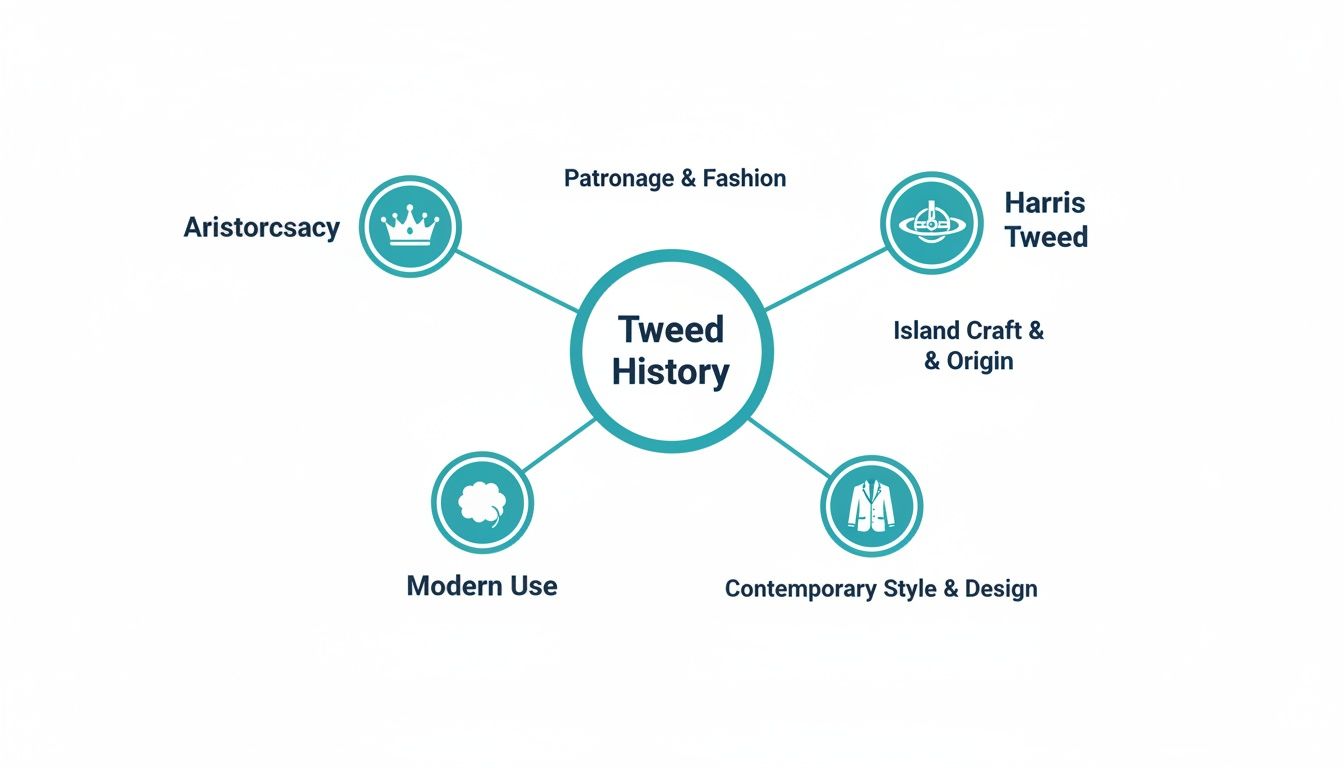
From rugged country wear for the landed gentry to a modern icon of refined style, tweed's evolution is central to its enduring charm. Appreciating this heritage is key to choosing a cloth that truly resonates with you.
Understanding Tweed Types and Weights
Not all tweeds are created equal. Far from it. Each type has its own distinct texture, weight, and origin story, making it better suited for certain climates and occasions. This choice will define not just how your suit looks, but how it feels to wear.
To help you navigate these wonderful cloths, we've put together a quick guide to some of the most distinguished British tweeds.
A Gentleman's Guide to British Tweed Types
This table offers a comparative look at popular tweed fabrics, outlining their origin, typical weight, texture, and ideal uses to help you select the perfect cloth for your bespoke suit.
| Tweed Type | Origin | Key Characteristics | Best For |
|---|---|---|---|
| Harris Tweed | Outer Hebrides, Scotland | Rugged, dense, and exceptionally durable. Protected by an Act of Parliament. | Braving the elements on a country weekend or a robust winter suit. |
| Donegal Tweed | County Donegal, Ireland | Recognisable by its colourful flecks. Mid-weight with a softer feel than Harris. | A suit with rustic, artistic character; think creative professional or smart-casual wear. |
| Shetland Tweed | Shetland Islands, Scotland | The softest and finest of the traditional tweeds. Lightweight and delicate. | A more refined city suit or jacket that can be worn comfortably indoors. |
Each of these fabrics tells a different story and serves a different purpose. Your lifestyle, and where you intend to wear the suit, will be the best guide in making your selection.
The weight of a cloth, measured in ounces per yard, is a crucial detail. A heavier tweed (16-20oz) gives structure and warmth, perfect for an overcoat or a hard-wearing country suit. A lighter one (10-12oz) offers a better drape and is more comfortable for year-round city wear.
For a more comprehensive look at how cloth influences the final garment, our guide to the best fabrics for suits is an excellent resource. Arming yourself with this knowledge empowers you to make a confident, informed decision for your commission.
Choosing a Pattern That Speaks Volumes
Once you've settled on a type of cloth, the next delightful consideration is its pattern. This is where your personality really comes into play, whether you lean towards the timelessly traditional or a more contemporary aesthetic.
Herringbone
Named for its resemblance to the skeleton of a herring, this classic V-shaped weave is perhaps the most versatile of all tweed patterns. It adds a wonderful depth and texture without being loud, making it a sophisticated, fail-safe choice for almost any occasion.
Houndstooth
A much bolder, more graphic pattern, houndstooth is defined by its broken, abstract four-pointed shapes. While traditionally seen in high-contrast black and white, modern interpretations play with a vast array of colours. A houndstooth suit makes a confident statement, perfect for a gentleman who enjoys turning a few heads.
Barleycorn
This is a pattern for the man who appreciates subtle, intricate details. Named for its resemblance to kernels of barley, the weave appears almost solid from a distance. Step closer, however, and its rich, pebbled texture reveals a wonderful depth.
Designing Your Perfect Bespoke Tweed Suit
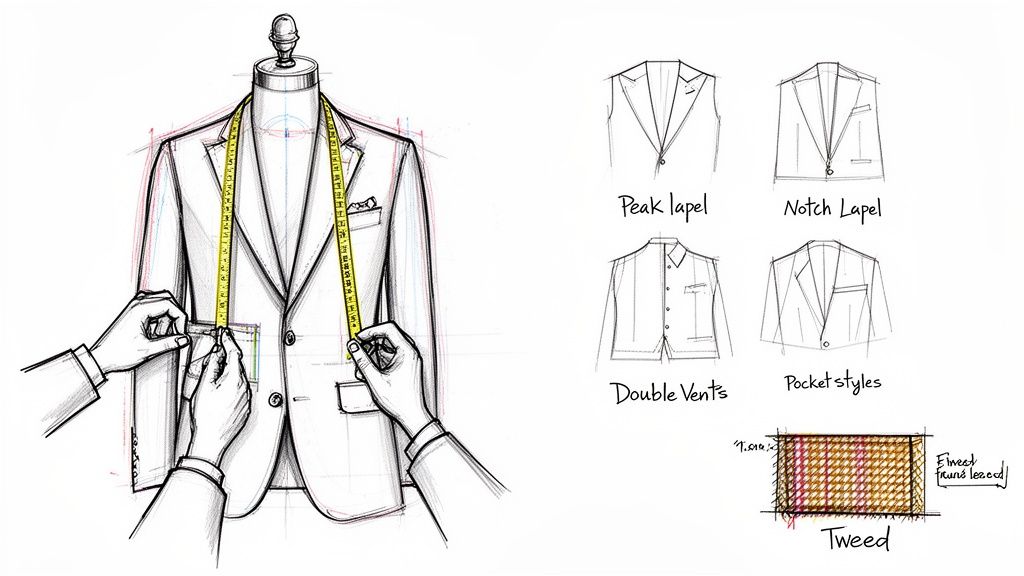
Once you’ve settled on the perfect tweed, the real artistry begins. This is where we move from the soul of the fabric to the form of the suit, shaping the cloth to your body and your life. It’s a meeting of minds—your vision and our expertise—to create something that is truly, unequivocally yours.
Think of it as sculpture. The tweed is our clay, and the way you stand, move, and live is our guide. Every choice from here on out will define the suit's silhouette, its personality, and how it will serve you.
Two-Piece or Three-Piece: A Question of Versatility
The first big architectural decision is whether to go for a two-piece or a three-piece suit. This choice fundamentally changes the character of the garment and the number of ways you’ll be able to wear it.
A classic two-piece tweed suit is the master of modern simplicity and versatility. The jacket and trousers work beautifully together for smart-casual business, a relaxed weekend away, or as stylish separates to be paired with chinos, jeans, or other pieces in your wardrobe.
On the other hand, a three-piece tweed suit, with its matching waistcoat, instantly elevates the whole affair. The waistcoat adds a layer of formality and tradition, making it a superb choice for a wedding, a day at the races, or any event where you want a more composed, classic profile. Plus, it has the practical benefit of keeping you looking sharp even after you’ve taken your jacket off.
A three-piece suit is an exercise in sartorial multiplication. You're not just getting one outfit; you're getting a jacket, trousers, and a waistcoat that can all be worn independently, dramatically increasing the number of stylish combinations at your disposal.
Defining Character Through Lapels and Vents
The details are where a bespoke suit earns its stripes. Two of the most impactful choices are the style of the lapels and the configuration of the vents, both of which subtly sculpt the jacket’s silhouette.
Lapel Styles: A Tale of Two Angles
The lapels frame your chest and shoulders, setting the tone for the entire jacket.
- Notch Lapel: This is the timeless, understated workhorse. Defined by the 75-90 degree ‘notch’ where the lapel meets the collar, it’s the most versatile choice, looking just as right on a business suit as it does on a casual sports jacket.
- Peak Lapel: With its sharp points sweeping upwards towards the shoulders, the peak lapel is a bolder, more formal statement. It creates a powerful V-shape that broadens the shoulders and slims the waist, adding a dash of sartorial flair you often see on double-breasted jackets and formalwear.
Vent Configuration: Function Meets Form
Vents are the vertical slits at the back of the jacket, a feature that began as a practical necessity for men on horseback. Today, they influence how the jacket drapes and moves with you.
- Single Vent: A single slit down the centre is the traditional American style. It’s classic, comfortable, and offers a clean look.
- Double Vents: Two slits on either side of the jacket are a hallmark of British tailoring. They allow for a closer, more shaped fit around the hips and prevent the jacket from creasing when you sit down or slide your hands into your pockets. It’s a touch more elegant.
The Finishing Touches: Pocket Styles
Finally, the style of the pockets plays a crucial role in the suit's overall level of formality and function.
Flap Pockets are the most common style, featuring a simple flap of fabric covering the opening. They are a versatile, do-it-all choice for most business and casual suits. For a cleaner line, you can always just tuck the flaps inside.
Jetted Pockets, sometimes called besom pockets, have no flap and show only a narrow, reinforced slit. This minimalist design is the most formal option, typically found on dinner jackets and tuxedos, but using it on a tweed suit can create a very sharp, refined aesthetic.
Each of these elements is a conversation, a choice we make together to ensure the final garment is a perfect extension of your personal style. To play around with these options yourself, you can design a suit online with our interactive tool and see how different combinations come to life.
How to Style Your Tweed Suit for Any Occasion
A bespoke tweed suit is a remarkable piece of tailoring, a chameleon in a gentleman’s wardrobe. Its true genius lies in its ability to adapt, moving from a formal countryside wedding to a relaxed weekend pub lunch with complete ease. The secret isn't in the suit itself, but in the art of how you style it.
The rich texture and character of the fabric are your canvas. By understanding how to complement it with the right shirt, shoes, and accessories, you can master its versatility for any setting. Whether you’re aiming for rustic refinement or creative business flair, the right combination ensures you look and feel impeccably put-together.
Styling for Formal Occasions
For formal events, especially an autumn or winter wedding, a tweed suit mens style is in its element. A classic three-piece suit, perhaps in a traditional herringbone or a subtle barleycorn weave, presents a look steeped in refinement and heritage. The goal is to polish its rustic charm with sharp, elegant details.
- Shirt: A crisp white or pale blue poplin shirt is non-negotiable. It provides a clean, sharp backdrop that allows the tweed’s rich texture to take centre stage.
- Tie: Your tie should have substance. Choose a luxurious fabric like silk or wool. A deep burgundy, forest green, or a navy grenadine tie adds a welcome touch of depth and formality.
- Shoes: This is the time for your best, most polished footwear. Dark brown or rich oxblood Oxford shoes are the perfect anchor, grounding the entire outfit with timeless class.
- Accessories: A neatly folded white linen pocket square adds a final dash of polish. It shouldn’t compete with the tweed’s pattern, but rather offer a clean, complementary accent.
Mastering Smart-Casual and Business Looks
A tweed suit is just as comfortable in a smart-casual setting or a creative business environment. In these scenarios, you have far more freedom to play with the rules and let your personal style show. The art here is dressing the suit down without losing its inherent character.
The real versatility of a tweed suit comes to light when you wear the pieces separately. The jacket becomes a distinguished blazer, and the waistcoat can lend character to a simple shirt-and-trouser combination, effectively multiplying your wardrobe options.
For a relaxed business meeting, consider wearing just the jacket and trousers of a two-piece suit. You can easily swap out the formal dress shirt for a fine-gauge merino wool roll-neck in a complementary colour like cream, charcoal, or camel. This pairing is sophisticated yet completely approachable.
Alternatively, an open-collar shirt in a soft chambray or brushed cotton creates a more laid-back feel. This is where suede footwear shines; chukka boots or loafers in a handsome shade of brown or navy perfectly echo the napped texture of the tweed. This approach softens the suit’s structure, making it ideal for everything from a client lunch to a weekend brunch. For more ideas on using the jacket alone, you might find our guide on styling tweed sports jackets useful.
Selecting Outerwear and Accessories
The right outerwear is the final, essential layer for your tweed ensemble, especially in the cooler months where the fabric truly excels. A classic wool overcoat in navy or camel, with a hem that falls just below the suit jacket, creates a powerful and elegant silhouette.
For a more traditional country look, you can’t go wrong with a waxed cotton jacket—a practical and time-honoured choice. Finally, don't overlook the smaller details that pull the whole look together. A good pair of leather gloves, a simple wool scarf, and a classic timepiece all contribute to a cohesive and thoughtful appearance, ensuring you’re ready for any occasion with quiet confidence.
The Dandylion Style Bespoke Experience with Igor
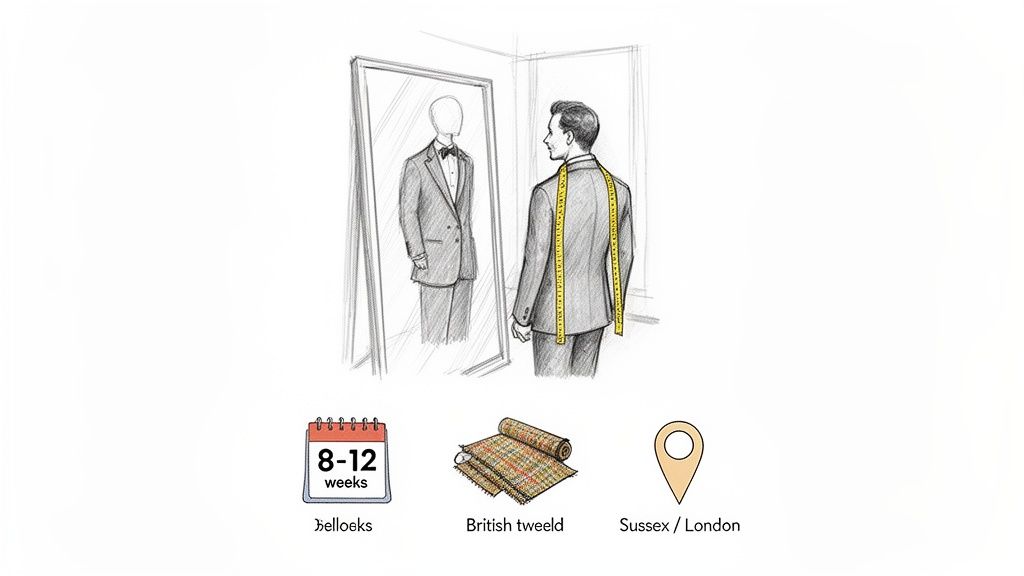
Commissioning a bespoke garment is a deeply personal journey. It’s a collaboration, a conversation that results in a suit that feels less like clothing and more like a second skin. Here at Dandylion Style, this is an experience I guide with a calm, considered approach, ensuring we create a piece you’ll value for decades. It all starts with a private consultation with me, Igor.
This first meeting is a dialogue, not a sales pitch. We’ll talk about your lifestyle, what you need from the suit, and the impression you want to make. It's a chance to get your hands on the finest British tweeds, to feel their unique texture and see the incredible depth of colour in each cloth.
The Art of the Perfect Fit
A true bespoke suit begins with a pattern drafted solely for you. This is where the real work starts, requiring a meticulous series of measurements—I personally take over 30 individual measurements to understand every nuance of your posture and physique. It’s this forensic level of detail that allows us to craft a garment with a flawless silhouette, one that moves with you, not against you.
This dedication to craft echoes the history of tweed itself. After Prince Albert bought Balmoral Castle in 1848, he commissioned a special tweed to mimic the local granite for hunting. This one act of royal endorsement transformed the fabric from humble workwear into a staple of high society, sparking a tradition of landowners across the UK creating their own ‘estate tweeds’.
The bespoke process isn't just about taking measurements; it's about understanding the individual. It's translating a client's personality and needs into a garment that is both beautiful and functional—a true extension of themselves.
From Canvas to Final Fitting
Once your measurements are recorded and the cloth is chosen, the creation process begins. This journey typically involves two to three fittings over an 8-12 week period. Each fitting is a crucial step, allowing us to refine the cut and shape as the suit takes form, progressing from its initial ‘basted’ canvas state to the nearly finished article.
To make things as convenient as possible, I can hold these appointments at your home or office across Sussex and London. We bring the traditional tailoring experience directly to you, ensuring the process is as seamless and enjoyable as the suit itself.
We believe in absolute transparency and honest guidance. Our pricing is clear, with a bespoke two-piece suit starting from £1,495 and a three-piece from £1,795. Think of it not as a purchase, but as an investment in enduring quality and your own personal style.
If you’re ready to begin your own sartorial journey, you can learn more about the Dandylion Style bespoke tailoring experience and book your initial consultation with me today.
Frequently Asked Questions About Men's Tweed Suits
Is a tweed suit still in style for gentlemen?
Absolutely. A tweed suit for men is a timeless classic that transcends fleeting trends. Its enduring appeal lies in its rich texture, heritage, and incredible versatility. While its origins are rural, modern tailoring has adapted it for city life, making it a sophisticated choice for business-casual settings, weddings, and weekend events. The key is a modern, tailored fit, which keeps the look sharp and relevant. It’s a statement of quiet confidence and an appreciation for quality craftsmanship that never goes out of style.
Can you wear a tweed suit for a wedding?
A tweed suit is an excellent and increasingly popular choice for a wedding, especially for autumn, winter, or countryside ceremonies. A three-piece suit in a classic pattern like herringbone or a subtle check offers a look that is both refined and full of character. To elevate it for the occasion, pair it with a crisp white shirt, a quality silk or wool tie, and polished dark brown or oxblood Oxford shoes. This combination respects the formality of the event while showcasing distinctive personal style.
What's the difference between a tweed suit and a regular suit?
The primary difference is the fabric. Most regular suits are made from smooth, worsted wools with a clean finish, like serge or gabardine. A tweed suit, however, is crafted from a more rugged, open-textured woollen cloth. This gives it a distinctively rustic and characterful appearance. Tweed is also generally heavier and warmer, making it ideal for cooler weather. While a regular suit is the default for corporate formality, a tweed suit offers more texture, depth, and a connection to British heritage.
How do I care for my tweed suit to make it last?
Proper care is simple but vital for a tweed suit's longevity. After wearing, always hang it on a wide, shaped wooden hanger to help it retain its form and allow the natural wool fibres to breathe. Use a soft-bristled clothes brush to gently remove any dust or debris. Avoid frequent dry cleaning, as the chemicals can strip the wool of its natural oils; only clean it when absolutely necessary. For minor spills, spot clean with cold water. This gentle routine will ensure your investment lasts for decades.
About the Author: Igor of Dandylion Style
I'm Igor, the founder and head tailor at Dandylion Style. From my award-winning bespoke studio in the heart of West Sussex, I've dedicated my craft to the rich legacy of British tailoring. My passion is creating garments that are not just worn, but lived in, becoming a true extension of my client's personality.
My entire approach is built on a calm, considered process. I believe the journey of commissioning a suit should be as comfortable and personal as the final fit itself. It's a partnership, where I work closely with every client to translate their ideas and lifestyle into something truly one-of-a-kind. I have a deep appreciation for sourcing the finest British fabrics—especially for any tweed suit mens style—and I am committed to a fit that feels like a second skin. This attention to detail shapes the entire bespoke experience for my clients across Sussex, London, and the South East.