When it comes to choosing a wedding suit, a groom should settle for nothing less than a perfect fit, a timeless style, and a fabric that feels right for the season and setting. The journey towards that perfect suit, particularly a bespoke one, isn't a sprint. It truly begins 6 to 9 months before the wedding day, a crucial lead time that allows for unhurried consultations, thoughtful fabric selection, and the multiple fittings needed for a flawless result.
Key Takeaways
- Start Early: Begin your suit journey 6-9 months before the wedding. This allows ample time for consultations, fabric selection, and multiple fittings for a stress-free, perfect result.
- Understand Your Options: A bespoke suit, created from a unique pattern, offers an unparalleled fit. Made-to-measure adjusts a standard pattern, while off-the-rack is the fastest but least personal option.
- Match Fabric to Season: Choose lightweight fabrics like linen or cotton for summer weddings and richer, textured materials like tweed or flannel for autumn and winter celebrations to ensure comfort and style.
- Embrace the Three-Piece: A waistcoat instantly adds formality and ensures you look sharp and put-together even after removing your jacket during the reception.
- Don't Match, Complement: Your suit should stand out from the groomsmen's. Differentiate your look through a unique suit, a waistcoat, or distinctive accessories to ensure you are the clear focus.
Your Essential Wedding Suit Checklist
Finding the perfect wedding suit is a journey, not a last-minute errand you can tick off a list. Getting it right is about more than just the suit itself; it's about ensuring you look and, more importantly, feel your absolute best on one of the most significant days of your life. This checklist simplifies the process, highlighting the non-negotiable points to consider as you begin.
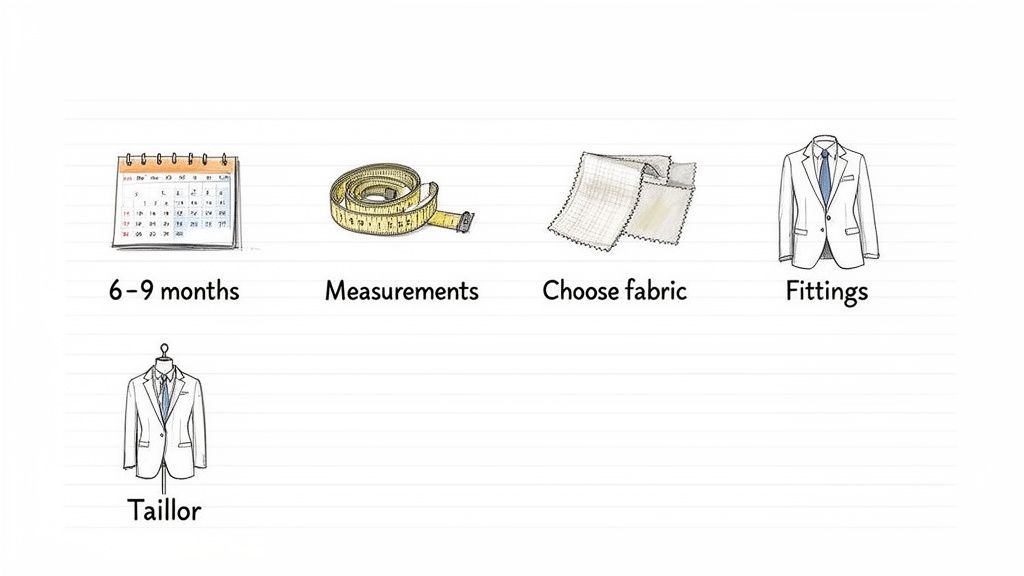
Key Milestones for Your Wedding Suit
Think of commissioning your suit in the same way you would book a major wedding vendor; the best require advance planning. Creating exceptional wedding suits for men is a meticulous art, a process that should never be rushed.
Here’s what to prioritise:
- Start Early: The single most important piece of advice I can give is to begin your search 6-9 months before the wedding. This generous timeframe allows for proper research, consultations, and all the necessary fittings without a hint of stress.
- Understand Your Options: Take the time to decide between bespoke, made-to-measure, and off-the-rack. A truly bespoke suit, crafted from a unique paper pattern made just for you, offers a level of fit and personalisation that is simply unmatched.
- Consider Season and Venue: The choice of fabric is absolutely vital and should be guided by your wedding's context. A lightweight linen suit is perfect for a summer beach ceremony, while a rich, textured tweed is ideal for an autumn celebration in the countryside.
Of course, as you prepare for the big day, it’s not just the groom who has a checklist. Understanding the essential duties of a best man can also help ensure a smooth and stylish celebration for everyone involved.
Defining Your Wedding Day Style
Your wedding suit is so much more than an outfit you’ll wear for one day. It’s a statement about who you are, the story of your wedding, and a garment that will be immortalised in photographs for decades to come. The goal isn't to chase fleeting trends, but to land on a personal style that feels authentic, confident, and absolutely timeless. Get this right, and your suit won’t just complement the wedding’s theme—it’ll become a cherished memory in its own right.
Think of it as a personal narrative told through fabric and thread. Are you a classic, traditional gent, or a modern man with a bolder streak? Your suit should reflect your character in every detail, from the cut of the lapel to the texture of the cloth.
Reflecting Your Personality Through Tailoring
The first step in defining your style is always a moment of introspection. What do you wear every day that makes you feel comfortable and truly yourself? A bespoke suit isn’t about transforming you into someone else; it’s about crafting the very best version of you.
- For the Traditionalist: You might gravitate towards a classic navy or charcoal two-piece suit. It’s a timeless choice that speaks of quiet confidence and versatility.
- For the Modern Man: A slim-fit suit in a more contemporary colour could be the perfect match. Think deep forest green or a rich, sophisticated burgundy.
- For the Dandy: If you’ve got a flair for the dramatic, a double-breasted jacket or a bold tweed with a distinctive pattern will make exactly the right statement.
This is where the Dandylion Style philosophy really comes into its own. Our master tailor, Igor, firmly believes that creating a suit is a collaborative process. It always starts with a simple conversation, getting to understand not just your measurements, but your character and your vision for the day.
At Dandylion Style, we don't just cut fabric; we shape a garment around your identity. Igor's expertise lies in translating your personal style into a beautifully crafted suit that feels like a second skin, ensuring you stand at the altar with absolute poise.
Aligning with Your Wedding's Theme
Your suit shouldn’t exist in a vacuum. It needs to harmonise with the overall aesthetic of your wedding—the formality, the location, and even the colour palette should all inform your stylistic choices. After all, a rustic barn wedding calls for a very different look than a formal black-tie affair in a grand city hotel.
This alignment creates a cohesive and powerful visual story. A textured tweed suit, for instance, perfectly complements an autumnal countryside setting, bringing in warmth and character. By contrast, a sleek, dark tuxedo is the epitome of elegance for an evening city wedding. By considering these elements, your suit becomes an integral part of the event's design, not just an afterthought. It's a journey Igor guides every client through, ensuring their chosen style is a flawless fit for the day’s narrative.
Choosing Your Suit: Bespoke vs Made-to-Measure vs Off-the-Rack
When it comes to your wedding suit, you’re faced with three very different roads to travel. Each path offers a unique balance of fit, personalisation, and experience, and understanding them is the first real step you’ll take toward finding the suit that truly reflects you on your big day.
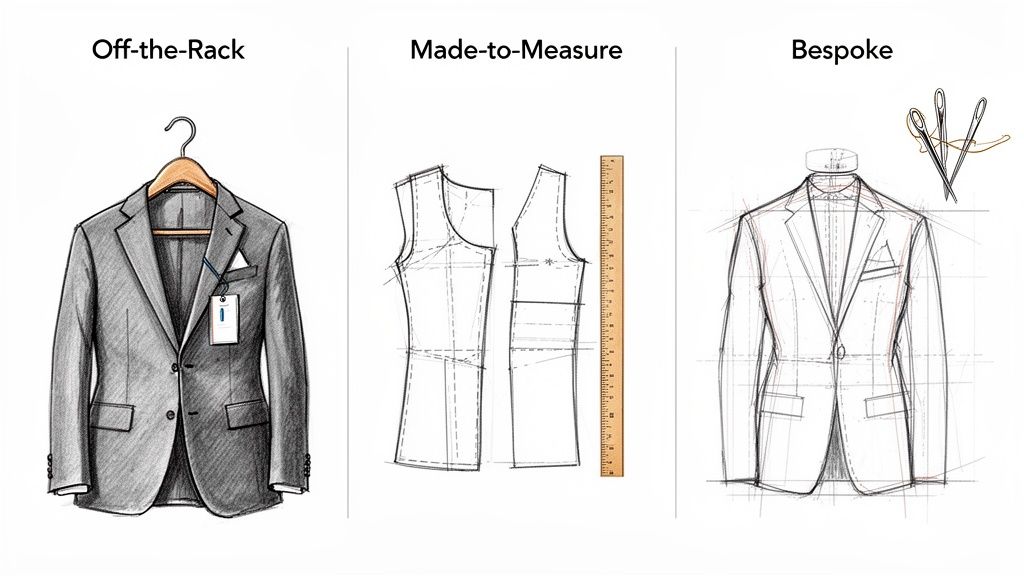
Think of it like buying a home. You could buy a house that’s already built, ready to move into. You could take a developer’s standard floor plan and ask to move a few walls. Or, you could hire an architect to design your dream home from the ground up, with every single detail built around you. Each approach gets you a house, but only one results in a home that is entirely, unmistakably yours.
Off-the-Rack: The Ready-to-Wear Option
An off-the-rack suit is the most common choice you’ll find on the high street. It’s the sartorial equivalent of that move-in-ready house, produced in standardised sizes and waiting for you in a department store.
- Pros: This is by far the fastest and most budget-friendly route. It’s a lifesaver for grooms with a tight timeline or a modest budget.
- Cons: The fit is fundamentally generic. These suits are cut for a theoretical "average" man, which means significant alterations are almost always a given. Even then, a tailor can only do so much; the suit’s core structure—the shoulder width, the height of the armholes—is fixed, often leading to compromises on both comfort and silhouette.
While it’s a convenient solution, an off-the-rack suit can never truly mould to your individual posture and proportions. It solves a problem, but it doesn't make a personal statement.
Made-to-Measure: A Step Towards Personalisation
Made-to-measure (MTM) is the middle ground, much like customising that new-build home. Here, a tailor takes your core measurements and then adjusts a pre-existing, standard block pattern to better match your frame. You’ll also get to choose from a curated selection of fabrics and styling details.
This process delivers a far better fit than off-the-rack because it accounts for specifics like your torso and arm length. The catch? The suit is still born from a template. It may not perfectly accommodate more unique postural traits like sloped shoulders or a particularly athletic back. If you’re keen to understand the finer points, our in-depth comparison delves into the nuances of made-to-measure vs bespoke.
The core difference lies in the pattern. Made-to-measure adjusts an existing template for you; bespoke creates a new template of you.
This distinction is everything. MTM offers a good degree of customisation and a much-improved fit over ready-to-wear, but it doesn’t provide the absolute freedom and anatomical precision of a true bespoke garment.
Bespoke: The Pinnacle of Suiting
Bespoke is the ultimate expression of the tailor’s art, comparable to commissioning that architect to design your home from scratch. Everything starts and ends with you. At Dandylion Style, your tailor, Igor, will begin by taking dozens of meticulous measurements and, just as importantly, observing your unique posture and how you stand. From this, he drafts a unique paper pattern.
This pattern belongs to you and you alone, ensuring the final suit drapes flawlessly over your body’s individual contours. Every single element is your choice, from the finest British cloths and the silk lining to the buttons and the style of the lapel. The result is a garment that is as unique as your own fingerprint.
For a groom who wants his suit to be as memorable as the day itself, this level of personalisation is what it's all about. In fact, with 72% of consumers citing 'fit' as the single most important factor when buying a suit, it’s no wonder the demand for bespoke is growing. At Dandylion Style, our West Sussex studio offers two-piece suits from exquisite British tweed and wool starting at £1,495. While a Savile Row suit might average £4,000, regional houses like ours provide an accessible entry into true luxury. Plus, with home fittings available across Sussex and the South East, we cater to the 50% of VIP clients who prefer the comfort and convenience of in-home tailoring.
Your wedding is a singular event in your life's story. Choosing a bespoke suit ensures your attire isn't just something you wear, but a central part of that story, crafted for you without a single compromise.
Matching Your Suit Fabric to the Season and Venue
A beautifully cut suit is one thing, but the true secret to looking and feeling impeccable on your wedding day lies in the cloth. The choice of fabric isn't just about aesthetics; it’s about practicality and comfort, dictated entirely by the time of year and the setting of your celebration.
Think of your tailor as a seasoned chef. Just as they would never serve a hearty stew on a summer’s day, we select fabrics that work in harmony with the environment. A sun-drenched beach ceremony and a formal winter wedding in a grand country house demand completely different materials. Getting this right is fundamental to your comfort and the overall feel of the day.
Summer Celebrations and Lightweight Choices
When it comes to a summer wedding, breathability is your best friend. The aim is to remain cool and collected, even when the mercury rises, without sacrificing a single drop of sartorial elegance. This is where lightweight cloths come into their own, offering sophisticated solutions for garden parties, destination weddings, and everything in between.
- Linen: The quintessential summer fabric, linen is derived from the flax plant and is prized for its exceptional breathability. It has a relaxed, almost nonchalant charm, though it does wrinkle—a characteristic that is very much part of its appeal.
- Cotton: A touch more structured than linen but still wonderfully lightweight, a cotton suit is a brilliant, versatile choice for smart-casual summer nuptials. It offers a crisp, clean look that feels as good as it looks.
- Lightweight Wool: Don't be too quick to dismiss wool for summer. Modern high-twist, open-weave wools are surprisingly airy and boast fantastic drape and wrinkle resistance, making them a superb option for a more formal summer event.
Choosing a lighter-coloured fabric—think beige, stone, or a pale blue—will also help reflect the sun's heat, keeping you far cooler. A light grey fresco wool suit, for instance, is a gentleman's secret weapon for staying sharp in the heat.
Autumn and Winter Weddings: The Richness of Texture
As the seasons turn and the temperature begins to fall, you have the opportunity to embrace heavier, more textured fabrics. These cloths do more than just provide warmth; they add a wonderful visual depth and a real sense of occasion to your wedding suit. An autumn or winter wedding is the perfect stage for richer colours and more substantial materials.
It's interesting to note that 70% of wedding wear in the UK is purchased within a tight five-month window. While this can put pressure on high-street retailers, it's a dynamic that bespoke tailors, with our structured timelines, are perfectly equipped to handle. This trend is part of a booming global wedding wear market, which is projected to climb from $52,680 million in 2024 to $70,390 million by 2034. This growth underscores how much people value personalised services, which is exactly where bespoke specialists like Dandylion Style come in.
Choosing the right fabric is a cornerstone of creating the perfect wedding suit. To help you navigate the options, we've put together a simple guide matching fabrics to the season and formality of your day.
Wedding Suit Fabric Guide by Season and Formality
| Fabric | Best Season(s) | Formality Level | Ideal Venue Type |
|---|---|---|---|
| Linen | Summer | Casual to Smart-Casual | Beach, Garden, Destination |
| Cotton | Spring, Summer | Smart-Casual | Outdoor, Barn, Marquee |
| Lightweight Wool | Spring, Summer, Autumn | Smart-Casual to Formal | City, Stately Home, Hotel |
| Tweed | Autumn, Winter | Smart-Casual to Formal | Countryside, Rustic, Barn |
| Flannel | Autumn, Winter | Smart-Casual to Formal | Stately Home, Hotel, City |
| Heavyweight Wool | Winter | Formal | Church, Stately Home, Castle |
This table serves as a great starting point, but remember that a personal consultation allows us to delve into the nuances of each cloth and find the one that truly speaks to your vision.
Weaving It All Together
For these cooler months, you can’t go wrong with these classic fabric choices:
- Tweed: A wonderfully rugged woollen fabric steeped in British heritage, tweed is the perfect match for a rustic or countryside wedding. It’s warm, durable, and comes in a breathtaking array of patterns and colours, from classic herringbone to bold estate checks.
- Flannel: Incredibly soft with a slightly fuzzy nap, flannel is another fantastic choice for an autumn or winter suit. It drapes beautifully and has an understated elegance, looking particularly sharp in shades of charcoal grey or navy.
- Heavier Wool: A classic worsted wool in a heavier weight offers everything you could want for a formal winter wedding: warmth, a beautiful drape, and a timeless, sharp silhouette. It’s the definitive choice for sophisticated nuptials.
In the end, the goal is to create a perfect sense of harmony between your suit, the season, and your venue. A carefully chosen fabric is your guarantee that you’ll feel comfortable, confident, and impeccably dressed from the first photograph to the last dance. To dive deeper into the world of cloth, have a look at our detailed guide on the best fabrics for suits.
The Bespoke Suit Timeline From First Chat to Final Fitting
Creating your bespoke wedding suit isn't a last-minute dash; it's a collaborative journey, a carefully orchestrated experience between you and your tailor. To truly appreciate the craft, it helps to understand the schedule. Knowing the timeline demystifies the entire process, allowing you to relax and enjoy watching your vision come to life, from that first conversation right through to the final, impeccable fit.
Ideally, your journey should begin 9 to 12 months before the wedding day. This generous lead time is your best friend. It guarantees a calm, unhurried process where every detail is thoughtfully considered without the pressure of a looming deadline. It gives us the space for in-depth discussions about your style, meticulous fabric selection, and the multiple fittings needed to achieve a truly flawless result.
Your Initial Consultation and Design
It all starts with a relaxed conversation, either here at our Ardingly studio or in the comfort of your own home. This is where we get to the heart of your wedding—the theme, the venue, the season, and most importantly, your personal style. We'll explore cloths from Britain’s most esteemed mills, pore over lining options, and decide on those crucial design details like the style of your lapels and pockets.
Once you’ve settled on the fabric and confirmed the design, we get to work taking over 30 precise body measurements. This isn't just about capturing your size; it's about understanding your posture and the unique nuances of your physique. These measurements are then used to draft a unique paper pattern—the architectural blueprint for your suit.
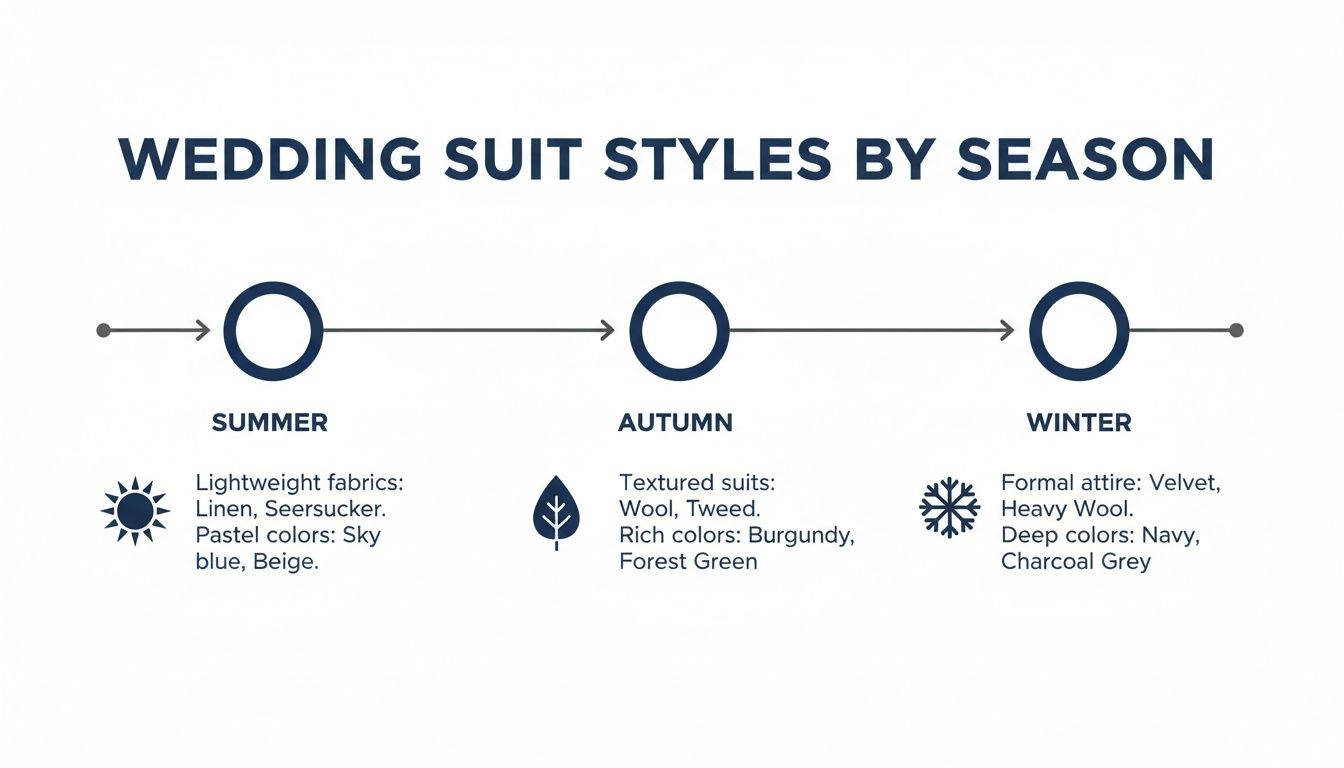
This infographic gives you a glimpse into how we align your suit with the season, a key topic we'll cover during your consultation. As you can see, choosing tweed for winter or linen for summer is about more than just aesthetics; it's about ensuring your comfort and style on the day.
The Fitting Process and Final Creation
The actual creation of your suit at Dandylion Style typically takes 8-12 weeks. This period is where the magic really happens, involving several key fitting stages to ensure absolute perfection.
The Baste Fitting: Your first fitting is with what we call a 'baste' suit. This is a temporary version of your garment, loosely stitched together. It allows us to check the core fit, the balance, and the overall proportions. We make chalk adjustments directly onto the fabric, which we then use to refine your paper pattern.
Second and Subsequent Fittings: After that initial session, the suit is taken apart and re-cut before being sewn more permanently. Subsequent fittings let us home in on the finer details, ensuring the jacket collar sits perfectly on your neck and the trousers hang just so. We continue this refinement process until the fit is nothing short of impeccable.
The entire point of multiple fittings is to sculpt the garment to your body. Each appointment is another step closer to a suit that moves with you and feels like a second skin—a level of precision and comfort that off-the-rack simply cannot replicate.
Once all the adjustments are finalised and you are completely happy with the fit, your suit receives its final press and is ready for you to take home. This meticulous process ensures your wedding suit is not just an outfit, but a perfectly realised piece of personal craftsmanship. You can learn more about what to expect by exploring our guide on crafting your bespoke suit journey.
How to Style Your Wedding Suit
Think of your perfectly tailored suit as the canvas. The final styling—the accessories, the shirt, the shoes—are the decisive brushstrokes that turn it into a masterpiece. This is where your own character truly comes to life, elevating a great garment into an unforgettable statement.
This is your guide to bringing all those crucial elements together into a cohesive, stylish whole.
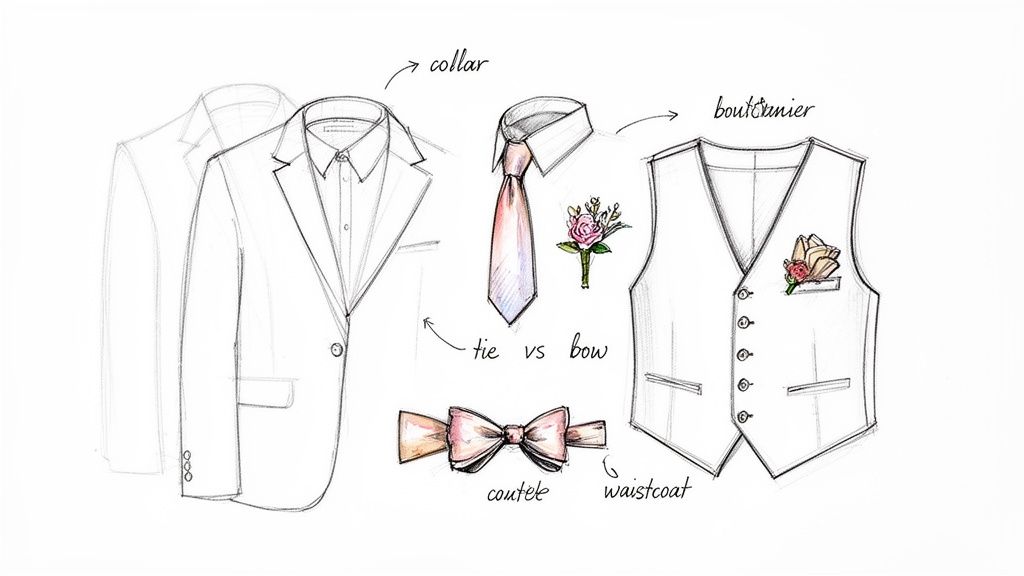
We'll move beyond the suit itself to the critical details that define your look. This isn't just about adding extras; it's about mastering the art of coordination, from selecting the right shirt collar to navigating the timeless tie-versus-bow-tie debate.
The Foundation: Your Shirt and Neckwear
Your shirt is the most immediate supporting actor to your suit. A crisp, flawlessly fitting dress shirt is entirely non-negotiable. Pay close attention to the collar, as it’s the frame for your face. A classic spread collar works beautifully with most tie knots, while a cutaway collar offers a more confident, contemporary feel.
Your choice of neckwear sets the entire tone. A traditional silk tie speaks of timeless elegance, whereas a bow tie can introduce a touch of classic formality or a more playful character, depending on its design. There’s no right or wrong answer here; it’s all about the look you want to achieve.
A handmade silk tie, like those we craft at Dandylion Style, paired with a classic navy suit is a simple yet incredibly powerful combination. The texture of the silk against the wool of the suit creates a subtle, sophisticated contrast that elevates the entire ensemble.
The Power of the Waistcoat
For any groom, a three-piece suit—with its matching waistcoat—is a secret weapon. It instantly adds a layer of formality and visual interest, creating a more structured and distinguished silhouette. It’s an almost indispensable element for creating a complete and polished look.
But it's more than just a style choice; the waistcoat is incredibly practical. During the reception, when jackets inevitably come off, a waistcoat ensures you remain looking sharp and put-together. It expertly bridges the gap between formal and relaxed, maintaining your polished appearance all day and night.
It's also worth noting how cultural trends are influencing wedding style. For 2026, we’re seeing a surge in "Bridgerton-inspired" elegance, with a +191% year-over-year interest pointing towards Regency-style suits in tweed or linen dominating UK weddings. Investing in a bespoke piece, rather than paying the £4,000 average for Savile Row, gives a groom a versatile garment he can wear again for business or black-tie events.
Perfecting the Finishing Touches
With the core elements in place, it’s time for the final details. These small choices have a surprisingly big impact.
- Cufflinks: This is your chance to inject some real personality, whether it's with a classic silver knot or a quirky enamel design that tells a story.
- Pocket Square: It should complement your tie, not match it exactly. A white linen square is a foolproof classic, but a patterned silk adds a brilliant dash of flair.
- Shoes: Well-polished leather Oxfords or Derbies in black or dark brown are the gold standard. They are the anchor for any formal wedding attire.
Once you have your suit styled, don't forget the other essential accessories. Our comprehensive guide to men's wedding bands can help you select the perfect ring to complete your look.
And to find those perfect final pieces, you can explore the full range of Dandylion Style’s handmade ties, pocket squares, and other accessories.
Frequently Asked Questions about Wedding Suits for Men
How far in advance should I order my wedding suit?
For a bespoke suit, you should begin the process 6 to 9 months before your wedding. This generous lead time ensures a completely unhurried process for consultations, thoughtful fabric selection, and the multiple fittings required for a perfect result. While an off-the-rack suit may only need a few months for purchasing and alterations, starting early for bespoke removes all stress and guarantees a flawless fit that is truly yours, reflecting the importance of the occasion.
Should my suit match the groomsmen?
No, your suit should complement the groomsmen's attire, but you absolutely should stand out as the groom. A popular and effective strategy is for groomsmen to wear suits in a similar colour family, while you distinguish yourself with a different suit, a three-piece ensemble, or unique accessories like your tie or buttonhole. This creates a cohesive look for the wedding party while ensuring you remain the clear focal point on your special day.
What is the difference between a two-piece and a three-piece suit?
A two-piece suit consists of a jacket and matching trousers, offering a classic and versatile look suitable for most weddings. A three-piece suit adds a matching waistcoat to the set. This simple addition elevates the formality and polish of your outfit significantly. It also has the practical benefit of keeping you looking sharp and well-dressed even when you remove your jacket during the reception. For most grooms, the three-piece is the superior choice for a complete wedding look.
How much should I budget for a wedding suit?
The cost of a wedding suit varies widely. A quality off-the-rack suit with alterations can range from £300 to £800. For a truly personalised experience, a bespoke suit from a regional tailor like Dandylion Style starts around £1,495. This price reflects the superior British fabrics, the hours of expert craftsmanship, and a perfect fit that is unattainable with other options. It’s an investment in a garment you will cherish and can wear for many years to come.
Can I wear my wedding suit again?
Absolutely, and you should. A well-made bespoke suit in a timeless style like a classic navy or charcoal lounge suit is a sustainable and versatile investment. Unlike single-use formalwear, your wedding suit can be worn for future business events, anniversaries, or other smart occasions. The jacket and trousers can even be worn as separates for a more casual look. We craft garments designed to be a lasting part of your wardrobe, not just for a single day.
About the Author: Igor, Founder of Dandylion Style
Igor is the founder and master tailor behind Dandylion Style. With a quiet reverence for classic British tailoring, Igor established his studio in the tranquil setting of Ardingly, West Sussex, to create a personal and unhurried bespoke experience. His craft is about more than measurements; it's about translating a gentleman’s character into a perfectly fitted garment using the finest British cloths. Igor champions a calm, collaborative process, offering honest, expert guidance to create suits that are personal, comfortable, and enduring. You can learn more about Igor and his tailoring philosophy on our site.
At Dandylion Style, we believe your wedding suit should be as unique as your story. Let master tailor Igor guide you through the bespoke process to create a garment that is perfectly you. Explore our wedding suit services and book your consultation today.