To truly settle the sport coat vs blazer debate, you have to look past the hangers and into their history. The essential differences come down to formality, fabric, and construction. Think of a blazer as the more buttoned-up of the two; it's a formal, solid-coloured jacket, often with structured shoulders and distinctive metal buttons.
A sport coat, on the other hand, is its more relaxed cousin. It’s a casual, often patterned jacket made from textured fabrics like tweed, originally designed for gentlemen enjoying countryside sporting events.
Key Takeaways
Blazer Basics: Originating from naval uniforms, blazers are more formal. They typically come in solid colours (especially navy), feature smooth fabrics like worsted wool, have structured shoulders, and often display metal buttons.
Sport Coat Style: Born from countryside sporting pursuits, sport coats are casual and versatile. They feature textured fabrics (tweed, linen), patterns (checks, plaids), softer shoulders, and buttons made from horn or leather.
When to Wear: Choose a blazer for smart-casual or business-casual settings, like an office or an evening social event. Opt for a sport coat for relaxed occasions, such as weekend lunches, creative workplaces, or country weddings.
Key Distinctions: The primary differences lie in formality, fabric, and construction. A suit jacket is part of a matching set, while blazers and sport coats are standalone pieces designed to be worn with non-matching trousers.
Deeper Dive: Choosing Between a Sport Coat and a Blazer
Getting to grips with the distinctions between these two menswear staples is the secret to building a truly versatile wardrobe. While both are standalone jackets designed to be worn with non-matching trousers, their heritage really dictates how we wear them today.
The blazer's naval origins give it a sharper, more uniform-like character, making it a reliable choice for semi-formal events or business-casual settings where you need to look put-together.
Conversely, the sport coat’s history as functional country wear gives it that relaxed, textured, and often patterned personality. This makes it the perfect companion for smart-casual affairs, creative workplaces, or weekend socialising. Choosing the right one is all about the occasion and the impression you want to make.
For the modern gentleman, the choice isn't about which is better, but which is right for the moment. A blazer commands respect in smarter settings, while a sport coat conveys relaxed confidence.
To make things even clearer, here is a quick reference table to help you distinguish between a sport coat and a blazer at a glance.
Sport Coat Vs Blazer At a Glance
Characteristic
Sport Coat
Blazer
Formality
Casual to Smart-Casual
Smart-Casual to Business
Fabric
Textured (tweed, linen, corduroy)
Smooth (worsted wool, serge)
Colour/Pattern
Often patterned (checks, plaids)
Typically solid (navy, black, grey)
Buttons
Horn, leather, or plastic
Metal (brass, silver), or horn
Construction
Softer, less structured shoulders
More structured, padded shoulders
Pockets
Often patch or flap pockets
Flap or jetted pockets
Best Paired With
Chinos, jeans, corduroys, flannels
Grey flannel trousers, smart chinos
Think of this table as your field guide. It cuts through the noise and gives you the core DNA of each garment, helping you decide which one your wardrobe—and your next event—truly calls for.
The Origins of Two Menswear Classics
To get to the heart of the modern sport coat vs blazer debate, you first need to understand where they came from. These two jackets weren't just designed differently; they were born from entirely different worlds. One hails from the rigid, disciplined life of the Royal Navy, while the other finds its spirit in the rugged, open freedom of the British countryside.
This split in their ancestry is the real key to telling them apart. The blazer's story is one of maritime authority and uniform, while the sport coat speaks of practicality, comfort, and aristocratic leisure.
The Blazer A Naval Beginning
The blazer's journey started on the water. Its history is tied directly to the British Royal Navy back in the 1830s. The story goes that the captain of the HMS Blazer, wanting his crew to look sharp for a visit from Queen Victoria, commissioned smart, navy blue, double-breasted jackets with striking brass buttons.
This naval heritage is precisely why the blazer carries an air of formality. At its core, it was a piece of a uniform, designed to signal order and rank. The classic navy colour, the structured shoulders, and those distinctive metal buttons are all direct descendants of this seafaring past, giving the garment its sharp, authoritative character.
The Sport Coat An Aristocratic Escape
The sport coat, on the other hand, emerged from the landed gentry’s weekend pursuits. It began life in the 19th century as the "Norfolk jacket," a tough, comfortable outer layer designed for country sports like shooting and hunting. Its purpose was purely functional, not ceremonial.
This practical origin story defines its most recognisable features:
Robust Fabrics: Materials like tweed and herringbone were chosen for their sheer durability and warmth against the notoriously fickle British weather.
Relaxed Construction: Softer shoulders and a looser cut were essential, allowing for the freedom of movement needed to raise a shotgun or cast a fishing line.
Earthy Tones and Patterns: Checks, plaids, and houndstooth patterns weren’t just for show—they provided a degree of natural camouflage in the countryside.
The sport coat was never meant to be part of a suit. It was conceived as a standalone piece of outerwear, built for performance and styled for the country—a spirit of rugged independence it retains to this day.
This heritage is why the sport coat feels so much more relaxed and versatile. Its design DNA is all about comfort and utility, making it the perfect companion for a whole host of smart-casual situations. For a glimpse into how quintessentially British tailoring can be adapted for modern style, you can explore our feature on pairing classic garments with a more relaxed context.
A Detailed Comparison of Jacket Anatomy
Beyond their different backstories, the most revealing distinctions between a sport coat and a blazer are quite literally woven into their DNA. When you get hands-on with each jacket, you start to see the deliberate choices in fabric, structure, and finishing touches that give each garment its unique character. These aren't just random details; they’re the direct result of what each jacket was originally designed to do, dictating how it drapes, feels, and projects formality.
A blazer’s very essence is rooted in uniformity and a sharp silhouette. That’s why you’ll traditionally find it crafted from smooth, tightly woven cloths like worsted wool or serge. These fabrics create a crisp, clean drape that holds its shape and resists wrinkling, keeping you looking smart all day. It's a clear nod to its naval past, where a tidy appearance was non-negotiable.
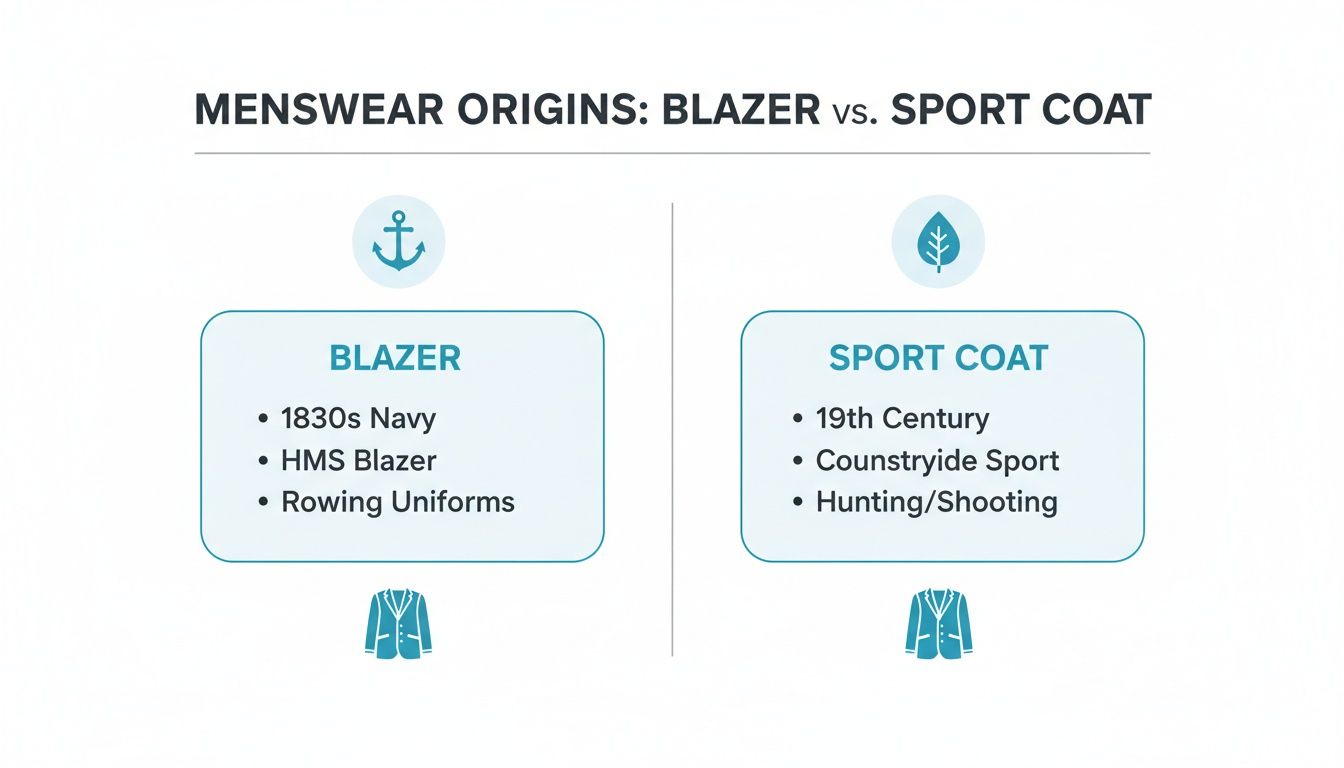
The infographic below really brings to life how these distinct origins shaped the anatomy of each jacket.
This visual contrast makes it clear: a blazer’s naval heritage gives it a more formal, regimented structure, while a sport coat’s countryside roots call for texture, comfort, and practicality.
The Feel of the Fabric
Where the blazer aims for smoothness, the sport coat positively revels in texture and pattern. It was born from a need for durable, functional outerwear for country pursuits, and its fabrics reflect that history. You’ll find materials with a distinct feel in your hands:
Tweed: Robust, warm, and often featuring intricate weaves like herringbone or Donegal.
Houndstooth: A classic broken check pattern that adds fantastic visual depth.
Linen and Cotton: Lighter, breathable choices perfect for warmer months, lending a much more relaxed look.
This incredible variety in texture is precisely what makes the sport coat so versatile for casual outfits. Its surface pairs effortlessly with other informal fabrics like denim, corduroy, and chino, pulling together a layered look that feels completely natural.
Construction and Silhouette
The internal build of each jacket is another key point of difference. A blazer typically has more structured shoulders, often with some padding, to create a strong, authoritative line. This construction gives it an air of formality, making it perfectly at home in business-casual settings.
A sport coat, on the other hand, usually features a softer, more natural shoulder line with little to no padding. This is all about comfort and freedom of movement, harking back to its sporting origins. The entire silhouette is less rigid, designed to drape comfortably over a chunky knit or a casual shirt. To really get into the nuts and bolts of jacket construction, you can explore our detailed guide on the parts of a suit.
The buttons on a jacket are like its signature. A blazer's classic metal buttons—often brass or silver—are a proud declaration of its heritage, while a sport coat's subtle horn or leather buttons whisper of understated country elegance.
Pockets and Finishing Details
Finally, the pockets and buttons offer some of the clearest visual giveaways. Blazers almost always feature sleek flap or jetted pockets for a clean, formal finish. Sport coats, however, frequently show off patch pockets, which are sewn directly onto the outside of the jacket for a more casual, utilitarian vibe.
You're also more likely to spot unique, functional details on a sport coat, like a ticket pocket, elbow patches, or even bellows pockets. These are all practical remnants of its countryside past. These small but significant details add to its relaxed, individualistic character and cement its status as a true standalone piece.
When to Wear a Sport Coat Vs a Blazer
Knowing the difference between a sport coat and a blazer is one thing, but understanding precisely when to wear each is the key to effortless style. This decision isn't about rigid rules; it's about reading the context of an event, the company you'll be keeping, and the impression you want to make. Let's move from theory to practice and map out some real-world scenarios where one jacket clearly outshines the other.
A blazer's natural formality comes directly from its naval uniform origins, making it the perfect choice for occasions that demand a sharper, more polished appearance. Think of it as the sartorial bridge between a full suit and a casual look, offering structure and authority without ever feeling stuffy.
The Blazer Scenarios for Smart Occasions
Consider the blazer your trusted ally for smart-casual and business-adjacent events. Its clean lines and solid colours project an air of confidence and respectability.
You should reach for your blazer for:
Business-Casual Offices: Paired with grey flannel trousers and a crisp shirt, a navy blazer is the quintessential uniform for a modern professional.
Evening Social Events: For a dinner party, a gallery opening, or after-work drinks, a blazer worn with smart chinos and loafers strikes the perfect balance of relaxed and refined.
Yacht Club or Rowing Regattas: Leaning into its maritime heritage, a blazer is perfectly at home at functions that call for a touch of classic, preppy elegance.
In these settings, the blazer’s structured silhouette and smooth fabric ensure you look intentionally well-dressed. For a deeper dive into the subtle differences that define these garments, you can learn more in our detailed comparison.
The Sport Coat Scenarios for Relaxed Sophistication
Where the blazer is sharp and uniform, the sport coat is expressive and adaptable. Its textured fabrics and patterned designs lend themselves beautifully to more relaxed, creative, and even rustic environments. The sport coat signals that you appreciate fine tailoring but aren’t bound by strict formality.
A gentleman chooses a blazer when the occasion calls for conformity and respect; he chooses a sport coat when it calls for personality and warmth.
This jacket is your go-to for adding a touch of sartorial flair to more informal gatherings.
A sport coat truly excels in these situations:
Weekend Lunches or Brunches: Worn over a fine-gauge knit with dark denim or corduroys, a tweed sport coat is the epitome of relaxed weekend style.
Creative Workplaces: In environments where individuality is valued, a sport coat in a subtle check or houndstooth pattern allows for personal expression while still looking professional.
Country Weddings: For a rustic or autumnal wedding, a sport coat is often far more appropriate than a dark suit, harmonising perfectly with the natural surroundings, especially when paired with moleskin trousers.
Ultimately, choosing between a sport coat and a blazer is a matter of reading the room. The blazer answers the call for structure and smartness, while the sport coat rises to occasions that favour texture, character, and a more approachable kind of elegance. Having both in your wardrobe ensures you are perfectly equipped for any invitation that comes your way.
The Bespoke Difference Crafting Your Perfect Jacket
Once you step beyond the world of ready-to-wear, the whole sport coat vs blazer debate becomes less about following strict rules and more about pure self-expression. A bespoke jacket isn't just one or the other; it's a unique creation, built from the ground up for your body, your lifestyle, and your taste. This is where the real art of tailoring begins.
The bespoke process simply throws the standard rulebook out the window. It lets you borrow elements from both worlds—imagine the sharp, structured shoulder of a classic blazer combined with the rustic, textured tweed of a country sport coat. You’re crafting a garment that’s genuinely your own, an investment in a piece that fits not just your measurements, but the occasions of your life.
A Consultation in Cloth and Cut
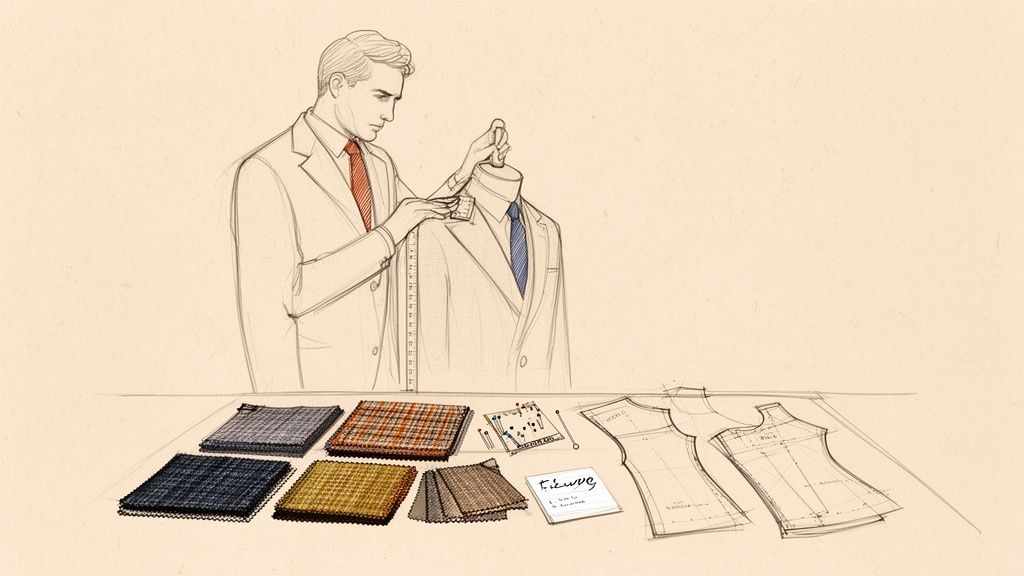
The journey always starts with a conversation. Here at Dandylion Style, Igor’s consultative approach is all about guiding you through every decision, making sure the final piece is a perfect reflection of you. This is where the possibilities really open up.
Your choice of fabric is fundamental. You might be drawn to a fine British worsted wool for a razor-sharp blazer, or maybe a robust Harris Tweed for a sport coat destined for country weekends. The selection is a tactile experience, a chance to feel the weight and drape of cloths that will ultimately define your jacket’s character.
Bespoke isn't about following a template; it's about writing your own. The cut, the cloth, the lining—every detail becomes a chapter in the story of your personal style, meticulously edited to perfection.
Personalisation Down to the Last Stitch
With the fabric chosen, we shift focus to the finer details that make a jacket uniquely yours. This is where you can really let your personality shine through.
These customisable elements include:
Lapel Style: From a classic notch to a commanding peak lapel, this single choice can completely alter the formality and feel of the jacket.
Pocket Configuration: Will it be classic flap pockets, more relaxed patch pockets, or perhaps a traditional ticket pocket for a touch of British flair?
Button Selection: The choice between gleaming brass buttons, subtle horn, or mother-of-pearl can completely redefine the garment's entire aesthetic.
Lining and Thread: A flash of vibrant silk lining or a pop of contrasting buttonhole stitching can add a discreet, personal touch of individuality.
This level of detail ensures your jacket is truly one-of-a-kind. If you're intrigued by the meticulous craft involved, you can learn more about what is bespoke tailoring and see how we create a garment built to last a lifetime.
FAQs: Sport Coat vs Blazer
What is the main difference between a sport coat and a suit jacket?
A suit jacket is part of a matching set, cut from the exact same cloth as its trousers; they are designed to be worn together. A sport coat, however, is a standalone garment intended to be paired with trousers of a different fabric and colour, such as chinos or flannels. Sport coats are also generally less structured and feature more textured fabrics like tweed, giving them a distinctly more casual and versatile character than a formal suit jacket.
Can I wear a blazer with jeans?
Absolutely. Pairing a blazer with dark, well-fitting jeans is a classic smart-casual look. The key is to choose a less formal blazer—one with softer shoulders or a textured fabric like hopsack—to complement the casual nature of denim. Avoid overly structured or shiny blazers, as they can create too harsh a contrast. This combination is perfect for a stylish weekend outing, a casual dinner party, or a creative workplace environment where polished yet relaxed attire is appropriate.
How should a blazer or sport coat fit properly?
A proper fit is essential for a sharp silhouette. The shoulder seams should end precisely where your natural shoulder does. When buttoned, there should be no straining or pulling that creates an 'X' shape. The sleeves should be short enough to reveal about a quarter to a half-inch of your shirt cuff. Finally, the jacket's length should be sufficient to cover your seat. A bespoke fitting ensures all these elements are tailored perfectly to your unique proportions for optimal comfort and style.
Are patch pockets less formal than other pocket types?
Yes, patch pockets are considered the most casual style for a gentleman's jacket. Because they are sewn directly onto the exterior of the garment, they have a more utilitarian and relaxed appearance, making them a common feature on sport coats and casual blazers. Flap pockets are a step up in formality and are highly versatile. The most formal option is the jetted pocket—a sleek slit in the fabric—which is typically reserved for dinner jackets and the most formal business suits.
About the Author: Igor
Igor is the founder and master tailor behind Dandylion Style. His professional life is a profound passion for the art of classic gentlemen’s tailoring, and he is dedicated to preserving the meticulous craft of bespoke. Igor creates garments that are not just worn but experienced, embodying the timeless elegance of British sartorial tradition. His exceptional eye for detail shines when working with fine fabrics, transforming them into pieces that are comfortable, durable, and impeccably stylish.
Based in Ardingly, West Sussex, Igor provides a deeply personalised service, offering consultations across Sussex, London, and the South East. This direct, hands-on approach is the cornerstone of the Dandylion Style experience, ensuring every garment is a perfect reflection of the client's character. Igor believes true style is a fusion of flawless fit, superior materials, and individual expression. Learn more about his work on the official Dandylion Style author page for Igor.
Ready to add a jacket to your wardrobe that's made just for you? At Dandylion Style, we specialise in creating bespoke garments that truly reflect your character and lifestyle. Book your personal consultation with Igor today.
Key Takeaways The Core Two: Navy blue and charcoal grey are the essential, non-negotiable suit colors for any professional wardrobe. Navy offers versatility and approachability, while charcoal projects authority and seriousness. Context is Crucial: The best suit color...
When you find a piece of clothing you absolutely love, getting the fit just right is the final, transformative touch. But how much should you expect to pay? In the UK, alteration costs can be as modest as £15 for a simple trouser hemming, or climb to £150 and beyond...
Getting the right pink shirt and tie combination is the mark of a well-dressed man. It’s a detail that separates the novices from those who truly understand their wardrobe. For a look that’s classic and can’t miss, pair your pink shirt with a navy, grey, or burgundy...
Key Takeaways For those seeking a quick overview, this section summarises the essential rules and recommendations for incorporating turn-up trousers into your wardrobe. Sartorial Purpose: Turn-ups add weight to the trouser hem, ensuring a cleaner, sharper drape,...
Deciding what colour tie to wear with a pink shirt is a common style query I hear from clients. For a classic, professional look that never fails, your safest and most effective choices are navy blue and charcoal grey. If you're heading to a more contemporary or...
You've just picked up a newly finished bespoke suit, and the cloth still has that clean, disciplined line only a real fitting room can give it. The temptation is to put it straight in the wardrobe and trust the label to do the rest. That's where expensive...
Book Your Tailoring Consultation
Looking for a suit or garment made specifically for you?
At Dandylion Style, we create bespoke and made-to-measure
garments tailored to your individual shape, style and occasion.
From suits and shirts to dresses, waistcoats and alterations,
our experienced tailors can help you create something truly unique.