When you decide to commission bespoke suits in London, you're not just buying a suit; you're investing in a piece of wearable art crafted just for you. The entire journey, from that first conversation with a tailor to the final handover, typically takes between 8 to 12 weeks. It’s a process built on precision, partnership, and a genuine passion for classic style.
Key Takeaways
- The Bespoke Journey: Commissioning a bespoke suit is a collaborative process that takes 8-12 weeks, involving a detailed consultation, fabric selection, and a series of fittings to achieve a flawless fit.
- Consultation is Key: The initial meeting is a deep dive into your personal style, the suit's purpose, and your preferences. Come prepared with ideas to get the most out of this crucial stage.
- Fit and Fabric: A bespoke suit starts with a unique paper pattern cut just for you. The choice of high-quality British cloths, such as worsted wool or tweed, defines the garment's character and durability.
- The Fitting Process: Expect two to three fittings. The first ('baste') fitting addresses the core structure, while subsequent sessions refine the silhouette for perfect balance and comfort.
- Personalisation Matters: Finishing touches like buttons, linings, and monograms are what make the suit uniquely yours, reflecting your individual personality.
Your Guide to Commissioning a Bespoke Suit
Stepping into the world of bespoke tailoring is a completely different experience from walking into a high-street shop. It’s less of a transaction and more of a creative collaboration between you and your tailor. The goal? To create a garment that feels like a natural extension of your personality.
Every single detail is up for discussion. From the subtle roll of the lapel to the choice of buttons, you are in the driver's seat, with an expert tailor navigating. This guide will pull back the curtain on the London bespoke scene, walking you through the entire process so you know exactly what to expect.
First, it helps to understand what is bespoke tailoring and what separates it from other methods. With that foundation, you’ll appreciate why the time and investment result in something truly special.
The Bespoke Process at a Glance
The journey unfolds over several key stages, each one crucial for achieving that flawless, second-skin fit. It all kicks off with an in-depth chat and culminates in a perfectly finished garment you’ll have for years.
This infographic breaks down the three core phases: the initial consultation where ideas take shape, the series of fittings where the suit is sculpted to your body, and the final delivery of your handcrafted piece.
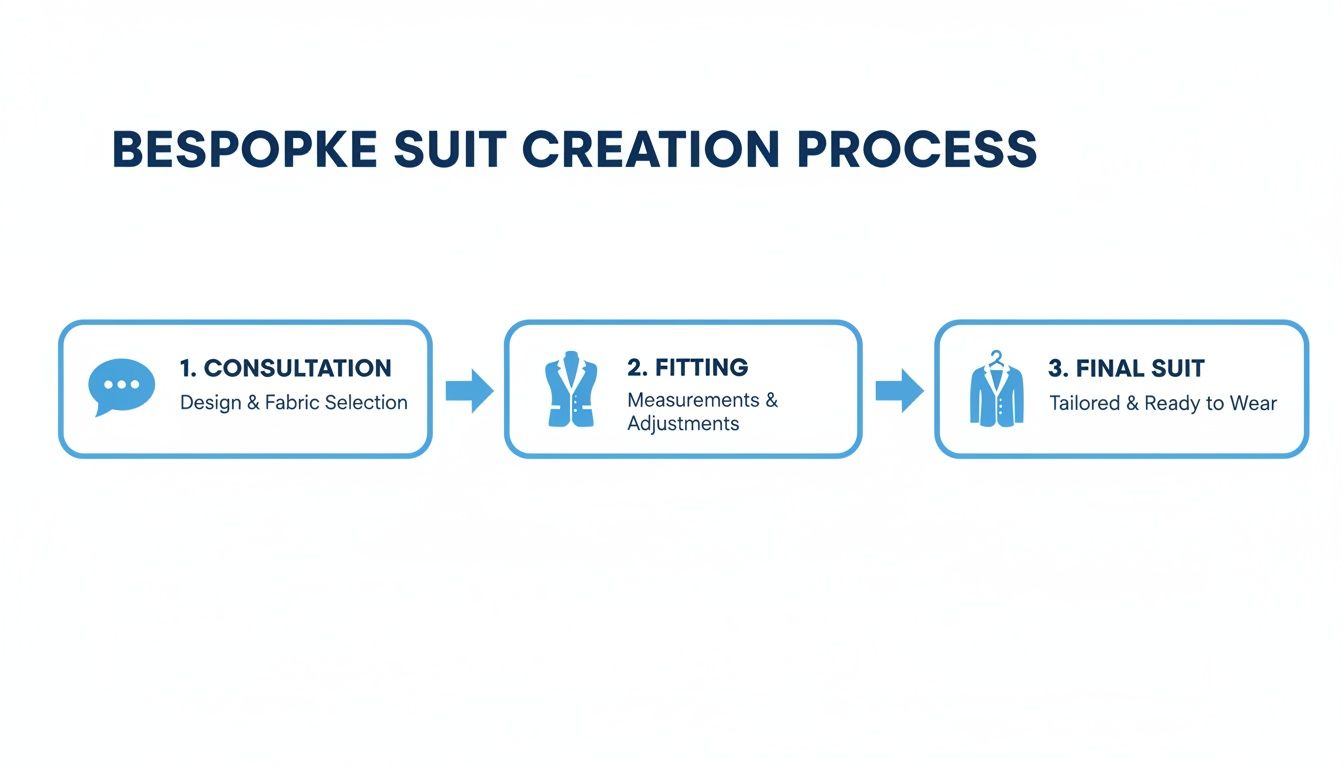
As you can see, it’s a deliberate, step-by-step process. Each stage logically builds on the last, allowing for constant refinement of the fit, feel, and style until it’s absolutely perfect.
Bespoke Suit Commissioning Checklist
To give you a clearer picture of what the journey entails from a practical standpoint, here’s a quick-reference checklist. It outlines the key stages along with the typical timelines and price points you can expect when commissioning a bespoke suit in London.
| Stage | What's Involved | Estimated Timeline | Price Indicator |
|---|---|---|---|
| Consultation | Discussing style, occasion, and fabric. Your detailed measurements are taken. | 1-2 hours | Included in final price |
| First Fitting | Trying on the 'basted' suit. Major adjustments to structure and fit are made. | 4-6 weeks after consultation | Included in final price |
| Second Fitting | Reviewing the refined suit. Sleeves and collar are attached; smaller tweaks are made. | 2-4 weeks after first fitting | Included in final price |
| Final Fitting | Final check for a perfect fit. Minor adjustments can be made before completion. | 1-2 weeks after second fitting | Included in final price |
| Collection | Your finished, hand-pressed suit is ready for you to take home. | Total: 8-12 weeks | £1,600 – £6,000+ |
This table, drawing on insights from our experience at Dandylion Style, sets the stage for a deeper dive into each step. In the sections that follow, we'll explore every part of this process in much greater detail, ensuring you start your bespoke journey with complete confidence.
Starting Your Bespoke Journey with an Initial Consultation
This is where the real work begins—and it’s nothing like buying a suit off the rack. The first meeting with your tailor is less of a transaction and more of a conversation. It's the moment your ideas start taking shape, forming the foundation for a suit that's truly yours.
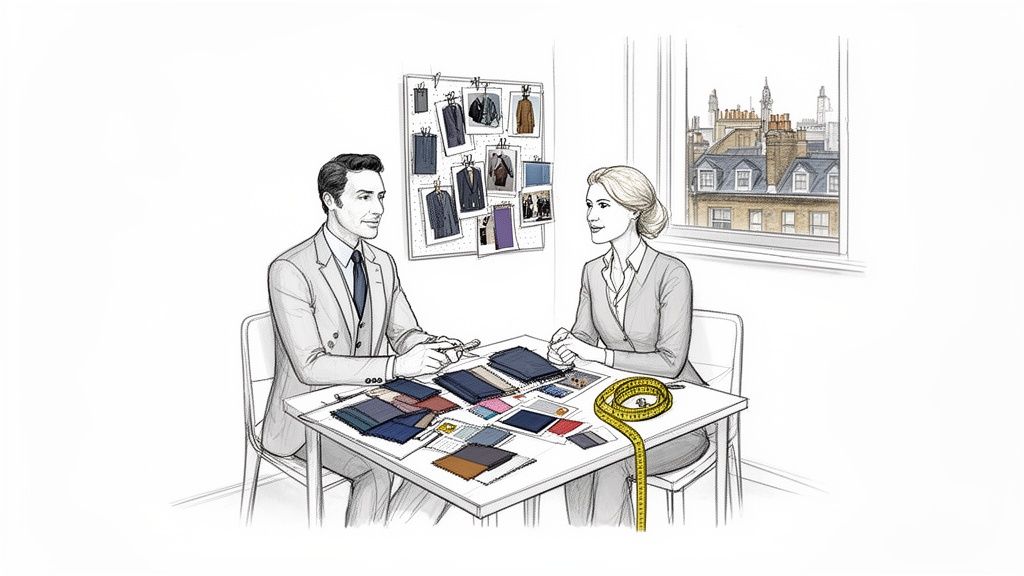
Whether you’re visiting a London studio or your tailor comes to you in Sussex, this first step is all about discovery. A master tailor like Igor won’t just pull out a measuring tape; he’ll want to understand your lifestyle, your personal style, and what you want this suit to say about you. It’s a relaxed, unhurried process designed to build a solid partnership.
This desire for a personal touch is part of a much bigger picture. As a global fashion hub, London is seeing huge growth in the demand for unique, high-quality clothing. The UK custom apparel market, valued at USD 112.10 million, is set to climb to USD 205.27 million by 2032. It’s clear that discerning clients want more than just clothes; they want an experience.
Preparing for Your First Meeting
To get the most out of the consultation, a little prep work goes a long way. Start by thinking about the suit's purpose. Is it for a wedding? A critical business meeting? Or will it be a reliable workhorse for the office? Its function will heavily influence the best fabric and style choices.
Bringing some inspiration is also a massive help. You don’t need a perfect sketch or a final design in your head. A few photos, screenshots, or even just some thoughts on details you like—a specific lapel shape, a pocket style, a particular shade of blue—can give your tailor a fantastic starting point.
The best consultations happen when a client arrives with an open mind but a clear idea of how they want to feel in the suit. It's my job to translate that feeling into the right cut, cloth, and construction.
This initial chat is your chance to explore options and ask all your questions. A great tailor will offer honest guidance, helping you understand how different choices will impact the final garment's look, feel, and durability.
What to Expect During the Consultation
Think of the consultation as a two-way street. While your tailor is getting to know your needs, you’re getting a feel for their process and expertise. It’s your opportunity to make sure you’ve found the right craftsman to bring your vision to life.
Here's a breakdown of what typically happens in this first key meeting:
- Style Discussion: You’ll talk through the overall look you’re after. This covers everything from the big picture—like a single versus double-breasted silhouette—to the finer points, such as the width of the lapels and the style of the pockets.
- Fabric Exploration: This is the tactile part. Your tailor will present a curated range of fabric swatches. You’ll get to see and feel the different materials, from hard-wearing worsted wools and versatile tweeds to luxurious cashmeres.
- Initial Measurements: A comprehensive set of measurements will be taken. This is far more detailed than anything you'd experience in a retail store, designed to capture the unique nuances of your posture and build to create a perfectly balanced garment.
This first step is crucial for creating the blueprint for your suit. Whether you're new to the world of bespoke or have a wardrobe full of custom pieces, finding a tailor you connect with is what makes all the difference. If you're still exploring your options, our guide on finding the right bespoke suit shops near me offers some valuable pointers on what to look for in a London tailor.
The Art of Fabric Selection and Measurements
Once we’ve sketched out the initial vision for your suit, we get to the really exciting part: taking your measurements and choosing the cloth. These two steps are the absolute heart of bespoke tailoring. It's where the suit's unique character and perfect fit are born, turning our conversation into the physical blueprint for your garment.
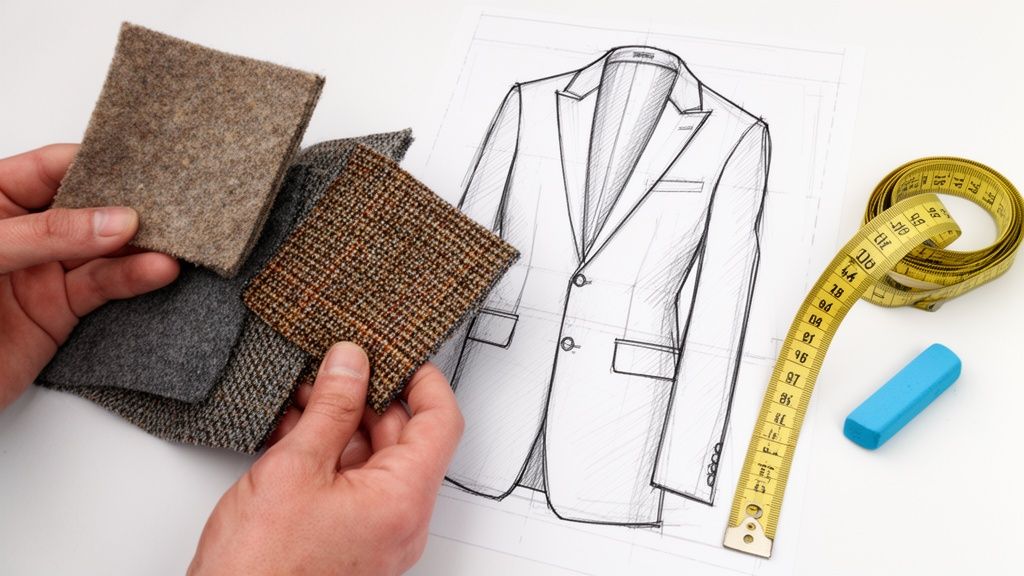
This part of the journey is deeply personal and incredibly detailed. We’re not just picking a size off a rail; we’re capturing the very essence of you in fabric and form.
The Blueprint of a Perfect Fit
A bespoke tailor takes dozens of measurements, going far beyond the standard chest, waist, and inseam you'd find elsewhere. This isn't just about numbers; it's a meticulous process designed to capture every single nuance of your physique.
We'll measure not just the circumference of your limbs but their length, the slope of your shoulders, the unique arch of your back, and even your natural posture. This data isn't just punched into a computer. It's used to hand-draft a unique paper pattern entirely from scratch—your personal blueprint, which exists for you and you alone.
A measuring tape in skilled hands doesn't just see numbers; it reads the story of how a person stands and moves. The goal is to create a garment that works in harmony with the body, not against it.
This level of precision is exactly what creates the signature comfort and balance of a bespoke suit. It ensures the jacket hangs perfectly from your shoulders and the trousers drape cleanly, creating a seamless and flattering silhouette from every angle.
Navigating the World of Fine Fabrics
At the same time, we'll dive into the tactile world of fabrics. This is where you choose the material that will define your suit's look, feel, and performance. For anyone commissioning bespoke suits in London, the choice often leans towards classic British cloths, celebrated for their unparalleled quality and durability.
The demand for authentic, high-quality menswear remains incredibly strong. The global market, valued at USD 3.2 billion, is projected to soar to USD 5.8 billion by 2033, with men's tailoring making up over 58% of total revenue. This isn't just a trend; it's a clear signal that true craftsmanship is more valued than ever.
Making an informed choice is key, and each fabric has its own distinct personality:
- Worsted Wool: The quintessential suit fabric. It's known for its smooth finish, resilience, and is available in various weights, making it perfect for year-round wear.
- Tweed: A rugged, textured wool originally from Scotland, ideal for cooler weather. It offers exceptional warmth and character, perfect for jackets and country suits.
- Linen: The go-to lightweight choice for summer, prized for its breathability. Its natural tendency to wrinkle is all part of its relaxed charm.
- Cashmere Blends: Incredibly soft and luxurious, these blends add a touch of opulence. They're often mixed with wool to enhance durability while keeping that sumptuous feel.
Your tailor will guide you through the swatches, explaining how the weight and weave of each cloth affect its drape. A heavier fabric will create a more structured silhouette, while a lighter one will offer a softer, more fluid line. To dive deeper, you can explore our detailed guide on choosing the best fabrics for suits.
Choosing Your Perfect British Fabric: A Comparison
To help you navigate these wonderful choices, we've put together a simple comparison of the most popular British fabrics. This should give you a clearer idea of what might work best for your needs, whether it's for a sharp city look or a relaxed weekend in the countryside.
| Fabric Type | Best For (Occasion) | Key Characteristics | Typical Weight | Price Indicator |
|---|---|---|---|---|
| Worsted Wool | Business, Weddings, All-Season Wear | Smooth, durable, wrinkle-resistant, versatile | 9oz – 13oz (255g – 370g) | ££ |
| Tweed | Autumn/Winter, Country Pursuits | Warm, textured, rugged, characterful | 12oz – 18oz (340g – 510g) | £££ |
| Flannel | Cool Weather, Smart Casual | Soft, milled finish, excellent drape, comfortable | 10oz – 14oz (280g – 400g) | £££ |
| Linen | Summer, Destination Weddings | Lightweight, breathable, relaxed, characterful creasing | 7oz – 10oz (200g – 280g) | ££ |
| Cashmere Blend | Luxury, Special Occasions | Exceptionally soft, luxurious feel, excellent drape | 9oz – 12oz (255g – 340g) | ££££ |
This table is just a starting point, of course. The real magic happens when you feel the cloth in your hands and discuss its potential with your tailor.
The final selection comes down to balancing your personal style with the suit's intended purpose. A heavy tweed might be perfect for an autumn wedding in the Sussex countryside but would be completely impractical for a summer business meeting in the city.
This is where the collaborative relationship with your tailor proves its worth. They can advise on which fabrics will not only look the part but will also stand up to your lifestyle, ensuring your investment is one you’ll cherish for many years to come.
Sculpting the Perfect Fit: A Guide to Your Fittings
Once we’ve navigated the world of fabrics and taken your precise measurements, we move into the very heart of the bespoke experience: the fittings. This is what truly sets a bespoke suit apart from anything else you can buy. It's a hands-on, collaborative process where we quite literally sculpt the suit to your body over several appointments, ensuring a fit that is absolutely flawless.
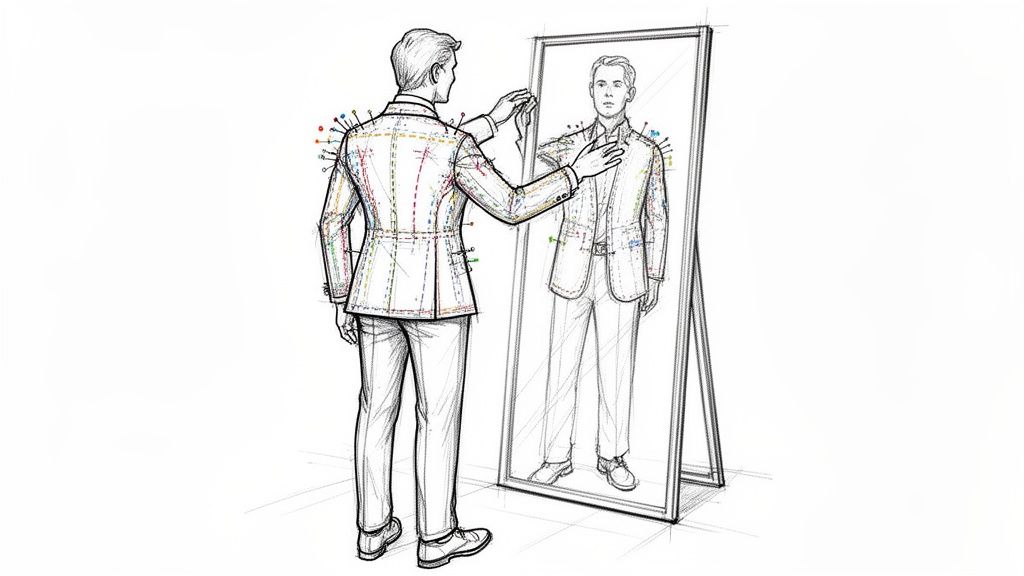
These sessions are about so much more than checking if something is too tight or too loose. It's where the tailor's expertise comes alive. We’re assessing the suit’s balance, its proportion, and how it moves with you. We're looking at the way the fabric drapes across your shoulders, how the jacket behaves as you walk, and ensuring the trousers hang with perfect precision.
The First Fitting: The 'Baste'
A few weeks after your consultation, you’ll come in for your first fitting. This is often called the 'baste' or 'skeleton' fitting, and it’s your first chance to see the suit taking shape. Don't be alarmed by its appearance; it will look a long way from the finished article. The garment is loosely tacked together with temporary white basting stitches, the lining is absent, and the pockets and lapels are often unfinished.
This raw, skeletal form is completely by design. It gives your tailor an unobstructed view of the suit's core structure on your body, making it easy to make fundamental adjustments.
This is where the big, foundational changes happen:
- Shoulder Adjustments: We make sure the jacket sits cleanly on your shoulders, with no unsightly pulling or creasing.
- Back and Chest Balance: We check for a smooth, uninterrupted fit across your back and chest, moulding the cloth to your specific posture.
- Trouser Drape: We assess how the trousers fall from your waist to guarantee they break perfectly over your shoes.
Your feedback at this stage is absolutely critical. This is your moment to be honest about how the suit feels. Is there any restriction when you reach forward? Does the waistband feel too snug when you take a seat? Your input is what guides the tailor's chalk marks and pin adjustments, setting the stage for a perfect fit.
The Second Fitting: Refining the Silhouette
After the baste fitting, we take the suit apart, re-cut the pattern based on our adjustments, and stitch it back together more permanently. Your next appointment is often called the 'forward' fitting, and the garment you try on will look much more like a finished suit.
The sleeves will now be attached, the lapels will have taken shape, and the pockets will likely be in place. The focus shifts from the broad structural strokes to the finer details that create a truly elegant silhouette.
The second fitting is where we hone the lines. The foundation is set, and now we refine the silhouette, ensuring every curve and seam works in perfect harmony with the client's body.
We’ll be looking at smaller, but no less important, details. This includes the sleeve pitch—how it hangs from your shoulder to prevent twisting—and the exact length of the cuffs and trousers. It's also our last chance to confirm the placement of things like buttonholes before they are permanently stitched.
Getting the Most Out of Your Appointments
A little preparation goes a long way in ensuring your fittings are as productive as possible. Following a few simple tips helps your tailor make the most accurate assessments and adjustments.
- Wear the Right Kit: Always come to a fitting wearing a good dress shirt and the shoes you intend to wear with the suit. This has a direct impact on how the collar sits and where the trouser hem should finish.
- Move Around: Don't just stand there like a statue. Walk around the room, sit down, raise your arms. We need to see how the suit performs in real-world motion.
- Be Specific: Clear communication is key. Instead of saying "it feels a bit tight," try to pinpoint where. For example, "I feel a bit of a pinch under the arms when I lift them."
The total number of fittings can vary, but most commissions for bespoke suits in London require two or three appointments. The process is only complete when both you and your tailor are 100% satisfied that the suit fits impeccably and feels like a second skin. That’s the ultimate goal: simple perfection.
Personalising Your Suit with the Finishing Touches
With the suit’s structure perfected and the fit feeling like a second skin, we arrive at the most enjoyable part of the journey. This is where we move beyond the architecture of the garment and into its soul, selecting the small but crucial details that transform a beautifully made suit into your suit. It’s these final flourishes that truly define bespoke suits in London, elevating your commission into something truly one-of-a-kind.
This stage is less about the technicalities of fit and all about expressing your personal style. Think of every choice—from the buttons on your cuff to the lining hidden within—as part of the story your suit tells. This is your moment to add a quiet whisper of personality or make a confident, bold statement.
Curating the Details
Now for the fun part. Your tailor will walk you through a curated selection of options, explaining how each choice influences the suit’s final look and feel. This isn't a solo decision; it's a collaboration. We'll work together to ensure the finished piece is a perfect reflection of your taste.
Some of the most common finishing touches include:
- Buttons: You'll handle and choose from a range of high-quality materials. Natural horn is a classic for a reason, offering an understated, rich elegance. For something with a bit more of a celebratory feel, mother-of-pearl adds a subtle lustre that catches the light beautifully.
- Linings: The inside of your jacket is a hidden canvas for self-expression. You might go for a classic solid colour in a business suit, keeping things conservative. Or, you could opt for a vibrant, patterned silk—a flash of personality that only you (and those you choose to show) will know is there.
- Pocket Styles: The shape of your pockets can subtly shift the suit's entire silhouette. Traditional flap pockets are timeless, while more modern jetted or slanted designs can lend a sharper, more contemporary edge.
- Monogramming: A discreet monogram, often stitched neatly inside the jacket, is the quintessential mark of a custom-made garment. It’s a subtle but powerful reminder that this suit was made for you and nobody else.
Of course, the personalisation doesn't stop with the suit itself. The right accessories, like the perfect dress watch, are essential for tying everything together into a polished, cohesive look.
The Final Handover and Looking After Your Suit
Once every detail is in place and the suit has passed its final, exacting quality check, it’s time for the handover. You'll try on the completed garment one last time to confirm that everything is absolutely perfect. Your tailor will be on hand to make any final, minute adjustments and give it a final press, ensuring it’s immaculate and ready to wear out the door.
A bespoke suit should not only look impeccable on day one but for years to come. Proper care is the final, crucial step in honouring the craftsmanship that went into its creation.
Remember, a bespoke suit is an investment designed to last. To protect it, proper care is non-negotiable. Always hang your jacket on a wide, shaped hanger that properly supports the shoulders, and give the suit at least a full day to rest between wears. Resist the urge to dry-clean it frequently, as the chemicals can be harsh on natural fibres. Instead, spot-clean any minor marks and limit professional cleaning to just once or twice a year.
This deep-rooted commitment to quality tailoring is a cornerstone of British and European style. Europe’s bespoke suit market was valued at approximately USD 1.32 billion, with the UK playing a starring role. In fact, the United Kingdom represents a key market, accounting for an estimated 15.60% of the custom suit market among top European nations. You can discover more insights about these market trends on Cognitive Market Research.
Frequently Asked Questions about Bespoke Suits
What is the real difference between bespoke and made-to-measure?
The key difference lies in the pattern. A bespoke suit starts with a unique paper pattern drafted from scratch, exclusively for you. This allows for unlimited customisation and a perfect fit. In contrast, a made-to-measure suit uses a pre-existing standard pattern that is simply altered to fit your measurements. While an improvement on off-the-rack, it lacks the precision and personalisation of true bespoke. Find out more in our guide on made-to-measure vs bespoke.
How much should I expect to pay for a bespoke suit in London?
The cost of commissioning bespoke suits in London varies based on the tailor and, most importantly, the fabric you choose. At Dandylion Style, our two-piece suits start from £1,495, reflecting the extensive hand craftsmanship and premium materials involved. Opting for a rare or luxurious cloth, such as a high-grade cashmere or a unique tweed, will naturally increase the final price. This investment guarantees a garment that is built to last and fits impeccably.
How long does the bespoke suit process take from start to finish?
From the initial consultation to collecting your finished garment, the entire bespoke process typically takes between 8 and 12 weeks. This timeline allows for meticulous attention to detail at every stage: in-depth discussion, precise measurements, hand-drafting your unique pattern, and conducting several fittings to sculpt the suit to your body. It’s a deliberately unhurried craft, ensuring the final quality is never compromised. We always advise starting the process well ahead of any specific event.
What should I wear to my suit fittings?
To ensure the most accurate adjustments, it is essential to wear the correct attire to your fittings. You should always wear a well-fitting dress shirt and the exact shoes you plan to wear with the finished suit. This allows the tailor to correctly assess the fit of the jacket collar and precisely determine the correct trouser length and break. This small preparation makes a significant difference in achieving a perfectly balanced and proportionate final garment for any discerning gentleman.
About the Author: Igor, Founder of Dandylion Style
Behind every great bespoke suit is a tailor with a deep respect for the craft. Igor, the founder and master tailor at Dandylion Style, embodies this passion. His philosophy is built on providing honest, expert guidance in a relaxed, collaborative environment. He believes commissioning a suit should be an enjoyable journey, helping gentlemen navigate choices of cut, cloth, and detail to create a garment that is a true extension of their personality and lifestyle, with a particular focus on the finest British fabrics.
You can learn more about Igor's background and approach on his profile page.
Ready to begin your own bespoke journey? Contact Dandylion Style today to schedule your complimentary consultation and discover the art of true British tailoring. Visit us at https://dandylionstyle.co.uk.