
Key Takeaways
- True Bespoke Starts from Scratch: Unlike made-to-measure, bespoke suit tailoring involves creating a unique paper pattern exclusively for you, ensuring an unparalleled fit that accounts for posture and body shape.
- It's a Collaborative Journey: The process is a detailed collaboration with your tailor, involving multiple fittings (typically 2-3) to sculpt the garment on your body. The entire journey takes approximately 8–12 weeks.
- Hand-Stitching is Essential: A significant portion of a bespoke suit, including the collar and internal canvas, is stitched by hand. This requires over 50 hours of skilled labour and provides durability and comfort that machines cannot replicate.
- Fabric Defines the Suit: The choice of cloth—from versatile wool to rugged tweed or breathable linen—is fundamental to the suit's character, performance, and longevity.
- A Long-Term Investment: While the initial cost is higher, a bespoke suit is built to last a lifetime. With proper care and the ability for future alterations, it offers superior long-term value compared to off-the-rack garments.
Bespoke tailoring is the absolute pinnacle of creating a garment. It’s a world where a unique pattern is drafted just for you, from scratch. This isn't just about measurements; it's a deep, collaborative process involving multiple fittings and countless hours of handwork to create a suit that feels less like clothing and more like a second skin.
Your Guide to Bespoke Tailoring: What You Need to Know
Think of commissioning a bespoke suit as a journey you take with your tailor. Unlike ready-to-wear or even made-to-measure, this process starts with a completely blank canvas. There are no pre-existing patterns here. Your tailor will take dozens of measurements, noting every subtle detail of your posture and physique, to draft a paper pattern that is yours and yours alone. This is the secret to that unparalleled fit.
This is true craftsmanship, and it doesn't happen overnight. The entire process, from that first conversation to collecting your finished suit, typically takes 8–12 weeks. This timeline is crucial because it allows for the essential stages that define the bespoke experience:
- The Initial Consultation: This is more of a creative conversation than a fitting. We'll talk about your vision, your lifestyle, and what this suit needs to do for you.
- Choosing Your Cloth: You’ll explore a world of premium fabrics that will ultimately define the suit's character, drape, and how it performs.
- Multiple Fittings: Expect at least two or three fittings. This is where we literally sculpt the suit on your body, refining the silhouette until it is absolutely perfect.
This meticulous, unhurried approach is a serious investment in quality, fit, and a garment that will last a lifetime. To really get under the skin of the process, you can learn more about what bespoke tailoring truly entails in our detailed guide. It’s this profound level of personalisation that makes the experience—and the final suit—authentically yours.
What Truly Defines a Bespoke Suit
The word ‘bespoke’ gets thrown around a lot these days, but in the world of true tailoring, it has a very specific and profound meaning. At its heart, a bespoke suit is an article of clothing created entirely for you, not just adjusted to you.
Think of it like this: it's the difference between an artist painting a portrait from life versus retouching a photograph. One captures the unique essence of the subject from a blank canvas, while the other simply modifies a standard template.
The journey of bespoke suit tailoring goes far beyond taking a few simple measurements. It begins with the time-honoured tradition of creating a unique paper pattern—a step that sets it apart from every other way of making a garment. This pattern is the architectural blueprint of your suit, drafted from scratch based on dozens of measurements and observations of your posture, balance, and individual shape.
The Paper Pattern: A Personal Blueprint
Your tailor is both an architect and a sculptor. The paper pattern they create is yours and yours alone, forming the foundation for everything that follows. It is never an existing template modified to fit; it’s a completely original design.
This blueprint captures every nuance—the specific slope of your shoulders, the arch of your back, the precise way you stand. Ready-to-wear garments are designed for a standardised figure that doesn’t really exist, which is why they so often pull, bunch, or hang incorrectly. A bespoke pattern ensures the final garment works in perfect harmony with your body, not against it.
"A bespoke suit is a conversation between the client and the cutter, translated into cloth. The pattern is the first and most important sentence in that dialogue."
This absolute dedication to a unique starting point is the fundamental difference between bespoke and everything else. If you're weighing your options, understanding how a suit is constructed is essential. You can explore a detailed comparison in our article on made-to-measure vs bespoke suits to see why this first step is so critical.
The Art of Multiple Fittings
Once the pattern is cut and the cloth is marked, the suit starts to take shape. But it's far from finished. The next defining characteristic of bespoke is the series of in-person fittings, where the garment is literally sculpted on your body.
The first of these is often called the 'baste' fitting. At this stage, the suit is loosely stitched together with temporary white basting threads. It looks like a mere skeleton of the final product, but this stage is absolutely vital.
During this fitting, your tailor will:
- Check the Balance and Drape: They’ll assess how the fabric hangs on your frame, looking for any pulling or strain that needs correcting.
- Refine the Silhouette: Adjustments are made to the shoulders, waist, and length to perfect the suit’s lines and overall shape.
- Pin and Chalk for Precision: Changes are marked directly onto the fabric with pins and chalk, ensuring the next iteration is closer to perfection.
This is a collaborative process. You provide feedback on how it feels, and the tailor uses their expert eye to make the technical adjustments. Typically, you should expect at least two or three fittings before the suit is finished. This iterative refinement is simply impossible with ready-to-wear or made-to-measure clothing.
The Importance of Hand-Stitching
Finally, the immense amount of handwork is what truly sets a bespoke suit apart. While a machine produces a rigid, uniform stitch, a hand-stitch has a slight elasticity and softness. This allows the garment to gently mould to your body over time, becoming more comfortable with every single wear.
Key areas of a true bespoke suit, like the collar, the buttonholes, and the internal canvas—the hidden structure that gives the jacket its shape—are almost exclusively stitched by hand. This meticulous craftsmanship can easily take over 50 hours to complete, resulting in a garment that is not only beautiful but also incredibly durable and uniquely yours.
Your Bespoke Journey From Consultation to Collection
Commissioning a bespoke suit is an experience, a collaboration that’s a world away from a standard shopping trip. It’s a creative process where every step is designed to turn your ideas into a perfectly fitting, beautifully made garment. This isn't just about waiting for a suit to be made; it’s about participating in its creation.
The entire journey unfolds over approximately 8 to 12 weeks—a timeline that honours the meticulous hand-craftsmanship involved. Over these weeks, raw cloth is transformed into a piece that doesn't just fit your body but truly expresses your personal style.
The Initial Consultation: A Creative Dialogue
Your bespoke journey doesn’t start with a measuring tape. It starts with a conversation. The first consultation is a creative dialogue where you and your tailor can properly discuss your needs, your preferences, and what the suit is for. Is it for a wedding? Daily wear in the city? A special black-tie event?
This is your moment to share your inspiration. Your tailor will guide you through different styles, from the shape of the lapels to the type of pockets, offering their expert eye to ensure the final garment is as functional as it is flattering. This first meeting lays the groundwork for the whole project, creating a shared vision for the final piece.
Taking Measurements and Selecting Fabric
Once the design is mapped out, the tailor will take dozens of precise measurements. This goes far beyond a simple chest and waist measurement; they’ll note the unique slope of your shoulders, the arch of your back, and your overall posture. These detailed metrics are the essential data needed to draft your unique paper pattern—the architectural blueprint of your suit.
With measurements taken, you'll be guided through an incredible selection of premium fabrics. You’ll get to feel the difference between a crisp mohair and soft cashmere, exploring textures and colours to find the cloth that perfectly matches your vision. This is where the suit's personality really starts to emerge. If you're keen to get a feel for the options, you can even begin to design a suit online to explore different styles and combinations.
The Critical Baste Fitting
After a few weeks, you'll be invited back for the first—and most critical—fitting: the 'baste' fitting. At this stage, your suit is loosely assembled with temporary white basting stitches. It will look like an unfinished shell, but that’s entirely by design.
This fitting is the first chance for the tailor to see how the two-dimensional pattern and cloth translate to your three-dimensional body. They'll check the suit's balance, how it drapes, and the overall silhouette, making crucial adjustments with chalk and pins directly on you.
The baste fitting is where the art of tailoring truly comes alive. It's the first time the suit meets your body, and it's where the tailor sculpts the garment to create a flawless foundation.
The suit is then taken apart completely, the paper pattern is re-cut based on the adjustments from the fitting, and the master craftsman begins the long process of hand-stitching it back together for the next stage.
The infographic below shows the key milestones in the bespoke tailoring timeline, from creating the pattern to the essential fitting and stitching stages.
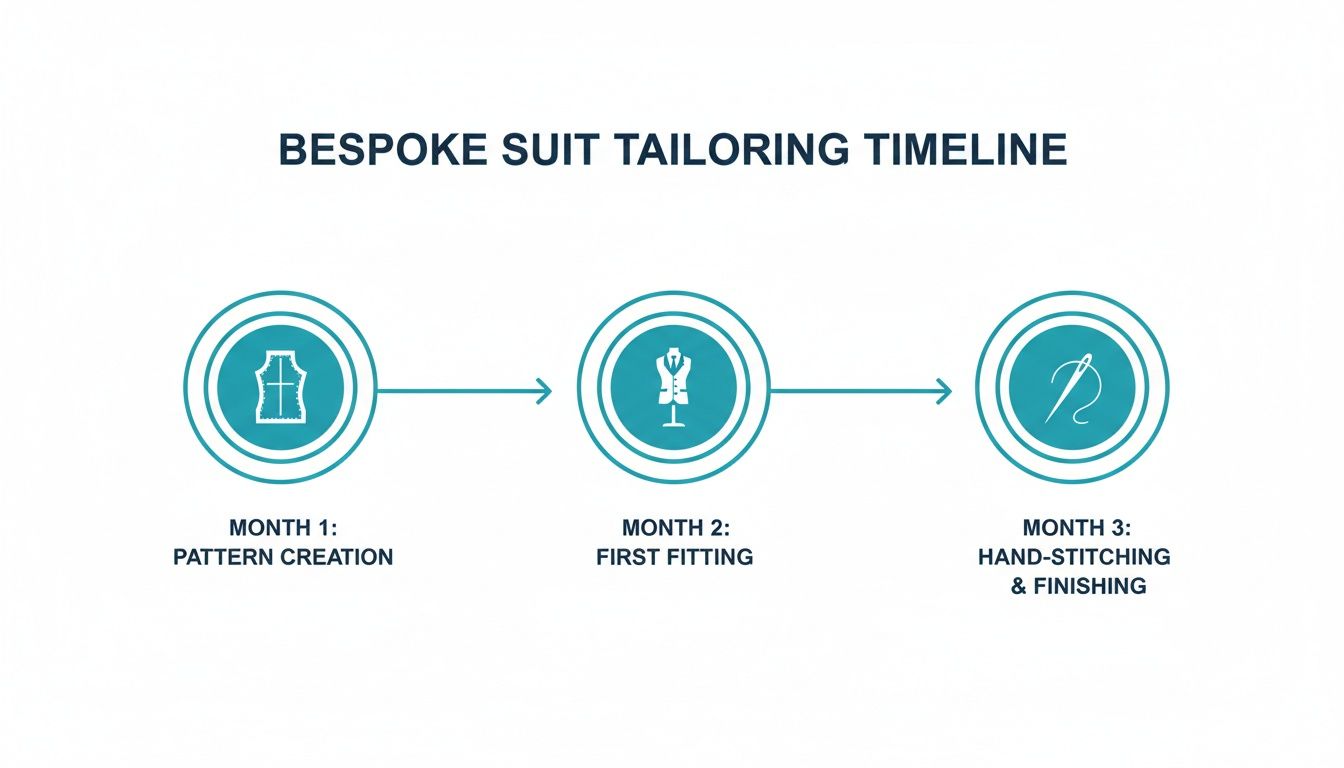
This visual flow highlights how each distinct phase builds upon the last, ensuring a methodical progression toward a perfect final product.
Refinement and Final Collection
Any fittings that follow are all about refinement. With the main structural work done, these appointments focus on perfecting the finer points. The tailor might adjust the pitch of the sleeve, nip the waist in just a fraction more, or fine-tune the break of the trousers to ensure everything sits exactly as it should.
This back-and-forth process continues until both you and the tailor are completely happy that the fit is impeccable. Only then is the suit finished, with details like the buttonholes being sewn by hand as a final touch of quality. Your journey culminates in the final collection, where you try on a garment that is no longer just a suit, but a personal statement crafted exclusively for you.
Choosing Your Fabric: The Soul of a Bespoke Suit
If the paper pattern is the blueprint of a bespoke suit, then the fabric is its very soul. The cloth you choose does more than just determine the suit's colour or pattern; it defines its personality, its comfort, and how it will live and breathe with you over a lifetime. Choosing your material is a sensory experience, a foundational moment in bespoke suit tailoring that connects your idea of the perfect suit to the finished garment.
This is less about finding a "good" fabric and much more about finding the right one for you and for the occasion. A good tailor is your guide here, helping you understand how each textile feels in your hand, how it drapes on the body, and how it behaves in the real world. The aim is to land on a cloth that doesn't just look the part, but feels right and performs brilliantly for your lifestyle.
A Guide to Premium British Cloths
At Dandylion Style, we have a deep appreciation for fine British fabrics, each with a unique character all its own. Getting to know their individual quirks and qualities will help you make a choice you’ll be happy with for years to come.
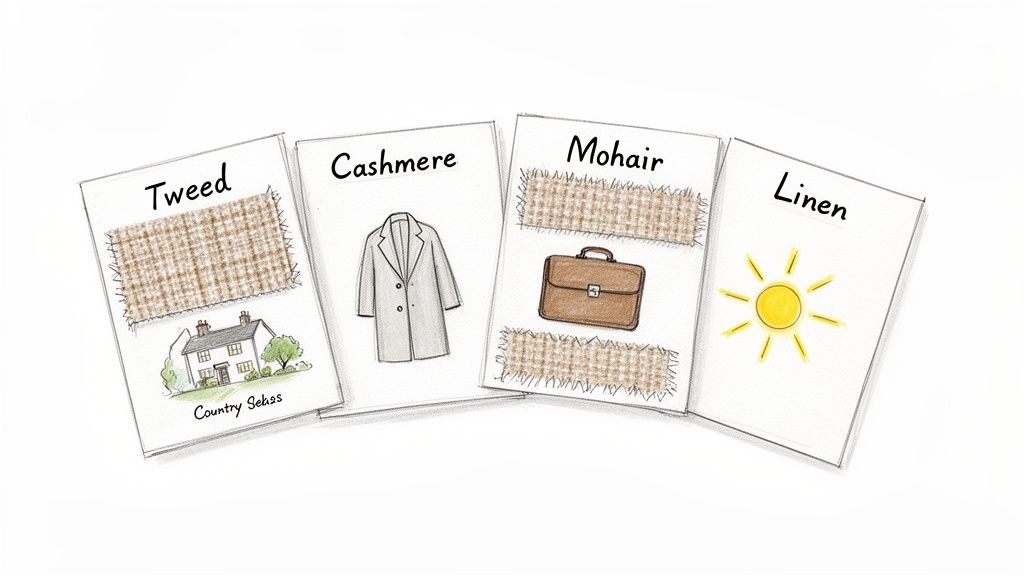
- Wool: The absolute cornerstone of classic tailoring. Wool is remarkably versatile, with a natural crimp that gives it fantastic wrinkle resistance and breathability. This makes it a superb all-rounder for a business suit that needs to perform day in, day out.
- Tweed: Rugged, durable, and brimming with character, tweed is the quintessential country cloth. Its tough, dense weave provides warmth and resilience, making it the perfect candidate for a sports jacket, a winter suit, or the attire for a rustic wedding.
- Cashmere: Famous for its incredible softness and luxurious handle, cashmere is the cloth you turn to for an elegant overcoat or a truly special blazer. It offers exceptional warmth without the weight or bulk.
This focus on exceptional cloth mirrors a wider sentiment in the UK. Quality is king in menswear, with 38% of buyers putting it above all else. This preference is fuelling a renaissance in bespoke tailoring, now valued at $192.449 million for custom suits alone, with steady growth on the horizon. It’s a ‘quiet luxury’ ethos that perfectly suits houses like ours, where master tailor Igor crafts beautiful garments from the finest cloths. For more on this, you can explore the full UK menswear market report.
Fabrics for Every Season and Occasion
Beyond the classics, other materials step in to offer specific advantages for different settings, ensuring your bespoke suit is always perfectly adapted to its environment.
A fabric does more than cover you; it communicates. Linen whispers of summer ease, while mohair speaks of sharp, modern professionalism. The right choice ensures your suit tells the story you intend.
A summer wedding or a business trip to a warmer climate, for instance, demands a completely different approach. This is where understanding how textiles perform becomes so important.
- Mohair: With its crisp feel and subtle lustre, mohair is incredibly crease-resistant and durable. It breathes beautifully, making it a fantastic choice for a sharp business suit or travel attire that needs to look immaculate all day long.
- Linen: The undisputed champion of summer fabrics. Linen offers unbeatable breathability and a relaxed, elegant texture. While it creases naturally, this is part of its charm, giving a sense of effortless style that’s perfect for warm-weather events.
Each of these textiles has its own distinct personality, and the process of finding yours is a deeply personal one. For a more detailed look at the options, you can dive into our guide on the best fabrics for suits and see how they shape the final garment. Making the right choice ensures your bespoke suit will not only fit flawlessly but will serve you beautifully for years to come.
Understanding the Value of Your Investment
When the conversation turns to bespoke suit tailoring, it naturally lands on cost. A bespoke suit is certainly a significant purchase, but looking at it as a simple expense misses the point entirely. It’s far more accurate to see it as a long-term investment in your personal presentation, your confidence, and your wardrobe.
That price tag represents a fusion of expertise, time, and world-class materials that you just won't find in mass-produced clothing. Behind every single suit is a master tailor pouring years of hard-won experience into every decision, from the first chalk mark on the cloth to the final press. This isn’t an assembly line; it’s dedicated, artisanal skill.
What Your Investment Covers
The cost of a bespoke suit directly accounts for the dozens of hours of meticulous handwork involved. Unlike a machine-made garment, key structural elements are stitched by hand to create a shape that moves with you, not against you. This human touch provides a level of comfort and durability that off-the-rack alternatives can never hope to match.
Beyond the labour, your investment secures access to some of the finest fabrics in the world. The superior quality of the cloth not only looks and feels better but also ensures the garment’s longevity, allowing it to serve you for years—if not decades.
- Master Expertise: You’re paying for the skill and artistic eye of a seasoned tailor who translates your vision into a perfectly balanced garment.
- Dozens of Hours: The process involves over 50 hours of hand-cutting, hand-stitching, and intricate finishing that machines simply cannot replicate.
- Premium Materials: The cost includes world-class fabrics, canvases, and linings that all contribute to the suit’s structure, comfort, and lifespan.
This commitment to quality tailoring is seeing a real resurgence across the UK. While London is still the main hub, growth is picking up pace in the surrounding areas. In fact, the UK's custom apparel market is projected to hit $205.27 million by 2032, which speaks volumes about the rising demand for true craftsmanship. This regional dynamism supports ateliers like Dandylion Style, allowing us to bring the bespoke experience to clients across Sussex, London, and the South East.
Cost Versus Long-Term Value
While the initial outlay is higher, the long-term value of a bespoke suit is undeniable. Think of it this way: an off-the-rack suit is often a temporary fix, frequently needing replacement after just a few years of regular wear. A bespoke garment, on the other hand, is built to last a lifetime.
A bespoke suit is an investment in yourself. The initial cost is balanced by its longevity, the confidence it inspires, and its ability to serve as a cornerstone of your wardrobe for countless important moments.
The flawless fit does more than just flatter your physique; it genuinely boosts your confidence and changes the way you carry yourself. This enduring style becomes a reliable foundation for your wardrobe, making it a particularly smart choice for life’s most significant events—weddings, major business milestones, or formal occasions. For a deeper dive, explore our definitive guide asking, are bespoke suits worth it? The answer becomes pretty clear when you weigh the one-time cost against years of impeccable service.
Caring for Your Bespoke Garment
Think of your bespoke suit as a fine piece of engineering. It’s built to last a lifetime, but like any masterpiece, its longevity hinges on how you treat it. Respecting the garment is the best way to preserve your investment, ensuring it stays as sharp and impeccable as the day you first put it on. A few simple habits make all the difference.
After a day’s wear, the first thing to do is let your suit breathe. Give it at least 24 hours on a proper hanger before it goes back into the wardrobe. This allows the natural fibres to rest, recover their shape, and shed any minor wrinkles. And on that note, always use a substantial, well-shaped wooden hanger that supports the shoulders. This preserves the very structure your tailor worked so hard to create. Thin wire hangers? They're the enemy of a bespoke jacket. Avoid them at all costs.
Maintenance and Alterations
Regular upkeep is simpler than you might think. A gentle brush with a soft-bristled garment brush after each wear will work wonders, removing surface dust and reviving the cloth. This simple act keeps the fabric looking fresh and dramatically extends the time between professional cleanings.
A word of warning: don't overdo the dry cleaning. The harsh chemicals can strip the natural oils from the wool fibres, making them brittle over time. A professional steam and press is a much better way to refresh the garment when it needs it.
One of the true marvels of bespoke suit tailoring is its ability to adapt. Your body will naturally change over the years, and a bespoke garment is cleverly built to change right along with you. Your tailor will have left generous fabric inlays within the seams, which means the waist, chest, and length can be adjusted down the line. It's this foresight that allows your suit to be let out or taken in, guaranteeing a perfect fit for decades.
Proper care even extends to when you’re on the move. To keep your suit looking its best when travelling, it pays to learn the tricks for packing a suit without wrinkles. Following these simple guidelines—for daily care, cleaning, and alterations—will ensure your bespoke suit remains a cornerstone of your wardrobe for many years to come.
Frequently Asked Questions
Stepping into the world of bespoke tailoring for the first time can feel like learning a new language. To make things clearer, we’ve put together answers to some of the questions we hear most often. The UK’s appetite for true craftsmanship is booming, with custom suit sales hitting $192.449 million recently, so you are in good company. You can dive deeper into the numbers in this in-depth custom suits market report.
How is bespoke different from made-to-measure?
The defining difference is the pattern. A bespoke suit begins with a unique paper pattern drafted from scratch exclusively for you, based on dozens of measurements and postural observations. Made-to-measure, conversely, starts with a pre-existing standard pattern which is then adjusted to your basic measurements. This foundational difference means bespoke tailoring offers an unparalleled level of customisation, fit, and comfort, as the garment is sculpted to your body through multiple fittings, a step that is absent in the MTM process.
How long does the bespoke process take?
Patience is key in creating a masterpiece. From your initial consultation to collecting the finished garment, the entire bespoke suit tailoring process typically takes between 8 and 12 weeks. This timeframe allows for the meticulous craftsmanship required at every stage: drafting your unique pattern, carefully cutting the cloth, the extensive hours of hand-stitching, and conducting several essential fittings to refine the silhouette. This unhurried, detail-oriented approach is fundamental to achieving the flawless fit and lasting quality of a true bespoke suit.
What should I budget for my first bespoke suit?
A bespoke suit is a long-term investment in your personal style and confidence. At Dandylion Style, a two-piece suit crafted from premium British cloth typically starts at £1,495. This price reflects the immense skill and time involved, including over 50 hours of a master tailor’s work, the creation of your personal pattern, and the finest materials available. While the initial outlay is higher than off-the-rack options, the superior fit, durability, and timeless style provide exceptional value for years to come.
Can a bespoke suit be altered in the future?
Absolutely. One of the hallmarks of high-quality bespoke suit tailoring is its adaptability. A skilled tailor anticipates that your body may change over time and builds the suit accordingly. Generous inlays of fabric are left within the seams of the jacket and trousers during construction. This foresight allows the garment to be let out or taken in with relative ease in the future, ensuring your investment continues to provide a perfect fit for decades, making it a truly sustainable wardrobe choice.
About the Author
Igor is the founder and master tailor behind Dandylion Style. With a deep respect for classic British tailoring and an unshakeable commitment to his craft, he has built a personal haven for sartorial excellence in Ardingly, West Sussex. His philosophy is built on a calm, considered approach, ensuring every gentleman feels guided and understood. Igor believes a suit is far more than clothing—it's an expression of individuality and confidence. He personally oversees every commission, transforming the finest cloths into a timeless work of art.
Ready to start your own bespoke journey? At Dandylion Style, we blend timeless British craftsmanship with a personal, one-to-one approach to create a suit that is entirely yours. Book your consultation today and discover the art of true bespoke tailoring.