When you think of cotton, what comes to mind? For many, it’s simply the raw fibre. But the true magic, the reason for the sheer variety of cotton fabric, lies in how those fibres are woven together. The specific weave and weight of a cloth are what transform humble cotton into everything from crisp poplin and textured Oxford cloth to rugged, durable twill.
Understanding these distinctions is what separates a novice from a connoisseur, and it's the key to making truly informed choices for your wardrobe.
Key Takeaways
- Weave Defines Character: The way cotton fibres are woven (e.g., plain, twill, basket-weave) determines a fabric's texture, drape, and suitability for different garments, from formal poplin shirts to casual Oxford button-downs.
- British Heritage Matters: Modern luxury cotton has deep roots in British industrial history, particularly in Lancashire. This legacy of innovation and quality continues to influence the world's finest shirting and suiting fabrics.
- Seasonality is Key: Lighter weaves like seersucker and lawn are ideal for warm weather due to their breathability, while denser fabrics like Oxford cloth and heavy twill provide structure and warmth for cooler months.
- Bespoke is a Tactile Experience: The best way to understand the variety of cotton fabric is through a hands-on consultation, where you can feel the differences in weight, texture, and handle to make a truly informed choice.
Your Guide to Cotton Fabrics
This guide is your essential tour through the world of cotton in gentlemen's tailoring. We're going to move beyond simple labels and delve into how a cloth's construction dictates its character—influencing everything from the sharp drape of a formal shirt to the relaxed form of an unstructured summer jacket.
Think of it as learning the language of fabric. This foundational knowledge will give you the confidence to articulate exactly what you want from your next bespoke commission.
By the end of this overview, you’ll be able to:
- Confidently distinguish between the key cotton fabrics you'll encounter.
- Appreciate how a cloth's weave and weight affect its feel, performance, and look.
- Discuss options for your made-to-measure garments with the clarity of an expert.
While our focus here is squarely on tailoring, it's fascinating to see how cotton's versatility extends into other crafts. For a completely different perspective, you can explore the different cotton fabric options for quilting to appreciate just how adaptable this natural fibre truly is.
The Legacy of British Cotton Craftsmanship
To really get to grips with the beautiful variety of cottons available for a bespoke commission today, it helps to know a little of its story. The tale of luxury cotton is woven deep into the fabric of British history, a narrative of industrial power and brilliant innovation that changed tailoring forever. This heritage was born in the north of England, particularly in the mills of Lancashire.
This region became the world’s epicentre for cotton production during the Industrial Revolution. What were once quiet towns exploded into a powerhouse of textile manufacturing, earning Manchester the nickname ‘Cottonopolis’. The sheer scale of this boom was staggering, and it laid the foundations for the fine cloths we value so much today.
The Rise of a Global Industry
This incredible growth was driven by groundbreaking inventions and an insatiable appetite for quality textiles. To put it in perspective, by 1831, cotton made up a massive 22% of all British industrial value added. Lancashire's dominance was absolute; by 1850, it was home to 69% of the UK's cotton spinning capacity, with over 2,500 mills churning out eight billion yards of cloth every year. Discover more about this industrial transformation on JPE.
This period didn't just produce vast quantities of fabric; it cultivated an atmosphere of excellence and refinement. The expertise that blossomed in these mills—from spinning ever-finer yarns to engineering complex new weaves—is the direct ancestor of the quality we look for in tailoring today.
The legacy of this era isn't just historical; you can feel it. It lives on in the superior handle, drape, and durability of the cloths we select for bespoke garments, connecting your suit or shirt to a long and proud tradition of British textile mastery.
This deep-rooted history is precisely why so many of the world’s finest shirtings and suitings still come from mills with a clear British heritage. The standards of quality set centuries ago continue to influence the premium textiles we now have available for custom tailoring. You can dive deeper into the enduring quality of these materials in our articles on British fabrics.
Decoding the Weaves in Cotton Fabrics
To really get to grips with the huge variety of cotton fabrics out there, you have to look beyond the fibre itself and focus on how it’s woven. The specific pattern of interlacing threads—what we call the weave—is what truly defines a fabric's character. It dictates the texture, the drape, and ultimately, its role in a gentleman's wardrobe.
Think of it like architectural blueprints; you can have the same raw material, but the final structure will be wildly different depending on the design. This is where we unravel the secrets behind the most essential cottons you'll encounter.
By the end of this, you'll be able to tell the crisp formality of Poplin from the rugged charm of Denim just by sight and touch. That's the kind of knowledge that empowers you to make confident, informed choices for your next bespoke piece.
The Foundational Weaves Explained
At its heart, weaving is a simple concept. It’s all about interlacing lengthwise threads (the warp) with crosswise threads (the weft). It’s the pattern of this intersection that defines the weave and gives each fabric its unique personality. For a gentleman’s shirting and tailoring, a few key weaves form the bedrock of any decent collection.
Let's break down the most prominent ones you'll find in the Dandylion Style studio.
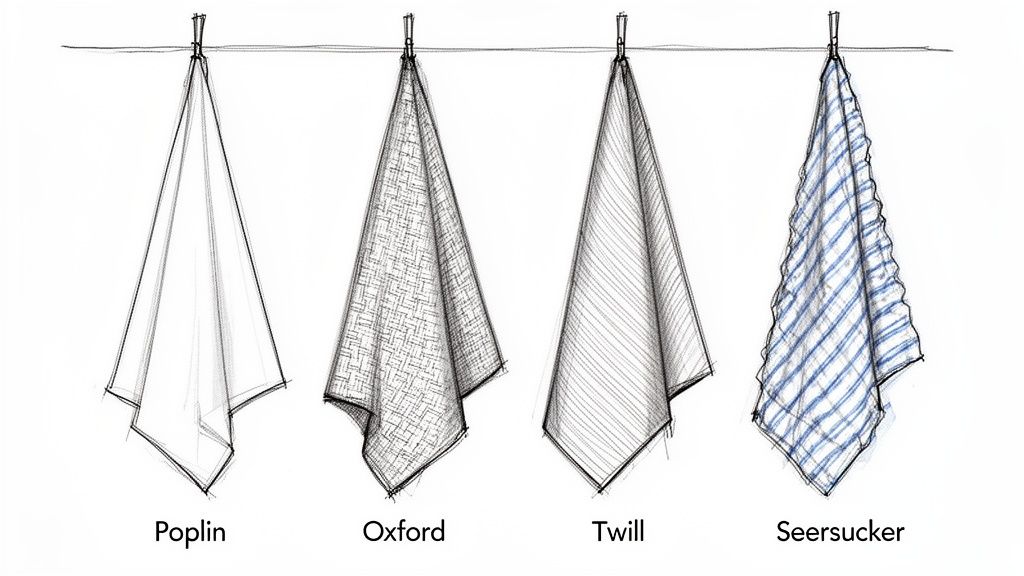
Poplin (or Broadcloth) This is the quintessential shirting fabric for formal occasions. It’s made using a simple, tight plain weave where each weft thread crosses neatly over and under a single warp thread. The result is a smooth, flat, and crisp surface with almost no texture, making it an impeccable choice for business meetings and black-tie events. Its lightweight nature also makes it incredibly breathable.
Twill You can spot a twill from a mile off by its distinct diagonal pattern. It’s a remarkably durable and versatile weave where the weft thread passes over one or more warp threads and then under two or more, with an offset on each row creating that signature diagonal line. This structure gives twill a wonderful drape, a soft feel, and makes it naturally more resistant to creasing than poplin.
The story of cotton, from its industrial roots in Lancashire to its place in modern tailoring, is a fascinating one.
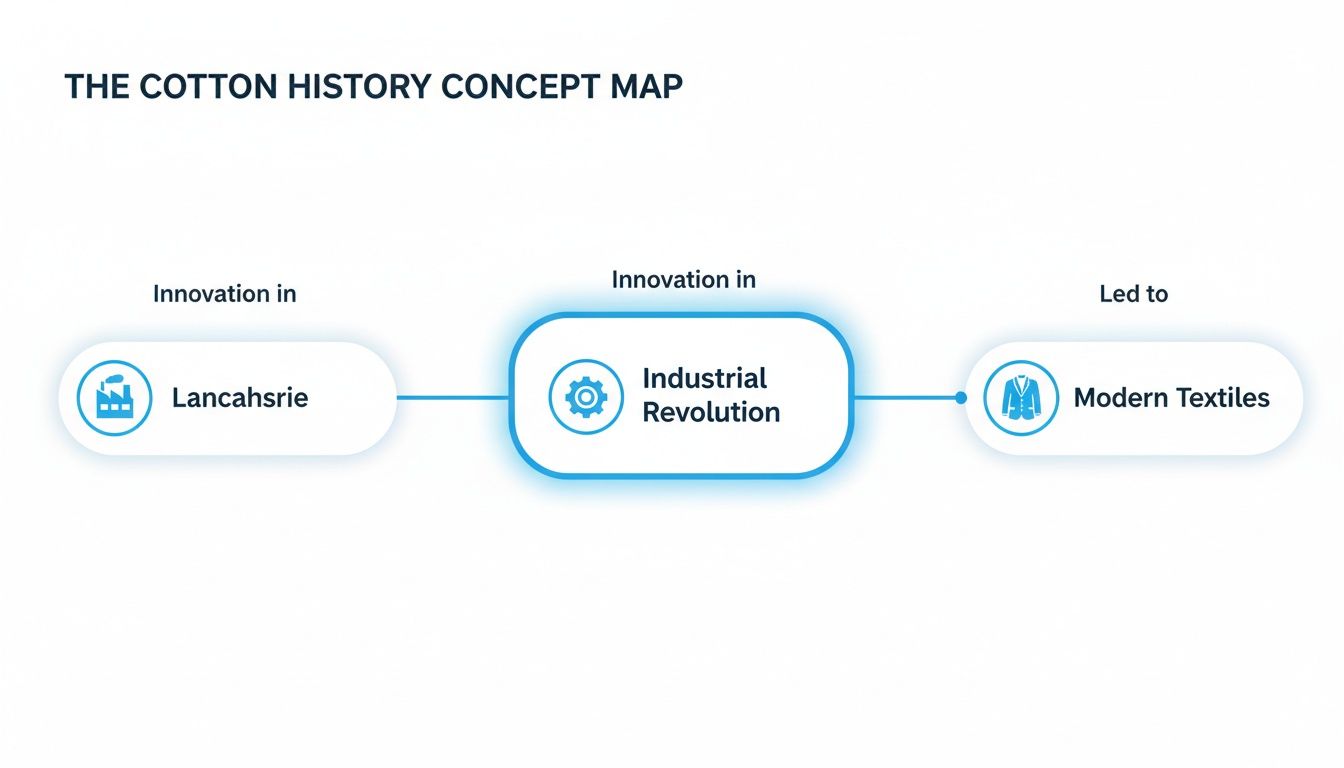
This journey really puts into perspective how the innovations of the Industrial Revolution enabled the creation of the sophisticated textiles we now take for granted in bespoke tailoring.
Exploring More Textured Cottons
Once you move past the smooth surfaces of poplin and twill, you enter a world of cottons with more pronounced textures. Each one is suited to different occasions and styles, often signalling a more relaxed or seasonal garment.
Oxford Cloth
A true staple of preppy, Ivy League style, Oxford cloth is a type of basket-weave. It’s made by crossing multiple weft threads over an equal number of warp threads. Often, the warp threads are coloured while the weft is white, giving the fabric its characteristic textured, slightly heathered look. It’s heavier and more durable than poplin, which is why it’s perfect for a classic button-down shirt that just gets softer and better with age.
Chambray
Often mistaken for a lightweight denim, chambray is actually much closer to poplin. It’s constructed with a plain weave but uses a coloured warp thread and a white weft thread. This combination creates a subtle, two-tone appearance and a lovely soft feel. It’s a fantastic, breathable option for smart-casual shirts that perfectly bridge the gap between formal and properly relaxed.
Choosing a fabric is a conversation between its character and your own. A textured Oxford cloth speaks of relaxed confidence, while a crisp poplin communicates precision and formality. The art is in matching the fabric's voice to the occasion.
Speciality Weaves for Distinctive Style
Finally, we arrive at the weaves created for specific effects, whether for performance or pure aesthetics. These are the fabrics that add a unique flair to a seasonal wardrobe, showing a deeper appreciation for textile craftsmanship.
Seersucker
This is the quintessential summer fabric, defined by its puckered, almost crinkled texture. This unique effect is achieved through a process called slack-tension weaving, where some warp threads are held tighter than others during production. The resulting puckering holds the fabric away from your skin, promoting air circulation and making it exceptionally cool to wear—perfect for unstructured summer jackets and trousers.
Denim
While we mostly associate it with workwear, denim is fundamentally a sturdy twill fabric, typically woven with an indigo-dyed warp and a white weft. That strong diagonal twill weave is what gives denim its famous strength and durability. In tailoring, we can use lighter-weight denims to craft stylish, casual shirts or even unstructured blazers for a contemporary edge. Broadening your textile knowledge to include wools and linens is always a good idea; we have a detailed guide covering the best fabrics for suits that explores these other options in depth.
Comparing Common Cotton Fabrics at a Glance
To make things a bit clearer, here’s a quick-reference table that summarises the key characteristics and typical uses of the most popular cotton fabrics we work with in bespoke tailoring.
| Fabric Type | Weave | Feel & Finish | Best For |
|---|---|---|---|
| Poplin/Broadcloth | Plain | Smooth, crisp, flat, no texture | Formal business shirts, black-tie shirts |
| Twill | Diagonal | Soft, excellent drape, visible texture | All-purpose shirts, casual trousers (Chinos) |
| Oxford | Basket-weave | Textured, durable, slightly coarse | Classic button-down shirts, smart-casual wear |
| Chambray | Plain | Soft, heathered, lightweight | Casual shirts, summer shirting |
| Seersucker | Slack-Tension | Puckered, crinkled, very light | Unstructured summer jackets, trousers, shorts |
| Denim | Twill | Sturdy, rugged, characterful | Casual shirts, unstructured blazers |
This table should serve as a handy starting point, but remember, the best way to understand a fabric is always to see it and feel it for yourself during a consultation.
Choosing the Right Cotton for the Season
Knowing your poplin from your twill is one thing; knowing when to wear them is another entirely. This is where the art of building a truly functional, stylish wardrobe comes into play. Selecting the right cotton for the season is a practical skill, one that ensures you’re not only impeccably turned out but also perfectly comfortable, whether you're navigating a sweltering city day or a brisk autumn evening.
This is where your understanding of weave and weight becomes truly powerful. For a gentleman’s wardrobe, seasonality isn’t just a detail—it’s the key to effortless style.
Dressing for Warmer Weather
When the mercury rises, your choice of cotton should be all about breathability and a lightweight handle. The aim is to choose cloths that allow air to circulate, keeping you cool and collected. Anything too dense or heavy will simply trap heat, leading straight to discomfort.
For the warmer months, these are your trusted allies:
- Seersucker: The undisputed king of summer fabrics. Its signature puckered texture is more than just a charming detail; it’s engineered for coolness, lifting the cloth away from your skin to create tiny air channels. It's an outstanding choice for an unstructured jacket or a pair of casual trousers.
- Lawn or Voile: These are exceptionally fine, almost ethereal, plain-weave cottons. They have a silky-smooth feel and a beautiful, airy quality that makes for luxurious and incredibly breathable summer shirts.
- Chambray: With its laid-back charm and lightweight feel, a chambray shirt is a versatile summer workhorse. It offers a touch more character than a standard poplin but remains light enough for even the warmest days.
While cotton is a superb summer choice, it’s worth weighing it against other seasonal heroes. For a deeper look into warm-weather tailoring, our guide on the perfect summer linen suit offers valuable insights into another brilliant option.
Selecting Cottons for Cooler Months
As the weather turns, your focus should naturally shift towards fabrics with more substance, structure, and a touch of warmth. This isn’t about sacrificing comfort; it's about choosing cottons with a denser construction. These cloths provide a subtle barrier against the chill and pair beautifully with layered outfits.
A gentleman’s wardrobe is built on nuance. The subtle shift from a lightweight lawn shirt in July to a robust Oxford cloth in October is a quiet signal of sartorial intelligence and respect for the season.
Heavier Oxfords are a brilliant starting point. Their robust basket-weave provides excellent durability and a pleasant heft that feels substantial without being stifling. Similarly, a sturdy twill, like that used for quality chinos or a casual overshirt, offers a denser structure that provides both warmth and a superb drape.
Finally, a mid-weight denim shirt becomes an indispensable layering piece, perfect under a tweed jacket or a cashmere jumper for a refined yet relaxed weekend look. By matching your fabric to the forecast, your comfort and style remain constant, no matter what the British weather throws at you.
Navigating Your Bespoke Fabric Selection
Reading about the vast variety of cotton fabric is one thing; feeling it between your fingers is another experience altogether. This is where the bespoke journey truly comes alive—transforming technical knowledge into a tactile discovery, where your vision and our expertise intersect to craft something uniquely yours.
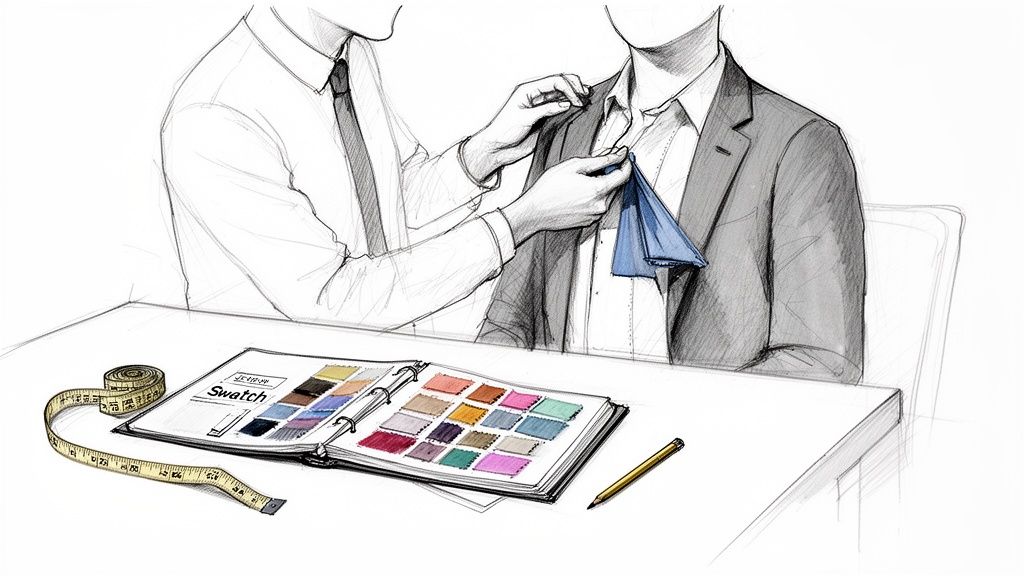
The process is less of a selection and more of a conversation. It all starts with the swatches. We encourage you to feel the difference firsthand—run your fingers over the crisp, cool smoothness of a poplin, the subtle diagonal texture of a twill, or the hearty basket-weave of an Oxford. This physical connection is paramount; it’s the only real way to grasp the subtle differences in weight, handle, and drape that words and pictures can only hint at.
Expert Guidance for a Perfect Choice
During your consultation, we’ll move beyond just how the fabric looks and feels. A master tailor’s eye is crucial for seeing the practical side of things. How will this cloth perform throughout your day? We’ll talk about what really matters: wrinkle resistance, durability for frequent wear, and how a fabric's character will complement the intended cut of the garment. For instance, a stiff, structured cotton might be perfect for a sharp business shirt, whereas a softer, more fluid weave is far better suited to a relaxed weekend piece.
This heritage of choice has deep roots. In Victorian Britain, the variety of cotton fabrics was astounding, from sturdy denims for workers to delicate lawns for the elite, all powered by inventions that revolutionised tailoring precision. By the mid-1800s, Lancashire's mills were producing an incredible eight billion yards annually—half the globe's supply—driven by innovations like John Kay's flying shuttle.
The goal of a bespoke consultation is to align the character of the cloth with the character of the wearer. It’s about ensuring your final choice is a perfect reflection of your vision, lifestyle, and aesthetic.
This is precisely why expert guidance is so invaluable. It demystifies the vast world of options, ensuring your final decision isn't just beautiful but is perfectly suited to you and your life. This collaborative journey is what makes the final garment so much more than just clothing; it becomes a true extension of your personal style.
To get a feel for the possibilities before we meet, you can begin to design a suit with our online tool.
Caring for Your Bespoke Cotton Garments
A bespoke garment is an investment, but not one to be locked away. Its true value comes from being worn and enjoyed, and with the right care, it will only get better with age. Looking after your custom cotton pieces isn't a chore; it’s the final, personal step in the tailoring process, ensuring the tailor's work endures for years to come.
Think of it this way: a crisp poplin shirt needs a slightly different touch than a rugged Oxford cloth. A warm wash followed by a steam iron while the poplin is still a little damp is the secret to restoring that signature sharpness. It’s a simple routine that keeps the fabric’s structure exactly as intended.
Tailoring Your Care Routine
Just as we tailor the cloth to you, you should tailor your care routine to the cloth. Each weave has its own character, and a little specific attention goes a long way. A sateen, for instance, with its delicate lustre, prefers a gentle wash and a cooler iron to protect that beautiful sheen. An Oxford, on the other hand, is a tough character that can handle higher temperatures and actually softens beautifully with every wash.
- Washing: Stick to a gentle detergent and always check the guidance. For most of our high-quality shirtings, a 40°C wash is the sweet spot.
- Drying: If you can, always hang your shirts to air dry. It’s far kinder to the fibres than a tumble dryer and the best way to prevent any risk of shrinkage.
- Ironing: The professional's trick is to iron garments while they're still slightly damp. Use the correct heat setting for the fabric, and you’ll find the job much easier and the results far superior.
The goal isn’t just cleaning; it's preservation. A thoughtful care routine is what turns a beautiful new garment into a reliable old friend, a cornerstone of your wardrobe that feels just right, every single time.
Frequently Asked Questions About Cotton Fabrics
What is the real difference between Poplin and Twill for a business shirt?
The core difference is the weave. Poplin uses a simple grid-like plain weave, creating a smooth, crisp, and flat surface ideal for formal business and black-tie shirts. Twill features a visible diagonal pattern, which gives it a softer feel, a better drape, and makes it more resistant to creasing. While poplin offers a traditional, sharp look, twill provides a touch more texture and durability, making it a versatile choice for the modern professional’s wardrobe, balancing elegance with everyday practicality.
Is an Oxford cloth shirt too casual for the office?
While traditionally more casual, a well-fitted Oxford cloth button-down is perfect for most modern business-casual settings. Its textured basket-weave offers a look of relaxed confidence, especially when paired with a tailored blazer and smart trousers. However, for highly conservative corporate environments or formal meetings, a smoother poplin or twill remains the safer and more appropriate choice. It’s a matter of matching the fabric’s character to the specific demands of your workplace, ensuring a polished appearance every time.
Why would I choose a cotton suit over a wool one?
A cotton suit is an excellent choice for warmer weather and less formal occasions. Its natural breathability and lighter weight provide superior comfort when temperatures rise. Stylistically, cotton offers a sharper, more structured silhouette compared to the softer drape of many wools, making it perfect for summer weddings or creative professional environments. While a wool suit is a versatile year-round staple, a bespoke cotton suit is an essential addition for seasonal comfort and a distinct, crisp aesthetic in a gentleman's wardrobe.
How does yarn count affect the quality of a cotton shirt?
Yarn count measures the fineness of the cotton thread; a higher number indicates a thinner, smoother yarn. This results in a fabric that feels more luxurious and silky against the skin. However, extremely high yarn counts can make a fabric more delicate and less durable for daily wear. The art of bespoke tailoring is finding the perfect balance—selecting a yarn count that provides a premium handle and beautiful drape while ensuring the shirt possesses the necessary longevity for its intended purpose.
Can seersucker be used for anything other than jackets?
Absolutely. While famous for jackets, seersucker’s puckered texture and exceptional breathability make it ideal for other warm-weather garments. Bespoke seersucker trousers are a comfortable and stylish alternative to chinos, and a full suit makes a confident statement at any summer event. Its natural resistance to creasing also makes it an excellent travel fabric for a gentleman on the move. You can pull a seersucker piece from a suitcase and it will look sharp with minimal fuss, ready for any occasion.
About the Author
My name is Igor, and I am the founder of Dandylion Style. With a deep passion for the heritage of British craftsmanship, I view tailoring not just as a job, but as an art form. My approach combines time-honoured techniques with a modern understanding of fit, comfort, and the nuanced variety of cotton fabric. I believe in working collaboratively with each client, offering honest guidance to help them discover a personal style that is both timeless and authentic. Every garment that leaves my workshop reflects a commitment to impeccable quality.
Ready to experience the difference bespoke makes? Explore our services at Dandylion Style and book your personal consultation today.