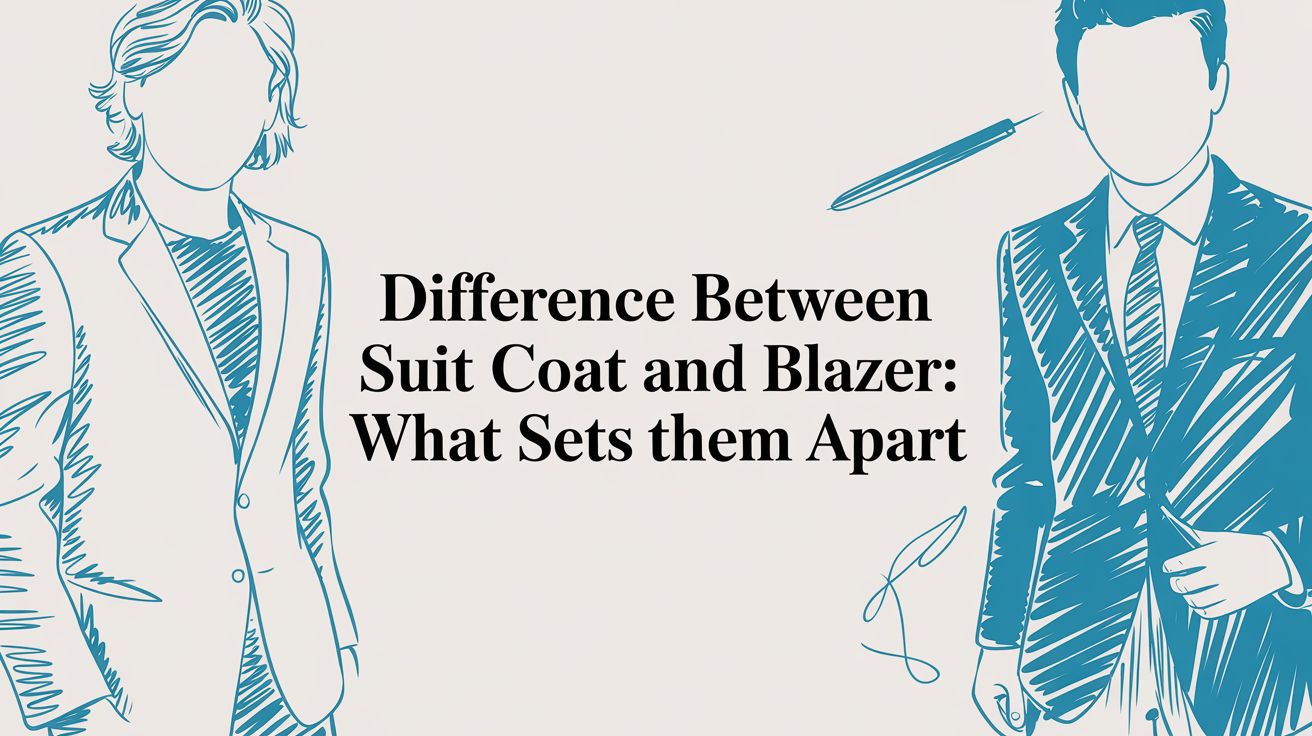
At its heart, the difference between a suit coat and a blazer is elegantly simple. A suit coat is born as part of a complete, matching suit. A blazer, on the other hand, is a standalone jacket, designed from the outset for versatility.
You’d never wear a suit coat without its original trousers; it’s one half of a single, formal whole. The blazer, by contrast, is made to be paired with all manner of separate trousers, from classic chinos to grey flannels.
Key Takeaways
- Origin & Pairing: A suit coat is part of a matching suit and should only be worn with its corresponding trousers. A blazer is a standalone garment designed to be paired with non-matching trousers.
- Formality: Suit coats are inherently more formal due to their structured build and fine fabrics. Blazers are less formal, featuring a softer construction and a wider range of textured materials, making them ideal for business-casual and smart-casual occasions.
- Construction: Suit coats typically have padded, structured shoulders and a fully or half-canvassed interior for a sharp silhouette. Blazers often feature soft, natural shoulders with less internal structure for a more relaxed drape.
- Details: The details are telling. Suit coat buttons are subtle and match the fabric. Blazer buttons are a statement piece, often made of contrasting metal or mother-of-pearl. Pockets on suit coats are sleek (jetted or flap), while blazers often have more casual patch pockets.
Key Distinctions at a Glance
But the real story goes much deeper than just the trousers. The differences are woven into their very DNA—from their internal construction and fabric choice to the finer points of styling. It’s a distinction rooted in the rich history of gentlemen’s tailoring.
This heritage is especially strong here in the UK, where the blazer’s story begins with the Royal Navy’s HMS Blazer in 1837. This history still shapes the market today, with UK revenue for coats and jackets hitting a remarkable US$2.37 billion. For our clients at Dandylion Style, a bespoke suit coat offers precision for a wedding, while a custom blazer provides adaptable style for business-casual events.
While this guide focuses on these two cornerstones of the wardrobe, you might also find our article on the difference between a sports coat and a blazer useful for exploring further nuances.
Suit Coat vs Blazer: A Direct Comparison
To quickly see how these two garments stack up, this table breaks down the core attributes that truly define each jacket.
| Attribute | Suit Coat | Blazer |
|---|---|---|
| Ensemble | Part of a matching suit with identical trousers | A standalone jacket paired with non-matching trousers |
| Formality | High (Formal, Business Professional) | Medium (Business-Casual, Smart-Casual) |
| Fabric | Fine worsted wools, flannel, smooth textures | Hopsack, serge, tweed, flannel; often textured |
| Buttons | Matching horn or corozo buttons | Contrasting metal, mother-of-pearl, or enamel |
| Construction | More structured with padded shoulders | Less structured with softer, natural shoulders |
Ultimately, knowing these distinctions allows you to choose the right tool for the right job, ensuring you’re always perfectly dressed for the occasion.
Comparing Construction and Silhouette
To really get to the heart of what separates a suit coat from a blazer, we need to look under the bonnet. The way each garment is built—its very architecture—defines its purpose and silhouette. These differences aren't accidental; they're the result of deliberate tailoring choices that dictate how the jacket drapes, feels, and presents itself to the world.
Think of this as a quick anatomy lesson. It explains why a suit coat feels like a piece of formal armour, while a blazer acts as an adaptable, easy-going companion. Every detail, from the shoulders right down to the pockets, tells you exactly what the garment was designed for.
The Foundation: Internal Canvassing
At the core of any quality tailored jacket is the canvassing. This is a layer of material, usually a blend of horsehair and wool, that’s sewn between the outer fabric and the inner lining. This crucial layer gives the jacket its shape and structure, allowing it to mould beautifully to your body over time.
A suit coat is almost always canvassed to achieve that sharp, formal silhouette. The options are generally:
- Full Canvas: This is the gold standard of tailoring. The canvas runs all the way from the shoulder down to the hem, offering the best possible drape and longevity as it creates a fluid, three-dimensional shape.
- Half Canvas: A more common and slightly more accessible method. Here, the canvas extends from the shoulder through the chest and lapels, giving structure where it’s most needed while keeping the lower half of the jacket a bit lighter.
Blazers, on the other hand, often have a less rigid construction, especially those intended for casual wear. They might be half-canvassed, or they could feature a fused construction where the inner lining is glued to the fabric. While it’s a less traditional approach, fusing can create a lighter, more relaxed garment that’s perfectly suited to a blazer's versatile nature. It’s a big part of why a blazer feels less restrictive than a suit coat.
A fully canvassed suit coat is a real investment in form and fit. Over years of wear, the canvas literally shapes itself to your body, creating a garment that feels like it was made just for you. A blazer’s softer construction, in contrast, prioritises immediate comfort and a more casual drape right from the first wear.
Shaping the Shoulders
The shoulder line is arguably the most telling feature of a jacket’s silhouette. It instantly signals the garment's level of formality. A suit coat is built to project authority and confidence, which it achieves with a structured shoulder. This involves using padding to create a crisp, clean line that enhances the wearer’s physique, making the shoulders appear broader and more defined.
A blazer, however, often takes the opposite route. Many modern and classic blazers feature a soft shoulder, sometimes called a natural shoulder or the Italian spalla camicia ('shirt shoulder'). This construction uses very little or no padding, allowing the jacket to follow the natural curve of your shoulder. The result is a much softer, more relaxed silhouette that perfectly matches the blazer’s less formal character.
This single difference in shoulder construction fundamentally changes how the jacket looks and feels. The structured shoulder of a suit coat gives a formal, commanding presence, while the soft shoulder of a blazer offers a sense of ease and effortless style.
Pockets and Buttons: The Telling Details
It’s often the small details that speak the loudest. The style of the pockets and the choice of buttons are dead giveaways to a jacket's intended purpose and formality.
Pocket Styles:
- Suit Coats favour sleek, minimalist pockets to maintain those clean, uninterrupted lines. Jetted pockets, where the pocket is a simple slit sewn into the jacket’s facing, are the most formal option. Flap pockets are also common but are considered a touch less formal.
- Blazers very often feature patch pockets, which are sewn onto the outside of the jacket like a patch. This is a more casual style that adds a bit of texture and a utilitarian feel, harking back to the blazer's sporting origins.
Button Choices:
The buttons are one of the most obvious visual clues that separate these two garments. On a suit coat, the buttons are chosen for their subtlety. They’re typically made from materials like horn or corozo and are designed to blend with the colour of the fabric. Their job is to be functional but discreet.
A blazer’s buttons, in stark contrast, are meant to be seen. They are deliberately chosen to contrast with the fabric. Classic options include polished brass, pewter, silver-toned metal, or mother-of-pearl. These distinctive buttons are a true hallmark of the blazer, tracing their roots back to its naval heritage.
While we've focused on the key construction differences here, you can dive deeper into the blazer vs suit jacket debate in our more direct comparison guide. Ultimately, it’s these intentional design choices in construction, shoulders, and finishing touches that make each garment so wonderfully unique.
A Guide to Fabrics, Weaves, and Patterns
The fabric of a jacket is its first handshake—it instantly tells a story about its purpose, formality, and heritage. The fundamental difference between a suit coat and a blazer is deeply woven into their respective materials. One is designed for seamless unity, the other for standalone character.
A suit coat is always crafted from finer, smoother fabrics to create a perfectly consistent appearance with its matching trousers. Think of luxurious worsted wools, soft flannels, and rich cashmere blends. These materials are chosen for their elegant drape and uniform finish, ensuring the suit functions as a single, cohesive statement.
Conversely, a blazer’s fabric selection is far more diverse and often more textured. Its role as an independent garment invites a broader palette of materials designed to complement, not match, the trousers it is paired with. This is where the blazer's personality truly gets to shine.
The Refined Palette of Suit Coat Fabrics
The world of suiting fabrics is one of understated elegance and precision. The goal is to achieve a sharp, clean silhouette, and the material is the primary tool for this.
Key fabrics for suit coats include:
- Worsted Wool: This is the absolute cornerstone of high-quality suiting. The wool fibres are combed to lie parallel before being spun, creating a fabric that is incredibly smooth, strong, and wrinkle-resistant. It’s perfect for a sharp, professional look.
- Flannel: Known for its softness and slightly milled finish, flannel offers warmth and a touch of texture without sacrificing formality. A grey flannel suit is a timeless choice for the colder months.
- Cashmere Blends: For an added touch of luxury and an exceptionally soft hand-feel, wool is often blended with cashmere. These suits drape beautifully and provide superior comfort.
The patterns you’ll find on suit coats are typically subtle and classic—think solid colours, delicate pinstripes, or faint chalk stripes. These restrained patterns maintain the garment's formal integrity, ensuring it remains appropriate for business and formal occasions. Exploring the best fabrics for suits can offer deeper insights into making the perfect selection.
The Textured World of Blazer Materials
A blazer is a celebration of texture and versatility, and its fabrics absolutely reflect this spirit. Because it stands alone, a blazer can afford to be more adventurous in its material and pattern, drawing on its rich sporting and naval heritage.
Popular blazer fabrics offer much more visual interest:
- Navy Serge: The original blazer fabric, serge is a durable twill weave that holds its shape well, making it the classic choice for a timeless navy blazer.
- Tweed: Hailing from the British countryside, tweed is a rugged, textured wool perfect for a more rustic, academic look. Patterns like herringbone or Donegal are common here.
- Hopsack: This is a lightweight, basket-weave fabric that is highly breathable and wrinkle-resistant, making it an excellent choice for a travel or summer blazer.
- Linen: For warm weather, nothing beats the relaxed, airy feel of linen. Its natural tendency to wrinkle is part of its charm, lending it an air of effortless style.
A blazer’s standalone nature is an invitation for bolder patterns. Classic choices like windowpane, Prince of Wales, or gun club checks are perfectly at home on a blazer, allowing you to express more personal style than a conservative suit coat would permit.
The market clearly reflects these distinct roles. In the UK, recent statistics show that blazer jackets reached USD 2,542.6 million in sales within semi-formal segments, outpacing suit coat-integrated formalwear by 18% in urban office adoption. This highlights a significant shift in workplace attire, where the blazer's versatility is highly valued. While a bespoke three-piece suit remains the gold standard for formal weddings, a standalone blazer made from British linen is the ideal choice for more casual events. This clear distinction in fabric and function is what truly defines the difference between a suit coat and a blazer.
Choosing The Right Jacket For Any Occasion
We've covered the nuts and bolts of how a suit coat and a blazer are constructed, but knowing the theory is one thing. Putting it into practice is where style truly comes alive. The right choice isn't about which jacket is "better"—it's about context. The occasion, the setting, and the statement you want to make are everything.
This guide will walk you through real-world scenarios, cutting through the guesswork. From a formal wedding to a laid-back weekend get-together, mastering these distinctions ensures you always look the part, turning your wardrobe into a powerful tool for self-expression.
Weddings And Formal Celebrations
When it comes to weddings, the two most important factors are the dress code and your role in the proceedings. As part of a matching suit, the suit coat is the non-negotiable standard for formal ceremonies, particularly for anyone in the wedding party.
A groom, for instance, needs the sharp, unified silhouette that only a bespoke suit can deliver. The single, unbroken line created by the matching coat and trousers shows a deep respect for the gravity of the occasion. Likewise, for guests at a formal or black-tie optional wedding, a dark, impeccably tailored suit is always the correct and most respectful choice. For a deeper dive into formalwear, feel free to explore our guide on crafting a formal outfit for a man.
This is where the blazer gets to shine, though. For less formal daytime events or destination weddings, it's the perfect guest attire. A navy or light-coloured blazer paired with smart trousers—think grey flannels or stone-coloured chinos—strikes that perfect balance between respectful and effortlessly relaxed.
The Professional Environment
In the business world, the line between a suit coat and a blazer often mirrors the culture of your industry. In traditional, buttoned-up sectors like finance or law, the suit remains king. The structured authority of a suit coat projects professionalism and a sense of serious purpose that nothing else can quite match.
But in the modern business-casual office, the blazer is the undisputed champion. As workplaces have become more relaxed, so has the attire. A blazer's incredible versatility allows it to pair with an endless variety of trousers and shirts, making it an absolute must-have in creative fields, tech start-ups, and any office that has moved beyond the suit-and-tie mandate. If you're weighing your options, you might find some great ideas in this resource about finding the best blazers for work.
The blazer's takeover in professional settings is impossible to ignore. UK consumer data shows men's blazer demand dominating at 55% of the USD 2.37 billion coats market, while suit coats in formal segments account for 40%. This shift is heavily influenced by a 28% spike in business-casual dress codes post-pandemic, cementing the blazer's role as a modern workplace staple.
Social And Casual Engagements
For almost any social event on your calendar—from dinner parties and gallery openings to weekend brunches—the blazer offers a level of versatility and style that's second to none. It's the ultimate garment for elevating a casual outfit without ever looking like you've tried too hard.
The blazer's real strength is its ability to bridge that tricky gap between smart and casual. Here are a few timeless pairings:
- With Chinos: A classic navy blazer with beige or khaki chinos is a preppy, can't-miss combination that always looks sharp.
- With Flannel Trousers: For a sophisticated yet comfortable look in cooler weather, you can't beat a tweed or navy blazer with a pair of grey flannel trousers.
- With Denim: A soft-shouldered blazer worn over a pair of well-fitting, dark-wash jeans creates a contemporary smart-casual look that’s perfect for a night out.
This simple flowchart can help you decide on the right fabric based on how formal the event is.
As the visual guide shows, formal occasions demand smooth, refined fabrics like worsted wool. Casual settings, on the other hand, are the perfect opportunity to play with more textured and relaxed materials like tweed or linen.
Ultimately, the suit coat is for occasions that call for uniformity and respect, while the blazer is for moments that celebrate individual style and personality.
The Bespoke Process at Dandylion Style
Knowing the difference between a suit coat and a blazer is one thing. Commissioning one is something else entirely. It’s where theoretical knowledge becomes a tangible, personal expression of style. At Dandylion Style, we guide you on this journey, transforming concepts of fabric and form into a garment that is unequivocally yours.
It all starts with a personal consultation with our master tailor, Igor. This is far more than just taking measurements; it's a collaborative conversation. We’ll discuss your lifestyle, what you need from the garment, and your sartorial ambitions. Whether you’re after the structured authority of a suit coat or the relaxed character of a blazer, this meeting lays the blueprint for everything that follows.
From Premium Cloth to Perfect Form
Our studio in West Sussex is home to a curated library of the finest British fabrics. We’ll present you with premium cloths from renowned mills, letting you feel the difference between a slick worsted wool destined for a suit and a textured hopsack perfect for a blazer. You will have a hand in every element, from the feel of the cloth to the colour of the lining.
Once the fabric is chosen, we take a comprehensive set of measurements to draft your unique paper pattern. This is the very essence of bespoke—a garment cut from scratch, for you and you alone.
Bespoke tailoring isn’t just about getting a perfect fit. It’s about creating a garment that enhances your natural posture and presence. The right button stance, lapel width, and shoulder construction all work in concert to build a silhouette that is both comfortable and commanding.
Meticulous Fittings and Personalisation
Creating your suit coat or blazer involves a series of meticulous fittings. These are critical stages where we refine the garment's shape directly on your body, ensuring an impeccable drape and complete freedom of movement. We’ll adjust the shoulders, sculpt the waist, and perfect the sleeve pitch with painstaking attention to detail.
This is also where your personal style choices truly come to life.
- Lapel Style: Will it be a classic notched lapel, a formal peak, or something more relaxed to define your jacket’s character?
- Button Stance: We position the buttons to flatter your torso, creating a balanced and proportionate look.
- Pocket Details: You can decide between formal jetted pockets for a suit coat or more casual patch pockets for a blazer.
- Linings and Threads: Select a lining that expresses your personality or choose a contrast stitching for a subtle, custom touch.
This journey, from that first conversation to the final fitting, ensures your new garment is more than just clothing. It is a reflection of your taste and a genuine investment in enduring style. You can explore the full story of Dandylion bespoke tailoring on our website to see our methods in more detail. The result is a suit coat or blazer that not only fits perfectly but feels entirely your own.
Frequently Asked Questions
Can I wear a suit coat as a blazer?
While technically possible, it is strongly advised against. A suit coat is designed to be worn with its matching trousers, and wearing it separately creates an orphaned look. More importantly, it causes uneven wear and fading between the jacket and trousers, effectively ruining the suit for future use as a complete ensemble. A blazer is specifically designed as a standalone piece, making it the appropriate choice to pair with different trousers.
What is the main difference in buttons?
The buttons provide one of the clearest visual distinctions. A suit coat features subtle, understated buttons, typically made from horn or corozo, that are designed to match and blend with the fabric for a cohesive, formal appearance. In contrast, a blazer’s buttons are a statement detail. They are made to contrast with the fabric, with classic options including polished brass, mother-of-pearl, or pewter, reflecting the blazer's naval and sporting origins.
Which is more versatile, a suit coat or a blazer?
The blazer is far more versatile. As a standalone garment, it can be dressed up or down with ease, pairing with everything from grey flannel trousers and chinos to smart denim. This adaptability makes it a cornerstone of any smart-casual or business-casual wardrobe. A suit coat, on the other hand, has only one pairing partner: its matching trousers. This limits its use to formal or business professional settings where the full suit is required.
How does the shoulder construction differ?
The shoulder construction reflects each jacket's purpose. A suit coat typically has a structured, padded shoulder to create a sharp, authoritative silhouette suitable for formal occasions. This enhances the wearer’s frame. A blazer, by contrast, usually features a soft or natural shoulder with minimal or no padding. This allows the jacket to follow the body's natural lines, resulting in a more relaxed, comfortable drape that is perfect for its less formal character.
Is there a difference in the fabrics used?
Yes, the fabric choice is a key differentiator. Suit coats are crafted from fine, smooth fabrics like worsted wool or flannel to ensure a consistent, elegant look with their matching trousers. The patterns are usually subtle, such as pinstripes. Blazers embrace more texture and variety. Materials like hopsack, tweed, serge, and linen are common, offering more visual interest. Blazers can also feature bolder patterns like windowpane or herringbone, as they don't need to match any specific trousers.
About the Author
Igor is the founder and master tailor behind Dandylion Style. With a deep-seated passion for classic gentlemen's tailoring and an expert's eye for fine British fabrics, he brings a personal touch to every commission. Based in Ardingly, West Sussex, Igor offers a travelling tailor service that covers Sussex, London, and the South East. He is dedicated to the bespoke process, focusing on creating enduring garments that capture the quiet refinement and unique character of each client. His commitment is to attentive service and the art of crafting a perfect fit.