A tweed sport coat is a true classic, a genuine cornerstone of any well-rounded wardrobe. It perfectly marries a rugged, country heritage with a timeless, easy-going elegance. Born from the practical needs of British outdoor life, this versatile jacket is all about its durable, textured wool fabric and iconic patterns. It’s simply a masterpiece of classic menswear, and its versatility is second to none.
Key Takeaways
Heritage and History: The tweed sport coat originated in 19th-century Scotland as durable workwear before being adopted by the aristocracy for country sports, cementing its legacy as a symbol of rugged refinement.
Fabric is Key: Understanding tweed types (like Harris, Donegal), patterns (Herringbone, Houndstooth), and weights (from lightweight 8oz to heavy 18oz+) is crucial for choosing the right jacket for the season and occasion.
Versatile Styling: A tweed jacket can be styled for various settings, from a relaxed weekend look with jeans to a smart-casual office outfit with flannel trousers or even as a distinctive choice for a rustic wedding.
The Bespoke Advantage: A bespoke tweed sport coat offers an unparalleled fit and lasting quality, tailored to your specific measurements and style preferences, making it a true sartorial investment.
Mastering the Tweed Sport Coat
The tweed sport coat is so much more than just another jacket; it's a wearable piece of history. Its journey from the windswept Scottish Highlands to the modern gentleman's wardrobe is a real testament to its enduring appeal. Getting to grips with its key elements is the first step to truly mastering this iconic garment.
Think of this guide as your definitive roadmap. We'll walk through everything you need to know to wear a tweed jacket with genuine confidence and flair.
Its Storied Origins: We’ll look at how it evolved from practical country wear into a symbol of relaxed sophistication.
Iconic Fabrics and Patterns: You'll learn to tell your Harris from your Donegal, and your Herringbone from your Houndstooth.
Versatile Styling Principles: We'll cover how to pair your jacket for any occasion, from a casual weekend to a rustic wedding.
The Bespoke Advantage: You’ll understand why a custom fit elevates the jacket from merely good to truly exceptional.
Navigating the subtle differences between jacket types can be a bit confusing at first. To clear things up, you can explore the key differences between a sports coat and a blazer in our detailed article. This kind of knowledge is what helps you build a more intentional and effective wardrobe.
From Highland Estates to Modern Wardrobes
The story of the tweed sport coat doesn't begin on a runway or in a tailor’s workshop. It starts on the rugged, windswept landscapes of 19th-century Scotland. It was born from pure necessity—a garment for landowners and gamekeepers who needed something durable, warm, and stubbornly weather-resistant to withstand the damp, unforgiving climate of the Highlands.
Its original purpose was all function, no fuss. A shield against the elements for men working the land. This tough, densely woven woollen fabric, known in Gaelic as clò-mòr (or "the big cloth"), was the perfect material for the job. Its natural lanolin oils repelled water, and its tight weave provided incredible insulation. Each thread felt like it carried the very character of the land itself.
The Rise of the Estate Tweed
The shift from humble workwear to a symbol of aristocratic leisure began in the mid-1800s. Suddenly, the tweed jacket was the perfect garment for country sports, blending raw practicality with a certain social status. After Prince Albert acquired Balmoral in 1848, English nobility flocked to purchase Scottish estates, commissioning unique tweeds designed to blend into the local terrain of heather, rock, and bracken. You can discover more about this fascinating history of tweed and its aristocratic roots.
This gave rise to ‘estate tweeds’—proprietary patterns that served as the exclusive uniform for a landowner and his staff. Each design became a unique sartorial signature, instantly identifying the wearer's affiliation.
An estate tweed was more than just a pattern; it was a badge of identity. Wearing the Lovat tweed, for example, signalled a connection to the Fraser of Lovat clan, creating a sense of belonging and heritage woven directly into the cloth.
From Countryside Pursuit to Sartorial Staple
Field sports like shooting, fishing, and stalking became wildly popular among the Victorian elite. Trendsetters like the Prince of Wales, later King Edward VII, were instrumental in popularising tweed as the proper attire for these leisurely country pursuits. The jacket evolved to meet their needs, with practical features like bellow pockets for shotgun cartridges and action-back pleats for freedom of movement.
The belted Norfolk jacket, often seen as the direct ancestor of the modern sport coat, became the standard for the active country gentleman. Its practicality and distinct style cemented tweed’s place in the menswear lexicon, forever associating it with a life of refined outdoor activity. This was the moment the jacket’s perception shifted from humble workwear to aspirational country attire.
Securing a Legacy: The Harris Tweed Orb
No discussion of tweed’s history is complete without mentioning the legendary Harris Tweed. Handwoven by islanders in the Outer Hebrides of Scotland, its quality became a benchmark. To protect this unique craft from cheap imitations, the Harris Tweed Authority was established in 1909.
They created the Orb Certification Mark, one of the oldest certification marks in the world. This iconic stamp is a guarantee that the cloth is made from 100% pure new wool, which has been dyed, spun, and handwoven at the homes of the islanders. A sport coat made from this cloth isn't just a jacket; it's a piece of legally protected heritage. This mark solidified tweed's reputation for quality and authenticity, ensuring its legacy would endure for generations. From the misty moors to the modern wardrobe, every tweed jacket carries this rich history in its very threads.
Understanding Tweed Fabrics: Patterns, Types, and Weights
Choosing a tweed sport coat is a bit like selecting a fine whisky; the real character isn't just in the name, but in its specific origin, blend, and age. Not all tweeds are created equal, and understanding the nuances of the fabric itself is the first step to finding a jacket that genuinely suits your style and needs. From the rugged texture of Harris Tweed to the subtle flecks of Donegal, each type has a story to tell.
This little dive into the world of tweed patterns, types, and weights will give you the confidence to pick a garment that isn't just handsome, but perfectly suited to your life. Let's unravel the threads that make each tweed sport coat a distinct piece of sartorial art.
Decoding Iconic Tweed Patterns
The first thing you notice about a tweed jacket is its pattern. These intricate weaves aren’t just for decoration; they're steeped in history and tradition, each carrying its own distinct personality.
Herringbone: One of the most classic and recognisable patterns out there. Herringbone features a V-shaped weave that looks a lot like the skeleton of a herring fish. It offers a subtle texture that adds depth without being too loud, making it incredibly versatile.
Houndstooth: Sometimes called dogstooth, this duotone pattern is made up of broken or abstract four-pointed checks. It creates a sharp, graphic effect that feels both traditional and surprisingly modern—perfect for a statement jacket.
Prince of Wales Check: Originally known as Glen plaid, this pattern was made famous by the Duke of Windsor. It’s a complex check design, often with a larger overcheck in a contrasting colour, which gives it a distinguished and sophisticated air.
Windowpane: Just as the name suggests, this pattern features large, single-line checks that resemble old-fashioned windowpanes. It's a clean, bold pattern that feels contemporary while still being firmly rooted in classic menswear.
These patterns are fundamental to the jacket's character. In British fashion history, the tweed sport coat essentially gave birth to the modern sports jacket, with patterns like Glen plaid (famously commissioned by Edward VII) and houndstooth defining its look. This heritage continues today, blending tradition with modern style. To explore more about fabric choices, check out our comprehensive guide to the best fabrics for suits and jackets.
Distinguishing Key Tweed Types
Beyond the pattern, the origin and specific weave of the wool define the tweed's soul. Each regional variation has a different texture, feel, and level of ruggedness, making it suitable for different environments and occasions.
Harris Tweed: The most famous of them all. To be called Harris Tweed, it must be handwoven by islanders in the Outer Hebrides of Scotland from pure virgin wool. It's known for its incredible durability, rich colours, and slightly coarse texture, making it the perfect choice for a rugged, lifelong jacket.
Donegal Tweed: Hailing from County Donegal in Ireland, this tweed is easy to spot thanks to the colourful flecks, or 'neps', spun into the yarn. These little flecks give the fabric a unique, rustic charm and a softer handle than many other tweeds.
Saxony Tweed: Made from the fine wool of Merino sheep, Saxony is one of the softest and most luxurious tweeds you can find. It has a smoother finish and a gentle drape, making it an excellent choice for a more refined, smart-casual sport coat that feels exceptionally comfortable to wear.
Think of tweed types like different dialects of the same language. Harris speaks of rugged resilience, Donegal whispers rustic poetry, and Saxony articulates refined comfort. The one you choose says a great deal about your personal style.
Selecting the Right Fabric Weight
The final piece of the puzzle is the fabric's weight, usually measured in ounces per metre (oz/m). This is what determines the jacket's warmth, drape, and how suitable it is for different seasons. A heavier tweed will give you a robust structure and great insulation, while a lighter one provides more breathability and a relaxed feel.
Understanding these weights is key to building a functional wardrobe. A 16oz Harris Tweed is a formidable ally against the winter chill, whereas a 10oz Saxony blend is perfect for a crisp autumn afternoon or a cool spring evening.
Choosing the Right Tweed Weight for Every Season
To help you decide, this table breaks down the common tweed weights and where they shine. It's all about matching the fabric to the season and the occasion to ensure your jacket is not just stylish, but practical, too.
Tweed Weight (oz/metre)
Description & Feel
Best Season
Ideal Occasions & Pairing Suggestions
8-11oz
Lightweight and breathable. Feels more like a standard wool jacket, drapes softly.
Spring, Autumn, cooler Summer evenings
Perfect for smart-casual events. Pair with chinos or light wool trousers. Great for indoor events or layering without overheating.
12-14oz
A versatile mid-weight. Noticeably textured but not overly heavy. The all-rounder.
Autumn, mild Winter, early Spring
Your go-to for most of the year. Works brilliantly for country walks, smart-casual office wear, or weekend lunches. Pairs with everything.
15-17oz
Heavy and robust. Offers significant warmth and a structured silhouette.
Winter
The classic winter sport coat. Ideal for cold weather, outdoor pursuits, and layering over a jumper. Pairs well with corduroys or flannel.
18oz+
Very heavy, almost like an overcoat. Extremely durable and insulating.
Deep Winter, very cold climates
Best reserved for the coldest days. Excellent for outdoor country sports or as a statement piece against harsh weather.
Choosing the right weight ensures your tweed sport coat is a practical and comfortable companion, not just a handsome one. It’s about making sure your jacket works for you, whatever the weather decides to do.
How to Style Your Tweed Sport Coat for Any Occasion
The true genius of the tweed sport coat is just how adaptable it is. Far from being a one-trick pony stuck on country estates, this jacket can be styled for almost any setting. It moves seamlessly from a relaxed weekend to a smart-casual office and can even hold its own at a rustic wedding. The secret is learning how to pair it with the right colours, textures, and accessories to create a look that feels both authentic and polished.
This guide will walk you through a few different ways to wear your tweed, giving you the confidence to take it anywhere. We’ll cover everything from dressing it down with denim to dressing it up for more formal social events.
The Relaxed Weekend Look
For an outfit that’s comfortable yet undeniably stylish, you can’t go wrong pairing a tweed sport coat with quality knitwear and denim. This combination is the very definition of looking put-together without appearing like you’ve tried too hard. It’s a look that speaks of an easy, self-assured style.
Start with a good pair of dark-wash jeans as your base. Then, layer a fine-gauge merino wool jumper—crewneck or V-neck—in a complementary colour over a simple T-shirt. For a touch more sophistication, a turtleneck is a fantastic choice. Our guide on mastering the suit and turtleneck combination has some great insights that apply just as well here.
Finish the look with casual yet smart footwear.
Chelsea Boots: A pair in brown or tan suede adds a sleek, modern edge.
Brogues: These classic shoes bridge the gap between smart and casual perfectly.
Loafers: On milder days, loafers can lend a touch of continental flair to the ensemble.
Smart-Casual Sophistication
Taking your tweed sport coat into a business-casual or smart social setting is all about elevating the other pieces of your outfit. Here, you’ll swap the jeans for tailored trousers and focus on a cleaner, more refined silhouette. The result is a look that’s both professional and full of character.
A pair of grey flannel trousers is the tweed jacket's best friend; the soft texture of the flannel is a beautiful counterpoint to the rugged weave of the tweed. Alternatively, well-pressed chinos in colours like navy, olive, or stone are also superb options. Underneath the jacket, a crisp white or light blue Oxford shirt provides a clean canvas.
Think of the tweed jacket in this context as a textured alternative to a standard blazer. It adds visual interest and a touch of personality that sets you apart in a sea of plain navy and grey.
Accessorise with a silk knit tie or a wool pocket square for a final touch of polish. Your footwear should be classic and well-maintained—think dark brown leather Oxfords, Derbies, or monk straps.
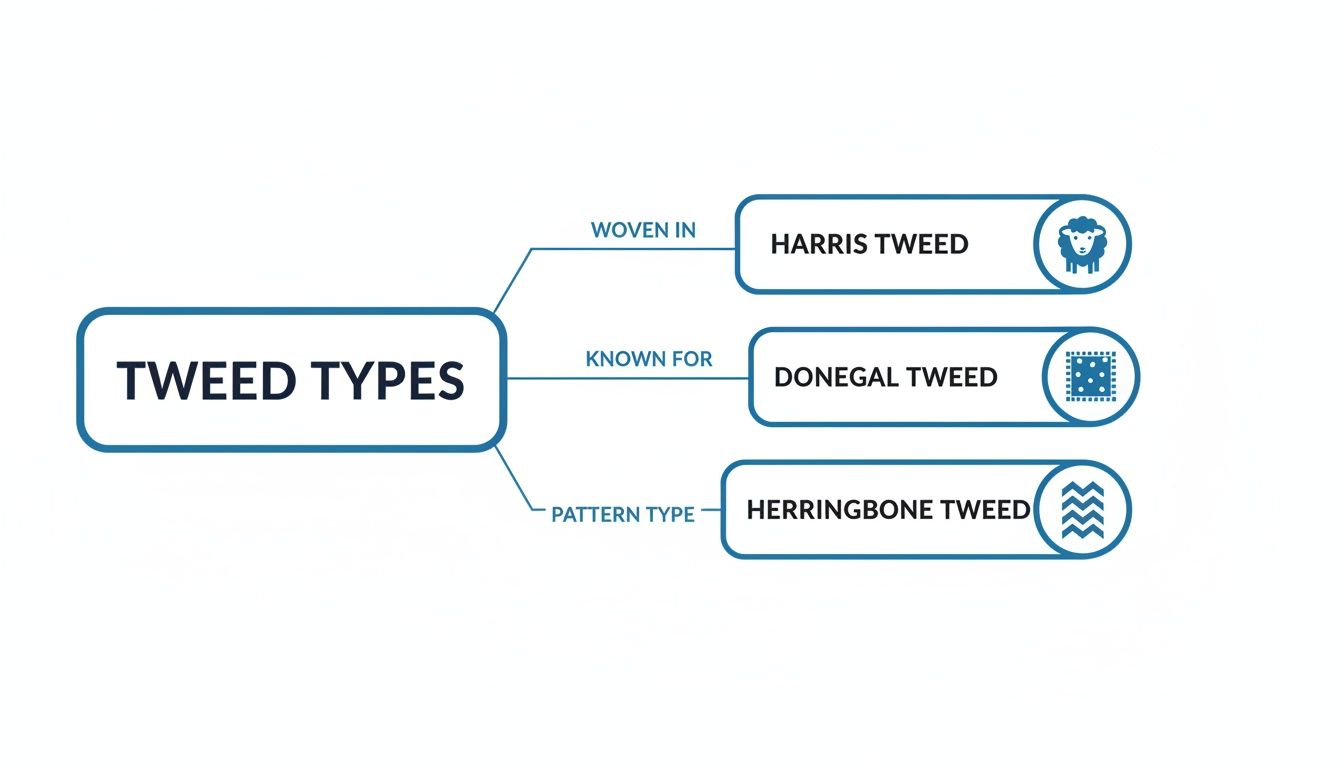
This visual gives you a quick reference for some of the iconic tweed types we've discussed.
Each one, from the rugged, handwoven Harris to the speckled Donegal and patterned Herringbone, brings its own unique character to an outfit.
Authentic Country Pursuits
To really tap into the tweed sport coat’s heritage, you have to embrace the full country aesthetic. This look is rooted in practicality and tradition, perfect for a day outdoors, a country fair, or for anyone who simply appreciates classic British style. It’s all about layering natural fabrics and earthy tones.
Start with a pair of sturdy corduroy or moleskin trousers in shades of brown, green, or mustard. Under the jacket, a Tattersall check shirt is the traditional choice, its grid-like pattern working beautifully with the tweed. Layering is key for both warmth and style, so consider adding a lambswool jumper or a V-neck cardigan.
For true authenticity, the details really matter:
Footwear: Sturdy, waterproof boots or heavy brogues are essential.
Headwear: A classic flat cap in a coordinating tweed completes the look.
Neckwear: A wool tie adds a touch of formality while keeping the rustic feel.
The Rustic Wedding Guest
A tweed sport coat is an increasingly popular and stylish choice for a wedding guest, especially for a celebration with a rustic, country, or autumnal theme. It strikes the perfect balance between formal and relaxed, ensuring you look appropriate without being stuffy. The key is to style it thoughtfully to match the celebratory mood.
Pair a well-fitted tweed jacket with smart, contrasting trousers—avoid matching tweed trousers unless it's a full suit. Light grey wool trousers or smart chinos in a neutral shade work exceptionally well. A crisp white dress shirt is non-negotiable.
Elevate the outfit with considered accessories. A smart waistcoat in a solid colour can add a layer of formality, while a silk pocket square and a tasteful floral lapel pin can add a celebratory flourish. Finish with polished brown Oxford or Derby shoes. This approach ensures you honour the occasion while showcasing your personal style.
The Art of a Bespoke Tweed Sport Coat
While a good off-the-rack jacket is certainly serviceable, a bespoke tweed sport coat is something else entirely. It feels less like an item of clothing and more like an extension of yourself. This is an investment not just in your personal style, but in a garment that will last for decades.
You’re moving beyond simply wearing clothes and into the realm of true sartorial craftsmanship. A bespoke jacket is born from a unique pattern drafted from scratch, just for you. This meticulous process ensures every curve, line, and quirk of your posture is accounted for—resulting in a fit that ready-to-wear can only dream of. It’s the difference between buying a house and commissioning an architect to build your home.
The Elements of a Perfect Fit
The magic of a bespoke tweed sport coat is woven into details the untrained eye might miss, but which are everything to its comfort and appearance. A master tailor obsesses over these elements to create a jacket that hangs in perfect harmony with your frame.
Key areas of focus include:
Shoulder Construction: The shoulder is the anchor of any jacket. In bespoke, the shoulder line is built to follow your natural shape, creating a clean, seamless drape without any awkward bunching or pulling. It should feel like a second skin, not a rigid piece of armour.
Sleeve Pitch: This is all about the angle at which the sleeve joins the jacket’s body. Your tailor will carefully observe how your arms hang naturally to set the sleeve pitch perfectly, eliminating the twisting and creasing that plagues so many off-the-rack jackets.
Jacket Length and Balance: Getting the length right is a matter of proportion. A bespoke tailor ensures the jacket just covers your seat and elegantly balances your upper and lower body, creating a flattering silhouette from any angle.
Defining a Superior Garment
Beyond the flawless fit, the actual construction of a bespoke tweed sport coat involves choices that define its quality and character. These are the details you get to decide on, making the final piece truly yours.
The essence of bespoke is choice. From the weight of the canvas that gives the jacket its shape to the style of the pockets that reflect your personality, every element is a conversation between you and your tailor.
Take the internal structure, known as canvassing. A full-canvas construction, where a layer of horsehair canvas runs from the shoulder to the hem, allows the jacket to gradually mould to your body over time. It’s the hallmark of high-quality tailoring, creating a superior drape and significantly extending the garment's life.
Other crucial details include the button stance—the placement of the buttons, which can subtly alter the perception of your torso’s length—and the style of pockets. Do you prefer the sleekness of jetted pockets, the classic utility of flap pockets, or the relaxed air of patch pockets? Each choice helps shape the final aesthetic. Understanding these nuances is key; for a deeper dive, our article explaining the differences between made-to-measure vs bespoke is a great resource.
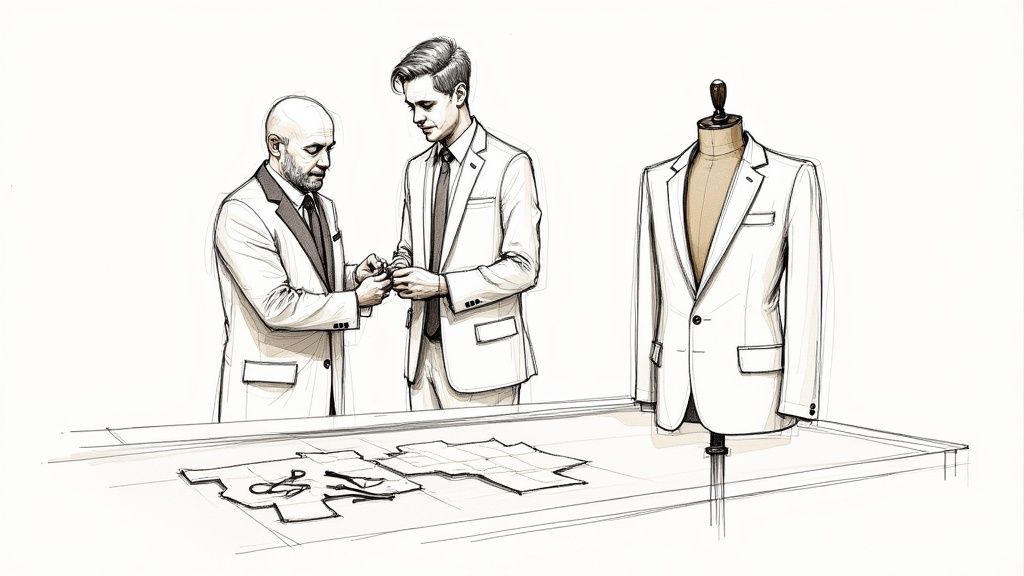
A Look Inside the Bespoke Process
Commissioning a bespoke tweed sport coat is a collaborative journey that unfolds over several stages, typically spanning 8-12 weeks. It’s a considered, unhurried process designed to achieve a perfect outcome.
The journey usually looks like this:
Initial Consultation: This is where the dialogue begins. We’ll discuss your lifestyle, preferences, and what you want from the jacket. You’ll select your tweed from a vast library of cloth swatches, choosing the perfect weight, pattern, and colour.
Measurements and Pattern Drafting: The tailor takes a comprehensive set of measurements—often more than 20 different points. These are then used to draft a unique paper pattern from scratch, exclusively for you.
The Fitting Stages: You will typically have two or three fittings. The first is often for a ‘basted’ garment—loosely stitched together so we can make foundational adjustments. Subsequent fittings refine the shape, ensuring every detail is perfect before the final stitches go in.
This patient, hands-on approach is the very soul of bespoke tailoring. It is a partnership between client and craftsman, resulting in a tweed sport coat that not only fits flawlessly but also tells a story—your story.
Caring for Your Tweed: More Than a Jacket, a Lifelong Companion
Think of a well-made tweed sport coat not as a fleeting fashion buy, but as a genuine investment. This is a garment crafted to be worn, loved, and even passed down through the decades. Viewing it this way is the first step to ensuring it lasts a lifetime. With the right care, a tweed jacket doesn't just survive; it thrives, developing a richer, more personal character with every wear.
The secret isn't complicated. It boils down to a few simple, consistent habits that protect the natural wool fibres, preserve the jacket's tailored shape, and keep it looking impeccable year after year.
Routine Upkeep and Cleaning
Your most essential tool is a high-quality clothes brush. After you take the jacket off, give it a gentle but firm brushing to lift away any dust, dirt, or stray fibres that have settled into the weave during the day. This simple ritual does wonders, revitalising the wool's nap and stopping grime from working its way deep into the fabric, which can cause damage over time.
When it comes to actual cleaning, restraint is key. Tweed’s natural lanolin oils give it a fantastic degree of self-cleaning and water resistance, so it certainly doesn’t need frequent trips to the cleaner. For minor spills, act quickly and spot-clean the area with a damp cloth. Only entrust your jacket to a professional dry cleaner when absolutely necessary—perhaps once a season at most. The harsh chemicals used in the process can strip the wool of those precious natural oils. For more tips on making your wardrobe last, explore our advice on suit longevity and care.
"The remarkable durability of tweed is part of its heritage. A well-cared-for jacket is not just maintained; it's curated. Each brushing and careful storage session is a small act that honours the craftsmanship woven into its very fibres."
This resilience is deeply woven into the story of British textiles. After a period of decline, Harris Tweed sport coats saw a staggering 400% sales explosion between 2008 and 2013. This comeback was driven by a renewed appreciation for the cloth's durability and weatherproof charm, sustaining a craft that is central to our sartorial culture. You can read more about the fascinating history of men's tweed jackets and their revival.
The Art of Proper Storage
How you store your tweed sport coat is every bit as important as how you clean it. Whatever you do, don't hang it on a flimsy wire hanger. That's a surefire way to distort the shoulders and permanently ruin the jacket's structure.
Instead, always use a substantial, shaped wooden hanger with wide, supportive shoulder rests. This mimics the natural slope of your own shoulders, preserving the elegant drape and precise fit your tailor worked so hard to create. Make sure the jacket has room to breathe in the wardrobe, not squashed against other clothes. For long-term seasonal storage, pop the clean jacket into a breathable garment bag with a few cedar blocks or lavender sachets to naturally deter moths and keep it smelling fresh.
Frequently Asked Questions
Can I wear a tweed sport coat in warmer weather?
Yes, but the key is choosing the right fabric. While heavy, traditional tweeds are designed for the cold, many mills now produce lightweight versions under 11oz, sometimes blended with silk or linen for better breathability. Paired with cotton trousers and a light shirt, a lightweight tweed sport coat is an excellent choice for a cool spring day or summer evening. It allows you to enjoy the classic texture and pattern without overheating, making it surprisingly versatile across seasons.
What is the main difference between a tweed sport coat and a blazer?
The primary distinctions lie in fabric and formality. A tweed sport coat has its roots in country pursuits and is made from rugged, textured, and often patterned wool. It is inherently more casual. A blazer, conversely, has naval origins and is typically a solid colour—most classically navy—made from smoother worsted wool and often features metal buttons. A sport coat is rustic and relaxed, while a blazer is sharper, more structured, and leans more towards formal wear.
What defines a perfect fit for a tweed sport coat?
A perfect fit balances structure with comfort. The shoulder seams should end precisely at your natural shoulder line, and the jacket should button easily without pulling into an 'X' shape across your chest. Sleeves should be short enough to reveal about half an inch of shirt cuff. Crucially, it must allow enough room for layering a jumper underneath without feeling restrictive. The jacket should comfortably cover your seat, creating a flattering and balanced silhouette that moves with you.
Is a tweed sport coat still considered fashionable in the city?
Absolutely. The old sartorial rule of 'no brown in town' is long gone. Today, a tweed sport coat is a stylish and distinctive choice for smart-casual urban environments, particularly during autumn and winter. To modernise it for the city, pair it with more refined items like grey flannel trousers, dark chinos, and smart leather shoes. It offers a wonderful textured alternative to a standard blazer, projecting a confident and timeless sense of personal style.
About the Author
Igor is the founder and creative force behind Dandylion Style, a bespoke tailoring house born from a genuine passion for the art of gentlemen's clothing. With a deep appreciation for classic menswear and an almost obsessive eye for detail, he's earned a reputation for crafting garments that feel both timeless and intensely personal.
His journey into tailoring wasn't a career choice so much as a calling, driven by a fascination with the stories fabrics can tell and the quiet confidence a perfect fit can bring. At Dandylion Style, he blends time-honoured techniques with a modern feel for style, helping each client express their own individuality through impeccably made suits, jackets, and, of course, the classic tweed sport coat.
Written by:
Igor Srzic-Cartledge
Igor is the founder of Dandylion Style, a tailoring house built on the simple, deeply held belief that a suit should be like a second skin—a true extension of a gentleman’s personality. For Igor, tailoring isn't just about cutting cloth; it's an art form dedicated to creating unique, perfectly fitted attire for the discerning man. His passion is rooted in classic sartorial traditions, yet he maintains a keen eye for contemporary style, ensuring his creations are both timeless and relevant. This approach has cemented his reputation for genuine craftsmanship and a truly personal service.
Key Takeaways The Core Two: Navy blue and charcoal grey are the essential, non-negotiable suit colors for any professional wardrobe. Navy offers versatility and approachability, while charcoal projects authority and seriousness. Context is Crucial: The best suit color...
When you find a piece of clothing you absolutely love, getting the fit just right is the final, transformative touch. But how much should you expect to pay? In the UK, alteration costs can be as modest as £15 for a simple trouser hemming, or climb to £150 and beyond...
Getting the right pink shirt and tie combination is the mark of a well-dressed man. It’s a detail that separates the novices from those who truly understand their wardrobe. For a look that’s classic and can’t miss, pair your pink shirt with a navy, grey, or burgundy...
Key Takeaways For those seeking a quick overview, this section summarises the essential rules and recommendations for incorporating turn-up trousers into your wardrobe. Sartorial Purpose: Turn-ups add weight to the trouser hem, ensuring a cleaner, sharper drape,...
Deciding what colour tie to wear with a pink shirt is a common style query I hear from clients. For a classic, professional look that never fails, your safest and most effective choices are navy blue and charcoal grey. If you're heading to a more contemporary or...
You've just picked up a newly finished bespoke suit, and the cloth still has that clean, disciplined line only a real fitting room can give it. The temptation is to put it straight in the wardrobe and trust the label to do the rest. That's where expensive...
Book Your Tailoring Consultation
Looking for a suit or garment made specifically for you?
At Dandylion Style, we create bespoke and made-to-measure
garments tailored to your individual shape, style and occasion.
From suits and shirts to dresses, waistcoats and alterations,
our experienced tailors can help you create something truly unique.