At its heart, a three-piece suit is a simple but powerful concept: a matching jacket and trousers, both cut from the very same cloth, brought together by a waistcoat. It’s that third piece—the waistcoat—that truly defines the ensemble.
Think of it as the element that elevates the entire look from smart to downright commanding. It adds a distinct layer of formality and visual polish, setting it miles apart from the more common two-piece suit and creating a sharp, uninterrupted silhouette from shoulder to shoe.
Key Takeaways
- Core Components: A three-piece suit consists of a jacket, trousers, and a matching waistcoat, all made from the same fabric. The waistcoat is the defining feature that adds formality and depth.
- Formality and Occasion: This ensemble is best reserved for significant events like weddings, formal celebrations, and high-stakes business meetings where making a powerful impression is crucial.
- Fit is Everything: The waistcoat must be long enough to cover the trouser waistband, creating a seamless line. The golden rule is to always leave the bottom button of a single-breasted waistcoat undone for comfort and style.
- Versatility: While powerful as a full set, the components can be worn separately. The waistcoat can be paired with chinos or the jacket used as a blazer for sophisticated smart-casual looks.
Your Quick Guide to the Three Piece Suit
Before we get into the finer points of fabric and fit, let's establish the fundamentals. A three-piece suit is more than just an outfit; it’s a statement of intent, a deliberate nod to the enduring power of classic menswear.
The waistcoat is the sartorial glue holding the entire look together. It’s what ensures you look impeccably put-together, even when you decide to unbutton or remove your jacket. This single garment transforms the suit from a simple combination into a cohesive, powerful statement.
Let's break down the core components and what they bring to the table:
- The Jacket: This is your suit’s main structure, setting the tone with its cut, whether it’s a classic single-breasted style or a more commanding double-breasted one.
- The Trousers: Cut from the identical fabric as the jacket, these create the seamless visual foundation that flows from top to bottom.
- The Waistcoat: This is the game-changer. It’s the key differentiator that adds depth, formality, and that final, polished finish.
To help you visualise how these pieces work together, here's a quick summary.
Three Piece Suit At a Glance
This table breaks down the essentials of what makes a three-piece suit such a distinguished choice.
| Component | Function | Key Style Point |
|---|---|---|
| Jacket | Provides the primary silhouette and structure. | Can be single or double-breasted to suit the occasion. |
| Trousers | Creates a continuous, unbroken visual line. | Must be cut from the exact same cloth as the jacket. |
| Waistcoat | Adds formality, depth, and a polished layer. | The defining element that completes the ensemble. |
Understanding these roles is the first step, but the real magic comes from how they are tailored to you.
A perfect fit is completely non-negotiable if you want to achieve the intended effect. Each piece has to work in perfect harmony, creating a clean, confident presence. From the fit across your shoulders to the precise break of the trousers, every single detail matters.
Deconstructing the Three-Piece Suit
To really get what a three-piece suit is all about, you’ve got to break it down into its individual parts. Think of it like a band – each instrument plays its own crucial role, but together they create a perfect harmony. Though they’re all cut from the same cloth, the jacket, trousers, and waistcoat each have a distinct job in building that final, iconic silhouette.
This diagram shows you the three core elements that make up the ensemble.
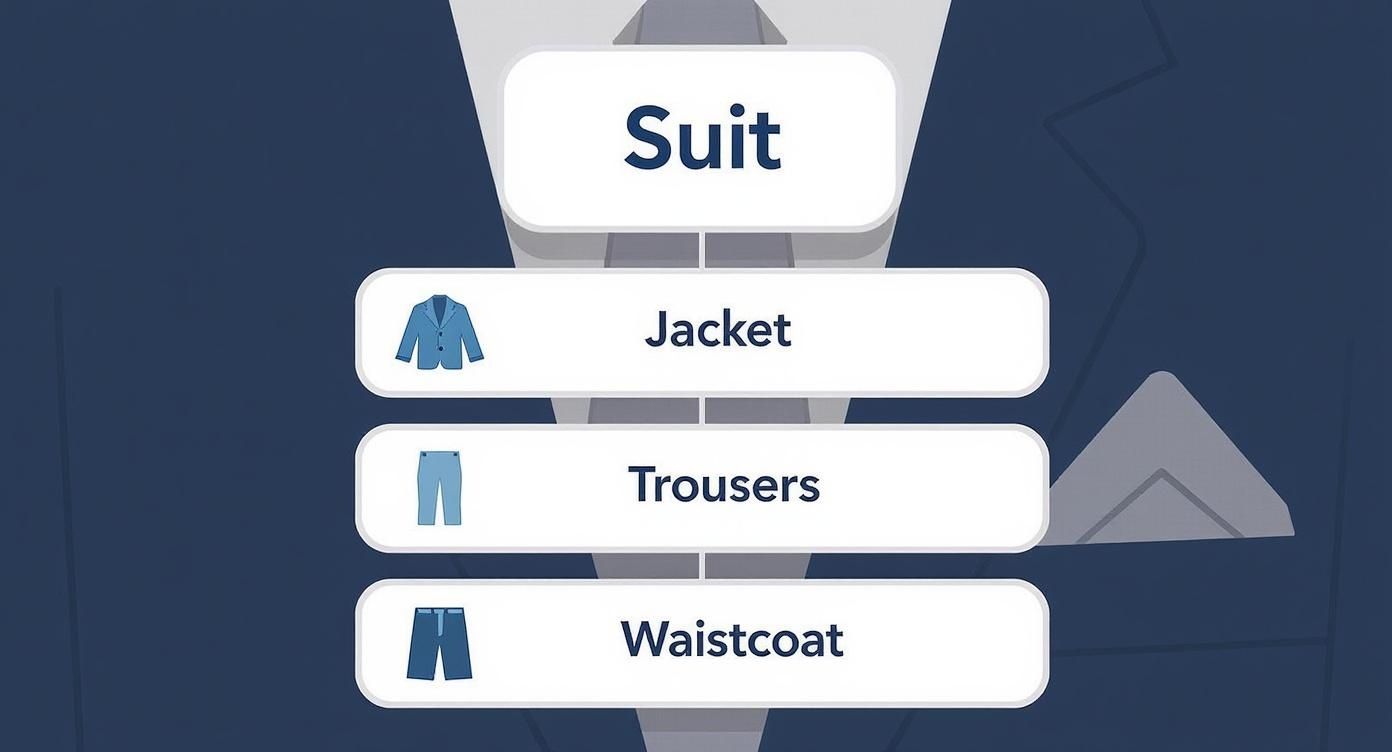
Here, you can see how the jacket, trousers, and waistcoat are all equally important, working together to create a cohesive whole.
The Suit Jacket: The Outer Shell
The jacket is the foundation, the primary structure that gives the suit its shape. Its style really sets the tone for the entire outfit, whether you opt for a versatile single-breasted cut or the more commanding presence of a double-breasted jacket. The lapels also play a huge part in defining its character.
- Notch Lapels: These are the dependable workhorses of the tailoring world. You’ll know them by the distinct 'notch' where the lapel meets the collar. They're a classic, go-to option that’s right at home in business settings and most social events.
- Peak Lapels: Bolder and more formal, peak lapels have points that sweep upwards towards the shoulder. While they're a traditional feature of double-breasted jackets, they add a real touch of flair and authority to single-breasted ones too.
The Trousers: The Unbroken Line
Trousers are so much more than just something to cover your legs; they're essential for creating that seamless, elegant line from your waist down to your shoes. How they're cut has a dramatic impact on the suit's entire profile. You can dive deeper into all the different styles and finer points in our complete guide on the parts of a suit.
Flat-front trousers give you a clean, modern silhouette that’s both sharp and slimming. On the other hand, pleated trousers offer a bit more room and a more traditional aesthetic, which many men find more comfortable for day-long wear.
The Waistcoat: The Finishing Touch
This is it—the defining piece. The waistcoat is the element that truly completes the three-piece ensemble, transforming a standard suit into something special. Its main job is to create a smooth, uninterrupted line from your chest to your trousers, neatly covering up the shirt beneath.
Its most important job is to cover the waistband of your trousers, ensuring no sliver of shirt is visible between your waistcoat and trousers. This single detail is crucial for achieving a polished, put-together appearance.
Just like jackets, waistcoats come in both single-breasted and double-breasted styles. And here’s a steadfast rule of tailoring you should never forget: always leave the bottom button of a single-breasted waistcoat undone. It's not just for show; this simple habit prevents the fabric from pulling and bunching up when you sit down, ensuring you look good and feel comfortable.
The Enduring Legacy of the Three Piece Suit
To call the three-piece suit just an outfit is to miss the point entirely. It’s a direct line to centuries of menswear history, a story not just of style, but of power, rebellion, and sartorial rebellion. Its journey didn’t start in a quiet tailor's shop, but in the lavish courts of 17th-century England as a deliberate statement meant to redefine an entire era.
The whole thing kicked off with a royal decree. Back in 1666, King Charles II introduced the vest (an early waistcoat), jacket, and breeches to actively move away from the over-the-top fashions coming out of the French court. It was a calculated play, a power move designed to promote a more restrained, distinctly English style while also giving a boost to the country's own wool trade. You can read more about this pivotal moment in fashion history on vogue.sg.
The Victorian Standard
Fast forward to the Victorian era, and the three-piece suit had become the unofficial uniform for any respectable gentleman. It was a powerful symbol, projecting professionalism, sobriety, and a solid social standing.
In an age of industrial might and rigid social codes, the suit was shorthand for reliability and seriousness. For any man in business or public life, it was practically essential. This leap from courtly finery to a professional benchmark shows just how adaptable it was; it was no longer about looking regal, but about looking dependable.
The suit's journey from royal courts to the modern boardroom shows its unique ability to adapt to the times while retaining its core identity of authority and elegance.
A Modern Revival
Of course, the suit's popularity has had its ups and downs, but it never truly vanished. It came roaring back in the 1970s, a decade known for its swagger, where the three-piece became a loud-and-proud symbol of peacocking confidence.
Today, it remains a statement of intent. It’s the choice for men who appreciate its classic architecture and the undeniable polish it provides. From the hallowed workshops of Savile Row to today's modern cuts, the three-piece suit is still a pinnacle of men's tailoring. For anyone curious about the sheer craft that goes into one, understanding the process of creating a full bespoke suit really pulls back the curtain on the artistry required for a perfect fit.
Ultimately, the legacy of the three-piece suit endures because it offers something constant in a changing world: a reliable framework for impeccable style.
Choosing the Right Occasion for a Three-Piece Suit
Deciding to wear a three-piece suit is a deliberate move, one that telegraphs confidence and a sharp eye for detail. But context is everything. Knowing exactly when to deploy this powerful ensemble is the key to commanding respect rather than simply looking overdressed. It's all about matching the suit's inherent formality to the weight of the moment.
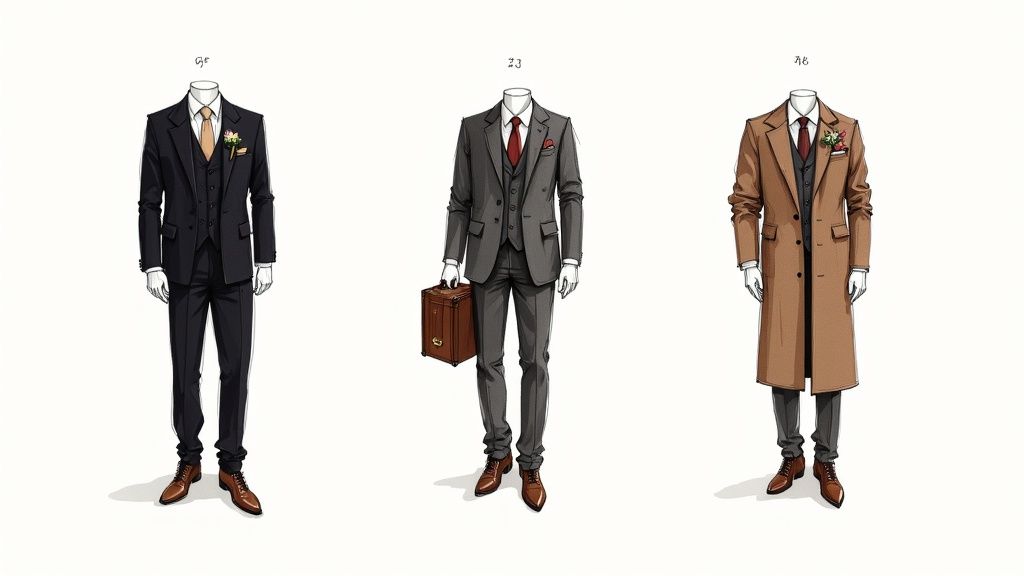
This classic silhouette is tailor-made for life’s cornerstone events and high-stakes professional moments where making an unforgettable impression isn't just an option—it's the goal.
Weddings and Formal Celebrations
If there's a natural habitat for the three-piece suit, it’s a wedding. It is an impeccable choice for the groom, his groomsmen, or a distinguished guest, striking the perfect chord between celebration and solemnity. That waistcoat adds a layer of polish that keeps you looking sharp long after the jacket comes off for the dance floor.
- For the Groom: A bespoke three-piece is the ultimate power move, setting you apart as the man of the hour.
- For Groomsmen and Guests: A well-fitted three-piece shows genuine respect for the occasion and the hosts.
If you’re part of the wedding party, understanding the role is half the battle. A good rundown of best man responsibilities can help frame why your attire matters so much. For a deeper dive, our guide to the wedding three-piece suit is packed with inspiration for the big day.
A three-piece suit is traditional wedding attire for a reason. It elevates your look, ensures you remain put-together, and allows for versatility as the event progresses from ceremony to reception.
The Business World and Professional Engagements
In the professional arena, a three-piece suit is a strategic weapon. It projects authority, competence, and an unwavering commitment to detail, making it the perfect choice for specific, high-impact scenarios. It’s certainly not everyday wear for most modern offices, but when you do bring it out, the effect is undeniable.
Think of it as your sartorial ace up the sleeve for:
- Crucial Boardroom Meetings: Where you need to own the room.
- High-Stakes Presentations: When your personal brand is on the line.
- Formal Networking Events: Where that first impression is the only one that counts.
Letting the Fabric Dictate Formality
Finally, never underestimate how much the fabric dictates the suit's suitability. The material can dress the entire ensemble up or down, making it far more versatile than you might think.
A heavy tweed three-piece, for example, feels right at home at a rustic countryside event or an autumn wedding. By contrast, a dark worsted wool or a sharp pinstripe is built for a formal city affair or a critical business negotiation. Matching the fabric to the setting is the final piece of the puzzle to looking impeccable every single time.
How to Style a Three Piece Suit Flawlessly
Even the most impeccably crafted three-piece suit can fall flat if the styling is clumsy or the fit is off. It’s the small details that really elevate an outfit from simply ‘good’ to genuinely exceptional. The aim is to build a silhouette that’s sharp, intentional, and perfectly put-together from head to toe.
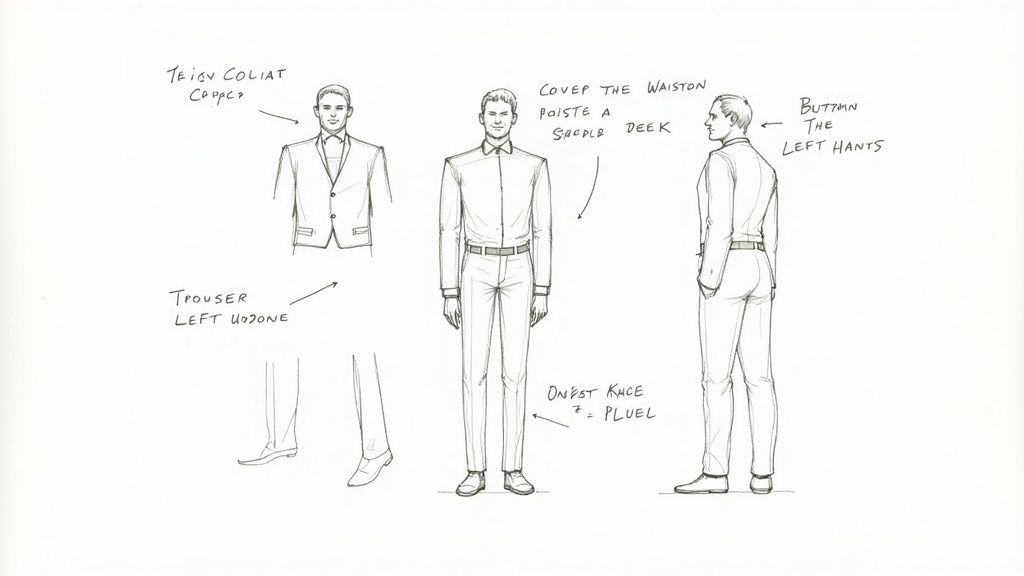
This all starts with getting the fit absolutely right. Your jacket, waistcoat, and trousers need to work as a team. The suit jacket’s collar should sit flush against your shirt collar without gaping, and the shoulders must end precisely where your own shoulders naturally do. Anything else just won’t cut it.
Nailing the Fit and Coordination
The waistcoat is the heart of the ensemble, and it requires particular attention. It should be snug against your torso, but never so tight that the buttons are pulling. And its length is crucial—it must be just long enough to cover the waistband of your trousers, making sure no sliver of shirt peeks through.
Once the fit is locked in, coordination is your next mission. The shirt and tie combination you choose will set the entire tone of your look.
- Classic Harmony: You can’t go wrong with a crisp white or a light blue shirt. They provide a timeless canvas that complements almost any suit colour. Finish it off with a silk tie in a complementary shade or one with a subtle, tasteful pattern.
- Modern Contrast: For a bit more punch, you can play with contrast. Just remember that balance is everything. If your suit is patterned, keep the shirt and tie solid and simple.
The secret to great style isn't about following rigid rules but understanding principles of balance and proportion. A three-piece suit provides a strong foundation, and your choices in accessories are where you express your personality.
For a wider view on creating balanced looks, the guide on how to style your outfits and love your look offers some excellent general principles that apply perfectly here.
Choosing Your Shoes and Accessories
The right pair of shoes grounds the entire outfit. Classic leather Oxfords are the most formal choice, ideal for business settings or more solemn events. Derbies offer a slightly more relaxed feel, but they’re still perfectly elegant. As for colour, let your suit guide you: black shoes for black or grey suits, and brown shoes with navy, blue, or tweed.
Accessories are the final, personal flourishes. A neatly folded pocket square adds a welcome pop of colour or texture, but remember, it should complement your tie, not match it perfectly. Cufflinks are a fantastic way to inject a bit of your own flair. And while the classic approach almost always includes a tie, knowing when and how to wear a suit without a tie can open up some brilliant smart-casual avenues, especially when you start breaking up the suit.
Breaking Up the Ensemble
One of the best things about a three-piece suit is its versatility. You don't always have to wear it as a full set. The individual pieces can be deployed separately to create some incredibly sophisticated smart-casual looks.
Try pairing the waistcoat with a good pair of chinos and a smart shirt. Or, wear the jacket as a standalone blazer with different trousers. This kind of flexibility is what makes a three-piece suit a genuinely valuable investment for any gentleman's wardrobe.
Frequently Asked Questions
What's the main difference between a two-piece and a three-piece suit?
The defining difference is the waistcoat. A two-piece suit consists of a matching jacket and trousers. A three-piece suit adds a matching waistcoat made from the same fabric, creating a more formal, layered, and cohesive look. This third piece elevates the ensemble, allowing you to maintain a polished appearance even when you remove your jacket. It provides a seamless transition from your chest to your trousers, ensuring a sharp and uninterrupted silhouette, which is the hallmark of this classic gentleman's attire.
Can I wear a three-piece suit to a job interview?
For most corporate environments, especially in finance, law, or executive roles, a three-piece suit can project confidence, seriousness, and attention to detail. However, it's crucial to gauge the company culture. In more creative or tech-focused industries, it might appear overly formal. If you're unsure, a well-fitted two-piece suit is a safer, yet still powerful, choice. The goal is to look professional and capable, not out of place, so context is the most important factor in your decision.
Should my waistcoat always match my suit?
For a traditional and highly formal look, the waistcoat should be cut from the exact same cloth as the jacket and trousers. This creates the classic, unified silhouette a three-piece suit is known for. However, wearing an "odd waistcoat"—one in a contrasting but complementary colour or fabric like tweed or flannel—is a stylish way to add personality and visual interest. This works best in less formal settings, allowing you to showcase your individual flair while still looking impeccably dressed.
What is the rule for buttoning a waistcoat?
The golden rule for a single-breasted waistcoat is to always leave the bottom button undone. This tradition began for practical reasons—it prevents the fabric from pulling and bunching when you sit down, ensuring a better fit and greater comfort. It has since become an established sartorial convention. For double-breasted waistcoats, it is generally best to keep all functioning buttons fastened to maintain the garment’s intended structure and sharp lines, whether you are standing or seated.
Is it acceptable to remove the jacket of a three-piece suit?
Absolutely. This is one of the key advantages of wearing a three-piece suit. The waistcoat is designed to keep you looking smart and put-together even after you've removed your jacket. It neatly covers your shirt and waistband, maintaining a formal and intentional appearance. This makes it perfect for the later stages of a wedding reception or a long day of meetings, allowing for greater comfort without sacrificing an ounce of style or professionalism. It's a sign of a well-considered outfit.
About the Author
My name is Igor, and I am the founder of Dandylion Style. My journey into the world of bespoke tailoring is driven by a deep-seated passion for classic menswear and the unparalleled artistry behind it. I believe a suit should be more than just an article of clothing; it should be a statement of individuality and a source of confidence. At Dandylion Style, we honour the timeless traditions of the craft while infusing a modern perspective, working closely with each client to create a garment that is uniquely theirs.
At Dandylion Style, we believe a perfect suit starts with a conversation. Book your bespoke consultation today.