Key Takeaways
- Preserve Garment Shape: High-quality wooden trouser coat hangers with wide, flared shoulders are essential for maintaining the structure of bespoke jackets, preventing unsightly puckering and stretching.
- Choose the Right Wood: Cedar is ideal for protecting woollens due to its moth-repellent properties, while beech offers durable, all-purpose support, and walnut provides a luxurious aesthetic with superior strength for heavy coats.
- Proper Hanging Technique is Crucial: Always unbutton jackets and hang them to mimic the human form. For trousers, use the 'Savile Row Fold' on a felted bar or a locking clamp for heavier fabrics to prevent creases and slippage.
- Invest in Longevity: Wooden hangers are a long-term investment. They extend the life of your garments by providing proper support, allowing fabrics to rest and shed wrinkles naturally.
Proper wooden trouser coat hangers are a fundamental, if often overlooked, element of a gentleman's wardrobe. They are the very foundation of garment care. To place a bespoke suit on a flimsy plastic or wire hanger is unthinkable; it’s akin to fitting a vintage motor with budget tyres and expecting it to perform.
Why Your Wardrobe Deserves the Best
You’ve made a considerable investment in fine tailoring, so why would you entrust its care to anything less than the best? A high-quality hanger is the one item that spends more time with your suit than you do, making its role in preserving that garment absolutely critical. Think of it as the final, essential step in honouring the craftsmanship of your tailor.
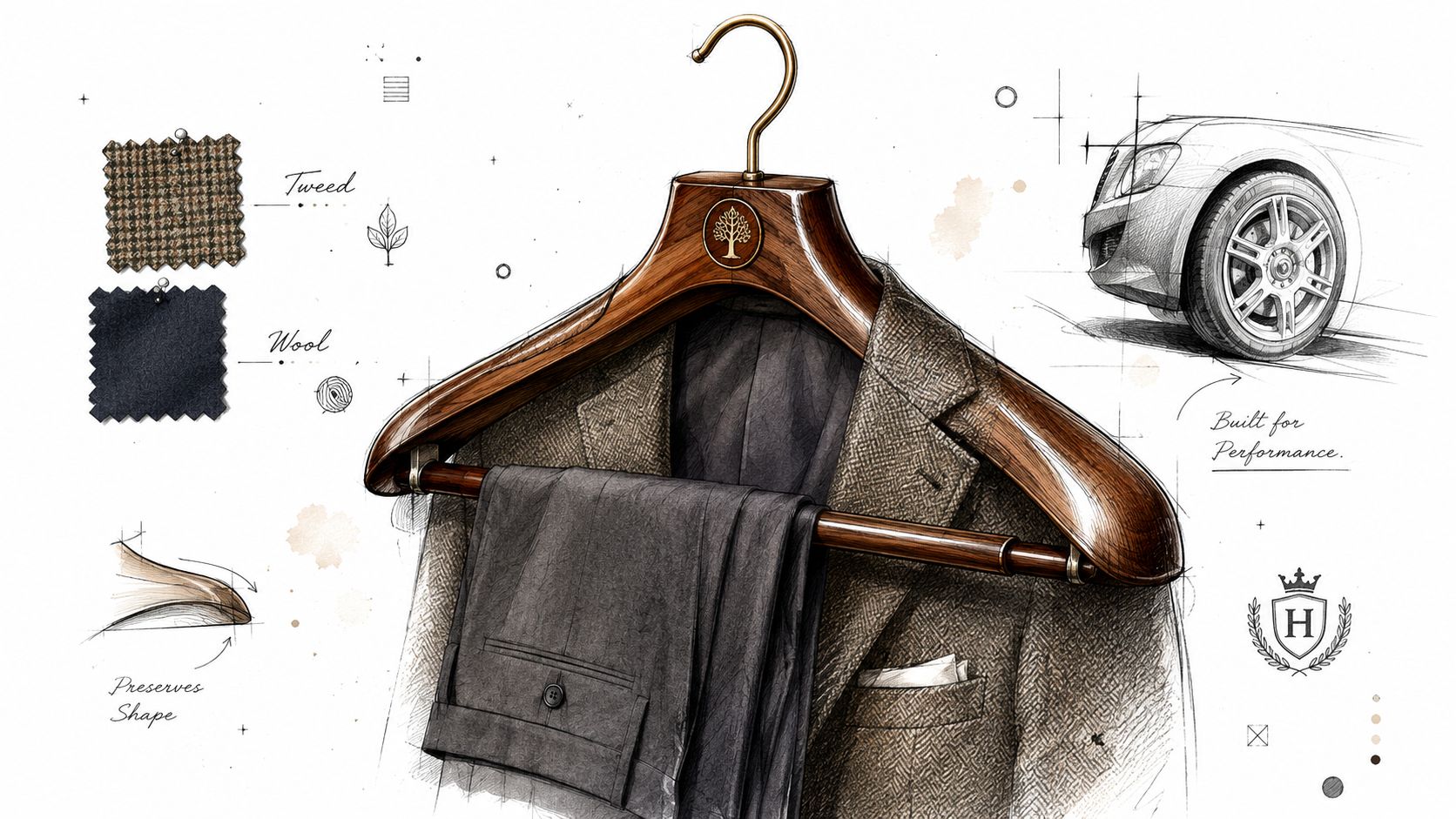
The primary function of quality wooden trouser coat hangers is to provide uncompromising support. Their design is a direct and necessary counterpoint to the damage caused by inferior alternatives.
Preserves Shape: Unlike wire, which creates unsightly shoulder “puckers,” a broad, contoured wooden hanger mimics the human form. This distributes the garment’s weight evenly and maintains the integrity of the bespoke shoulder line your tailor worked so meticulously to create.
Supports Fabric: Heavier materials common in British tailoring, like tweed and wool, require a robust structure. A proper hanger prevents these noble fabrics from stretching and sagging over time, ensuring your jacket drapes as it should.
Long-Term Value: By preventing damage and helping garments shed wrinkles naturally as they rest, these hangers significantly extend the life of your suits. It's a small detail that pays dividends for years to come.
The Foundation of Garment Care
When you commission a bespoke suit, you’re investing in exceptional craftsmanship and the finest fabrics available. To then hang such a creation on a flimsy plastic or wire hanger is to actively work against that very investment. It distorts the precise shoulder line your tailor perfected and can, over time, cause irreversible damage.
It’s time to see the hanger not as a mere accessory, but as the very foundation of your garment care. Much like a historic building needs a solid foundation to stand for centuries, your suit requires a proper support structure to maintain its intended form. A quality hanger is the one item that spends the most time with your suit, making its role in preserving your investment absolutely critical.
The Unseen Guardian of Your Suit
Choosing the right hanger is the final, and arguably most crucial, step in caring for your bespoke garments. Inferior hangers invariably create stress points, especially at the shoulders, leading to unsightly puckering and stretching. Over months and years, this seemingly minor detail can completely ruin the drape and silhouette of a jacket.
A robust wooden trouser coat hanger is your first line of defence, providing the support needed to prevent this slow decay. It allows the fabric to relax and shed the day's wrinkles naturally—a vital process for materials like wool and tweed.
A well-structured wooden hanger does more than just hold a suit; it acts as a silent guardian, working around the clock to preserve the shape, integrity, and lifespan of your most treasured garments.
This isn’t a new concept; the utility of wooden hangers has been recognised for generations. The modern hanger's journey began with O.A. North's invention back in 1869, which quickly found favour in British tailoring circles. By the early 20th century, their popularity had soared, with UK production increasing by approximately 45% between 1920 and 1940 as their ability to support heavy wool and tweed became indispensable.
This foundational care is every bit as important as knowing how to clean your garments properly. For further guidance on maintaining your wardrobe, you can read our detailed guide on how often you should dry clean a suit.
Choosing the Right Wood for Your Hangers
Now that we’ve established why a well-structured hanger is non-negotiable for your bespoke garments, let's talk about the material itself. Stepping up to wooden trouser coat hangers is about more than just aesthetics; it's a practical decision that directly affects the preservation and longevity of your clothing.
There's a reason wood is the preferred choice among connoisseurs. It’s not just a feeling; the numbers back it up. A few years ago, in 2019, wooden hangers already claimed a significant 28% of the global market. More tellingly, a 2020 report revealed that 62% of luxury tailoring houses in the UK choose wood over any other material. This isn't a trend; it's a testament to wood's superior ability to care for fine fabrics. If you're keen to understand the nuances of different timbers, you can learn about solid wood furniture options.
Exploring Common Woods for Suit Hangers
When you're selecting hangers, three particular woods consistently stand out for the discerning gentleman. Each offers a unique character and set of benefits, perfectly suited for different needs within a well-curated wardrobe.
- Cedar: Prized for its wonderfully aromatic properties, cedar is a natural moth repellent. An unfinished cedar hanger is the ideal guardian for your wool, cashmere, and tweed, subtly protecting them while also absorbing any excess moisture. Think of it as an invisible layer of defence for your most cherished seasonal pieces.
- Beech: Known for its exceptional strength, durability, and beautifully smooth grain, beechwood is the reliable workhorse of the wardrobe. Its fine, dense texture guarantees no splinters or rough edges that could snag a delicate suit lining or a fine-gauge knit. It’s an impeccable choice for all-around performance.
- Walnut: For those who appreciate a touch of visual opulence, walnut hangers bring an immediate sense of luxury to a wardrobe with their rich, dark aesthetic. Beyond its good looks, walnut is incredibly strong and resilient, making it the perfect home for heavy overcoats and full suits.
Choosing a wood type is like selecting the right fabric for a suit; each has a specific purpose and character. Cedar is your guardian for woolens, while Beech provides flawless support for all-season suits.
When you're considering the best options for your wardrobe, a direct comparison can be incredibly helpful. Here’s a simple breakdown of how these popular woods stack up.
Comparing Common Woods for Suit Hangers
| Wood Type | Key Benefit | Best For | Aesthetic |
|---|---|---|---|
| Cedar | Natural Moth Repellent | Wool, Cashmere, Tweed | Rustic, Aromatic |
| Beech | Smooth & Durable | All-Purpose, Suits | Clean, Neutral, Fine Grain |
| Walnut | Strong & Luxurious | Heavy Coats, Full Suits | Rich, Dark, Elegant |
Ultimately, your choice will come down to a balance of your specific garments' needs and your personal taste, but each of these woods represents a superb investment in garment care.
The Importance of the Finish
The finish applied to a wooden hanger is just as critical as the wood itself. It's the final touch that seals the wood, provides a crucial barrier for your clothes, and enhances the hanger’s appearance and lifespan.
A natural, unlacquered finish, particularly on cedar, is essential. It allows the wood to breathe and release its beneficial aromas, making it the superior choice for the long-term storage of natural fibres. On the other hand, a polished lacquer finish creates a perfectly smooth, almost frictionless surface. This is ideal for preventing any possibility of snags on the most delicate fabrics, like silk or fine suit linings. The choice of finish allows you to further customise your garment care, ensuring it aligns perfectly with the needs of the best fabrics for suits in your collection.
The Anatomy of a Perfect Hanger
So, what truly sets a premium wooden trouser and coat hanger apart from the everyday plastic or wire affair? It comes down to the details—the considered design choices that determine how well your garments are preserved. It’s all in the anatomy of the hanger itself.
Think of a hanger’s shoulders as a direct stand-in for your own. A truly great hanger mimics the human form with a wide, flared, and subtly curved shape. This design isn’t merely for looks; it distributes the jacket's weight evenly across a much larger surface area, preventing that dreaded ‘puckering’ at the shoulder seam that so often ruins the line of a bespoke suit.
This is a critical point for any tailored jacket. To learn more about how a jacket is constructed and why this support is so vital, you might find our guide on the parts of a suit particularly insightful.
The All-Important Shoulder Flare
The shoulder flare is perhaps the most defining feature of a superior coat hanger. Standard hangers, with their thin, angular profiles, create concentrated points of stress. Over time, the sheer weight of a jacket pulls down on these points, stretching the fabric and permanently altering its intended shape.
A quality hanger with a flare of at least two inches provides the broad, gentle support needed to maintain the jacket's natural drape. This ensures the canvas, padding, and fabric of the shoulder all rest without tension, just as your tailor intended.
Securing Your Trousers with Care
Just as crucial as the shoulder support is the trouser bar. This element is designed to hold your trousers securely, but without causing damage or unsightly creases. How well it performs depends entirely on its design, especially when dealing with different fabric weights and textures.
There are two primary designs you will encounter:
- Felted or Velvet-Lined Bars: These non-slip bars create gentle friction, making them perfect for holding finer fabrics like linen or lightweight wool trousers firmly in place. The soft covering prevents the garment from sliding off and ending up in a heap at the bottom of your wardrobe.
- Locking Clamp Bars: For heavier garments such as tweed or flannel trousers, a locking clamp bar provides security that's second to none. This design features a mechanism that clamps the trousers securely, ensuring they hang straight and allowing the fabric’s own weight to help release wrinkles.
The infographic below illustrates the importance of another key anatomical feature—the wood itself.
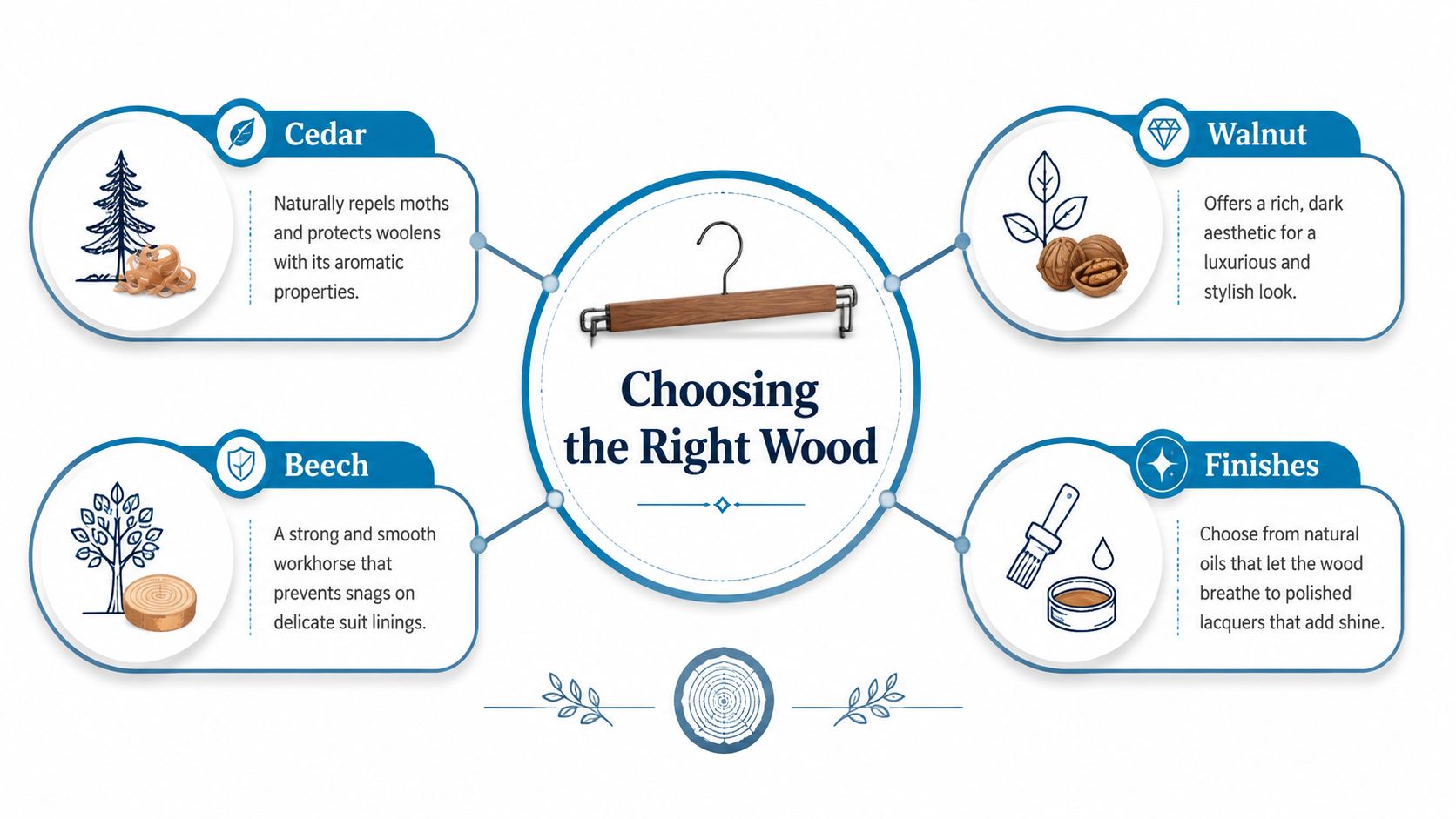
As you can see, the choice between Cedar, Beech, and Walnut is a crucial part of the hanger's ‘anatomy’, each offering distinct protective qualities.
The perfect hanger is a sum of its parts. A wide shoulder flare preserves the jacket's structure, while a well-designed trouser bar ensures your trousers remain immaculate and ready to wear.
By understanding these critical design elements, you can select wooden trouser coat hangers that are perfectly matched to the specific needs of your garments. This ensures everything from a summer linen suit to a heavy winter overcoat is stored correctly, preserving its form and fabric for years to come.
The Art of Hanging Your Bespoke Suit
Possessing the right tools is only half the battle; knowing how to use them correctly is where the real artistry lies. As your tailor, I don't just guide you on the cut and cloth of your suits—I also believe in teaching the daily rituals that will preserve them. The simple act of hanging your suit correctly is one of the most crucial things you can do to maintain its structure and extend its life for years to come.
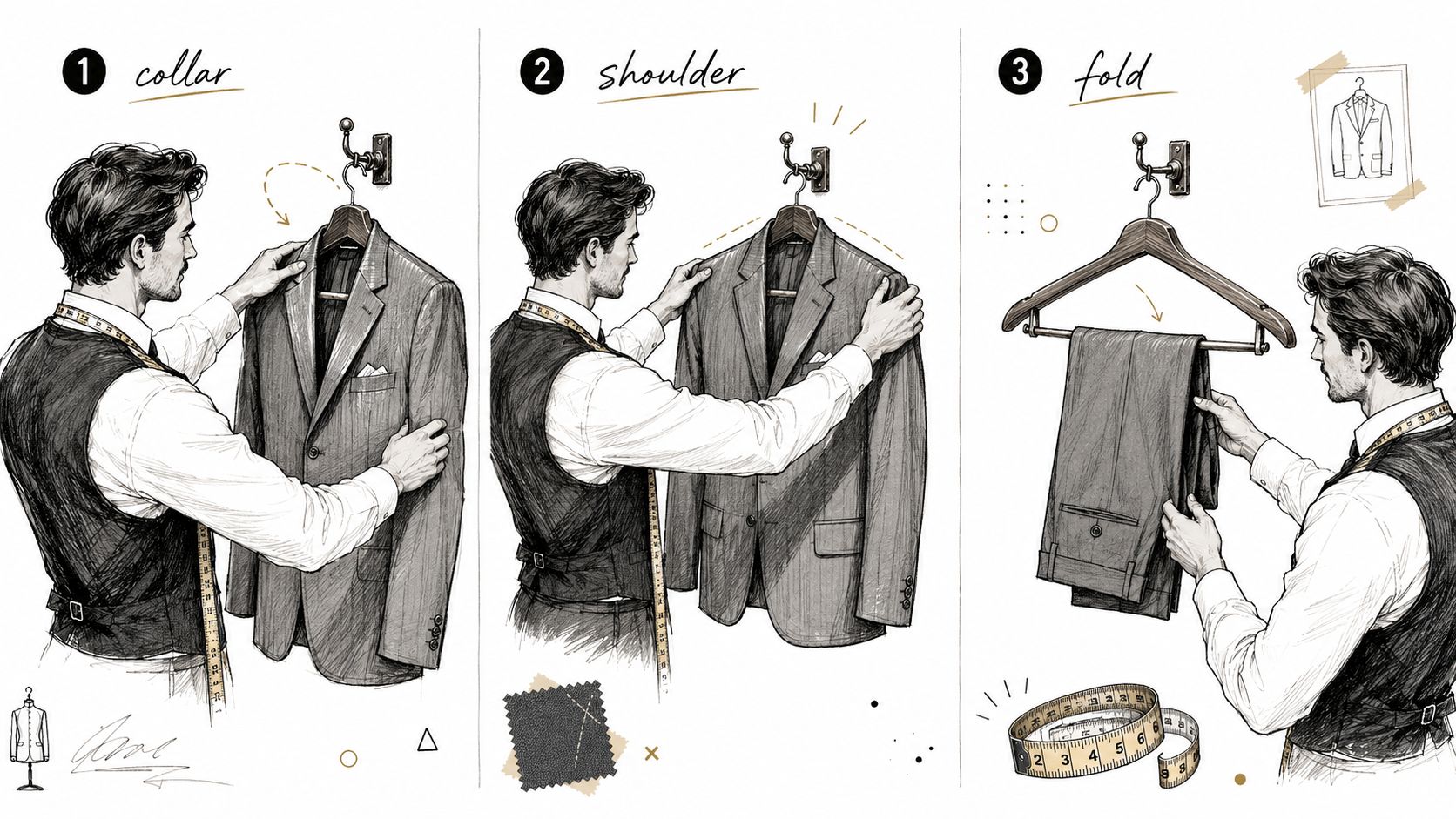
Let’s begin with the jacket. Always unbutton it completely, and approach the hanger as if you were helping a friend into their coat. Gently slide one shoulder onto the flared end, making sure the fabric is smooth and the collar sits naturally around the back of the hanger, just as it would on your own neck. Then, carefully align the other shoulder.
The aim here is to ensure the jacket hangs freely, with its weight evenly distributed across the hanger. You should see no tension, pulling, or awkward bunching of fabric. This allows the garment to rest and recover its shape after a day’s wear.
The Correct Way to Hang Trousers
Next, we move to the trousers. The method you use will depend on your hanger's design, but the guiding principle remains the same: we want to minimise creasing and allow the fabric to hang straight, letting gravity do the work.
For a standard wooden trouser coat hanger with a simple bar, I always recommend the 'Savile Row Fold', which is both elegant and impeccable.
- Hold the trousers upside down by the hems, allowing them to hang to their full length.
- Align the leg creases precisely so they lie flat against each other. This is a critical step, as it prevents new, unwanted creases from forming.
- Drape the trousers over the bar, ensuring that one leg hangs just slightly lower than the other. This subtle imbalance uses the trousers' own weight to secure them firmly in place.
If your hanger is fitted with a locking clamp bar, the process becomes even more direct. Simply open the clamp, align the hems neatly, and secure them. This method is particularly effective for heavier fabrics like tweed, as it lets gravity gently pull out any minor wrinkles from the day. This simple care routine is just as essential as knowing how to pack suits for travel.
Managing Two-Piece and Three-Piece Suits
For a two-piece suit, a single, high-quality hanger is your best friend. It keeps the ensemble together and ensures both the jacket and trousers receive the proper support they need to maintain their shape.
When it comes to a three-piece suit, I find it’s often best to give the waistcoat its own dedicated, smaller hanger. Overcrowding a single hanger with a jacket, waistcoat, and trousers can compromise airflow and prevent the individual garments from resting properly.
By following these simple yet deliberate steps, you are actively participating in the preservation of your bespoke investment. In a way, you are continuing the tailor’s work, ensuring the garment remains as perfect as the day it was delivered.
Long-Term Care and Personalisation
Your choice of superior wooden trouser coat hangers is an investment, not just in your wardrobe's immediate presentation, but in its future. Like any fine possession, a small measure of care ensures they will perform beautifully for decades, protecting your garments as perfectly as the day you first brought them home.
Thankfully, this care is remarkably straightforward. For hangers with a lacquered or polished finish, a simple wipe with a soft, dry cloth is usually all that’s needed to remove dust. We advise against using any harsh chemical cleaners, as these can easily damage the finish and, in turn, transfer to the fine fabrics of your clothing.
Refreshing and Maintaining Your Hangers
The real magic of certain woods, like cedar, lies in their ongoing, active benefits. Over time, you may notice that the wonderful, moth-repelling aroma of a cedar hanger has started to fade. This is perfectly natural, and rejuvenating it is a surprisingly simple ritual.
The natural oils in cedar are what provide its protective qualities. A quick, gentle sanding is all it takes to release a fresh wave of these aromatic oils, effectively restoring the hanger's ability to guard your woollens.
A light pass over the surface with fine-grit sandpaper—a 220-grit paper is ideal—will instantly refresh its scent and protective properties. Performing this simple act once a year ensures your cedar hangers continue their duty as active guardians for your most cherished fabrics.
The Ultimate Expression of a Curated Wardrobe
While function is always paramount, the final touch in any bespoke experience is, of course, personalisation. This is the moment a functional tool is elevated into a personal heirloom, completing the narrative of a truly curated wardrobe.
Imagine opening your wardrobe to find hangers engraved with your personal monogram or family crest. It is a detail that speaks to the same commitment to individuality that defines your bespoke suits and other luxury accessories.
This level of personalisation transforms your hangers from simple supports into an integral part of your personal style statement. It is the ultimate expression of care, reflecting a profound commitment to the details that define true and lasting luxury.
FAQ: Your Wooden Hanger Questions Answered
What is the best wood for suit hangers?
The ideal wood depends on your specific needs. For protecting natural fibres like wool, aromatic cedar is unparalleled; its oils repel moths and absorb moisture. For superb durability and a smooth, snag-free finish suitable for all garments, beechwood is the classic choice. For a touch of luxury and the strength to support heavy overcoats, the rich, dark grain of walnut is an excellent investment. Each wood offers unique benefits for a well-curated gentleman's wardrobe.
How wide should a suit hanger be?
A suit hanger should be wide enough to support the jacket from shoulder seam to shoulder seam without overextending it. A hanger that is too wide will create puckers, while one that is too narrow will cause the shoulders to collapse. For most men's jackets, a width of 17 to 19 inches is ideal. Crucially, look for a model with a shoulder flare of at least two inches to distribute the garment's weight evenly and preserve its tailored shape.
Do wooden hangers actually prevent moths?
Only one specific type of wood is a true moth deterrent: aromatic cedar. The natural oils in unfinished cedar release a scent that is pleasant to humans but repels moths and other pests, making it the perfect guardian for wool, cashmere, and tweed. Other woods like beech or walnut provide excellent structural support but do not have this innate repellent quality. For active moth protection, always opt for unfinished cedar hangers for your most vulnerable garments.
Should I hang or fold my suit trousers?
For fine tailored trousers, hanging is always the superior method. Hanging allows the fabric to relax and lets gravity gently pull out minor wrinkles from wear, reducing the need for frequent pressing which can degrade the fabric over time. Folding trousers in a drawer creates hard, set creases and restricts airflow. Using a proper trouser bar on a wooden hanger preserves the drape and ensures your trousers are always ready to wear, maintaining the sharp look your tailor intended.
How do I stop trousers slipping off a hanger?
This is a common issue solved by choosing the right hanger design. For smoother, lightweight fabrics like silk or fine wool, a trouser bar covered in felt or velvet provides gentle friction to hold them securely. For heavier materials such as tweed, flannel, or corduroy, a locking clamp bar is the most effective solution. This mechanism clamps the trouser hems firmly, ensuring they hang perfectly straight without any risk of slipping to the wardrobe floor.
About the Author
Igor is the founder and master tailor at the heart of Dandylion Style. His life's passion for craftsmanship and profound expertise in the art of British tailoring are the very pillars upon which the brand is built. He holds a firm belief in creating enduring, deeply personal garments that tell a story for each individual who wears them.
From his studio nestled in Ardingly, West Sussex, Igor serves a discerning clientele that stretches across Sussex, London, and the South East. He is known for offering a calm, considered, and deeply personal approach to bespoke tailoring, working exclusively with the finest British fabrics. For further insights, you might be interested in South Jersey home design tips from other experts. This article is simply an extension of the trusted, expert advice he provides his clients every day.