A shirt shouldn't be the part of your wardrobe that lets everything else down. Yet many gentlemen know the routine well: the collar sits away from the neck, the sleeves break too low over the hand, or the body balloons when tucked and strains when seated. The problem usually isn't you. It's that ready-made shirts are built for averages, and very few people are average in posture, shoulder line, or proportion.
That's why interest in personalised clothing has moved well beyond old-fashioned luxury. In Britain, the custom apparel market is projected to rise from USD 112.10 million in 2024 to USD 205.27 million by 2032, at a CAGR of 7.86%, according to Credence Research's UK custom apparel market outlook. Clients increasingly want clothing that fits their real lives, not just a rail standard.
For shirts, bespoke remains the clearest answer when fit has been consistently disappointing. It's not just a nicer version of off-the-peg. It's a different discipline altogether, one that starts with your body, your posture, your habits, and the way you wear your garments. If you've also been weighing the convenience of online ordering against the certainty of personal fitting, this guide to buying tailored shirts online in the UK is a useful companion read.
Key takeaways
- Bespoke means a shirt pattern is drafted for you, rather than a stock pattern being adjusted.
- Made-to-measure works well for many men, but it won't solve every posture or asymmetry issue.
- True value comes from fit complexity, not from the label alone.
- Service matters as much as craftsmanship, especially if you're deciding between a central London appointment and home or office fittings in Sussex or the South East.
- A well-made bespoke shirt becomes easier to reorder, because the tailor retains and refines your pattern over time.
Introduction The End of Ill-Fitting Shirts
By the third or fourth shirt, the pattern is usually obvious. The collar is comfortable but the body blouses out by lunch. The sleeves look right when your arms are at your sides, then bind the moment you reach for a keyboard or steering wheel. A shirt can pass the mirror test and still fail in ordinary wear.
That frustration is what brings many clients to bespoke shirting. Not a desire for extravagance. A desire to stop compromising.
Standard sizing is built for production efficiency. It cannot account for a lower shoulder, a prominent chest, a rounded back, or the posture shifts that come from long days at a desk. Those details sound minor until they appear together in one shirt. Then you get twisting sleeves, a collapsing collar, strain across the front, or surplus cloth at the waist.
Interest in personalised clothing has grown across the UK, which reflects a broader change in how people buy. Clients are placing more value on fit, choice, and service, not on brand name alone. For anyone considering tailored shirts online in the UK, that matters, because the best decision is rarely about cloth alone. It is about whether the process truly suits your life.
For many men in Sussex and the South East, convenience is part of the appeal. A fitting at home or at the office often produces better results than a rushed trip into central London. You stand naturally, wear the trousers and jacket you use, and discuss what the shirt needs to do in your real week, whether that means commuting, presenting, travelling, or dressing for formal events.
The Promise of a Proper Fit
A proper bespoke shirt solves practical problems first. It corrects balance, improves movement, and removes the small irritations that make a shirt feel wrong after an hour.
When the pattern is right, the effect is quiet. The collar sits cleanly around the neck. The cuff stays where it should. The sleeve follows the arm instead of fighting it. The body has shape without clinging and ease without excess. Good shirting rarely announces itself. The work is in the cut, and in the attention paid before the cloth is ever cut.
The Three Tiers of Shirtmaking Bespoke vs MTM
Shirtmaking has three service levels, and the differences matter. Clients often arrive assuming bespoke is nothing more than the premium version of made-to-measure. It is a different method, with a different level of control, and it suits a different type of problem.
For a man in Sussex or the South East, the practical question is simple. Do you need a shirt quickly, a shirt improved from standard sizing, or a shirt built around your body and habits with fittings at home or at the office rather than a trip into central London?
Ready-to-wear
Ready-to-wear, or RTW, is produced from standard factory sizing. You pick the closest collar, sleeve and body size available, then accept the compromises that come with that system.
That is often reasonable.
If your build is close to standard and you need shirts straight away, RTW can serve well enough. The limit is built into the pattern. The shirt was never cut for your posture, shoulder line, or sleeve pitch, so recurring faults usually remain recurring faults. Alterations can shorten a sleeve or reduce the side seam, but they cannot redraw the shirt from first principles.
Made-to-measure
Made-to-measure starts with an existing block and adjusts it to your measurements and preferences. The result is more personal than RTW and, for many men, more than adequate.
This is usually the right choice when the underlying shape is broadly correct but the standard size needs refining. Collar size, sleeve length, body suppression, cuff depth, collar style, cloth, placket and pocket details can all be specified with useful precision. If that is the level of adjustment you need, made-to-measure shirts in the UK are often the sensible middle ground.
The trade-off is straightforward. MTM improves a pre-existing pattern. It does not replace it.
Bespoke
Bespoke begins with a new paper pattern drafted for one client. The cutter is not choosing which stock block is closest. He is deciding how the shirt should hang from your neck, sit across your back, travel over the chest, and finish at the cuff and skirt.
That distinction matters more than many clients expect. Two men can share the same neck and chest measurements and still require very different shirts. One may carry his head forward. Another may have one shoulder lower than the other. Another may need extra length and balance through the back because standard shirts ride up when seated.
In practice, bespoke is where persistent fit problems are properly addressed. It also suits clients who care about small points that RTW and MTM often flatten out, such as collar spread in relation to face shape, cuff proportion against watch size, or how much fullness to leave through the rib and waist for comfort over a long working day.
The word bespoke is often used loosely outside clothing. Perpetual Time discusses bespoke Cartier in the context of one-off commissions, and the same principle applies here. The work is defined by individual specification and direct maker involvement, not by choosing options from a menu.
Shirtmaking tiers compared
| Feature | Ready-to-Wear (RTW) | Made-to-Measure (MTM) | Bespoke |
|---|---|---|---|
| Pattern basis | Standard factory pattern | Existing block adjusted | New pattern drafted for the client |
| Fit flexibility | Limited | Moderate | Highest |
| Measurements used | Standard size selection | Key body measurements | Broad measurement set including posture and asymmetry |
| Fittings | Usually none | Usually minimal | Commonly includes fitting stages |
| Best for | Straightforward proportions, speed | Men wanting better fit without full bespoke | Men with recurring fit issues or precise preferences |
| Detail choice | Limited | Broad design options | Broadest design and pattern control |
| Service style | Retail purchase | Shirtmaking service | Craft and long-term fitting relationship |
A simple rule helps. Choose RTW for speed, MTM for refinement, and bespoke when the same faults keep appearing or when the service itself matters. For many clients outside central London, that last point carries real weight. A careful fitting in your own home or office often produces better decisions than a rushed appointment, because the shirt is being discussed in the context where it will be worn.
The True Value of a Bespoke Shirt
The wrong way to judge bespoke is to ask whether it's “better” in the abstract. The right question is whether it solves a problem that cheaper options haven't solved.
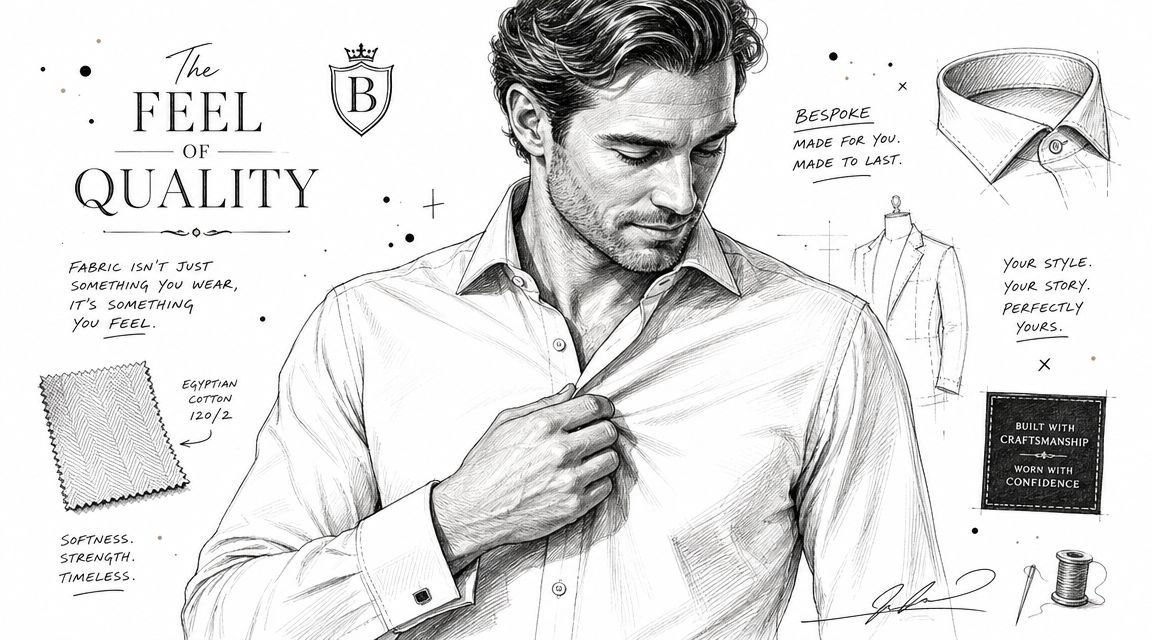
Independent menswear guidance puts this plainly. The value of bespoke is strongest for men with non-standard posture, uneven shoulders, or other fit issues that made-to-measure cannot fully address. The same guidance notes that a UK bespoke shirt can start at around £250, compared with around £170 for made-to-measure, and argues that the difference is justified when bespoke delivers comfort and solves complex fit problems rather than merely adding luxury language, as discussed by Apsley Tailors on bespoke shirts.
Where bespoke earns its keep
A bespoke shirt justifies itself in three common situations:
- Persistent fit failures: The same issues appear no matter which brand or size you try.
- High-frequency wear: You rely on shirts weekly for business, formal dressing, or regular events.
- Specific aesthetic standards: You care not only about fit, but about collar behaviour, cuff proportion, hem length, and how the shirt sits under a coat.
The key is that bespoke shouldn't be purchased as a vague badge of refinement. It should be commissioned because it does something useful.
Product or personal commission
A proper bespoke shirt also changes how a man relates to his wardrobe. Once a pattern exists and has been refined, future commissions become more consistent and more personal. The shirtmaker isn't just selling fabric and buttons. He's maintaining a pattern that reflects your body.
That is very similar to how bespoke works in other crafts. For readers interested in how one-off commissioning operates beyond tailoring, Perpetual Time discusses bespoke Cartier in a way that highlights the same principle: value lies in personal design, specialist process, and the relationship behind the object.
A bespoke shirt is rarely “worth it” because it is expensive. It's worth it when it removes friction every time you wear it.
That's why some gentlemen are better served by excellent made-to-measure, while others should move directly to bespoke and never look back.
The Anatomy of Your Perfect Shirt
Once fit is addressed, the shirt's character comes from a quieter set of decisions. Fabric, collar, cuff, stitching, and buttons all affect not just appearance, but how often the shirt gets worn.
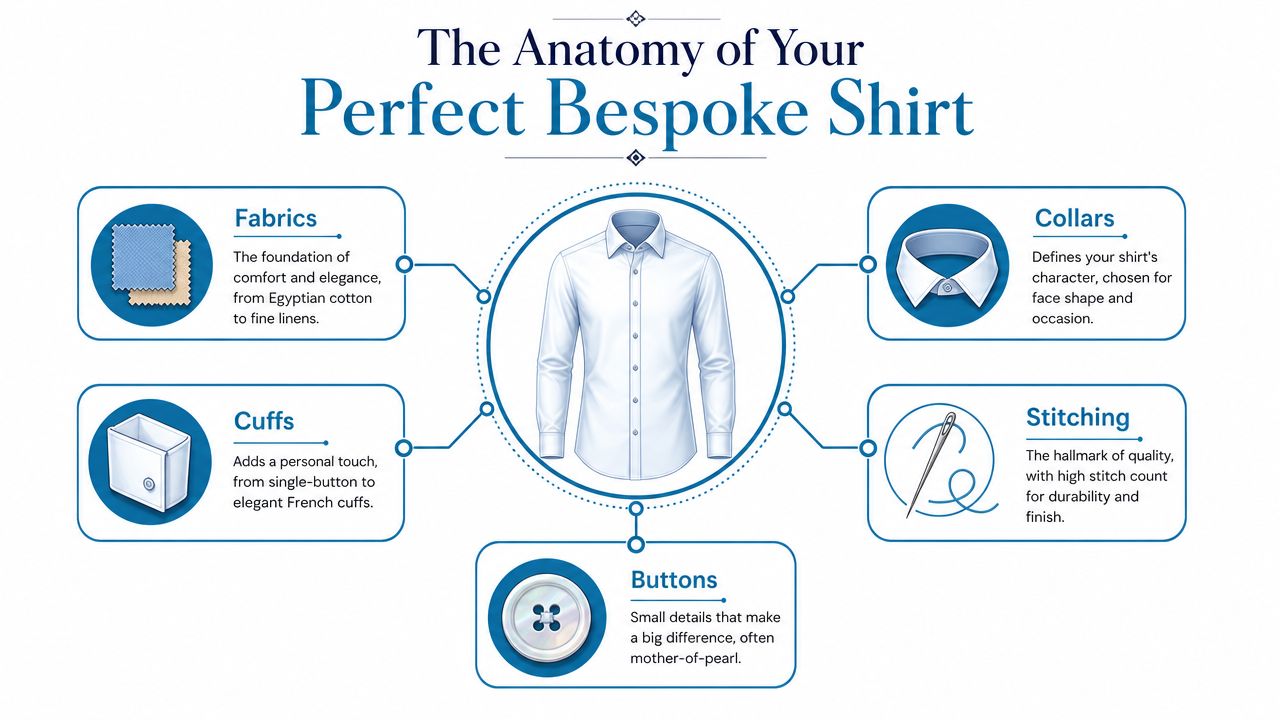
A good tailor doesn't overwhelm you with options. He edits them. If you'd like to explore the design side in more detail, this custom shirt design guide is a useful reference.
Fabric first
Fabric determines the mood and utility of the shirt long before anyone notices the cuff shape.
Some practical distinctions matter more than romantic descriptions:
- Poplin: Smooth, crisp, and versatile. Excellent for business shirts and formal use.
- Twill: Slightly richer in texture, often softer in hand, and forgiving in wear.
- Oxford: More casual, with visible basket weave and a sturdier feel.
- Linen: Ideal when breathability matters, though it carries a natural crease that should be embraced rather than fought.
- Fine cottons: Chosen for softness, clarity, and refinement against the skin.
A gentleman building a first bespoke wardrobe usually does better with calm, reliable fabrics than with novelty. White poplin, pale blue twill, and a subtle stripe will serve more often than an adventurous cloth that looked exciting in the bunch.
Collar and cuff choices
The collar frames the face and determines how the shirt behaves with or without a tie. This is not a decorative afterthought.
Consider these broad guides:
- Classic point or Kent collar: Balanced and adaptable. Safe for business and formal dressing.
- Cutaway collar: More open and contemporary. Strong with larger tie knots or open-neck wear.
- Button cuff: The everyday workhorse. Clean, practical, and appropriate in most settings.
- French cuff: More formal and more expressive, especially for eveningwear or ceremonial dress.
A collar should suit your face, your neck length, and the way you wear jackets. A man who rarely wears a tie needs a collar that stands well open. A man in business tailoring may need one that supports a knot cleanly throughout the day.
The finishing details that matter
Plackets, stitching density, gussets, and buttons don't shout, but they change the experience of ownership.
| Component | Why it matters |
|---|---|
| Buttons | Mother-of-pearl is valued for depth, polish, and a more elegant finish |
| Stitching | Fine, even stitching supports durability and visual neatness |
| Placket style | A front placket feels more structured, while a plain front is cleaner and dressier |
| Yoke and seams | Good construction helps the shirt sit more naturally across the upper back |
Small details only matter after the large decisions are right. There's no elegance in a beautiful cuff on a shirt whose sleeve hangs poorly.
The Bespoke Journey from Measurement to Masterpiece
A client often begins with a familiar problem. The collar is comfortable but the body blouses out by lunchtime, or the sleeves twist because one shoulder sits lower than the other. A proper bespoke shirt process corrects those faults methodically, and it should do so in a way that fits around real life, whether the appointment happens in a London workday, at home in Sussex, or at your office between meetings.
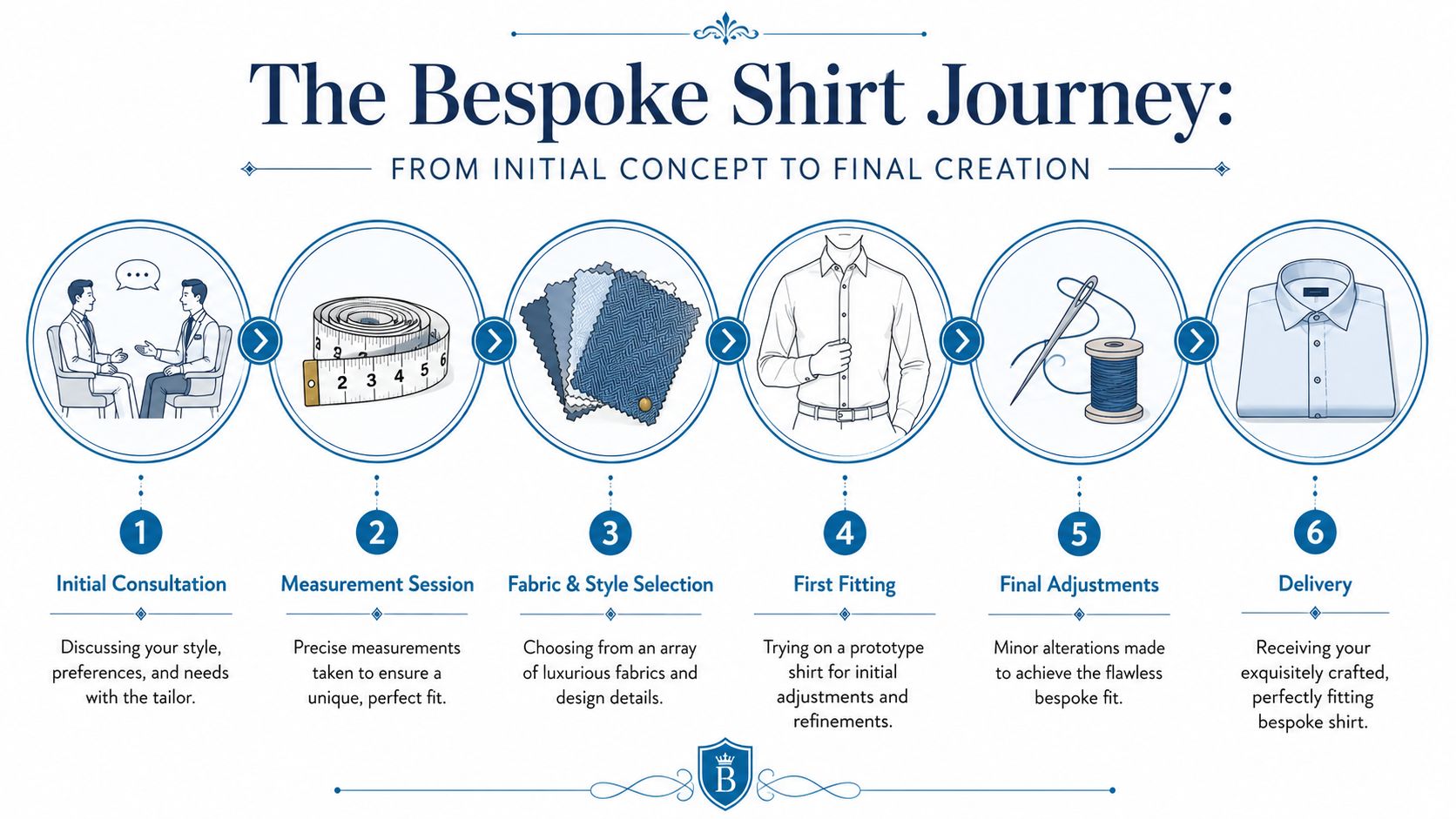
For clients comparing service models, this guide to custom shirts made outlines how a personal shirtmaking service works beyond a standard shop appointment.
Consultation and measurement
The first meeting is less about numbers than observation. A good shirtmaker studies how your current shirts fail, how you sit, whether your neck changes through the day, where your waistband sits, and whether you wear the shirt under structured jackets or on its own. Those details shape the pattern long before cloth is cut.
Measurements follow, but measurement alone is never the whole job. Any competent maker can record neck, chest, and sleeve length. The difference in bespoke work lies in reading balance and asymmetry properly. Shoulder slope, one cuff showing more than the other, a forward head position, a prominent blade, a fuller midsection with a slimmer chest. These are the details that explain why a shirt can feel wrong even when the tape says it should fit.
The fitting stage
This is the point where true bespoke separates itself from a standardised made-to-measure offer. The first fitting gives the shirtmaker something more useful than a list of figures. It gives a moving, visible test of the pattern on your body.
At that stage, the corrections are often small to the eye and significant in wear. Collar height may need adjusting so it sits cleanly without choking. The sleeve pitch may need rotating so the cuff hangs straight when your arms are at rest. The chest and back may need redistributing so the shirt follows the body without pulling across the buttons or ballooning at the waist.
A serious fitting also tells you something about the maker. If he can explain what he is changing and why, you are in capable hands.
If a supposed bespoke shirt is offered with no meaningful fitting and no individual pattern control, treat the claim cautiously.
What happens after the first shirt
The first order carries the heaviest workload because it establishes the pattern and the relationship. Once that groundwork is in place, repeat orders become easier, but never careless. Good shirtmakers still check whether your preferences have shifted, whether you have changed weight, and whether the next shirt is for business, travel, or a wedding.
Convenience matters as much as craft. Clients across Sussex and the South East often value the ability to review cloths, confirm refinements, and be measured at home or at the office rather than losing half a day to travel. That practical, attentive approach tends to produce better results because the process is easier to maintain. The shirt improves, and so does the understanding behind it.
The finished shirt is the visible result. The value is the pattern built for your life, then refined with each commission.
Choosing Your Tailor in London and Sussex
Selecting a shirtmaker is not only about workmanship. It is also about access, communication, and whether the process fits your life.
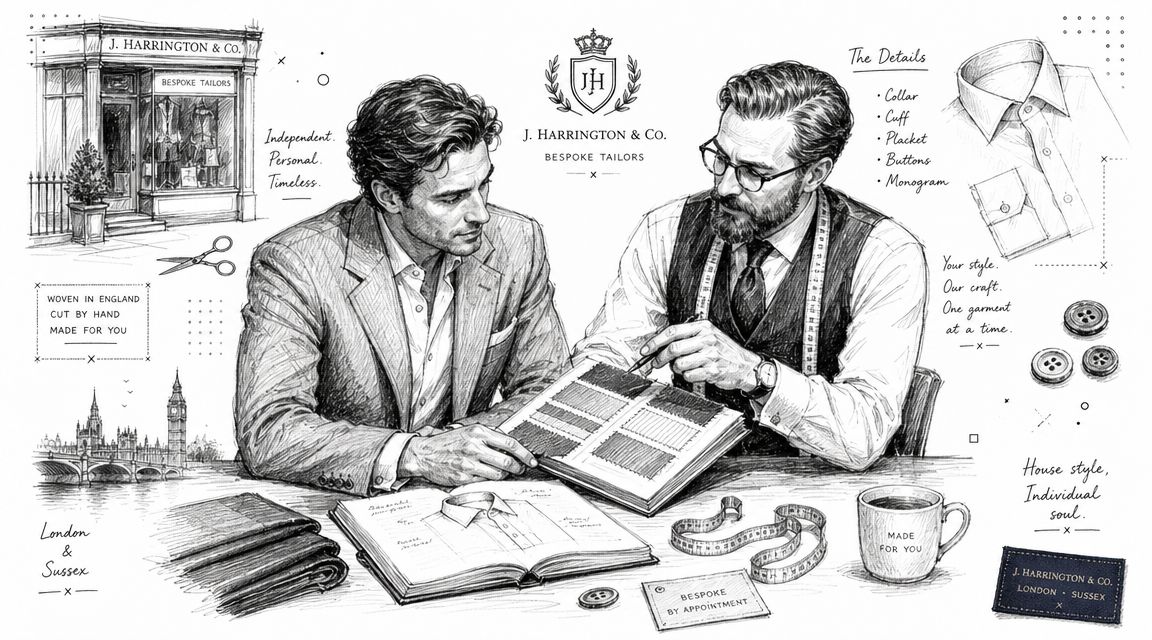
Many men start by searching for tailor made shirts near me. That's a sensible beginning, but proximity alone isn't enough. A better question is whether the tailor's service model matches your schedule and expectations.
London prestige versus practical convenience
London offers heritage, range, and strong shirtmaking culture. For some clients, especially those who already work in town and enjoy the ritual of an appointment, that is part of the attraction.
But convenience has become a serious differentiator. Guidance aimed at bespoke clients notes that, for busy professionals, the process can matter as much as the finished shirt. Regional tailors offering home or office visits in areas such as Sussex provide a distinct practical advantage by reducing travel and folding fittings into the client's day, as noted on Turnbull & Asser's bespoke page.
What to assess before you commit
Use a simple filter when comparing shirtmakers:
- Pattern philosophy: Do they draft individually, or are they mainly adapting standard blocks?
- Fitting discipline: Is there a genuine fitting process, or just an order form with nicer language?
- House style: Do their shirts look like what you want to wear?
- Access: Can fittings happen at your home or office if your schedule makes central travel inconvenient?
- Aftercare: Will they refine the pattern after first delivery and maintain continuity for future orders?
One practical local option is Dandylion Style, which offers bespoke and made-to-measure appointments in the studio as well as home or office fittings across Sussex, London, and the South East. That type of model suits clients who want the personal side of bespoke without turning every fitting into a half-day expedition.
The best tailor for you isn't always the one with the grandest address. It's the one whose process you'll actually complete properly.
Signs of a good long-term relationship
A capable shirtmaker remembers not just your measurements, but your wearing habits. He knows whether you prefer a cleaner waist, a firmer collar, more room through the forearm, or extra length for staying tucked under a jacket.
That attention is why bespoke shirts in the UK increasingly make sense outside the old assumption that everything must happen in central London.
Caring for Your Bespoke Investment
A bespoke shirt can be beautifully made and still wear badly if it's poorly cared for. Maintenance doesn't need to be fussy, but it does need to be consistent.
Washing and drying
Wash shirts gently and avoid treating every shirt as if it were gym kit. A lower-temperature wash is kinder to fine cottons, collars, and stitching than an aggressive hot cycle. If a shirt has sweat or collar build-up, address that area directly rather than over-washing the whole garment.
Air-drying is usually preferable to heavy tumble drying. It is easier on fibres and helps the shirt keep its shape. Take the shirt out while slightly damp if you plan to iron it.
Pressing and storage
Iron collars and cuffs with care rather than force. Press them into shape instead of grinding heat into the cloth. The body and sleeves should be smoothed, not scorched.
For storage:
- Use proper hangers: A decent hanger supports the shoulder line better than thin wire.
- Button lightly: Fastening one or two buttons helps the shirt hang neatly.
- Give shirts space: Crowding them in a wardrobe creates deep creases and unnecessary friction.
Build the wardrobe slowly
The strongest bespoke shirt wardrobe is rarely bought all at once. Start with the shirts you'll wear. A white formal shirt, a pale blue business shirt, and one more relaxed option in stripe or texture will take you further than a pile of experimental commissions.
If something feels slightly off after wear, tell your shirtmaker early. Small refinements are part of building a strong pattern.
About the Author
Igor is the founder of Dandylion Style, a luxury bespoke tailoring house based in Ardingly, West Sussex. He specialises in one-of-a-kind garments shaped around the client rather than the rail, with a focus on timeless British style, comfort, and long-term wearability. His approach is calm and exacting, with careful guidance on cloth, cut, proportion, and finishing details. Working with clients across Sussex, London, and the South East, Igor offers a personal tailoring service that includes studio, home, and office appointments for gentlemen who value discretion, convenience, and precise craftsmanship.
Frequently Asked Questions About Bespoke Shirts
Is bespoke always better than made-to-measure?
Not always. Bespoke is better when your body or posture creates fit problems that a standard block can't resolve cleanly. If your proportions are relatively straightforward and you mainly want better cloth, smarter styling, and cleaner sizing, made-to-measure can be entirely sufficient. The important thing is matching the service to the problem rather than assuming the higher tier is automatically the wiser purchase.
How many fittings should I expect for a first bespoke shirt?
A first bespoke shirt often involves more interaction than repeat orders because the pattern is still being established. In a proper bespoke process, a fitting is part of pattern development, not just a last-minute tidy-up. If a shirtmaker offers bespoke with no meaningful fitting conversation at all, treat that carefully and ask exactly how the pattern is created and refined.
Are bespoke shirts only for City professionals and formal dressers?
No. Business clients are common, but bespoke also suits grooms, frequent travellers, men who dislike shopping, and anyone whose shirts are a constant source of irritation. The primary factor isn't profession. It's how much you value consistent fit, comfort, and personal service. Some men wear bespoke shirts with suits. Others wear them open-necked with smart separates and knitwear.
What makes home or office fittings useful?
Convenience changes the entire experience. For many clients, especially in Sussex and the South East, the ability to fit around work and family commitments makes the bespoke process easier to complete properly. Home and office appointments also let the tailor work in a more relaxed setting, which often leads to clearer discussion about wardrobe use, lifestyle, and how the shirts need to perform day to day.
How long should a bespoke shirt last?
That depends on how often you wear it, how it's laundered, and the cloth chosen. A bespoke shirt isn't immortal. It is, however, easier to keep in service when the fit is right and the fabric quality is sound. Shirts that aren't under constant strain at the collar, cuff, or side seams tend to wear more gracefully. Good care and thoughtful rotation make a substantial difference.
If you're considering bespoke shirts and want a service built around real life rather than showroom ritual, Dandylion Style offers private consultations and fittings in Ardingly, at home, or at your office across Sussex, London, and the South East. It's a measured, personal approach for gentlemen who want better fit, clearer guidance, and shirts made around how they dress.