
You've probably had the same experience many women have with tailoring. The jacket fits at the shoulders but strains at the bust. The trousers sit neatly on the hips but pull at the seat. Or the whole suit looks acceptable on the hanger and ordinary in the mirror.
That's usually the point when bespoke stops sounding indulgent and starts sounding practical. A well-cut suit doesn't fight your shape. It works with posture, movement, proportion and purpose, whether you need it for boardroom wear, a wedding, black tie, or a wardrobe that has to do more than one job.
The Search for the Perfect Suit and Your Key Takeaways
Off-the-peg suiting asks your body to adapt to a factory block. Bespoke works the other way round. The cloth is cut for you, from a pattern drafted from scratch, then refined through fittings until the line is clean and the garment feels natural to wear.
That distinction matters more in womenswear than many clients first realise. A woman's suit has to reconcile several points at once: shoulder line, bust shape, waist suppression, hip room, sleeve pitch and trouser balance. If one is wrong, the whole suit looks slightly unsettled.
British tailoring has a long history of solving that problem properly. In the 1960s, women's participation in the workforce reached 40%, helping return the suit to mainstream women's wardrobes as a symbol of authority and professionalism, as noted in this history of women's suiting. That heritage still shapes what good bespoke means today.
Key takeaways
- True bespoke starts with a fresh pattern. It isn't an adjusted stock size. The tailor drafts a unique pattern for your body and your posture.
- Bespoke and made-to-measure solve different problems. If your fit issues are straightforward, made-to-measure may be enough. If you struggle with shoulders, bust fit, asymmetry, or balance, bespoke usually gives more control.
- The fitting process is where the quality appears. Measurements alone don't produce a fine suit. Fittings reveal how the cloth behaves on your body in motion and at rest.
- Fabric choice changes the result. The same cut in wool, tweed, linen or mohair won't drape, breathe or hold shape in the same way.
- A good women's suit should feel composed, not restrictive. You should be able to sit, walk, reach and stand comfortably without pulling, gaping or twisting.
- Local access matters. For clients in Sussex and London, seeing a tailor without turning every fitting into a day in town makes bespoke far more workable.
A proper bespoke suit should feel calm on the body. If you're constantly adjusting the jacket, the pattern hasn't solved the problem.
What Defines a Bespoke Suit for Women
A bespoke suit for a woman is not a smaller men's suit. It's a separate piece of pattern engineering.
The difference begins before a single piece of cloth is cut. A tailor studies how the body is built and how it stands. Some clients are square through the shoulder and full through the bust. Others are narrow at the shoulder with a long waist, or prominent hips, or a forward posture that changes how the jacket must hang. Bespoke allows those realities to be built into the pattern from the beginning.
The pattern is the foundation
Think of bespoke as building a house from an architect's drawing rather than buying a finished structure and trying to move the walls. The paper pattern controls balance, pitch and proportion before the garment reaches the fitting stage.
That is why bespoke suits women commission for serious wear often feel different in a very immediate way. The jacket doesn't merely fasten. It sits. The lapel lies properly. The waist is shaped without creating drag across the front. The skirt or trouser line follows the body without clinging to it.
Why more women choose custom tailoring
This isn't a niche corner of the market. The broader custom suits market was valued at USD 5,340.46 million in 2021 and is projected to reach USD 6,826.3 million by the end of 2025, according to Grand View Research's market report. Those are global figures, but they help explain why women's bespoke tailoring now sits comfortably within mainstream premium clothing rather than at its edge.
In practice, women come to bespoke for a few recurring reasons:
- Persistent fit issues. Ready-to-wear often fails where multiple proportions need to work together.
- Specific use. Wedding tailoring, black tie, business dressing and occasion wear all ask different things of cut and cloth.
- A clearer personal style. Some want a softer line. Others prefer a sharper, more masculine expression rooted in gentlemen's tailoring.
- Wardrobe efficiency. One excellent suit often replaces several compromised purchases.
Practical rule: if your best ready-to-wear jacket still needs major alterations in more than one area, you're usually a stronger candidate for bespoke than for another round of retail trial and error.
What bespoke should deliver
At its best, bespoke doesn't look theatrical. It looks right.
That may mean a clean single-breasted jacket in navy wool with a slightly extended shoulder and straight trouser, echoing the restraint of classic British menswear. It may mean a double-breasted cut with authority at the chest and softness through the waist. The style can vary. The principle does not. The garment should express you without asking you to tolerate obvious compromise.
Bespoke vs Made-to-Measure The Key Differences
Most confusion in tailoring comes from these two terms. Both can produce a good suit. They are not the same service.
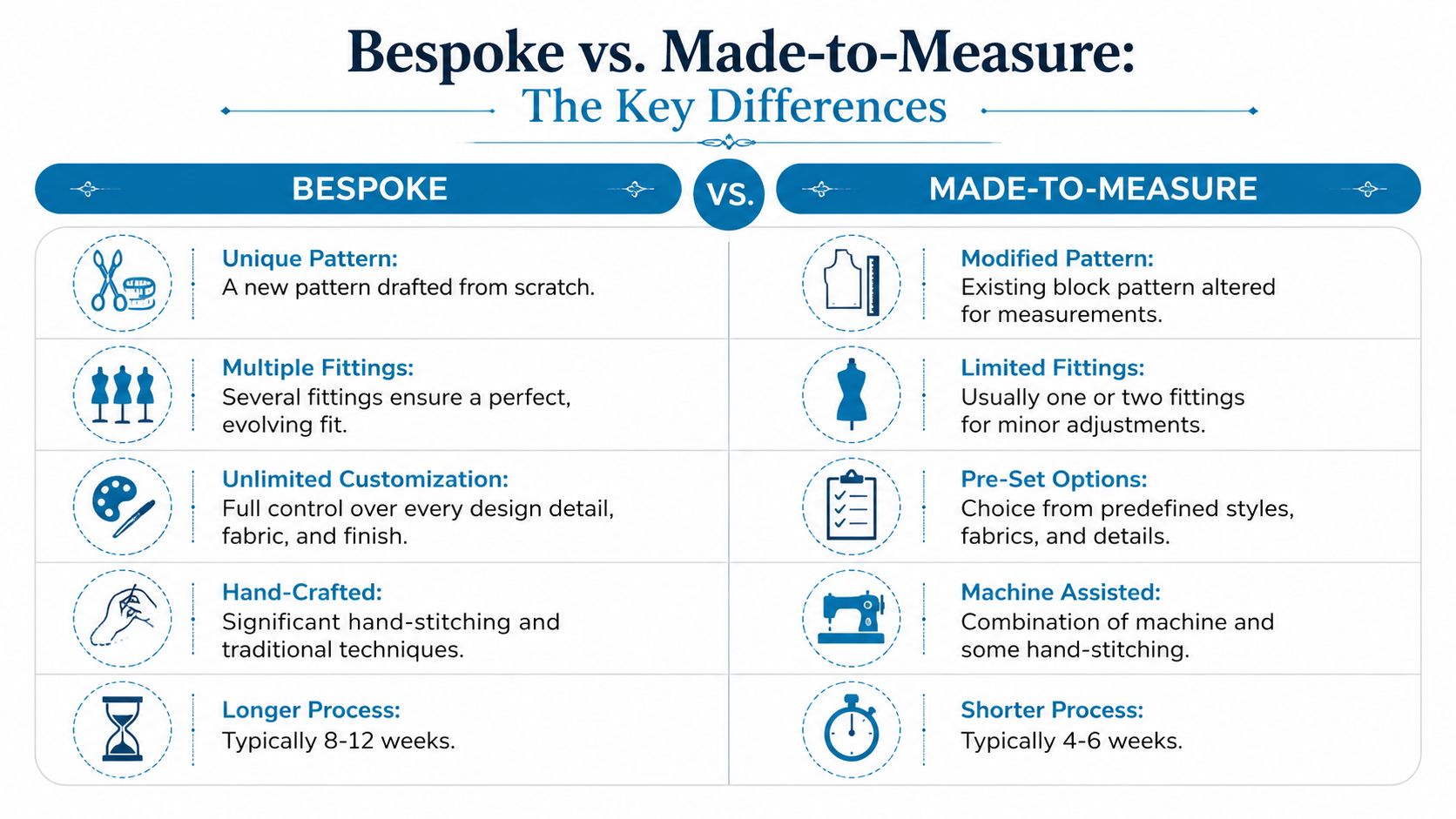
True bespoke begins with a unique paper pattern drafted from scratch for the client. Made-to-measure usually works from an existing block, digital or physical, then adjusts it according to measurements. That difference at pattern level affects everything that follows, especially for women with more complex fit needs.
Bespoke vs Made-to-Measure at a glance
| Feature | Bespoke | Made-to-Measure (MTM) |
|---|---|---|
| Pattern | Unique paper pattern drafted from scratch | Existing block pattern altered to measurements |
| Fit correction | Strong control over balance, pitch and proportion | Better for simpler adjustments |
| Fittings | Usually several fittings through construction | Usually fewer fittings |
| Customisation | Broad control over cut, details and finishing | Choice within set options |
| Construction | More pattern-level intervention and handwork | More standardised production |
| Best for | Complex fit, asymmetry, strong style preferences | Straightforward fit, faster route to a custom suit |
The technical point is simple. True UK bespoke starts with a unique paper pattern, while made-to-measure alters a standard pattern and is less effective at correcting more complex fit issues.
When made-to-measure is enough
Made-to-measure suits many women perfectly well. If your shoulders are even, your bust is moderate relative to your frame, and your main complaint with ready-to-wear is trouser length or waist placement, MTM can be sensible. It's often a practical route for occasional wear or for clients who want customisation without the full bespoke process.
A good MTM garment can look polished. It has less room to solve structural problems.
When bespoke earns its price
Bespoke becomes the better value when fit issues stack up. Common examples include:
- Shoulder asymmetry that causes one side of the jacket to collapse or twist
- Bust fit problems where the jacket either gaps or pulls
- Pronounced waist-to-hip difference that distorts side seams
- Posture variations that affect collar position, sleeve hang or front balance
- A strong aesthetic preference for a line not easily offered within standard options
For a more detailed breakdown of where each service fits, this guide on made-to-measure vs bespoke is useful.
Bespoke isn't automatically better for everyone. It's better when the pattern itself needs to do more work.
The decision in plain English
If you want a good custom suit and your body fits conventional proportions reasonably well, made-to-measure may be enough.
If you're tired of jackets that almost fit, if alterations keep chasing one problem and creating another, or if you want a garment shaped around your exact stance and style, bespoke is usually the cleaner answer.
Your Bespoke Journey From Consultation to Collection
The process is more straightforward than many clients expect. It isn't stiff or mysterious. It's a sequence of calm decisions and careful refinements.
For women in Sussex and London, access matters just as much as craft. One persistent barrier in bespoke has been geography. London has long dominated the conversation, while regional clients often assume proper bespoke means repeated travel into town. That's why home and office appointments have become so important for many women balancing work, family and event deadlines. Dandylion Style offers those appointments across Sussex and London, helping address that access gap, as discussed in this article on bespoke custom women's suits.
The first conversation
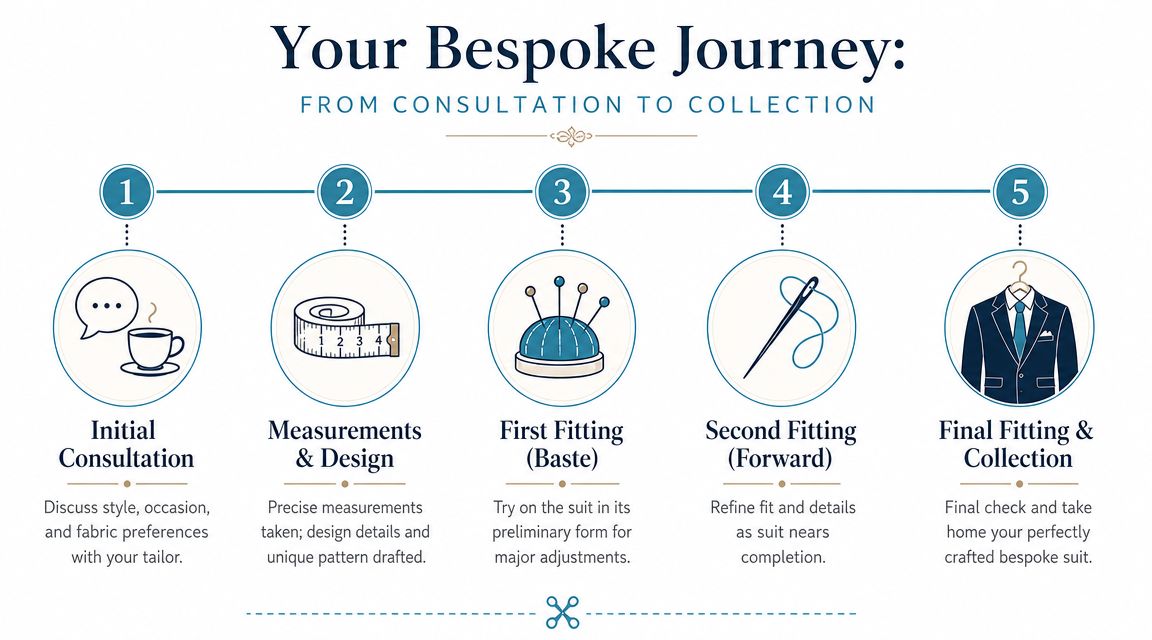
The opening meeting is less about fashion jargon and more about use. Is this suit for work, a civil wedding, a formal dinner, a speaking role, or several purposes at once? How often will you wear it? Do you want crisp authority, soft drape, or something that nods to classic gentlemen's tailoring with a feminine line?
This is also where a tailor reads what clients don't always name directly. Some want more structure at the shoulder because it sharpens the whole figure. Others need less stiffness because they move constantly through the day. Those decisions affect cloth, cut and internal construction.
Measurements and design
Once the brief is clear, measurements are taken in detail and the design is fixed. That includes fabric, lining, lapel shape, pocket style, button stance, trouser rise and hem shape.
If you've never done this before, a simple preparation guide like how to measure yourself for a suit can help you understand the terminology before the appointment, even though a proper bespoke fitting relies on the tailor's own measuring and observation.
The fittings
Most clients remember the fittings as the moment the suit becomes real.
- First fitting often reveals the large corrections. Balance, chest shape, waist position and trouser line are assessed in three dimensions.
- Second fitting deals with refinement. The silhouette is cleaner, and smaller points such as sleeve length, skirt break, pocket placement or button position can be judged more accurately.
- Final fitting confirms comfort and finish. The suit should look composed both standing still and moving naturally.
A bespoke commission should never feel rushed. The garment improves because each stage gives the tailor a chance to remove error before the next one is locked in.
The best fitting comments are specific. “It feels tight” is less useful than “I feel it across the front when I reach forward” or “the right shoulder feels lower than the left”.
Collection and wear
A finished suit should feel settled from the outset. Not stiff, not fragile, not precious. You should be able to wear it with confidence immediately.
Typical bespoke timelines in this market often sit around the two-to-three month mark, and Dandylion Style's published service information notes a usual completion window of 8 to 12 weeks for commissions. That allows time for the fittings that make the difference.
Designing Your Signature Suit Fabrics Cuts and Details
Design begins with cloth. Cut matters enormously, but fabric decides how the suit will behave in life.
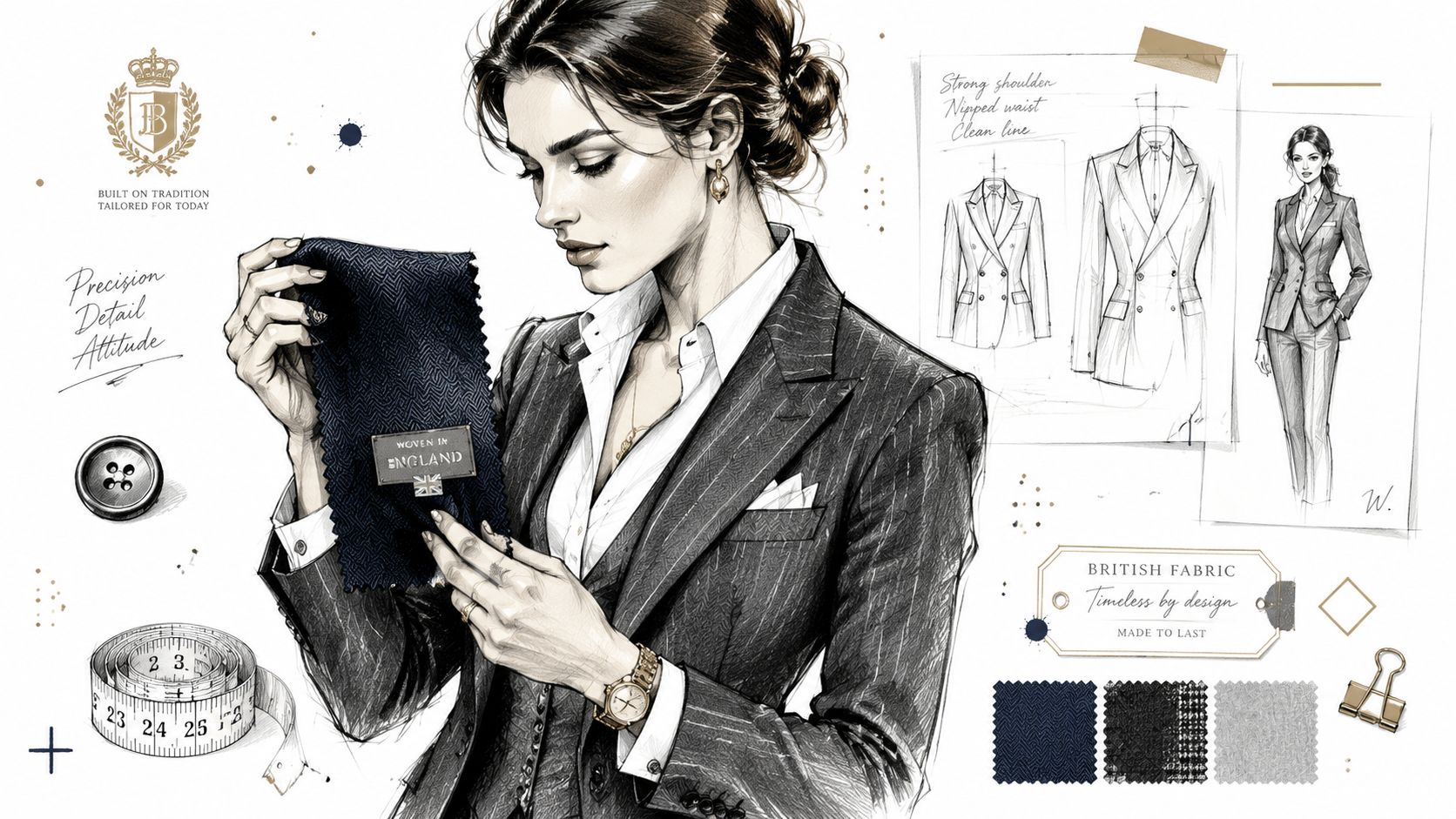
A sharp jacket in a dry worsted wool speaks differently from the same pattern in brushed flannel or open-weave linen. One holds a crisp edge. Another softens. A third breathes beautifully but creases with honesty. None is right in every case. The right cloth depends on where and how you'll wear it.
Start with the cloth
If your wardrobe needs one dependable bespoke suit, a mid-weight wool is usually the most versatile foundation. It drapes well, recovers neatly, and moves comfortably across much of the year. For country wear or a more textured expression, tweed offers character and depth. Linen is superb in warmer weather, though it asks you to appreciate a more relaxed look. Mohair blends can give eveningwear or business suiting a drier, cleaner edge.
The visual language can still lean towards gentlemen's tailoring. Think chalk stripe, birdseye, herringbone, gun club check, cavalry twill. Those cloths have authority without looking severe.
Choose the line of the suit
The cut should suit your body, but also your habits.
A few reliable directions:
- Single-breasted jackets tend to be versatile and easy to wear. They work well for business and separate nicely with other pieces.
- Double-breasted jackets can be magnificent on women when the balance is right. They bring presence and a sense of intention.
- Straight or gently tapered trousers are often the most useful daily option.
- Wide-leg trousers can look elegant and powerful, especially with a longer line through the hip.
- A skirted suit can be excellent when movement, occasion or preference calls for it, provided the proportion stays coherent with the jacket.
If you want to play with options before an appointment, designing a suit can help clarify your preferences.
Finish with the details that matter
Details should support the whole, not distract from it. Good bespoke houses know that one excellent decision at the cuff is worth more than five fussy ones elsewhere.
Consider these finishing elements:
- Lining. A sober exterior can hide a richer lining if you want personality without noise.
- Buttons. Horn, corozo, cloth-covered and metal buttons all shift the tone.
- Lapels. Peak lapels add formality and command. Notch lapels are restrained and versatile.
- Pockets. Straight flap pockets feel businesslike. Jetted pockets can be cleaner for eveningwear.
- Handmade buttonholes. A small detail, but one that often signals the level of care in the commission.
A strong bespoke aesthetic for women doesn't have to mimic menswear, but it can borrow from its discipline. Clean shoulders, good cloth, elegant restraint and a line that holds itself. That's often what makes a suit look expensive, regardless of ornament.
The Art of the Fitting and Lifelong Garment Care
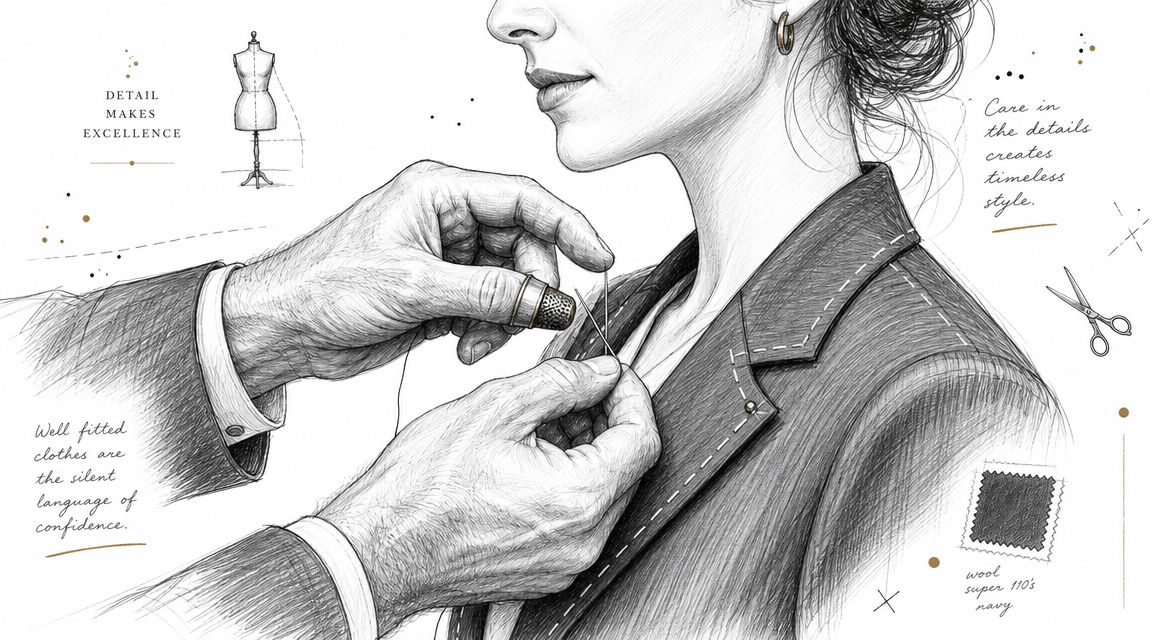
A fitting is not a formality. It's the point at which the tailor tests whether the pattern is behaving truthfully on the body.
In women's bespoke tailoring, the most important benchmark is shoulder balance and bust control. The shoulder seam should sit exactly on the shoulder edge, and the chest should remain clean without gaping or pulling. Darts and shaping do the quiet work here, as explained in this guide to custom-tailored suits for women.
What the tailor is checking
At each fitting, the eye goes to a few important places first.
| Area | What should happen | What often signals a problem |
|---|---|---|
| Shoulders | Seam sits neatly at the edge | Collapse, divots, twisting |
| Bust and chest | Front lies cleanly | Gaping, strain, front break |
| Collar | Sits close to the neck | Collar roll or a gap behind the neck |
| Waist | Shaped but comfortable | Pulling, distortion, over-suppression |
| Sleeves and skirt or trouser line | Hang cleanly | Drag lines, imbalance, twisting |
Clients often find it useful to understand the principles behind achieving the perfect fit, because it makes their own feedback more precise and more valuable.
How to look after the suit
Good care is mostly about restraint. A bespoke suit lasts better when it is aired, brushed and stored properly rather than over-cleaned.
- Hang it well. Use a broad, shaped hanger that supports the jacket's shoulders.
- Rest it between wears. Cloth recovers better when given time.
- Brush the fabric. A proper clothes brush removes surface dust before it settles in.
- Steam lightly when needed. Gentle steam helps release creases without crushing the shape.
- Clean sparingly. Dry cleaning has its place, but too much of it is hard on cloth and internal structure. This guide on how often you should dry clean a suit is a sensible starting point.
- Store seasonally with care. Clean the garment first, then store it in a breathable cover, not sealed plastic.
A bespoke suit should age with dignity. Frequent harsh cleaning and poor hanging do more damage than regular wear.
Frequently Asked Questions About Women's Bespoke
Can a bespoke suit be altered later if my body changes
Yes, within reason. A well-made bespoke suit usually allows for thoughtful adjustment because the tailor understands the original pattern and how the garment was built. Small changes at the waist, seat, hem and sleeve are often manageable. More substantial changes depend on where the body has changed and how much inlay was left in the cloth. The important point is that bespoke gives you a far better base for future alteration than most ready-to-wear garments.
Is a bespoke suit only worth it if I wear tailoring to the office
No. Many women now commission bespoke for weddings, black tie, speaking engagements, travel wardrobes and events where they want authority without looking conventional. A navy or cream suit can work across several settings if the cloth and cut are chosen carefully. The value comes from repeat use, comfort and reliability. If you reach for it often because it always works, the suit earns its keep whether or not you work in a formal office.
What if I like classic men's tailoring but don't want to look masculine
That balance is one of the pleasures of bespoke. You can borrow the discipline of gentlemen's tailoring without losing softness or individuality. Cloth choice, lapel width, button stance, shoulder expression and trouser shape all influence the mood. A strong shoulder and peak lapel can still look elegant rather than hard. Bespoke lets you choose where the line feels architectural and where it feels fluid, instead of forcing you into one visual idea.
Are bespoke suits women order suitable for weddings and formal events
Absolutely. Bespoke works especially well for weddings because occasion dressing often exposes every weakness in standard sizing. A civil ceremony, registry wedding, reception dinner or evening event each calls for a different balance of structure, comfort and presence. The advantage of bespoke is that it can be formal without looking costume-like. You can keep the line restrained and timeless, then express personality through cloth, lining, buttons or a waistcoat.
About The Author
Igor is the founder of Dandylion Style and the tailor behind its bespoke commissions in Sussex, London and the South East. His work is rooted in British cloth, measured cutting and the quieter values of classic tailoring: balance, proportion, comfort and longevity. He specialises in garments made for real use, not just for a fitting-room impression, and prefers an unhurried process where clients can make sound decisions about cut, fabric and finish. You can read more about his background on Igor's author profile.
If you're considering bespoke and want to discuss cloth, cut, fittings or whether bespoke is the right route for your needs, Dandylion Style offers consultations for clients in Sussex, London and the South East.