A gentleman usually arrives at made to measure shirts for the same reason. He's tired of compromise. The collar is comfortable but the body blouses at the waist. The shoulders sit acceptably, yet the sleeves stop short once he bends his arm. Or the shirt looks fine in the changing room and wrong the moment it goes under a jacket.
That's where made to measure shirts UK services earn their place. They aren't magic, and they aren't the answer for every wardrobe. But for the right client, they solve recurring fit problems with a level of precision that ready-to-wear rarely manages and without requiring the full commitment of bespoke.
Key takeaways
- Made to measure works best when standard sizing almost fits, but not quite. It's especially useful for recurring issues at the collar, sleeve, shoulder line, and body taper.
- The real value isn't just “custom”. It's the adjustment of a pattern block to your proportions, posture, and asymmetries.
- A good MTM shirt should be judged on construction as well as fit. Collar make, interlining, stitching, cuffs, and cloth all matter.
- In the UK market, MTM sits in a broad price range. That means choosing well matters more than simply choosing “custom”.
- For work, weddings, and repeat orders, MTM is often the most sensible middle ground between high-street alterations and full bespoke.
Introduction
A client tries on a shirt at 8am, knots his tie, and leaves for the City looking sharp enough. By lunch, the collar is pressing at the neck, the cuff has vanished under the jacket sleeve, and extra cloth is billowing above the waistband. That is usually the point at which made to measure starts to make sense.
For many men, the question is not whether custom shirting sounds appealing. It is whether it solves a problem that ready to wear and simple alterations have failed to solve. If your fit issues are predictable, a collar that fits but a body that is too full, sleeves that are always short, a shoulder line that never sits cleanly, MTM is often the right investment. If your proportions are highly unusual, or you want a pattern drafted entirely from scratch, bespoke may be the better route.
That distinction matters. A good MTM shirt is not purchased for bragging rights. It is chosen because it handles recurring fit faults efficiently, gives better consistency across repeat orders, and asks for less time and money than full bespoke. For many clients I see, that middle ground is the sensible one.
This approach fits the UK market well, where many clients research cloths, collars, and makers online before booking a fitting and refining the details in person. The process works best when digital convenience is paired with a trained eye. A cutter can spot balance issues, cuff preferences, or posture adjustments that no size chart will catch. That is why a proper made to measure tailoring consultation remains valuable, even for clients who begin their search online.
What Made to Measure Truly Means for Your Wardrobe
Made to measure starts with a refined base pattern. That's the central point. The shirtmaker isn't inventing your shirt from nothing. He's taking an established pattern block and adjusting it to suit your frame, your posture, and the way you want the shirt to behave once worn.
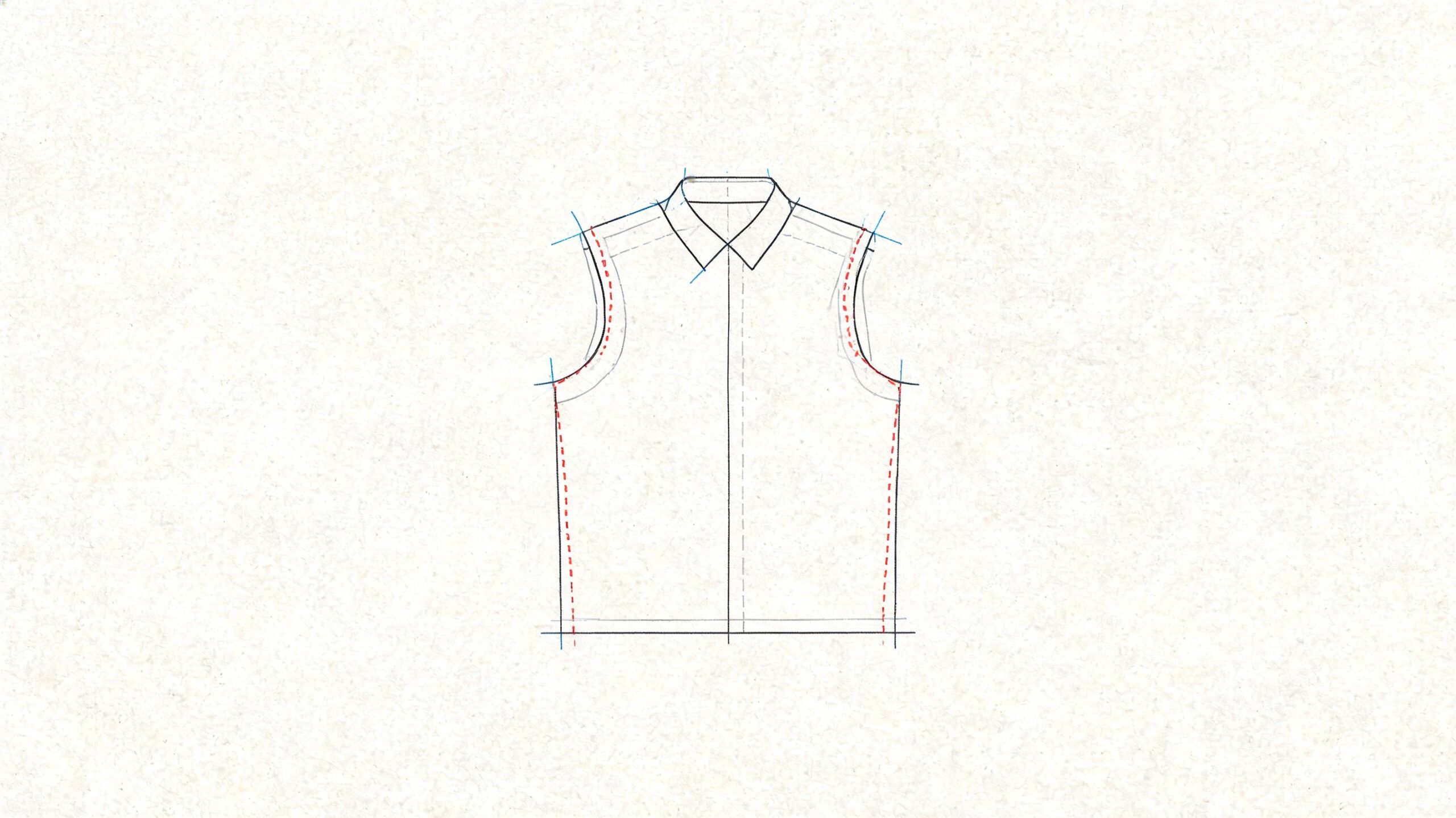
Think of it as modifying the blueprint of a fine motorcar for a specific driver. The chassis already exists. What changes is the calibration. Seat position, steering reach, and control placement are adjusted so the machine feels natural rather than merely usable.
What the cutter is actually changing
In UK made to measure shirting, shirtmakers commonly record at least eight key measurements: collar, chest, waist, shoulder, sleeve length, biceps, wrist, and back length. Some also note posture and shoulder slope, which allows the cutter to compensate for asymmetry and torso proportions that standard sizing can't address (Alexandra Wood on made to measure tailoring).
That matters more than many clients realise. A shirt can fail in subtle ways:
- Collar strain if the neck is cut too tight for comfort.
- Forward-dragging sleeves if posture isn't considered.
- Excess cloth at the lower back if the body shape is slimmer than the stock pattern assumes.
- Awkward cuff position if wrist and sleeve balance haven't been judged properly.
A proper made to measure service adjusts those points with intent, not guesswork.
What it means in daily wear
The best MTM shirts don't scream “custom”. They look settled. The collar sits neatly. The shoulder seam falls where it should. The cuff lands cleanly. The body follows the torso without pulling or ballooning.
A well-cut shirt shouldn't ask for your attention all day. It should disappear into your routine and reappear only in the mirror.
For gentlemen exploring broader custom-made options, the same principle applies across jackets and trousers as well, which is why the wider made to measure tailoring approach at Dandylion Style often begins with fit logic rather than decoration.
The Fit Spectrum MTM Bespoke and Ready to Wear
The mistake many men make is treating all shirting choices as if they differ only by price. They don't. They differ by how the garment is conceived, how much can be corrected, and how much personal involvement the process requires.
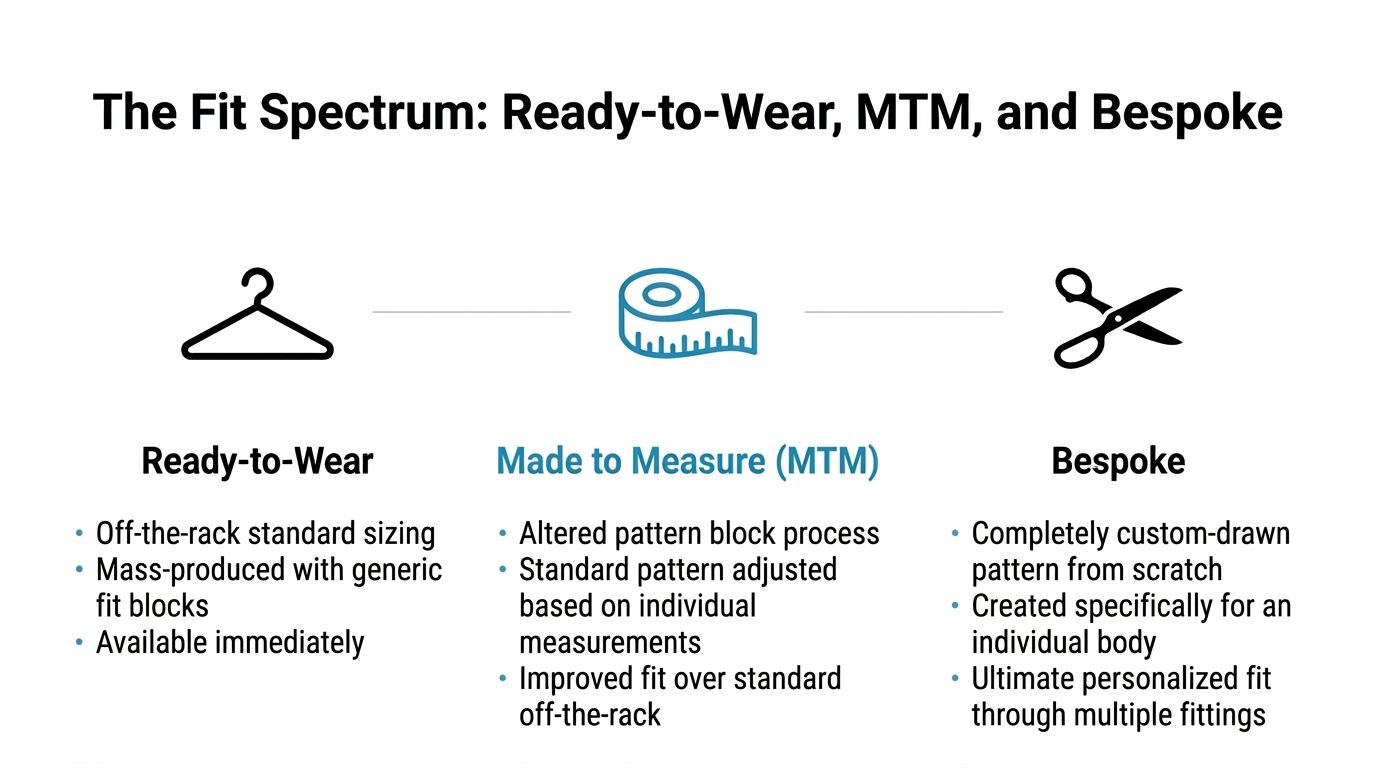
A practical comparison
| Option | Pattern basis | Fit flexibility | Style choices | Best for |
|---|---|---|---|---|
| Ready to wear | Stock sizes | Limited, even with alterations | Limited to what's offered | Men who fit standard proportions reasonably well |
| Made to measure | Existing pattern block adjusted to measurements | Strong improvement on common fit issues | Good range of collars, cuffs, cloths, and proportional tweaks | Men whose fit problems are consistent but not extreme |
| Bespoke | Individual pattern created from scratch | Maximum precision | Broadest design freedom | Men with pronounced asymmetry, strong preferences, or exacting standards |
When ready to wear is enough
If you have balanced proportions, a moderate drop from chest to waist, and no recurring issue with sleeve length or collar fit, a high-quality ready-to-wear shirt with light alterations can be perfectly sensible.
That route often works well for occasional use. It can also work for men who care more about fabric and colour than exact fit nuance. But it tends to break down when one alteration creates another problem. Shortening sleeves won't correct a collapsing collar. Taking in the waist won't fix a shoulder line that sits poorly.
When MTM becomes the smart option
This is the point most men are at. They're not impossible to fit. They're just not standard enough to feel polished in standard sizes.
The UK market itself reflects that middle ground. Pricing for made to measure shirts is broad, with examples in the market running from about £125 to £295+, which suggests the category serves different needs rather than one universal customer. It also highlights a persistent gap in the market, because many guides still explain the process but don't help clients judge whether MTM is better value than altering ready-to-wear for their own body shape and use case (Steed on made to measure shirts).
Practical rule: Choose MTM when your issue is structural and repeatable. Choose alterations when your issue is minor and isolated.
Examples where MTM often earns its keep:
- Office shirts for men who need dependable collar fit and consistent sleeve length across repeat orders.
- Wedding shirts where photographs, comfort, and collar balance matter more than in everyday wear.
- Formal shirts for men who wear studs, cuffs, or a bow tie and need the front, neck, and wrist to sit exactly right.
When bespoke is worth the leap
Bespoke becomes worthwhile when a standard block, however adjusted, still won't address the body in front of the cutter. That can happen with pronounced shoulder imbalance, unusual posture, highly specific stylistic wishes, or a client who wants every detail shaped from first principles.
For many gentlemen, though, bespoke is more shirt than they need. Made to measure often gives the cleaner answer. If you're weighing those two routes carefully, a fuller comparison of made to measure vs bespoke helps clarify where each service belongs.
Hallmarks of a Quality Made to Measure Shirt
Fit gets the attention first. Construction decides whether the shirt still pleases you after repeated wear and laundering. A shirt can fit well at the first fitting and still disappoint if the collar is lifeless, the seams twist, or the cuff loses its shape.
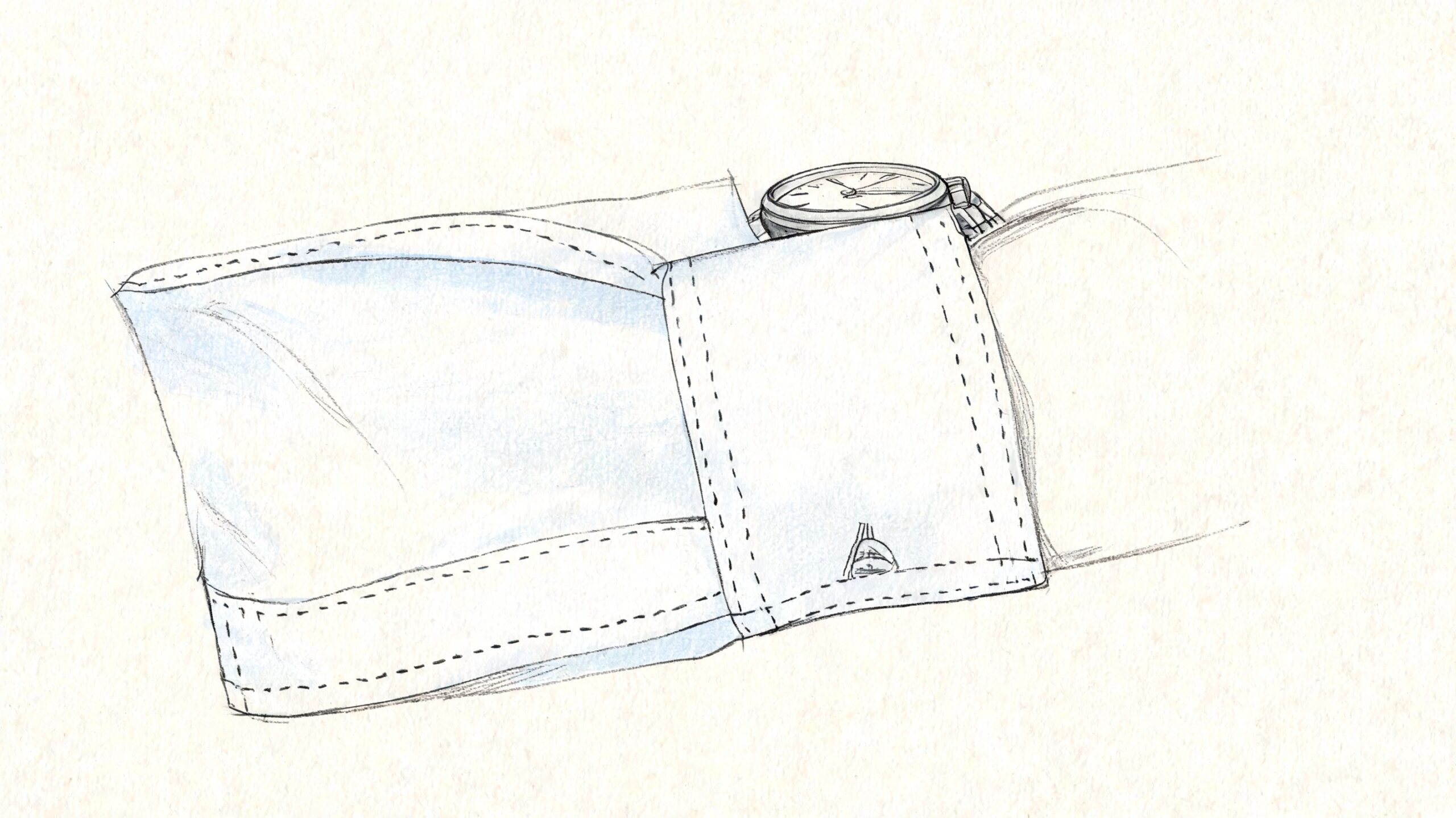
Leading UK shirtmakers distinguish themselves through details such as hand-turned collars, fine interlinings, and single-needle stitching, and a useful benchmark for delivery is six to eight weeks from order to completion for made-to-order shirts at this level (Edward Sexton made-to-order shirts). Those aren't romantic flourishes. They affect collar roll, seam stability, and how the shirt ages.
Construction details worth asking about
A discerning client should ask direct questions. Not dozens. Just the right ones.
- Collar construction matters because interlining determines whether the collar sits with grace or looks flat and overbuilt.
- Single-needle stitching generally gives a cleaner, finer seam than rougher mass-market assembly.
- Button quality matters in daily handling. Mother-of-pearl remains a classic choice because it wears elegantly and looks more refined.
- Cuff design should reflect how you dress. A man who wears a watch every day may need a subtle accommodation on one wrist.
Cloth and finishing
Cloth should suit use before prestige. A business shirt needs different priorities from a wedding shirt. Some men immediately reach for lustre and fineness, then realise they wanted resilience and ease.
That's why fabric advice matters. Poplin, twill, Oxford, and more textured cottons all behave differently in drape, formality, and maintenance. Gentlemen comparing options often benefit from a more grounded understanding of the variety of cotton fabric before they choose collar and cuff details.
A handsome cloth can't rescue an unstable collar. A perfect measurement set can't rescue poor assembly.
Aftercare affects the result too
Even an excellent shirt can be undermined by poor storage. Thin wire hangers distort the shoulder area and encourage creasing around the yoke. For dress shirts, it's sensible to use wide-shouldered wooden or contoured velvet hangers, especially once you've invested in better cloth and more careful construction.
Clients often focus on the first wear. Good shirt ownership is about the fiftieth as well.
Your MTM Journey from Measurement to Final Fitting
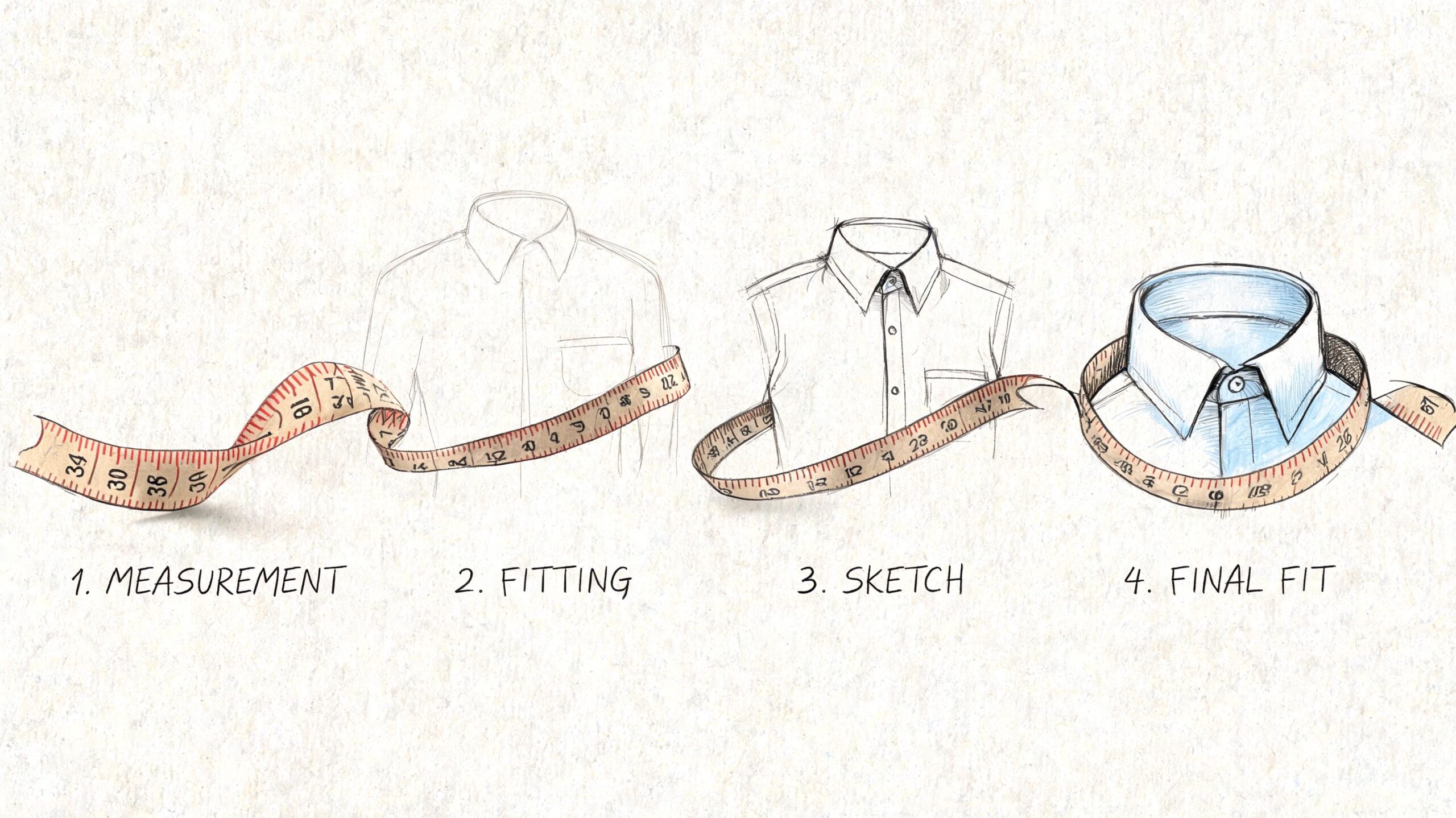
A good MTM shirt usually begins with a frustration you already know well. The collar fits but the body blouses. The sleeves are right until you bend your arm. Alterations improve one area and disturb another. That is often the point at which made to measure starts to make financial and practical sense.
First consultation
The first appointment sets the brief. A shirt for weekly business wear should be judged differently from one for a wedding or black tie. Cloth, collar height, cuff structure, front style, and overall cut all follow that use case.
A careful shirtmaker also asks how you live in the garment. Do you spend long days seated at a desk? Do you wear a tie daily, occasionally, or never? Do you prefer a clean, close silhouette, or enough room to move without strain across the back and chest? These answers matter more than clients expect, because they determine whether MTM is solving a real fit problem or merely adding decorative choice.
Measurement and style decisions
Once the purpose is clear, the measuring starts. Good measuring is part numbers and part observation. Neck, chest, waist, seat, sleeve, and cuff are straightforward enough. The better work comes from noticing asymmetry, posture, shoulder pitch, arm position, and how the shirt needs to behave when tucked and worn for a full day.
Style decisions should support wear, not fight it.
- Collar choice should suit your neck, face, and tie habits.
- Cuff style needs to account for watches, jacket sleeves, and daily use.
- Body shape should follow the torso without pulling at the buttons.
- Shirt length should keep the shirt anchored if you wear it tucked.
- Sleeve allowance should permit reach and bend, not just look clean when standing still.
This stage is also where expectations need honesty. MTM works best when the base pattern is close to your shape and the maker knows how to refine it. If your posture is highly unusual, or if one side of the body differs markedly from the other, full bespoke may justify the extra expense.
Fitting and reordering
The first fitting is a review of balance, comfort, and proportion. I look first at the collar and neckband, then the shoulder line, chest, sleeve hang, cuff position, and the amount of cloth through the waist and back. Small corrections are normal. They are part of settling the pattern to the wearer. Large corrections usually mean the initial assessment was too casual.
Clients often ask what they should notice during that fitting. Three things matter. The collar should sit cleanly without choking or gaping. The sleeve should end where the wrist and hand meet, with enough length for movement. The body should feel tidy when standing and remain comfortable when sitting.
Reordering is where MTM starts to prove its value. Once your pattern adjustments and preferences are recorded properly, later commissions become more consistent and less time-consuming. For clients comparing remote convenience with proper fit control, custom shirts online works best when there is a real pattern record behind it, followed by clear human review rather than a purely automated form.
The first shirt establishes the pattern. The second usually confirms whether MTM was the right decision.
Understanding Costs and Timelines in the UK
Cost in shirting isn't only about fabric. It reflects labour, construction standard, pattern adjustment, finishing, and the reliability of the service behind the garment. Two shirts can look similar on a rail and behave very differently after months of use.
What shapes the price
The UK market gives a clear sense of spread. Existing market examples place made to measure shirt pricing roughly between £125 and £295+ in the category discussed earlier, and that alone tells you there isn't a single definition of value.
What usually moves the cost upward is not mystery. It's the combination of finer cloths, more thoughtful collar and cuff options, better stitching, stronger finishing standards, and a more attentive fitting process. The expensive shirt isn't automatically the right one. But the cheapest version of “custom” often leaves too little room for proper correction or durable construction.
For clients considering whether to alter shirts they already own instead, it's worth comparing that route against the likely benefit. A practical guide to how much alterations cost can help frame that decision more clearly.
Why lead times aren't always fast
Patience matters. Good shirting is not usually an instant purchase. If a maker is adjusting patterns, confirming specifications, cutting cloth, assembling the shirt properly, and allowing for quality control, the process takes time.
This also sits within a wider industry context. IBISWorld estimates there were 3,762 clothing manufacturing businesses in the UK in 2026, and notes pressure in the sector from wider contraction. In that environment, locally produced and higher-value tailoring stands out as a distinctive category. The same source also points to a growing UK custom apparel market, projected to reach USD 205.27 million by 2032 (IBISWorld UK clothing manufacturing).
Faster isn't always better in tailoring. A shirt that arrives quickly but needs repeated correction is slower in every way that counts.
The sensible client plans around the occasion. For weddings, seasonal wardrobe changes, and workwear refreshes, order earlier than instinct tells you.
Why Choose a Local Luxury Tailoring Studio
A local luxury studio gives you something an anonymous ordering platform can't. Accountability. The same eye that advises you on cloth and collar shape can see how the shirt sits on your actual posture, remember your preferences, and refine the next order with judgement rather than software alone.
That matters most when the fit issue is subtle. One shoulder may sit lower. One cuff may need to clear a watch differently. The neck may need comfort while the body remains clean and close. Those corrections are easier when the tailor knows the client, not just the measurements.
A local studio also makes the process more civilised. You can handle the cloths, compare collar shapes against your face and jacket wardrobe, and discuss whether a wedding shirt should read crisp, soft, formal, or understated. Home and office fittings add another layer of practicality for busy clients who want proper service without losing half a day.
For gentlemen in Sussex, London, and the South East, Dandylion Style offers studio, home, office, and remote consultation options within that more personal model. That sort of service isn't about spectacle. It's about continuity, measured advice, and garments that improve because the relationship improves.
Conclusion
A well-made shirt shouldn't feel like a luxury reserved for specialists. It should feel like a sensible correction to a familiar problem. If ready-to-wear almost works but never quite settles, made to measure is often the right answer. It gives you cleaner fit, greater consistency, and better control over the details that make a shirt elegant in wear, not just attractive on a hanger.
For work, weddings, and a wardrobe you rely on regularly, it's an investment in ease as much as appearance. The next step is simple. Book a consultation and handle the options properly.
Frequently Asked Questions
Is made to measure worth it for office shirts
Yes, often. Office shirts are where recurring fit issues become most irritating because you wear them frequently. If your collar is always too loose once the body fits, or your sleeves never break correctly under a jacket, made to measure can bring consistency that ready-to-wear struggles to provide. It's especially worthwhile when you want to repeat a successful shirt across several business cloths without restarting the search each time.
Can a made to measure shirt fix posture issues
It can often improve them substantially, though it depends on the service and the nature of the issue. A competent shirtmaker can account for things like shoulder slope, asymmetry, and balance differences between front and back. That helps the shirt hang more cleanly and feel more natural. If the body is unusually difficult to fit, bespoke may still be the better route, but MTM frequently solves the most common posture-related frustrations.
How many shirts should I order first
For most clients, one or two is the sensible place to begin. The first order establishes your pattern adjustments, collar preference, cuff shape, and how closely you like the body cut. Once that's proven, repeat orders become much easier. Ordering too many at once before confirming those details can be inefficient, especially if you later decide you want a slightly softer collar, more cuff room, or a cleaner waist line.
Are made to measure shirts better than altered ready-to-wear
Sometimes yes, sometimes no. If your issue is minor, such as a simple sleeve adjustment, a good ready-to-wear shirt with alterations may be enough. But if the problem is structural, such as collar fit versus torso fit, shoulder balance, or the way the shirt sits through the upper body, alterations often reach their limit. That's where made to measure becomes better value because the pattern itself is being adjusted.
How long should I allow before a wedding
Allow more time than you think you need. Weddings involve photographs, formalwear, and little tolerance for last-minute compromise. You want enough time for consultation, cloth selection, production, and any final refinements if needed. Waiting until the last moment usually narrows your options and encourages rushed decisions. A wedding shirt should support the rest of the outfit with understated confidence, not become a source of avoidable stress.
About the Author
Igor is the founder of Dandylion Style, a luxury tailoring house in Ardingly, West Sussex. He works with fine British fabrics and a calm, highly personal fitting process to create garments that feel precise, comfortable, and lasting. His approach combines traditional tailoring judgement with practical advice for modern gentlemen building wardrobes for business, weddings, and formal occasions.
If you're considering Dandylion Style, the easiest next step is to arrange a consultation and discuss what you need from a shirt. Whether that's a dependable business staple, a wedding shirt, or a more refined alternative to off-the-peg, the aim is the same. Better fit, better judgement, and a shirt you'll reach for with confidence.